
You are staring at a thicket of knee-high weeds, and you just want them gone without the noise of a gas engine, the hassle of a battery, or the tangle of an extension cord. That is exactly where a manual weed cutter tool shines: one sharp blade on a long handle, and every swing slices through stalks quietly and instantly.
I’m Rikta — the co-founder and writer behind Lawn Gear Lab. This guide is built by comparing the manufacturers’ published specifications and the patterns across verified customer reviews, so you get each pick’s real strengths and trade-offs instead of marketing spin.
For a fence line, a ditch, or a patch of tall grass your mower cannot reach, the best weed cutter tool saves you time by needing nothing more than your own arm swing and gravity to do the job.
How To Choose The Best Weed Cutter Tool
A manual weed cutter is just a sharp blade on a long stick, but the difference between a tool that feels effortless and one that leaves your back sore comes down to a few specs. Here is what to look for.
Blade material and edge type
The blade is everything. A carbon steel blade takes a sharper edge and holds it longer than stainless steel, but it can rust if you leave it wet. A serrated (saw-tooth) edge grips and slices through thick stalks better than a plain edge, especially on the backswing. A double-edged blade cuts in both directions — forward and return — so you cover twice as much ground with the same effort.
Handle length and material
A longer handle gives you more leverage and lets you stand upright while swinging. Look for at least 30 inches if you are average height, or up to 60 inches if you are taller or want to avoid bending. Hardwood handles (like hickory or ash) absorb shock and feel balanced, but they can crack if left in rain. Thicker stainless steel poles are rust-proof and adjustable, but the joints can unscrew during use if not reinforced.
Weight and balance
A heavier blade (2 pounds or more) cuts with momentum — you let the tool’s weight do the work. A lighter blade (around 1.4 pounds) is easier to swing all day, but you have to swing harder. The best weight depends on the thickness of the weeds you are cutting and your own arm strength.
Quick Comparison
On smaller screens, swipe sideways to see the full table.
| Model | Category | Best For | Key Spec | Amazon |
|---|---|---|---|---|
| AMES True Temper Deluxe Weed Cutter | Premium | Knee-high brush and saplings | 2.6 lb blade weight | Amazon |
| Truper Tru Tough Weed Cutter | Mid-Range | Traditional swing feel | 30-inch wood handle | Amazon |
| BlumWay 60-Inch Weed Cutter | Mid-Range | Adjustable length for tall users | 60-inch adjustable reach | Amazon |
| HRADHOL Weed Grass Cutter | Budget | Light-duty patch clearing | 14-inch stainless blade | Amazon |
| True Temper Serrated Grass Whip | Entry-Level | Light overgrown patches | 1.4 lb lightweight blade | Amazon |
In‑Depth Reviews
1. The AMES Companies 2945000 True Temper Deluxe Weed Cutter

The heaviest blade here — 2.6 pounds — makes the AMES True Temper Deluxe Weed Cutter the top pick for anyone who needs to slice through knee-high weeds and thin saplings without muscling every swing. That extra mass means the tool’s own weight does the cutting, and buyers report it is “easier than gas brushcutter for small tasks,” especially in shady damp patches where a string trimmer gives up.
The double-edged serrated blade cuts on both the forward and return strokes, so every pendulum swing clears twice the ground. The 30-inch hardwood handle gives you natural shock absorption and a traditional feel that experienced gardeners prefer. And it is made in the USA — a detail that matters if you want a tool that lasts.
The honest limit: owners mention the handle is thick, and at 2.6 pounds it can feel heavy after an hour of swinging. If you have smaller hands or plan to clear a large area in one session, add a grip wrap. For raw cutting power in a traditional tool, this is the one to beat.
Why it’s great
- Heaviest blade (2.6 lb) cuts with momentum, not muscle
- Double-edged serrated blade cuts on both forward and return strokes
- Made in the USA with alloy steel and a hardwood handle
Good to know
- Handle is thick and may slip for smaller hands
- Not ideal for tall grass in full sun; best for knee-high brush
2. Truper Tru Tough Serrated Weed Cutter, 30-Inch Premium Wood Handle
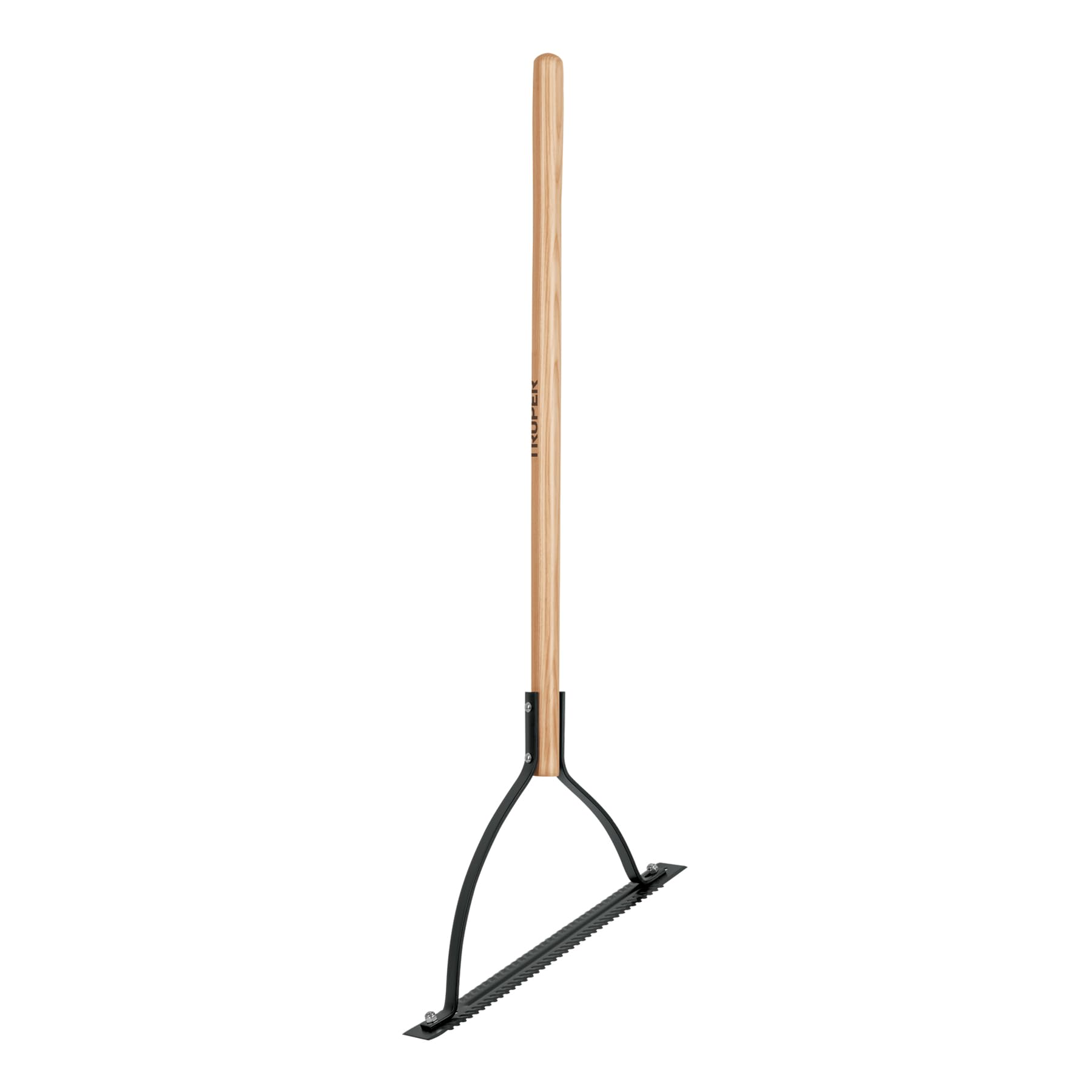
At 2.1 pounds, the Truper is a full 24% lighter than the AMES True Temper Deluxe — so it takes less arm effort to swing, but also builds less momentum to slice through thick stalks. Some customers note it “Barely cut 18″ grass despite vigorous use,” which suggests the blade may arrive less sharp than the AMES and need a touch-up out of the box.
What makes the Truper a smart alternative is its classic feel. The 30-inch clear-lacquered hardwood handle absorbs shock well, and the serrated double-edge blade cuts on both directions. When manufacturing is on point, buyers call it “a great original weed-wacker” and say it stays solid after adding a locking nut (a nut that prevents the blade from loosening).
This tool suits you if you want a lighter, faster swing on thin weeds and you are willing to sharpen the blade before use. If you prefer a sharper blade straight from the box and the extra weight for dense brush, the AMES is the better pick.
Where it shines
- Traditional 30-inch hardwood handle with excellent shock absorption
- Carbon steel serrated blade cuts on forward and return strokes
- Ambidextrous design works for left-handed users
Worth noting
- Some units arrive too dull to cut 18-inch grass; needs sharpening
- Handle holes slightly larger than rivets; some buyers upgraded to locking bolts
3. BlumWay 60 INCH Weed Grass Cutter with Double-Edged Serrated Sharp Steel Blade

If you are tall and tired of hunching over every time you swing, the BlumWay solves that: its multi-section stainless steel pole adjusts from 31 to 60 inches, so you stand fully upright. At the 60-inch setting, the 14-inch blade sweeps an 80-inch cutting range — meaning fewer swings to cover the same patch compared to the AMES True Temper Deluxe’s fixed 30-inch handle.
Buyers rave about the sharpness: “Super sharp barely have to swing, cuts like butter!” is typical, and that is because the serrated double-edged blade is genuinely sharp out of the box. The handle uses thicker 32mm stainless steel that resists rust, and the whole tool weighs only 3.52 ounces — staggeringly light, which helps you control the long pole without strain.
The standout spec here is the adjustability, but several reviewers point out the extension poles unscrew during use, especially the blade attachment pole. One reviewer warns “poles bend with semi-rough use clearing vines/roots.” Plan to apply thread-locking compound (a liquid glue for screws) to every joint before your first swing.
What stands out
- Adjustable from 31 to 60 inches for standing upright at any height
- Super sharp serrated blade that cuts tall grass with minimal effort
- Rust-resistant 32mm stainless steel pole
The trade-offs
- Extension poles unscrew during use; requires thread-locking compound
- Thin metal can bend under heavy brush or vine clearing
4. Weed Grass Cutter with Double-Edged Serrated Sharp Steel Blade (HRADHOL)
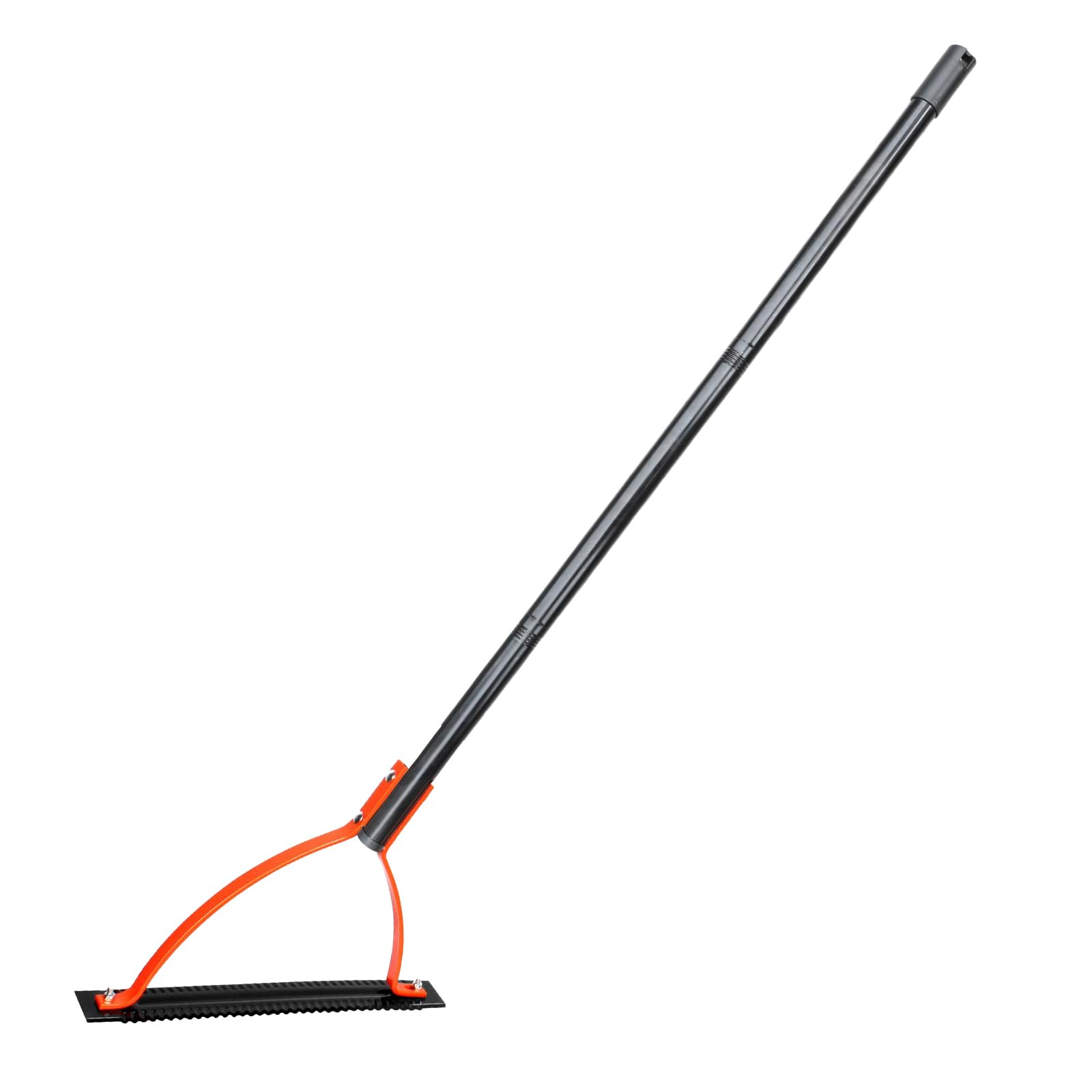
The single number that matters most in this category is the 14-inch blade length, and the HRADHOL scores a solid sweeping range for wide patches. The 52-inch handle lets you stand upright, and the double-edged serrated blade cuts both directions — exactly the feature set you need. Shoppers say the blade is “very sharp and lightweight; durable for weed removal.”
The catch for the low cost is in handle construction. Several reviews mention that plastic handle joints unscrew during use and that the aluminum poles feel thin. One reviewer bluntly says “handle keeps popping off” and “pole unsteady; causes arm fatigue.” You will likely need to reinforce every threaded joint with a thread-locker (a liquid glue for screws) on day one.
For occasional spot-clearing of thin weeds in a small yard, this tool delivers decent sharpness. But if you have tough brush or a large area, stepping up to the wood-handled AMES or Truper saves you frustration — a price-to-value read that favors low investment only for light use.
The upsides
- 14-inch double-edged serrated blade cuts both directions
- 52-inch handle helps you stand upright while working
- Blade is sharp and lightweight out of the box
Keep in mind
- Plastic handle joints unscrew during use; needs thread-lock reinforcement
- Thin materials cause arm fatigue during extended use
5. True Temper 1942600 Serrated Grass Whip with Double-Edged Serrated Steel Blade, 22 in. Hardwood Handle

What you actually get at this lower price is a 1.4-pound grass whip with a 22-inch hardwood handle and a 10-inch shank, making it the lightest and most compact option here for small patches of foot-tall weeds.
What you give up is momentum and stability. The lightweight blade struggles on thicker stalks — buyers report the metal is “too thin and bends easily,” and the short handle forces you to bend over or swing from a crouch. Many reviewers also note the blade arrives dull and needs sharpening before it cuts effectively.
For a homeowner who only needs to trim a few tall weeds along a fence line or around a mailbox post, this tool’s portability and small storage size matter more than pure power. For anything thicker or larger, the AMES or Truper are far more capable, so this is the exact budget buyer it is perfect for.
Why we’d pick it
- Ultra-light 1.4 lb design for easy one-handed carry
- Compact 22-inch handle stores easily in a shed or car trunk
- Double-edged serrated blade for bi-directional cutting
A few caveats
- Blade often arrives dull and needs sharpening before first use
- Thin metal bends easily when cutting tough stalks
Understanding the Specs
Blade material: carbon steel vs. stainless steel
Carbon steel takes a razor-sharp edge and holds it much longer than stainless steel, making it the preferred material for cutting tough, woody weeds and saplings. The downside is that carbon steel rusts if left wet, so you must wipe it dry after each use. Stainless steel resists rust naturally and requires less maintenance, but it does not hold as sharp an edge and can feel “duller” sooner — the trade-off is convenience over cutting performance.
Serrated vs. plain blade edge
A serrated edge has a saw-tooth pattern that grips and cuts through thick, fibrous stalks (like thistle or blackberry vines) more easily than a plain edge. The teeth catch the plant material so it does not slide off the blade on the backswing. A plain edge is easier to sharpen at home, but it tends to push through thin grass rather than slice it — which means you need a faster swing speed. For most buyers dealing with overgrown yards, serrated is the better choice.
FAQ
How do I keep the handle from loosening during use?
Can a manual weed cutter tool handle thick brush like blackberry vines?
How do I sharpen the blade when it gets dull?
Final Thoughts: The Verdict
If you want one dependable pick, the best weed cutter tool winner is the AMES True Temper Deluxe Weed Cutter because its 2.6-pound alloy steel blade generates the momentum you need to slice through knee-high brush without fighting the tool. If you want a classic wood-handled feel at a lighter 2.1 pounds, grab the Truper Tru Tough Weed Cutter. And for tall users who need an adjustable handle that can reach 60 inches, the standout is the reach of the BlumWay 60-Inch Weed Cutter.