
A poorly designed frame feeder can leak syrup, trap your bees, or attract robbers from outside the hive. The right one keeps your colony well-fed during dearths, winter, or spring buildup without creating a mess or a drowning hazard. This guide covers seven frame feeders that actually work, explaining what each one does best and where it falls short, so you can pick the one that fits your hives and your workflow.
I’m Rikta — the co-founder and writer behind Lawn Gear Lab. This guide is built by comparing the manufacturers’ published specifications and the patterns across verified customer reviews, so you get each pick’s real strengths and trade-offs instead of marketing spin.
Understanding differences in capacity, fit, and material is key to finding the best bee frame feeder for your specific setup.
How To Choose The Best Bee Frame Feeder
Picking the right frame feeder is about matching capacity, fit, and safety features to your beekeeping style. A feeder that is too small means constant refills. One that fits poorly invites comb building and leaks. One without proper ladders can drown your bees. Here are the key factors to consider before you buy.
Capacity: Gallons, Liters, and Your Colony’s Needs
The size of your colony and the time of year dictate how much syrup you should offer. A small 3-quart feeder (about 0.75 gallons) works for a nuc or a weak colony. A strong 10-frame hive during a dearth can empty a 1-gallon feeder in a few days. Larger capacity models, like those holding 6.5 liters (about 1.7 gallons), mean fewer trips to the apiary. But they also take up more space inside the hive — typically the width of two frames. Choose a capacity that balances your refill schedule against the amount of hive real estate you are willing to sacrifice.
Fit: Deep vs. Medium Frames and Your Hive Box
Frame feeders replace one or more frames in your brood box. Most standard models are built for Langstroth deep boxes, measuring about 19 inches long and 9 inches tall. Before you buy, measure the depth of your hive boxes. Using a deep feeder in a medium box leaves a gap that encourages burr comb. Also check the ears — these are the tabs that hang the feeder on the box walls. They should be the right width (usually 2 inches) to sit flush without wobbling.
Drowning Prevention: Ladders, Grooves, and Internal Design
A feeder without proper internal features is a drowning risk for your bees. Look for models with internal ladders — these are the textured ramps or stair-like structures inside the feeder tank that allow bees to climb out easily. Many feeders also have grooved sides for the same purpose. Some beekeepers add wine corks to float in the syrup as a rescue aid. The best designs combine these features with a tight-fitting cap and base that prevents bees from being trapped between the feeder components.
Material and Maintenance: Plastic vs. Treated Wood
The material of your feeder affects its longevity and how easy it is to clean. Molded plastic (polypropylene, or PP) is lightweight, easy to clean, and will not rot. But it can warp or deform over time when full of warm syrup. Models that combine a plastic tank with a wood or beeswax-treated wood lid tend to be more durable and nestle better in the hive. Consider any part that touches the syrup: you want a material that resists bacterial growth. Disassembly for cleaning is a feature you will appreciate once syrup crystallizes inside the feeder.
Quick Comparison
On smaller screens, swipe sideways to see the full table.
| Model | Category | Best For | Key Spec | Amazon |
|---|---|---|---|---|
| MayBee 2 Pack | Premium | High-volume feeding | 6.5 liters (1.7 gallons) | Amazon |
| BeeCastle | Mid-Range | Value + solid build | 6 liters (1.6 gallons) | Amazon |
| Pro Feeder (Mann Lake) | Premium | Clean, low-mess feeding | 1 gallon | Amazon |
| Little Giant | Mid-Range | Budget-friendly reliability | 3 quarts (0.75 gallons) | Amazon |
| Pierco Deep | Mid-Range | Smaller colonies / nucs | 1 gallon | Amazon |
| NUOMIC 2 Pack | Value | Multi-hive management | 3.5 liters (0.9 gallons) | Amazon |
| Beeswax-Treated 2 Pack | Premium | Durability and fit | 3.5 liters (0.9 gallons) | Amazon |
In-Depth Reviews
1. MayBee 2 Pack 6.5L Bee Pro Feeder

6.5 liters (1.7 gallons) — the largest capacity of any feeder in this guide — makes the MayBee 2 Pack the top pick for beekeepers running a strong 10-frame colony who want the longest stretch between refills during a dearth.
Buyers report these “hold more syrup than I expected,” and the combination of a food-grade plastic tank with a cedar wood lid gives it a durable, hive-ready feel. The feeder takes up about two frames of space, and its internal grooves — textured surfaces inside the tank — help prevent drowning by giving bees a surface to climb on. At 4.89 pounds per feeder, you are getting substantial build quality that withstands repeated cleaning and handling.
The honest catch is that the wider footprint might feel like overkill for a smaller 5-frame nuc or a weak colony that simply does not need that much syrup. But for a standard 10-frame Langstroth deep, this is the one that keeps your colony fed with the least effort.
Why it is great
- Largest capacity on the list at 6.5 liters
- Premium build with cedar wood lid
- 2-pack is great value for multiple hives
Good to know
- At 4.89 pounds per feeder, heavier than most
- Takes up 2 frames of space
2. BeeCastle Bee Pro Feeder

Compared to the top-pick MayBee, the BeeCastle Bee Pro Feeder holds 6 liters (1.6 gallons) — just 0.5 liters less — and costs less, while offering a very similar feature set: a large tank, internal ladders with grooves for safe climbing, and pre-assembled construction so you can use it straight out of the box.
Owners mention “they hold about 1.5 gallons of syrup or water for your beehives.” The two internal ladders with grooves work well to prevent drownings. The feeder is easy to disassemble and clean — a critical feature when syrup crystallizes. It takes up 2 to 3 frames of space, which is a bit more than some models, but that width is what allows the generously sized tank.
Choose the BeeCastle over the MayBee if you want a nearly identical capacity in a lighter package (2.44 pounds compared to the MayBee’s 4.89 pounds) and you do not mind the slightly wider footprint inside the brood box.
Why it is great
- Generous 6-liter capacity in a lightweight 2.44-lb build
- Pre-assembled for immediate use
- Excellent drowning prevention with dual ladders
Worth noting
- Takes up 2 to 3 frames, more than some feeders
- Plastic sleeves in fill holes can fall out if handled carelessly
3. Pro Feeder for Bee Hive (Mann Lake)
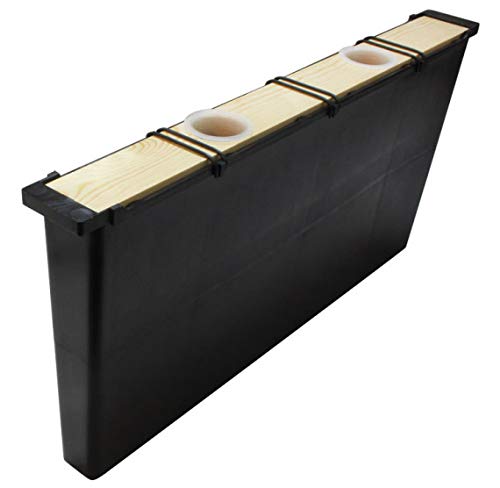
If you are tired of scraping sticky propolis and burr comb off your feeders every inspection, the Mann Lake Pro Feeder is the one buyers consistently call the “cleanest option possible.” It replaces one deep frame, holds exactly 1 gallon of syrup, and uses a design that customers note “creates perfect bee space” — the gap is just right to avoid burr comb and sticky propolis cleanup.
The feeder comes with a wood cap and internal feeding ladders. The tight design keeps robber bees and bugs out. The wood cap helps it sit flush within the frame, preventing the bulging that can trap bees. It holds 1 gallon of syrup, which is less than the MayBee or BeeCastle, but the catch is the best user experience for simplicity and easy maintenance. One reviewer calls it “cleanest option possible.”
This is for the beekeeper who hates scraping burr comb and wants a feeder their bees find quickly with zero mess. skip it if you need more than 1 gallon of capacity for a strong colony during a heavy dearth — you will be refilling every day or two instead of every few days. The Pro Feeder replaces one deep frame and holds 1 gallon of syrup.
Why it is great
- Excellent bee space design reduces burr comb and propolis
- Wood cap for a snug, hive-integrated fit
- Strong drowning prevention and anti-robbing performance
The trade-offs
- The lugs (teats) may require removing 2 frames instead of 1 for space
- Not the largest capacity at 1 gallon
4. Little Giant Beehive Feeder Frame
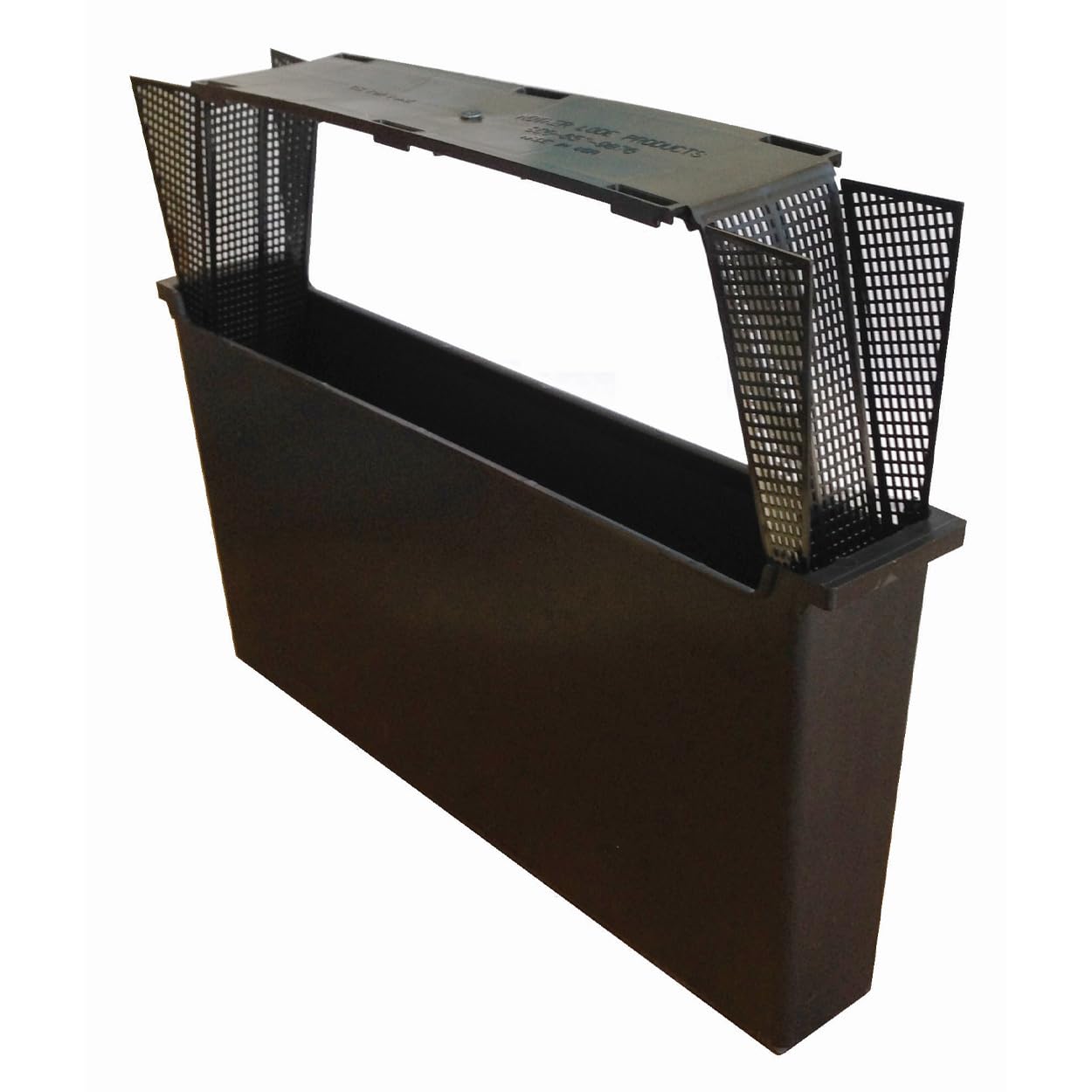
The single number that matters most in this category is 3 quarts (0.75 gallons), making the Little Giant the smallest feeder here. But it is also the most affordable and comes from a brand trusted in the USA. Its light weight of 1.5 pounds makes it a good pick for a nuc (a small starter colony) or a spring-fed weak hive.
The downside you accept is more frequent refills — every day or two during heavy feeding — and the fact that it still takes up two frames of space despite its smaller tank. Reviewers point out “no bee drownings with added wine corks,” suggesting you might still want to add those corks for extra safety despite the built-in ladders and grooved sides.
For its price point, the Little Giant offers solid, no-frills performance from a domestic manufacturer. It is for the beekeeper starting out or feeding just a single hive who wants reliability without overcommitting on cost or size. pass on it if you have a strong 10-frame colony that will empty this feeder in half a day — you will get tired of refilling, which makes the price-to-value read as best for small-scale or entry-level use.
Why it is great
- Very budget-friendly for a reliable feeder
- Compact and lightweight at 1.5 pounds
- Made in the USA with a straightforward design
Keep in mind
- 3-quart capacity requires frequent refilling for strong hives
- Bees can still drown in corners; wine corks recommended
5. Pierco 9 5/8 Deep Frame Feeder

You get a full 1-gallon capacity and a ladder design that shoppers say “prevents drowning during refills” at a competitive mid-range price with the Pierco. The large opening makes it simple to check the syrup level without removing the feeder. It is made in the USA.
There is a known trade-off: one reviewer reports the feeder “stretches and deforms when full, trapping bees in middle.” This seems to happen if the plastic gets warm and the cap is not seated absolutely perfectly. That said, the ladder design is excellent when set up correctly — if the ladder panels arrive reversed from the factory, simply flip them so they spring tightly against the tank wall.
The Pierco is a strong value play for the gallon-capacity at this price. It is for the beekeeper who is careful with assembly and wants 1 gallon of syrup without paying for a premium brand. it’s not for you if you do not want to check the seal after each refill, especially on hot days — that extra step matters with this feeder, unlike the Mann Lake or MayBee.
Why it is great
- Full 1-gallon capacity at a very competitive price
- Easy-to-refill top and safe ladder design
- Made in the USA
A few caveats
- Can stretch and deform when full if cap is not perfectly seated
- Ladder panels may arrive reversed; a quick fix
6. NUOMIC 2 Pack 3.5L Standard Bee Hive Deep Frame Feeder

If you manage multiple hives and need a reliable, no-fuss feeder for each one, the NUOMIC 2 Pack is designed for exactly that. Each feeder holds 3.5 liters (about 0.9 gallons) — a size that is ideal for a standard Langstroth deep colony during buildup or maintenance periods when you do not need a massive tank but also do not want to refill every few hours.
Buyers report these “fit perfectly in my hive” and appreciate the clear level markings on the durable plastic container. The cedar wood cover provides a natural feel and a snug fit. The design includes grooved sides for bee access, and the ladder system helps reduce drowning risk. One reviewer sums it up: “reliable for supplemental feeding.”
The honest limitation is that at 3.5 liters, you will need to refill more often than with the 6.5-liter MayBee on a strong hive. But for the price of this 2-pack, you get two solid feeders that can service two hives at once. It is for the beekeeper with 2 to 5 hives who wants a practical, affordable feeder per colony. look elsewhere if you have a single strong 10-frame hive during a heavy dearth — the MayBee or BeeCastle will save you more trips.
Why it is great
- 2-pack delivers great value for multiple hives
- Clear level markings for easy syrup monitoring
- Good balance of capacity and hive space usage
Before you buy
- 3.5-liter capacity may not sustain a strong hive through a peak dearth
- The plastic can be slightly slippery when wet
7. Beeswax-Treated Wood 2 Pack Bee Feeder
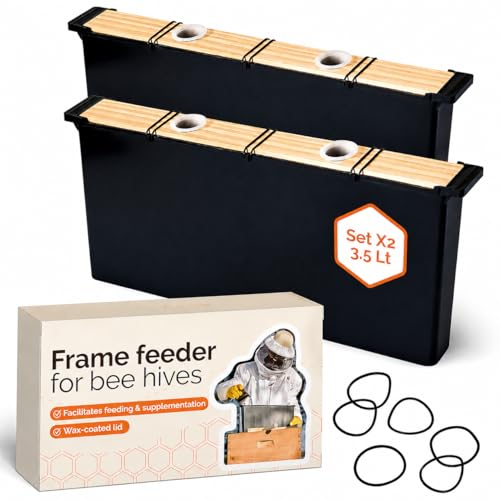
At a higher price than most frame feeders in this guide, the Beeswax-Treated Wood 2 Pack Bee Feeder positions itself as a premium-value choice for beekeepers who prioritize build quality over upfront savings. The 2-pack costs more than basic plastic options, but the materials—thick plastic tank and beeswax-treated wood lid—justify the investment for those wanting a feeder that feels substantial and lasts.
That money gets you a 3.5-liter capacity (about 0.9 gallons) per feeder, a 2-pack, and a design that owners mention “fits perfectly” in their hives. The feeder takes up about 1 to 2 frames, depending on your spacing, so it fits neatly without wasting space. The beeswax-treated lid is the standout feature — it is less likely to warp or crack after a season of sun and syrup compared to standard wood caps.
This is for the beekeeper willing to pay a premium for materials that will outlast cheaper plastic-only designs. steer clear if you need high capacity — at 3.5 liters, it cannot match the MayBee’s 6.5 liters, and the price is higher per gallon of capacity. That is the trade-off you accept for long-term durability. The one clear reason to choose it is the beeswax-treated lid that resists warping and cracking better than any other feeder in this guide.
Why it is great
- Beeswax-treated wood lid for superior weather resistance
- Sturdy, thick plastic tank that feels built to last
- 2-pack offers good value for its build quality
The downsides
- 3.5-liter capacity is not the largest on the list
- Premium price point reflects materials, not capacity
Understanding the Specs
Capacity (Liters / Gallons / Quarts)
This is the amount of sugar syrup or water the feeder can hold. A 6.5-liter feeder (1.7 gallons) is good for a strong 10-frame hive during a dearth (a period with little natural nectar), needing a refill every few days. A 3-quart feeder (0.75 gallons) is better for a nuc or a weak colony, though you will refill it more often. Pick a capacity that matches your colony’s appetite and your schedule.
Fit and Dimensions
Frame feeders replace one or two frames in your hive box. The standard length is 19 inches for a Langstroth deep (a common hive box type), but the width determines how many frames it replaces — from 1.5 inches for a single-wide to over 3 inches for a double-wide. Check the height — 9 inches for deep boxes — and ensure the ears (the hanging tabs) are 2 inches wide to hang flush on the box walls. A poor fit leads to burr comb and bee-trapping gaps.
Internal Ladders and Grooves
These are the textured structures inside the feeder tank that allow bees to climb in and out of the syrup safely. Without them, bees can drown. Look for feeders with multiple ladders or grooved sides running the length of the feeder. Some designs combine both for maximum safety, though many beekeepers still recommend floating wine corks as a backup rescue aid.
Materials: Plastic, Wood, and Beeswax Treatments
Most feeders use a plastic (polypropylene, or PP) tank because it is lightweight, easy to clean, and food-grade. Plastic can warp in heat, so look for thick walls. Wood caps or lips (sometimes treated with beeswax) add durability and help the feeder nestle better in the hive. Avoid any material that seems thin or cheap — it will not hold up to repeated cleaning and the weight of syrup.
FAQ
How does a bee frame feeder prevent drownings?
Can I use a deep frame feeder in a medium hive box?
How often should I clean a frame feeder?
Does a larger capacity feeder always mean less work?
Final Thoughts: The Verdict
For most beekeepers, the bee frame feeder winner is the MayBee 2 Pack because its 6.5-liter capacity and premium build give you the most feeding time between refills. If you want a nearly identical capacity in a lighter, more affordable package, grab the BeeCastle. And for the cleanest, most mess-free feeding experience inside the hive, the standout is the Mann Lake Pro Feeder.