
Specs are compiled from manufacturer listings and verified buyer reviews and can change over time — please confirm the key details on the product page before buying.
Melons sprawl across the ground, taking over your entire garden bed and hiding fruit from view — a sturdy trellis changes that by lifting leaves and heavy melons up so you reclaim space and see every ripe one. The real challenge is picking a frame that actually supports the weight of a full-sized melon without buckling, so your harvest is clean and your garden stays organized.
I’m Rikta — the founder and writer behind Lawn Gear Lab. This guide is built by comparing the manufacturers’ published specifications and the patterns across verified customer reviews, so you get each pick’s real strengths and trade-offs instead of marketing spin.
Whether you are planning a small raised bed or a walk-through arch, the right trellis for melons transforms how you grow heavy vine crops by giving them reliable vertical support from seedling through harvest.
Quick Picks
- Heavy Duty 50″x17″ Adjustable A-Frame Trellis — Best Overall
- Garden Arch Trellis for Climbing Plants Outdoor — 83″ H x 71″ W — Premium Arch
- HIRALIY Garden Arch Trellis — 68″ W x 76″ H — Heavy Arch
- Yotoworth A-Frame Trellis — 31.5″ W x 70.8″ H — Value A-Frame
- Toriexon Cucumber Trellis 2-Pack — 48″ L x 16″ W — Budget 2-Pack
How To Choose The Best Trellis For Melons
Melons are heavy — a single cantaloupe can weigh several pounds — so the trellis you choose must handle concentrated weight without sagging or tipping. Focus on three things: the frame structure, the grid density, and the material’s weather resistance.
Structure shapes: A-Frame vs Arch
An A-frame creates two sloping sides that brace against each other, spreading the load of heavy melons. An arch (or tunnel) offers a walk-through passage and more growing surface but requires sturdy metal connectors so the top does not collapse under weight. For melons, look for a frame where the sides lock securely — loose bolt-together joints are a weak point.
Grid spacing for melon support
A wide grid (6 inches or more) lets melons slip through or dangle awkwardly. Denser spacing — around 3 to 4 inches — gives each fruit a stable perch and makes it easier to train vines upward. Some trellises use a net that attaches to the frame, which works but can snag during installation.
Material and finish
Powder-coated or PE-coated steel resists rust and sun damage better than bare galvanized metal. Thicker tubes (at least 1 cm or 0.4 inches) handle wind wobble better. A plastic coating also prevents the metal from heating up enough to burn vines on hot days.
Quick Comparison
On smaller screens, swipe sideways to see the full table.
| Model | Best For | Dimensions (W x H) | Weight Capacity | Material | Amazon |
|---|---|---|---|---|---|
| Heavy Duty 50″x17″ A-Frame | Raised beds & heavy melons | 17″W x 50″H | Heavy-duty steel grids | Powder-coated steel | Amazon |
| Garden Arch Trellis (71″ x 83″) | Walk-through tunnel support | 71″W x 83″H | Dual-reinforced steel | PE-coated steel | Amazon |
| HIRALIY Garden Arch (68″ x 76″) | Heavy crops & wind stability | 68″W x 76″H | 20mm thick steel tubes | PE-coated steel | Amazon |
| Yotoworth A-Frame (31.5″ x 70.8″) | Tiny areas & easy assembly | 31.5″W x 70.8″H | Reinforced clamps | Metal with PE coating | Amazon |
| Toriexon 2-Pack (16.7″ x 49.6″) | Budget multi-pack & small beds | 16.73″W x 49.61″H | Powder-coated steel | Powder-coated steel | Amazon |
In‑Depth Reviews
1. Heavy Duty 50″x17″ Adjustable A-Frame Trellis
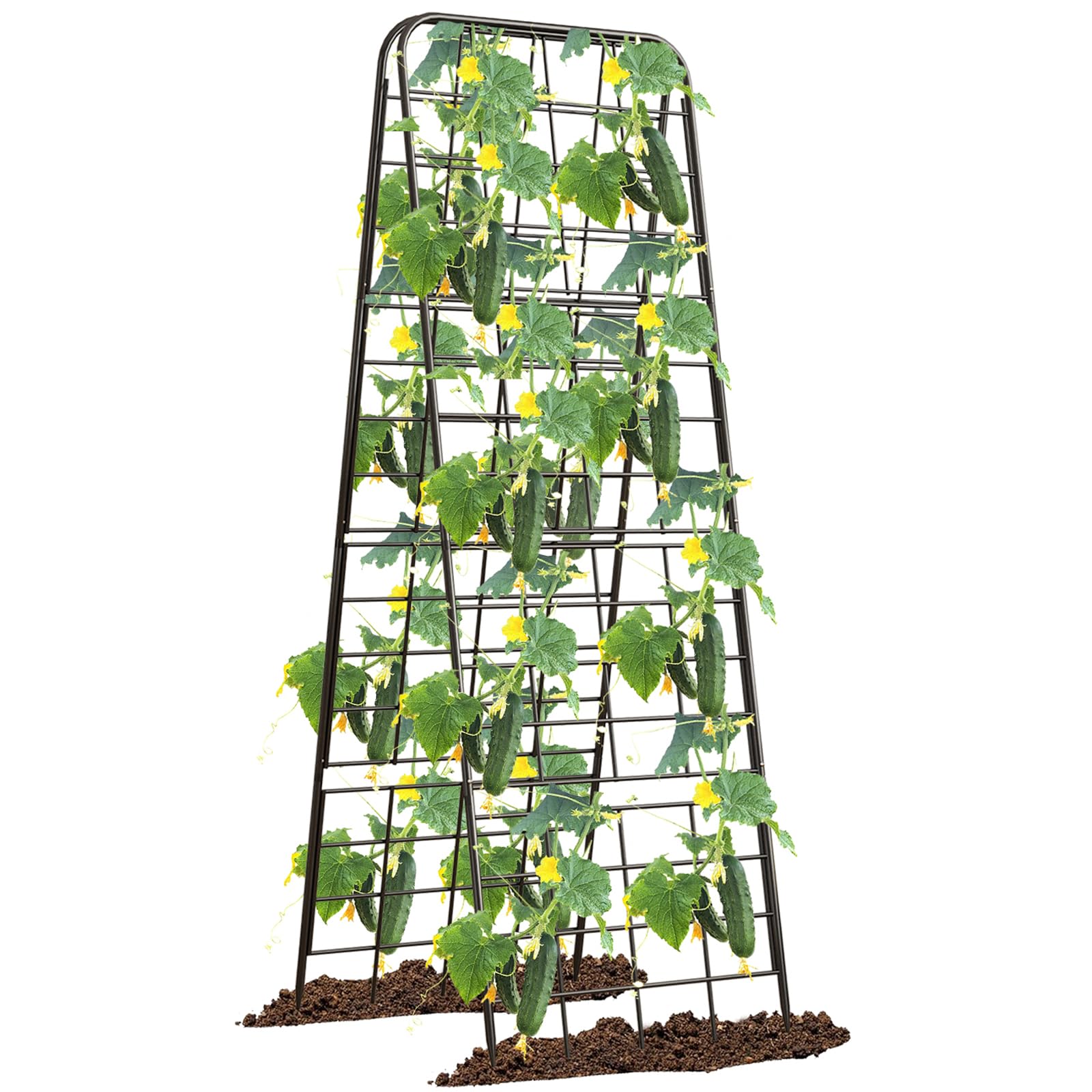
The adjustable A-frame that grows with your melons from seedling to harvest.
You start with a compact 17-inch height for delicate seedlings, then extend it up to 50 inches as vines charge upward — no swapping frames mid-season. The 3.15 x 3.94 inch reinforced steel grids are spaced tightly enough to support heavy melons without sagging, and the maker says these grids carry 2 times the load of ordinary trellises. At 3.73 kilograms (about 8.2 pounds) versus the Yotoworth A-frame at 2.7 kilograms (about 6 pounds), it has a planted feel even when loaded with fruit.
You get a wobble-free arch because the hinge is factory-fused forged steel, not bolted together like cheaper arches. Buyers report that “two units arrived on time, well-packaged, easy assembly in minutes” and that the unit “fits narrow raised beds” and “folds for transport.” One reviewer noted that some pieces arrived slightly bent but were fixable — check the packaging on delivery. This A-frame spans 17 inches wide, which is wider than the Toriexon 2-pack at just 16.73 inches, and its sturdier build resists wind wobble better.
If you want a single heavy-duty trellis that adjusts to your melons’ growth and stays put in raised beds, this is the one to grab. The catch is that the premium build comes at a higher price than basic 2-packs, and if you need to cover a long row you will need to buy multiples.
Standout strengths
- Adjustable height from 17″ to 50″ matches vine growth
- Dense 3.15″x3.94″ steel grids support heavy melons without netting
- Forged steel hinge and 1cm outer frame resist wind wobble
Watch out for
- Some pieces arrived slightly bent per one buyer review
- Higher cost per unit compared to basic 2-packs
- Requires assembly — about 6 hand-tightened bolts
Reach for this if: you grow melons in a raised bed and want a trellis that adjusts height, holds heavy fruit, and folds flat for off-season storage — all in one unit.
Look elsewhere if: you need multiple units for a large row on a tight budget — the Toriexon 2-pack covers twice the space for less money.
2. Garden Arch Trellis for Climbing Plants Outdoor — 83″ H x 71″ W
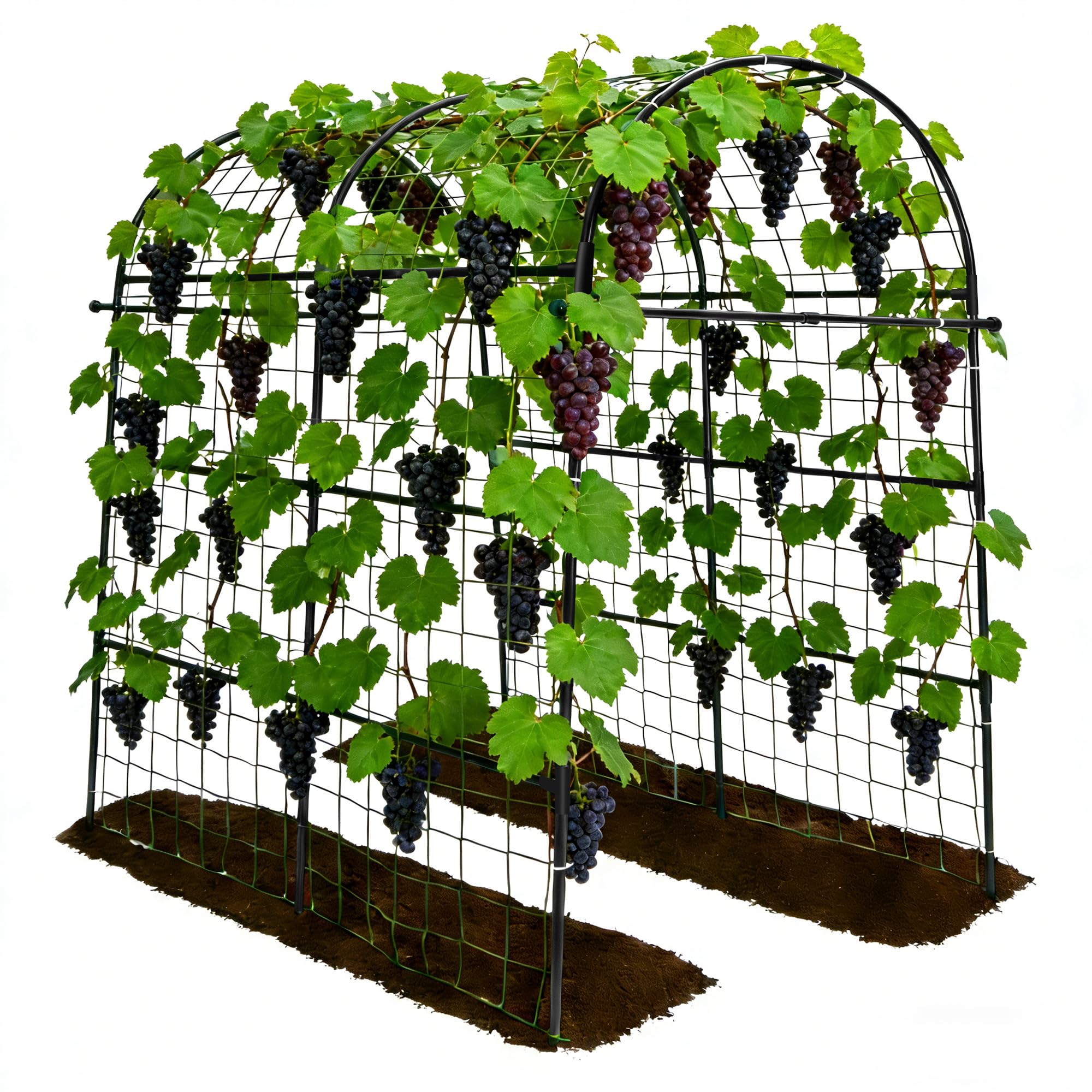
A walk-through tunnel that turns your melon patch into an archway you can harvest under.
At 83 inches high and 71 inches wide (with a 43-inch depth), this is the largest structure in this lineup — a U-shaped arch that gives you room to stand and tend vines on both sides. The dual-reinforced design uses thickened steel tubes plus iron buckle connections, which dramatically boosts load-bearing for heavy melons and pumpkins compared to single-joint arch frames. The galvanized steel pipes have a PE coating that protects against corrosion and prevents the metal from getting hot enough to burn vines in direct sun.
Owners mention it is “super sturdy” and provides “great support to my plants,” with one reviewer noting it took about 15 minutes to assemble. At 14.6 pounds, it is not the heaviest pick here; the HIRALIY arch is listed at 7.63 kilograms (16.8 pounds). The semicircular shape optimizes airflow underneath, which reduces mildew on melon leaves. Reviewers also mention the instructions for the netting part are not very clear, though the frame itself goes together easily.
If you have the garden space and want an arch that doubles as a garden feature while supporting heavy melons, this arch is the top choice. The downsize is that at 71 inches wide, it takes up considerable ground space and may overwhelm a small raised bed.
High-capacity rig: The reinforced steel tubes and iron buckle connections handle heavy melon loads reliably — one buyer mentioned it “works great” and “should last longer than a wooden one.”
Assembly note: Allow about 20 minutes with basic tools; the netting instructions are sparse, but the frame itself is straightforward per multiple reviews.
Best for: gardeners with a spacious plot who want a walk-through tunnel that supports heavy melons, pumpkins, and vining flowers for seasons to come.
Not ideal if: you are limited to narrow raised beds — this 71-inch width needs open ground or a very wide bed.
3. HIRALIY Garden Arch Trellis — 68″ W x 76″ H
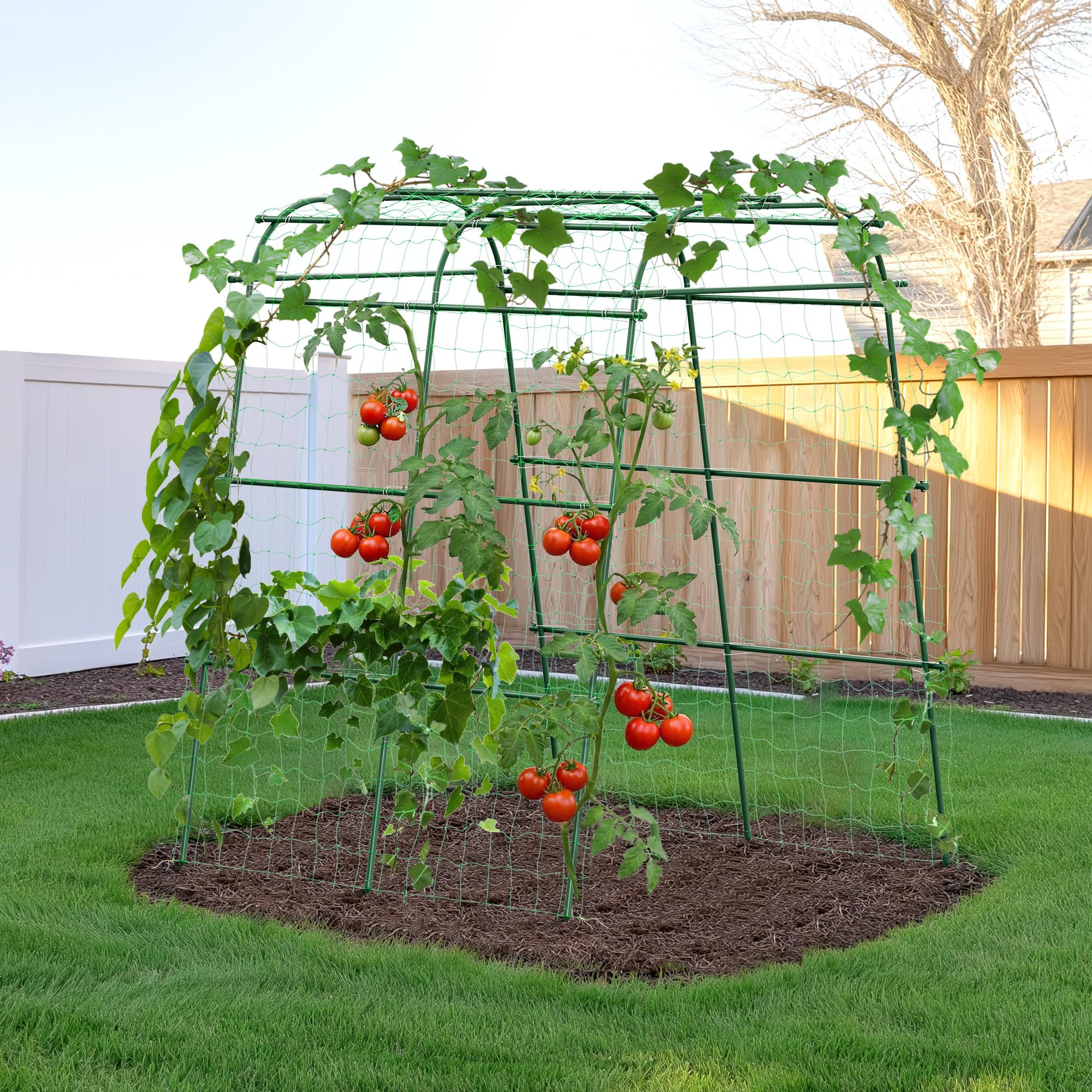
The melon arch with 20mm steel tubes that stand up to storm winds and heavy fruit.
Standard trellises use 11mm garden stakes, but the HIRALIY arch uses 20mm (0.79 inch) thick steel tubes — nearly double the diameter — so it resists bending under the weight of full-sized melons. The walk-through arch measures 68 inches wide by 76 inches high (63 inches deep), giving you enough clearance for a tall gardener to walk through. It uses metal inserts and sturdy sure-clips for all joints, creating a metal-to-metal lock that keeps the structure stable even in heavy wind.
It comes with nylon garden netting and a pair of gardening gloves for setup. Customers note that “withstood storms” and that a “6’3″ husband can stand inside” the arch. One owner reported the clips are tricky but workable, and the metal inserts can feel loose and pull apart if not fully seated — make sure you push them in until you hear the click. The same buyer mentioned the unit has a pointed top that looks like an inverted V rather than the arched photo, so check that detail if looks matter. At 7.63 kilograms (16.8 pounds) versus the Garden Arch Trellis at 14.6 pounds, it has a solid planted stance.
If you want a heavy-duty arch with thickened tubes that handle melons, cucumbers, and cantaloupe through gusty weather, this arch is a smart buy. The trade-off is that the netting snags during installation, and some joint connectors are loose until fully seated.
Built to last
- 20mm steel tubes (0.79″) are nearly twice as thick as standard 11mm stakes
- Withstood storms per buyer reports — stable in wind
- Includes nylon netting and gardening gloves for setup
Assembly quirks
- Mesh net snags during installation per multiple reviews
- Clips and metal inserts can be loose until fully seated
- Pointed top differs from the rounded arch in product photos
Reach for this if: you want a storm-proof arch with thickest-in-class tubes that supports heavy melons and lets you walk underneath for easy harvesting.
Look elsewhere if: a clean rounded arch look is important — this one has an inverted V top that may not match the product imagery.
4. Yotoworth A-Frame Trellis — 31.5″ W x 70.8″ H
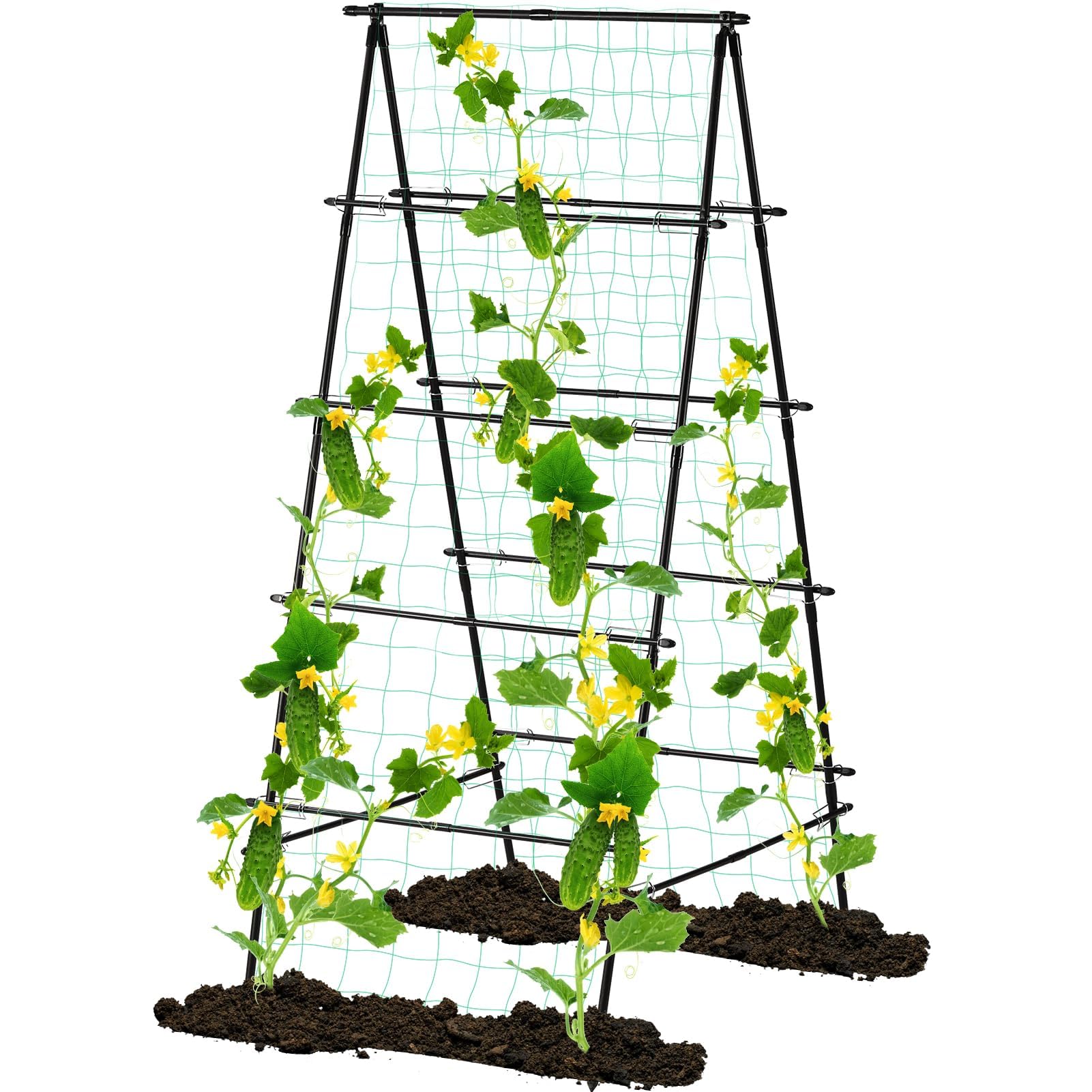
The budget-friendly A-frame that one grower loaded with 30+ watermelons — and it held.
A buyer posted a video showing this 31.5-inch wide by 70.8-inch tall A-frame supporting “30+ watermelons in a tiny area” with “no problem at all.” That real-world test makes the Yotoworth a credible option for melon growers on a budget. The unique A-frame lets you grow vines on both sides simultaneously, maximizing a small footprint. It uses metal pipes with a PE coating (a plastic layer) that resists rust and prevents plant burn on hot days.
Assembly requires no tools — just clip the sections together and press the pointed bottom into the soil. Most reviews praise the ease of setup: “took me about 20 minutes to assemble.” But one buyer gave it 1 star, calling it “poorly constructed” with unstable connections, and another noted it came with plastic bread ties instead of proper zip ties. That inconsistency suggests quality control varies unit to unit. At 2.7 kilograms (about 6 pounds), it is significantly lighter than the 3.73-kg Heavy Duty A-frame, which makes it easy to move but less planted in heavy wind.
This Yotoworth A-frame is a solid budget entry for melon growers who want to try vertical growing without a big investment. The catch is that connection quality can be hit-or-miss — inspect it carefully during assembly and use the included clips as directed.
Real-world proof: One buyer shared a video of 30+ watermelons held on this trellis — a strong endorsement for a budget A-frame.
Inconsistent build: While most reviews praise easy assembly, a small number report unstable joints and cheap tie quality — check your unit before loading it with fruit.
Best for: first-time melon growers who want to test vertical growing with a low upfront cost and a compact A-frame that fits small spaces.
Not for: gardeners who need a trellis that stands up to strong winds without wobbling — the light weight and variable joint quality make it less reliable in exposed spots.
5. Toriexon Cucumber Trellis 2-Pack — 48″ L x 16″ W
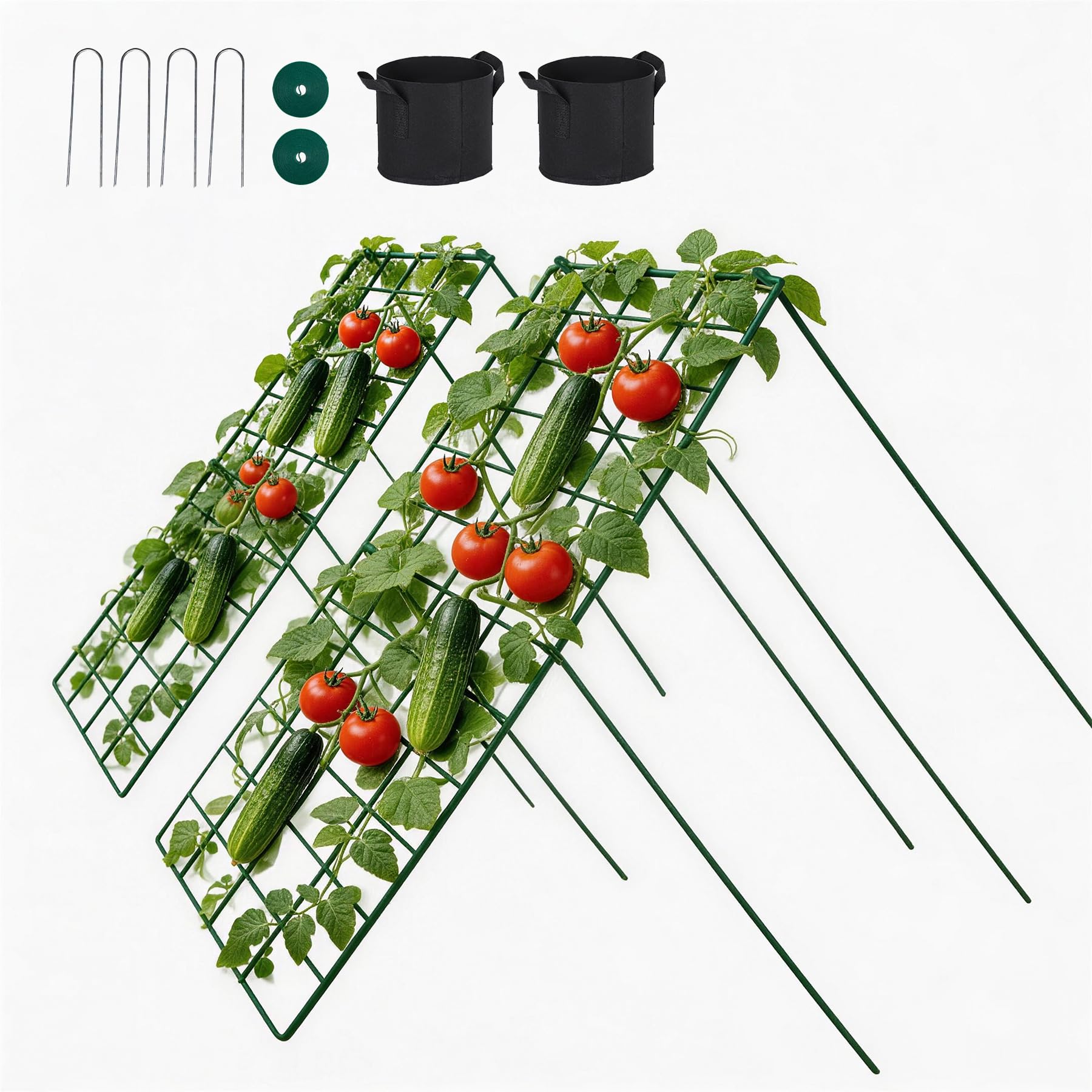
The compact two-pack that grew melons in Oregon weather for two years with zero rust.
These rectangular trellises measure 16.73 inches wide by 49.61 inches tall, versus the 71-inch-wide Garden Arch, making them ideal for narrow raised beds or fitting between existing plants. Each unit can be used as a single 48-inch panel or split into smaller sections. The powder-coated steel finish resists rust, and buyers confirm that “after 2 years in Oregon weather, no rust, fading, or chipping” — a solid endorsement for wet climates.
At this price point you get two trellises plus extras like plant bags and binding ropes. Assembly is simple: pull the legs out, lock them with U-stakes, and you are done. Reviewers point out they are “sturdy” and “real impressed with product” for the cost. However, the height (49.61 inches) is noticeably shorter than the 70.8-inch Yotoworth A-frame, so vigorous melon vines may outgrow the top before the season ends. The 16.73-inch width also means each trellis supports a narrower planting strip than the 31.5-inch Yotoworth.
If you are covering multiple narrow raised beds on a budget, this 2-pack gives you two trellises for roughly the same cost as one premium A-frame. The limitation is height — tall melon varieties may need a taller structure to reach full maturity.
Why it stands out
- Two trellises in one pack — covers more ground than a single unit
- No rust, fading, or chipping after two years in Oregon rain per buyer reports
- Foldable design splits into multiple configurations
Size check
- Short at 49.61 inches — vigorous melon vines may outgrow the frame
- Narrow at 16.73 inches — each trellis supports a limited planting width
- Not as heavy-duty as the A-frame options for large melons
Reach for this if: you have multiple narrow raised beds and want two durable, rust-proof trellises for the price of one premium unit — ideal for small melons and cucumbers.
Look elsewhere if: you grow large melon varieties that need a taller support — the 49.61-inch height and narrow width may limit fruit size and vine spread.
Understanding the Specs
A-Frame vs Arch Design
An A-frame uses two angled panels that brace each other, creating a stable triangular base that resists tipping under heavy loads — ideal for raised beds and small spaces. An arch (tunnel) provides a walk-through passage and more growing surface on both sides, but its top joint must be strong enough to support hanging fruit without sagging. For melons, A-frames generally offer better stability per square foot of footprint.
Grid Spacing (3.15″ vs 6″)
Grid openings determine how well the trellis supports individual fruits. A dense grid (around 3 to 4 inches) gives small to medium melons a resting spot between the wires, keeping them off the ground and reducing rot. A wide grid (6 inches or more) lets melons dangle freely, which can stress stems and cause fruit to drop. Melon-friendly trellises like the Heavy Duty A-frame use 3.15 x 3.94 inch grids for this reason.
Tube Thickness and Material
The outer tube diameter directly affects how much weight the trellis carries before bending. Standard trellises use 11mm tubes, while heavy-duty models like the HIRALIY arch use 20mm tubes — nearly double the thickness. Powder-coated steel resists rust better than bare metal, and PE-coated steel adds a protective layer that also prevents the metal from heating up and burning plant stems on hot afternoons.
Height and Width for Melons
Melon vines can grow 6 to 8 feet long, so a trellis at least 50 inches tall gives them room to climb and fruit at eye level. Wider trellises (31 inches or more) let you plant multiple melon vines side by side, while narrow models (16 inches) fit between existing plants. The trade-off is that a taller, wider structure needs deeper anchoring or heavier materials to stay upright in wind.
FAQ
Will a standard cucumber trellis hold melons?
How tall should a melon trellis be?
Can I grow melons on an A-frame trellis?
What is the difference between an arch and an A-frame for melons?
How do I prevent melons from falling off the trellis?
Will a plastic-coated trellis burn my melon vines?
How much does a heavy-duty melon trellis weigh?
Can I use a melon trellis for other vegetables?
How long does a melon trellis last outdoors?
What is the best trellis for small raised beds?
Final Thoughts: The Verdict
For the majority of shoppers, the best trellis for melons winner is the Heavy Duty 50″x17″ Adjustable A-Frame because its adjustable height, dense steel grids, and forged hinge handle heavy melons from seedling through harvest without sagging. If you want a walk-through arch with 20mm tubes that withstand storms, grab the HIRALIY Garden Arch. And for a budget 2-pack that fits narrow raised beds and already proven rust-free after two years, the Toriexon 2-Pack is a solid entry-level choice.
How We Picked
We do not accept paid placement, and we did not hands-on test every unit. Instead, we match each pick to a real buyer and use-case by comparing the manufacturers’ published specifications against the patterns in verified customer reviews — so you get each pick’s real strengths and trade-offs instead of marketing copy.
Sources & Methodology
Specifications: manufacturer listings and product documentation. Review insights: verified customer reviews, as of July 2026. Pricing: not shown on this page (it changes often); check the current price via the retailer link.
As an Amazon Associate, Lawn Gear Lab earns from qualifying purchases. This does not affect which products we feature.