
Specs are compiled from manufacturer listings and verified buyer reviews and can change over time — please confirm the key details on the product page before buying.
Snake plants (also known as Sansevieria) are famously tough to kill — unless you drown them in the wrong soil. The single fastest way to send a snake plant to an early grave is waterlogged, dense potting mix that suffocates its roots. The fix is simple: fast-draining, airy soil that lets excess moisture escape within seconds, not hours.
I’m Rikta — the founder and writer behind Lawn Gear Lab. This guide is built by comparing the manufacturers’ published specifications and the patterns across verified customer reviews, so you get each pick’s real strengths and trade-offs instead of marketing spin.
Whether you’re repotting a beloved Laurentii or a newer Cylindrica, choosing the right soil for snake plant means prioritizing drainage, low organic matter, and a loose texture that stops root rot before it starts.
Quick Picks
- Perfect Plants Organic Snake Plant Soil in 8qt. Bag — Best Overall
- Hoffman 10404 Organic Cactus and Succulent Soil Mix, 4 Quarts — Budget Champion
- Perfect Plants Organic Snake Plant Soil in 4qt. Bag — Quality Control
- Rosy Soil Cactus & Succulent Potting Mix, 4 Quarts — Premium Mix
- Jessi Mae Potting Soil – 4-Quart Bag, Perlite — Organic Choice
- Spike & Bloom High Drainage Cactus Soil Potting Mix, 8 Pounds — Gritty Specialist
How To Choose The Best Soil For Snake Plant
Snake plant roots are thick, fleshy rhizomes that store water — they rot quickly if they sit in moisture. The soil you choose must drain fast and dry out between waterings. Here are the three things to check on every bag.
Drainage Speed Is Everything
Look for ingredients like perlite, coarse sand, pine bark chips, or coconut coir. These create pockets of air that let water flow through instead of pooling. A soil that mentions “fast-draining” or “well-draining” on the bag is on the right track. Avoid anything labeled “moisture-retaining” or “water-holding.”
Low Organic Matter
Snake plants evolved in rocky, arid environments. They do not need rich, compost-heavy soil. Too much organic matter — like peat moss, manure, or dense compost — holds water and breeds fungus gnats. A lean, chunky mix with sand or grit is closer to what they naturally grow in.
pH Balance
Snake plants prefer soil that is slightly acidic to neutral, typically in the 5.5 to 7.0 range. Most quality cactus or succulent blends are pH-balanced for this range. If the bag does not mention pH, it is usually fine, but a soil that states a specific pH like 6.5 gives you an extra layer of confidence.
Quick Comparison
On smaller screens, swipe sideways to see the full table.
| Model | Best For | Volume | Base Ingredient | Key Additive | Amazon |
|---|---|---|---|---|---|
| Perfect Plants 8qt | Best Overall | 8 Quarts | Coco Coir | Perlite & Sand | Amazon |
| Hoffman 10404 | Budget Champion | 4 Quarts | Peat Moss & Compost | Perlite & Sand | Amazon |
| Perfect Plants 4qt | Quality Control | 4 Quarts | Coco Coir | Pine Bark & Perlite | Amazon |
| Jessi Mae | Organic Choice | 4 Quarts | Organic Materials | Perlite | Amazon |
| Rosy Soil | Premium Mix | 4 Quarts | Peat-Free Blend | Worm Castings | Amazon |
| Spike & Bloom | Gritty Specialist | 8 Liters (≈8.5 qt) | Clays & Sands | Mycorrhizal Fungi | Amazon |
In‑Depth Reviews
1. Perfect Plants Organic Snake Plant Soil in 8qt. Bag
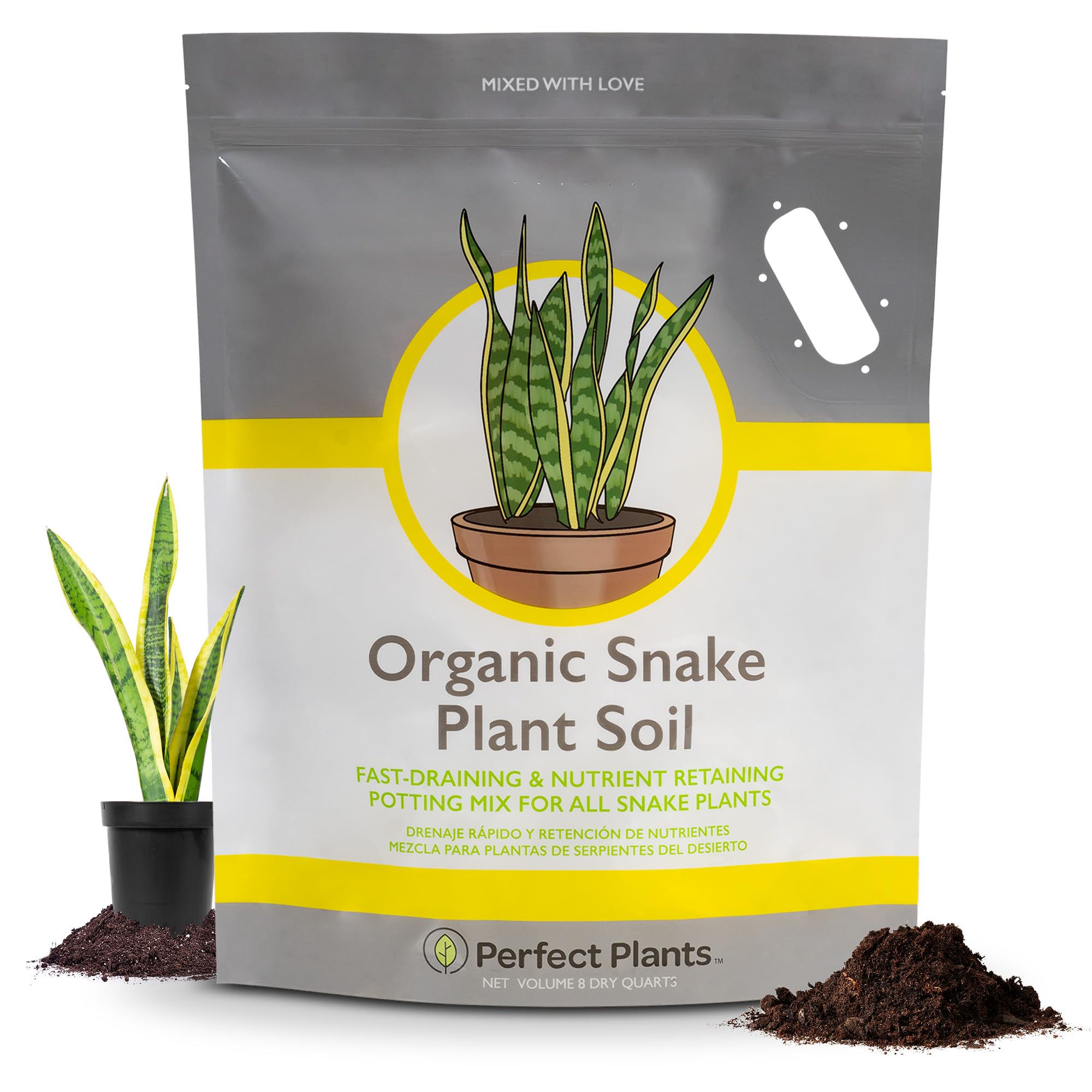
The doubled-up bag that saves you from buying again next week.
If you have more than one snake plant — or even one large pot — you need volume. This bag holds 8 Quarts, versus 4 Quarts for the Hoffman and Jessi Mae options. You get that extra quantity without sacrificing quality: the mix uses coconut coir, pine bark chips, perlite, and sand, all ingredients that promote fast drainage. Buyers report their snake plants “thrive in it” and that the bag has consistent texture from top to bottom.
Unlike standard potting soil that clumps and holds moisture, this blend is all-natural and contains no slow-release fertilizer — so you control feeding. It works for all snake plant varieties including Sansevieria trifasciata, Laurentii, Black Coral, and Cylindrica. The bag is heavy-duty and resealable, which keeps the remaining soil fresh between uses.
One reviewer noted it is “great but not cost effective” for very large plants, meaning if you have a massive floor snake plant, you might still need to supplement with a cheaper bulk option. Still, for the balance of volume, drainage ingredients, and plant response, this is the one to get.
Volume advantage: At a full 8 Quarts, this gives you more soil than the 4-quart Hoffman bag. If you have a collection, you buy this once.
Honest trade-off: If you are only repotting a single small snake plant, the 4-quart version of this same soil or the Jessi Mae bag might leave you with less leftover to store.
Reach for this if: You own multiple snake plants or a large pot and want a single bag that covers you. The coco coir base drains fast and the resealable bag keeps the rest fresh.
Look elsewhere if: You only need a tiny amount for a 4-inch nursery pot — a smaller bag wastes less space and money.
2. Hoffman 10404 Organic Cactus and Succulent Soil Mix, 4 Quarts

The affordable mix that kicked fungus gnats to the curb.
This is the soil that the community turns to when everything else has failed. One reviewer called it the “saving succulent mix,” reporting that it “eliminated persistent fungus gnats and root rot in snake plants after other mixes failed.” That is a strong claim, but the formula backs it up: it is pH balanced, formulated for both jungle and desert cacti, and contains perlite and sand for drainage. It comes in a 4-quart bag, weighing about 16 ounces.
Read the reviews and you see a pattern: people who repotted snake plants and succulents into this soil saw new growth and healthier roots. The mix is “light and fluffy,” according to one review, and much lighter than standard cactus soil. It is mostly compost and peat moss, so some buyers add extra perlite for snake plants they want to keep on the drier side.
At 4 Quarts it sits below the 8-Quart Perfect Plants bag. That makes it a better fit for a single pot or a small collection. One reviewer received a bag that leaked in transit, so inspect the packaging when it arrives. If you want a proven, affordable soil that does exactly one thing well — drain fast and keep pests away — this is the one.
What works
- Proven to stop root rot and fungus gnats
- Light, airy texture that drains fast
- pH balanced for cactus and snake plants
What to watch
- Only 4 Quarts — you might need two bags for a large pot
- One buyer mentioned a bag leak in shipment
Who it works for: The budget-conscious grower who has fought with root rot or gnats and wants a proven fix. The science is simple: low dead organic matter + good drainage = healthy snake plants.
Who might pass: If you need a bigger bag to repot several plants at once, the 4-quart volume forces you to buy two bags, which pushes you toward the Perfect Plants 8qt.
3. Perfect Plants Organic Snake Plant Soil in 4qt. Bag

For the buyer who wants the same great blend in a smaller, more affordable bag.
This is the 4-quart version of the Best Overall soil above, using the exact same formula. The ingredients are identical: coconut coir, pine bark chips, perlite, and sand. It is specially blended for all snake plant types including Sansevieria trifasciata, Laurentii, Black Coral, and Cylindrica. Buyers call it “rich” and note that it has “no funky smell,” which is a small but real relief after opening some organic blends.
The mix drains well and owners mention their snake plants are “growing and loving the soil.” It is made from all-natural materials with no slow-release fertilizer, so you control when to feed. The bag is resealable, which helps keep the contents fresh. One reviewer who has four snake plants noted it is “not cost effective” for large repots, which is where the 8-quart version becomes the better choice.
Compared directly to the Hoffman, this bag uses coco coir instead of peat moss as the base. Coco coir typically holds less water and resists compaction longer than peat. If you want a smaller purchase that still gets you the Perfect Plants formula — and you do not need the full 8 quarts — this is the logical midpoint.
Small-bag value: This is the same proven coco-coir blend as the 8-quart bag but at a lower upfront cost. If you only have one or two smaller snake plants, you get the identical performance without paying for extras.
One catch: If a propagation spree hits and you suddenly have five more snake plants, you will wish you had the bigger bag. There is no cost savings per quart compared to buying the 8-quart version.
Ideal for: Snake plant collectors who want a high-quality, species-specific mix but do not need bulk. The coco coir base and pine bark provide the aeration snake plants need.
Skip if: You plan to repot several large pots — the 8-quart version is a better deal per quart and saves a second purchase.
4. Rosy Soil Cactus & Succulent Potting Mix, 4 Quarts
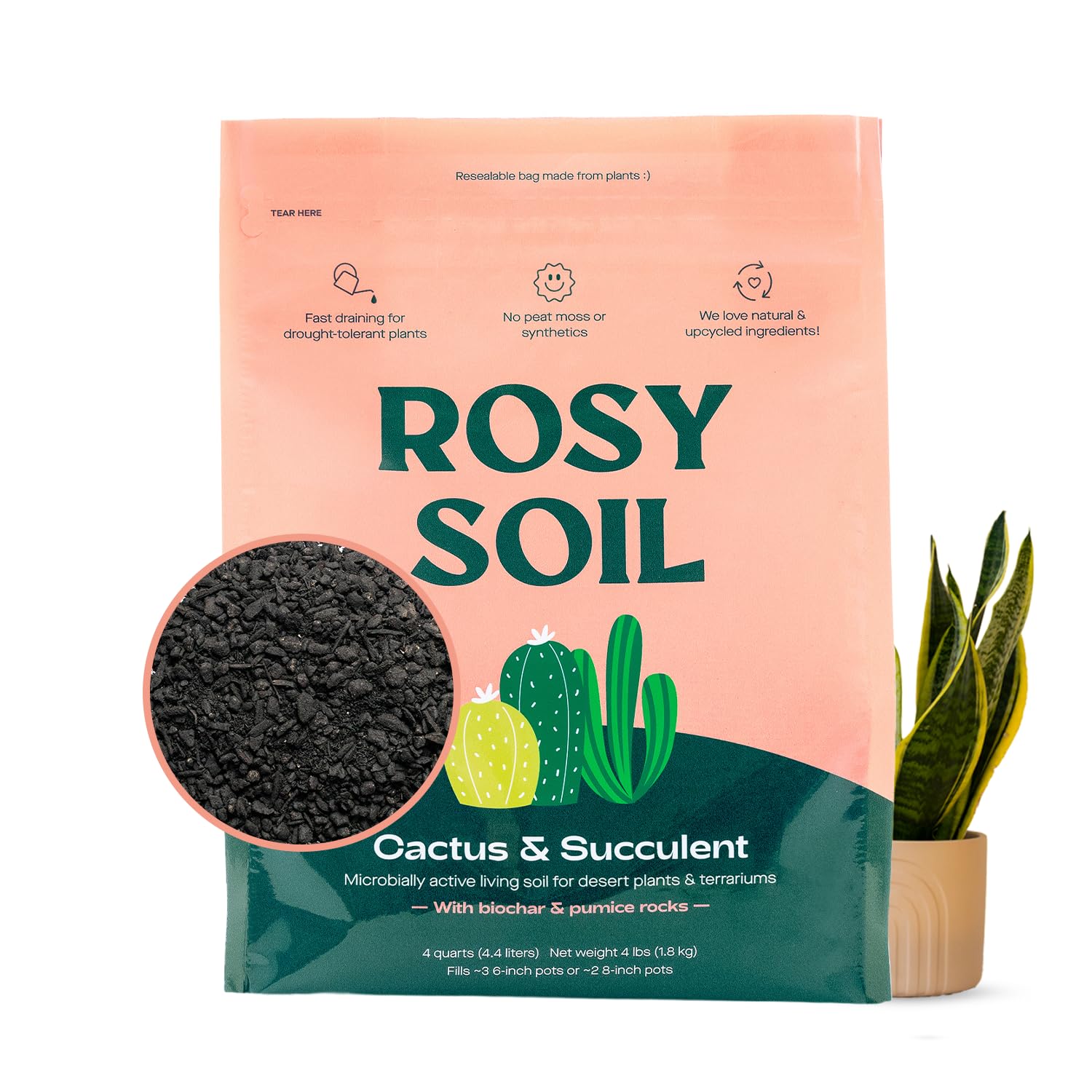
Living soil packed with microbes and zero peat — your snake plant’s roots will thank you.
Rosy Soil takes a different approach. Instead of just mixing perlite and sand, they add beneficial fungi, microorganisms, and organic worm castings to create what they call a “living soil” ecosystem. The goal is to feed roots naturally without synthetic fertilizers. It is peat-free, which helps it drain more freely and makes it less hospitable to the common problems that come with damp, heavy mixes. One owner reported that succulents replanted in this soil were “healthy after one month.”
The chunky texture stays loose and airy, so water moves through fast. It fits aloe vera, jade, Christmas cactus, desert rose, lithops, and snake plants all in a single 4-quart bag. The bag is resealable and plastic-neutral. Another reviewer noted that the soil had “no bugs seen in 6+ bags,” which is reassuring for indoor use. Some buyers add extra perlite or bonsai soil to tweak it for older, more sensitive plants.
One thing to note: the bag itself is 4 Quarts and weighs 4 Pounds. Some reviewers mentioned that the resealable strip is hard to close, which could dry the soil over time if you do not transfer it to a separate container. If you want a premium, peat-free soil with a built-in microbial boost and you are okay resealing the bag carefully, this is a strong option.
What stands out
- Pre-loaded with beneficial microbes and worm castings
- Peat-free formula drains better than peat-based soils
- No bugs reported across multiple bags
What to know
- Small bag (4 quarts) — only fills 2-3 pots according to the brand
- Resealable strip is tricky to close; some buyers use their own ziplock
Who should buy: Indoor gardeners who want the most natural, peat-free option and appreciate a soil that feeds itself. The living-soil approach is a good match for snake plants that dislike synthetic fertilizers.
Who might skip: If you only trust a simple sand-and-perlite blend and do not want to pay extra for worm castings and microbes, a simpler mix like the Hoffman gives you similar drainage for less cost.
5. Jessi Mae Potting Soil – 4-Quart Bag, Perlite

Hand-mixed in small batches, it smells earthy for a day then delivers.
Jessi Mae sells a slightly acidic organic potting soil that is mixed in small batches. The texture is light and airy, with perlite added to improve water movement and reduce the risk of root rot. It is designed for indoor plants including peace lilies, parlor palms, snake plants, and ivy. One buyer who used it for a peace lily reported the plant was “giving a new bud after a few weeks.” The same buyer noted the bag was “smaller than expected but the product is great.”
Several reviews mention that the soil has a noticeable organic smell when you first open the bag — one customer observed “it definitely SMELLS organic” — but that the smell goes away in a day or two. If you are sensitive to earthy odors, you might want to let the bag sit open for a few hours before using it. The mix is made in the USA and packaged in food-grade materials.
For snake plants specifically, the slightly acidic pH and well-drained structure are the right combination. The bag is 4 Quarts (128 fluid ounces), which covers one or two medium pots. If you are a plant newbie, this takes the guesswork out of mixing — it is ready to use right out of the bag. The only real downside is the bag size, which is on the smaller side for the price.
What makes it different: The small-batch mixing means every bag is hand-checked for quality. The slightly acidic pH (around 6.5) is ideal for snake plants, which prefer a slightly acidic environment.
The one thing to prepare for: The organic smell will be strong for the first day or two after repotting. It is harmless and fades, but do not be alarmed when you open the bag.
Best for: Plant owners who value organic, small-batch mixing and want a ready-to-use, slightly acidic soil. The light texture and perlite content are well-suited for snake plants that hate standing water.
Not ideal for: Large repot projects — the 4-quart bag goes fast, and there is no larger bag option from this brand.
6. Spike & Bloom High Drainage Cactus Soil Potting Mix, 8 Pounds

The grittiest mix in the list, built for snake plants that demand absolute dryness.
Spike & Bloom calls this the “Desert Blend” and it is formulated with clays, sands, and minimal organic matter to create a gritty, loose texture that drains water almost instantly. The pH is set to 6.5, which is slightly acidic and exactly what snake plants want. It includes mycorrhizal fungi — a beneficial fungus that forms a network around roots to help them absorb water and nutrients more efficiently. One user highlighted it has “perfect drainage for red fishhook barrel cactus” and that water runs through quickly.
The bag holds 8 Liters (roughly 8.5 quarts), and the Perfect Plants option holds 8 quarts. It weighs about 3.17 Kilograms (7 pounds). Buyers are enthusiastic: one called it the “bees knees of soil” and said it helps plants “grow like crazy.” Another noted it is excellent for smaller, exotic cacti that are prone to root rot, but cautioned that it is expensive for large cactus like saguaro. The same logic applies to snake plants — if you have a massive pot, this could get costly.
This is the specialist’s choice. It is the most draining soil in the lineup, with the most sand and clay content. If you have struggled with root rot in the past and want the mix that leaves the least room for error, this is your bag. The trade-off is that you may need to water slightly more often, because the soil holds very little moisture.
Why it excels
- Fastest drainage — essentially eliminates standing water
- Mycorrhizal fungi boost root health and bloom potential
- pH 6.5 is ideal for snake plants
Where it falls short
- Expensive for the volume compared to standard mixes
- Fine grit may not suit beginners expecting a traditional soil feel
Who needs this: Anyone who has lost snake plants to root rot and wants a near-failsafe draining mix. The mycorrhizal fungi add a root-health bonus that no other mix here offers.
skip it if: You are on a strict budget or repotting a very large floor plant — the cost per quart is the highest in this lineup.
Understanding the Specs
Volume (Quarts vs Liters)
Soil bags are measured in quarts in the US and liters internationally. A 4-quart bag and a 4-liter bag are not the same size, so always check the stated volume before you buy. An 8-quart bag gives you more soil than a 4-quart bag, which is important if you own multiple pots or a large floor snake plant. Always check the volume number on the bag, because two bags that look similar can still differ a lot in capacity.
Base Ingredient (Coco Coir vs Peat Moss)
Coco coir (made from coconut husks) holds less water and resists compaction longer than peat moss. It is also more sustainable. Peat moss holds more moisture and is slightly acidic, which some snake plants like — but it can become dense over time. For a snake plant, coco coir is the safer choice because it stays airy and drains faster.
FAQ
Can I use regular potting soil for a snake plant?
How often should I repot a snake plant?
What happens if I use soil that is too heavy for a snake plant?
Should I add extra perlite to snake plant soil?
What is the difference between cactus soil and snake plant soil?
Does snake plant soil need fertilizer mixed in?
Can I mix different brands of snake plant soil together?
What does it mean when a soil is labeled “pH balanced”?
How long does an opened bag of soil last?
Is it worth paying more for soil with mycorrhizal fungi?
Final Thoughts: The Verdict
If you want one dependable pick, the soil for snake plant winner is the Perfect Plants Organic Snake Plant Soil in 8qt. Bag because it offers 8 quarts while several other picks here offer 4 quarts, with a proven coco-coir-and-perlite blend that drains reliably and buyers consistently praise. If you want a budget-friendly mix that has saved plants from root rot, grab the Hoffman 10404. And for the buyer who needs the fastest-draining, grittiest option with a root-boosting fungal kick, the standout is the Spike & Bloom Desert Blend.
How We Picked
We do not accept paid placement, and we did not hands-on test every unit. Instead, we match each pick to a real buyer and use-case by comparing the manufacturers’ published specifications against the patterns in verified customer reviews — so you get each pick’s real strengths and trade-offs instead of marketing copy.
Sources & Methodology
Specifications: manufacturer listings and product documentation. Review insights: verified customer reviews, as of July 2026. Pricing: not shown on this page (it changes often); check the current price via the retailer link.
As an Amazon Associate, Lawn Gear Lab earns from qualifying purchases. This does not affect which products we feature.