
Specs are compiled from manufacturer listings and verified buyer reviews and can change over time — please confirm the key details on the product page before buying.
You grab a bag of plant food, scatter it around your tomatoes, and hope for the best. But the wrong mix can scorch leaves, stall flowers, or leave you with a bush that refuses to bloom. The trick is matching the nutrient numbers to what you are actually growing — whether that is prize roses, a vegetable patch, or shrubs that need steady feeding all season.
I’m Rikta — the founder and writer behind Lawn Gear Lab. This guide is built by comparing the manufacturers’ published specifications and the patterns across verified customer reviews, so you get each pick’s real strengths and trade-offs instead of marketing spin.
This breakdown covers liquid concentrates for fast results, slow-release granules for low-maintenance feeding, and organic options for natural gardeners. It helps you find the best fertilizer for outdoor plants that matches your garden without guesswork or wasted money.
Quick Picks
- Great Big Roses and Flowers Liquid Fertilizer Booster — Best Overall
- FoxFarm Happy Frog All Purpose Fertilizer — Top Performer
- Espoma Organic Plant-Tone 5-3-3 — Best Value
- Miracle-Gro LiquaFeed Bloom Booster Flower Food — Bloom Specialist
- Alaska Fish Fertilizer OMRI Listed 5-1-1 — Big Coverage
- Miracle-Gro Shake ‘n Feed All Purpose Plant Fertilizer — Easy Long-Feed
- Jobe’s Organics Granular All Purpose Fertilizer, 16 lbs — Bulk Organic
How To Choose The Best Fertilizer For Outdoor Plants
Picking a fertilizer is mostly about matching the N-P-K (nitrogen-phosphorus-potassium) numbers to what your plant needs right now. High nitrogen gives you lush green leaves. Phosphorus drives flowers and fruit. Potassium keeps roots strong and plants healthy. The wrong balance can give you a leafy bush with no blooms or a rose bush full of leaves only.
Granular vs. Liquid: How Fast Do You Want Results?
Granular fertilizers — like the FoxFarm Happy Frog or Jobe’s Organics — release nutrients slowly over weeks or months. You apply fewer times and risk burning plants less if you follow directions. Liquid fertilizers, such as the Great Big Roses Booster or the Alaska Fish Fertilizer, work fast because the nutrients reach roots immediately. But you mix and apply them more often.
Organic vs. Synthetic: What Kind of Gardener Are You?
Organic fertilizers (OMRI-listed options like Espoma Plant-Tone, Alaska Fish, and Jobe’s Organics) come from plant or animal matter. They feed soil microbes along with your plants. They tend to be gentler and cause less chemical burn. Synthetic options like the Miracle-Gro LiquaFeed deliver precise, fast-acting nutrient hits — great for giving a tired plant a quick boost — but they do not build long-term soil health.
Quick Comparison
On smaller screens, swipe sideways to see the full table.
| Model | Best For | Type | N-P-K Ratio | Weight / Volume | Amazon |
|---|---|---|---|---|---|
| Great Big Roses and Flowers Liquid Booster | Bloom activation | Liquid | N/A (70 minerals) | 32 fl oz | Amazon |
| FoxFarm Happy Frog All Purpose | All-around gentle feeding | Granule | N/A (microbes) | 4 lb | Amazon |
| Espoma Organic Plant-Tone 5-3-3 | Reliable organic maintenance | Granule | 5-3-3 | 4 lb (pack of 2) | Amazon |
| Miracle-Gro LiquaFeed Bloom Booster | Quick flower feeding | Liquid | 1:0 | 16 fl oz | Amazon |
| Alaska Fish Fertilizer 5-1-1 | Organic leafy growth | Liquid | 5-1-1 | 115 fl oz | Amazon |
| Miracle-Gro Shake ‘n Feed All Purpose | Long-lasting convenience | Powder | 12-4-8 | 1 lb | Amazon |
| Jobe’s Organics All Purpose 4-4-4 | Big coverage, big value | Granule | 4-4-4 | 16 lb | Amazon |
In‑Depth Reviews
1. Great Big Roses and Flowers Liquid Fertilizer Booster
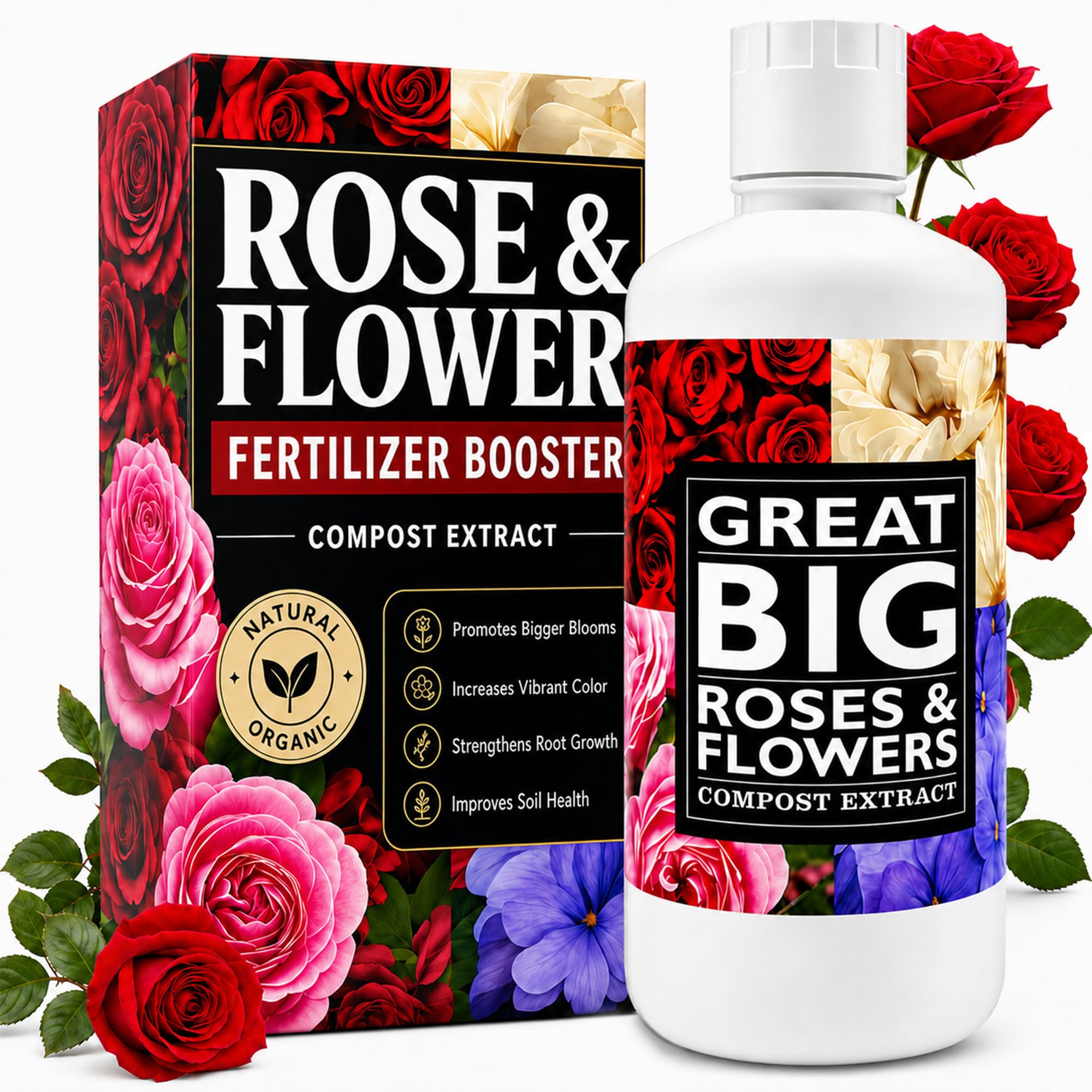
The 32‑ounce liquid with over 70 chelated minerals that buyers report revived rose bushes that had not bloomed in years.
You want fast, visible results on flowers that refuse to cooperate. This liquid concentrate delivers humic acids, seaweed, and over 70 chelated trace minerals (minerals already bonded to amino acids so roots absorb them easily) straight to the root zone. Each 32 fluid ounce bottle makes about 8 gallons of feed. One reviewer noted it “produced tons of buds and early blooms after harsh winter,” proof of its soil-activating power.
It works alongside other organic fertilizers (fish emulsion, bone meal, worm castings) rather than replacing them. It is a superb sidekick to boost your existing routine. The liquid volume here is a full 32 fluid ounces compared to the 16 fluid ounces in the Miracle-Gro LiquaFeed, giving you double the concentrate for a similar price. The main drawback buyers mention is the jug design — the wide mouth makes measuring messy, and at this price point, every spill stings. This pick suits gardeners who want the most dramatic flower response and do not mind paying a premium for concentrated organic minerals. You should skip it if you want a grab-and-grow granular that needs no mixing.
What Works
- Contains over 70 trace minerals plus humic acid and seaweed
- Owners mention revived blooms within weeks on tired plants
- 32 fl oz makes ~30 gallons of mixed fertilizer (8 applications)
The Trade-off
- Jug’s wide mouth makes spill-free measuring tricky
- Price per bottle feels steep, though one bottle covers a full season
Our pick if: You want the fastest, most dramatic flower response and don’t mind paying a premium for concentrated organic minerals.
Look elsewhere if: You want a grab-and-grow granular that needs no mixing.
2. FoxFarm Happy Frog All Purpose Fertilizer

The 4‑pound slow-release granule that customers note revived yellow tomato and zucchini plants within a week.
You want a gentle feed that nurtures plants over time. This 4-pound bag of granules is packed with beneficial soil microbes and mycorrhizal fungi (root-friendly fungi that help roots absorb more water and nutrients). Unlike the liquid boosters you mix every few weeks, Happy Frog is a slow-release feed — perfect for container gardens, raised beds, and ornamentals. One buyer mentioned it “revived yellow tomato and zucchini plants within a week,” and a monthly application led to their best garden ever.
It is OMRI (Organic Materials Review Institute) listed, meaning it has been approved for organic gardening, so you can use it safely on edible crops. The main catch is the smell — reviewers consistently note the strong manure odor, which can linger for a couple of days after watering. This is noticeable in contained spaces like greenhouses or indoor setups. It is an effective dry fertilizer, but you will want to apply it outdoors and let it air out. This pick works well for gardeners who want a gentle, organic slow-release feed for a mixed garden and do not mind the earthy smell. pass on it if you need a huge bag for extensive lawns or a completely odorless option.
Why Gardeners Love It
- OMRI listed for organic use on vegetables and ornamentals
- Contains active soil microbes and mycorrhizal fungi
- Gentle feeding — low risk of burning when used as directed
The Downside
- Strong manure smell that lasts for days after watering
- Small bag (4 lb) may not cover large garden beds
Reach for this if: You want a gentle, organic slow-release feed for a mixed garden and don’t mind the earthy smell.
it’s not for you if: You need a huge bag for extensive lawns or a completely odorless option.
3. Espoma Organic Plant-Tone 5-3-3

The 8‑pound total (two 4‑pound bags) of 5-3-3 slow-release granules from a brand that has been making organic fertilizers since 1929.
You want a reliable, all-purpose organic feed with minimal effort. Espoma’s Plant-Tone 5-3-3 blend includes their Bio-tone formula (a proprietary mix of beneficial microbes) plus 5% calcium to strengthen cell walls. It covers flowers, vegetables, trees, and shrubs. One loyal buyer says, “I use this twice a year and it works like a champ. What a difference this makes with my landscaping and foliage.”
Its 5-3-3 N-P-K ratio leans slightly higher on nitrogen than the balanced 4-4-4 of Jobe’s Organics, making it a touch better for green growth early in the season. Simply apply around the drip line (the area under the outermost leaves) of each plant and water thoroughly — no mixing required. The only downside is, like many organic granulars, it has a strong chicken-manure smell, so stand upwind when spreading. This pick suits organic gardeners who want a reliable feed they can apply with a sprinkle-and-water routine. Consider something else if you need a liquid for fast absorption or a completely odor-free application.
What Stands Out
- Trusted brand since 1929 with Bio-tone formula for root health
- Approved for organic gardening with no sludges or toxic ingredients
- Works on annuals, perennials, vegetables, trees, and shrubs
The Catch
- Strong organic smell (like chicken manure) when applying
- 4 lb bags are compact; a 2-pack is still modest for large yards
Best for: Organic gardeners who want a reliable, all-purpose feed they can apply with a simple sprinkle-and-water routine.
Consider something else if: You need a liquid for fast absorption or a completely odor-free application.
4. Miracle-Gro LiquaFeed Bloom Booster Flower Food

The 16‑ounce liquid that needs just two squeezes per pint of water and costs less than the Great Big Roses Booster.
You grow flowering plants in containers or beds and want a straightforward liquid feed that delivers visible results fast. The LiquaFeed Bloom Booster comes in a 16 fluid ounce bottle designed specifically for flowers. The mixing ratio is simple — two squirts in a pint bottle or two big squirts in a quart bottle. One reviewer says, “We use this plant food 2-3 times a week to keep our flowers blooming and help promote healthy growth.”
While the Great Big Roses booster at 32 fluid ounces gives you double the concentrate, the LiquaFeed is significantly more wallet-friendly upfront and still delivers prolific blooms. Reviewers point out that the brand claims it is safe for bees and birds when used as directed. The main trade-off is that it is a synthetic quick-feed, not a soil builder, so you will need to apply it frequently (every 7-14 days) throughout the growing season. This pick is ideal for container flowers on a patio where easy, frequent feeding is your routine. Pass if you want an organic soil conditioner or a larger concentrate to cover many plants.
Why It Works
- Super simple to mix — no measuring spoons, just squeeze the bottle
- Shoppers say bigger, more abundant blooms in a short time
- The brand claims it is safe for pollinators when used as directed
The Limitation
- Only 16 fluid ounces — less than half the volume of the Great Big roses booster
- Synthetic formula won’t build long-term soil health
Grab it for: Container flowers on a patio where easy, frequent feeding is your routine.
Pass if: You want an organic soil conditioner or a larger concentrate to cover many plants.
5. Alaska Fish Fertilizer OMRI Listed 5-1-1

The 115‑ounce fish-based liquid with a 5-1-1 N-P-K ratio that buyers report strengthens stems and reduces transplant shock on tomatoes.
You want lush leafy growth across a large garden. This liquid fertilizer has a 5-1-1 N-P-K ratio heavy on nitrogen. The huge 115 fluid ounce bottle is more than 3.5 times the size of the Great Big Roses 32-ounce bottle, giving you exceptional value for coverage.
The fishy smell is real and pungent during mixing, but it dissipates within a day after watering in. Owners mention stronger stems and faster growth on tomatoes, peppers, and cucumbers, and note that it reduces transplant shock for seedlings. Since it is low in phosphorus and potassium, you may need a separate bloom booster later in the season for flowering and fruiting. But for green growth, nothing in this price range delivers this much concentrate. This pick is perfect for leafy vegetables, herbs, and young transplants needing a nitrogen boost. It is not for heavy flowering or fruiting stages without a companion bloom fertilizer.
The Big Win
- Massive 115 fl oz bottle at a mid-range price — excellent value per ounce
- OMRI listed for certified organic gardening
- Gentle, natural nitrogen that won’t burn plants when diluted correctly
Be Aware
- Strong fish odor during mixing; lingers in enclosed spaces
- Low P and K means you’ll need another feed for blooms and fruit
Perfect for: Leafy vegetables, herbs, and young transplants needing a nitrogen boost throughout the season.
Not for: Heavy flowering or fruiting stages without a companion bloom fertilizer.
6. Miracle-Gro Shake ‘n Feed All Purpose Plant Fertilizer

The 1‑pound powder with a 12-4-8 N-P-K ratio that feeds for up to three months from a single shake.
You want to apply once and let the plant get fed gradually for months. This Shake ‘n Feed formula has a 12-4-8 N-P-K ratio, making it higher in nitrogen and potassium than balanced organics, targeting strong root development and vibrant foliage. It contains organic ingredients like kelp, earthworm castings, and bone meal, bridging the gap between purely synthetic and all-organic approaches.
It covers approximately 135 square feet per container. You simply shake the powder around the base of in-ground or container plants, then water in. Reviewers love the easy pour spout and the fact that no mixing or liquid measuring is needed. The trade-off is the small 1-pound package — it will not go far if you have a large vegetable garden, so you may need multiple boxes. Unlike the 16-pound Jobe’s bag, this is more of a convenient supplement than a bulk buy. This pick is ideal for busy gardeners who want a low-fuss, long-lasting feed for containers and small beds. Look elsewhere if you need an organic-only fertilizer or huge coverage for a large plot.
Why It Appeals
- Feeds for up to 3 months with a single application
- Contains organic ingredients (kelp, castings, bone meal)
- Easy pour spout for dry, mess-free application
Watch Out For
- Only 1 pound — relatively small coverage for large gardens
- Higher synthetic nutrient content than strictly organic options
Ideal for: Busy gardeners who want a low-fuss, long-lasting feed for containers and small beds.
Look elsewhere if: You need an organic-only fertilizer or huge coverage for a large plot.
7. Jobe’s Organics Granular All Purpose Fertilizer, 16 lbs

The 16‑pound bag of 4-4-4 granules that gives you four times the weight of any other granular in this guide for a modest price jump.
You have a lot of ground to cover — a large vegetable patch, many shrubs, or a lawn. The 16-pound bag of Jobe’s Organics provides four times the weight of any other granular in this guide. Its balanced 4-4-4 N-P-K ratio makes it a true all-purpose feed, supporting vegetables, flowers, shrubs, and trees without overdoing any single nutrient. It is OMRI listed for organic gardening by the USDA.
The application schedule is every 2-3 weeks during the growing season. The granules are friable and easy to spread with a hand spreader without creating a dust cloud. One owner reported that using it as a steep (1 cup fertilizer to 1 gallon of water left for 24 hours) created a liquid tea that caused flowers to open within 48 hours of feeding. The smell is less pungent than raw manure, but it is still organic — expect some earthy aroma. This pick works for gardeners with a large organic garden who want a single bag that handles everything from vegetables to shrubs. Think twice if you need a quick liquid feed or only have a few small containers.
The Advantages
- 16 pounds — far more coverage than any other granular in this list
- 4-4-4 balanced NPK plus OMRI listing for organic gardens
- Can be used dry as granules or steeped as a liquid tea
Consider This
- Requires re-application every 2-3 weeks during growing season
- Large bag can be cumbersome to store and handle
Go for this if: You have a large organic garden and want a single bag that handles everything from vegetables to shrubs.
Think twice if: You need a quick liquid feed or only have a few small containers.
Understanding the Specs
N-P-K Ratio
This is the three-number code on every fertilizer bag, standing for Nitrogen (first number), Phosphorus (second), and Potassium (third). A 5-3-3 blend means it has 5% nitrogen, 3% phosphorus, and 3% potassium. High nitrogen feeds leaves, high phosphorus drives blooms and fruit, and potassium supports root health and disease resistance. A balanced 4-4-4 is a safe bet for general feeding, while a 5-1-1 like the Alaska Fish Fertilizer is ideal for green growth.
Granular vs. Liquid
Granular fertilizers (like FoxFarm Happy Frog or Jobe’s Organics) are solid particles you sprinkle on the soil and water in. They release nutrients slowly over weeks, making them great for pre-season feeding or for busy gardeners. Liquid fertilizers (like the Great Big roses Booster or Alaska Fish) are concentrated liquids you dilute with water and apply directly. They deliver nutrients instantly to the roots, but need reapplication every 1-3 weeks to maintain results.
FAQ
How often should I fertilize outdoor plants?
What does N-P-K stand for on a fertilizer bag?
Can I use a rose fertilizer on vegetables?
What is the difference between slow-release and fast-release fertilizer?
How do I apply granular fertilizer to outdoor plants?
Why does organic fertilizer smell bad?
What does OMRI listed mean for a fertilizer?
Can I over-fertilize my outdoor plants?
What is the best fertilizer for flowering plants vs. leafy plants?
How much fertilizer should I use per plant?
Final Thoughts: The Verdict
For the majority of shoppers, the best fertilizer for outdoor plants winner is the Great Big Roses and Flowers Liquid Fertilizer Booster because of its class-leading ability to kick-start blooming with over 70 chelated minerals. If you want an organic granular that is simple to use all season, grab the Espoma Organic Plant-Tone 5-3-3. And for the biggest coverage at the best bulk value, the Jobe’s Organics Granular 4-4-4 in the 16-pound bag will feed your entire garden while staying affordable.
How We Picked
We do not accept paid placement, and we did not hands-on test every unit. Instead, we match each pick to a real buyer and use-case by comparing the manufacturers’ published specifications against the patterns in verified customer reviews — so you get each pick’s real strengths and trade-offs instead of marketing copy.
Sources & Methodology
Specifications: manufacturer listings and product documentation. Review insights: verified customer reviews, as of July 2026. Pricing: not shown on this page (it changes often); check the current price via the retailer link.
As an Amazon Associate, Lawn Gear Lab earns from qualifying purchases. This does not affect which products we feature.