
A cheap cone-shaped wire cage looks like a deal until mid-July, when a fully loaded indeterminate tomato plant turns it into a leaning, bent mess. The real challenge in this category isn’t just buying a cage—it’s picking one that won’t buckle under heavy fruit, resist rust after a season of rain, and still fold flat for winter storage. Every option here was evaluated on stake thickness, coating durability, height adjustability, and real-world feedback from gardeners who have already put them through the wringer.
I’m Rikta — the co-founder and writer behind Lawn Gear Lab. I’ve spent dozens of hours comparing steel gauges, plastic coating formulations, connection mechanisms, and load-test data from verified owner reports to separate the genuinely sturdy tomato cages from the ones that look good in a product photo but fail in wet soil.
Whether you manage a raised bed or a patio container garden, the right support structure determines how clean your harvest stays and how easily you can reach the fruit. This guide walks through the key specs and real trade-offs of every model to help you find the best tomato cages for your specific growing setup and plant variety.
How To Choose The Best Tomato Cages
A tomato cage is a simple structure, but the wrong one costs you bent stems, flopped-over plants, or a wire mess that rusts after one season. Focus on three variables: height, frame geometry, and the material’s corrosion resistance. These factors determine whether the cage supports the plant through the entire growing cycle or forces a mid-season replacement.
Height and Plant Type
Determinate (bush) tomatoes rarely exceed 4 feet, so a 40-inch cage is adequate. Indeterminate (vining) varieties regularly hit 6 to 8 feet and require a cage at least 58 inches tall—preferably 72 inches if you don’t want to add extensions later. A cage that is too short forces the main stem to bend over the top, which can snap branches under fruit weight.
Frame Shape and Stake Gauge
Round cone cages with only three thin legs shift easily in loose soil. Square or triangular frames distribute load across four or three wider-spaced stakes, reducing the chance of tipping. The stake diameter matters more than the crossbar thickness: 6-gauge (4.1 mm) or thicker legs push into the ground without bending, while 9-gauge cross members (2.9 mm) are sufficient for horizontal rings if the vertical stakes are robust.
Coating and Corrosion Life
Bare galvanized steel resists rust for several seasons but eventually develops white oxidation. Powder-coated finishes offer a thicker, chip-resistant layer but can flake if the steel bends. PVC-coated cages provide a soft sleeve that won’t scratch stems, but the plastic can crack under UV exposure if the base material is low-grade. For wet climates or drip irrigation systems, a double-layer plastic sleeve over a steel core offers the best rust barrier.
Quick Comparison
On smaller screens, swipe sideways to see the full table.
| Model | Category | Best For | Key Spec | Amazon |
|---|---|---|---|---|
| LOMNYIY 55-Inch | Round Snap‑Fit | Adjustable height on a budget | 55 in tall, 3 support rings | Amazon |
| K‑Brands Square 58-Inch | Square Snap‑Lock | Stable square frame, 3‑pack value | 58 in, 4‑stake square design | Amazon |
| Halatool 72-Inch | Triangular Adjustable | Extra‑tall indeterminate support | 72 in, 4‑pack, PVC‑coated | Amazon |
| VEVOR 46-Inch Square | PVC‑Coated Steel | Large‑volume, budget multi‑pack | 46 in, 10‑pack, silver PVC | Amazon |
| Gardener’s Supply Lifetime | Powder‑Coated Steel | No‑assembly, heirloom‑quality build | 39 in, 14‑in square, foldable | Amazon |
| Cedar Ridge 13×56 | Galvanized Foldable | US‑made heavy‑duty, long‑term use | 56 in, 6‑gauge legs, foldable | Amazon |
| Happy Trees 18×58 | Wide Galvanized | Maximum interior space, lifetime cage | 58 in, 18×18 in opening | Amazon |
In‑Depth Reviews
1. LOMNYIY 55-Inch Round Heavy Duty Tomato Cage

The LOMNYIY cage uses a steel-core rod wrapped entirely in a thick plastic sleeve, which prevents rust from forming even when the legs are driven into damp soil. At 55 inches, it reaches above most determinate varieties and covers the lower range of indeterminate growth without needing a mid-season extender. The round frame includes three horizontal support rings that lock onto the vertical stakes via a slot-in card design—a detail that reduces wobble compared to traditional wire connectors that slip under heavy fruit loads. Owners report that the bottom ring can be left off for seedlings, then stacked upward as the plant gains height.
The snap-together connection requires no tools, but the plastic hinges on the circular rings are the weakest point: several users note that pressing too hard during assembly can snap the tab. Once the cage is set, the unique double-layer metal tube built into the interface keeps individual rods aligned better than standard push-fit designs. The legs measure roughly 1.66 kg total for a two-pack, which feels light enough to reposition but heavy enough to stay anchored in moderate wind.
For the price, this cage delivers a rare combination of rust protection, adjustable height, and a compact fold-flat storage profile. It fits cucumbers, peppers, and pole beans equally well, making it a versatile choice for the mixed-bed gardener who wants one support system for multiple vining crops.
What works
- Full plastic coating stops rust on all metal surfaces.
- Three adjustable rings let you increase height as plants grow.
- Collapses flat for efficient off-season storage.
What doesn’t
- Ring hinge tabs can snap if forced during assembly.
- Round shape offers less wind resistance than square alternatives.
2. K‑Brands Square Tomato Cage (58-Inch, 3‑Pack)
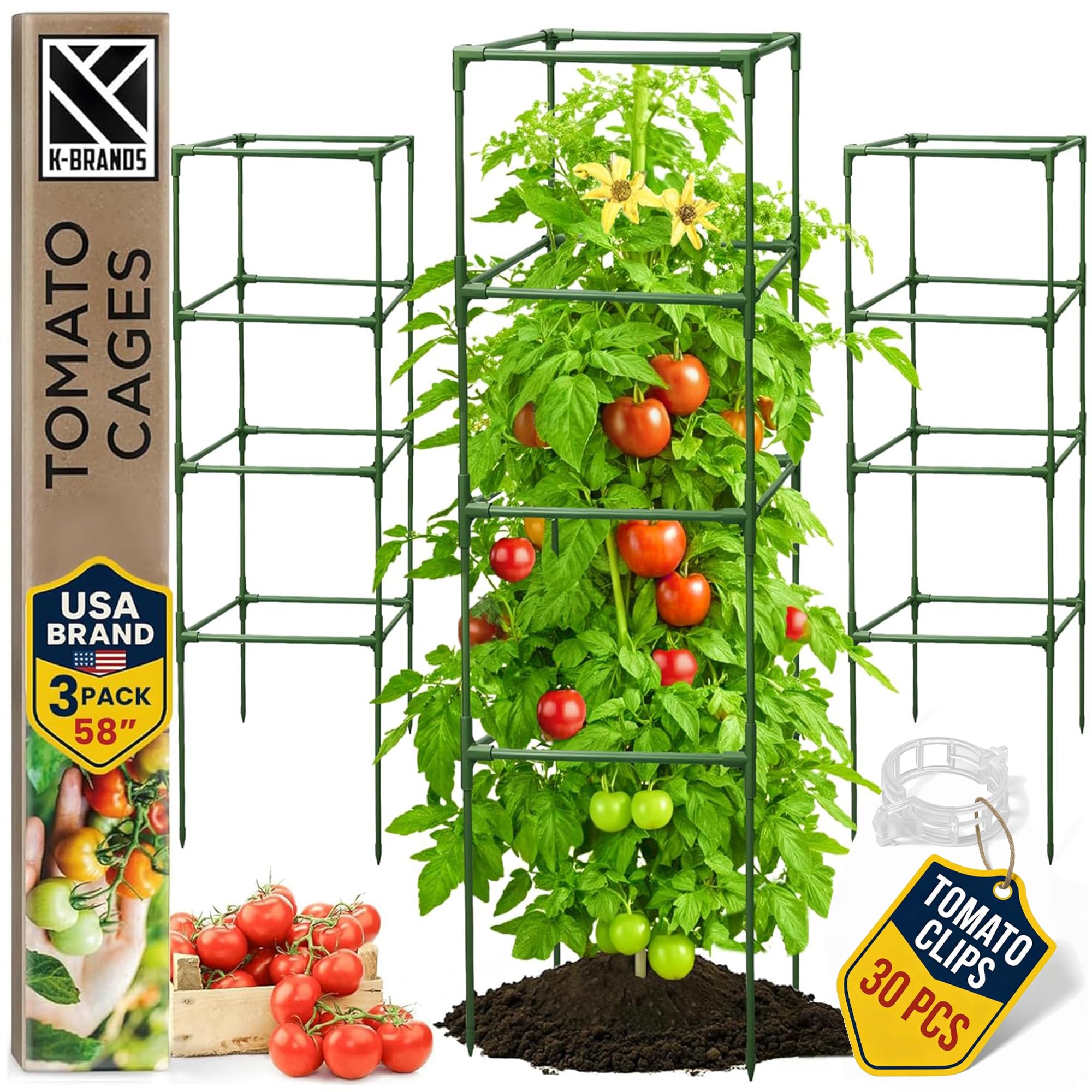
The K‑Brands cage shifts from the traditional round shape to a square footprint, which inherently resists twisting torque from wind because four independent stakes each anchor into the soil. Each stake measures roughly 58 inches fully assembled, and the interlocking plastic connectors snap together without tools. The steel core is encased in a green PVC sleeve that blends into the foliage, and the 3.8 kg total weight for the three-pack signals that the wall thickness is above average for the mid-range bracket. The square openings give plants room to branch outward without being constricted by a circular ring.
Assembly is straightforward: slide the horizontal bars onto the vertical posts and push the legs into the ground. Multiple reviewers describe the clips as snug, and the adjustable height feature—you can add or remove sections—is especially useful for starting seedlings low and building up as the plant matures. A few units arrived missing one connector bar, which indicates that the packing QC could be tighter, but the seller resolves missing-part issues quickly when contacted.
For raised beds and container gardens, the square shape maximizes corner space without wasting the gap that round cages leave between the planter edge and the cage wall. The 58-inch height handles most indeterminate tomatoes, and the structural rigidity eliminates the leaning that plagued older wire cones.
What works
- Square geometry provides superior wind stability versus round cones.
- Interlocking connectors allow tool-free height adjustment.
- Disassembles flat for compact winter storage.
What doesn’t
- Occasional missing connector bar in the box.
- PVC coating is thinner on the crossbars than on the stakes.
3. Halatool 72-Inch Tall Tomato Cage (4‑Pack)
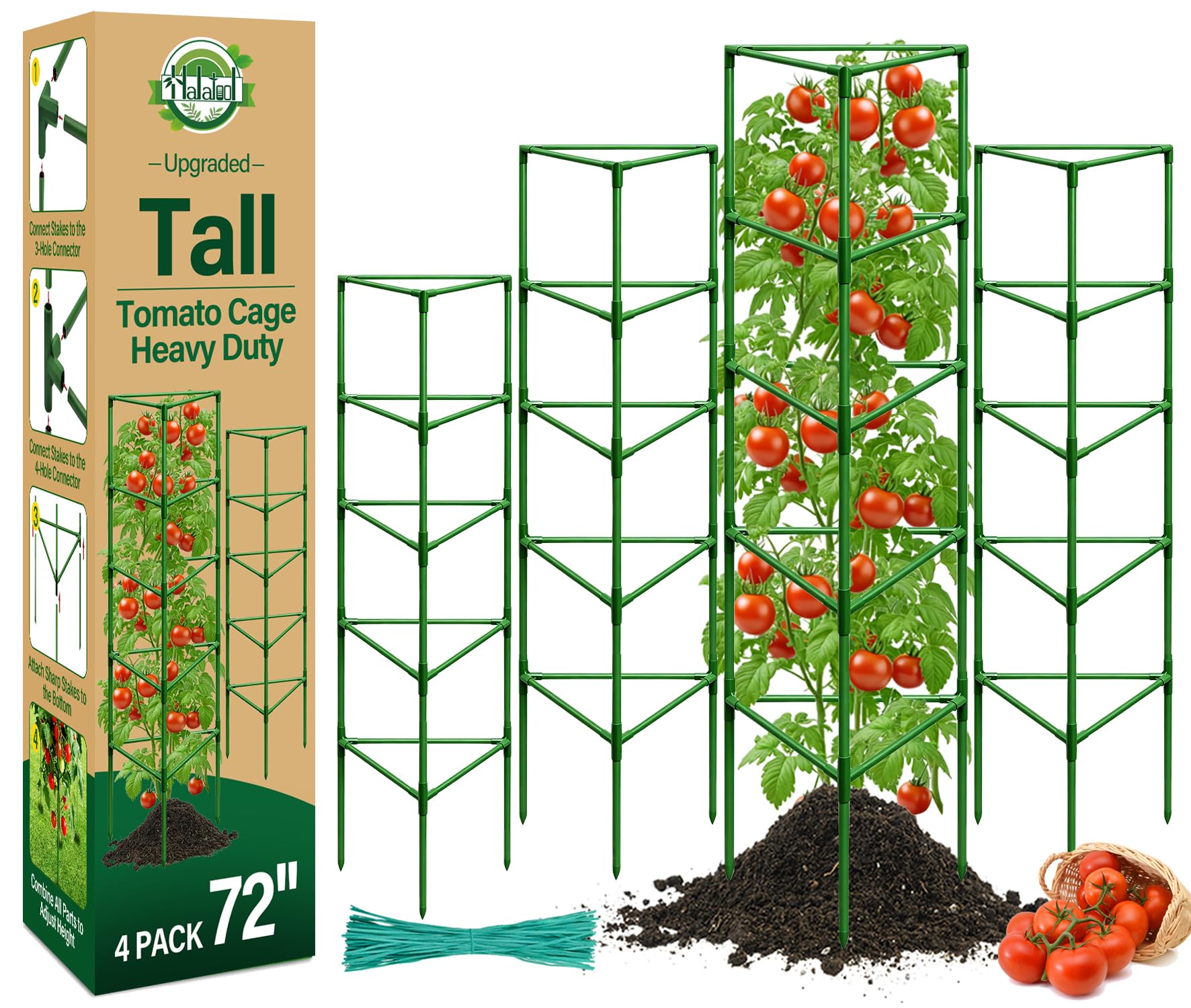
Indeterminate tomato vines routinely exceed 6 feet, and most “tall” cages tap out around 58 inches. The Halatool cage reaches a true 72 inches, eliminating the need to stack a second cage or improvise with bamboo stakes halfway through the season. The triangular footprint uses three reinforced legs that spread the load across a wider footprint than a round cone, and the steel core is encased in a soft UV-resistant plastic sleeve that won’t crack after a full summer of direct sun. Owners report that stems slide up the plastic without developing the brown abrasion marks common on bare metal cages.
The upgraded snap clips lock the ring sections into place firmly enough to stay connected during windy storms, but the cage is not immune to tipping—one reviewer noted a single unit blew over in strong wind and needed an external stake for extra anchorage. Assembly is completely tool-free, and the minimum starting height of roughly 14.5 inches means the cage works in small patio containers and indoor pots as easily as in full garden beds. The 4-pack configuration gives enough coverage for a standard raised bed without overbuying.
If you grow indeterminate varieties like ‘Brandywine’ or ‘Cherokee Purple’, the extra vertical clearance from day one prevents the main stem from bending over the cage top and snapping under fruit weight. The triangular shape also makes it easy to prune and harvest from three sides without reaching through a cramped circular ring.
What works
- Full 72-inch height supports indeterminate varieties without extensions.
- Soft UV-resistant plastic sleeve prevents stem abrasion and rust.
- Snap clips hold rings securely in windy conditions.
What doesn’t
- Triangular base may need staking in loose or sandy soil.
- Rings are closed at the bottom, making removal of mature plants difficult.
4. VEVOR 46-Inch Square Tomato Cages (10‑Pack)

The VEVOR cage delivers 10 units per box, making it the obvious choice for gardeners managing large plots or community gardens where many plants need support simultaneously. Each cage stands 46 inches tall with an 11.8-inch square opening, and the wire is made from 4 mm (roughly 8-gauge) steel with a silver PVC coating. The coating matches the natural stem color and won’t flake off like painted finishes, but the 46-inch height limits the cage to determinate varieties and compact indeterminate types unless you’re willing to let the main stem flop over the top. The 10-inch in-ground legs can be pushed deeper to improve stability, and the side-lock mechanism folds the cage flat to roughly a quarter of its deployed width for storage.
Owners consistently praise the rigidity of the welded cross joints and the ease of assembly—no tools required, just unfold and lock the sides. The 10-pack weight is 7.35 kg, which is reasonable for the coverage volume, and the PVC coating holds up well against occasional sprinkler contact. One limitation is the height: for a 5-foot indeterminate plant, the top foot of growth will lack structural support. Several gardeners solved this by staking the main stem above the cage top with a separate bamboo pole.
Despite the height limitation, the per-unit cost is dramatically lower than premium alternatives, and the square foldable design makes this an excellent stocking option for gardeners who need volume without sacrificing frame stability.
What works
- Ten cages per box offer unbeatable coverage for large gardens.
- Fold‑flat design compresses to a quarter of the deployed size.
- PVC coating prevents rust and blends with foliage.
What doesn’t
- 46-inch height is too short for indeterminate vine growth.
- Side locks can pop open if the cage is moved after deployment.
5. Gardener’s Supply Company Lifetime Tomato Cages (Set of 4)
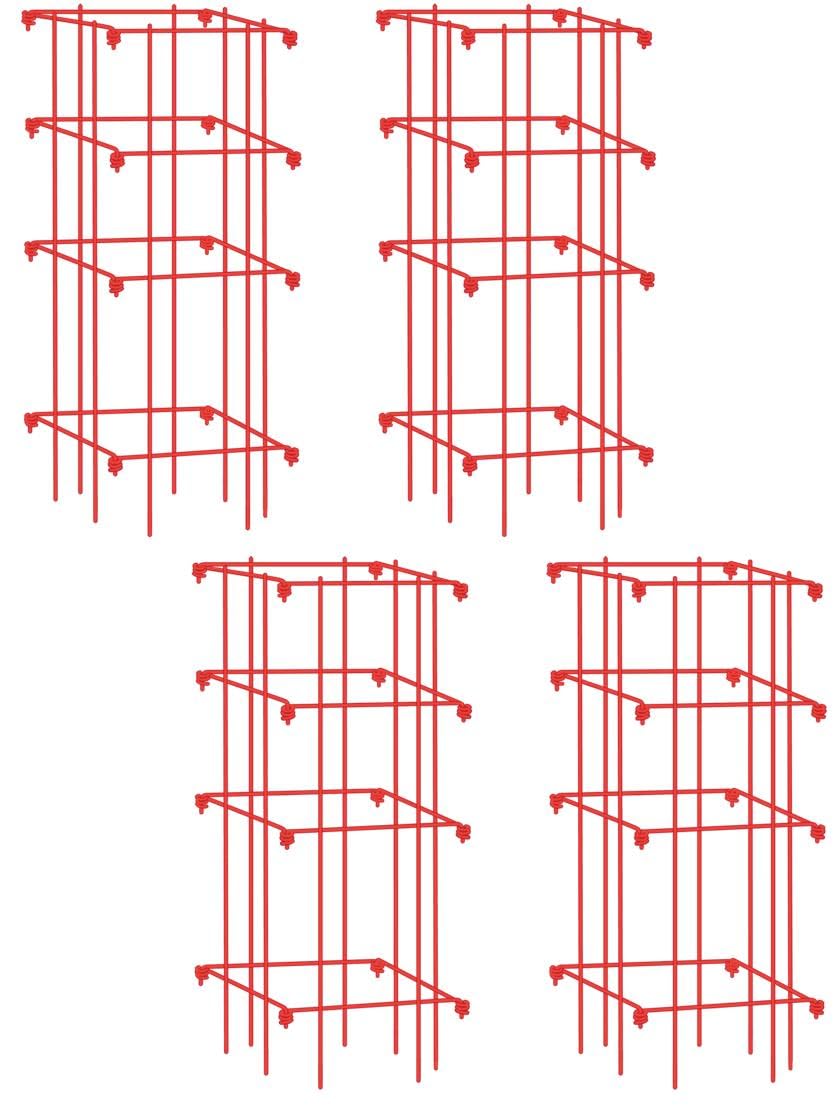
The Gardener’s Supply Lifetime cage arrives fully assembled—just unfold the hinged panels and push the 7-inch legs into the soil. The 14-inch square footprint and 8-inch interior grid openings make it easy to reach through the cage and harvest without fighting narrow wire gaps. The frame is constructed from heavy-gauge steel with a red powder-coat finish that resists chipping and rust far better than thin PVC sleeves. Owners with 15-year-old units report the same cage still holding up after decades of seasonal use, which validates the “Lifetime” branding. The 39-inch overall height (32 inches once installed) is best suited for determinate varieties or compact raised beds.
One practical trade-off: the integrated hinge design makes the cage very rigid once open, but the initial unfolding takes considerable force. A few users found that pressing the hinge tabs with pliers made opening easier and prevented the panels from separating during the process. Once in place, the cage supports heavily laden branches without any bowing, and the open geometry promotes air circulation that reduces foliar disease pressure. The square shape also fits flush against raised-bed corners, wasting no growing space.
For the gardener who values time over tinkering, this cage eliminates assembly frustration entirely. The powder-coat finish is thick enough to survive being left out in rain and snow, and the fold-flat storage means the cage occupies minimal shed space during the off-season.
What works
- Completely pre-assembled; unfolds and pushes into soil in seconds.
- Heavy powder-coat steel resists rust and bending for many seasons.
- 8-inch grid openings allow hand access for easy harvesting.
What doesn’t
- Initial unfolding requires significant hand strength.
- 39-inch height is too short for full-size indeterminate tomatoes.
6. Cedar Ridge Square Foldable Tomato Cages (13×56, 3‑Pack)
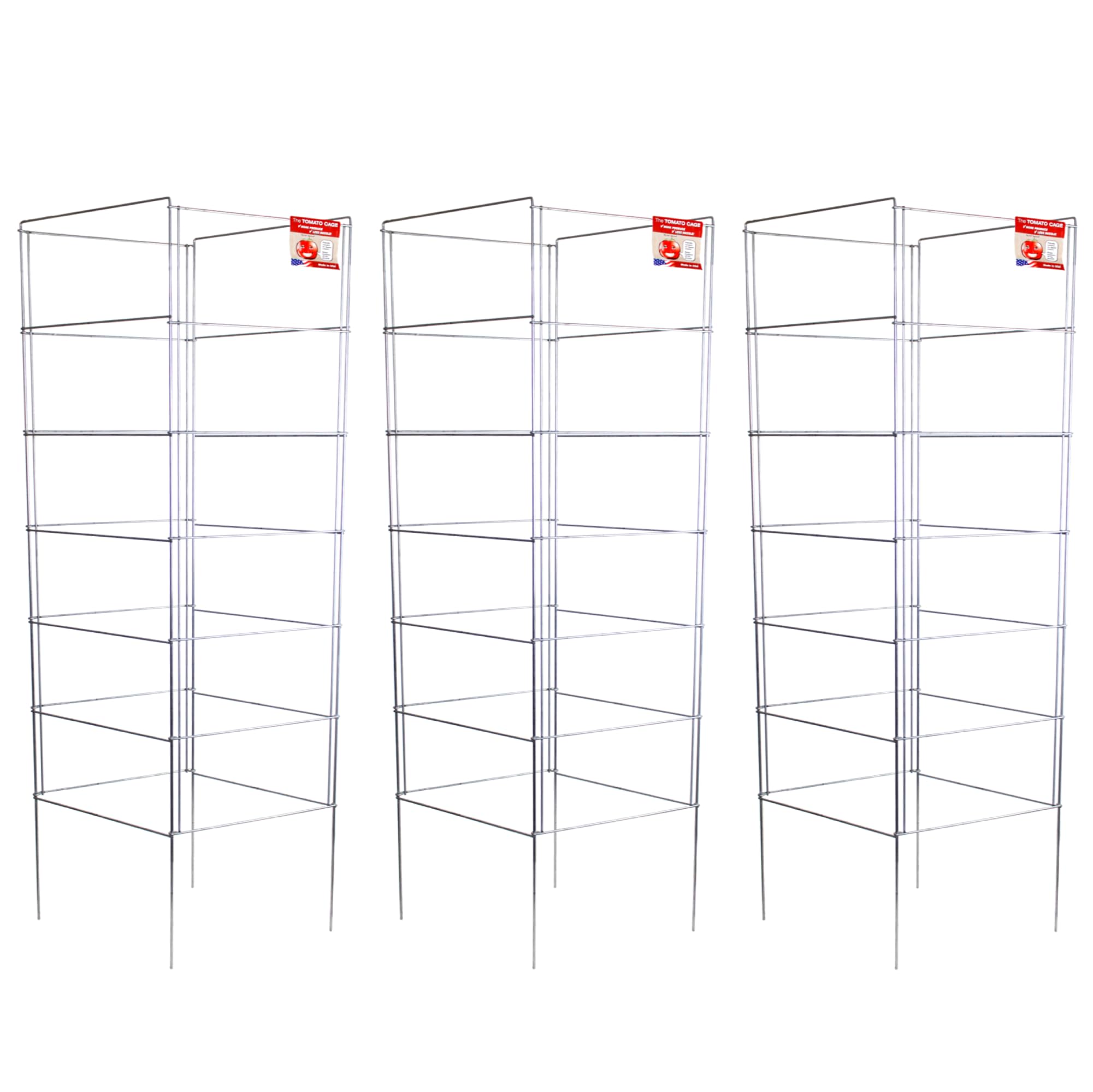
The Cedar Ridge cage is built in the USA from galvanized steel with 6-gauge (4.1 mm) legs and 9-gauge (2.9 mm) cross members—specifications that put it in the “buy it once” tier. At 56 inches tall with a 13-inch square opening, it provides enough vertical clearance for most indeterminate varieties while the square cross-section prevents the twisting that round cages suffer in windy conditions. The galvanized finish has a matte silver appearance that won’t rust, though it lacks the soft touch of plastic-coated alternatives. The foldable hinge design allows the cage to collapse flat without tools, and owners consistently report that the hinge pins hold up season after season without loosening.
The 7.26 kg total weight for a three-pack reflects the heavy-gauge steel, and the legs push into the ground with a satisfying resistance that indicates they won’t bend under load. The 56-inch height leaves roughly a foot of growth un-caged for aggressive indeterminate types, but the steel gauge is thick enough that you can attach a bamboo extension ring without distorting the frame. A few reviewers mentioned that the cage is stiff when unfolding for the first time, but once the hinges break in, the action becomes smooth. The open-grid design allows ample airflow and makes pruning accessible from all four sides.
For the gardener who wants a USA-made product with the thickest leg gauge available, this cage is the clear frontrunner. It is heavy, but that weight translates directly to stability and longevity—it won’t blow over and won’t need replacement after two seasons.
What works
- Thick 6-gauge steel legs resist bending when driven into hard soil.
- Galvanized finish eliminates rust without a coating that can peel.
- Hinged design collapses flat for easy storage.
What doesn’t
- Bare galvanized surface can leave light marks on tender stems.
- Heavier weight makes repositioning more demanding during the season.
7. Happy Trees Large Heavy Duty Tomato Cages (18×58, 3‑Pack)
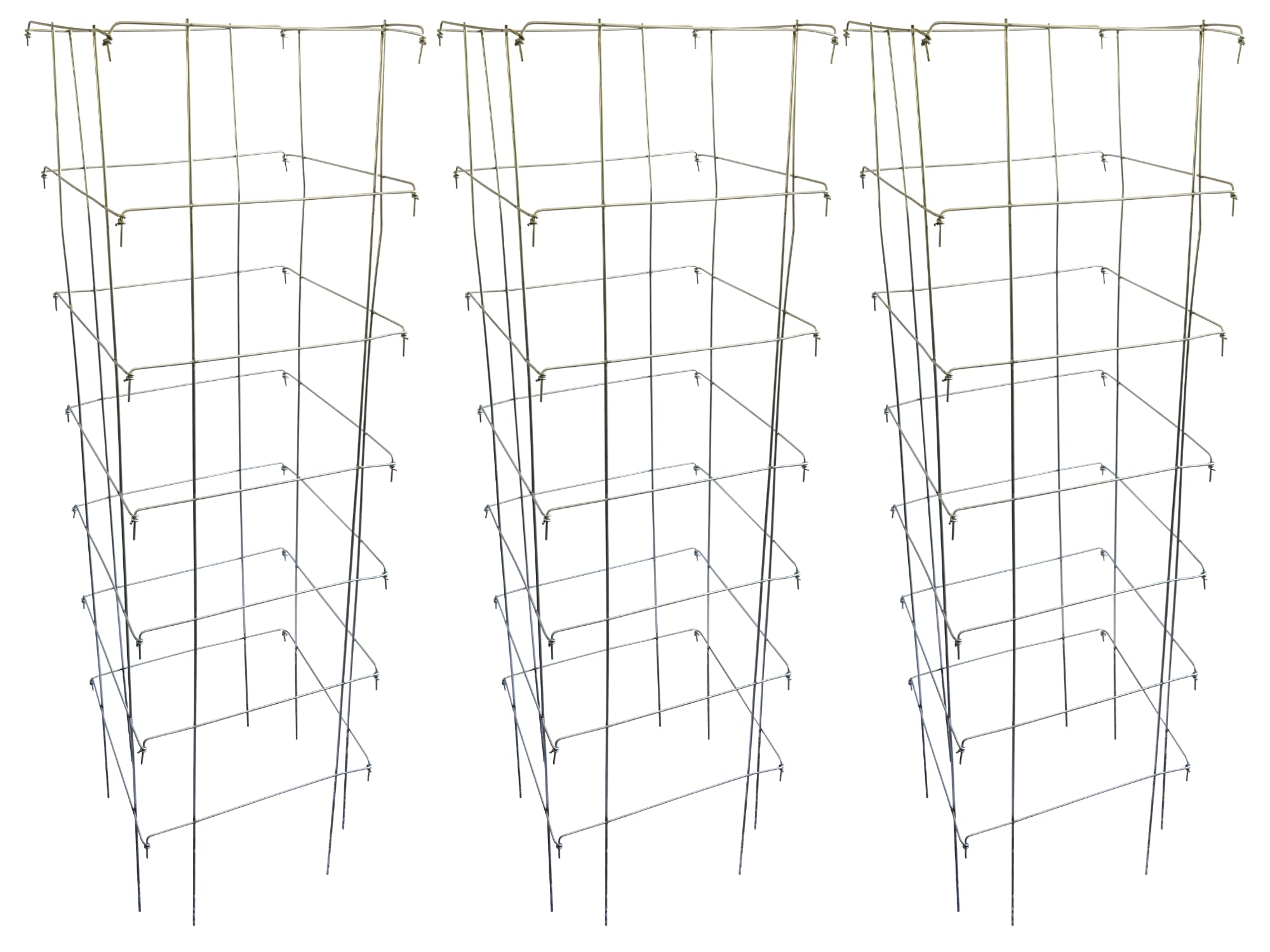
The Happy Trees cage stands out with an 18-inch by 18-inch interior opening—the widest of any model in this guide. That extra space gives sprawling indeterminate tomato plants room to branch laterally without being compressed against the sides, which reduces leaf crowding and improves air circulation. The entire structure is made from thick-gauge galvanized steel, and the collapsible hinge design folds completely flat for storage. At 58 inches tall, the cage clears the bulk of indeterminate vine growth, and the wide footprint distributes the plant load so effectively that several owners noted it was the only cage in their garden that didn’t blow over during a severe storm.
Assembly from flat takes about five seconds per cage: just pull the sides apart until the hinges lock. The wide 18-inch square shape does pose a challenge for standard 15-gallon nursery pots—the legs may not fit inside the container rim. Many users solved this by using the cages exclusively in raised beds or in-ground rows. The galvanized finish is extremely durable, with multiple reviewers reporting zero rust after leaving the cages in the ground through a full wet winter and a growing season. The 3-pack weight is substantial enough to stay anchored, but the cages are still portable enough to move between beds during crop rotation.
If interior plant volume is your primary concern, this cage offers the most breathing room per unit. The trade-off is that the larger footprint limits container compatibility, and the price per cage is the highest in this lineup. But for gardeners who prioritize longevity and never want to buy another cage, this is the gold standard.
What works
- Widest interior opening (18×18 inches) gives plants maximum branching space.
- Thick galvanized steel resists rust through multiple seasons.
- Collapses flat and deploys in seconds without tools.
What doesn’t
- Large footprint doesn’t fit inside standard 15-gallon nursery pots.
- Highest per-unit cost in the selection.
Hardware & Specs Guide
Steel Gauge and Stake Thickness
The stake diameter is the single most important mechanical spec for a tomato cage. Legs made from 6-gauge wire (4.1 mm) will push into compacted garden soil without buckling, while 9-gauge cross members (2.9 mm) are sufficient for horizontal rings because those bars experience less direct downward force. Thinner legs (11-gauge or below) tend to bend near the soil line when the plant reaches full fruit load, especially after rain softens the ground. Always check the gauge of the vertical stakes before the horizontal supports—the legs take the full plant weight and wind load.
Coating Types and Corrosion Life
Three coating strategies dominate the category. Powder coating offers the thickest layer but can chip if the underlying steel flexes. PVC sleeves are softer, resist UV degradation when formulated correctly, and prevent stem abrasion, but the plastic can crack if the base metal is thin and flexes repeatedly. Galvanized steel has no coating to peel, but it develops a white zinc patina over time that is purely cosmetic. For damp climates or gardens with drip irrigation, a PVC sleeve over a steel core provides the best corrosion barrier—just verify that the sleeve is UV-stabilized to avoid brittleness after one season.
FAQ
Should I choose a round, square, or triangular tomato cage?
What height tomato cage do I need for indeterminate varieties?
How do I prevent a tomato cage from rusting?
Can I use tomato cages for other climbing vegetables?
Final Thoughts: The Verdict
For most gardeners, the best tomato cages winner is the LOMNYIY 55-Inch Round Cage because it combines full PVC rust protection, adjustable snap-fit height, and a collapsible design at a reasonable price for a two-pack. If you need the tallest cage for indeterminate varieties, grab the Halatool 72-Inch 4-Pack for true 6-foot support without mid-season add-ons. And for the gardener who wants maximum interior space and will never buy another cage, nothing beats the Happy Trees 18×58-Inch Wide Cage for heavy-duty performance that lasts decades.