
Standing in wet soil, kneeling in damp beds, and walking through morning dew are regular realities for anyone who tends a garden. Without the right boot, those hours turn into a miserable battle against cold, soaked socks and muddy footprints trailing through the house. The difference between a productive afternoon and a frustrating one often starts at your feet.
I’m Rikta — the co-founder and writer behind Lawn Gear Lab. I’ve spent countless hours analyzing material thicknesses, insole support, tread patterns, and owner-reported durability to separate reliable garden footwear from disposable rain boots that fail after a single season of real use.
Whether you’re hauling mulch, weeding after a rain, or tending livestock, your feet need protection that stays flexible yet tough. This guide breaks down the specifications and real-world performance of the best boots for garden work so you can step into the muck with confidence.
How To Choose The Best Boots For Garden
Garden boots are not fashion accessories — they are tools that handle mud, moisture, manure, and sharp debris. Choosing poorly means wet feet, blistered heels, or soles that delaminate mid-season. Here is what actually matters.
Shaft Height and Calf Fit
Mid-calf boots (roughly 10–14 inches) offer the best balance for garden work — tall enough to keep mud and water out when kneeling or stepping into puddles, but short enough to avoid restricting knee movement. Check the shaft circumference if you wear tucked-in pants or have wider calves. A boot that is too tight around the calf cuts off circulation; one that is too loose lets debris slide in.
Material Thickness and Insulation
The standard for serious garden boots is 6mm neoprene paired with a natural rubber shell. Thinner neoprene (4mm or less) works for light rain but fails in cold mud or repeated deep-water exposure. Insulation matters if you garden in early spring or late fall — 6mm neoprene provides enough warmth for most temperate weather without making feet sweat during active work.
Underfoot Protection: Steel Shanks and Puncture Resistance
A steel shank running between the insole and outsole prevents fatigue when standing on uneven ground and protects against sharp rocks, roots, or stray nails. For heavy-duty use, a puncture-proof midsole is a non-negotiable safety feature. Without it, a single misplaced step onto a buried garden stake could ruin your day.
Tread Pattern and Outsole Durability
Deep, self-cleaning lugs (at least 15mm apart) channel mud away from the sole and maintain grip on slick grass or wet concrete. Flat or shallow tread patterns are dangerous on garden slopes and wet patios. Look for boots marketed with “multi-directional traction” — the tread should bite in forward, backward, and lateral motions.
Ease of On and Off
You will take garden boots on and off multiple times per session — to grab a tool, answer the door, or shake out a pebble. A rear pull loop and a kick-off ledge molded into the heel make this frictionless. Boots without these features force you to sit down and wrestle the rubber off, which adds unnecessary friction to your workflow.
Quick Comparison
On smaller screens, swipe sideways to see the full table.
| Model | Category | Best For | Key Spec | Amazon |
|---|---|---|---|---|
| Trudave Rubber Boots for Women | Mid Calf | Daily muddy chores | 6mm neoprene plus steel shank | Amazon |
| HISEA Women’s Mud Rain Boots | Tall Garden | Narrow feet with high arches | Flex-foam upper with seamless construction | Amazon |
| Trudave Steel Toe Rubber Boots (Men) | Steel Toe | Chemical and impact protection | Steel toe + steel shank + 4mm SBR | Amazon |
| Rubber Work Boots (Steel Toe & Shank) | Puncture-Proof | Heavy-duty construction and hunting | 800g Thinsulate + puncture-proof midsole | Amazon |
| Men’s Waterproof Rubber Muck Boots | Mid Calf | Year-round outdoor work | 6mm neoprene with corrosion-resistant rubber shell | Amazon |
| Showave Men’s Ankle Rain Boots | Ankle | Quick slip-on for light yard tasks | Ankle-height with steel shank | Amazon |
| Trudave Rubber Boots for Women (Original) | Mid Calf | Value-focused garden and pet care | 100% waterproof rubber with non-slip tread | Amazon |
In‑Depth Reviews
1. Trudave Rubber Boots for Women with Steel Shank
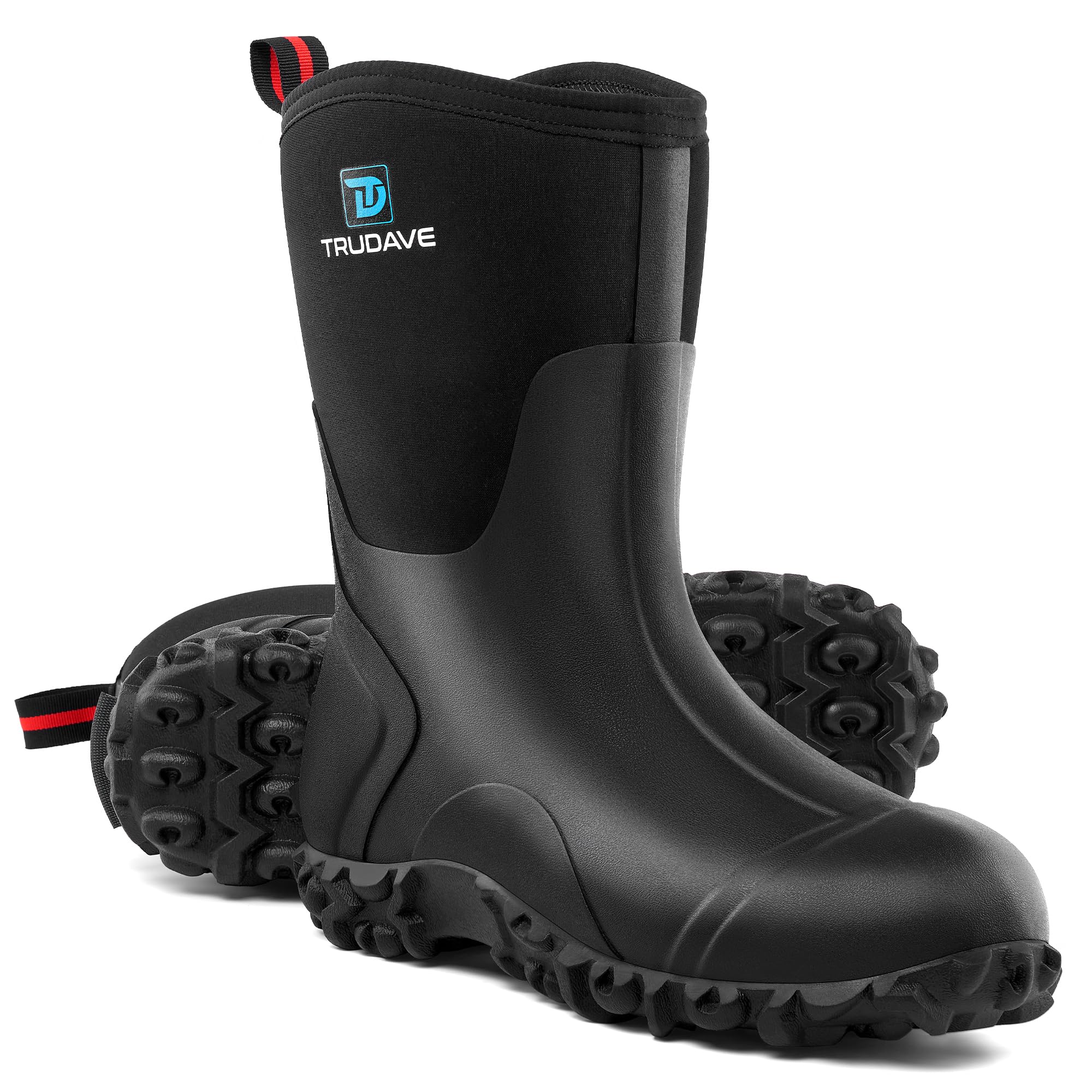
The Trudave women’s boot with steel shank brings together the three specs that matter most for garden work: 6mm neoprene for insulation, a steel shank for arch support on uneven ground, and a reinforced rubber shell that resists punctures from roots and rocks. Multiple owner reports confirm these boots stay fully waterproof even after months of daily chicken-coop and snow shoveling duty, and the deep tread prevents slipping on wet grass or icy paths.
The mid-calf height hits the sweet spot for garden tasks — high enough to step through standing water without soaking the foot, but low enough to avoid restricting knee bend when kneeling to plant or weed. The back pull loop and heel kick ledge allow hands-free removal, which is a practical convenience when your gloves are caked with mud. The generous toe box accommodates bunions and thick winter socks without pinching.
Where these boots stand out versus cheaper alternatives is the steel shank, which runs the full length of the footbed and prevents sharp debris from pushing through the sole. Owners who shovel gravel or walk over stony paths report zero foot fatigue even after extended wear. The only trade-off is that the reinforced construction adds noticeable weight compared to thinner budget boots, though most users consider that an acceptable price for real protection.
What works
- Steel shank prevents fatigue and puncture through the sole.
- 6mm neoprene keeps feet warm in deep snow without overheating in mild weather.
- Heel kick ledge and pull loop make removal easy with muddy hands.
What doesn’t
- Heavier than non-reinforced garden boots due to steel shank.
- Some owners report sizing runs slightly large; size down if between sizes.
2. HISEA Women’s Mud Rain Boots
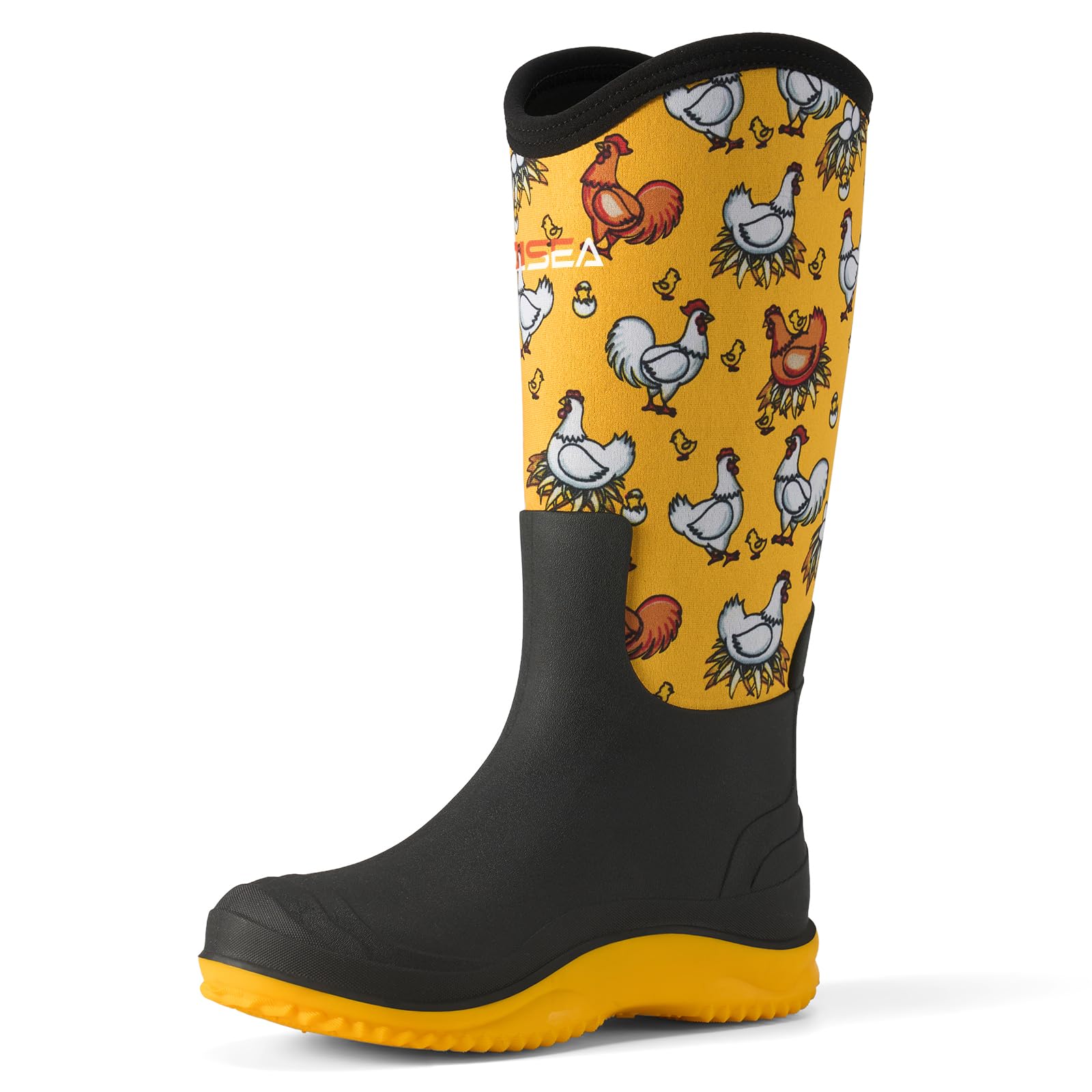
HISEA targets a specific fit issue that many garden boots overlook: narrow feet with high arches. The boot’s flex-foam upper conforms closely around the instep and ankle without creating pressure points, and the seamless interior construction eliminates the rubbing that occurs when neoprene panels are stitched together. Owners with narrow heels report zero heel slip — a common problem with unisex boots that lack ankle contouring.
The tall shaft reaches well above the mid-calf, providing extra protection when wading through tall wet grass or stepping into deeper puddles. The outsole features aggressive lugs that bite into mud and loose soil, and the waterproof base has held up through daily chicken chores, wood splitting, and Ohio freeze-thaw cycles according to verified reviews. The weight is noticeably lighter than steel-shank boots, making these a good choice for gardeners who prioritize mobility over maximum underfoot protection.
Be aware that these boots run large — most reviewers recommend ordering a full size down from your normal shoe size, especially if you plan to wear thin socks. The calf shaft is also wide enough to accommodate tucked-in pants without restriction, though users with very slim calves may find the upper feels slightly loose. The fuchsia accent color divides opinion, but the construction quality is consistently praised as superior to similarly priced garden boots.
What works
- Seamless flex-foam upper eliminates rubbing for narrow feet and high arches.
- Lightweight design reduces leg fatigue during long gardening sessions.
- Deep tread maintains grip on wet grass and muddy slopes.
What doesn’t
- Runs large; most users must size down by one full size.
- Tall shaft may feel restrictive for gardeners who prefer mid-calf mobility.
3. Trudave Steel Toe Rubber Boots for Men
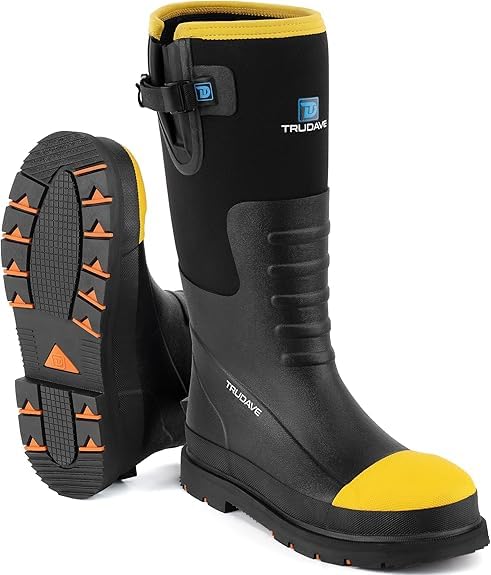
The Trudave steel toe boot brings industrial-grade safety features into the garden category without sacrificing flexibility. The steel toe cap meets standard impact protection requirements, and the integrated steel shank provides full-length arch support and puncture resistance. The upper combines 4mm SBR neoprene with a 2mm breathable mesh layer, creating a boot that remains comfortable in hot asphalt conditions while still keeping feet dry in standing water.
An adjustable buckle on the calf allows the shaft circumference to be tightened or loosened independently of the foot fit — a practical detail for men who wear work pants tucked into their boots or who have muscular calves. The deep-tread rubber outsole is chemically resistant and holds up to manure, fertilizer, and fuel spills without degrading. Multiple owners report using these boots 12-hour days in wastewater treatment and construction environments with zero leaks or sole separation.
The downside is that while the neoprene sandwich construction breathes better than solid rubber, it is less insulating than 6mm neoprene alone. Gardeners working in consistently cold wet conditions may need thicker socks or a fully insulated boot. Additionally, one long-term reviewer reported rubber deterioration after six months — a caution that underscores the importance of rinsing boots clean and storing them out of direct sunlight to extend the rubber’s lifespan.
What works
- Steel toe and shank provide genuine puncture and crush protection.
- Adjustable calf buckle creates a customizable fit for different leg shapes.
- Chemical-resistant outsole handles manure, fuel, and fertilizers.
What doesn’t
- Less insulating than 6mm neoprene boots in freezing conditions.
- One isolated report of rubber deterioration after extended use in harsh chemicals.
4. Rubber Work Boots with Steel Toe & Shank (Hunthor)

The Hunthor work boot is the most heavily armored boot in this lineup, with 800g Thinsulate insulation rating, a puncture-proof midsole, and a steel toe cap. The 6mm neoprene layer combined with the Thinsulate liner makes this boot suitable for sub-freezing garden tasks — a clear advantage for gardeners who live north of the hardiness zone 6 line. The back kick tab and rear gusset design accommodate bulky calf sizes while still allowing easy hands-free removal.
Owners consistently highlight the sole thickness and pliability as standout features. The EVA mid-sole cushions every step, and the rubber outsole’s multi-directional lugs provide traction on everything from wet concrete to loose gravel. One verified user works 12-hour days in wastewater treatment — standing in 2 to 7 inches of water — and reports complete dryness after months of daily use. That level of waterproof confidence is rare at any price point.
The trade-off is weight and bulk. These boots feel noticeably heavier than mid-range garden boots, and the tall shaft combined with the steel construction can make squatting and kneeling feel stiff. Some users also noted cosmetic imperfections on arrival (discoloration from glue residue) — though none reported that the flaws affected waterproofing or durability. For gardeners who prioritize safety and warmth over nimbleness, these are the most protective option available.
What works
- 800g Thinsulate insulation keeps feet warm in sub-freezing temperatures.
- Puncture-proof midsole and steel toe cap offer best-in-class protection.
- Stays fully waterproof even after months of daily immersion in standing water.
What doesn’t
- Heavier and bulkier than non-armored garden boots.
- Some units arrive with cosmetic glue residue on the rubber.
5. Men’s Waterproof Rubber Muck Boots (Terratrax)
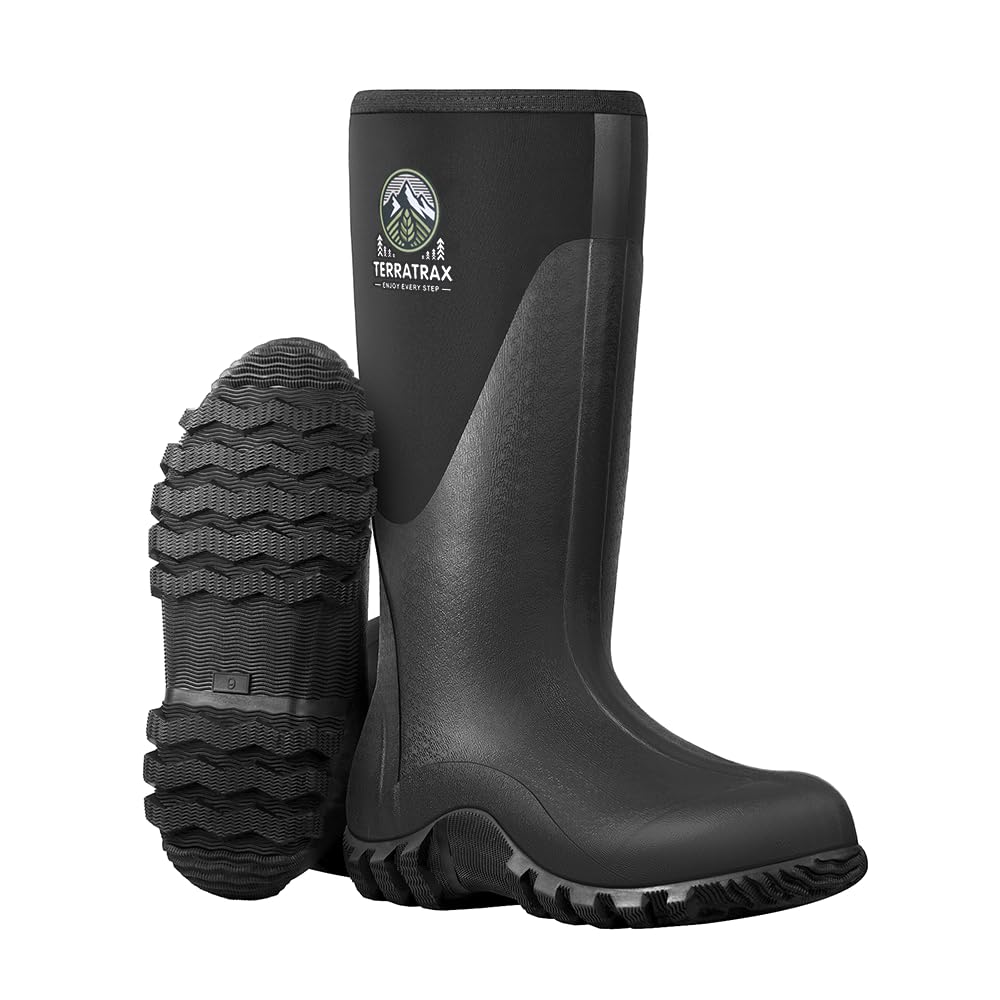
The Terratrax muck boot focuses on all-season versatility rather than heavy industrial protection. The 6mm neoprene upper wicks moisture to prevent sweat buildup during spring and summer chores, while the natural rubber shell provides 100% waterproofing that rinses clean in seconds. The flexible fit design uses high-stretch neoprene that accommodates wide calves and tucked-in pants without compressing the leg — a common pain point in fixed-circumference boots.
The outsole features corrosion-resistant rubber that holds up to chemical exposure from fertilizers and weed killers, and the rear kick-off lug lets you remove the boot with the opposite foot without bending over. Multiple owners confirm the boots are true to size, offer excellent out-of-the-box comfort, and provide stable traction on muddy and wet surfaces. The mid-calf height is practical for gardening without restricting movement.
Where these fall short is insulation — they are not as warm as boots with Thinsulate or thicker neoprene layers. One reviewer noted that the boots failed to keep feet warm during extended winter use, expecting more thermal protection from a boot marketed for cold-weather work. For gardeners in mild climates or those who only need light insulation, this is a non-issue. For deep winter gardening, adding thick wool socks or choosing a boot with additional insulation would be wise.
What works
- Flexible high-stretch neoprene comfortably fits large calves and tucked-in pants.
- Corrosion-resistant rubber shell handles chemical exposure without degrading.
- Rear kick-off lug enables easy hands-free removal.
What doesn’t
- Less insulating than expected for cold-weather garden tasks.
- Not suitable for sub-freezing temperatures without heavy sock layering.
6. Showave Men’s Ankle Rain Boots

The Showave ankle boot is the minimalist’s choice — a slip-on rubber boot that reaches just above the ankle for quick garden tasks, pet walks, and light yard chores. Despite its low profile, it includes a steel shank for underfoot protection and a thick rubber outsole with wet traction lugs. This makes it far more capable than a generic rain boot while remaining easy to kick on and off for quick trips outside.
Owners verify that the boot is fully waterproof after a year of use, with no leaks, tears, or lining failure reported. The cushioned insole provides genuine comfort for all-day wear, and the wide forefoot accommodates foot swelling during extended standing. The pull tabs at the back and front make entry smooth even with muddy hands. Several buyers mention that the boot runs slightly large, so sizing down is recommended to avoid heel slip during active walking.
Where the ankle height creates a limitation is in deeper wet conditions. Stepping into a puddle deeper than the shaft height will soak the foot instantly, and kneeling in wet grass will let moisture trickle in over the top. These boots are best reserved for dry-surface garden work, light rain, and quick trips to the compost bin rather than heavy-duty mud or standing water tasks.
- Ankle-height design slips on and off faster than any mid-calf boot.
- Steel shank and thick outsole provide genuine puncture protection.
- No leaks or tears reported after one year of regular use.
- Ankle height offers no protection against deep puddles or kneeling in wet conditions.
- Runs slightly large; sizing down may be necessary for a secure fit.
7. Trudave Rubber Boots for Women (Original, Non-Shank)
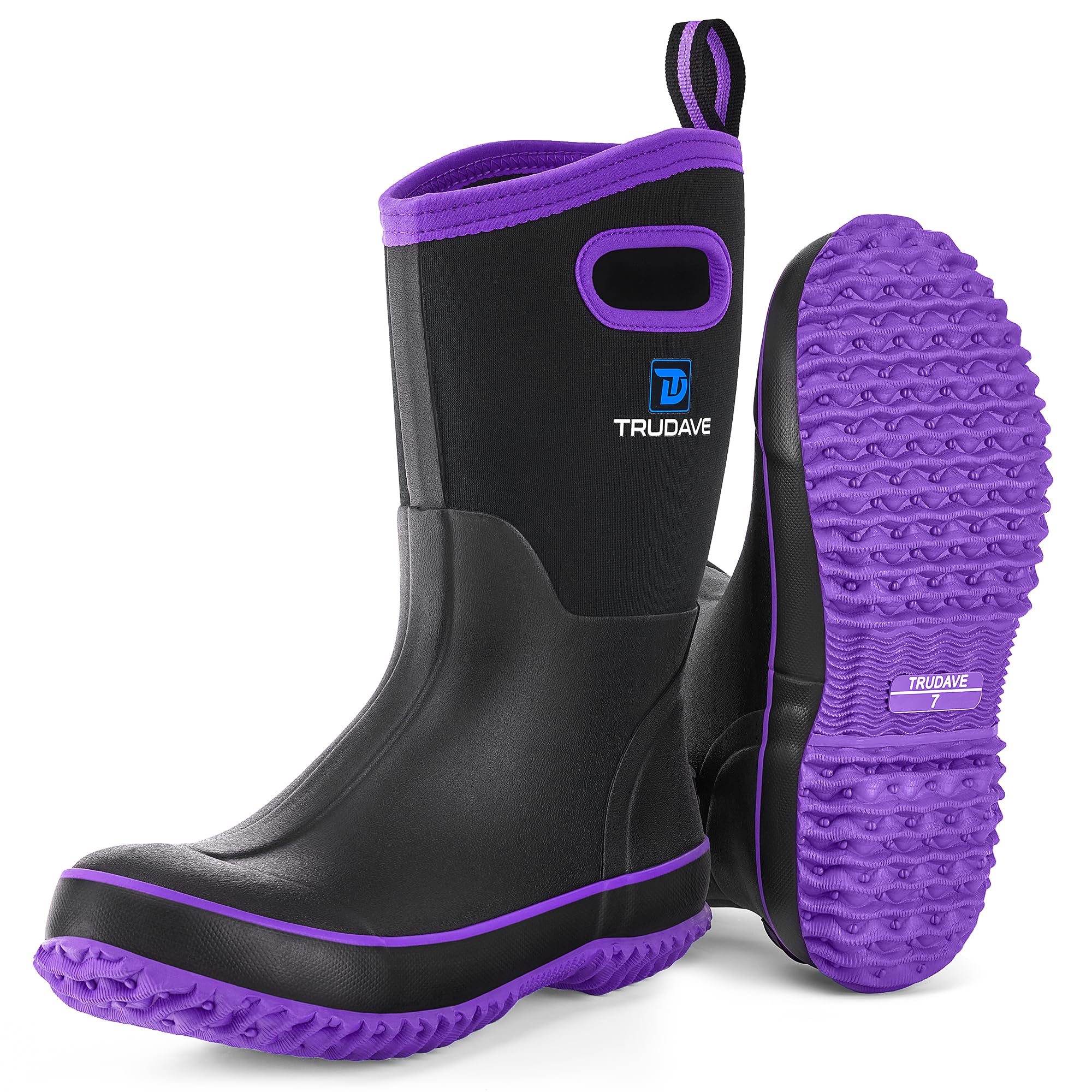
The original Trudave women’s boot offers solid waterproof performance and genuine comfort at an approachable price point. The 100% waterproof rubber construction keeps feet dry during muddy chicken coop cleanups and rainy garden sessions, and the substantial tread pattern grips well on wet grass and light snow. The mid-calf shaft provides enough coverage for most garden tasks without the weight of a full-height barn boot.
Multiple verified owners report these boots as comfortable enough for daily use over three-plus months and note that the wide toe box is ideal for bunions or foot swelling. The easy on/off design includes side handles for pulling, and the non-slip outsole holds up on rocky paths and damp concrete. The fit runs slightly loose, but most users find that a thick sock fills the extra space and adds warmth.
The limitation is the absence of a steel shank or puncture-proof midsole. While the rubber sole is thick enough for standard garden surfaces, standing on sharp rocks or stepping on a buried root point can be uncomfortable. These boots are best suited for light to moderate garden work — weeding, watering, and pet care — rather than heavy construction or demolition tasks. For the price, they deliver reliable waterproofing without the stiffness of reinforced boots.
What works
- Reliable waterproof rubber construction keeps feet dry in mud and rain.
- Wide toe box accommodates bunions and foot swelling comfortably.
- Non-slip tread provides stable grip on wet grass and light snow.
What doesn’t
- No steel shank or puncture protection — not suitable for sharp debris.
- Runs slightly loose; may require thick socks or sizing down for a snug fit.
Hardware & Specs Guide
Neoprene Thickness (mm)
Neoprene thickness directly determines insulation and flexibility. 6mm neoprene is the gardening sweet spot: it provides enough warmth for early spring and late fall without making feet sweat during active work. 4mm neoprene is lighter and more breathable but will feel cold in consistently wet or freezing conditions. Boots that use layered neoprene (e.g., 4mm plus 2mm mesh) offer better ventilation at the cost of reduced insulation.
Steel Shank vs. No Shank
A steel shank runs the full length of the footbed between the insole and outsole. It prevents the boot from flexing under the arch when stepping on rocks or roots, reducing fatigue and adding a layer of puncture resistance. Garden boots without a shank rely entirely on the rubber outsole for protection, which is adequate for smooth soil but insufficient for stony or debris-strewn paths.
FAQ
How tight should garden boots fit around the calf?
Can garden boots be machine washed?
What is the difference between a garden boot and a muck boot?
Final Thoughts: The Verdict
For most gardeners, the boots for garden winner is the Trudave Rubber Boots for Women with Steel Shank because the steel shank provides underfoot protection that thin budget boots lack, while the 6mm neoprene keeps feet warm without overheating. If you have narrow feet and high arches, grab the HISEA Women’s Mud Rain Boots. And for heavy-duty chemical resistance and maximum warmth, nothing beats the Hunthor Rubber Work Boots with Steel Toe & Shank.