
Watching camellia leaves turn chlorotic yellow while flower buds fail to form is the telltale sign of alkaline soil stress. These broad-leaved evergreens depend on a consistent supply of soluble iron and manganese, which become chemically locked in any soil with a pH above 6.5. When the growing medium drifts toward neutral or basic, the plant simply starves despite ample nutrients in the ground.
I’m Rikta — the co-founder and writer behind Lawn Gear Lab. My approach to this guide comes from weeks of cross-referencing horticultural soil-science data, poring over NPK ratios and sulfur percentages, and analyzing hundreds of verified owner reports to determine which products actually deliver the sustained acidity camellias require.
Whether you are amending a new planting bed or reinvigorating a mature shrub, this analysis of the best acidic soil for camellias will help you choose a formulation that matches your specific growing conditions and schedule.
How To Choose The Best Acidic Soil For Camellias
Camellias are obligate acidophiles — they will not thrive in neutral or alkaline ground. Selecting the right product starts with understanding the three pillars: the starting pH of your native soil, the sulfur content of the amendment, and the form of nitrogen used in the fertilizer.
Target pH Range and How to Measure It
Camellias require a soil pH between 5.0 and 6.0. Below 4.5, aluminum toxicity becomes a risk; above 6.5, iron chlorosis turns leaves pale and stunts growth. Before buying any amendment, test your soil with a probe or a lab kit. If your native pH is above 7.0, look for a product with at least 4 to 6 percent elemental sulfur to drive the number downward over several months.
Form of Nitrogen Matters
Camellias respond best to ammoniacal nitrogen (NH₄⁺), which has a natural acidifying effect on the root zone. Products that rely on nitrate-based nitrogen can actually raise pH over time, working against your goal. Check the guaranteed analysis for ammonium sulfate, urea, or other ammoniacal sources.
Slow-Release vs. Immediate Correction
Granular organic fertilizers with mycorrhizal fungi or composted marine meals release nutrients gradually across a full growing season, which matches the camellia’s steady feeding habit. Fast-acting chemical formulas can green up foliage within weeks but require repeated application and careful measuring to avoid root burn. Choose based on whether you need a single seasonal feeding or a quick chlorosis rescue.
Quick Comparison
On smaller screens, swipe sideways to see the full table.
| Model | Category | Best For | Key Spec | Amazon |
|---|---|---|---|---|
| True Organic Azalea, Camellia & Rhododendron Food | Granular Fertilizer | Long-term pH correction | 5% sulfur, 5-4-3 NPK | Amazon |
| Fertilome Azalea, Camellia, Rhododendron Food | Granular Fertilizer | Post-bloom recovery | 9-15-13 NPK, 10 lb bag | Amazon |
| Espoma Organic Holly-Tone (2-Pack) | Granular Fertilizer | General acid-loving shrubs | 4-3-4 NPK, 5% sulfur | Amazon |
| Coast of Maine Organic Planting Soil | Potting Mix | Container camellias | Low pH, 20 Qt bag | Amazon |
| FoxFarm Happy Frog Acid Loving Fertilizer | Slow-Release Powder | New transplants | With mycorrhizal fungi | Amazon |
| Espoma Land and Sea Gourmet Compost | Soil Amendment | Increasing soil organic matter | Lobster & crab meal, 24 lb | Amazon |
| Miracle-Gro Potting Mix (3-Pack) | General Potting Mix | Quick container setup | Feeds up to 6 months | Amazon |
In‑Depth Reviews
1. True Organic Azalea, Camellia & Rhododendron Food
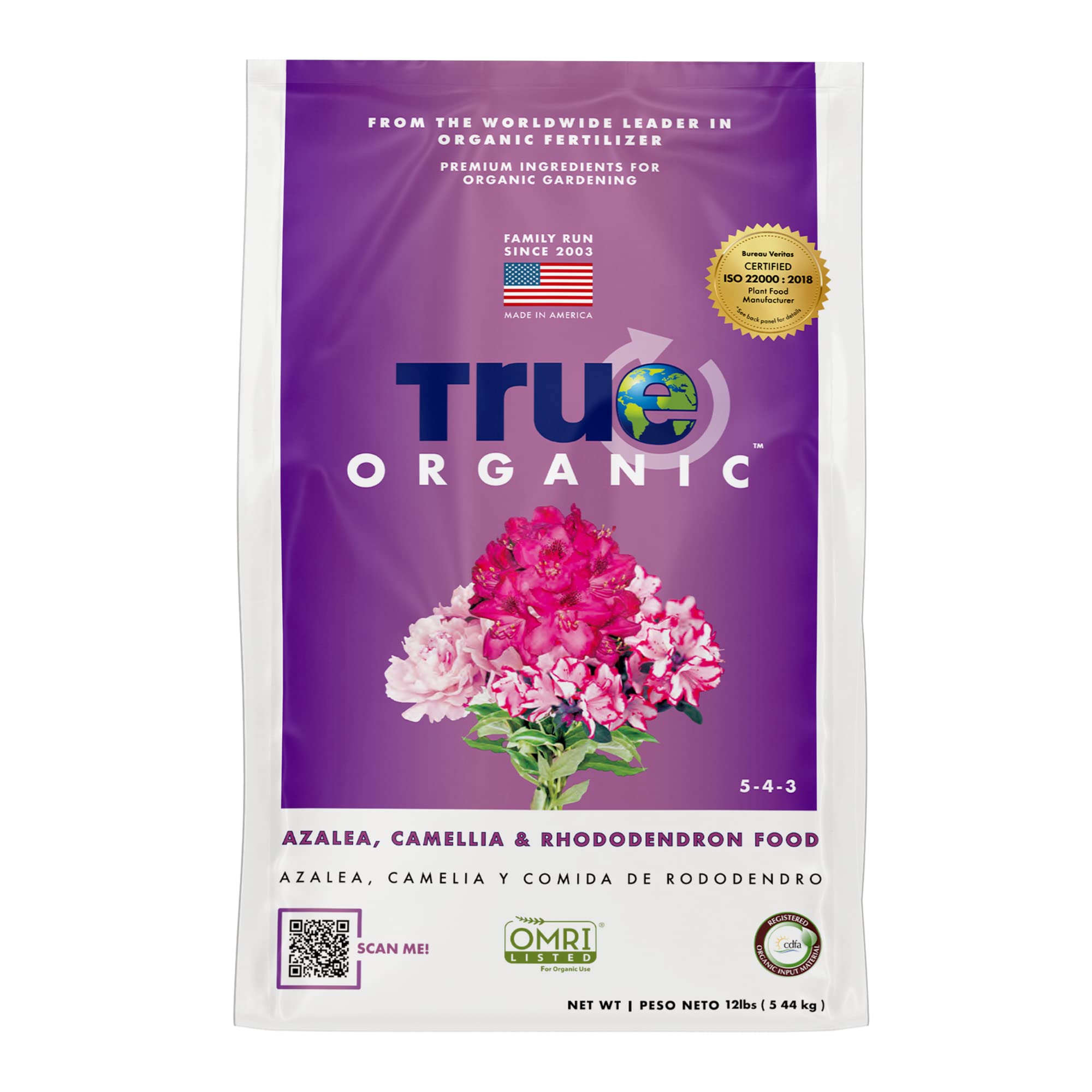
True Organic’s 5-4-3 formula targets camellias directly, and the 5 percent elemental sulfur content is the highest in this comparison — enough to gradually lower soil pH without shocking the root system. The granular blend includes seabird guano, shrimp shell meal, and crab meal, which release ammoniacal nitrogen steadily across the season rather than dumping it all at once.
At 12 pounds, this bag covers up to 261 square feet, making it practical for both a border of mature shrubs and a single large specimen. The twice-yearly application schedule (spring and fall) fits neatly into a standard care routine, and the organic ingredients mean there is no risk of synthetic salt buildup around shallow camellia roots.
Reviewers consistently mention that their rhododendrons and azaleas perked up within weeks, but the real value for camellia owners is the sustained acidification. If you have multiple ericaceous plants on a property with borderline-neutral soil, this is the most efficient single-bag solution available.
What works
- 5 percent sulfur aggressively drives down pH
- Marine-based organics provide slow-release ammoniacal nitrogen
- Large 12-pound bag covers extensive planting areas
What doesn’t
- Granules require thorough watering-in to activate sulfur
- Not ideal if you need immediate foliage greening within days
2. Fertilome Azalea, Camellia, Rhododendron Food 9-15-13
Fertilome’s 9-15-13 analysis is distinctly high in phosphate and potash relative to nitrogen — a ratio engineered to push flower bud set and root development rather than leafy growth. The formulation also includes micronutrients such as iron and manganese, which are critical for camellias growing in soil that is only mildly acidic.
The 10-pound bag is a generous size for a concentrated granular product, and the application rates (1/4 to 1/2 cup for smaller shrubs) mean a single bag lasts multiple seasons. Users who had rhododendrons that had not bloomed in years reported visible bud formation within two months of the first feeding.
The trade-off is that this is a synthetic fertilizer that relies on fast-release salts rather than organic matter. Over-application can lead to root burn if you do not measure carefully, and it does not contain elemental sulfur to lower pH — it simply feeds plants that are already in acceptable acidic soil.
What works
- High-phosphate ratio drives exceptional bloom set
- Micronutrients combat chlorosis beyond just nitrogen
- Large 10-pound bag provides multi-season value
What doesn’t
- Synthetic salts can burn roots if over-applied
- Does not actively lower soil pH on its own
3. Espoma Organic Holly-Tone 4-3-4 (2-Pack)
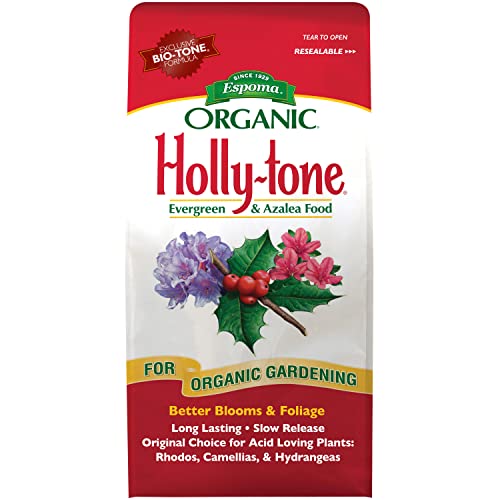
Espoma’s Holly-Tone has been the go-to organic fertilizer for acid-loving plants since 1929, and the 4-3-4 analysis combined with 5 percent sulfur remains a reliable standard. The Bio-tone formula includes endo- and ectomycorrhizae that help camellia roots access phosphorus and trace minerals more efficiently, which is particularly valuable in compacted clay soils.
This pack contains two 4-pound bags, which is convenient for gardeners who want to treat several shrubs without committing to one massive sack. The pellets are ready to use — no mixing required — and the slow-release organics break down gradually so there is little risk of salt injury even if you are generous with the spreader.
Owners consistently report greener leaves and more abundant flower buds after a single spring application. However, the 4-pound-per-bag size is relatively small; if you have a large camellia hedge or multiple tall shrubs, you may need multiple packs to cover the full drip-line area.
What works
- Bio-tone mycorrhizae improve nutrient uptake in poor soil
- 5 percent sulfur provides steady pH correction over time
- Two-bag pack offers flexibility for smaller gardens
What doesn’t
- Individual bag size is small for large planting areas
- Organic breakdown slows in cold soil below 50°F
4. Coast of Maine Organic Planting Soil for Acid Loving Plants

When you are planting a camellia in a container or re-amending a small bed, the Coast of Maine blend provides a complete low-pH foundation instead of just a fertilizer top-dressing. The mix combines sphagnum peat moss, composted manure, and aged bark to create a lightweight, well-draining medium that naturally holds a pH between 4.5 and 5.5.
The 20-quart bag is large enough to fill a 14-inch pot or to mix into a 3-by-3-foot in-ground bed. Because this is an actual planting soil rather than a concentrated fertilizer, you can use it as the sole growing medium for container camellias without worrying about nutrient burn or pH drift.
Reviews highlight that the soil has no offensive odor, which is a practical advantage when working close to a patio or entryway. The downside is that the nutrient content is relatively mild compared to a dedicated fertilizer; established camellias in this mix may still need a supplemental feeding in late spring to sustain heavy blooming.
What works
- Pre-formulated low-pH mix ideal for container camellias
- Sphagnum peat and compost ensure good drainage and moisture retention
- No synthetic chemicals or strong odors
What doesn’t
- Nutrient levels are moderate; heavy bloomers need extra feeding
- Bag size may be insufficient for large in-ground beds
5. FoxFarm Happy Frog Acid Loving Plants Fertilizer

FoxFarm’s Happy Frog line is built around beneficial soil microbiology, and this acid-loving formula delivers a concentrated dose of mycorrhizal fungi and microbes alongside a gentle nutrient profile. The powder form dissolves readily when mixed with water at a 1/16 cup per gallon rate, making it straightforward to apply as a liquid drench around the root zone of newly transplanted camellias.
The 4-pound bag is compact, but the mixing ratio is efficient — a single bag yields roughly 16 gallons of feeding solution, which is enough to water several small shrubs or one large specimen multiple times. Because the formula is mild, there is virtually no risk of burning delicate feeder roots during the establishment phase.
Users growing blueberries, gardenias, and strawberries in containers all report a visible flush of new growth within 10 to 14 days. For camellias specifically, this is best used as a biweekly supplement during the first growing season after planting rather than as a standalone annual feeding program.
What works
- Mycorrhizal fungi enhance root establishment in new transplants
- Powder mixes easily into a liquid drench for precise application
- Gentle formula eliminates burn risk for sensitive roots
What doesn’t
- Liquid mixing requires more labor than granular broadcast
- 4-pound bag is small for repeated feeding of multiple shrubs
6. Espoma Organic Land and Sea Gourmet Compost

Espoma’s Land and Sea Gourmet Compost is not a standard fertilizer — it is a concentrated soil amendment designed to rebuild organic matter and microbial life in depleted ground. The lobster and crab meal provide chitin and calcium that feed beneficial soil bacteria, while the Myco-Tone blend supplies both endo- and ectomycorrhizae for deep root colonization.
The 24-pound bag is heavy, but a cubic foot of this material goes a long way when tilled into a planting bed or layered into a container mix. For camellias, the true value appears in the second season, after the marine meals have fully decomposed and released their trace minerals into the acidified root zone.
Experienced gardeners who combine this compost with a sulfur-based acidifier report noticeably denser foliage and more uniform flower coverage. The catch is that this product alone will not lower pH — you must pair it with an acidifying fertilizer if your starting pH is above 6.5.
What works
- Marine-based ingredients rebuild soil microbiology long-term
- Myco-Tone enhances root access to deep nutrients
- Large 24-pound bag provides substantial volume per dollar
What doesn’t
- Does not actively acidify soil on its own
- Requires tilling or mixing; not a top-dress convenience product
7. Miracle-Gro Potting Mix (3-Pack)

Miracle-Gro’s standard potting mix is not formulated for acid-loving plants, but it can serve as a neutral base for container camellias if you amend it aggressively with sulfur or an acid-fighting fertilizer. The three 8-quart bags offer excellent volume for the money, and the moisture-control properties keep container soil from drying out too quickly during the summer.
The built-in feeder formula supplies nutrients for up to six months, which removes the need for supplementary fertilization in the first season. However, the starting pH of this mix typically hovers around 6.2 to 6.8 — above the ideal range for camellias — so you must incorporate an acidifying agent before planting.
Reviewers appreciate the convenience of the smaller bags, which are easy to handle and store. For a budget-conscious gardener who already has a sulfur amendment on hand, this mix provides a cost-effective potting medium, but it is not a standalone solution for ericaceous plants.
What works
- Excellent value with three 8-quart bags per pack
- Built-in fertilizer feeds container plants for up to six months
- Lightweight and easy to handle for potting
What doesn’t
- Starting pH is too high for camellias without added acidifier
- General formula lacks the micronutrients ericaceous plants need
Hardware & Specs Guide
Sulfur Content Percentage
The single most important spec on an acid-loving plant fertilizer label. Products with 5 percent elemental sulfur, such as True Organic and Espoma Holly-Tone, can lower soil pH by 0.5 to 1.0 units over a season. Products with zero sulfur, like Fertilome and standard potting mixes, require separate sulfur amendments to achieve the same acidification.
NPK Ratio and Nitrogen Form
Camellias prefer a balanced or slightly nitrogen-lean ratio. A 4-3-4 or 5-4-3 analysis provides steady foliar growth without sacrificing flowers. Crucially, look for ammoniacal nitrogen sources — ammonium sulfate or urea — rather than nitrate, which has a neutral to alkalizing effect on root-zone pH.
Mycorrhizal Inoculation
Mycorrhizal fungi form a symbiotic network around camellia roots, extending the plant’s reach for phosphorus, zinc, and copper by up to 100 times. Products such as FoxFarm Happy Frog and Espoma Holly-Tone include these beneficial fungi. If your chosen product lacks them, consider a separate mycorrhizal inoculant for new plantings.
Coverage Area Per Bag
Coverage varies widely: a 4-pound bag of FoxFarm covers roughly 40 square feet at the suggested rate, while a 12-pound bag of True Organic covers up to 261 square feet. Match the bag size to your planting area to avoid having to reorder mid-season or over-applying out of impatience.
FAQ
Can I use regular potting soil for camellias?
How often should I apply acidic fertilizer to camellias?
What is the fastest way to lower soil pH for a camellia?
Is coffee ground a good acidifier for camellias?
Final Thoughts: The Verdict
For most gardeners, the acidic soil for camellias winner is the True Organic Azalea, Camellia & Rhododendron Food because it combines 5 percent elemental sulfur with a marine-based 5-4-3 NPK ratio that feeds camellias steadily without synthetic salts. If you need the fastest bloom response after a season of poor flowering, grab the Fertilome 9-15-13 for its high-phosphate bud-triggering punch. And for container gardeners who want a ready-to-use low-pH growing medium without mixing, nothing beats the Coast of Maine Organic Planting Soil.