
When the leaves on your prized oak, maple, or fruit tree start turning yellow, spotting black, or wilting before autumn, the culprit is often a fungal disease living inside the vascular system — a problem a surface spray can’t fix. The solution is a systemic fungicide that the tree absorbs and moves through its tissues to stop the infection from the inside out, a target you cannot hit with a simple foliar mist.
I’m Rikta — the co-founder and writer behind Lawn Gear Lab. I’ve spent hundreds of hours comparing active ingredient chemistries, analyzing third-party trial data on disease suppression rates, and cross-referencing owner reports from arborists and homeowners to identify the formulations that truly deliver inside the tree’s cambium layer rather than just sitting on the bark.
Whether you’re battling oak wilt, anthracnose, or persistent powdery mildew on a mature tree, this guide breaks down the concentrated chemistries and application methods that work. Read on to find the best systemic fungicide for trees that matches your specific disease pressure and tree size.
How To Choose The Best Systemic Fungicide For Trees
Selecting the right systemic fungicide requires matching the active ingredient to the specific disease and understanding how the tree will uptake the chemical. A product that works on powdery mildew in roses may be ineffective against Phytophthora root rot in an oak tree.
Active Ingredient: Propiconazole vs. Myclobutanil vs. Phosphorous Acid
Propiconazole (found in Quali-Pro and Atticus Gunner) is a demethylation inhibitor (DMI) that stops fungus from building cell membranes. It is exceptional for brown patch, dollar spot, and rusts. Myclobutanil (found in Atticus Gravex) works similarly but is often preferred for broad-spectrum control on ornamentals and fruit trees. Phosphorous Acid (found in Monterey Garden Phos) moves both upward and downward in the tree and is the go-to for water-mold diseases like root rot and Phytophthora.
Application Method: Soil Drench vs. Foliar Spray vs. Basal Bark
For large trees with thick canopies, a foliar spray requires a high-pressure sprayer and proper coverage. A soil drench, like the Monterey Fruit Tree & Vegetable Systemic Soil Drench, relies on root uptake and works best for trees up to a certain trunk diameter. Basal bark applications are effective for thin-barked species. Always match the method to the tree’s size and the label’s site specifications.
Rainfastness and Residual Activity
Systemic fungicides, once absorbed, are rainfast within hours. However, the duration of protection varies: some provide 14 days, while others like Quali-Pro Propiconazole 14.3 offer up to 28 days. In areas with heavy spring rains, look for a formulation that resists wash-off and maintains curative activity between applications.
Quick Comparison
On smaller screens, swipe sideways to see the full table.
| Model | Category | Best For | Key Spec | Amazon |
|---|---|---|---|---|
| Quali-Pro Propiconazole 14.3 | Professional Concentrate | Broad-spectrum turf & tree disease control | 14.3% Propiconazole | Amazon |
| Dow Eagle 20EW | Industry Standard | Premium disease control on ornamentals | 19.7% Myclobutanil | Amazon |
| Monterey Garden Phos | Root Rot Specialist | Phytophthora & root rot in trees | Phosphorous Acid | Amazon |
| Atticus Gravex 20EW | Broad Spectrum | Brown rot & powdery mildew on fruit trees | 19.7% Myclobutanil | Amazon |
| Atticus Gunner 14.3 MEC | Low Odor | Quick uptake & long residual | 14.3% Propiconazole | Amazon |
| Monterey Fruit Tree & Vegetable Systemic Soil Drench | Soil Drench | Year-long insect & disease suppression | Imidacloprid | Amazon |
| Ortho Rose & Flower Disease Control | Entry Level | Beginner-friendly rose & shrub care | 16 oz Liquid Concentrate | Amazon |
In‑Depth Reviews
1. Quali-Pro Propiconazole 14.3 Fungicide

Quali-Pro Propiconazole 14.3 sets the standard for professional-grade tree and turf disease control. Its 14.3% propiconazole formulation matches the active ingredient found in the industry benchmark Banner Maxx, delivering broad-spectrum protection against brown patch, powdery mildew, rusts, and anthracnose. The microemulsion concentrate mixes easily and stays suspended in the tank, so you don’t have to re-agitate mid-spray — a major advantage when treating multiple large trees in a single session.
Users consistently report that a single application at 2 oz per gallon per 1,000 sq ft stops brown patch spread in turf within a week. For trees, the locally systemic action moves into leaf tissue and provides up to 28 days of residual control. The 32 oz bottle treats a significant area, making it economical for properties with multiple large shade trees or extensive landscaping.
The biggest consideration is that this is a professional-strength product requiring careful measurement and full personal protective equipment (PPE) during mixing. Some users note that the label uses per-acre rates for tree applications, requiring a simple conversion to your sprayer volume. For any homeowner facing a serious fungal outbreak on mature trees, this is the most reliable weapon in the arsenal.
What works
- Broad-spectrum control on dozens of tree and turf diseases
- Excellent tank stability with MEC formulation
- Up to 28 days of residual protection
What doesn’t
- Requires PPE and careful mixing
- Label rates can be confusing for small applications
2. Dow AgroSciences Eagle 20EW Fungicide

Dow Eagle 20EW is the gold standard for professional applicators who need a proven myclobutanil formulation that works inside the tree’s vascular system. With 19.7% active ingredient, it controls over 15 diseases including dollar spot, brown patch, spring dead spot, and powdery mildew in turf, ornamentals, and fruit trees. The systemic action moves upward through the xylem to protect new growth that emerges after application.
Users treating shot-hole disease in stone fruits and powdery mildew in ornamentals report it outperforms copper-based sprays. In one documented case, a red oak tree with suspected blight recovered fully after a combined trunk injection and drench treatment. The product is also labeled for apples, stone fruits, and grapes, making it a versatile option for orchard owners.
The primary drawback is the complexity of mixing: rates are given in ounces per acre per 100 gallons, which can confuse first-time users. Also, the 16 oz bottle is small relative to the mixing rates, so large properties may need to buy multiple bottles. For anyone serious about tree health and willing to follow detailed label instructions, Eagle 20EW delivers unmatched efficacy.
What works
- Superior curative and preventive action on tough diseases
- Protects new growth with upward systemic mobility
- Trusted by professional arborists and golf course superintendents
What doesn’t
- Mixing instructions are complex for home users
- Small bottle size for large properties
3. Monterey Garden Phos Bundled with Measuring Spoon

Monterey Garden Phos is the specialist you call when the problem is below the soil line. Its phosphorous acid chemistry is uniquely systemic in both upward and downward directions, meaning it moves from the leaves to the roots and vice versa, making it highly effective against water-mold pathogens like Phytophthora, Pythium, and root rot that conventional DMIs often miss. The included measuring spoon simplifies the mixing process, a welcome addition for precise application.
Users report it saved avocado trees from root rot after other products failed. One review described a full recovery after calling the manufacturer for specific application advice, noting it is a little expensive but delivers when nothing else works. It can be applied as a soil drench, foliar spray, or basal bark treatment, giving arborists flexibility depending on the tree species and disease location.
The product has some risks: if misapplied at high concentrations, it can cause leaf burn. Also, the 1-pint bottle is best suited for small to medium-sized trees or targeted spot treatments — large properties may require multiple units. For homeowners dealing with root rot in a valuable shade or fruit tree, this is the most targeted solution available.
What works
- Controls Phytophthora and root rot that other fungicides miss
- Bi-directional systemic movement
- Multiple application methods (drench, spray, bark)
What doesn’t
- Can cause leaf burn if over-applied
- Small bottle size for large trees
4. Atticus Gravex 20EW Fungicide
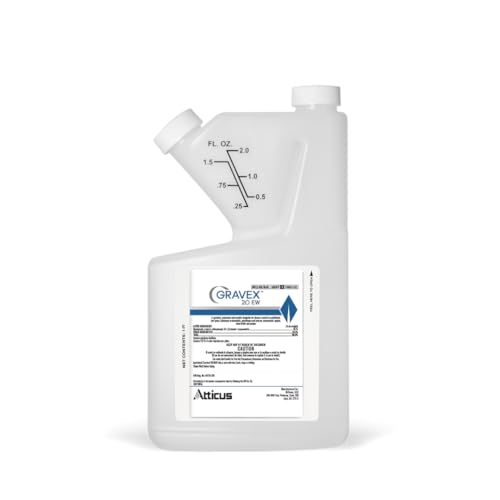
Atticus Gravex 20EW offers a cost-effective alternative to the branded Eagle 20EW, containing the same 19.7% myclobutanil active ingredient. It is labeled for control of over 38 fungal diseases across turf, ornamentals, and residential fruit trees. Users treating brown rot on peach trees noted that applications starting weeks before harvest reduced losses from major to just 1-2 affected fruits, even under heavy rain pressure.
The product’s upward systemic mobility ensures that new leaves and blossoms are protected as they emerge. It is particularly effective on powdery mildew, black spot, scab, and rusts. The 16 oz bottle includes a convenient spout with measurement markings, making it easier to pour accurately into a backpack sprayer tank compared to some competitors.
Some users report a strong chemical smell during mixing, though it dissipates after spraying. It also does not cure leaves already infected — it prevents infection on new growth. For homeowners with a mix of fruit trees and ornamentals who want a proven myclobutanil formulation at a better price point than the name brand, Gravex is the clear choice.
What works
- Same active ingredient as Eagle 20EW at a lower cost
- Effective on brown rot in stone fruits
- Easy-to-pour bottle with measurement spout
What doesn’t
- Strong smell during mixing
- Not curative on already-infected leaves
5. Atticus Gunner 14.3 MEC Fungicide
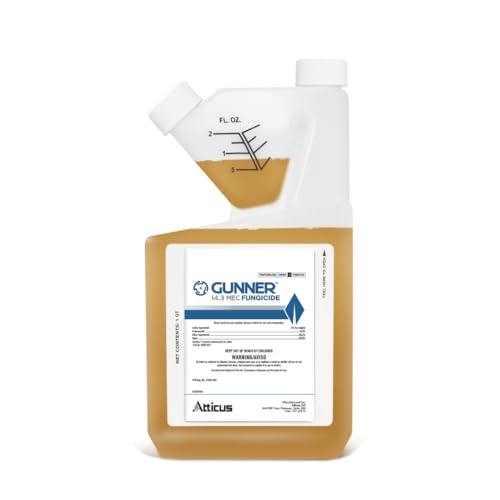
Atticus Gunner 14.3 MEC delivers exactly the same active ingredient (14.3% propiconazole) as the professional standard Banner Maxx, but in a lower-odor formulation that won’t leave a strong chemical trail in your yard. The microemulsion (MEC) technology ensures particles stay suspended in the tank, providing consistent application without the need for constant re-mixing. Once dry on the foliage, it resists wash-off from rain, making it reliable during unpredictable spring weather.
Users report it eliminated persistent black spot on roses with a single application and kept the disease from returning for three weeks. Another reviewer with a 12,000 sq ft lawn ordered a second bottle because the first worked so well on lawn fungus. The 32 oz size provides a good volume-to-cost ratio, ideal for treating multiple trees and a lawn in the same session.
The product is not sold in Alaska, DC, Hawaii, Puerto Rico, or Vermont, so check local availability. Also, the label instructions are printed very small, which can make reading mixing rates difficult. For homeowners who want professional-grade propiconazole activity without the strong odor, Gunner is the most pleasant option to work with.
What works
- Low-odor formulation for comfortable application
- Rainfast after drying
- Good value with 32 oz size
What doesn’t
- Not available in several states
- Small print on label instructions
6. Monterey Fruit Tree & Vegetable Systemic Soil Drench
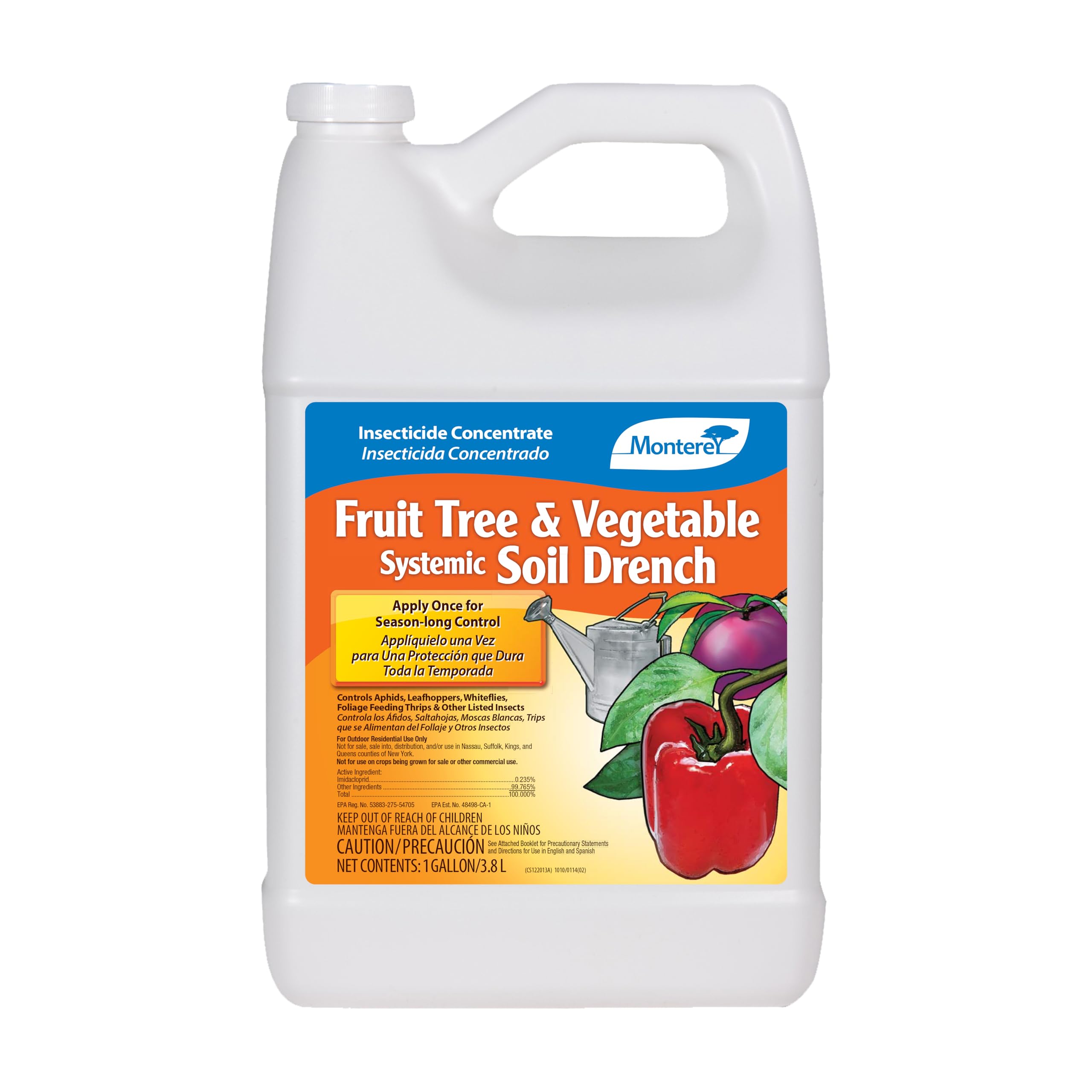
This Monterey soil drench is unique because it delivers a systemic insecticide (imidacloprid) that also suppresses some fungal vectors, but it is important to note this is an insecticide, not a true fungicide. It is included here because many tree diseases are spread by insects like borers and lace bugs, and controlling the vector is a critical part of disease management. The 1-gallon jug concentrates into a large volume of ready-to-use solution, providing year-long protection from a single root-zone application.
Users report dramatic results: a 7-ft avocado tree with severe lace bug infestation and 70% leaf loss fully recovered with massive new growth after treatment. Another reviewer saved their squash and fruit trees from moth worms. The soil drench method eliminates the need for spray equipment — you simply mix and pour around the base of the tree.
The primary concern is that imidacloprid is a neonicotinoid with potential environmental impact, and some users worry about residues in edible crops. Label instructions advise against use on plants in flower visited by bees. It is also ineffective against fungal pathogens directly. For integrated pest management where insects are the primary disease vector, this is a valuable tool, but it should not replace a dedicated fungicide for true fungal infections.
What works
- Easy soil drench application, no spraying required
- Provides season-long insect control
- Large 1-gallon size for many trees
What doesn’t
- This is an insecticide, not a true fungicide
- Not suitable for use on flowering plants visited by bees
7. Ortho Rose & Flower Disease Control Concentrate

Ortho Rose & Flower Disease Control Concentrate is the entry-level option for homeowners dealing with common fungal issues like black spot, rust, and powdery mildew on smaller ornamental trees and shrubs. It works systemically — once dry, rain cannot wash it off — and starts working within 24 hours, with residual control lasting up to four weeks. The 16 oz bottle is small and easy to handle, designed for use with a standard garden sprayer.
Long-time users swear by it for rose bushes, reporting that leaves turn green again after turning yellow with black spots. It is also effective on a range of flowering ornamentals. The formula is gentle enough that users feel comfortable applying it without heavy PPE, though gloves are still recommended.
This product is not designed for large mature trees or severe infections — its strength is best on shrubs and small ornamental trees. It is also not sold in New York. For a beginner who wants a simple, reliable product for a few rose bushes or a small dogwood tree, Ortho delivers predictable results with minimal fuss.
What works
- Easy to mix and apply
- Rainfast within 24 hours
- Works well on roses and ornamental shrubs
What doesn’t
- Not strong enough for large mature trees
- Not available in New York
Hardware & Specs Guide
Active Ingredient Concentration
The percentage of active ingredient (e.g., 14.3% Propiconazole, 19.7% Myclobutanil) determines the strength per ounce of concentrate. Higher percentages allow lower product rates per gallon of water. Product like Eagle 20EW at 19.7% is more concentrated than a 14.3% propiconazole, so you use less product per spray tank. Always calculate the amount of active ingredient per acre, not just the liquid volume of the bottle.
Formulation Type: EC vs. MEC vs. Emulsifiable Concentrate
Standard emulsifiable concentrates (EC) can separate in the tank and require constant agitation. Microemulsion concentrates (MEC), like those in Atticus Gunner and Quali-Pro, use smaller particles that stay suspended longer, reducing the need for re-mixing and providing better coverage on leaf surfaces. MEC formulations also typically have lower odor levels, which is a practical advantage for residential applications near patios or houses.
FAQ
How long does it take for a systemic fungicide to start working on a tree?
Can I use the same fungicide for my lawn and my trees?
What is the difference between a soil drench and a foliar spray for trees?
Final Thoughts: The Verdict
For most gardeners, the best systemic fungicide for trees winner is the Quali-Pro Propiconazole 14.3 because its broad-spectrum control, professional-grade activity, and excellent tank stability make it the most versatile option for treating both trees and turf. If you are fighting root rot or Phytophthora, grab the Monterey Garden Phos. And for a low-odor propiconazole that is rainfast after drying, nothing beats the Atticus Gunner 14.3 MEC.