
Fixing those dips and humps requires a specific blend of materials that compacts firmly without shrinking, supports grass root growth, and stays put through rain and foot traffic. Generic topsoil or pure compost often settles unevenly, undoing all your raking work within weeks.
I’m Rikta — the co-founder and writer behind Lawn Gear Lab. I spend my time cross-referencing soil particle sizes, organic content percentages, and compaction rates across dozens of bagged blends, then matching those specs against thousands of real owner reports to identify what actually holds a level grade through a season.
Whether you are filling gopher holes, smoothing a bumpy backyard, or prepping a seedbed for a flawless new lawn, you need a mix that bridges the gap between structure and fertility. This guide breaks down the top contenders among the best soil for lawn leveling by examining compressibility, nutrient profile, and how each product behaves when topdressed over existing turf.
How To Choose The Best Soil For Lawn Leveling
Leveling a lawn is not the same as filling a flowerbed. The material you use must strike a balance between structural stability and biological activity. Sand alone shifts under foot traffic; pure compost rots down and sinks; heavy clay cracks when it dries. The ideal leveling mix contains a backbone of mineral particles for weight plus organic matter for moisture retention and microbial life. Pay attention to these three factors before you buy.
Particle Size And Settlement Rate
Mixes with larger particles (coarse sand, fine gravel, or screened topsoil) lock together quickly and resist further compaction, making them ideal for filling deep depressions. Finer materials like peat moss or coir expand when wet and shrink when dry, which can undo your leveling work after several rain-dry cycles. Look for a blend that uses a silt-loam or sandy-loam base—it strikes the best compromise between immediate fill and long-term grade stability.
Organic Content And Nutrient Profile
Bare dirt that you spread over existing grass needs enough organic matter (compost, peat, or humus) to support root penetration and water infiltration. Too little organic content leaves a sterile crust that grass struggles to colonize. Too much creates a spongy layer that sinks unevenly. A leveling soil should test between 5% and 15% organic matter by volume—enough to feed microbes but not so much that the fill collapses as the carbon decomposes.
Drainage And Water-Holding Balance
Leveling materials that hold excessive water (pure peat moss, uncomposted manure) turn spots into mud pits after a storm. Those that drain too fast (sharp sand, perlite-heavy mixes) let water run off before roots can drink. The sweet spot is a mix that holds moisture like a wrung-out sponge while allowing excess water to percolate downward. Coco coir or well-aged compost blended with sandy topsoil often delivers this balance without creating a perched water table inside the fill layer.
Quick Comparison
On smaller screens, swipe sideways to see the full table.
| Model | Category | Best For | Key Spec | Amazon |
|---|---|---|---|---|
| Michigan Peat Baccto Top Soil (50 lb) | Screened Topsoil | General lawn topdressing & fill | Reed sedge peat & sand blend | Amazon |
| Jonathan Green Love Your Soil | Soil Amendment | Breaking up compacted clay before leveling | Covers 15,000 sq. ft. | Amazon |
| The Andersons Humic DG | Humic Amendment | Boosting root mass after leveling | 70% humic content (A&L method) | Amazon |
| Lawnbox Soil Saver Gypsum & Humic | Gypsum Blend | Loosening heavy clay prior to leveling | 15 lb bag / 2,500 sq. ft. | Amazon |
| R&M Organics Premium Compost (10 lb) | Manure Compost | Small patch nutrient boost | 0.31 cubic feet per bag | Amazon |
| Michigan Peat Potting Soil with Perlite (2-Pack) | Potting Mix | Raised beds & container leveling | 0.14 cubic yards total | Amazon |
| Avalution Organic Coco Coir Bricks (6-Pack) | Coco Coir | Mixing into sandy soil for moisture retention | Expands to 36 quarts total | Amazon |
In‑Depth Reviews
1. Michigan Peat Company Baccto Top Soil (50 lb)

The Baccto Top Soil uses a reed sedge peat and sand base that hits the ideal texture for lawn leveling work. It is dark, relatively clean, and compacts firmly without turning into a brick when dry. Multiple repeat buyers note that this is their third or fourth order, which signals consistent quality batch to batch—exactly what you need when covering large uneven areas across multiple weekends.
At 50 pounds per bag, the material spreads evenly at a quarter-inch depth for topdressing without smothering existing grass. The sand component provides enough weight to hold the fill in place during rain, while the peat fraction maintains moisture for seed germination if you overseed after leveling. Owners report that it improves drainage in clay soils better than standard garden topsoil blends that rely on compost alone.
Some bags arrive with a significant amount of large twigs and wood fragments that require manual sifting before spreading. If you are covering a large surface, budget extra time to screen out debris. The peat content also means the soil can develop clumps if stored wet, so keep the bag sealed until use.
What works
- Consistent screened texture ideal for thin topdressing layers.
- Sand-peat blend resists settling better than pure compost.
- High repeat-purchase rate among lawn enthusiasts.
What doesn’t
- Frequent large twigs require sifting before spreading.
- Can form clumps if bag gets wet during storage.
2. Jonathan Green Love Your Soil (54 lb)

Love Your Soil is not a direct fill material—it is a powdered soil amendment designed to be applied before you level. The formula uses gypsum to flocculate clay particles, creating pore space that allows water and roots to penetrate hardpan. Users with heavy clay report that two to three applications restored lawns that had looked hopeless for years, saving thousands in professional re-sodding costs.
Spread this with a rotary spreader at the recommended setting (many owners find setting 4 on a Scotts Mini Edge Guard works for 11,000 sq. ft., despite the bag suggesting a higher rate). The microbes it stimulates build a humus reserve that keeps the soil porous long after the initial application. One reviewer noted that their compacted driveway edge filled in with grass after a single treatment, with results visible within weeks.
The fine powder creates dust during application, so wear a mask on breezy days. Coverage math can be confusing—users frequently report that the bag covers less area than advertised at the higher spreader setting. It is not a leveling medium by itself; you still need topsoil or sand to fill the actual dips after the clay has been opened up.
What works
- Effectively loosens compacted clay before leveling begins.
- Stimulates microbial activity that keeps soil porous long-term.
- Safe for lawns, vegetable gardens, shrubs, and flower beds.
What doesn’t
- Dusty powder requires a mask during application.
- Coverage area claims are inconsistent with user experience.
3. The Andersons Humic DG Organic Soil Amendment (11 lb)
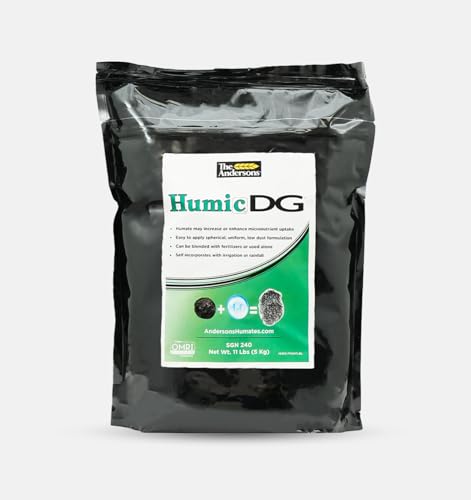
Humic DG delivers highly concentrated carbon in a dispersible granule form that blends seamlessly with any fertilizer program or can be used solo. The 70% humic content (measured by the A&L method) feeds beneficial soil microbes and chelates nutrients so grass roots absorb more from every drop of fertilizer you apply. For lawns with poor soil biology, this amendment turns dead dirt into a living system that supports deep root growth.
Use this after you have filled the low spots but before the grass fully knits in. The humic acids accelerate root vigor and seed germination, which helps new turf grab hold of the fresh fill material before erosion can wash it away. Owners with high clay content report that twice-yearly applications (spring and fall) for two to three years transformed their soil structure permanently, reducing the need for annual leveling touch-ups.
The 11-pound bag covers up to 10,000 sq. ft., so you will need a drop or broadcast spreader that handles fine granules. A few users found that the product clumps in humid conditions if not stored in a sealed container. It is an additive, not a standalone leveling soil—you must mix it into or apply it over your base fill.
What works
- High humic concentration improves nutrient uptake significantly.
- Dispersible granule format spreads evenly with standard spreaders.
- OMRI listed for organic lawn care programs.
What doesn’t
- Clumps in humid storage conditions without an airtight container.
- Must be used alongside a physical fill material, not alone.
4. Lawnbox Soil Saver Gypsum & Humic Acid (15 lb)
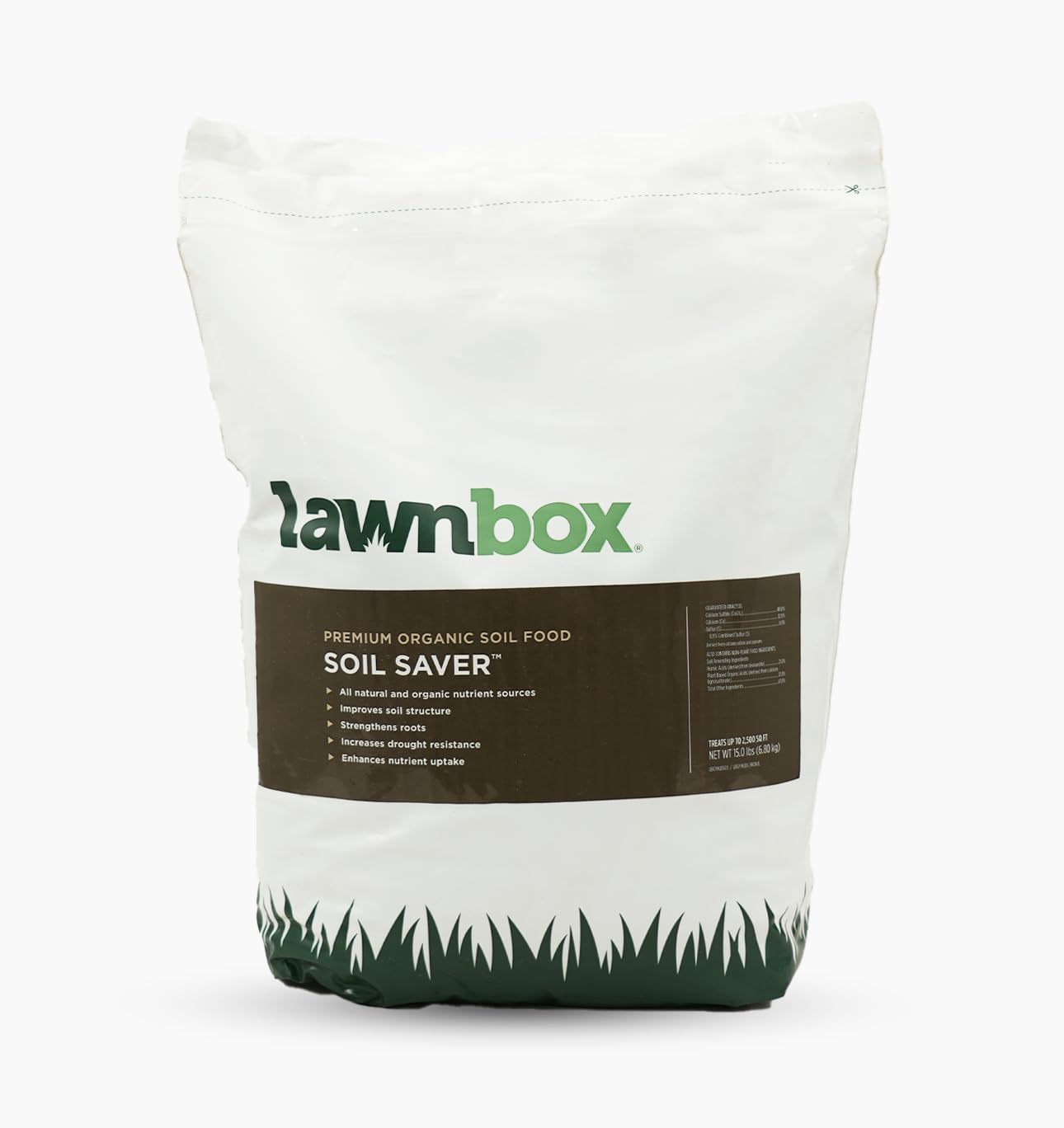
Soil Saver pairs gypsum with humic acid to tackle two problems at once: physical compaction and biological deficiency. The gypsum provides calcium and sulfur that break up heavy clay without altering soil pH, while the humic acid stimulates microbial populations that build long-term soil structure. Users with stubborn clay soils report visible turf growth in bare spots within a week after application, and one reviewer noted that patches that remained bare for two years finally filled in.
The 15-pound bag covers 2,500 sq. ft., making it a practical size for targeted treatment of problem zones before you bring in bulk soil for leveling. Spread it, water it in, and wait a few days for the gypsum to start flocculating the clay before you rake your fill material into place. Multiple users in the Oklahoma City area with heavy red clay reported that their lawns stayed thick and green through summer droughts after switching to this product.
It is not for sale in California or Oregon, so residents of those states need to find an alternative. The bag size is small relative to the coverage claim—if your entire lawn is compacted clay, you may need multiple bags to see a difference across the whole property.
What works
- Dual-action gypsum and humic acid for physical and biological soil repair.
- Fast visible results on bare patches in compacted clay.
- Safe for pets and family immediately after watering in.
What doesn’t
- Not available for purchase in CA or OR.
- Small bag size requires multiple units for full-lawn treatment.
5. R&M Organics Premium Organic Compost (10 lb)
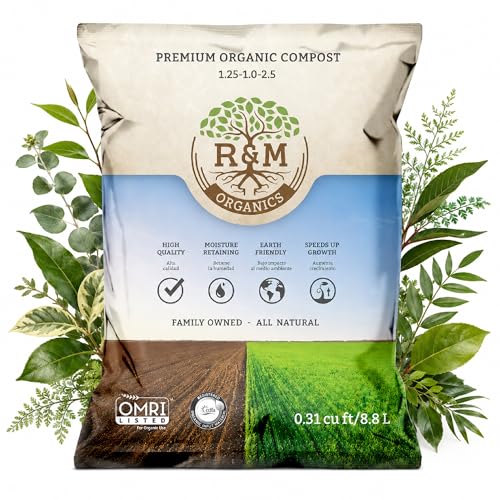
R&M Organics delivers fully composted dairy cow manure with a fine, crumbly texture that blends easily into topsoil for small patch leveling jobs. The material has a low odor (owners describe it as a clean earthy smell rather than barnyard stench), making it tolerable for indoor use on houseplants or for small outdoor patches near patios. One user rescued azaleas damaged by roof wash runoff by topdressing with this compost.
The 10-pound bag is compact enough to carry in one hand, and the compost is screen-fine with no clumps or visible unfinished wood. A single bag goes a long way when used as a quarter-inch topdressing for a few square feet of depressed lawn area. A Master Gardener recommended it for emergency plant recovery, and the owner reported that ailing tomato plants with yellow leaves turned green within a week after mixing a bag into a 27-gallon planter.
At 10 pounds, you get only 0.31 cubic feet, which is not enough for any leveling project beyond a few square feet. The mixing ratio of 5:1 (soil to compost) means you will need additional bulk fill material for any substantial dip. It is also premium-priced per cubic foot compared to bulk compost from a landscape supply yard.
What works
- Low-odor formula suitable for indoor and patio-area use.
- Fine, crumbly texture mixes into topsoil without clumping.
- Fast nutrient release visible on stressed plants within a week.
What doesn’t
- Small bag volume impractical for anything beyond tiny patches.
- High cost per cubic foot relative to bulk alternative sources.
6. Michigan Peat Potting Soil with Perlite (2-Pack, 50 lb Each)
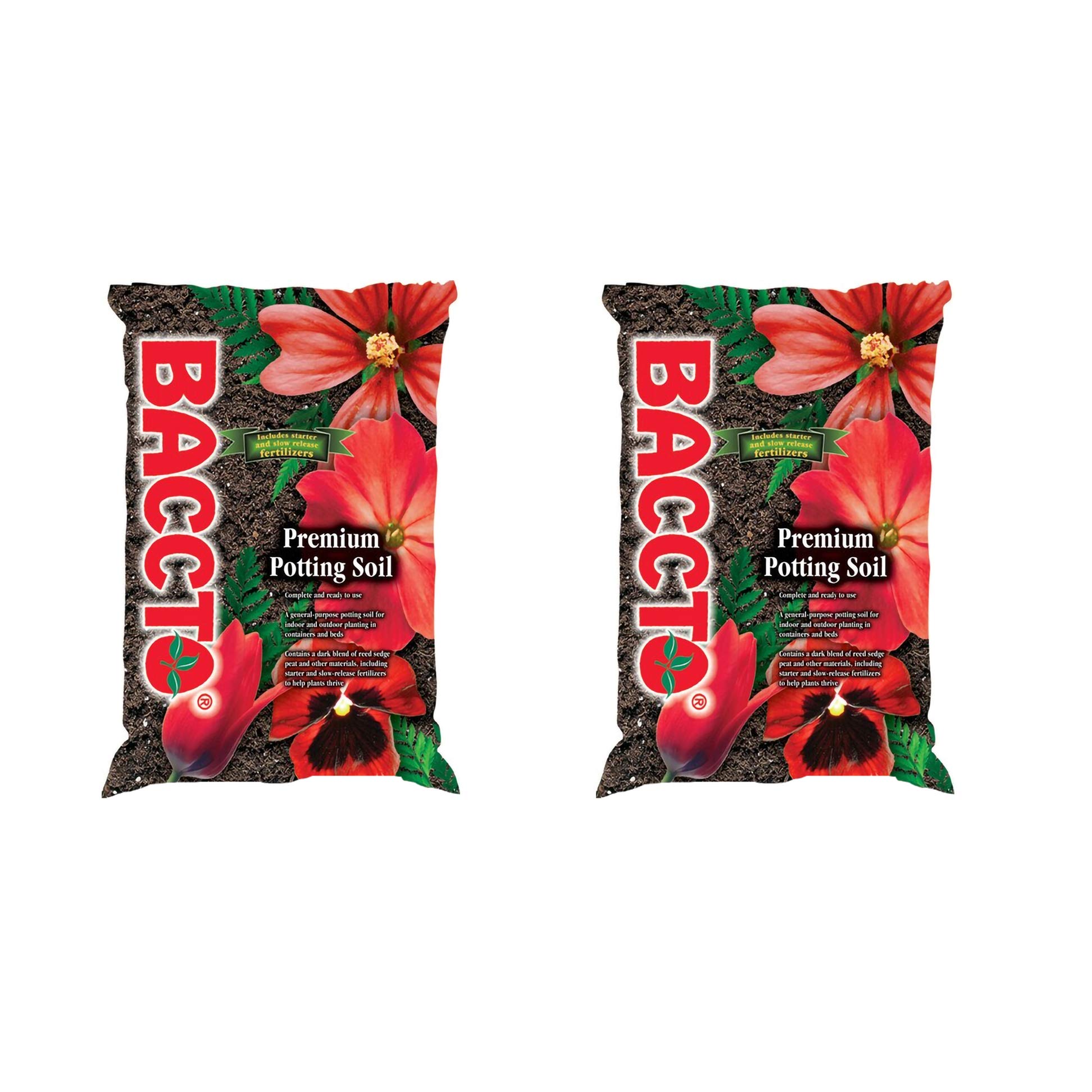
This two-pack gives you 100 pounds of a reed sedge peat, perlite, and sand mix that works well for filling raised planting beds or leveling large container gardens. The perlite improves aeration and drainage, preventing the mix from compacting into a dense layer that suffocates roots. Users describe the consistency as perfect for potting and container gardening, arriving moist and ready to use straight from the bag.
For lawn leveling, this product is best suited for filling small depressions in garden beds or topdressing areas where you plan to transplant shrubs rather than seeding grass. The sand component provides enough weight to hold the fill against light rain, while the perlite keeps the soil from crusting over on the surface. Owners of deep raised beds (2.5 feet deep) found that this mix provided enough depth without excessive settlement.
Multiple reports mention fungus gnats emerging from the bag after opening, which suggests the peat was not fully pasteurized. The perlite also floats to the surface after heavy watering, creating a white layer that some homeowners find unsightly on a lawn setting. This is not a dedicated leveling soil for turf—it is a potting mix repurposed for light fill work.
What works
- Perlite keep the mix aerated and prevents compaction in beds.
- Arrives moist and ready to use without additional wetting.
- Large 100-pound total volume for substantial filling projects.
What doesn’t
- Fungus gnats reported in multiple bags shortly after opening.
- Perlite rises to the surface after rain, creating visible white specks.
7. Avalution Organic Coco Coir Bricks (6-Pack)
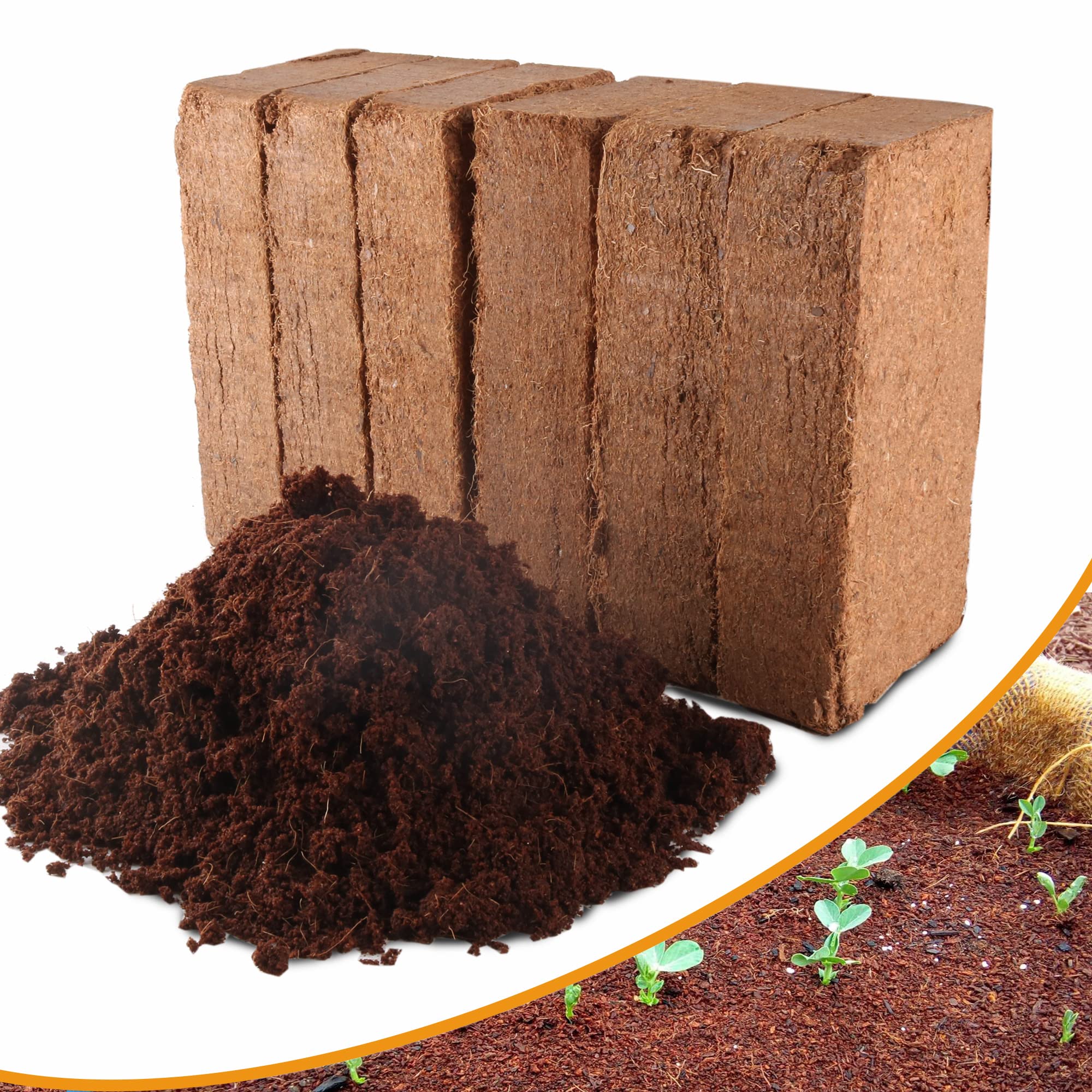
Coco coir bricks are compressed coconut husk fibers that expand eight to ten times their dry weight when soaked, producing a fluffy, pH-neutral growing medium. For lawn leveling, coir is rarely used alone—it lacks the mineral weight to hold a grade against erosion—but it excels as an additive to sandy or loamy topsoil to boost moisture retention. One user combined three blocks with topsoil during lawn reseeding and reported that the mix held moisture far longer than soil alone.
Each brick requires soaking in 4 to 5 quarts of water overnight, then breaking apart with a trowel or gloved hands. The six-pack expands to a total of 36 quarts, which is roughly the volume of a large bucket. Owners with deep raised garden beds (2.5 feet) found that coir added needed depth without the weight of soil, though they noted that the material compresses noticeably over time and may require topping off each season.
Pure coir settles under foot traffic and rain, so it is not a standalone leveling material for lawns. The blocks are hard when dry and need significant soaking time—skipping the overnight soak leads to stubborn lumps that refuse to break apart. The volume is generous for the price, but for leveling a full yard you would need many packs to make a measurable difference.
What works
- Excellent water retention when mixed into sandy leveling soil.
- Compact storage—bricks expand to ten times dry volume.
- Neutral pH works well with any fertilizer or soil type.
What doesn’t
- Lacks mineral weight to hold a level grade on its own.
- Requires overnight soaking; lumps form if hydration is rushed.
Hardware & Specs Guide
Compaction And Settlement Rate
The most critical spec for a leveling soil is how much it settles after wet-dry cycles. Pure organic matter like compost or peat can shrink 10% to 20% as carbon decomposes. Coco coir compresses roughly 15% under foot traffic. Sandy topsoil with less than 10% organic content settles only 3% to 5% over a season, making it the most stable base for grade-sensitive work. If you are filling a dip deeper than two inches, overfill by about half an inch to account for natural settlement.
Particle Size Distribution
Screened topsoil should pass through a half-inch mesh, but the ratio of sand, silt, and clay determines how the material behaves when wet. A blend with 60% sand, 20% silt, and 20% clay (sandy loam) offers the best balance for leveling: the sand provides weight and drainage, the clay adds cohesion, and the silt fills the gaps. Avoid mixes with visible wood chips or bark fragments—they decompose unevenly and create pockmarks in the finished grade.
FAQ
Can I use pure sand to level my lawn?
How deep can I apply leveling soil in one pass?
Should I mix gypsum into my leveling topsoil?
Final Thoughts: The Verdict
For most gardeners, the soil for lawn leveling winner is the Michigan Peat Baccto Top Soil because its screened sand-peat blend compacts firmly without excessive shrinkage and supports rapid grass root growth from day one. If you need to break up compacted clay before you can even begin leveling, grab the Jonathan Green Love Your Soil for its powerful gypsum-based soil structure repair. And for targeted nutrient boosting of small patch fills, nothing beats the R&M Organics Premium Compost for its fast-acting, low-odor organic content.