
Nothing ruins a flowering container display faster than soil that drowns roots, compacts into concrete, or starves blooms before they open. Potted flowers demand a growing medium that drains sharply yet retains enough moisture between waterings, delivers steady nutrition without burning tender roots, and stays structurally light so air reaches every root tip. The wrong bag fills your pots with heavy, weedy debris that turns a vibrant patio into a wilting disappointment.
I’m Rikta — the co-founder and writer behind Lawn Gear Lab. I compare bagged mixes by studying horticultural specifications, checking particle size distribution, analyzing organic certification claims, and cross-referencing hundreds of verified owner experiences to isolate the mixes that actually perform in confined containers.
Whether you’re planting annuals in window boxes or perennials in terracotta, the right mix transforms the entire season. This guide breaks down five commercial options to help you confidently pick the best soil for flowers in pots that matches your plants and your watering routine.
How To Choose The Best Soil For Flowers In Pots
Confusion sets in as soon as you scan the garden center shelves: bag colors, brand claims, and ingredient lists blur together. Potted flowers need something different from what goes into the ground. The following three criteria separate a high-performing container mix from a bag of disappointment.
Drainage and aeration matter more than fertilizer content
Roots confined to a pot cannot escape standing water. A mix that lacks perlite, pumice, or coarse sand compacts under gravity and traps moisture against the root zone, inviting rot and fungal disease. Look for visible white perlite specks or listed aeration agents in the first few ingredients. A good mix should feel loose and crumbly when squeezed — never sticky or clay-like.
Nutrient profile and feeding duration
Container flowers exhaust available nutrients quickly. Some mixes pack a synthetic slow-release fertilizer that feeds for up to six months, which reduces the need for liquid feeding. Organic mixes rely on composted meals and worm castings — gentler but less predictable. If your blooms demand heavy feeding (petunias, geraniums), a mix with a long feeding window saves work. For light feeders like succulents or herbs, a lean mix is safer.
Texture and weight for your specific container type
Hanging baskets and tall urns need lightweight mixes that do not tip or strain hooks. Heavy soils work fine in low, wide planters but become a burden overhead. Check the bag weight relative to volume: a 1.5 cubic foot bag that weighs 34 pounds packs more moisture and less air than a 16-quart bag weighing 14 pounds. Match the weight to your container’s structural limits.
Quick Comparison
On smaller screens, swipe sideways to see the full table.
| Model | Category | Best For | Key Spec | Amazon |
|---|---|---|---|---|
| FoxFarm Ocean Forest | Premium All-Purpose | Blooming perennials & heavy feeders | 1.5 cu ft / 34 lbs — aged forest products + crab meal | Amazon |
| Coast of Maine Bar Harbor Blend | Organic All-Purpose | Organic container gardens & vegetables | 16 qt / 14 lbs — lobster shell + kelp meal | Amazon |
| Miracle-Gro Potting Mix (3-Pack) | General Outdoor | Annual flowers & mixed containers | 8 qt per bag — feeds up to 6 months | Amazon |
| Miracle-Gro Cactus, Palm & Citrus | Specialty Fast-Draining | Succulents, cacti & drought-tolerant flowers | 8 qt per bag — 3-pack fast-draining formula | Amazon |
| Miracle-Gro Organic Indoor | Indoor / Seed Starting | Houseplants & starter flowers | 8 qt per bag — 2-pack with moisture-regulating coir | Amazon |
In‑Depth Reviews
1. FoxFarm Ocean Forest Potting Soil with 2 Plant Tags
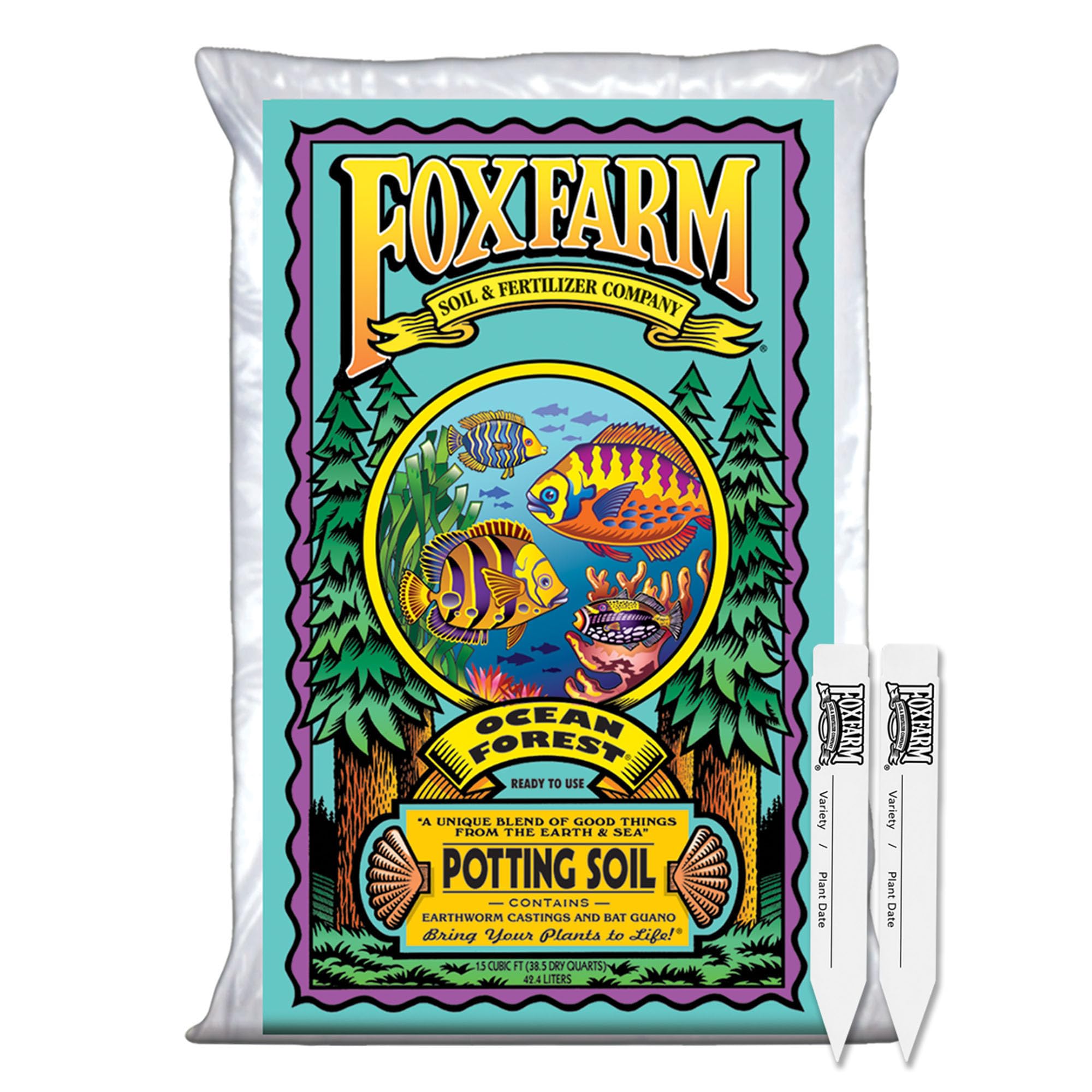
FoxFarm Ocean Forest has earned a near-cult following among serious container gardeners, and the 1.5 cubic foot bag lives up to the reputation. The texture is immediately noticeable: light, fluffy, and loaded with visible perlite and fibrous forest products. Water hits the surface and absorbs almost instantly rather than beading up or running off, a sign of proper pore structure that roots need for oxygen exchange.
The ingredient list reads like a soil recipe from a master grower. Aged forest products and sphagnum peat moss form the base, while sandy loam provides structure for drainage. Crab meal, shrimp meal, earthworm castings, and kelp meal supply a broad spectrum of micronutrients that flowers like petunias, zinnias, and marigolds convert directly into heavy blooms. The bag includes two plant tags, a small but welcome bonus for labeling.
Some gardeners find the price point steep compared to general-purpose mixes, but the nutrient charge lasts longer in the pot, reducing the need for frequent liquid fertilizer applications. The 34-pound weight is substantial — expect to heft this bag, not carry it casually. For any flowering plant that demands sustained vigor, Ocean Forest delivers the most consistent results across the widest range of container sizes.
What works
- Superior aeration and immediate water absorption
- Dense, organic nutrient profile supports heavy blooming
What doesn’t
- Heavy bag (34 lbs) is awkward to carry
- Premium pricing compared to standard mixes
2. Coast of Maine Bar Harbor Blend Potting Soil (2-Pack)
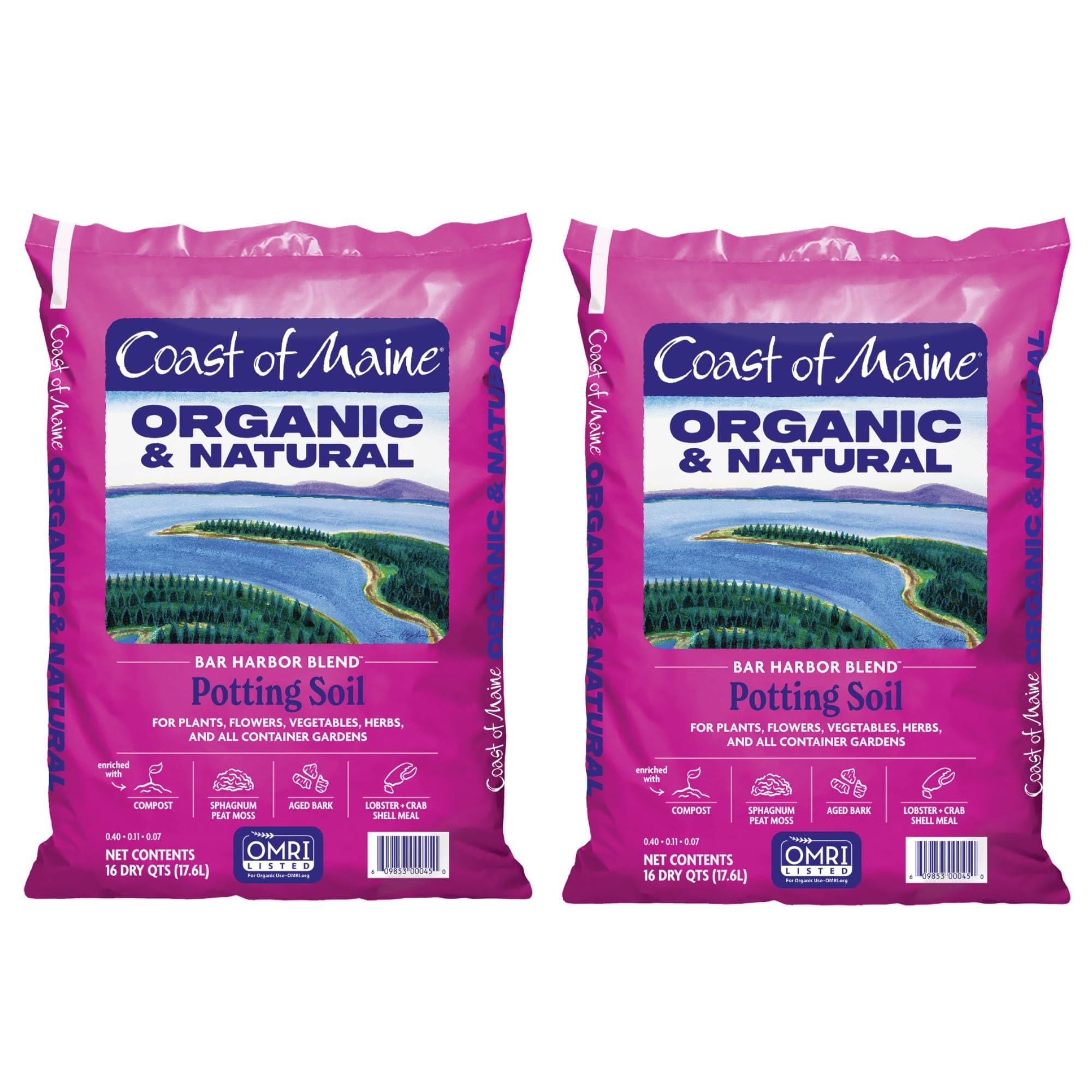
Coast of Maine’s Bar Harbor Blend brings something rare to the potting soil aisle: a genuinely different ingredient base. Lobster and crab shell meal from Maine seafood processors provides a slow-release calcium and chitin source that strengthens cell walls and may help deter soil-borne pests. Kelp meal adds trace minerals, while sphagnum peat moss and perlite handle the structural job of drainage and aeration.
The 2-pack format gives you 32 total quarts, making it practical for a medium-sized patio collection or several hanging baskets. Users consistently mention the rich, dark color and absence of large woody chunks or weed seeds that plague cheaper bags. The texture leans slightly heavier than FoxFarm but still feels workable after watering, without turning into a dense sludge. Tomatoes, peppers, and flowering annuals all respond with rapid root growth.
Organic certification means no synthetic wetting agents or quick-release fertilizers, so plants initially grow at a steadier pace rather than exploding overnight. Gardeners accustomed to synthetic feeding may need to supplement with liquid organic fertilizer after the first month. The price per quart positions it as a mid-range premium, acceptable for gardeners who prioritize organic inputs over maximum raw growth speed.
What works
- Unique marine-based nutrients for robust plant health
- Clean, consistent texture with no weeds or sticks
What doesn’t
- Nutrient release is slower than synthetic mixes
- Requires supplemental feeding for heavy bloomers
3. Miracle-Gro Potting Mix (3-Pack)

This is the workhorse of the list, and the 3-pack of 8-quart bags is exactly what you need when you have multiple containers to fill and no desire to lug a single heavy bag around the yard. Miracle-Gro’s standard potting mix incorporates a slow-release fertilizer that feeds flowering plants for up to six months, effectively eliminating the worry about when to apply liquid feed. Annual flowers like geraniums, impatiens, and petunias respond with visible growth within the first week.
The texture is consistent from bag to bag, with enough perlite to keep the mix from compacting into a hard mass over a full season. The 8-quart bags are small and manageable, making them ideal for topping off pots, refreshing window boxes, or handling smaller planters without waste. Gardeners report that the mix holds water well without becoming soggy, striking a middle ground that suits a broad range of flowering plants.
The trade-off is the synthetic nature of the fertilizer. Organic purists will pass, and the mix does not contain the composted richness found in FoxFarm or Coast of Maine. For the budget-conscious gardener focused on reliable, repeatable results for seasonal annuals, this 3-pack delivers the best consistency per dollar without surprising your plants with inconsistent nutrition.
What works
- Six-month feeding window simplifies care
- Small individual bags reduce waste and effort
What doesn’t
- Synthetic fertilizer may not appeal to organic growers
- Texture is less rich than premium blends
4. Miracle-Gro Cactus, Palm and Citrus Potting Mix (3-Pack)

Flowers that originate in arid environments — portulaca, gazania, certain succulents like echeveria — will rot within weeks in a standard moisture-retentive mix. This fast-draining formula from Miracle-Gro addresses that specific pain point. The particle size is noticeably coarser than regular potting soil, with more sand and perlite to ensure water runs through rapidly rather than pooling around the crown.
The 3-pack of 8-quart bags covers multiple succulent arrangements or a collection of cactus pots. The fertilizer is blended into the mix, which is unusual for a specialty draining formula. Many cactus soils contain zero nutrition, expecting the grower to add it. Miracle-Gro includes plant food that supports slow, steady top growth without forcing tender roots into overdrive. Users report excellent results with Christmas cactus, jade plants, and citrus trees in containers.
Stick with this mix only for plants that genuinely need fast drainage. Using it for moisture-loving flowers like fuchsia or lobelia will force you to water constantly — the mix simply cannot hold enough water for those species. For its intended audience of drought-tolerant bloomers and succulents, this is the correct specialized tool.
What works
- Coarse texture prevents root rot for succulents
- Includes pre-blended fertilizer, rare in this category
What doesn’t
- Unsuitable for moisture-loving flowers
- Requires frequent watering in hot, dry conditions
5. Miracle-Gro Organic Indoor Potting Mix (2-Pack)

Indoor flowers face a different set of constraints: limited light, less air movement, and the constant risk of overwatering by well-meaning owners. Miracle-Gro’s organic indoor mix addresses the moisture problem directly with added coir fiber, which acts as a buffer — holding water when the soil dries out and releasing it slowly rather than drowning the roots. The OMRI listing confirms the absence of synthetic chemicals, important for herbs grown alongside flowers.
The 2-pack format (two 8-quart bags) covers a modest houseplant collection or several seed-starting trays. Users transitioning from standard potting soil to this mix notice an immediate reduction in fungus gnat populations, likely because the coir-dominated texture does not stay consistently wet at the surface. The included natural fertilizer provides a gentle initial nutrient boost that suits slow-growing indoor species without causing leaf burn.
Expect to water less frequently than with conventional bags, but do not expect the heavy nutrient density of outdoor mixes. Indoor flowers that bloom heavily — african violets, begonias — may need supplemental liquid feeding after the first two months. For seed starting and general houseplant potting with minimal fuss, this 2-pack represents the best value per bag in the indoor segment.
What works
- Coir fiber reduces overwatering risk
- OMRI organic certification for indoor peace of mind
What doesn’t
- Nutrient density is lower than outdoor mixes
- Heavy feeders need supplemental fertilizer later
Hardware & Specs Guide
Bag Volume & Weight Ratio
The relationship between volume in quarts and weight in pounds reveals aeration quality. A 16-quart bag weighing 14 pounds (like Coast of Maine) indicates a lighter, more airy structure with perlite and composted organics. A 1.5 cubic foot bag (roughly 45 quarts) weighing 34 pounds (FoxFarm) is still well-aerated but denser due to aged forest products. Avoid mixes where the weight-to-volume ratio suggests heavy, waterlogged particles — those compact quickly in containers.
Fertilizer Type & Duration
Mix manufacturers use two approaches. Synthetic slow-release granules (found in all three Miracle-Gro bags) coat each particle to dissolve gradually over a defined period, usually 4–6 months. Organic blends rely on composted meals (kelp, crab, worm castings) that break down through microbial activity — effective but slower and less predictable in cold indoor conditions. For seasonal annual pots, synthetic feeding duration is a clear advantage. For long-term perennials, organic sources feed the soil biology as well as the plant.
FAQ
Can I use garden soil from my yard in flower pots?
How often should I replace potting soil in flower containers?
What does perlite do in a potting mix for flowers?
Final Thoughts: The Verdict
For most gardeners, the soil for flowers in pots winner is the FoxFarm Ocean Forest Potting Soil because it combines superior aeration with a dense organic nutrient profile that carries blooms through the entire season. If you need an organic pick with consistent texture and no synthetic inputs, grab the Coast of Maine Bar Harbor Blend. And for budget-conscious planting that still feeds your flowers for half a year, nothing beats the Miracle-Gro Potting Mix 3-Pack.