
Specs are compiled from manufacturer listings and verified buyer reviews and can change over time — please confirm the key details on the product page before buying.
Soil for earthworms isn’t dirt — it’s bedding. Get it wrong and your red wigglers crawl to the lid, go sluggish, or dry out. Get it right and they eat, breed, and turn kitchen scraps into rich castings faster than you thought possible.
I’m Rikta — the founder and writer behind Lawn Gear Lab. This guide is built by comparing the manufacturers’ published specifications and the patterns across verified customer reviews, so you get each pick’s real strengths and trade-offs instead of marketing spin.
The right bedding keeps worms moist, aerated, and feeding; the wrong one turns your bin into a sour mess, and here is the honest checklist for the best soil for earthworms.
Our Picks at a Glance
How To Choose The Best Soil For Earthworms
Worm bedding is simply the material your worms live in. It’s not food, it’s their home — the place that holds moisture, lets air flow, and gives them something to burrow through so they don’t drown or dry out.
Match the Material to the Worms
Red wigglers and nightcrawlers both like a loose, absorbent mix, but the source matters. Coco coir comes from coconut husks and resists compacting, while sphagnum peat moss holds water well but has environmental baggage. Pick a blend matched to the species you keep — the label will tell you which worms it supports.
Think in Volume, Not Just Weight
A 5-pound bag sounds modest, but once hydrated it fluffs up considerably. If you run a small starter bin, 5 pounds is plenty. For a full worm farm that processes lots of kitchen waste, you want a bigger total volume — like 40 gallons — so the worms have room to move and breed.
Moisture Is Everything
Worms breathe through their skin, which only works when they’re damp. Good bedding retains moisture for days without turning into a waterlogged clump. The recurring advice from experienced keepers: let the bedding sit for about 24 hours after mixing with non-chlorinated water before adding worms.
Quick Comparison
| Model | Best For | Weight | Material | Worm Types | Amazon |
|---|---|---|---|---|---|
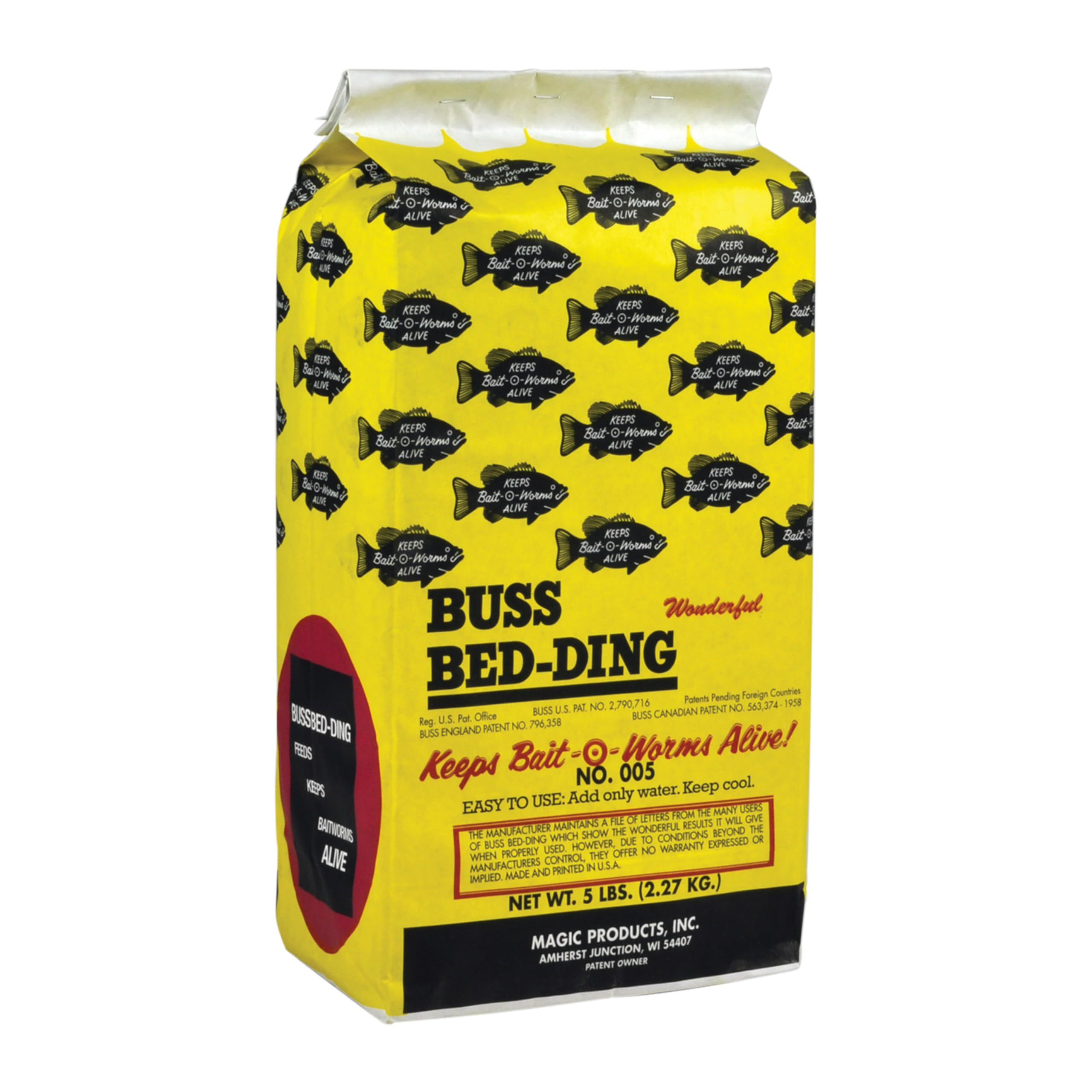
| Magic Products Buss Worm Bedding★ Best Overall | Fishing bait keepers | 5 pounds | Buss Bedding mix | Nightcrawlers, garden worms, red worms | Amazon |
| WWJD Worms 5lb Worm Bedding | Vermicompost starters | 5 pounds | Sphagnum peat moss, coco coir, calcium carbonate | Red wigglers, nightcrawlers | Amazon |
| SPONGEASE Coco Coir Brick (20 Pack) | Large farms & multi-use | 20 bricks (makes 40 gallons) | Peat-free coco coir | Worm farms, animal bedding | Amazon |
In‑Depth Reviews
1. Magic Products Buss Worm Bedding, 5-Pound
Our pick — over 4.5★ from 300+ verified ratings; the strongest balance of quality and price.
The keeper’s standby that leaves your bait lively, clean, and ready for the hook.
This 5-pound bag is built around one job: keeping fishing bait fresh. The maker’s claim is specific — nightcrawlers, garden worms, and red worms kept in Buss Bedding stay clean, lively, and full of fish-catching flavor — and long-term users back it up. Buyers report using this exact bedding for decades to maintain a worm box at home, which says plenty about consistency.
The crowd consensus lands on effectiveness above all — that’s the most-praised aspect here. The routine that works: mix with non-chlorinated water, let it sit for roughly 24 hours, then add worms. Owners who do this describe worms that stay happy and lively, and some store a filled box for half the summer without losing their bait. Mixed in with worm food and coffee grounds, the result is noticeably fat, active worms.
It’s a simple, single-purpose product — there’s no nutrient blend or potting-soil angle here. If your goal is a thriving fishing bait box rather than garden castings, this is the precise tool for it. The recurring note about Amazon’s delivery conditions is about the shipper, not the bedding itself.
What keeps owners coming back
- Holds moisture well, keeping worms damp between uses
- Proven year-after-year for fishing bait boxes
- Supports multiple worm types in one bag
Who should look elsewhere
- No added nutrients for garden-casting projects
- 5 pounds is a starter size, not a big-farm volume
Reach for it: you keep bait worms for fishing and want a dependable, decades-proven bedding that holds moisture for days.
Think twice: you want a nutrient-rich mix that doubles as worm food for a serious composting operation.
2. WWJD Worms 5lb Worm Bedding for Nightcrawlers and Red Wigglers
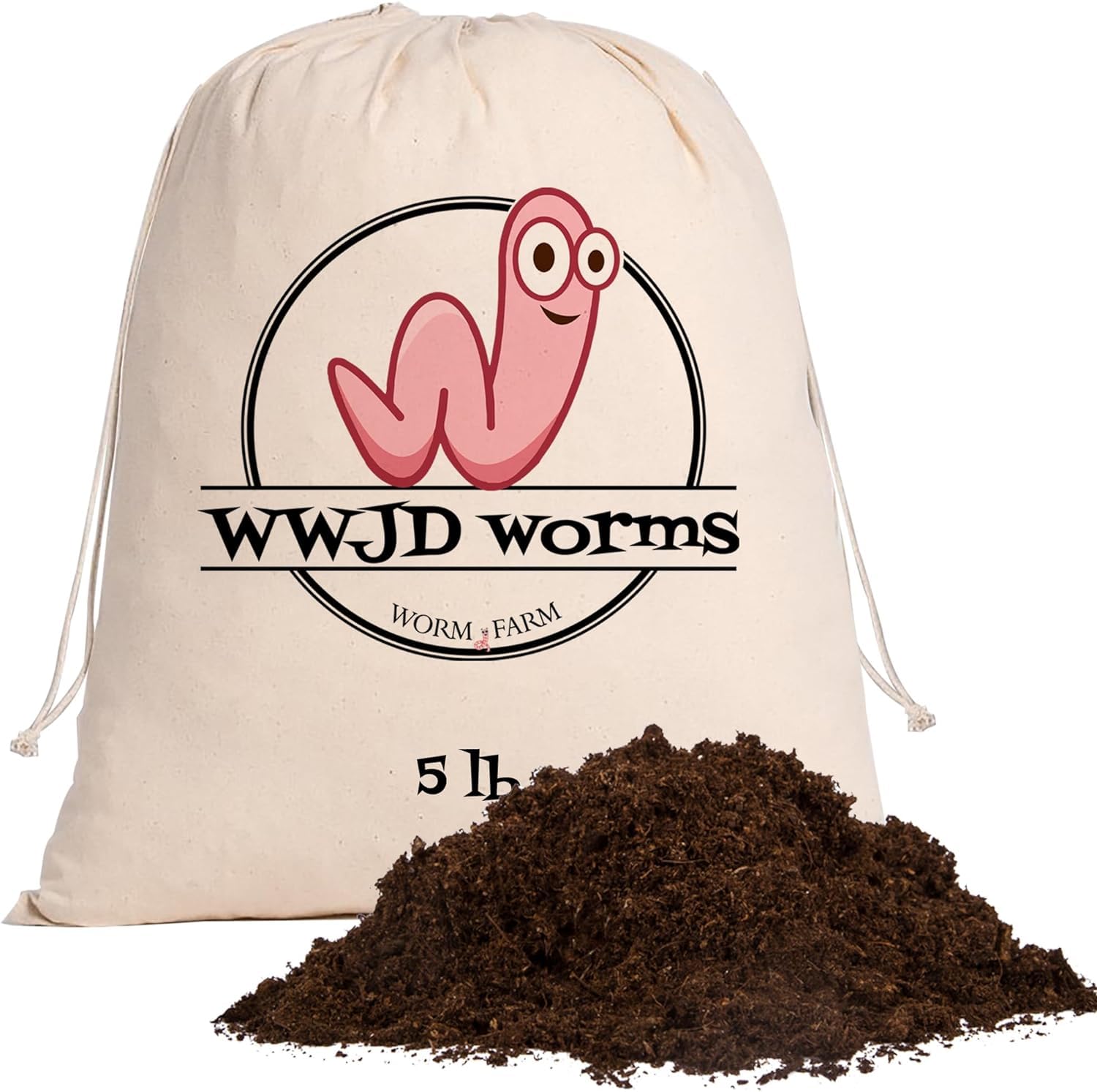
A dual-purpose blend that feeds your worms while it beds them down.
This one earns its name as worm food, not just bedding. The mix is made with sphagnum peat moss, coco coir, and calcium carbonate — a combination designed to hold structure while feeding red wigglers and nightcrawlers. That means it works harder than plain bedding: it nourishes the worms, boosts castings production, and once saturated, it transitions into a nutrient-rich organic potting soil for your garden.
The thing owners praise most is worm quality — buyers describe worms arriving active and young, and the bedding keeps them happy. There’s a fair warning on the listing: this is bedding only, no worms included, so don’t expect a complete starter kit. The feedback on value is split, with some calling the price right for the convenience and others feeling it runs high for a 5-pound bag.
Unlike the single-purpose Buss Bedding above, this blend serves the composter who wants the bedding to pull double duty. It supports movement and burrowing while stabilizing moisture in the bin. For someone just testing whether worms are for them, the 5-pound size is a sensible entry point before scaling up to a pound of worms for heavier compost loads.
Why composters choose it
- Feeds worms and boosts castings production
- Breathable habitat that supports burrowing
- Becomes organic potting soil after saturation
The honest caveats
- Worms not included — bedding only
- Value opinions are mixed at this price point
Best if: you’re starting a worm farm and want a nutrient-rich organic blend that feeds and beds in one step.
skip it if: you only need cheap filler bedding for a large bait-keeping operation.
3. SPONGEASE Coco Coir Brick (20 Pack)

A dehydrated coir powerhouse that expands into 40 gallons of worm-ready habitat.
If you’re outfitting a serious worm farm, this is the volume play. Each brick is shrink-wrapped and dry, and when soaked, one brick makes 2 gallons of soil — the full 20-pack delivers 40 gallons of pure coco coir. That’s a huge habitat for a large worm population, and because it’s dehydrated, it stores flat until you need it, so you can expand your bin in stages.
Coco coir acts like a sponge, letting roots and worms absorb the right balance of water, oxygen, and nutrients. The natural fibers resist waterlogging — a common cause of plant and worm failure — and because it’s peat-free and renewable, it sidesteps the environmental concerns tied to peat moss. Owners note it’s easy to work with once the bricks are soaked and lumps are broken up, and some find the medium impressively clean, free of bug eggs and bacteria.
Compared to the ready-to-use 5-pound bags above, this is the do-it-yourself option: you rehydrate, drain, and fluff before use. One buyer’s tip is to drain excess water after soaking to get the most out of it. The versatility stretches beyond worms — it’s also used as animal bedding and as a dust bath material for backyard chickens.
The scale advantage
- Huge 40-gallon total volume from 20 bricks
- Peat-free, renewable, and reusable
- Use-as-needed bricks keep storage compact
Plan for the work
- Requires soaking and draining before use
- Premium cost upfront for the full pack
Grab this: you run a large worm farm or want a flexible, peat-free media that doubles as potting soil and animal bedding.
Pass it by: you need a small, ready-to-use bag for a single bait box — a 5-pound option makes more sense.
Understanding the Specs
Weight vs. Hydrated Volume
A 5-pound bag of bedding sounds small, but it fluffs up when wet. The real question is how many gallons of living space you get after hydration — a 5-pound bag suits a starter bin, while a 20-pack of coir bricks making 40 gallons fits a full worm farm processing lots of kitchen waste.
Coco Coir vs. Sphagnum Peat Moss
Coco coir comes from coconut husks, resists compacting, and is renewable — it holds air well and won’t waterlog. Sphagnum peat moss holds moisture strongly but raises environmental concerns. Many premium blends, like the one with calcium carbonate, combine both to balance aeration and water retention for active burrowing.
FAQ
How long should I let worm bedding sit before adding worms?
Is worm bedding the same as worm food?
How much bedding do I need for a starter worm bin?
Can I use coco coir bricks for a worm farm?
What’s the difference between red wiggler and nightcrawler bedding?
Will worm bedding turn into potting soil?
Is coco coir better than peat moss for worms?
Does worm bedding include the worms?
Final Thoughts: The Verdict
For most people, the soil for earthworms winner is the Magic Products Buss Worm Bedding because its 5-pound bag has earned decades of trust from bait keepers who rely on lively, clean worms. If you want a nutrient-rich blend that feeds while it beds, grab the WWJD Worms 5lb Bedding. And for a large worm farm or multi-use peat-free media, the SPONGEASE Coco Coir Brick 20 Pack is the one to reach for — its 40-gallon volume is tough to beat when you need serious scale.
How We Picked
We do not accept paid placement. Every pick is matched to a real buyer and a real use-case; we do not hands-on test units.
Sources & Methodology
Specifications: manufacturer listings and product documentation. Review insights: verified customer reviews, as of August 2026. Pricing: not shown on this page (it changes often); check the current price via the retailer link.
As an Amazon Associate, Lawn Gear Lab earns from qualifying purchases. This does not affect which products we feature.