
Using standard potting soil for a bonsai tree is the single fastest route to root rot and a dead tree. Bonsai require an open, granular mix that drains instantly yet retains a whisper of moisture between waterings—a balance that generic bagged soil simply cannot provide.
I’m Rikta — the co-founder and writer behind Lawn Gear Lab. I’ve spent countless hours analyzing particle-size distribution, pH buffering, and water-retention curves across dozens of commercial bonsai substrates to separate the high-grade blends from the overpriced dust.
This guide breaks down the seven best blends on the market, from premium pre-sifted professional mixes to budget-friendly mineral options, so you can confidently choose the right soil for bonsai tree without gambling your tree’s health on a bag of crushed gravel.
How To Choose The Best Soil For Bonsai Tree
The ideal bonsai substrate is a paradox: it must drain fast enough to avoid root suffocation, yet hold enough capillary water so the roots don’t dehydrate between waterings. Every component in your mix either improves drainage or retains moisture—you need both, in the correct proportion for your species and climate.
Particle Size — The Single Most Important Metric
Bonsai soil particles should be between ⅛ inch and ¼ inch (3 mm to 6 mm). Particles smaller than that collapse into mud, blocking air pockets. Oversized particles (>½ inch) leave gaps too large for fine root hairs to anchor. Professional blends are pre-screened; cheap blends often contain fines (dust) that must be sifted out before use. Look for “screened” or “pre-washed” on the label to save yourself an afternoon of dusty work.
Inorganic vs. Organic Components
Inorganic aggregates—pumice, lava rock, calcined clay, akadama—provide stable structure that doesn’t decompose. They hold water inside pores while draining freely between particles. Organic components—pine bark, peat moss, forest humus—retain moisture and add cation exchange capacity but eventually break down and clog pore space. A general-purpose bonsai blend typically contains 50–80 percent inorganic aggregate, with the remainder organic. Conifers prefer higher inorganic ratios; tropical species can tolerate more organic material.
pH and Nutrient Availability
Most bonsai trees thrive in a slightly acidic range of pH 5.5 to 6.5. Lava rock and pumice are pH-neutral; pine bark and peat moss naturally acidify the mix. Some blends include lime or dolomite to buffer pH upward. If your water source is alkaline, a blend with built-in acidic components (bark, humus) will keep micronutrients available. Always match the mix’s pH character to your tree species—juniper and pine prefer the lower end, while ficus tolerates a wider range.
Quick Comparison
On smaller screens, swipe sideways to see the full table.
| Model | Category | Best For | Key Spec | Amazon |
|---|---|---|---|---|
| Bonsai Jack #221 | Premium Inorganic | Mature trees & precision growers | 2-gallon, pre-washed, pH 6.4 | Amazon |
| The Bonsai Supply 4qt | Professional Inorganic | All bonsai varieties | 4 quarts, chunky ~¼-inch particles | Amazon |
| Avalution 7lb Lava & Pumice | Mineral Aggregate | DIY mixers & succulents | 7-pound, professional-grade grit | Amazon |
| Hoffman 10708 | Mid-Range Organic | Beginners & evergreens | 2 quarts, pre-mixed, ready to use | Amazon |
| Rosy Soil Cactus Mix | Organic Peat-Free | Succulents & tropical bonsai | 4 quarts, living microbes | Amazon |
| Harris Bonsai Soil | Value Organic Blend | Seedlings & general repotting | 2 quarts, lime & basalt included | Amazon |
| Pulovin 5lb Lava Rocks | Budget Mineral Top | Top dressing & drainage layer | 5-pound bag, 0.2-inch particle | Amazon |
In‑Depth Reviews
1. Bonsai Jack Universal Organic Bonsai Soil Mix #221
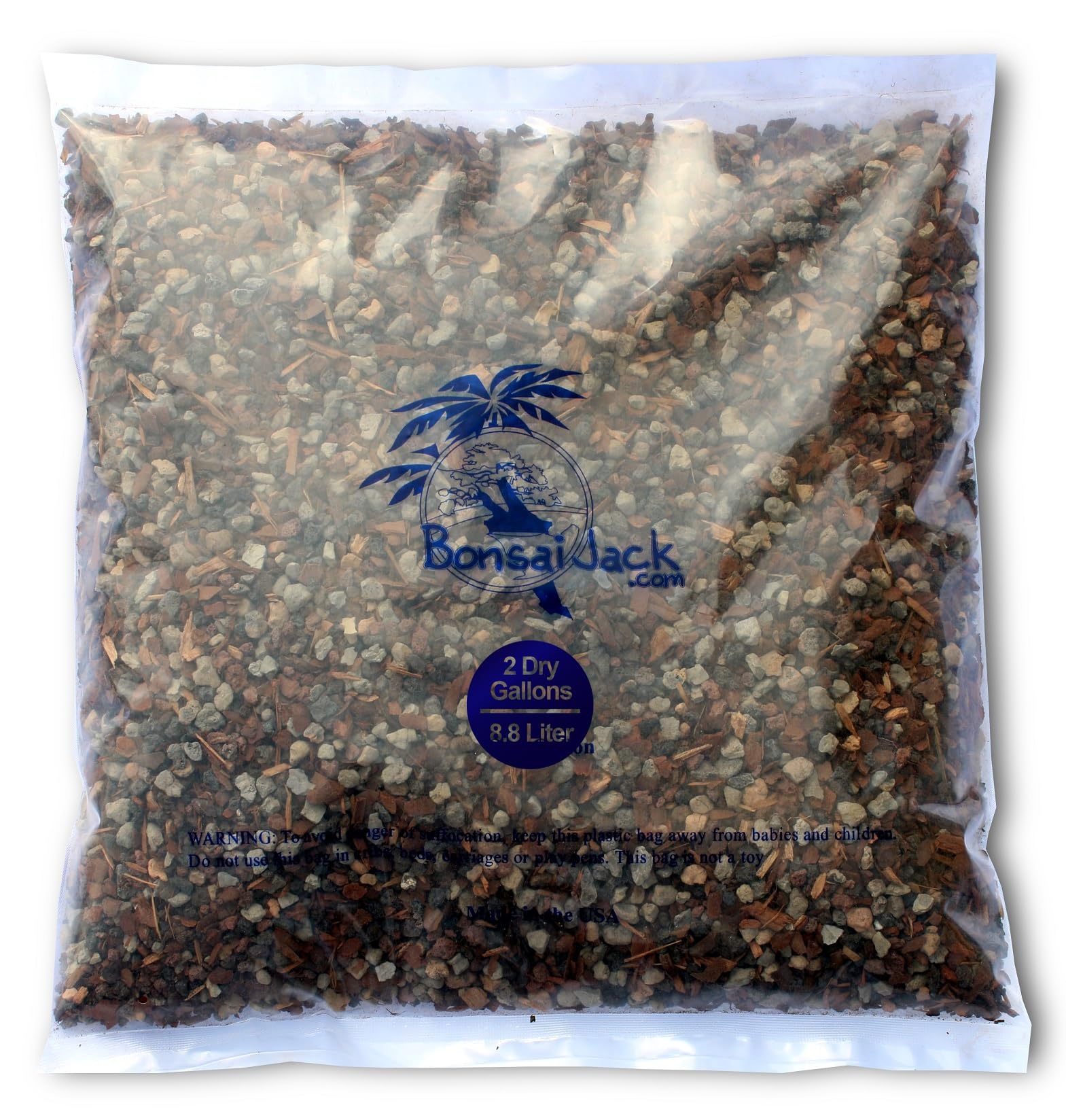
Bonsai Jack’s Mix #221 is the closest thing to a “calibrated” substrate in the commercial market. It is pre-washed and pre-screened to an optimal particle size range (roughly ⅛ to ¼ inch) with a stated pH of 6.4—ideal for the vast majority of bonsai species, including tropical varieties. The blend relies primarily on inorganic aggregate, meaning it will not decompose and collapse over time, so the aeration structure stays intact for years.
For growers who maintain mature trees in shallow training pots, this mix’s rapid drainage is a lifesaver. Multiple long-term users report trees surviving full-sun exposure with healthy root systems after three years. The bag sizes range from 2 quarts up to 28 gallons, giving serious collectors a convenient bulk option. The included phone support with each order is a rare bonus for troubleshooting species-specific adjustments.
That said, this mix is not designed for moisture-loving species or beginners who water infrequently—its fast-draining nature means it can dry out quickly in hot climates, and small pots may need more frequent irrigation. Some users add river rocks to stabilize shallow-rooted plants until the root ball establishes. The price per quart is higher than generic blends, but for high-value trees the investment is justified.
What works
- Pre-washed and pre-screened — zero dust, ready to use immediately
- Inorganic structure doesn’t degrade, maintaining aeration for years
- Optimal pH 6.4 suits almost all bonsai species
What doesn’t
- Dries rapidly in shallow pots under full sun; requires attentive watering
- Premium price per quart compared to value organic blends
2. Bonsai Soil by The Bonsai Supply – 4qts

The Bonsai Supply’s 4-quart mix hits the sweet spot of professional-grade drainage at a mid-range price point. The particles are consistently chunky—around ¼ inch—giving the root zone the same air-filled porosity you would expect from a custom-blended mineral substrate. The resealable ziplock stand-up pouch is made from recycled materials, a nice touch for environmentally conscious growers.
One standout feature is the ready-to-use convenience: the mix is pre-sifted and free of fine dust, so you can pour it straight from the bag into a training pot. Veteran reviewers note that while the drainage is excellent for preventing root rot, the blend is relatively low in inherent nutrients. They recommend supplementary fertilizing during the growing season and optionally mixing in 10 to 30 percent organic material (like pine bark) for beginners who want a bit more moisture buffer.
The main compromise is value. While the per-quart cost is reasonable, some long-term enthusiasts point out that mixing your own components yields more material for the same money. Also, the aggregate sources vary by domestic region, so the visual consistency may differ between batches. But for a grab-and-go bag that delivers genuine bonsai-grade aeration, this is the most balanced option on the list.
What works
- Consistent ¼-inch particle size provides excellent aeration and drainage
- Pre-sifted and dust-free, ready to use straight from the bag
- Eco-friendly resealable packaging keeps soil fresh
What doesn’t
- Nutrient-poor; requires regular fertilizing for sustained growth
- DIY mixing offers a better cost-to-volume ratio
3. Avalution 7lb Horticultural Lava Rock & Pumice Mix

This 7-pound bag from Avalution is a pure mineral mix of horticultural lava rock and pumice—no organic matter, no peat, no bark. For growers who prefer to build their own custom substrate by adding specific organic components, this is an ideal base aggregate. The professional-grade formulation provides the chunky, gritty texture that succulents and conifers crave, and it doubles as an attractive top dressing or terrarium layer.
The material is less dusty than many other bulk rock products, though a thorough rinse is still recommended before use to wash away any fine particles from shipping. Users report that the porous lava rock helps neutralize soil pH and boosts drainage significantly when mixed with existing potting soil. It also works well in semi-hydro setups, which is a growing trend among indoor plant enthusiasts.
The biggest drawback is the price per pound relative to sourcing lava rock and pumice separately from a landscape supply yard. And because this is 100 percent inorganic, it holds no nutrients and provides zero cation exchange capacity—it is strictly a structural amendment, not a complete soil. If you are after a ready-to-use mix, this is not it; but as a bulk aggregate for custom blending, it is excellent.
What works
- Clean, non-dusty mineral aggregate ideal for custom mixing
- Porous lava rock buffers pH and prevents compaction
- Versatile as top dressing, drainage layer, or semi-hydro medium
What doesn’t
- Not a complete soil; requires organic matter addition for most bonsai
- More expensive than sourcing bulk aggregates locally
4. Hoffman 10708 Bonsai Soil Mix

Hoffman’s 10708 is a classic entry-level bonsai soil that has been on the market for years, and it remains one of the most accessible options for newcomers who just repotted their first juniper. The pre-mixed formula combines organic composted materials with calcined clay for drainage, and it arrives in a resealable bag that keeps moisture in—helpful for apartment dwellers who cannot store large bags of soil.
Users consistently praise the drainage: water flows through the pot quickly, preventing the soggy conditions that kill bonsai roots. The dark brown color helps growers gauge when the soil is dry, and small roots colonize the mix aggressively after a few weeks. Beginners especially appreciate that the bag includes clear instructions—a rarity in this category.
On the downside, the bag contains a fair amount of organic fines that can break down over time, reducing air porosity in the long run. Several seasoned hobbyists recommend sifting the mix before use to remove the dust. The 2-quart size is enough for one or two small pots but runs out fast if you have multiple trees. Still, for the price of a takeout meal, this is a low-risk way to start with a real bonsai soil rather than potting soil.
What works
- Excellent drainage out of the bag, prevents waterlogged roots
- Resealable packaging keeps the mix fresh for multiple uses
- Clear planting instructions ideal for beginners
What doesn’t
- Contains organic fines that degrade and reduce aeration over time
- Small bag size often requires sifting before use
5. Rosy Soil Cactus & Succulent Potting Mix
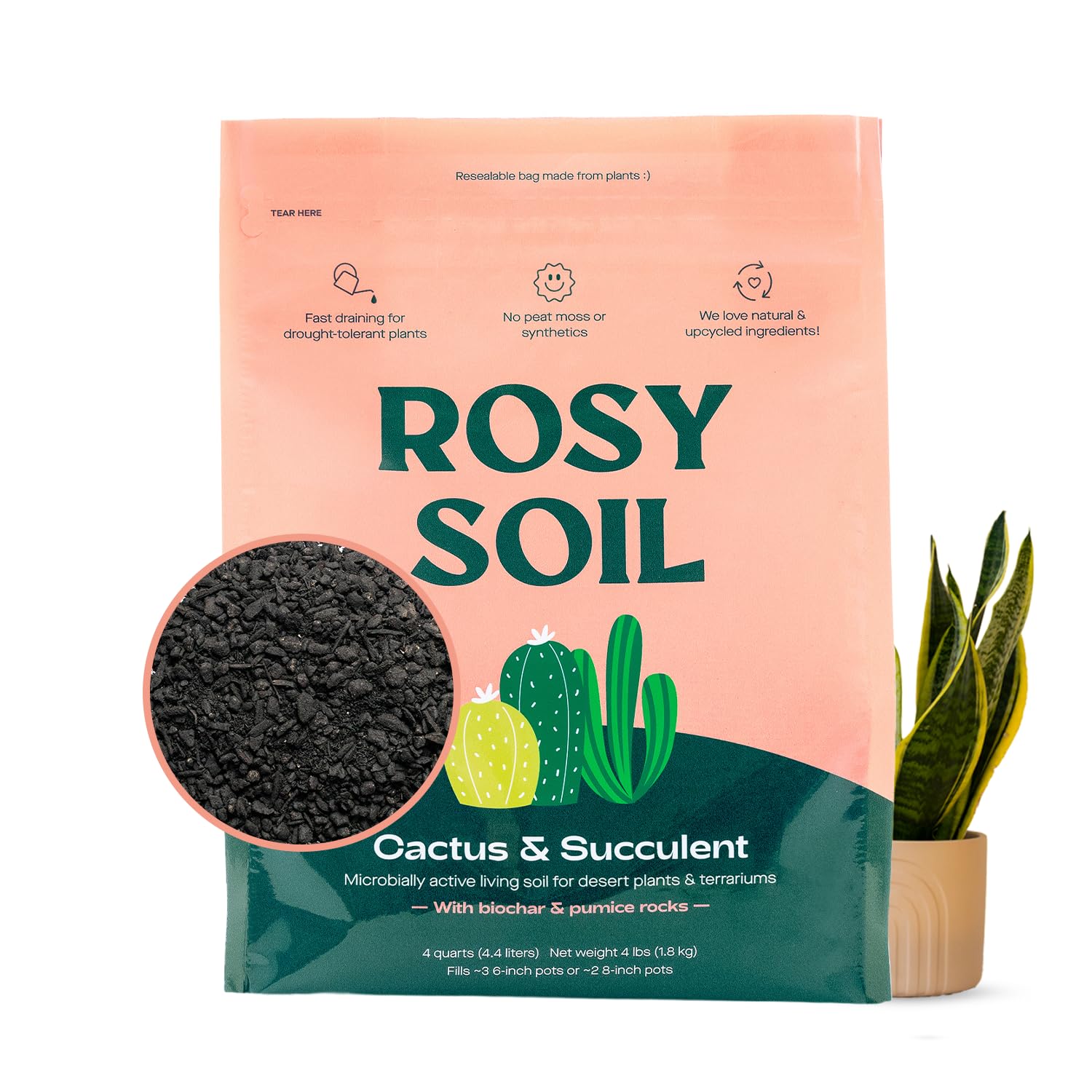
Rosy Soil’s cactus and succulent mix is technically marketed for desert plants, but its chunky, peat-free composition makes it a fine candidate for tropical bonsai species that prefer a less moisture-retentive substrate than traditional organic blends. The bag is packed with beneficial fungi, microorganisms, and worm castings that create a living soil ecosystem—roots get a constant supply of microbially processed nutrients without relying on synthetic fertilizers.
The texture is notably loose and airy compared to typical cactus soils; water runs through in seconds rather than pooling on top. Rosy Soil also skips peat moss entirely, which means the mix resists compaction over time and avoids the environmental drawbacks of peat harvesting. For growers who keep a mix of bonsai and indoor succulents, this single bag can serve both collections.
However, the particle size is smaller than what dedicated bonsai enthusiasts typically want—closer to ⅛ inch than the ideal ¼ inch—so it may not provide the extreme aeration that pine or juniper bonsai demand. Another concern is the resealable zipper: several users reported that the closure mechanism was difficult to operate, potentially letting the soil dry out between uses. For the right species and the right watering discipline, this is a sustainable option that works.
What works
- Living soil with pre-loaded microbes and worm castings for natural feeding
- Peat-free formula drains fast and resists compaction
- Versatile for both succulents and moisture-sensitive bonsai
What doesn’t
- Particles are smaller than the ideal bonsai range (closer to ⅛ inch)
- Resealable bag closure is awkward and may not seal properly
6. Harris Bonsai Soil, All Purpose Premium Blend

Harris offers a blended organic bonsai soil that punches above its price point. The formula includes forest humus, pumice, calcined clay, basalt rock dust, and lime—a surprisingly complete ingredient list for a 2-quart bag under twenty dollars. The lime is a meaningful inclusion because many cheap mixes ignore pH buffering, leaving growers to guess at acidity correction. Users report virtually zero transplant shock when moving young trees into this mix.
For starting seeds or rooting cuttings, this blend holds just enough moisture to prevent wilting while still draining faster than standard potting soil. Multiple customers noted that their juniper and ficus seedlings showed rapid new root growth within weeks of repotting. The basalt dust provides a slow-release source of trace minerals that many synthetic blends omit entirely.
The main limitation is particle-size inconsistency. Because this is not a screened product, you may find a small amount of fine material that settles at the bottom of the bag. Some hobbyists prefer to pass the entire bag through a ⅛-inch sieve before use. Also, the 2-quart volume is barely enough for one medium-sized bonsai—if you have multiple trees, you will need to buy several bags. Still, for the price, it is a solid foundation that you can amend with extra pumice to dial in the drainage.
What works
- Complete blend with lime, basalt, pumice, and calcined clay
- Minimal transplant shock; seedlings root rapidly
- Excellent value for the ingredient list
What doesn’t
- Not pre-screened; may contain fine particles that require sifting
- Small 2-quart bag goes quickly for multiple trees
7. Pulovin 5lbs Mix Horticultural Lava Rocks
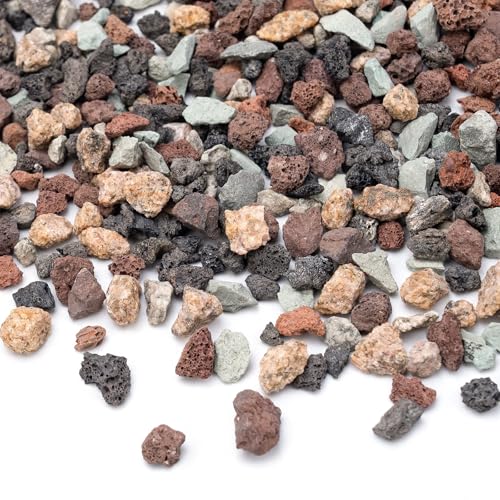
Pulovin’s 5-pound bag of horticultural lava rocks is strictly a mineral amendment, not a complete soil. The particles are small—around 0.2 inches in diameter—and work best as a bottom drainage layer, a top dressing for aesthetic finish, or a mixer combined with organic matter to create a custom bonsai substrate. The rocks are formed from cooled volcanic magma and contain no synthetic additives or chemical treatments.
Customers report that the rocks arrive with minimal dust compared to other bagged lava products, though a quick rinse is still recommended before use. The porous surface aids moisture wicking and prevents water from pooling at the bottom of the pot, which directly reduces the risk of root rot in dense soils. Many users also repurpose the stones for terrarium layers, fairy gardens, and even candle holder decor—so the bag goes beyond purely horticultural use.
The obvious limitation is that this product alone cannot sustain a bonsai tree. It provides zero nutrients, very little cation exchange, and no organic matter. If you are looking for a plug-and-play bonsai soil, look elsewhere. But if you already have a base mix (like the Harris or Hoffman blends above) and want to increase its drainage fraction without spending premium money on branded bonsai grit, this bag is a cheap and effective solution.
What works
- Clean, low-dust lava rock ideal for adding drainage to any mix
- Multi-use as drainage layer, top dressing, or craft material
- Porous structure helps regulate moisture at the pot bottom
What doesn’t
- Not a complete soil; requires organic components to support bonsai growth
- Small particle size may not provide enough air gap for mature trees
Hardware & Specs Guide
Particle Size
This is the single variable that defines whether a soil is “bonsai-grade” or just crushed rock. Ideal particles measure between 3 mm (⅛ inch) and 6 mm (¼ inch). Particles below 2 mm turn into mud that blocks air pores; particles above 8 mm create gaps too large for fine root hairs to bridge. Pre-screened blends like Bonsai Jack #221 save you the effort of sifting, while unscreened value bags (Harris, Hoffman) often require manual screening.
Water Retention vs. Drainage
Inorganic aggregates (pumice, lava, calcined clay) have internal pore spaces that hold capillary water, while the large gaps between particles allow gravity to pull excess moisture out of the pot. Organic components (bark, humus) hold water between and inside their fibers. A balanced bonsai mix typically contains 50–80 percent inorganic aggregate and 20–50 percent organic material—the exact ratio depends on your climate and watering frequency.
pH Buffering
Bonsai roots absorb micronutrients optimally in a pH range of 5.5 to 6.5. Lava rock and pumice are pH-neutral. Pine bark and peat moss acidify the mix (lower pH), while lime and dolomite raise it (higher pH). Blends that list “lime” or “basalt rock dust” (Harris, Bonsai Jack #221) already include pH stabilizers. If your tap water is alkaline, choose a mix with acidic organic components to counteract it.
Longevity & Decomposition
Inorganic aggregates (pumice, lava, calcined clay) last indefinitely—they do not decompose. Organic components (bark, humus, peat) break down over 1–3 years, shrinking the substrate and clogging pore space. High-organic blends (Hoffman, Harris) will require repotting and replacement more frequently than high-inorganic blends (Bonsai Jack, The Bonsai Supply). For a mature tree in a shallow pot, an inorganic-heavy mix reduces repotting frequency.
FAQ
Can I use regular potting soil or cactus mix for my bonsai tree?
Should I sift my bonsai soil before use?
What is the difference between akadama, pumice, and lava rock in bonsai soil?
Final Thoughts: The Verdict
For most gardeners, the soil for bonsai tree winner is the The Bonsai Supply 4qt because it delivers professional-grade particle size and drainage at a price that makes sense for daily use. If you want the absolute highest quality with pre-screened, pH-calibrated, long-lasting structure, grab the Bonsai Jack #221. And for a budget-friendly mineral base that you can customize to your specific species, nothing beats the Avalution 7lb Lava & Pumice.