
Few things ruin an evening on the patio faster than walking face-first into a fresh spider web at dusk. Outdoor spider sprays promise a perimeter of protection, but the difference between a product that works for a day and one that holds for months comes down to the active ingredient, the application method, and the residual longevity. I’ve broken down the chemistry and real-world performance of the top contenders so you can make a purchase that actually keeps the eight-legged intruders at bay.
I’m Rikta — the co-founder and writer behind Lawn Gear Lab. I’ve spent hundreds of hours cross-referencing label ingredients, comparing residual kill times, and analyzing owner feedback from thousands of verified buyers to separate the effective outdoor spider sprays from the ones that simply smell like citronella for an afternoon.
This guide cuts through the marketing claims to deliver a data-backed look at the best outdoor spider spray options on the market right now, ranked by residual power, coverage area, and practical ease of use.
How To Choose The Best Outdoor Spider Spray
Choosing an outdoor spider spray isn’t about picking the bottle with the scariest spider picture. Real results depend on matching the chemistry, coverage method, and residual activity to your specific infestation level and property size. Beginners often grab a ready-to-use bottle thinking it will handle a wide perimeter, only to run out after treating a single door frame. Understanding the core specs upfront saves money and frustration.
Active Ingredient and Residual Longevity
The active ingredient determines how the spray works and how long it keeps working after it dries. Synthetic pyrethroids like bifenthrin (found in Talstar One) and lambda-cyhalothrin (found in Onslaught FastCap) offer residual protection measured in weeks to months, breaking down spiders’ nervous systems on contact. Natural essential oil blends — peppermint, cedarwood, geraniol — repel spiders by overwhelming their sensory receptors but degrade in sunlight within days and rarely kill on contact. If you have an active infestation, synthetic chemistries deliver longer-lasting results. If you only need light prevention around seating areas and prefer a non-toxic profile, essential oil sprays can be a viable maintenance tool when reapplied weekly.
Application Method: RTU Trigger vs Hose-End vs Concentrate
Ready-to-use (RTU) trigger bottles offer convenience for spot treatments around windows, door frames, and eaves but become expensive and impractical when covering a large perimeter. Hose-end sprayers (like the Raid Perimeter Protection Trigger Starter) mix automatically as you spray, providing broader coverage with less physical effort, but the dilution ratio is factory-set, limiting your ability to increase concentration. Concentrated formulas such as Talstar One and Onslaught FastCap give you full control over mixing ratios, deliver the lowest cost per treated square foot, and allow you to use professional-grade sprayers for even, consistent coverage. For anyone treating a property larger than 2,000 square feet, a concentrate is almost always the smarter long-term investment.
Quick Comparison
On smaller screens, swipe sideways to see the full table.
| Model | Category | Best For | Key Spec | Amazon |
|---|---|---|---|---|
| Talstar One | Concentrate | Full property perimeter | Bifenthrin 7.9% | Amazon |
| Onslaught FastCap | Concentrate | High-pressure infestations | Lambda-cyhalothrin | Amazon |
| Trifecta Natural | RTU Hose-End | Pet-friendly yard control | Essential oil blend | Amazon |
| Harris Spider Killer | RTU Trigger | Spot treatment indoors/outdoors | 64 oz total volume | Amazon |
| Raid Perimeter Pro Trigger | RTU Trigger | Quick perimeter barrier | 18-month residual claim | Amazon |
| Raid Perimeter Starter | RTU Trigger | Easy continuous spray | 60 oz total volume | Amazon |
| Smart Grower Peppermint Oil | RTU Natural | Chemical-free prevention | Maximum strength oil | Amazon |
In‑Depth Reviews
1. Talstar One Insecticide 1 Gallon
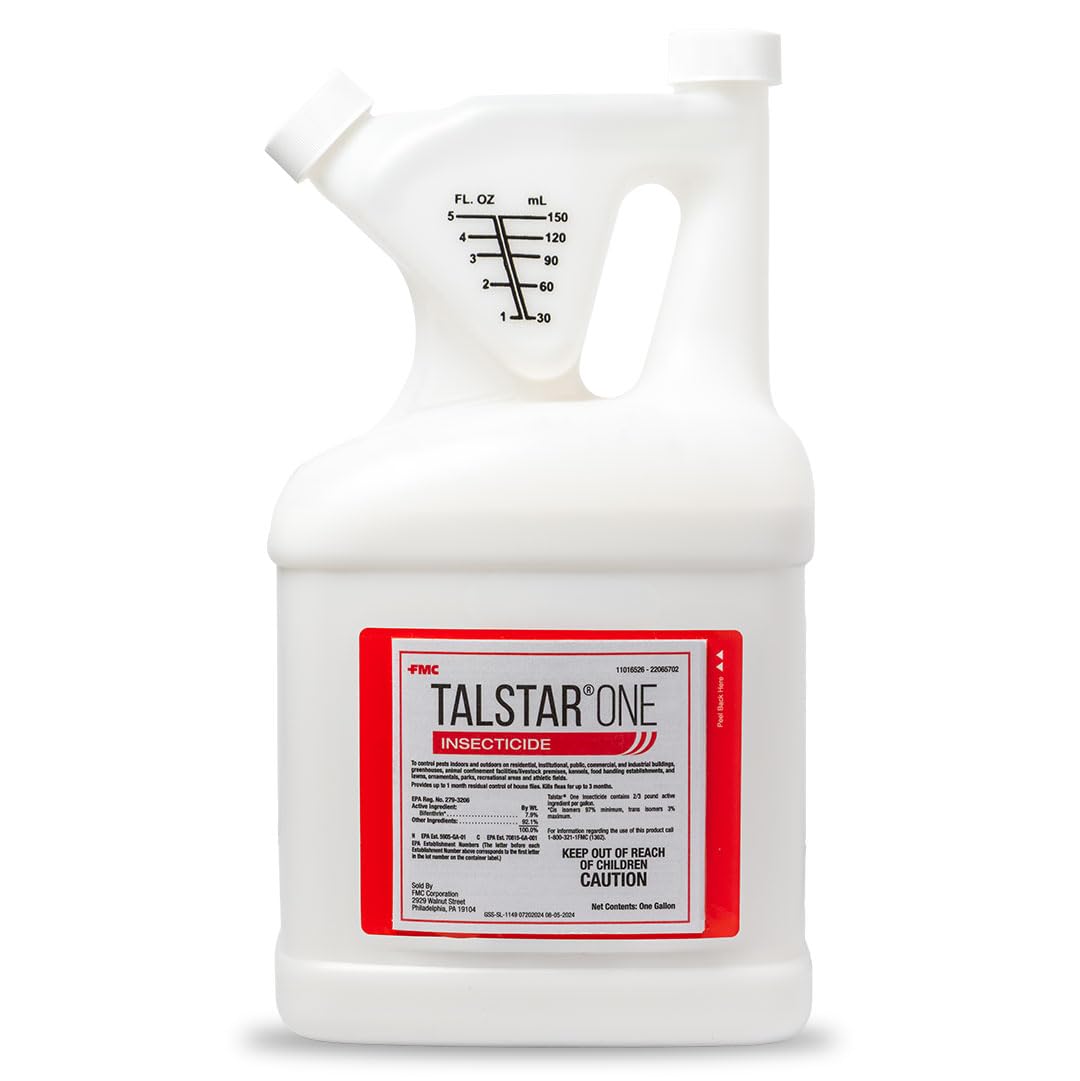
Talstar One delivers professional-grade bifenthrin at a 7.9% concentration, which translates to roughly 300 finished gallons of spray per gallon of concentrate. That scale makes it the clear choice for homeowners who want to treat the entire perimeter season after season without running back to the store. The water-based formula dries clear and odorless, eliminating the chemical funk that lingers around entry points after cheaper RTU sprays.
Owner reports confirm residual activity that lasts four to six weeks under normal weather conditions, with many users noting they fired their pest control service after their first application. The product requires a separate pump sprayer, but the cost per treated area is dramatically lower than pre-mixed alternatives — a single gallon of concentrate often covers an entire season for a typical suburban lot. It controls over 75 listed pests, so you aren’t just targeting spiders; ants, mosquitoes, fleas, and ticks are also on the label.
The one catch is that it doesn’t provide instant knockdown. Bifenthrin works by disrupting the insect nervous system after contact and ingestion, so you won’t see immediate dropping. Spiders and other pests that walk across the treated barrier will die over the following hours or days. For users accustomed to aerosol sprays that kill on sight, this delayed action can feel unsatisfying, but the trade-off is weeks of invisible protection that you don’t have to reapply every weekend.
What works
- Extremely cost-effective with hundreds of gallons of spray per bottle
- Dries clear and odorless for discreet perimeter treatment
- Long residual activity reduces reapplication frequency
What doesn’t
- Requires a separate pump sprayer for application
- No instant knockdown — pests die over hours to days
2. Onslaught FastCap Spider Scorpion Insecticide
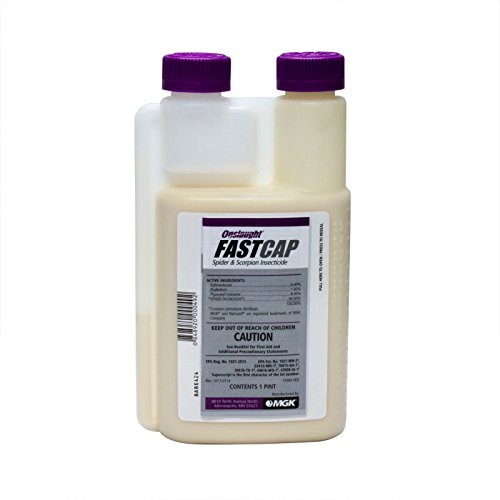
Onslaught FastCap uses lambda-cyhalothrin, a fast-acting pyrethroid that delivers noticeably quicker knockdown than bifenthrin-based competitors. Users report spiders and scorpions being affected within minutes and dead by the following morning, even in heavy infestation scenarios. One verified reviewer documented eliminating 27 scorpions in 15 days with a single perimeter application, with the barrier holding effective for over six months in a dry climate.
The formula includes a unique cap-stabilizing technology that reduces photodegradation, meaning the spray remains active longer in direct sunlight compared to older-generation pyrethroids. This makes it especially valuable for south-facing exterior walls, patios, and foundation perimeters that take full sun exposure. It also has very low odor once dry, so you don’t drive yourself out of the space you’re trying to protect.
On the downside, the bottle is relatively small at 19 fluid ounces of concentrate, and the price point is significantly higher per ounce than Talstar One. For a small property or targeted treatment around doors and windows, it lasts a long time because you mix only what you need. But for full-yard perimeter spraying on a larger lot, the cost per treatment adds up faster. Reapplication every three to four weeks is recommended by many long-term users to maintain peak activity against heavy spider and brown recluse pressure.
What works
- Fast knockdown visible within hours in most cases
- Excellent residual activity even in direct sun
- Very low odor after drying
What doesn’t
- Higher cost per ounce than bulk bifenthrin concentrates
- Frequent reapplication needed for heavy pressure
3. Trifecta Natural Outdoor Pest Control Yard Spray

Trifecta Natural takes a plant-based approach with cedarwood oil, citronella oil, geraniol, and thyme oil. The 32-ounce bottle connects directly to a garden hose, covering up to 5,000 square feet without requiring any mixing or measuring. For homeowners who prioritize safety around children and pets, this essential oil blend offers a legitimate alternative to synthetic pyrethroids for light to moderate spider pressure.
Owner feedback is strongest among those using it for weekend events — barbecues, outdoor parties, garden gatherings — where the goal is temporary suppression rather than long-term eradication. The citronella scent is noticeable during application but fades after drying, and the formula kills many non-spider pests on contact, including mosquitoes, ants, fleas, and gnats. The hose-end delivery makes it easy to cover full lawns and garden beds quickly.
The trade-off is residual duration. Essential oils break down rapidly under UV exposure and rainfall, so the protection window is measured in days, not weeks. Users in areas with high spider populations report needing to reapply after every rain or within three to five days. It also won’t kill spiders that are already established indoors or deep in eaves — it’s primarily a repellent and contact spray. For serious infestations, it’s better used as a supplement to a longer-lasting perimeter treatment.
What works
- Safe around kids and pets when dry
- Hose-end sprayer covers large areas fast
- Pleasant natural scent compared to chemical sprays
What doesn’t
- Short residual life — reapplication needed after rain
- Insufficient for heavy spider infestations
4. Harris Spider Killer Liquid Spray 32oz (2-Pack)
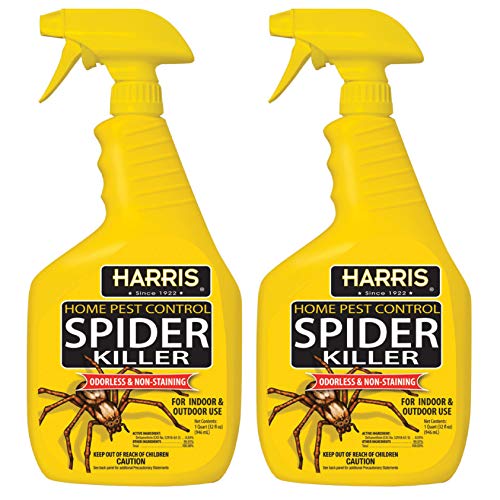
Harris Spider Killer comes as a two-pack of 32-ounce ready-to-use trigger bottles, giving you 64 fluid ounces of EPA-registered spray right out of the box. The formula is odorless and non-staining, which makes it a strong candidate for indoor-outdoor use around fabric patio furniture, window screens, and light-colored siding where chemical residue is a cosmetic concern.
The spray stream carries a solid 6 feet with good cohesion, allowing you to reach eaves and high corners without climbing a ladder for every application. Verified buyers consistently report that spiders sprayed directly are found dead by the following morning. The formula also works on ants, roaches, Asian lady beetles, crickets, and silverfish, making it a versatile multi-pest tool for homeowners who want one product for both indoor cracks and outdoor perimeters.
It’s not an instant killer — users looking for a product that drops spiders mid-web immediately will be disappointed. The kill takes a few hours as the dried residue is ingested or absorbed. Also, the two-pack format provides decent volume but still works out more expensive per ounce than a concentrated option. For spot treatments and smaller homes, the convenience of no-mix spraying is worth the premium, but large-property owners should look elsewhere.
What works
- Completely odorless and doesn’t stain fabrics or siding
- Excellent 6-foot stream reach for high applications
- Kills overnight with reliable results
What doesn’t
- No instant knockdown — overnight kill only
- Higher cost per ounce than concentrate alternatives
5. Raid Max Perimeter Protection Insecticide Spray 30oz
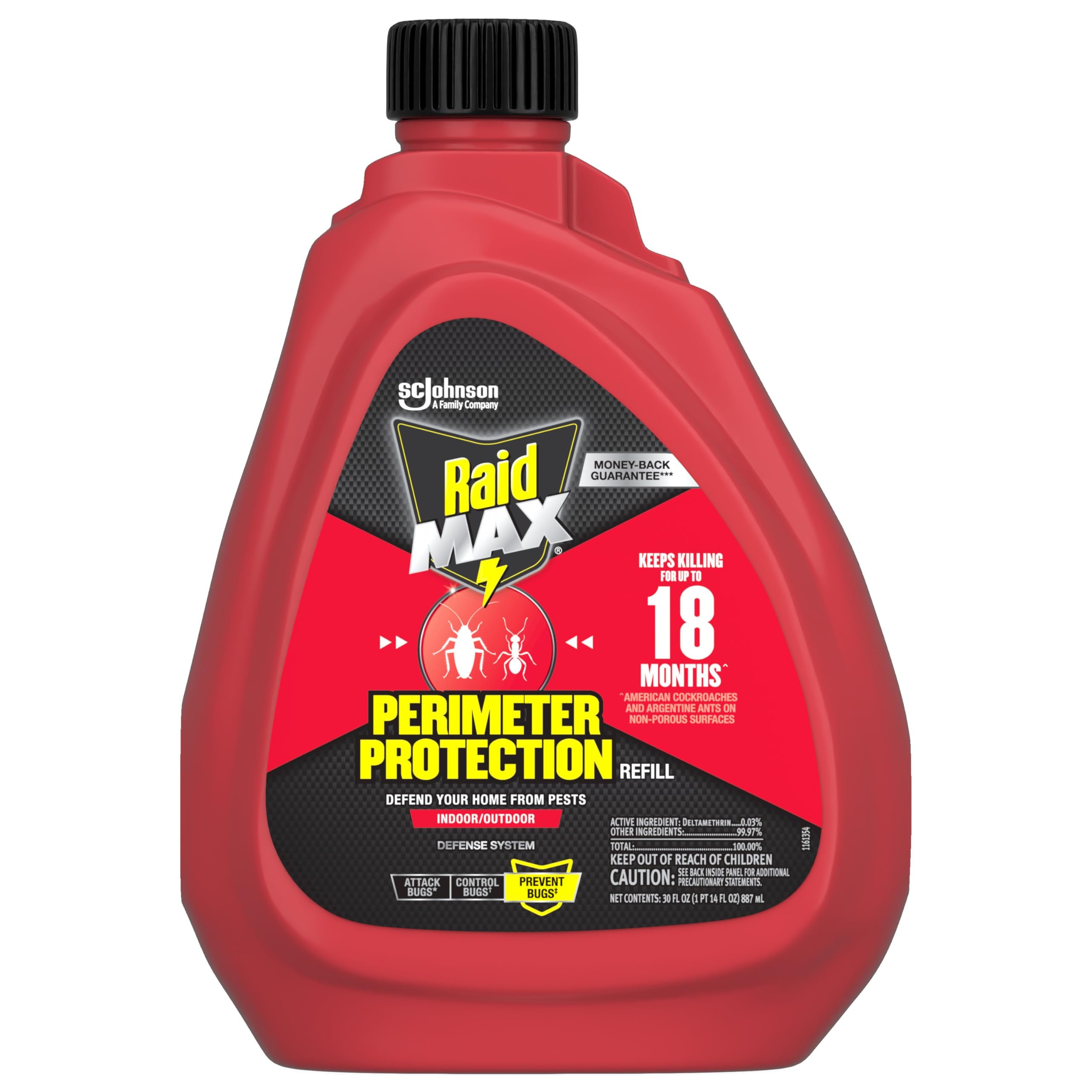
Raid Max Perimeter Protection is the brand-name heavyweight in the RTU category, claiming residual protection for up to 18 months when applied to non-porous surfaces out of direct sunlight. The 30-ounce bottle uses a battery-powered trigger system that delivers a continuous spray without requiring manual pumping, which reduces hand fatigue during longer applications around foundations and door frames.
Real-world user data shows it performs best as a preventive treatment applied in spring. It kills over 50 listed insect types including cockroaches, ants, and spiders, and the formula leaves no oily residue or visible staining. The battery trigger lets you spray upside down into weep holes and soffits, and the stream reaches three to four feet easily. Many users treat a full home with one bottle and report zero spider activity through the summer.
The “up to 18 months” claim assumes ideal indoor conditions with no rain, no UV exposure, and no surface disturbance. Outdoors on exposed concrete or wood, the residual window is much shorter — typically a few weeks before reapplication is needed. Also, the 30-ounce container runs out quickly when treating a large perimeter, and replacement bottles are frequent purchases for seasonal coverage. It’s best used as a spot-treatment complement to a longer-lasting concentrate base.
What works
- Battery-powered trigger reduces hand fatigue
- Kills over 50 insect types on contact and residual
- Odorless and non-staining when dry
What doesn’t
- Outdoor residual far shorter than indoor claim
- Small bottle size requires frequent repurchase
6. Raid Perimeter Protection Trigger Starter 60oz

The Raid Perimeter Protection Trigger Starter is the larger 60-ounce sibling to the Max Perimeter bottle, offering double the volume and the same continuous-spray trigger system. The ergonomic design eliminates the need to pump or squeeze repeatedly — you simply pull the trigger and hold it, making it much more comfortable when walking the perimeter of a house and spraying continuously along baseboards and window frames.
Owner reviews consistently highlight the convenience factor. Users who previously used pump-spray bottles report finishing treatments faster and with less hand cramping. The formula itself is the same Raid perimeter chemistry — effective on spiders, ants, roaches, and a broad range of crawling insects — with the same odorless, non-staining finish.
As the bottle empties, some users report that the trigger performance degrades and requires tilting to maintain a steady stream. The 60-ounce bottle is better value than the 30-ounce but still costs more per ounce than a concentrate. For multi-story homes or large lots, you’ll likely need two bottles per full perimeter treatment, which pushes the cost per season above a concentrate-based approach despite the convenience premium.
What works
- Continuous trigger spray reduces hand fatigue
- Large 60-ounce volume for extended treatment
- Effective long-term residual in protected areas
What doesn’t
- Trigger performance drops as bottle empties
- Expensive per treatment compared to concentrates
7. Smart Grower Peppermint Oil Spray 16oz
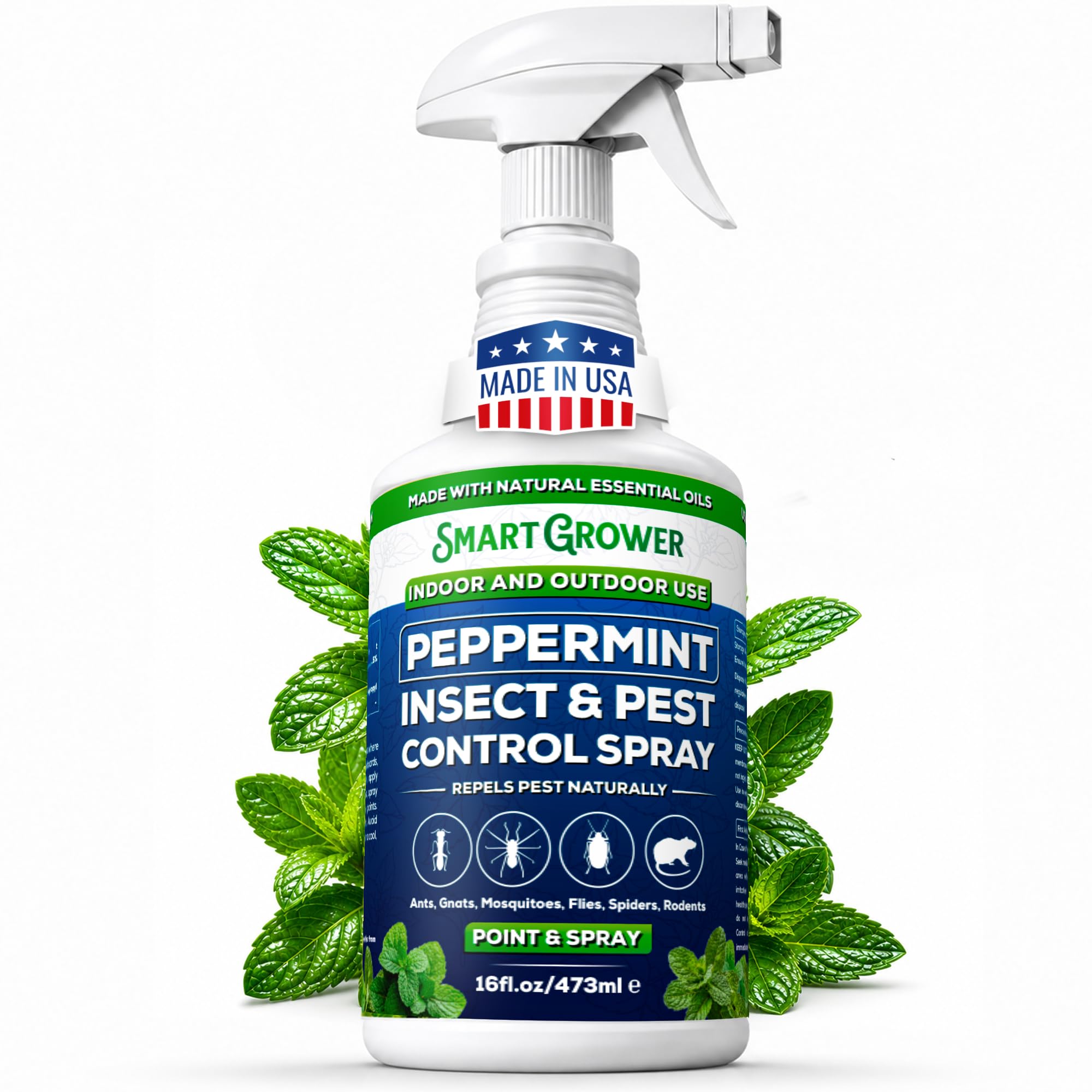
Smart Grower takes a 100% peppermint essential oil approach to pest control, offering a maximum-strength formula that repels spiders, ants, wasps, bees, rodents, and even mice without any synthetic pesticides. The 16-ounce bottle is ready to use straight out of the box — no mixing, no measuring — and the peppermint scent is strong and pleasant rather than chemical and off-putting. Users consistently describe it as smelling like a candy cane rather than a bug spray.
Verified owner reports show it works best as a preventative barrier rather than a reactive killer. It repels spiders by overwhelming their chemosensory receptors, so webs stop appearing in treated corners and eaves. It’s also safe around dogs and chickens, according to multiple reviews, making it a go-to for coop owners and pet households. The formula handles crickets, camel spiders, aphids, and ants well when sprayed directly.
The natural chemistry comes with clear limitations. It provides no residual control after rain or heavy dew, and the repellent effect typically lasts only a few days before reapplication is necessary. It does not kill spiders on contact — they simply avoid the area — so existing infestations need to be physically removed first. The 16-ounce bottle also covers a relatively small area, making it impractical for full perimeter treatment without frequent repurchase.
What works
- No synthetic chemicals — safe around pets and poultry
- Strong peppermint scent masks chemical odor completely
- Effective repellent for spiders and crawling insects
What doesn’t
- Short residual life — days, not weeks
- Does not kill spiders, only repels them
Hardware & Specs Guide
Active Ingredient Chemistry
The active ingredient is the single most important spec in any outdoor spider spray. Synthetic pyrethroids (bifenthrin, lambda-cyhalothrin, cyfluthrin) provide weeks of residual activity by attacking the insect nervous system on contact and after drying. Natural essential oils (peppermint, cedarwood, geraniol) overwhelm sensory receptors and repel rather than kill, with residual measured in days. For active infestations, choose a pyrethroid concentrate. For maintenance and chemical-sensitive areas, essential oil sprays are a viable rotation tool.
Concentration and Finished Spray Volume
Concentrate labels list the percentage of active ingredient — Talstar One at 7.9% bifenthrin, for example. A higher percentage means you can mix a stronger final solution or cover more area per ounce of concentrate. A gallon of concentrate at typical mixing rates (1 oz per gallon of water) creates 128 gallons of finished spray. RTU bottles cannot be diluted, so the cost per square foot is significantly higher. Always calculate finished gallons when comparing price between formats.
FAQ
How long does outdoor spider spray last after it dries?
Can I use outdoor spider spray inside my house?
Is outdoor spider spray safe for pets and vegetable gardens?
Does outdoor spider spray kill spiders on contact?
Final Thoughts: The Verdict
For most homeowners, the best outdoor spider spray winner is the Talstar One Insecticide because it delivers professional-grade bifenthrin at a price per square foot that no RTU product can match, with residual protection that keeps spiders at bay for weeks without constant reapplication. If you need fast knockdown against an active infestation, grab the Onslaught FastCap. And for chemical-free prevention around kids, pets, and vegetable beds, nothing beats the Trifecta Natural Outdoor Pest Control.