
A deer motion detector is your silent sentry in the backyard, scouting for the bucks that shred your hostas and the does that devour your vegetable beds before you even wake up. These devices range from simple motion-activated trail cameras that snap a photo to full cellular units that beam real-time alerts straight to your phone, turning your property into a 24/7 intelligence-gathering zone.
I’m Rikta — the co-founder and writer behind Lawn Gear Lab. My focus is on comparing trigger speeds, night vision range, image resolution, and real-world battery efficiency by analyzing hundreds of hours of aggregated owner feedback and technical spec sheets from the trail camera and outdoor surveillance market.
To help you choose, this guide breaks down the essential specs of the best deer motion detector and reviews seven top models that balance image clarity, detection range, and power management for serious wildlife monitoring.
How To Choose The Best Deer Motion Detector
Deer are skittish, fast, and often active only at dawn or dusk. A motion detector that fires a split-second too late or emits a visible flash will send them bounding over the fence before you get a usable image. Focus on these four specs to separate a reliable scouting tool from a battery-eating paperweight.
Trigger Speed and PIR Sensor Design
A 0.1-second trigger speed is the gold standard for catching a buck mid-stride. The PIR (passive infrared) sensor must detect the heat signature of a moving animal and activate the camera within that window. Models with three PIR sensors, like the GardePro E5S, provide a wider detection field and reduce the dead zones where a deer can slip past unrecorded.
Night Vision Type: 940nm No-Glow vs. 850nm Low-Glow
Deer are highly sensitive to visible light. A 940nm no-glow infrared LED emits no visible red glow, making it invisible to both human eyes and wildlife — essential for undisturbed monitoring. An 850nm low-glow LED produces a faint red cast that some animals notice, though it often delivers a slightly brighter nighttime image. For deer specifically, no-glow is the safer bet.
Connectivity: Cellular, Local WiFi, or No WiFi
Cellular cameras like the Moultrie Edge 2 Pro and Tactacam Reveal X 3.0 send images directly to your phone via 4G LTE, eliminating the need to retrieve an SD card — ideal for remote acreage. Local WiFi models (MAXDONE, Assark) create their own hotspot for phone downloads within 40-55 feet, but you must be physically nearby. Offline cameras (OUTDOOR EXPERT, Meidase P70, GardePro E5S) offer the lowest running cost but require manual card pulls.
Power Source and Battery Longevity
Solar-powered units with built-in rechargeable lithium batteries (5200mAh in the MAXDONE) remove the need for constant battery swaps in sunny locations. Non-cellular cameras running on 8x AA lithium cells can last a full season. Cellular cameras draw more power for LTE transmission; pairing them with an external solar panel or a high-capacity rechargeable pack extends deployment time dramatically.
Quick Comparison
On smaller screens, swipe sideways to see the full table.
| Model | Category | Best For | Key Spec | Amazon |
|---|---|---|---|---|
| Tactacam Reveal X 3.0 | Cellular | Remote property monitoring | 4K photo with 6-month battery life | Amazon |
| Moultrie Edge 2 Pro | Cellular | AI false trigger filtering | 1440p video + onX integration | Amazon |
| GardePro E5S | Trail Cam | Pure 0.1s trigger with 3 sensors | 64MP / 1296p / 100ft 940nm | Amazon |
| MAXDONE Solar | Solar WiFi | Maint-free solar + app control | 64MP 4K / 5200mAh battery | Amazon |
| Assark Solar | Solar WiFi | Value solar with included 32GB card | 48MP / 1080p / 0.2s trigger | Amazon |
| Meidase P70 | Trail Cam | 64MP detail on a budget | 64MP / f/1.6 lens / 100ft 940nm | Amazon |
| OUTDOOR EXPERT Mini | Trail Cam | Compact concealable scouting | 20MP / 1080p / 80ft 940nm | Amazon |
In‑Depth Reviews
1. Tactacam Reveal X 3.0 Cellular Trail Camera
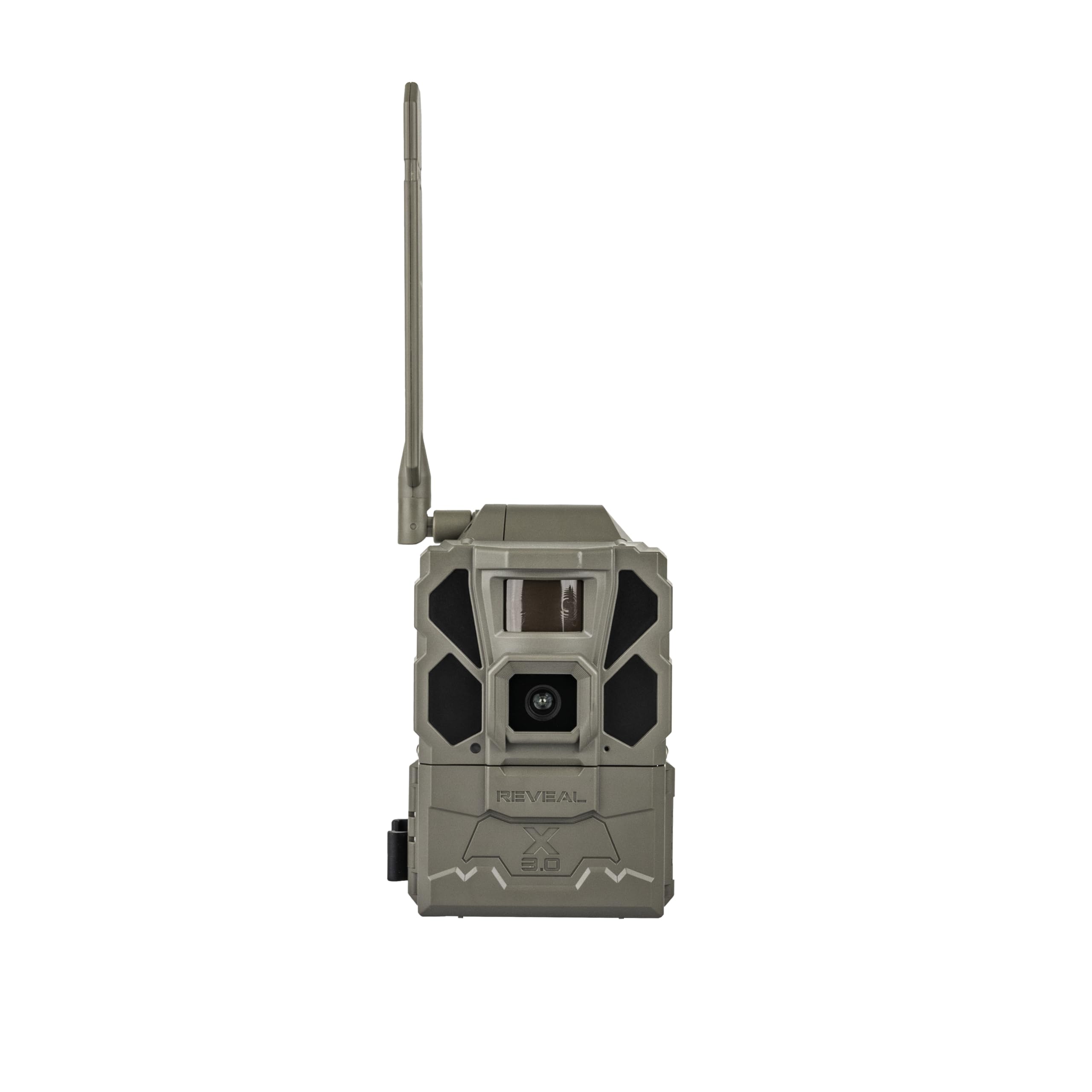
The Tactacam Reveal X 3.0 stands as the reference standard for a cellular deer motion detector, combining a sub-half-second trigger with a 3-shot burst mode that nails fast-moving bucks before they exit the frame. Its auto-connect multi-carrier LTE (AT&T and Verizon) eliminates dead spots from single-network locks, and the pre-installed SIM gets you live images in under ten minutes from unboxing. Owners consistently report sharp 4K photos and 1080p video, with the no-SD-card-required onboard storage simplifying deployment.
Independent testing puts its battery life at six-plus months on a single set of lithium cells, and the built-in GPS tracks camera location in the REVEAL app — a practical safeguard against theft on remote property. The trigger speed, while very fast, is rated at sub-half-second rather than the 0.1-second peak found on some non-cellular trail cameras, a minor trade-off for the convenience of LTE transmission. Field reviews note reliable signal consistency even in marginal reception areas, making it a top pick for landowners who can’t visit every week.
Real-world feedback from hunters and farmers emphasizes the camera’s role as a property monitoring system: one owner used it to track gate activity on a 40-acre parcel and received alerts within seconds of any motion. The optional lithium power pack extends deployment to multiple months, while the folding solar panel offers year-round hands-off operation. For anyone managing remote acreage who demands daily photo delivery without a physical card check, the Reveal X 3.0 delivers unmatched ease of use and signal reliability.
What works
- Auto-switching AT&T/Verizon LTE for strong signal anywhere
- 6-month battery life with lithium cells reduces maintenance frequency
- 3-shot burst and fast trigger capture deer before they escape the frame
- No SD card needed — built-in storage sends photos straight to your phone
What doesn’t
- Cellular data plan required adds ongoing monthly cost
- Sub-half-second trigger is fast but not as instant as 0.1s non-cellular models
- Field of view at 60 degrees is narrower than many 120-degree trail cameras
2. Moultrie Edge 2 Pro Cellular Trail Camera

The Moultrie Edge 2 Pro distinguishes itself with AI-powered false trigger elimination — a feature that distinguishes deer, turkeys, and humans from waving grass or passing cars, then delivers only the images you want directly to the Moultrie Mobile app. Its 40MP photos and 1440p video with HD audio offer excellent clarity, and the no-glow 100ft flash ensures deer never spook at night. The Live Aim function lets you preview the camera’s field of view on your phone before locking it down, eliminating the guesswork of aiming into an empty clearing.
Integration with the onX Hunt app adds a powerful scouting layer: your trail camera photos appear directly on your onX maps alongside property boundaries and terrain data. The camera uses auto-connect nationwide 4G LTE, and data plans start at a reasonable monthly fee with no long-term contract. Owners report crisp, clean images day and night, with the AI filter significantly reducing the number of blank or wind-triggered photos. The 50-degree field of view is narrower than some competitors, which concentrates the detection zone but may miss wider trail crossings.
Field reviews highlight the Edge 2 Pro’s reliability through heavy rain and extreme temperature swings, with one user noting it performed flawlessly from October through February without a battery change when paired with a 6700mAh rechargeable pack. The built-in 8GB memory plus unlimited cloud backup means you never have to swap SD cards. For hunters who want to separate doe clusters from mature buck patterns without scrolling through hundreds of false images, the Moultrie’s AI logic delivers a cleaner, more actionable data stream.
What works
- AI eliminates wind-triggered and false motion alerts effectively
- onX Hunt integration pins photos directly onto scouting maps
- Live Aim function provides real-time phone preview for perfect camera placement
- 8GB onboard storage plus unlimited cloud backup, no SD card needed
What doesn’t
- 50-degree field of view is narrow — may miss deer passing at the edges
- Cellular plan subscription required for photo transmission
- Requires 16 AA batteries or optional rechargeable pack for extended use
3. GardePro E5S Trail Camera

The GardePro E5S is engineered around a 0.1-second trigger speed driven by three PIR sensors, making it one of the fastest non-cellular deer motion detectors on the market for catching sprinting whitetails. It captures 64MP stills and 1296p video with a 120-degree field of view, and its 100ft 940nm no-glow night vision keeps deer completely unaware of the camera’s presence. The camouflage housing with a standard 1/4-20 mounting thread allows secure attachment to trees, fence posts, or a tripod.
Owners consistently praise the E5S for image clarity that rivals cameras costing twice as much — one reviewer compared it favorably against a unit. Battery efficiency is another strong point: eight AA lithium cells lasted an entire season in testing, and the camera supports the GardePro SP350 solar panel for indefinite deployment. The trade-off for this pure performance is a lack of wireless connectivity — you must physically retrieve the SD card to view footage, making it best suited for properties you visit regularly.
Field reports note that the microphone can produce crackling audio on some units, though GardePro’s customer support resolved the issue quickly for affected owners. The 1296p video resolution sits above standard 1080p but below 4K, delivering a solid middle ground for detail without consuming excessive SD card space. For the hunter who wants the fastest possible trigger and the clearest night images without paying for cellular infrastructure they won’t use, the E5S offers exceptional spec-for-dollar value in a durable, weather-ready package.
What works
- 0.1-second trigger with triple PIR sensors catches deer at full sprint
- 100ft no-glow 940nm IR keeps wildlife completely undisturbed at night
- 120-degree wide field of view covers more ground than 60-degree models
- IP66 waterproof rating holds up reliably through rain and snow
What doesn’t
- No WiFi or cellular — requires manual SD card retrieval for photo access
- Microphone audio can be crackly on some units
- Small onboard screen makes on-camera review difficult; laptop recommended
4. MAXDONE Solar Trail Camera WiFi Bluetooth

The MAXDONE Solar Trail Camera solves the battery-maintenance headache with a built-in 5200mAh rechargeable lithium cell and a high-efficiency solar panel that owners report keeps the charge at 100% even in partial shade. It captures 64MP images and 4K video at 30fps, paired with 65ft of low-glow infrared night vision. The WiFi and Bluetooth connectivity (using the camera’s own hotspot, not your home network) lets you preview and download photos from up to 55 feet away through the free app without pulling the SD card.
Setup is straightforward: the camera includes a pre-installed 32GB TF card, and the Bluetooth pairing process takes under two minutes. Owners highlight the adjustable motion sensitivity as effective for tuning out small animal triggers while catching deer reliably. The 0.1-second trigger speed is on par with premium non-cellular models, and the 100-degree detection angle covers a solid corridor. Users note that the camera generates its own WiFi signal — it does not connect to your home router, so you must be within 40-55 yards to download images.
Field testing shows the solar panel maintains the battery indefinitely in sunny conditions, eliminating the cost and waste of disposable AAs. The night vision produces satisfactory black-and-white images, though some owners note the low-glow LED emits a faint red cast that more sensitive deer might detect. For the environmentally conscious hunter or property owner who wants near-zero maintenance and the convenience of app-based photo review, the MAXDONE delivers a compelling solar-powered package that removes battery swaps from the annual calendar.
What works
- 5200mAh built-in battery with solar panel maintains 100% charge indefinitely
- App-based WiFi preview and download eliminates SD card removal
- 64MP 4K video captures fine antler details and movement smoothly
- 0.1s trigger with adjustable sensitivity reduces unwanted blank frames
What doesn’t
- WiFi is camera hotspot only, not home network — limited to ~55 ft range
- Low-glow IR emits faint red light that some deer may notice
- Pre-installed 32GB card is adequate but 256GB max support means room to upgrade
5. Assark Solar Trail Camera WiFi Bluetooth

The Assark Solar Trail Camera brings a competitive price point to the solar-powered WiFi category, bundling a 48MP sensor, 1080p video at 30fps, a pre-installed 32GB micro SD card, and a detachable solar panel. Its 0.2-second trigger speed is slightly slower than the 0.1-second leaders, but still fast enough to catch most deer movement. The 850nm low-glow LED illuminates up to 65 feet, and the IP66 waterproof housing shrugs off rain and dust without issue.
Owners report that the solar panel keeps the internal rechargeable battery at 100% even during overcast conditions, and the USB-C charging port offers a backup option for cloudy weeks. The “TrailCam Go” app (Bluetooth for setup, WiFi hotspot for photo download) works reliably within 45 feet, allowing on-the-spot review without touching the SD card. Motion detection sensitivity is adjustable, and the programmable detection zone helps filter out tree shadows and road traffic. Some users note the night illumination has a spotlight effect — the center of the image is bright but the edges fall off into darkness beyond 15-18 feet.
Field tests showed the camera lasting 2.5 days on internal battery when taking 2000+ 25-second videos, which translates to weeks of normal use before solar recharge catches up. The threaded tripod mount and included strap give flexible placement options. While the 48MP sensor and 1080p video fall short of the 4K resolution found on premium models, the trade-off is a fully loaded package — solar, WiFi, Bluetooth, memory card, and tripod included — at a notably accessible price point that undercuts most competitors with equivalent features.
What works
- Complete kit: camera, solar panel, 32GB card, and tripod all included
- Solar charging maintains battery indefinitely in most outdoor conditions
- Bluetooth setup and WiFi downloads work through the free TrailCam Go app
- Adjustable PIR zone helps reduce false triggers from moving branches or cars
What doesn’t
- Night vision range limited to about 15-18 ft for clear image before edges darken
- 0.2-second trigger may miss extremely fast deer movement compared to 0.1s models
- Rubber port cover can interfere with button access during setup
6. Meidase P70 Trail Camera
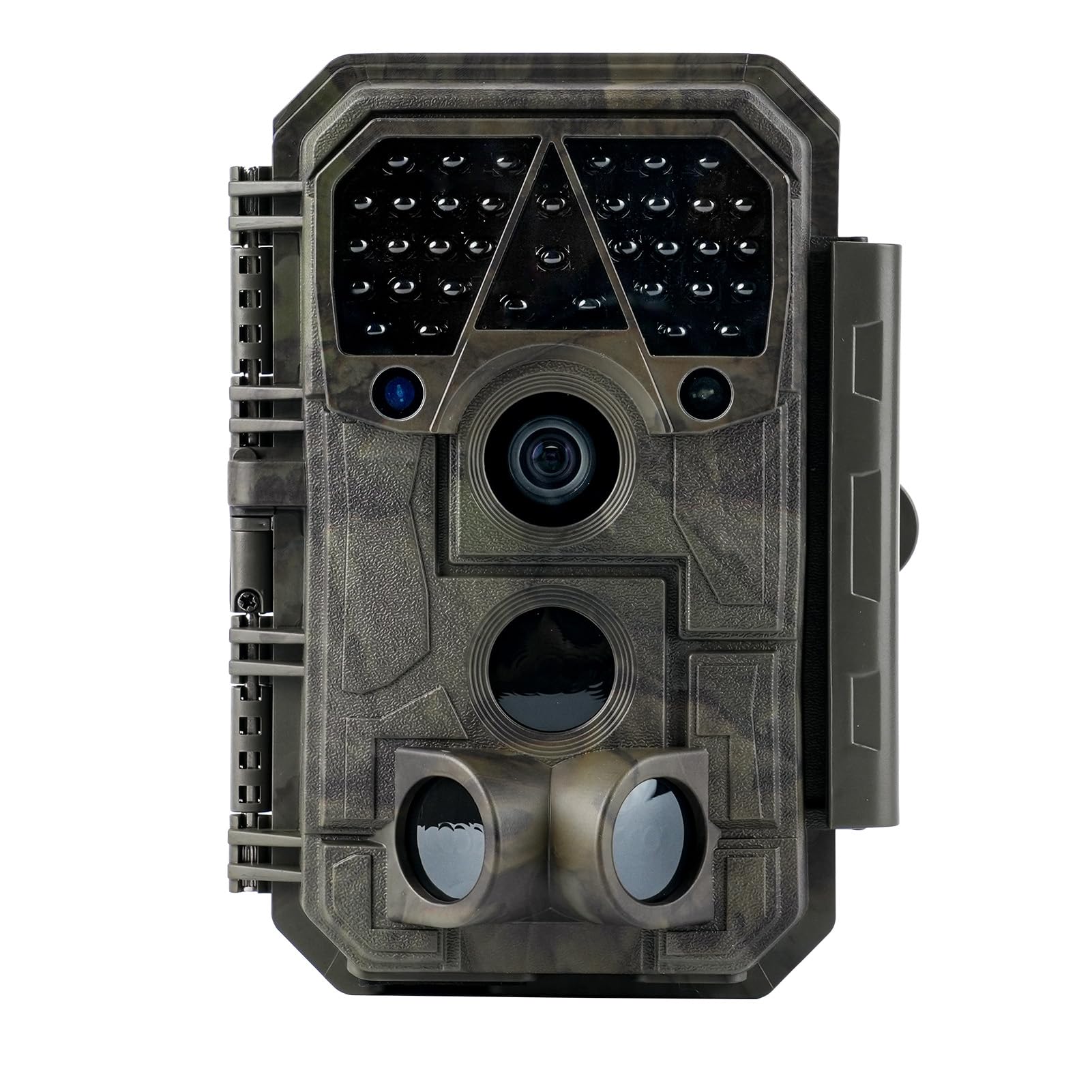
The Meidase P70 packs a 64MP image sensor paired with a bright f/1.6 aperture lens into a non-cellular trail camera that delivers exceptional daytime and nighttime detail at a mid-range price. Its 0.1-second trigger speed matches the fastest competitors, and the 100ft no-glow 940nm infrared ensures deer never see or hear the camera activating. The 1296p HD video (H.264 compression) keeps file sizes manageable for quick playback on a laptop without sacrificing image sharpness.
A 2.4-inch color display lets you review footage in the field, and the easy-access button layout simplifies menu navigation without needing a phone. The camera supports SD cards up to 512GB, offering immense storage capacity for high-volume scouting locations. Owners report that the P70 performs well across all weather extremes — one user noted flawless operation through Florida heat and storms. The image quality at its lowest resolution setting is surprisingly good, and the 0.1-second trigger reliably catches deer that pass through the frame quickly.
One real-world quirk: the camera requires you to reset the calendar and time after each battery change, a minor inconvenience for regular users. Rechargeable AA batteries may not last as long as Energizer Ultimate Lithium cells, particularly when shooting video with the IR active. The P70 is also ready for the Meidase SP350 solar panel (sold separately), making it a candidate for long-term solar-powered deployment. For the shooter who wants premium 64MP resolution and blazing-fast trigger speed without paying for cellular data, the Meidase P70 is a strong, spec-dense contender.
What works
- 64MP photos and f/1.6 lens capture exceptional detail in low light
- 0.1-second trigger with side sensors catches fast-moving deer reliably
- 100ft no-glow 940nm IR keeps wildlife undisturbed in total darkness
- 2.4-inch color display allows on-camera photo review without a laptop
What doesn’t
- Clock and date reset after every battery change — must be manually reset
- Rechargeable AA batteries may drain faster than lithium for video-heavy use
- No WiFi or cellular — SD card removal required for photo transfer
7. OUTDOOR EXPERT Mini Game Camera 20MP

The OUTDOOR EXPERT Mini Game Camera earns its spot for budget-conscious scouting with a compact design — roughly half the size of a standard trail camera — that fits inside a coffee cup for truly concealable placement. It captures 20MP stills and 1080p video with 940nm no-glow night vision illuminating up to 80 feet, and the 60-foot PIR trigger range covers a solid detection zone. The IP66 waterproof housing and ABS plastic shell make it tough enough for year-round outdoor exposure.
Owner feedback highlights the camera’s crisp daytime color images and clear black-and-white night shots, with the invisible IR flash ensuring deer never spook. Motion sensitivity is preset on the high side, which means it triggers reliably on deer but also on wind-blown leaves and roadside traffic if not carefully aimed away from moving vegetation. The included mounting strap is considered too flimsy by many users — replacing it with bungee cords or a screw-down bracket provides a far more secure mount. Battery life with 6 AA cells is impressive; one owner reported hundreds of pictures over months on a single set.
The most common durability issue is the battery door hinge, which some users found prone to cracking with repeated opening. A simple washer-and-bolt repair resolves it, but it indicates a minor build compromise at this price point. No WiFi, Bluetooth, or cellular connectivity means you must remove the micro SD card (up to 32GB) to view images. For the entry-level scout who wants an affordable, tiny, concealable deer motion detector to monitor a small food plot or garden approach without breaking the bank, the OUTDOOR EXPERT delivers surprisingly capable image quality in a package that disappears into the landscape.
What works
- Miniature size fits in a coffee cup for near-invisible placement
- No-glow 940nm IR does not spook deer at night up to 80 feet
- Excellent day color and night B&W clarity at an entry-level price
- Battery life lasts months with hundreds of photos on 6 AA cells
What doesn’t
- Battery door hinge is fragile and can crack with frequent battery swaps
- Motion sensitivity is non-adjustable and triggers on small movements like wind
- Included mounting strap is too weak — requires bungee or screw replacement
Hardware & Specs Guide
PIR Sensor Count and Detection Angle
A deer motion detector’s ability to sense movement depends on its PIR (passive infrared) sensor array. Single-sensor cameras have a narrower detection zone and may miss deer approaching from the side. Triple-sensor designs, like the GardePro E5S, cover a wider arc and reduce the blind spots where a deer can pass unrecorded. The detection angle — typically 100 to 120 degrees on modern units — determines the width of the monitored corridor. A 60-degree sensor (found on some cellular models) concentrates sensitivity but requires more precise aiming toward trail pinch points.
IR Wavelength: No-Glow vs. Low-Glow
The infrared LED wavelength directly impacts deer awareness. 940nm no-glow IR emits zero visible light — it is invisible to both human eyes and deer, making it the gold standard for undisturbed monitoring. 850nm low-glow IR produces a faint red glow when active; deer may not consistently notice it, but on particularly wary bucks, it can cause hesitation. Image brightness traded off: 850nm LEDs typically produce a brighter nighttime image than 940nm because they operate at a slightly more visible wavelength. For the best balance of discretion and clarity, a 100ft-rated 940nm no-glow system is ideal for most deer scouting scenarios.
Trigger Speed and Burst Mode
Deer move fast. A 0.1-second trigger speed is the fastest standard in the trail camera market, capturing a deer that is already mid-stride before it exits the frame. Slower 0.2- to 0.5-second triggers may produce tail-only shots of a buck already past the sensor. Burst mode — typically 3 to 5 consecutive shots per trigger event — improves your odds of getting at least one frame with the deer’s head and antlers fully visible. For property monitoring where deer are moving quickly across a field edge, prioritize cameras with both 0.1-second trigger and burst capture.
Power Architecture: Solar, Rechargeable, or Disposable
Power source determines how often you must visit the camera. Solar models with a built-in rechargeable lithium battery (5200mAh in the MAXDONE) can run indefinitely in full sun without user intervention. Non-cellular cameras running on 8x AA lithium cells typically last 6-12 months on a single set. Cellular cameras draw additional power for LTE transmission — some owners pair them with external 6700mAh rechargeable packs or dedicated solar panels to stretch battery life. If your camera is placed in deep forest shade where solar charging is minimal, prefer a high-capacity AA lithium setup over a solar-rechargeable unit.
FAQ
Will a 940nm no-glow IR camera scare deer less than an 850nm low-glow model?
How fast does the trigger need to be to catch a running buck?
Do I need a cellular trail camera if my property is within walking distance?
Final Thoughts: The Verdict
For most gardeners and landowners, the best deer motion detector winner is the GardePro E5S because its 0.1-second triple-PIR trigger and 940nm no-glow night vision capture clear deer images without spooking the herd, all at a mid-range cost with no ongoing data fees. If you want real-time LTE alerts delivered directly to your phone, grab the Tactacam Reveal X 3.0. And for maintenance-free solar-powered operation with app-based photo downloads, nothing beats the MAXDONE Solar Trail Camera.