
Raw, uncomposted manure is a classic mistake that nukes vegetable gardens with excessive ammonia and weed seeds. The difference between a bumper harvest and yellow, stunted leaves often comes down to a single bag choice.
I’m Rikta — the co-founder and writer behind Lawn Gear Lab. This guide comes from comparing the NPK ratios, organic certifications, and moisture content of seven top-selling manure products, cross-referencing hundreds of verified buyer experiences to separate effective soil amendments from overpriced dirt.
My goal is a clean, actionable verdict on the manure for vegetable garden that delivers steady nutrients without burning your tomatoes.
How To Choose The Best Manure For Vegetable Garden
Selecting manure isn’t about grabbing the cheapest bag. The key is matching the source animal, the composting process, and the NPK release curve to what your specific crops need during each growth stage.
Composted vs. Raw: The Ammonia Trap
Composting reduces soluble nitrogen to a form that won’t burn tender roots. Raw manure can contain 2-4% ammonia nitrogen that volatilizes rapidly, damaging leaves and stunting growth. Always look for bags labeled “composted” or “aged” to guarantee the heat cycle has neutralized pathogens and weed seeds.
NPK Ratio and Your Crop Cycle
Tomatoes, peppers, and squash are heavy feeders that benefit from a higher middle number (phosphorus) during flowering, typically a 4-6-2 or 5-7-3 blend. Leafy greens prefer a higher first number (nitrogen) for vegetative bulk, around 4-2-2. Avoid manure with NPK below 0.5-0.5-0.5 as a standalone fertilizer — treat it as a soil conditioner instead.
Texture and Application Method
Pelleted manure, like chicken manure, spreads evenly via a hand spreader and breaks down over weeks. Bagged composted cow manure is bulkier and works best as a soil amendment tilled into beds before planting. Liquid concentrates offer fast-acting tea for foliar feeding but require dilution ratios around 1:1 to prevent salt buildup.
Quick Comparison
On smaller screens, swipe sideways to see the full table.
| Model | Category | Best For | Key Spec | Amazon |
|---|---|---|---|---|
| FoxFarm Happy Frog | Granules | Heavy feeders & blossom end rot prevention | NPK 5-7-3 + Mycorrhizae | Amazon |
| Down To Earth Tomato & Vegetable Mix | Granules | All-purpose organic feeding | NPK 4-6-2 | Amazon |
| Michigan Peat Baccto Wholly Cow | Bagged Compost | Soil conditioning & moisture retention | 40-Quart volume | Amazon |
| Fancy Chicken Manure | Pellets | Lawn & garden nitrogen boost | NPK 4-2.5-2 | Amazon |
| Brut Cow Compost | Bagged Compost | Indoor pots & delicate seedlings | OMRI Listed | Amazon |
| Insta-Cow Liquid Manure | Liquid Cubes | Foliar feeding & quick green-up | 1:1 mixing ratio | Amazon |
| Black Kow Composted Cow Manure | Bagged | Tomato in-bag planting | Slow-release 0.5-0.5-0.5 | Amazon |
In‑Depth Reviews
1. FoxFarm Happy Frog Tomato & Vegetable Fertilizer

FoxFarm’s Happy Frog formula is built for heavy feeders with a 5-7-3 NPK ratio that supports explosive flowering and fruit set on tomatoes, peppers, and squash. The calcium inclusion directly targets blossom end rot — the most common calcium deficiency symptom in container-grown vegetables. Mycorrhizal fungi colonies the root zone to increase nutrient and water absorption, making it a complete package for high-yield beds.
Users report baby tomato fruit forming within days of application on bag-grown plants, and squash vines expanding rapidly without the leaf burn seen with synthetic fast-release fertilizers. The granular texture allows easy hand application or top-dressing, and the scent is mild — no offensive manure odor typically associated with raw chicken or steer products. The 4-pound bag covers around 100 square feet at recommended rates.
The primary drawback is cost per pound relative to bulk cow manure bags. For large gardens exceeding 400 square feet, the price adds up quickly compared to a general-purpose amendment like Wholly Cow. Some users also note the granules can cake if exposed to high humidity before opening.
What works
- Calcium prevents blossom end rot on tomatoes
- Mycorrhizal fungi boosts root efficiency
- No strong manure smell
What doesn’t
- Expensive for larger gardens
- Granules can clump in humid storage
2. Down To Earth All Natural Fertilizers Organic All Purpose Tomato & Vegetable Mix 4-6-2

Down To Earth’s 4-6-2 blend draws from fish bone meal, blood meal, feather meal, rock phosphate, langbeinite, greensand, humates, and kelp meal. This ingredient stack provides a slow-release phosphorus spike that supports flowering without the high soluble nitrogen that can delay fruiting. The OMRI listing confirms it meets organic production standards for row crops and containers alike.
A 5-pound box covers roughly 150 square feet. Gardeners consistently report pale, flimsy tomato plants reviving within two weeks of application, with steady growth through the entire season without needing reapplication every 30 days. The formulation is gentle enough for transplants and won’t burn roots when mixed into the top inch of soil.
Down To Earth produces an earthy, barn-like odor that dissipates in a few days after watering. A small percentage of users find the smell stronger than FoxFarm’s blend, particularly if applied before rain. The granules also settle quickly in the bag during shipping, requiring a brief stir before measuring.
What works
- Diverse organic ingredient blend
- Gentle, non-burning formula
- OMRI listed for organic gardening
What doesn’t
- Initial odor can be strong
- Requires even mixing to avoid hot spots
3. Michigan Peat Baccto Wholly Cow Horticultural Compost and Manure
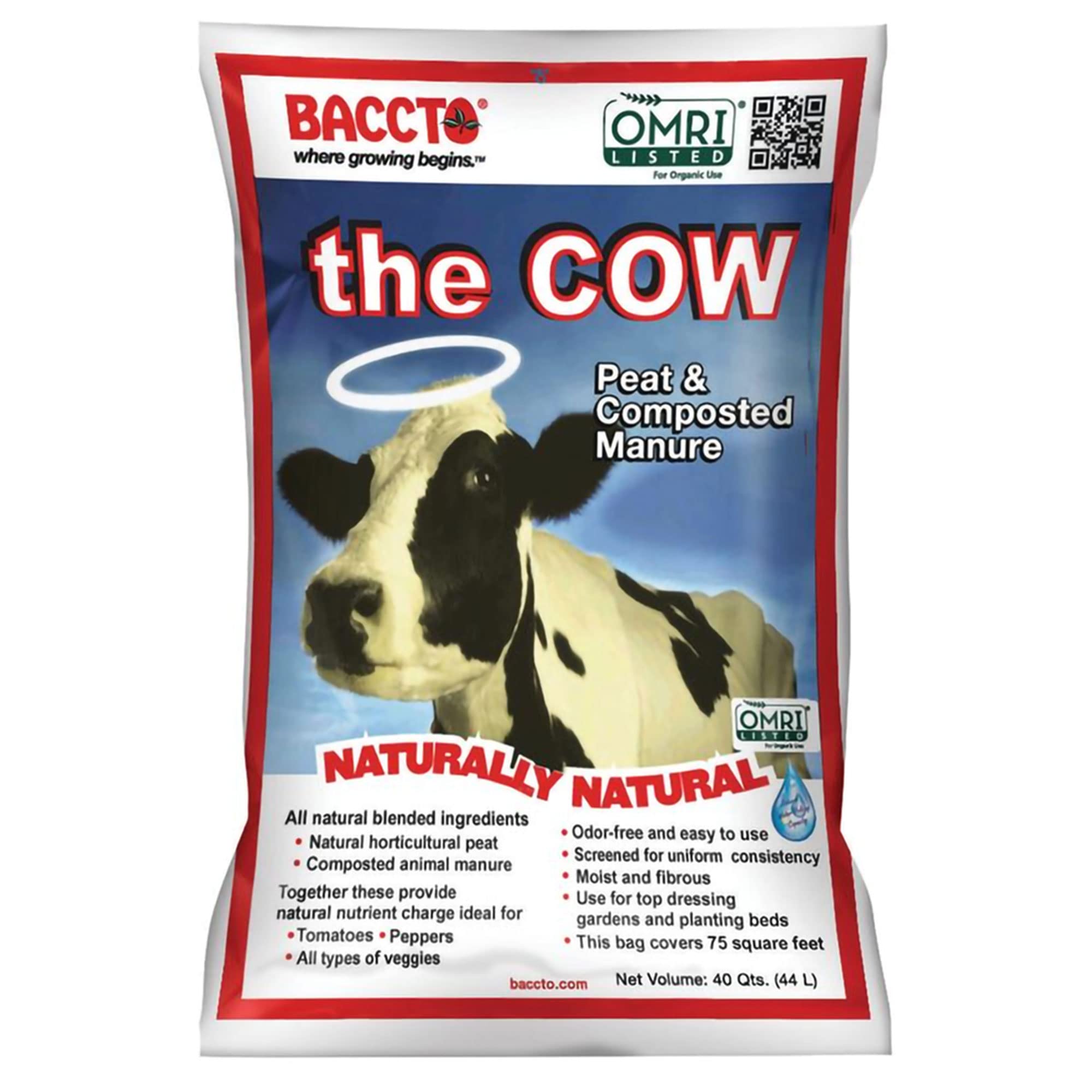
Wholly Cow blends composted animal manure with Michigan peat to create a lightweight, fluffy amendment that holds moisture and improves aeration in dense or sandy soils. The 40-quart bag is the largest volume option in this roundup, making it the practical choice for building new raised beds or amending 200+ square feet. The screened consistency ensures minimal sticks or debris — a frustration with bulk steer manure.
Gardeners report using it as a straight top-dressing for roses and as a 1:1 base with coco coir for mushroom substrates, where its high organic matter content drives robust flushes. The odor-free nature means you can work with it indoors for container mixes without driving family out of the room. Multiple reviewers over 70 highlight its ease of handling and immediate improvement in poor river-bottom soil.
The NPK is not listed on the bag, which indicates it functions primarily as a soil conditioner rather than a concentrated fertilizer. Vegetable beds still need a supplemental granular feed like Down To Earth for heavy fruiting. Some buyers also note the bag weight varies by hydration — wetter batches can feel heavier than the stated 34-pound spec.
What works
- Huge 40-quart volume for large beds
- Odor-free, light texture
- Screened uniform consistency
What doesn’t
- No stated NPK — needs companion fertilizer
- Moisture content makes bag weight inconsistent
4. Fancy Chicken All-Purpose Manure 4-2.5-2
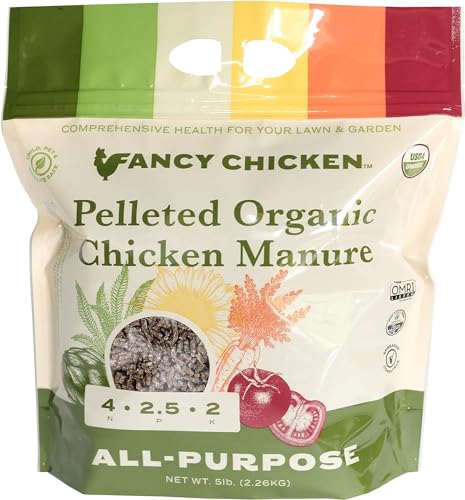
Fancy Chicken offers dehydrated pelleted chicken manure with a 4-2.5-2 NPK profile that delivers a faster nitrogen release than composted cow manure. The pellet form allows precise application via hand spreader or push spreader without the dust of loose powders. A single 5-pound bag covers 300 to 500 square feet at a thin top-dressing rate, making it economical for lawn borders and larger vegetable rows.
Gardeners switching from synthetic chemical fertilizers note that after three weeks the grass greenness and vegetable leaf expansion are visually comparable to high-nitrogen synthetics but without the salt buildup. The pellets break down over about 30 days, providing a steady N-release that won’t leach away in a heavy rain. The CEC (Cation Exchange Capacity) improvement helps soil hold onto magnesium and calcium over multiple seasons.
The initial odor when dry is moderate — comparable to a working chicken coop — but fades completely after first watering. A few users expect larger bags at the price point, noting that other brands offer 10-pound bags for a few dollars more. The pellets also harden if left open in humidity, requiring extra effort to break apart.
What works
- Even pellet distribution with spreaders
- Covers 300-500 sq ft per bag
- Improves soil CEC over time
What doesn’t
- Moderate odor before watering
- Bag weight small for the price
5. Brut Cow Compost – Composted Cow Manure Organic Soil Amendment

Brut Worm Farms produces an OMRI-listed cow compost that is finely sifted and free of additive fillers. The texture resembles a dark, crumbly topsoil that mixes seamlessly into potting blends for indoor seedlings and tender transplants. The 10-quart bag is sized for container gardeners who need a soil conditioner rather than a large-volume bed filler.
Users mixing it at a 3:2 ratio with standard potting soil report tomato seeds germinating into sturdy plugs with thick stems in under eight weeks. The total lack of odor makes it one of the few manure options suitable for apartment balcony gardens or greenhouse work in enclosed spaces. Calcium and iron levels in the compost support chlorophyll production in leafy greens like kale and Swiss chard.
The low volume is a limiting factor for in-ground vegetable beds — you would need four or five bags to match a single 40-quart bag of Wholly Cow. The price per quart is higher than bulk alternatives. Some reviewers also wish for a larger bulk option to reduce plastic waste from multiple small bags.
What works
- Finely sifted, no debris
- Completely odor-free
- OMRI certified organic
What doesn’t
- Small bag size for large gardens
- High cost per quart
6. Insta-Cow – Composted Aged Cow Manure Liquid Cubes
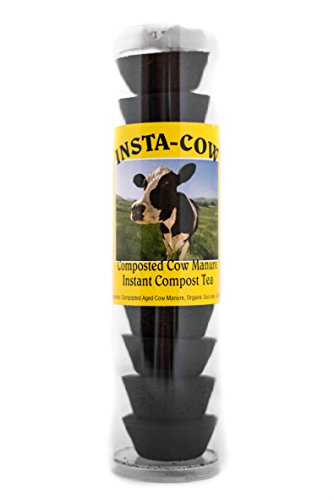
Insta-Cow breaks the granular mold with dehydrated cubes that dissolve in water to create a compost tea. Each cube mixes at a 1:1 ratio with water, producing a gallon of dark, mineral-rich slurry. The shelf-stable format means no refrigeration and no spoilage, a practical advantage over liquid fertilizers that require immediate use after opening.
Home gardeners report applying the tea to seedlings and seeing greener leaves within 48 hours. The liquid form reaches roots faster than dry amendments, making it ideal for container plants that need a mid-season boost without disturbing the soil structure. Users also appreciate the included packet of fertilizing pellets as a bonus for slow-release support.
The primary criticism is the mild odor during mixing — described as earthy but noticeable indoors. Additionally, the 10-cube count covers only ten gallons of tea, which covers approximately 40 square feet when applied via watering can. For large vegetable patches, the cost per treated area runs higher than bagged granular manure.
What works
- Fast-acting liquid tea for quick green-up
- Shelf-stable, no refrigeration
- Easy to measure 1:1 mix
What doesn’t
- Mild earthy odor during mixing
- Low volume covers limited area
7. Black Kow Composted Cow Manure 35 lb Bag

Black Kow is a slow-release composted cow manure with a low 0.5-0.5-0.5 NPK rating, designed primarily as a soil structure improver rather than a high-potency fertilizer. The 35-pound bag offers one of the lowest costs per pound in this roundup, making it a go-to for amending large areas or building new bed bases. The manufacturer even suggests planting tomatoes directly into a slit-open bag for a contained, no-dig growing station.
Gardeners using it as a soil mix base report vigorous vegetable growth when paired with a balanced granular feed. The composted texture is dark and crumbly, blending well with native clay or sandy soils to improve drainage and water retention. Reviews highlight fast results — tomatoes and peppers showing noticeable size increase within weeks of incorporation.
A critical minority of buyers report the bag arriving underweight, measuring around 20 pounds instead of the advertised 35 pounds. This inconsistency makes the per-pound comparison less reliable. Additionally, some find it available at a significantly lower price at local garden centers, reducing the value proposition for those paying delivery.
What works
- Bulk bag covers large garden beds
- Slow-release won’t burn roots
- Great soil conditioner for native clay
What doesn’t
- Inconsistent bag weight reported
- Low NPK requires supplemental feeding
Hardware & Specs Guide
NPK Ratio: The Three‑Number Code
The first digit (Nitrogen) drives leaf growth; the second (Phosphorus) fuels flowers and fruit; the third (Potassium) builds disease resistance and root strength. For heavy-fruiting vegetables like tomatoes and peppers, look for a middle number of 6 or higher. For leafy greens, a higher first number around 5 delivers better vegetative mass.
Composting Method: Hot vs. Cold
Hot composting maintains internal temperatures above 130°F long enough to kill weed seeds, pathogens, and fly larvae. Bagged certified compost from major brands uses this method. Cold-aged manure retains more organic matter but may carry viable weed seeds — not ideal for a vegetable garden where you want uniform, weed-free beds.
FAQ
Can I use fresh cow manure directly on my vegetable garden?
What is the best animal manure type for tomatoes?
How often should I apply manure to my vegetable beds?
Final Thoughts: The Verdict
For most gardeners, the manure for vegetable garden winner is the FoxFarm Happy Frog because it combines a vegetable-specific 5-7-3 NPK with calcium to prevent blossom end rot and mycorrhizal fungi to boost root efficiency. If you want a bulk soil conditioning option that works across huge raised beds, grab the Michigan Peat Baccto Wholly Cow. And for a fast, gentle liquid feed that revives seedlings within days, nothing beats the Insta-Cow.