
Aerating a garden fork isn’t just about poking holes in the dirt; it’s the primary mechanical way to relieve soil compaction, restore oxygen flow to root zones, and let water actually penetrate instead of running off. The wrong fork either bends on the first clod of clay or leaves you wrestling with a handle that feels like a broomstick.
I’m Rikta — the co-founder and writer behind Lawn Gear Lab. I spend most of my research time comparing tine metallurgy, handle-to-head joint reinforcement, and step-plate ergonomics across dozens of models so you don’t have to guess which one will stand up to your soil type.
After analyzing owner feedback and build specs across hundreds of digging sessions, I’ve separated the tools that deliver real aeration from the ones that waste your money — here is the definitive guide to the best aerating garden fork.
How To Choose The Best Aerating Garden Fork
The market is packed with forks that look identical on a thumbnail but differ drastically in real-world durability. Three factors determine whether a fork will aerate your soil efficiently or end up bent in the shed.
Tine Material and Thickness
Carbon steel tines offer the best strength-to-weight ratio for penetrating compacted clay. Stainless steel resists rust but tends to be softer and can splay under heavy leverage. Look for tines that are at least 7mm thick and over-welded to the crossbar — single-point welds shear off when you hit a rock.
Handle: Length, Grip, and Shaft Type
A handle between 40 and 45 inches allows you to stand upright while driving the tines, saving your lower back. D-grips provide better wrist control than T-handles for rotating the fork after insertion. Fiberglass handles won’t rot like wood, but a solid steel shaft (like the TABOR TOOLS model) eliminates any risk of handle snap under extreme leverage.
Foot Step Design
A wide, flat foot step distributes the force of your full body weight evenly and lets you drive the tines deep without slipping. Narrow or rounded steps cause foot fatigue and reduce penetration depth. The best designs are integrated into the steel crossbar rather than bolted on.
Quick Comparison
On smaller screens, swipe sideways to see the full table.
| Model | Category | Best For | Key Spec | Amazon |
|---|---|---|---|---|
| Bully Tools 92370 | Premium | Heavy clay & rock-soil aeration | Over-welded steel tines, 44″ fiberglass | Amazon |
| TABOR TOOLS J59A | Premium | Unbreakable build for pros | Alloy steel shaft, 5.5 lb | Amazon |
| Spear & Jackson 1570AL | Mid-Range | Deep soil penetration | Forged carbon steel, 39.17″ ash handle | Amazon |
| Berry&Bird 922 | Mid-Range | Raised bed & compost turning | Stainless steel head, 43.9″ ash handle | Amazon |
| Ymachray 5-Tine | Mid-Range | Breaking up compacted clay | Welded boron steel, 41.3″ T-handle | Amazon |
| VEVOR F115-2 | Budget | Entry-level average garden use | Forged steel, 45″ fiberglass Y-grip | Amazon |
| Truper 30293 | Budget | Light garden tilling & compost | Steel head, 30″ wood D-handle | Amazon |
In‑Depth Reviews
1. Bully Tools 92370 Spading Fork
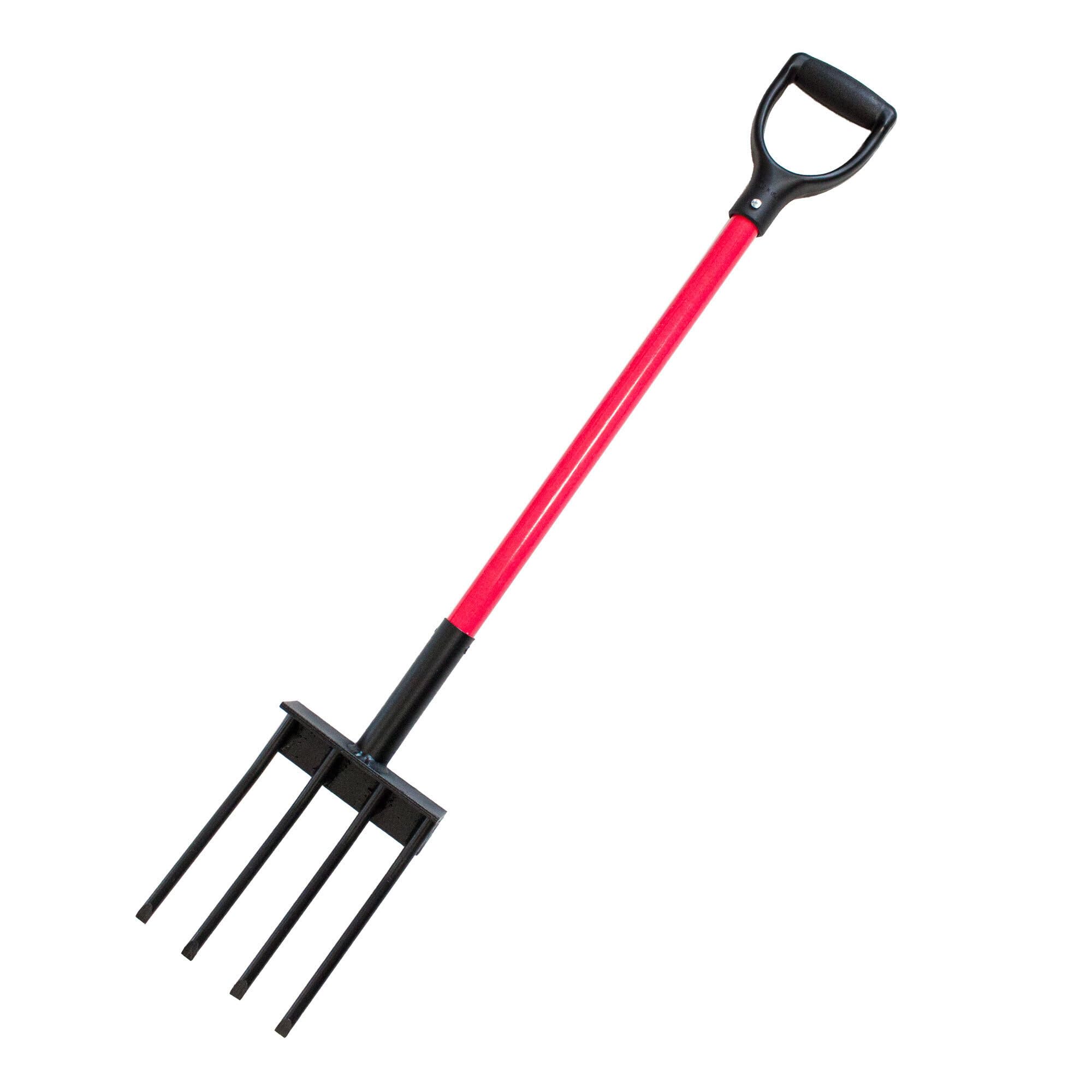
Bully Tools builds this fork around over-welded 100% USA-made steel tines that are up to 30% thicker than typical imports. The 2.25-inch foot step is wide enough to drive the head deep into hardpan without your foot slipping off, and the extended steel collar up the fiberglass handle eliminates the neck-snap failure common on cheaper forks.
At 6 pounds, it’s not a lightweight, but that mass translates directly into penetration momentum. The polyester-veil-coated fiberglass handle resists splintering even after seasons of wet storage, and the D-grip accommodates gloved hands comfortably. Multiple owners report using this fork to break up heavy clay that previously stalled rototillers.
The tines measure 10 inches long with a 7.5-inch head width — proportions that balance leverage with control. Assembly requires only a Phillips screwdriver and pliers, and the head-to-handle connection stays tight after hours of prying. This is the fork to buy if you want a single tool that handles aeration, root crop harvesting, and compost turning without wincing.
What works
- Over-welded tine construction resists bending
- Wide foot step enables deep penetration
- Fiberglass handle won’t rot or splinter
What doesn’t
- Heavier than wood-handle alternatives
- Short handle length challenges very tall users
2. TABOR TOOLS J59A Digging Fork

TABOR TOOLS takes a different approach by replacing the traditional wood or fiberglass handle with a welded steel shaft. The result is a fork that simply will not snap, flex, or rot — owners who have used it for years on heavy black clay report the tines remain unbent and the handle shows no wear.
The 8-inch-wide head with 4 tines is forged from hardened, tempered high-carbon steel. The black oxide finish provides corrosion resistance, and the D-handle is wide enough for gloved hands. At 5.5 pounds, it’s similar in heft to the Bully Tools fork, but the metal handle transfers more vibration during insertion.
Customer feedback highlights its performance on compacted clay and dense root mats. The diamond-point tines cut through soil aggressively, and the straight steel shank delivers maximum downward force. The 40-inch total length is slightly shorter than ideal for taller users, but the trade-off is a tool that can survive being used as a pry bar without failing.
What works
- Steel shaft is virtually unbreakable
- Forged tines stay sharp through heavy use
- Corrosion-resistant black oxide finish
What doesn’t
- 40-inch length is short for tall users
- Metal handle can feel cold in winter
3. Spear & Jackson Neverbend 1570AL

Spear & Jackson’s Neverbend line has a decades-long reputation among UK gardeners, and the 1570AL brings that tradition to American soil. The solid forged carbon steel tines measure 7 inches long and are designed to withstand the twisting forces of breaking up compacted ground without permanent deformation.
The handle is weatherproofed hardwood — specifically ash, known for its shock-absorbing properties. At 39.17 inches total length, this fork sits at the shorter end of the ergonomic range, but the wood grip dampens vibration better than fiberglass. The 5.39-pound weight is manageable for all-day aeration sessions.
Owners consistently mention this fork’s ability to plunge into hard clay after a rain and lift dense root systems without the handle creaking. A few users reported handle breakage after extreme use, but the general consensus is that this tool outlasts big-box alternatives by years. It’s the best choice for gardeners who prefer traditional materials and proven design.
What works
- Forged carbon steel tines resist bending
- Wood handle absorbs shock well
- Proven design with decades of field testing
What doesn’t
- Wood handle can eventually splinter
- Short length may require bending for tall users
4. Berry&Bird 922 Digging Fork

Berry&Bird focuses on traditional craftsmanship with an environmental conscience. The 4-tine stainless steel head resists rust and soil adhesion — a real advantage in wet compost or clay that would gum up carbon steel. The 43.9-inch ash wood handle comes from FSC-certified forests and is ergonomically shaped to reduce lower back strain.
The straight tines are ideal for raised bed aeration, where you need clean insertion and removal without disturbing adjacent plants. The D-grip fits comfortably and is easy to hang on a hook for storage. At 6.24 pounds, it’s on the heavier side, but the stainless steel head is harder than typical carbon steel and holds its edge shape.
Feedback from owners who use it for beach-side gardening (salt exposure) confirms the rust resistance is real. The fork handles normal garden soil, compost turning, and manure moving without issue. A few users noted the wood handle requires periodic oiling to maintain its weather resistance, but the 2-year warranty provides peace of mind.
What works
- Stainless steel head won’t rust
- FSC-certified ash handle is eco-friendly
- Long 43.9-inch handle reduces back strain
What doesn’t
- Stainless steel can bend under extreme prying
- Wood handle needs occasional treatment
5. Ymachray 5-Tine Heavy Duty Pitch Fork

The Ymachray fork stands out with its 5-tine design and welded boron steel construction. Boron steel is harder than standard carbon steel, and the extra tine provides more contact points for breaking up heavy clay. The T-handle design reduces wrist strain compared to D-grips, and the double-riveted socket adds strength at the head-to-shaft junction.
At 2.72 kilograms (about 6 pounds), it’s a substantial tool. The square tines are specifically shaped for turning and cultivating soil, and they excel at lifting sod and dense root masses. The tilt bracket/step bar gives extra leverage when you need to force the tines deep into compacted ground.
Owners in Georgia red clay report this is the only fork they’ve found that can break up the hardpan without the tines splaying. The stainless steel head resists soil adhesion, and the bolt-together assembly is secure. Some users wish the T-handle were 6 inches longer, but the overall build quality justifies its mid-range position.
What works
- Boron steel tines are extremely hard
- 5-tine design provides more aeration points
- T-handle reduces wrist fatigue
What doesn’t
- Heavier than 4-tine alternatives
- Handle length may feel short for taller users
6. VEVOR F115-2 Garden Fork
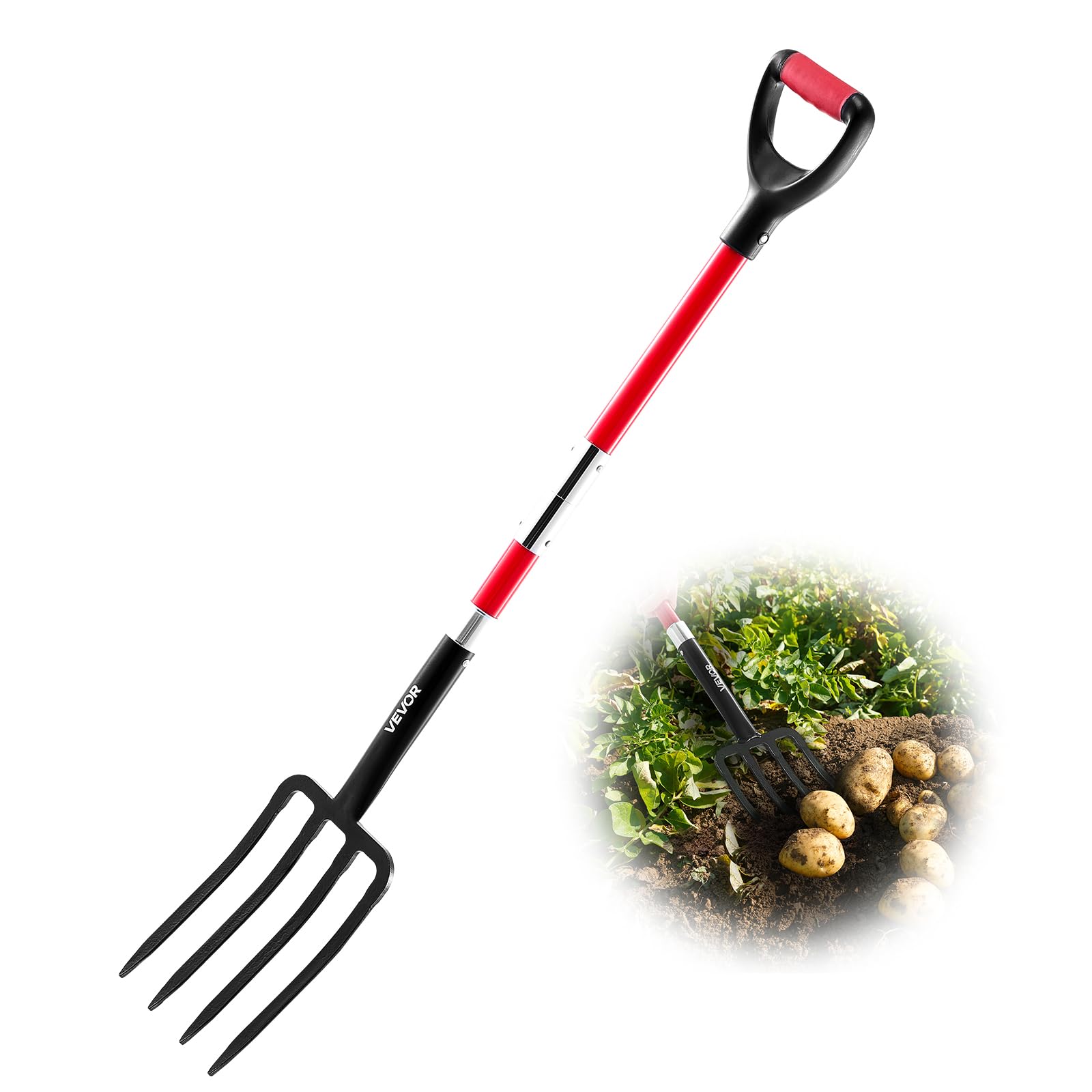
VEVOR’s F115-2 offers a surprising amount of utility at a budget-friendly price. The integrated forged digging fork head connects to a 45-inch fiberglass handle with a reinforced joint that resists wobbling. The Y-grip is ergonomically shaped to fit the hand’s natural curve and features a non-slip texture that works in wet, muddy conditions.
At 4.85 pounds, it’s one of the lightest forks in this review, making it accessible for older adults or anyone who prefers less heft. The total length of 45.28 inches provides good leverage for stand-up aeration, and the 4-tine head covers enough area for raised beds and compost piles. Assembly takes minutes with no special tools.
Customer reviews consistently praise its performance in solid clay soil — a test that kills many budget forks. The fiberglass handle shows no signs of flexing under load, and the bolts mount outward to prevent snagging on clothing or foliage. For the average backyard gardener working on moderate soil, this fork delivers solid performance without the premium price.
What works
- Lightweight at 4.85 pounds
- Non-slip Y-grip works in wet conditions
- Easy assembly with reinforced joint
What doesn’t
- Not suitable for extreme prying in rocky soil
- Fiberglass handle lacks the heft of steel
7. Truper 30293 Spading Fork
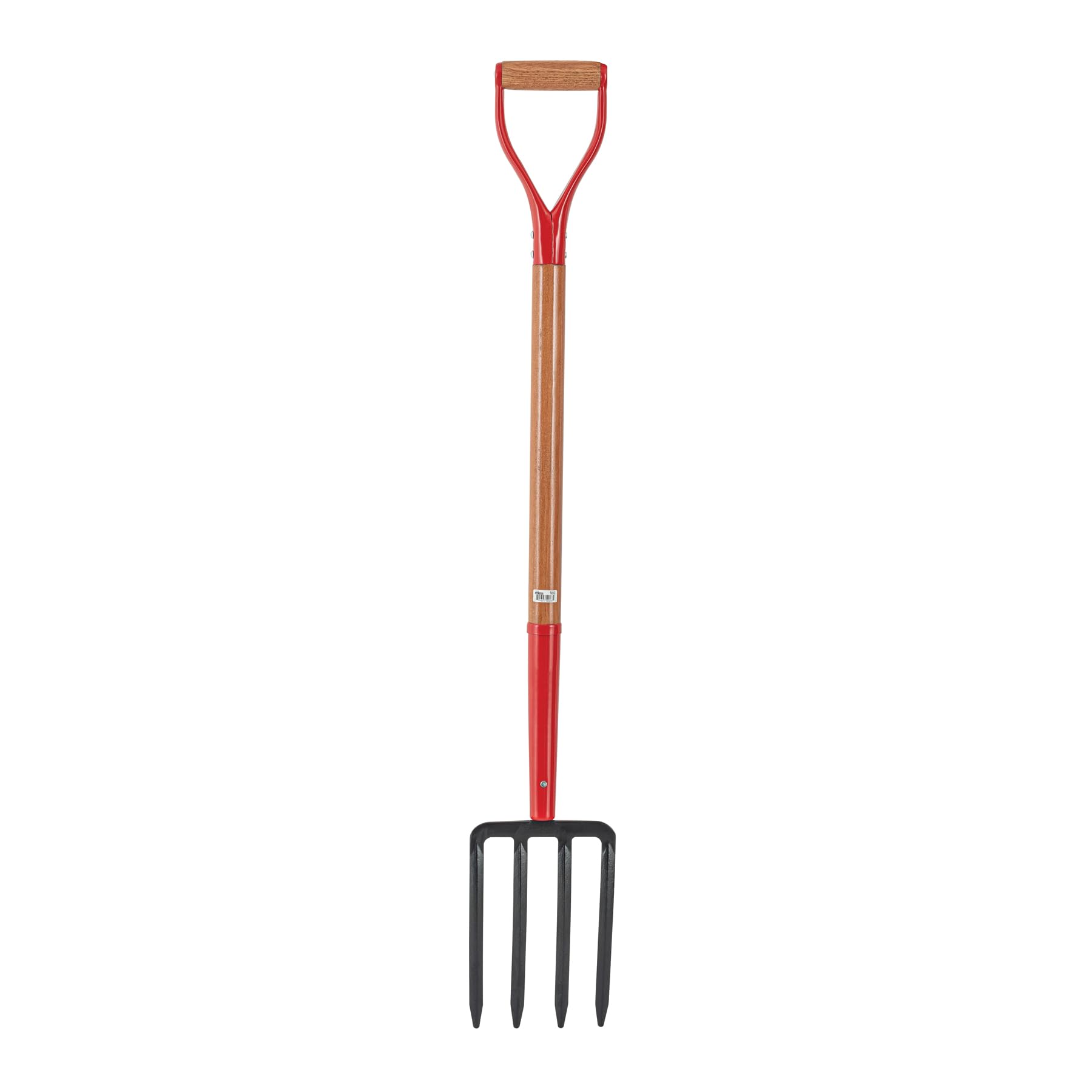
Truper’s 30293 is a no-nonsense, compact spading fork built for maneuverability in tight garden beds. The 4-tine steel head measures only 7 inches wide and the handle is just 30 inches long — almost a hand-tool length. This makes it ideal for raised beds, tight greenhouse aisles, or any situation where a full-length fork feels clumsy.
The wood D-handle provides a secure grip, though the hardwood will require periodic maintenance to prevent drying and cracking. The steel fork head is durable for routine turning and loosening of compost, mulch, and light soil. At 1.7 kilograms (about 3.7 pounds), it’s the lightest fork here, which helps during extended use.
Owner feedback is overwhelmingly positive for its intended use: turning garden beds, moving compost, and dividing perennials. The short length means you’ll be bending more, but the trade-off is exceptional control in confined spaces. Some users reported tine bending when used as a pry bar on rocks — this fork is best treated as a dedicated soil cultivator, not a demolition tool.
What works
- Compact design perfect for tight spaces
- Very lightweight at 3.7 pounds
- Sturdy wood D-handle provides good control
What doesn’t
- Short handle requires bending to use
- Wood can dry and crack without treatment
Hardware & Specs Guide
Tine Metallurgy and Cross-Section
The tine is the business end of an aerating fork. Carbon steel with a Rockwell hardness of at least 45 HRC will penetrate hard clay without bending. Stainless steel typically runs softer (around 35 HRC) but resists rust. Boron steel, used in the Ymachray fork, adds trace amounts of boron during smelting to achieve hardness comparable to carbon steel with better impact resistance. Over-welded tines — where the weld bead runs across the entire top of the crossbar rather than just the sides — distribute stress evenly and prevent tine detachment.
Handle Length and Leverage
Handle length directly affects the mechanical advantage you can apply. A 40-inch handle generates approximately 15% more downward force at the tines compared to a 30-inch handle, assuming the same user weight. This is why long-handled forks (44 to 45 inches) are preferred for deep aeration tasks. D-grip handles allow you to rotate the fork after insertion — a critical motion for loosening soil without lifting — while T-handles provide better forward thrust but less rotational control.
FAQ
How deep should an aerating garden fork penetrate?
Is a 4-tine fork better than a 5-tine fork for aeration?
Can I use a spading fork to aerate my lawn?
Final Thoughts: The Verdict
For most gardeners, the best aerating garden fork winner is the Bully Tools 92370 because its over-welded tines and 44-inch fiberglass handle deliver the best balance of penetration force and durability at a sensible price. If you want an unbreakable steel shaft that will last a lifetime, grab the TABOR TOOLS J59A. And for budget-conscious gardeners working moderate soil, the VEVOR F115-2 offers surprising capability without breaking the bank.