
Mowing a sloped lawn is a battle against gravity, slipping tires, and the constant fear of losing control. A standard mower on a 15-degree incline often spins its wheels, scalps the high side, or worse, sends the operator sliding. The right machine changes this dynamic entirely, using specialized drive systems, aggressive tread patterns, and lower centers of gravity to keep the cutting path straight and safe.
I’m Rikta — the co-founder and writer behind Lawn Gear Lab. I’ve spent countless hours analyzing owner feedback, comparing drive-train specs, wheel dimensions, and deck weights to pinpoint exactly which features separate a confident hill-climber from a frustrating slide-fest.
This guide dissects the specific torque, tire, and transmission choices that define a capable lawn mower for hills, ensuring your next purchase tackles every incline with stability rather than struggle.
How To Choose The Best Lawn Mower For Hills
Not every self-propelled mower can maintain traction on a 20-degree grade. Focus on three critical factors: drive-wheel placement, tire design, and overall weight distribution. An imbalance here turns a simple mow into a dangerous chore.
Drive System: Rear-Wheel vs. All-Wheel vs. Front-Wheel
Rear-wheel drive (RWD) applies power directly under the engine’s weight, pressing tires into the ground for maximum uphill bite. Front-wheel drive (FWD) lightens the rear on inclines, causing the drive wheels to spin. For steep properties, RWD or all-wheel drive (AWD) is non-negotiable. AWD spreads torque across all four corners, offering the best stability on uneven slopes and soft soil.
Tire Tread and Diameter
A wide tire with an aggressive, deep-lug tread digs into grass rather than skating over it. Look for tires at least 10 inches in diameter with a pronounced V-shaped or sawtooth pattern. Smaller, smooth “mulching” tires work fine on flats but are the first component to fail on a wet incline.
Cutting Deck and Anti-Scalp Design
Hills create axle articulation that can cause blade contact with high spots. A deck with adjustable anti-scalp rollers or a floating design prevents the mower from digging into the crest of a slope. Wider decks (22 inches or more) provide better stability, but narrower decks navigate tighter contours without dragging.
Weight and Power-to-Ground Ratio
A lightweight mower may struggle to keep drive tires planted on steep grades. Heavier machines in the 80-to-100-pound range improve traction, but extreme weight can rut soft turf. A balanced approach pairs a robust engine (200cc or equivalent electric torque) with a low center of gravity, ideally with the battery or gas tank mounted low in the chassis.
Quick Comparison
On smaller screens, swipe sideways to see the full table.
| Model | Category | Best For | Key Spec | Amazon |
|---|---|---|---|---|
| EGO Power+ LM2114SP | Electric Self-Propelled | Mid-size battery hill mowing | 56V 6.0Ah, 50 min run | Amazon |
| Greenworks 60V MO60L424 | Electric Self-Propelled | Large-lot battery traction | 60V dual 4.0Ah, 21″ deck | Amazon |
| YARDMAX YG2860 | Gas FWD CVT | Budget gas with variable speed | 201cc CVT, spiked tires | Amazon |
| SENIX G-H-FIVE | Gas RWD | Entry-level rear-wheel drive | 201cc OHV, 22″ steel deck | Amazon |
| Greenworks 48V 1341002-VK | Combo Kit Electric | Complete yard kit on hills | 48V (24Vx2) 5.0Ah, 21° climb | Amazon |
| Mammotion LUBA 3 1500H | Robot AWD | Autonomous 80% slope mowing | AWD, 9.4Ah, 360° LiDAR | Amazon |
| Mammotion LUBA 3 3000H | Robot AWD | Large autonomous slope coverage | AWD, 12Ah, 0.75 acre | Amazon |
| Segway Navimow X450 | Robot 4WD | Extreme gradient robots | 4WD, 84% slope, 12 blades | Amazon |
| Mowrator S1 4WD | RC 4WD | Steep manual-remote slopes | 1000W 4WD, 21″ cut, RC | Amazon |
| CRAFTSMAN 13AC77XYA93 | Gas Riding Tractor | Gentle slopes, large acreage | 36″ deck, 11.5 HP, 7-speed | Amazon |
| Husqvarna Z254F | Gas Zero-Turn Rider | High-speed zero-turn on hills | 54″ deck, 23 HP Kawasaki | Amazon |
In‑Depth Reviews
1. EGO Power+ LM2114SP
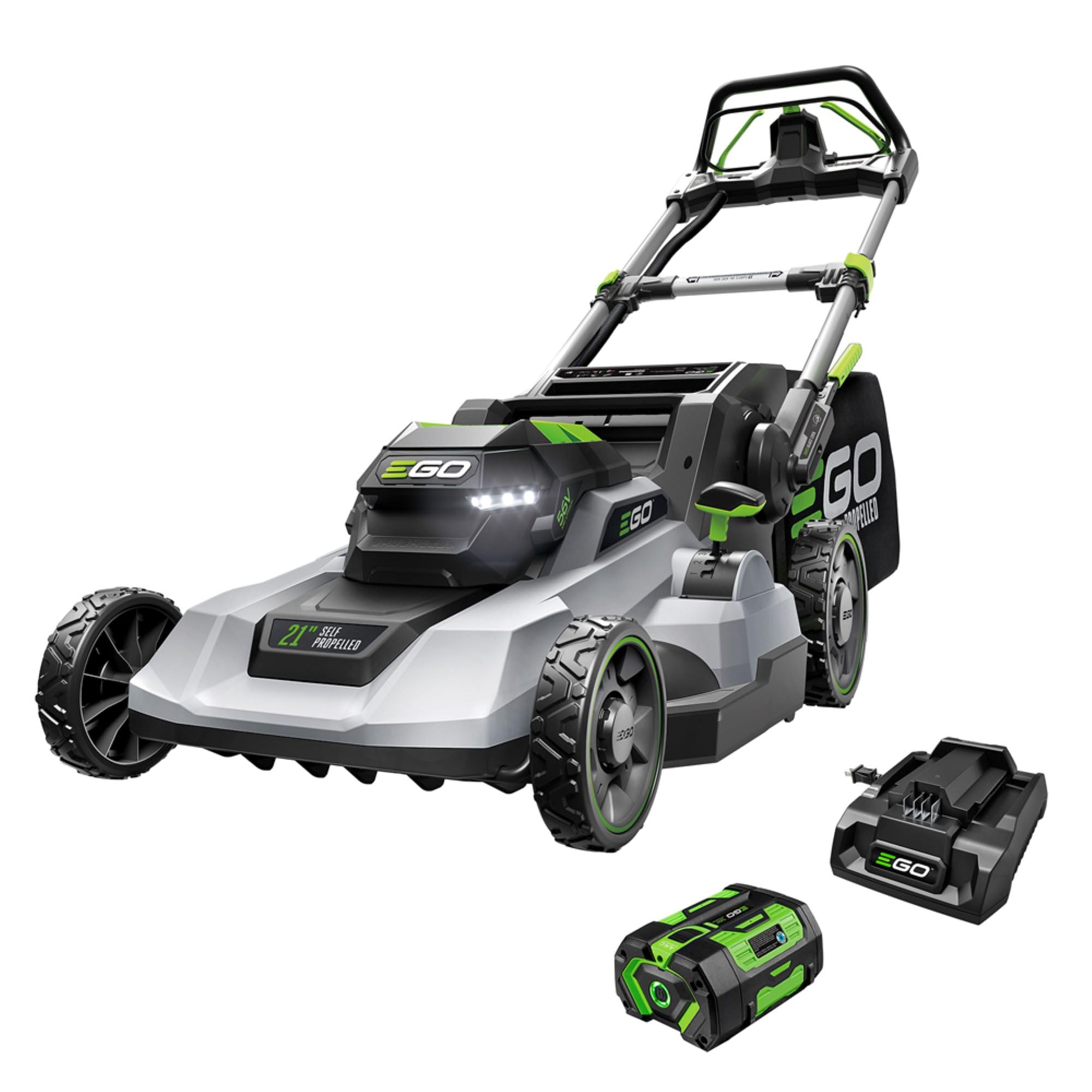
The EGO LM2114SP delivers 6.0 ft-lbs of cutting torque — enough to power through thick grass on a steep incline without bogging. Its brushless motor keeps weight manageable at 84 pounds, and the 56V 6.0Ah ARC Lithium battery provides up to 50 minutes of runtime under load. The dual-toggle handleset lets you engage self-propel with either hand, which is practical when you need to brace yourself on a sideways grade.
Owner reports confirm this mower handles “steep hill” professional use, with one landscape contractor stating it outperformed several gas mowers in cut quality and climb stability on a challenging slope. The 7-position height adjustment (1.25 to 4 inches) combined with a 21-inch deck gives flexibility for seasonal grass changes without sacrificing traction. LED headlights extend usable hours for evening mows after work.
Battery life is close to the estimate on flat terrain, but on sustained hills expect slightly less coverage. The self-propel speed is aggressive for small lots. Factor in a second battery if your lawn approaches half an acre with significant vertical gain.
What works
- Excellent cutting torque for a battery machine
- Up to 50 minutes runtime on a charge
- Dual-toggle handleset for convenient self-propel engagement
- Push-button start with no gas or oil
What doesn’t
- Self-propel speed can feel fast on tight turns
- Battery drains faster on prolonged steep climbs
2. Greenworks 60V MO60L424

This Greenworks model uses a 60V brushless motor paired with two 4.0Ah batteries to cover up to three-quarters of an acre per charge. Rear-wheel drive puts the traction where it matters — under the heaviest part of the frame — so climbing a moderate hill doesn’t turn into a wheel-spin session. The 21-inch durable steel deck adds weight low in the chassis for a planted feel on uneven ground.
Owner feedback highlights the 4-in-1 versatility, including a turbo button for thick grass, and the ability to finish a mid-size yard on one battery set. The self-propel system has separate wheel and blade paddles, giving the operator control over speed independent of blade engagement. LED headlights allow mowing from dusk until dark, and the vertical storage design saves garage footprint.
The self-propel disengagement is not instant — it requires a forward push to release the clutch. Speed control slides slightly due to vibration. For buyers who want a powerful electric hill mower without the gas routine, this is a strong mid-range pick.
What works
- RWD traction for reliable hill climbing
- Dual batteries cover up to 3/4 acre
- Turbo button adds power for thick patches
- LED headlights for low-light operation
What doesn’t
- Self-propel clutch delayed on release
- Speed control wanders under vibration
3. YARDMAX YG2860

The YARDMAX YG2860 brings a 201cc engine with an exclusive CVT transmission to the budget-friendly gas hill mower category. The CVT allows you to dial in walking speed precisely using a 6-speed shift lever rather than a variable friction disc, which can slip. Its rubber tires feature an aggressive spiked tread pattern specifically designed to increase traction on loose soil and grassy slopes.
Multiple owners report this mower “handles inclines easily” and starts on the first or second pull thanks to the automatic choke system. The 22-inch stamped steel deck with a cleanout port makes post-mow cleanup quick, and the single-lever height adjustment simplifies changing cut height between seasons. Weighing 84.9 pounds, it sits heavy enough to keep front-drive tires engaged on moderate grades.
Front-wheel drive is the main limitation — on very steep or wet hills the front can lose bite, requiring the operator to lean into the handle. The speed lever reportedly slips for some users. For gently rolling slopes, the value proposition is hard to beat.
What works
- CVT transmission offers smooth speed selection
- Aggressive spiked tires improve slope grip
- Automatic choke for easy starts
- Deck cleanout port for fast cleaning
What doesn’t
- FWD loses traction on steep or wet hills
- Speed lever can slip during operation
4. SENIX G-H-FIVE
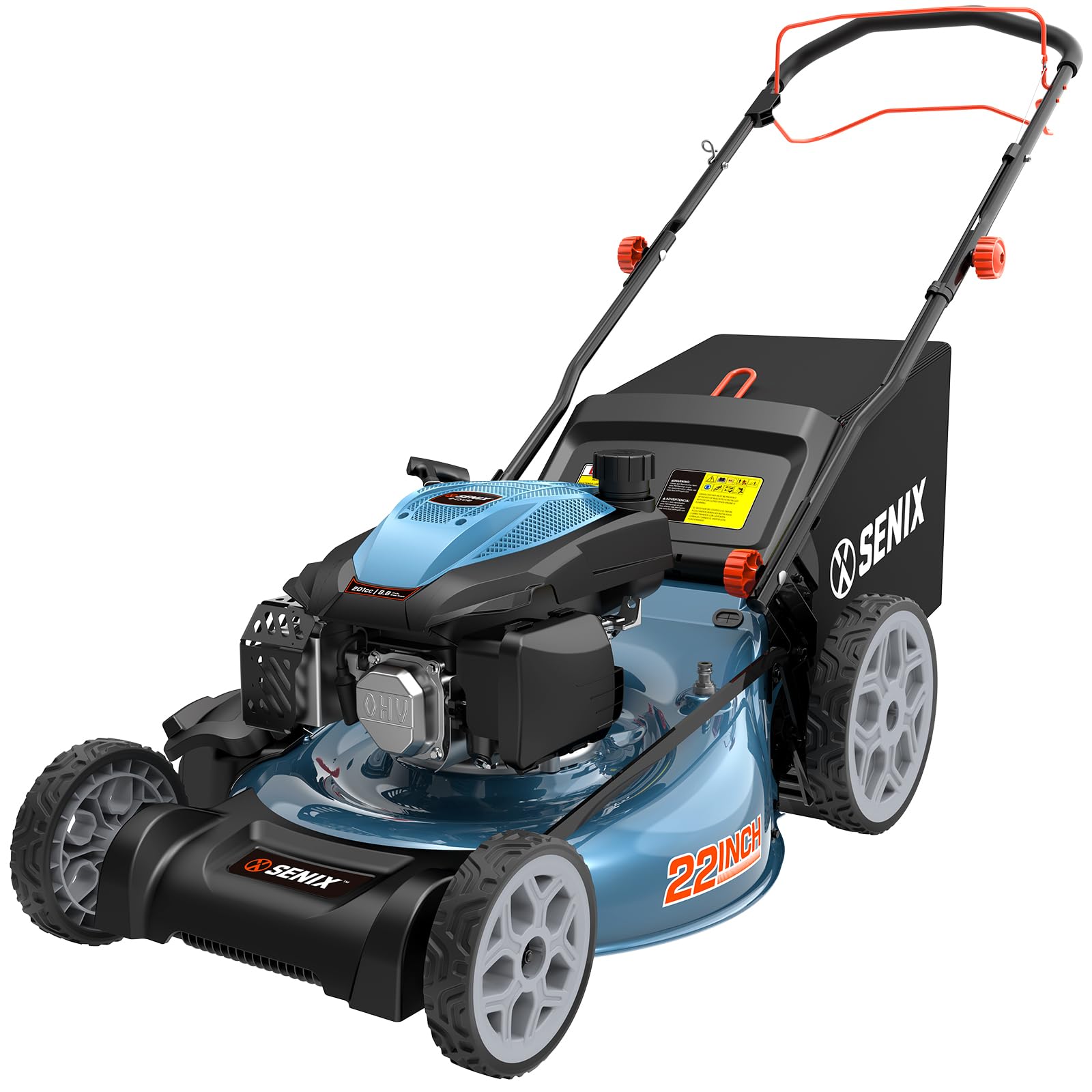
The SENIX G-H-FIVE breaks into the rear-wheel drive gas mower market at a price point normally reserved for FWD models. Its 201cc OHV engine puts out 4.7 HP and 8.8 ft-lb of torque, and the rear-wheel single-speed self-propel reaches 2.9 MPH. The 22-inch heavy-duty steel deck uses a vortex tunnel airflow design to improve grass discharge on hillsides where gravity works against the bagger.
Buyers report near-zero assembly, quiet operation relative to other gas mowers, and the ability to start on the first pull after priming. The 6-position central height adjustment (1.25 to 4 inches) covers everything from early spring scalping to late-summer high cuts. At 72 pounds, it’s lighter than many RWD gas mowers, which helps when pushing uphill with self-propel engaged.
Some owners noted the wheels feel cheap and the pull cord recoil can ring when the handle flexes. The included bagger’s compatibility information was unclear in early manuals. For a sub- rear-wheel drive option, it sets a new floor on what you should expect from a hill-capable gas mower.
What works
- RWD system provides solid uphill traction
- Lightweight at 72 pounds
- Easy setup with minimal assembly
- Powerful 201cc OHV engine
What doesn’t
- Wheels feel less durable than premium mowers
- Manual lacks detailed oil and gas capacities
5. Greenworks 48V 1341002-VK

This Greenworks combo bundles a 21-inch self-propelled mower with a 12-inch string trimmer and a 320 CFM blower, all powered by a shared 48V platform (two 24V 5.0Ah batteries). The mower is rated to climb inclines up to 21 degrees, which covers most residential slopes. Its brushless motor delivers up to 2X more torque than standard brushed electric mowers, making the uphill cut feel effortless.
Owners appreciate the push-button start, the variable speed self-propel, and the turbo button for tackling long grass on the side of a hill. The 4-in-1 system includes rear bag, mulch, side discharge, and the turbo leaf pickup mode. The kit includes two chargers and a USB battery for the trimmer, effectively giving you three batteries across the tool set.
The battery life is adequate for small yards up to a quarter acre, but larger properties will need the second 5.0Ah pack for a full mow. Some owners reported the trimmer lacks power for heavy weeds. The mower struggles slightly with wet grass on steeper sections. As an entry into a cordless ecosystem for a hilly property, it’s a solid value.
What works
- Rated for 21-degree incline climbing
- Combo kit includes trimmer and blower
- Turbo button for dense grass on slopes
- Push-button start with no maintenance
What doesn’t
- Battery life short for yards over 1/4 acre
- Trimmer lacks power for heavy brush
6. Mammotion LUBA 3 AWD 1500H
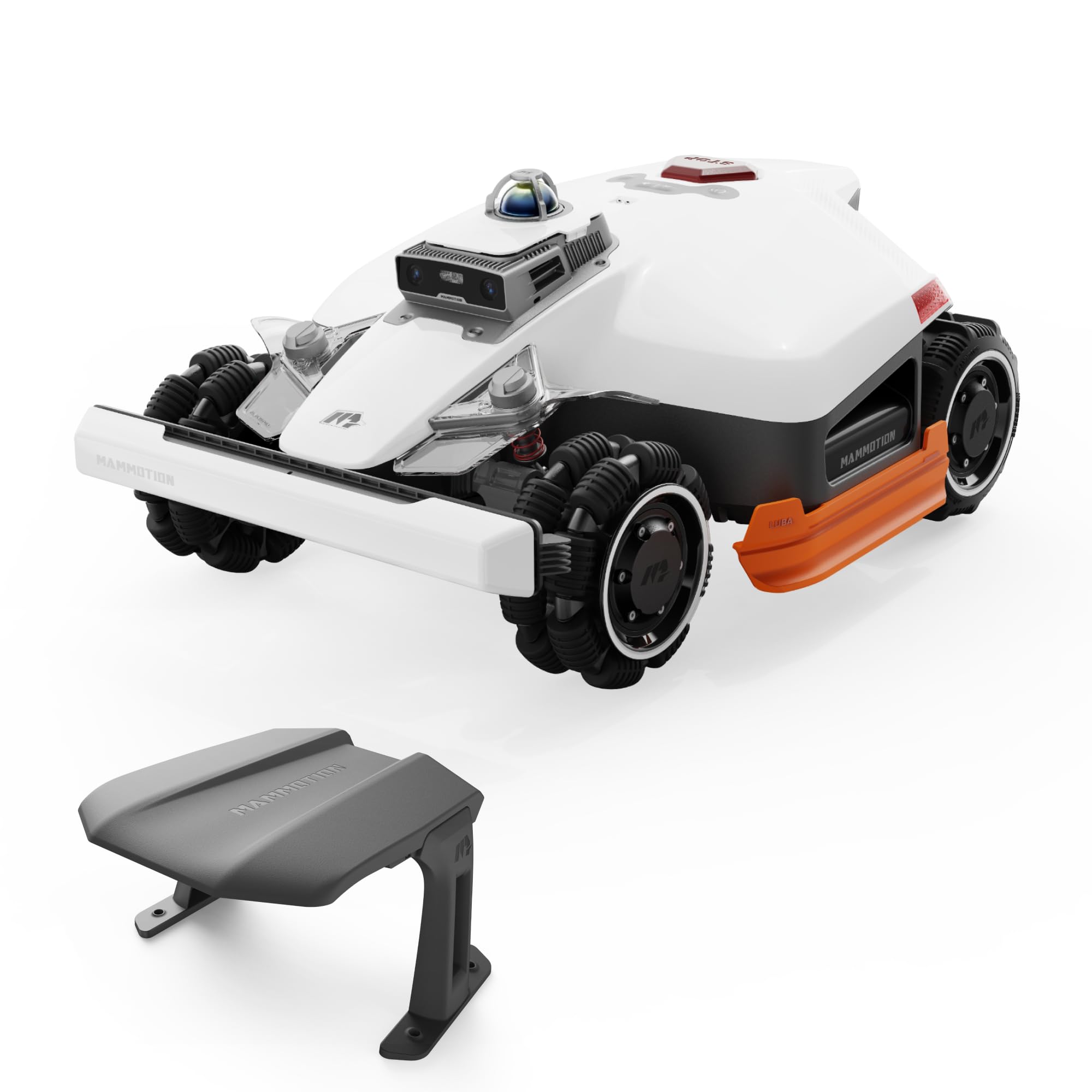
The LUBA 3 AWD 1500H is an autonomous robot mower built specifically for slopes up to 80 percent (38.6 degrees). Four independent motors drive each wheel, and an omni wheel enables smooth pivots without turf damage. The 360-degree LiDAR combined with a dual-camera AI vision system provides centimeter-level positioning, allowing it to map a hilly yard accurately without a perimeter wire.
Equipped with two 88W cutting motors and a 9.4Ah lithium battery, it covers 400 square meters per hour with a runtime up to 135 minutes. The adaptive suspension steps over curbs and roots up to 50 mm high, so it won’t get beached on a bump. The AI vision detects over 300 obstacle types and adjusts cutting power based on grass density automatically.
Real-world battery coverage is roughly 60 percent of the marketing figure, so expect to charge more frequently on larger lots. The included garage ships separately, which can cause logistical confusion. For owners of steep, complex terrain who want to eliminate manual mowing entirely, this is the category benchmark.
What works
- AWD climbs 80% slopes reliably
- 360° LiDAR + AI vision for precise navigation
- Adaptive suspension prevents getting stuck
- No perimeter wire required
What doesn’t
- Real-world battery life below marketing claims
- Garage shipped separately
7. Mammotion LUBA 3 AWD 3000H
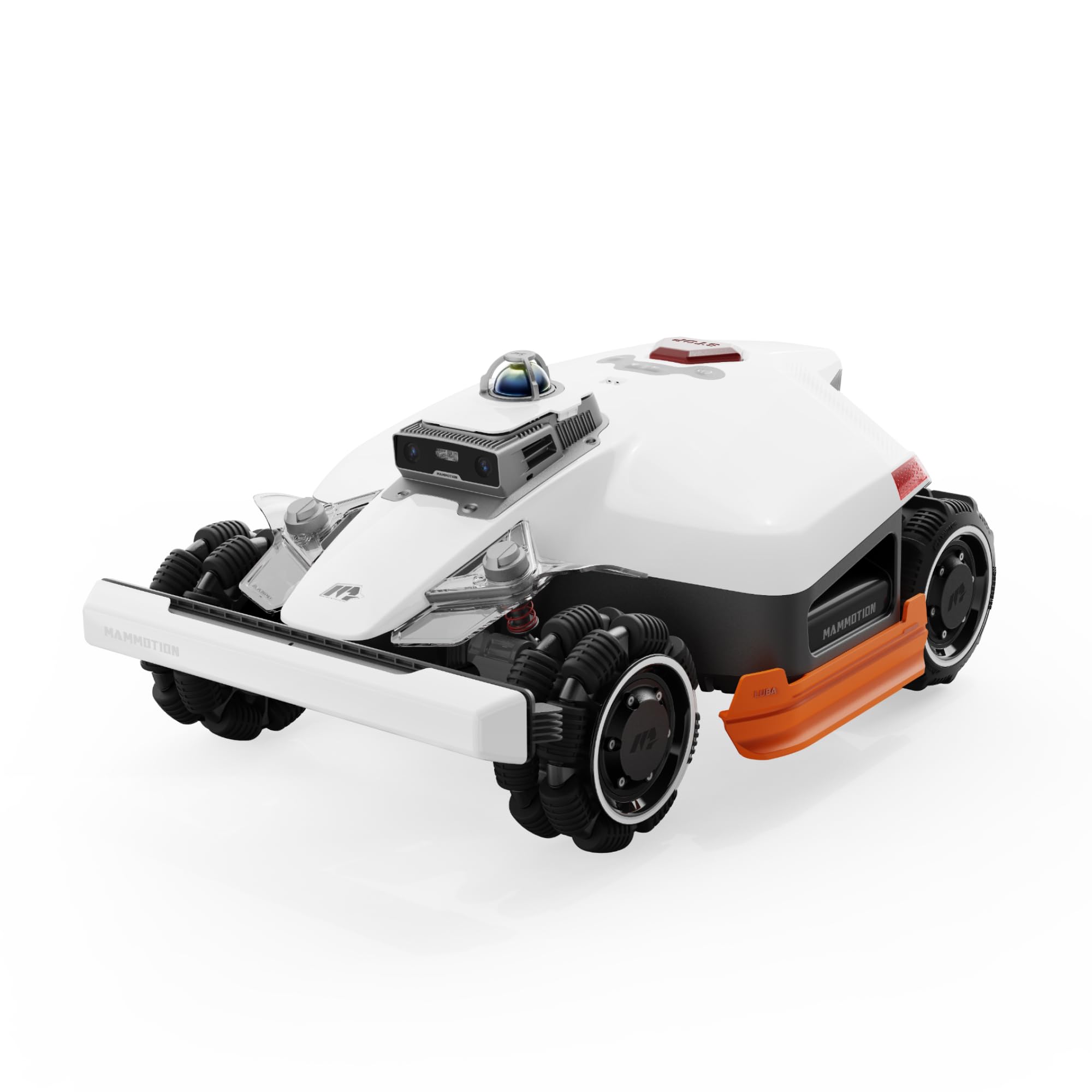
Stepping up to the LUBA 3 AWD 3000H adds Tri-Fusion navigation — 360-degree LiDAR, NetRTK, and dual-camera AI vision — for coverage up to 0.75 acres. The AWD drivetrain climbs 80 percent slopes and the 165W dual cutting motors (two 6-blade discs) handle dense grass on steep inclines without hesitation. The 12Ah battery runs up to 175 minutes, covering 500 square meters per hour.
Owners consistently report the cut quality is superior to both their old push mowers and riding mowers, with straight, visible stripe patterns. The RTK system locks onto GPS easily, even under dense tree canopy, and the app support allows up to 30 mowing zones with no-go areas for flowerbeds or pools. The adaptive suspension and omni wheel pivot keep the robot stable on uneven terrain.
Battery replacement is not user-friendly, and long-term parts availability is still an open question given the new platform. The machine is slightly larger than the 1500H, so it may struggle with very tight passageways. For acreage owners with serious hill content, it offers a hands-off mowing experience that few other robots can match.
What works
- Tri-Fusion navigation with NetRTK accuracy
- 165W cutting motors for dense grass
- 175-minute runtime on 12Ah battery
- 30-zone management for complex lawns
What doesn’t
- Battery replacement not user-serviceable
- Larger size limits access in narrow areas
8. Segway Navimow X450
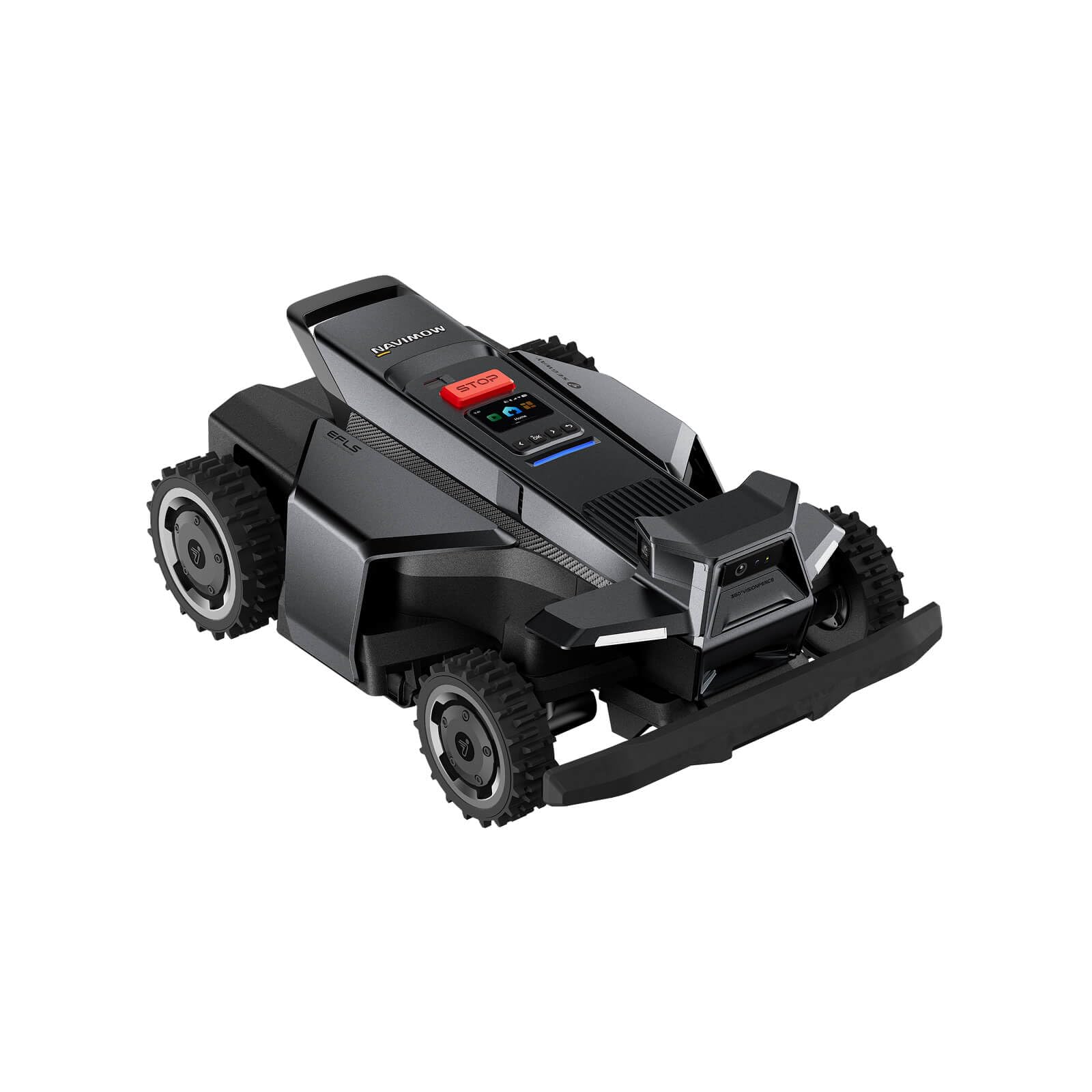
The Navimow X450 pushes the robot slope envelope to 84 percent (40 degrees) using 4WD with eccentric front-wheel steering and smart traction control. Dual 180W motors drive two cutting discs equipped with 12 blades total, mowing at 2.6 feet per second with a 17-inch cutting width. The Xero-Turn steering system prevents turf scuffing even during tight zero-radius turns on steep grades.
One-tap Auto Mapping sets up the yard without boundary wires or GPS antennas. The EFLS tri-frequency RTK combined with 360-degree vision and VIO provides centimeter-level accuracy under tree cover. Owners highlight the smooth, patterned cut quality and the robot’s ability to navigate around obstacles without getting stuck. Voice control via Alexa and Google Home adds a layer of convenience.
Initial units had some firmware and navigation quirks, including instances of the robot driving into the road. Customer support was responsive but the early adopter experience included a learning curve. The heavy 63.7-pound weight helps with traction but makes manual handling awkward. For extreme gradient robot mowing, this is currently the highest slope-rated option available.
What works
- 84% slope rating — highest in category
- Zero-turn steering prevents turf damage
- Wire-free setup with RTK accuracy
- Voice control with smart home integration
What doesn’t
- Firmware and navigation early-adopter issues
- Heavy at 63.7 pounds for manual handling
9. Mowrator S1 4WD 12Ah
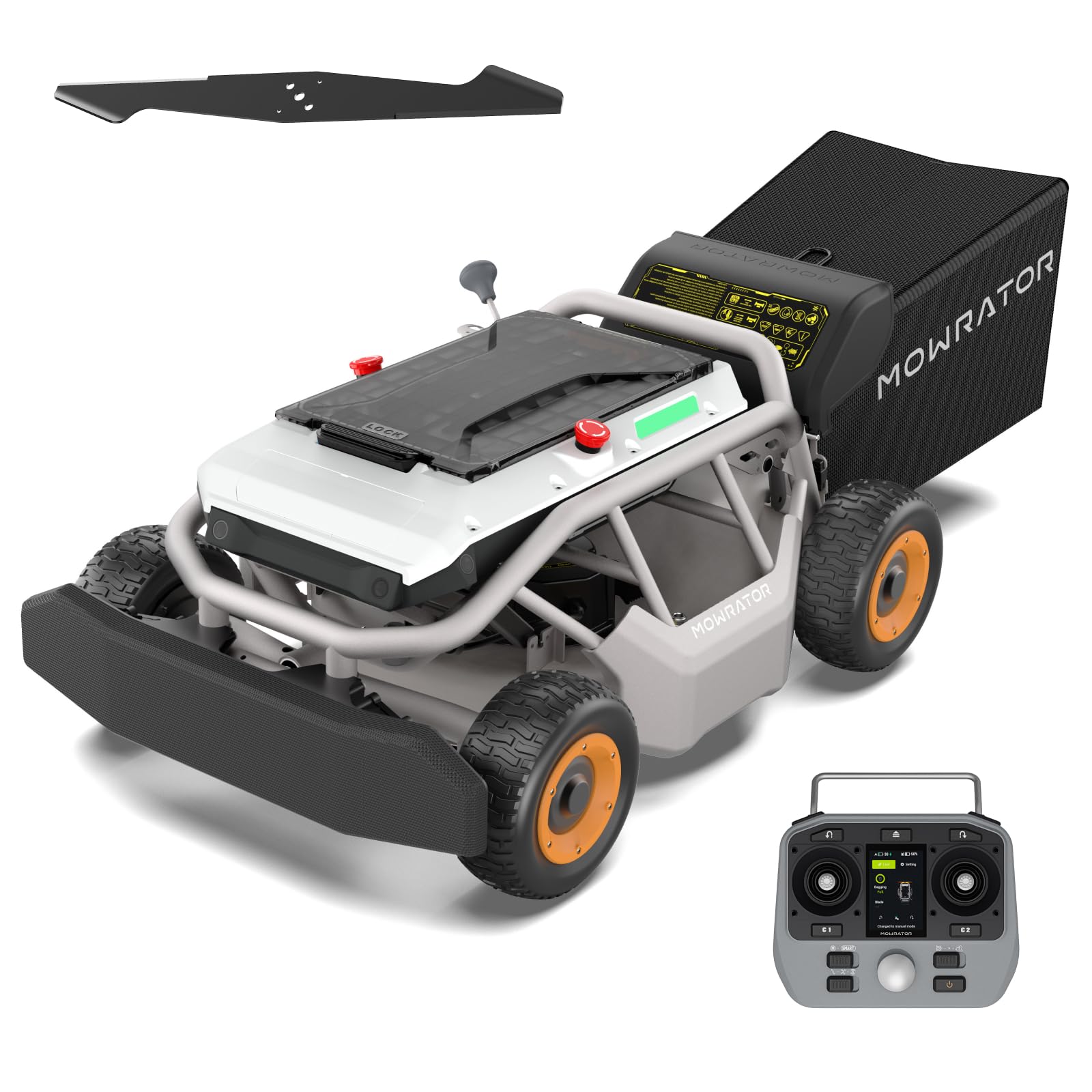
The Mowrator S1 is a remote-control mower that puts the operator safely at the top of the hill while the machine climbs 75 percent (37-degree) slopes below. A 1000W 4WD system distributes power to all wheels, and the blade motor peaks at 1600W at 3200 RPM with 6 ft-lb of cutting torque. The 21-inch cutting width covers ground efficiently, and the 56V 12Ah LiFePO4 battery runs up to 1.5 hours for up to 0.75 acres.
Owners with front yards too steep for riding or walk-behind mowers call this machine a game-changer. The low-latency remote provides 5ms response, and the 5-layer safety system includes ultrasonic sensors, an emergency stop, and blade auto-stop. It also handles winter snow clearing with an optional plow, making it a true 4-season yard tool.
The collision sensors can be overly sensitive to vines and small branches, causing the mower to stall. The tilt sensor cannot be manually disabled, which limits operation on extreme terrain transitions. The price reflects its specialist nature — this is not a general-purpose mower but a dedicated solution for hazardous slopes.
What works
- RC control for safe operation on steep hills
- 1000W 4WD climbs 37-degree slopes
- LiFePO4 battery with 1.5-hour runtime
- Multi-season use with optional attachments
What doesn’t
- Collision sensors stall on light vegetation
- Expensive for a single-purpose machine
10. CRAFTSMAN 13AC77XYA93
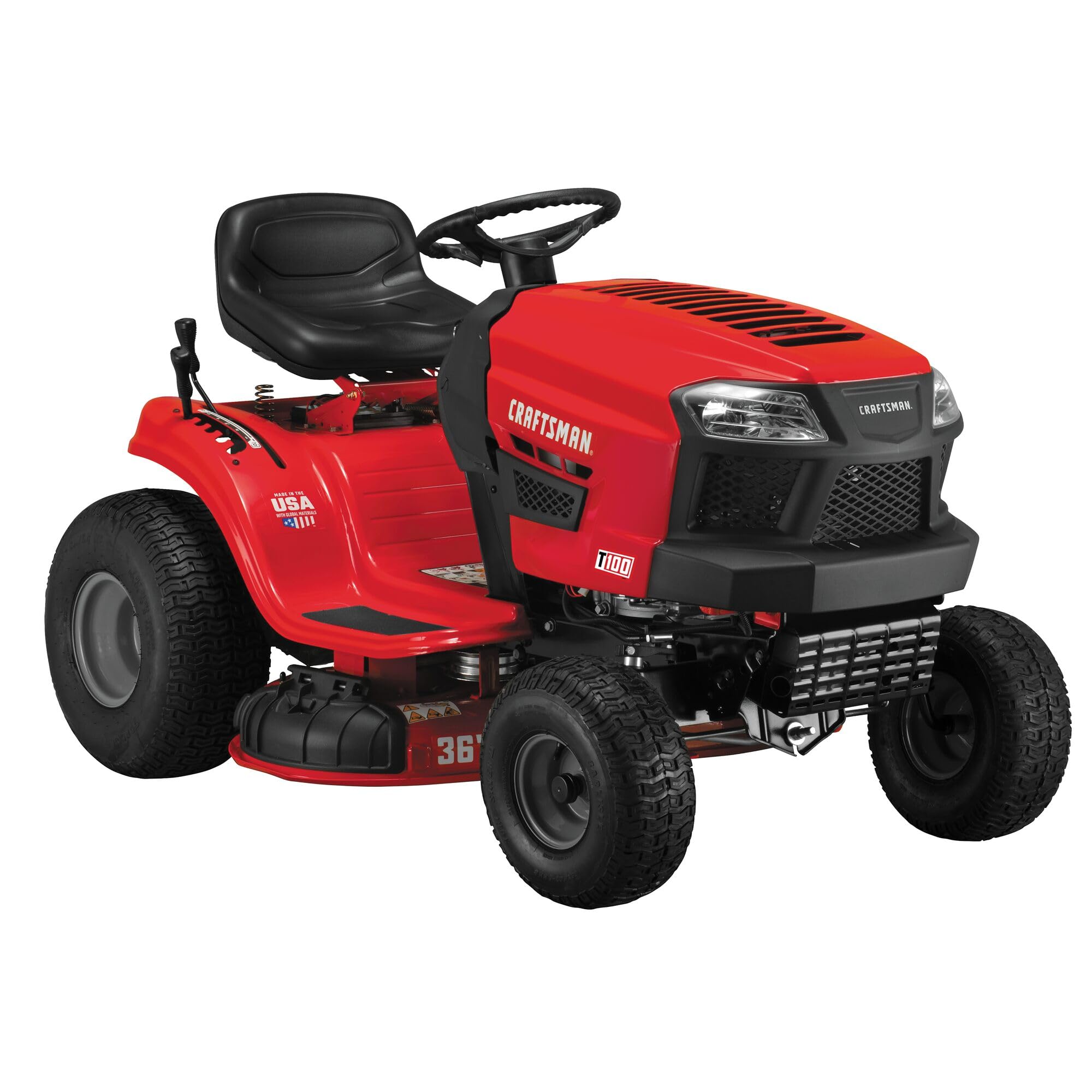
The CRAFTSMAN 36-inch riding mower is built for gentle-to-moderate slopes where a walk-behind would be inefficient. The 11.5 HP Briggs & Stratton single-cylinder engine provides reliable power for up to 2 acres, and the 7-speed manual transmission lets you choose a comfortable ground speed for the grade. The 18-inch turning radius and heavy-duty Turf Saver wheels help navigate around obstacles without tearing up the lawn.
Owners report easy assembly, strong power delivery, and a comfortable ride for the price point. The 36-inch stamped steel deck fits through standard 36-inch gates, making it one of the few riders that can access a fenced backyard. The included mulching kit adds versatility for those who prefer not to bag clippings.
The low-back seat is not ideal for long mowing sessions, and the 7-speed selector requires engaging the brake and clutch to shift. Build quality is not on par with premium brands — one unit quit driving on the second use. For a budget-friendly riding mower on moderate hills, it covers the basics without frills.
What works
- 36-inch deck fits through standard gates
- 11.5 HP engine handles 2 acres
- 7-speed transmission for grade adjustment
- Includes mulching kit
What doesn’t
- Low-back seat lacks comfort for long use
- Build quality concerns from early failures
11. Husqvarna Z254F

The Husqvarna Z254F is a zero-turn rider with a 23 HP Kawasaki engine and a 54-inch ClearCut deck, designed for homeowners or light commercial use on larger, sloped properties. The hydrostatic transmission requires no maintenance and delivers smooth speed transitions up to 6.5 MPH. The deep deck design creates superior airflow, improving bagging and discharge on hills where clippings tend to fall sideways.
Customer reviews consistently label this mower high-quality and perfectly suited for 2+ acre properties. The ergonomic seat and anti-slip foot area keep the operator stable during side-hill traverses. The manufacturing quality is notably higher than similarly priced tractors, and the Kawasaki engine starts reliably even after winter storage.
The deck is black, not orange as typically pictured, which may matter to brand purists. Mulching and bagging attachments are sold separately, adding to the upfront cost. For serious zero-turn performance on large acreage with moderate hills, the Z254F represents a proven balance of power, durability, and cut quality.
What works
- Powerful 23 HP Kawasaki engine
- Maintenance-free hydrostatic transmission
- Deep deck design for superior airflow on slopes
- Comfortable ergonomics for long mowing sessions
What doesn’t
- Mulching and bagging attachments not included
- Deck color differs from marketing images
Hardware & Specs Guide
Self-Propel Drive System
The drive system determines where power reaches the ground. Rear-wheel drive (RWD) places the driving wheels under the engine or battery, which is the heaviest part of the mower, maximizing traction on uphill climbs. All-wheel drive (AWD) distributes torque to every wheel, providing the most stable climb on uneven terrain. Front-wheel drive (FWD) is lighter and more maneuverable on flat ground but tends to lose grip on inclines as weight shifts to the rear.
Cutting Deck Width and Material
Deck width affects both stability and maneuverability. Wider decks (21 to 22 inches) offer more stability on slopes because the wider stance reduces rocking. Narrower decks (17 to 20 inches) navigate tighter contours but are less stable on steep side-hills. Stamped steel decks are standard on most mid-range mowers; fabricated steel decks (common on higher-end robots and zero-turns) resist warping under the stress of uneven ground.
Battery Chemistry and Voltage
For cordless mowers, voltage and amp-hour rating together determine hill-climbing torque. 56V and 60V platforms deliver the higher wattage required to sustain blade speed under load on an incline. Lithium-ion (Li-ion) packs are standard, but LiFePO4 chemistry, as used in the Mowrator S1, offers longer cycle life and better thermal stability. Higher amp-hour ratings (6.0Ah and above) translate to longer runtime when the motor is working hardest.
Tire Diameter and Tread Pattern
Larger-diameter tires (10 to 14 inches) roll over dips and bumps more easily, reducing the chance of the deck scalping the high spots. Aggressive tread patterns with deep lugs or a V-groove design bite into the turf rather than skimming across it. For slopes, avoid smooth “turf-saver” tires that look good on flat lawns but offer minimal grip on a wet or dusty incline.
FAQ
Is rear-wheel drive or all-wheel drive better for mowing hills?
What size lawn mower engine do I need for a hilly yard?
How steep is too steep for a standard lawn mower?
Can a robot lawn mower handle steep hills?
Final Thoughts: The Verdict
For most gardeners, the lawn mower for hills winner is the EGO Power+ LM2114SP because it combines strong cutting torque, a 50-minute runtime, and reliable self-propel in a battery-powered package that eliminates gas maintenance. If you want maximum autonomy on extreme slopes, grab the Mammotion LUBA 3 AWD 1500H. And for hazardous terrain where you need to stay off the hill entirely, nothing beats the Mowrator S1 4WD.