
Powdery mildew and stem rot are the silent killers in any succulent collection, often appearing only after the damage is done. A targeted fungicide is the single most important tool for keeping your Echeveria, Haworthia, and Lithops collections healthy through humid summers and wet winters.
I’m Rikta — the co-founder and writer behind Lawn Gear Lab. I spend my days dissecting label claims, comparing active ingredient concentrations, and cross-referencing hundreds of verified owner reports to find the precise formulations that actually suppress fungal pathogens on drought-adapted plants.
After analyzing dozens of formulations, seven products stand out as the most reliable defense. This guide breaks down everything you need to know to choose the correct fungicide for succulents and keep your collection thriving without chemical burn.
How To Choose The Best Fungicide For Succulents
Succulents have thin cuticles and store water in their leaves, which makes them hypersensitive to harsh fungicides that can cause phytotoxicity or leaf burn. The right selection depends on matching the active ingredient to the specific fungal threat without damaging the plant’s delicate surface.
Active Ingredient — Bio vs. Chemical
Biological fungicides containing beneficial bacteria like *Bacillus amyloliquefaciens* colonize the root zone and leaf surfaces to outcompete pathogens. These are the safest choice for sensitive succulents. Copper-based soaps are effective against powdery mildew and black spot without the harshness of synthetic systemic fungicides, but they can burn leaves if applied in direct sun.
Formulation — Concentrate vs. Ready-to-Use
A 32-ounce concentrate that makes 10 gallons of spray solution is far more economical for a large collection, but you must measure precisely. Over-concentrating any fungicide is the fastest way to damage succulent leaves. Ready-to-use sprays eliminate dilution risk but cost more per application. Stick with concentrates if you have more than a dozen plants and a dedicated measuring syringe.
Application Method — Foliar Spray vs. Soil Drench
Powdery mildew and leaf spot require a foliar spray that coats both leaf surfaces. Root rot and damping-off pathogens demand a soil drench that reaches the entire root ball. The best products in this category perform double duty — apply as a foliar spray for surface issues and as a drench for soil-borne pathogens. Always test a single leaf first before spraying the entire plant.
Quick Comparison
On smaller screens, swipe sideways to see the full table.
| Model | Category | Best For | Key Spec | Amazon |
|---|---|---|---|---|
| Bonide Wilt Stop | Anti-Transpirant | Moisture stress and transplant shock | 40 oz RTU spray | Amazon |
| Southern Ag Bio Fungicide 8oz | Bio-Fungicide | Root rot prevention in pots | Bacillus amyloliquefaciens | Amazon |
| Earth’s Ally Disease Control | Citric Acid | Powdery mildew on indoor plants | Makes 10 gallons | Amazon |
| Neudorff Copper Fungicide | Copper Soap | Black spot and rust on ornamentals | 16 oz RTU spray | Amazon |
| Garden Safe Fungicide3 | Neem Oil | Multi-pest and fungal control | 128 oz RTU spray | Amazon |
| Southern Ag Bio Fungicide 16oz | Bio-Fungicide | High-concentration root drench | Bacillus amyloliquefaciens | Amazon |
| Evergreen Way Organic Combo | Bio-Based | Fungus gnats and leaf disease | 16 oz concentrate | Amazon |
In‑Depth Reviews
1. Southern Ag Garden Friendly Biological Fungicide, 16oz

This 16-ounce concentrate of *Bacillus amyloliquefaciens* strain D747 is the same active ingredient used in premium hydroponic root inoculants but at a far higher concentration. Owners report diluted applications as a soil drench completely halted root rot in water propagations within days. The bacterial colony establishes on the root surface and outcompetes *Pythium* and *Fusarium* without any synthetic residue.
The concentrated formula allows precise dosing — users mix as little as 2 milliliters per gallon for maintenance or up to 10 milliliters for active outbreaks. As a foliar spray, it suppresses powdery mildew on Echeveria leaves while the live bacteria continue to protect the phylloplane between applications. The strong bacterial smell is a reliable indicator that the culture is alive and viable.
One recurring complaint involves the bottle opening: dribbling occurs when measuring concentrate for small batches. Using a dedicated syringe eliminates the mess. For succulent collectors battling recurring root rot from overwatering, this biological approach is safer than copper or sulfur alternatives and provides systemic colonization that chemical fungicides cannot match.
What works
- High concentration of live Bacillus culture stops root rot fast
- Safe as both soil drench and foliar spray without burning leaves
- More economical than Hydroguard at fraction of the cost per dose
What doesn’t
- Bottle opening design causes drips when measuring concentrate
- Strong odor lingers briefly after application
2. Organic Insecticide & Fungicide for Plants — Evergreen Way Concentrate

This bio-based concentrate pulls double duty as both a fungicide and insecticide, targeting powdery mildew on leaf surfaces while simultaneously controlling fungus gnats in the soil. Owners report that a single soil soak eliminated severe gnat infestations in indoor succulent collections, with weekly maintenance preventing reoccurrence. The formulation appears gentle on tender Haworthia and Lithops without leaf burn.
The product has no strong chemical smell, making it suitable for indoor applications on shelf collections or terrariums. It works well as a preventive spray before introducing new nursery plants into an established collection.
Some users note that it does not provide overnight eradication of established powdery mildew colonies; multiple applications over a week are necessary for full control. The concentrate yields many refills from a single 16-ounce bottle, making it one of the most economical options for a medium-sized succulent collection.
What works
- Kills fungus gnat larvae in soil with one application
- Odorless formula suitable for indoor use near living spaces
- Concentrate provides excellent value per treatment
What doesn’t
- Requires multiple applications for established powdery mildew
- Effectiveness on advanced stem rot is limited
3. Garden Safe Brand Fungicide3, 1 Gallon
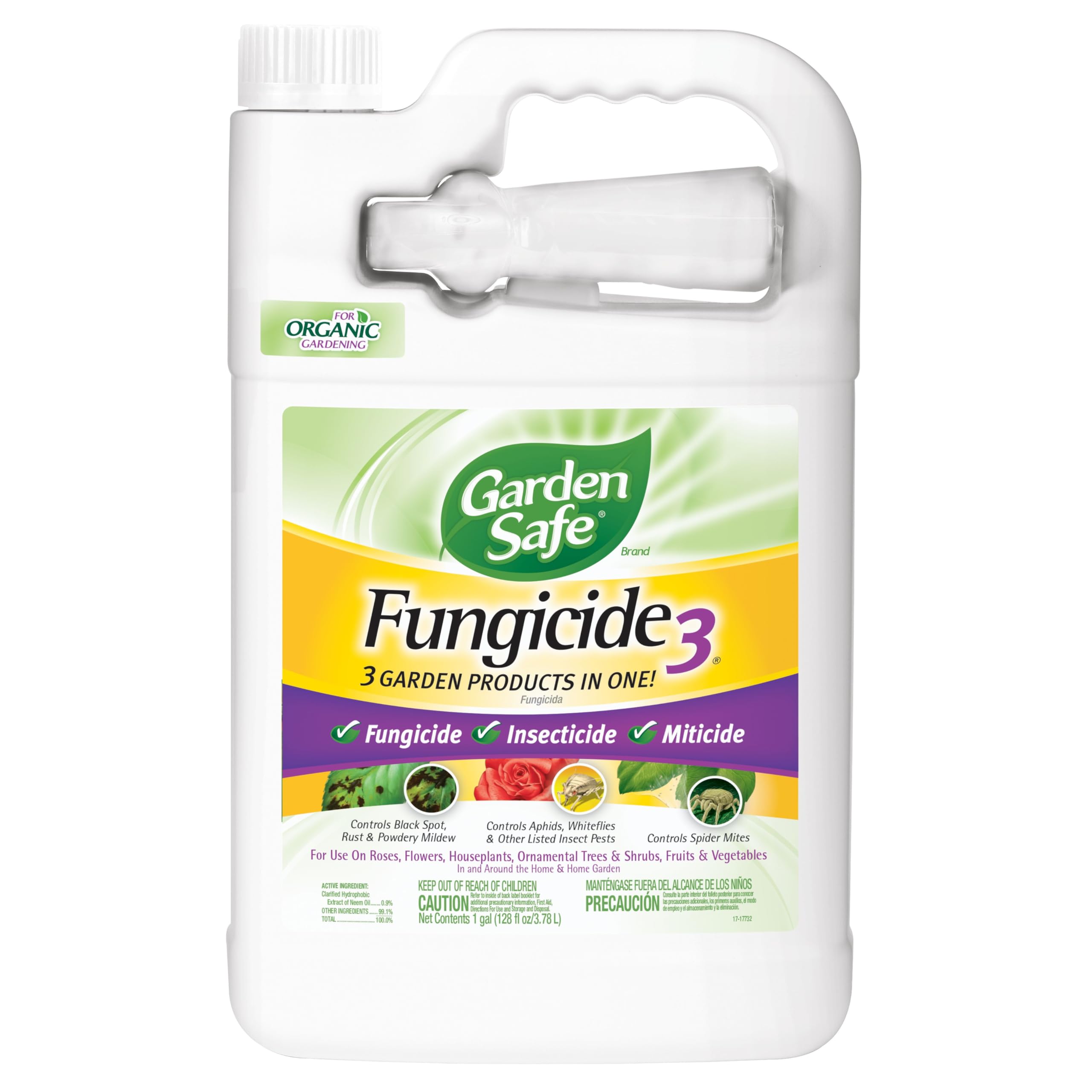
The clarified hydrophobic neem oil extract in this ready-to-use gallon provides fungicidal, insecticidal, and miticidal protection in a single spray. Succulent owners find it particularly effective for preventing powdery mildew on jade plants and aloes when applied weekly during humid months. The neem oil coats fungal spores on leaf surfaces, preventing germination without penetrating sensitive tissues.
The attached sprayer is convenient out of the box, but owners consistently report that the short pickup tube makes reaching lower foliage difficult. Using a separate pump sprayer resolves this issue entirely. The gallon size is excessive for small collections but ideal for greenhouse setups with dozens of succulents. Half the recommended dose is often sufficient for thinner-leaved species.
Some users experienced leaf burn when applying during daytime heat or under direct grow lights. Evening application with thorough drying before light exposure eliminates phytotoxicity risk. The neem oil odor is strong initially but dissipates within a few hours, making indoor use manageable with ventilation.
What works
- Triple-action formula covers fungus, insects, and mites in one product
- Ready-to-use gallon saves dilution effort for large collections
- Neem oil extract is OMRI-listed for organic gardening
What doesn’t
- Integrated sprayer design has poor reach for lower foliage
- Can burn leaves if applied under direct light or heat
4. Earth’s Ally Disease Control Concentrate, 32 oz
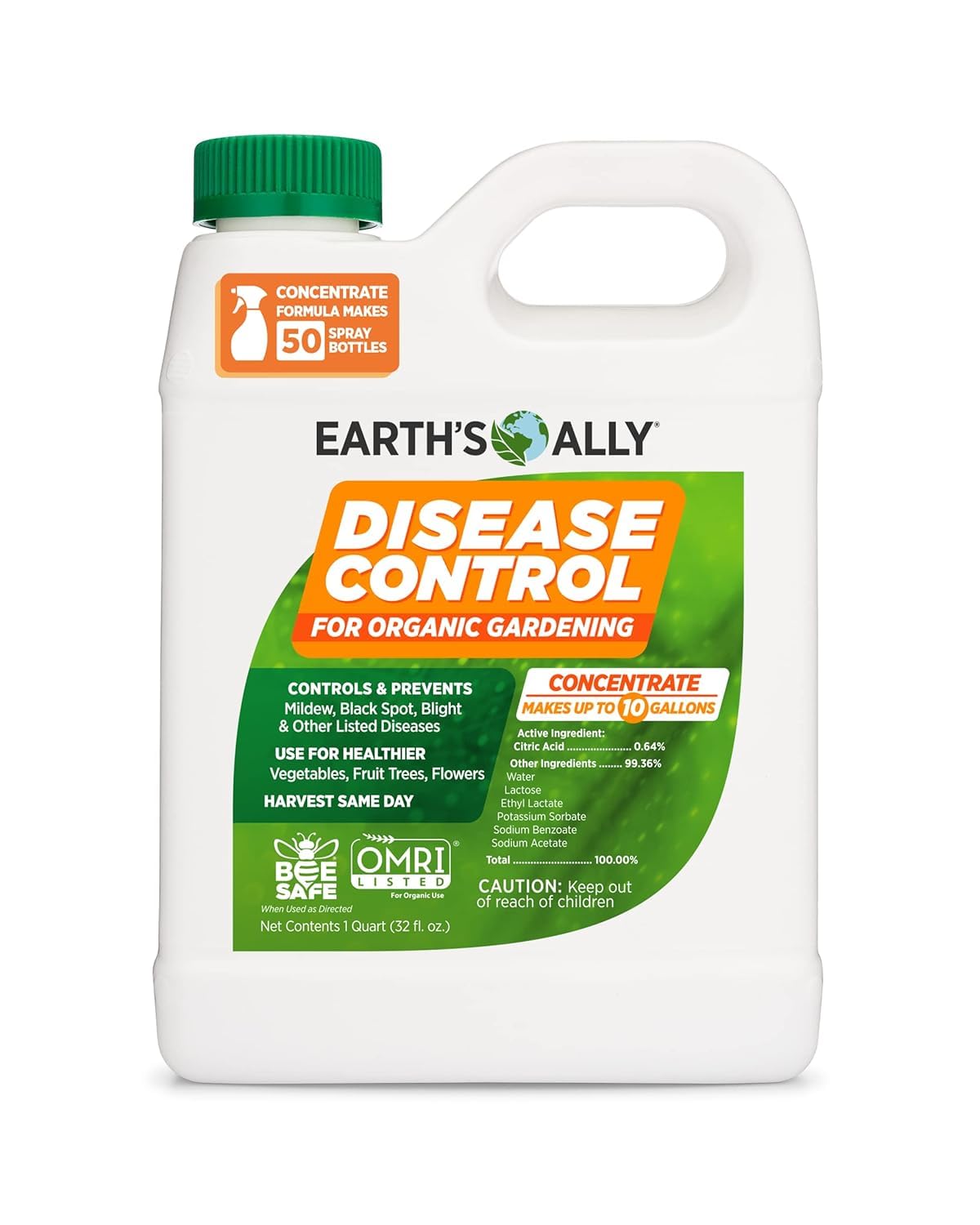
Earth’s Ally uses citric acid as its active ingredient, creating an acidic environment on leaf surfaces that disrupts fungal spore germination without toxic residues. This formulation is exceptionally gentle on thin-leaved succulents like Sedum and String of Pearls. The concentrate makes 10 gallons of ready-to-use spray, providing dozens of treatments for a small indoor collection.
Owners treating powdery mildew on Echeveria rosettes report visible reduction in white coating within three to four days of application. The formula works well as a preventive spray applied every two weeks during the growing season. Unlike copper-based products, citric acid leaves no blue stains on leaves or pots, maintaining the aesthetic appeal of decorative succulent arrangements.
The concentrate tends to settle in the bottle, requiring vigorous shaking before each use. Some users find the citric acid less effective on established black spot infections compared to copper alternatives, but for routine prevention on healthy succulents, it provides an unbeatable safety margin.
What works
- Citric acid formula is safe enough for the most delicate succulent varieties
- Concentrate makes 10 gallons — exceptional value for large collections
- No staining or visible residue on leaves or pots
What doesn’t
- Less effective on severe or established black spot infections
- Concentrate requires thorough shaking to remix settled solids
5. Neudorff Plant Fungicide Spray, Copper Soap RTU 32 oz

This ready-to-use copper soap formulation combines low-concentration copper with fatty acids that break down into plant-available nutrients. It targets powdery mildew, black spot, and rust on succulent leaves. Owners report immediate improvement on gardenia and rose foliage, with the blue-tinted spray providing visible confirmation of coverage during application.
The copper soap is odorless and fits well into indoor care routines. Users apply it weekly during high-humidity periods to prevent fungal outbreaks before they appear. The 16-ounce bottle treats a moderate succulent collection with several applications per season. It is OMRI-listed and can be used up to the day of harvest on edible succulents like purslane.
Some owners report leaf burn on sensitive hostas when applied in full sun. Always apply copper fungicides in the evening and allow foliage to dry completely before any light exposure. The product also lists activity against insects and mites, though most owners purchase it specifically for its broad-spectrum fungal control.
What works
- Immediate visible improvement on black spot and powdery mildew
- Odorless and safe for indoor use on houseplant succulents
- Copper soap decomposes into plant-usable nutrients over time
What doesn’t
- Can burn sensitive leaves if applied in direct sunlight
- Blue tint may temporarily stain pale succulent leaves
6. Southern Ag Garden Friendly Bio Fungicide Organic, 8 OZ

This smaller 8-ounce bottle of concentrated *Bacillus amyloliquefaciens* offers the same live-culture protection as the 16-ounce version at a lower entry point. Owners use it primarily as a soil drench to prevent root rot in potted succulents, mixing as little as 2 milliliters per gallon for hydroponic setups. The bacterial culture colonizes the root zone within 24 hours, creating a protective biofilm that prevents *Pythium* and other water-mold pathogens from establishing.
The concentrate is potent — over-application can cloud reservoir water in hydroponic systems, but experienced users note that the cloudiness is harmless and indicates active bacterial growth. The strong sulfur-like smell confirms the culture is viable, though it dissipates within an hour after application. For succulent owners who propagate in water or use semi-hydroponic methods, this is an essential product.
The small bottle size is ideal for testing the product before committing to a larger volume. The primary drawback is that it requires more frequent reapplication compared to synthetic fungicides — every two weeks for active prevention versus monthly for chemical alternatives.
What works
- Low entry cost for trying biological fungicide approach
- Highly effective for water propagation and hydroponic succulent setups
- Concentrated formula goes a long way at 2ml per gallon
What doesn’t
- Strong bacterial odor may be off-putting for some users
- Requires more frequent reapplication than chemical fungicides
7. Bonide Wilt Stop, 40 oz Ready-to-Use Spray

Bonide Wilt Stop is not a traditional fungicide; it is an anti-transpirant that forms a clear, flexible polymer film over leaf surfaces to reduce moisture loss during transplant shock, drought, or winter stress. For succulents, this is particularly useful when moving plants from indoor to outdoor environments or after repotting. The film holds moisture in while still allowing gas exchange, reducing the physiological stress that often precedes fungal infection.
Owners report that a single application per season is sufficient for evergreen cuttings and garlands, with noticeable reduction in leaf drop and desiccation. For succulent leaf cuttings propagating in dry conditions, the spray prevents shriveling while roots develop. The 40-ounce ready-to-use bottle covers a large number of plants with minimal effort.
The film leaves a slight sticky residue that can trap dust and debris on indoor succulents, making the leaves appear less pristine. It is not a cure for active fungal infections — it only prevents the moisture stress that makes plants vulnerable. For wet-climate growers, this serves as a preventive complement to a biological fungicide rather than a standalone treatment.
What works
- One seasonal application provides long-lasting moisture retention
- Reduces transplant shock and winter desiccation in succulents
- Clear film does not discolor leaves or block photosynthesis
What doesn’t
- Sticky residue attracts dust on indoor plants
- Does not treat or cure active fungal infections
Hardware & Specs Guide
Bacillus amyloliquefaciens Concentration
Measured in colony-forming units per milliliter (CFU/mL), this determines how aggressively the beneficial bacteria colonize the root zone and leaf surfaces. Products like Southern Ag Garden Friendly contain 98.85% active strain D747, making them far more concentrated than consumer hydroponic brands. Higher concentration allows smaller doses per application, extending bottle life and reducing cost per treatment.
Copper Soap vs. Copper Sulfate
Copper soap (copper octanoate) is less concentrated than copper sulfate, reducing the risk of phytotoxicity on thin-leaved succulents. The soap formulation also adheres better to waxy leaf surfaces like those on Echeveria and Sedum. Copper sulfate should be avoided for indoor succulents because it can accumulate in potting soil and reach toxic levels over repeated applications.
FAQ
Can I use copper fungicide on indoor succulents?
How often should I apply a biological fungicide to my succulents?
Will neem oil fungicide burn my succulent leaves?
What is the difference between a fungicide and an anti-transpirant for succulents?
Final Thoughts: The Verdict
For most succulent collectors, the fungicide for succulents winner is the Southern Ag Garden Friendly Biological Fungicide 16oz because it provides live Bacillus colonization that prevents root rot while remaining gentle enough for daily foliar applications. If you need both fungus and insect control in one spray, grab the Evergreen Way Organic Concentrate. And for large greenhouse collections battling powdery mildew, nothing beats the coverage and value of the Garden Safe Fungicide3 gallon.