
A fresh pruning cut is an open invitation: insects, fungal spores, and decay pathogens all see it as a front door into your tree’s circulatory system. Without a proper seal, that clean snip can become a long-term liability, sapping moisture and energy from the tree at the worst possible time. The right dressing forms a flexible, weather-resistant barrier that buys the tree precious weeks to start its own compartmentalization process—no tar, no petroleum, just targeted protection.
I’m Rikta — the co-founder and writer behind Lawn Gear Lab. I’ve spent hundreds of hours cross-referencing formulation chemistry, reviewing long-term customer field reports on everything from oak wilt to bonsai dieback, and auditing the tackiness, adhesion, and UV resistance of every major sealer on the market.
Whether you are treating a wind-damaged limb on a mature shade tree or sealing a delicate graft on a fruit tree, the right protective coating can mean the difference between a quick recovery and a costly removal. This guide distills the research into the single definitive lineup of the best tree wound dressing available today.
How To Choose The Best Tree Wound Dressing
Selecting a wound dressing is not about picking the thickest goo—it is about matching the formulation to the wound type, tree species, and climate. The wrong choice can trap moisture or crack under temperature swings, turning a protective coat into a liability. Focus on the three factors below before reaching for any can or tin.
Formulation Type: Aerosol vs. Brush-On vs. Putty
Aerosol sprays shine on large surface areas and hard-to-reach trunk wounds—they penetrate bark crevices without brush marks, but they atomize quickly, so heavy overspray is common. Brush-on liquids offer thicker control and better build on vertical cuts, though they tend to string and drip in heat. Putty-based pastes, common in bonsai cut paste, provide the strongest mechanical bond for small, precision wounds (under 2 inches). For a 4-inch limb stub, you want a brush-on liquid; for a quarter-inch graft, reach for a putty.
Active Ingredients: Latex Emulsion vs. Natural Resin vs. Asphalt
Asphalt-based dressings (often labeled “pruning sealer”) are dirt-cheap and water-resistant, but they block UV light and can heat up in direct sun, potentially cooking the cambium underneath. Latex-emulsion formulations breathe slightly and allow some gas exchange, reducing the risk of fungal growth beneath the seal. Natural-resin options—pine tar, lanolin, beeswax—are the best fit for organic orchards: they repel insects without introducing synthetic chemicals, though they reapply more often because rain and UV degrade them faster. Avoid petroleum-based gels on fruit trees destined for human consumption.
Climate Resilience: UV Stability and Flexibility Range
A wound dressing that freezes brittle in January or turns runny in July will fail in the first season. Look for a stated temperature range (many aerosol brands claim -20°F to 120°F). Products with a high tack index—where the dried film stays slightly rubbery rather than glass-hard—crack less during freeze-thaw cycles. If you live in a region with heavy monsoon rains, water-repellant wax blends (like grafting wax) outperform latex because they shed standing water instead of absorbing it.
Quick Comparison
On smaller screens, swipe sideways to see the full table.
| Model | Category | Best For | Key Spec | Amazon |
|---|---|---|---|---|
| Treekote 8 OZ Grafting Wax Tin | Natural Wax | Grafting & bonsai sealing | Weather-resistant natural wax | Amazon |
| Treekote Aerosol Sealer | Aerosol Spray | Large trunk wounds & orchards | Rapid-set aerosol barrier | Amazon |
| Bonsai Outlet Cut Paste | Putty Paste | Precision bonsai & perimeter cuts | 160g putty, made in Japan | Amazon |
| Tanglefoot Pruning Sealer | Brush-On Liquid | General pruning & storm damage | 8 oz brushcap liquid | Amazon |
| Bonide Aerosol Pruning Sealer | Aerosol Spray | Fruit trees & planter boxes | 14 oz aerosol, waterproof | Amazon |
| Bickmore 100% Pine Tar | Natural Resin | Organic orchards & wood preservation | 16 oz pure pine tar | Amazon |
| Tricopolymer Garden-Seal | Non-Toxic Emulsion | Raised beds, trellises & clay pots | 128 oz, clear, odorless | Amazon |
In‑Depth Reviews
1. Treekote 8 OZ Grafting Wax Tin
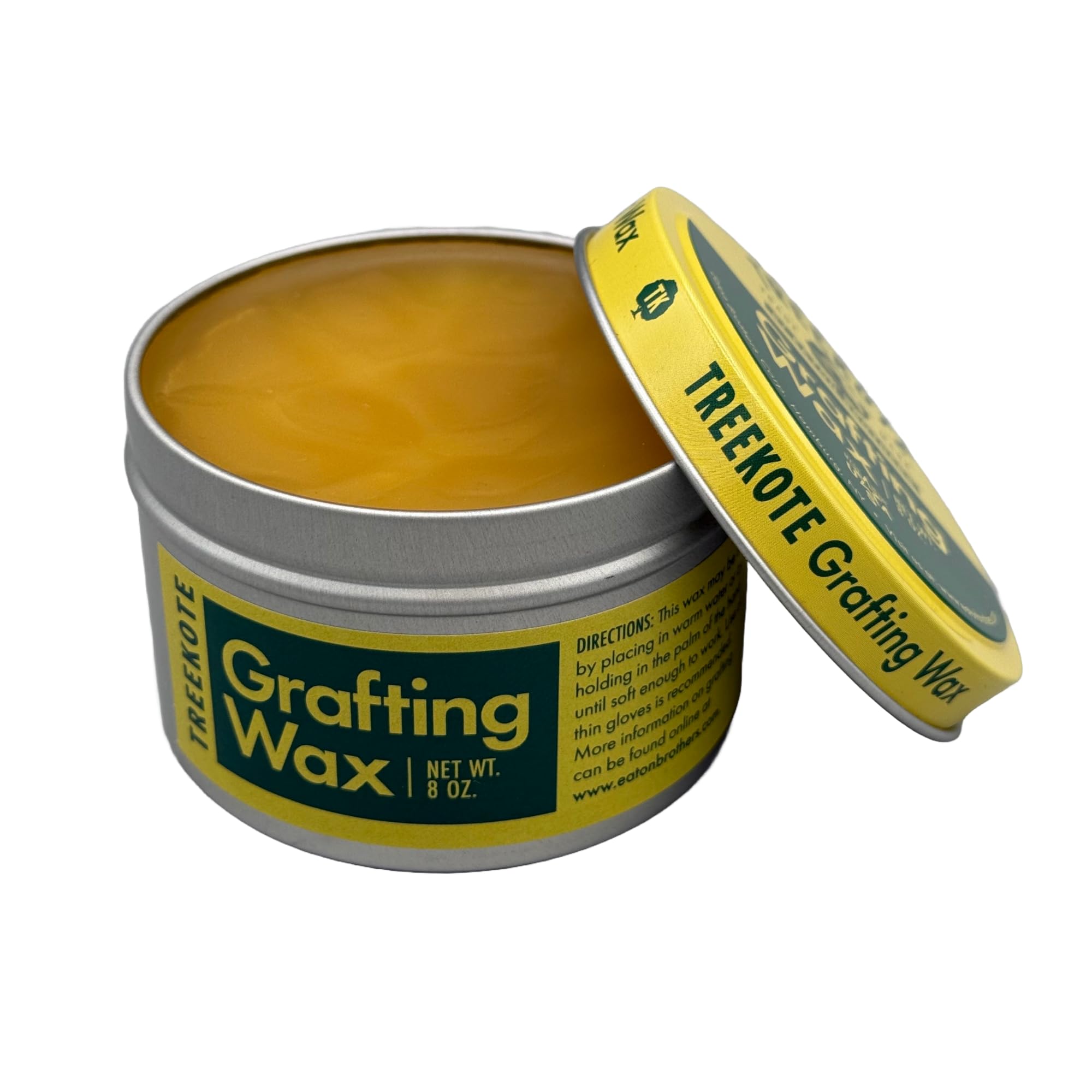
Treekote’s grafting wax represents the goldilocks zone of tree wound dressings—thick enough to stay put on a vertical limb but malleable enough to expand and contract through freeze-thaw cycles without cracking. The 8-ounce tin holds a beeswax-and-resin blend that softens at body temperature, meaning a quick warm-up in hot water (not boiling) gets it to a brushable consistency. Once applied, the wax forms a weather-resistant shield that sheds rain rather than absorbing it, a critical feature for grafts that need to stay dry for the first three weeks of callus formation.
Experienced orchardists praise its adhesion on fruit trees and bonsai, noting that it stays tacky enough to block boring insects without becoming brittle. The natural ingredient list makes it suitable for organic use, and it cracks and falls off naturally once the graft union takes—no scraping required. Users report that a single tin covers dozens of small grafts or roughly a dozen 2-inch limb cuts, delivering respectable value for a premium all-natural product.
The biggest tradeoff is application effort: the wax is solid at room temperature and requires a warm-water bath and occasionally a hair dryer to keep it fluid during use. It also picks up lint and debris if you work in a dusty environment. For anyone serious about grafting—or who wants a petroleum-free sealer that actually breathes—this tin is the clear frontrunner.
What works
- All-natural formula safe for organic orchards
- Weatherproof seal that handles temperature swings
- Falls off naturally as wound heals
What doesn’t
- Requires heating before each application
- Sticky surface attracts sawdust and debris
2. Treekote Aerosol Pruning Sealer
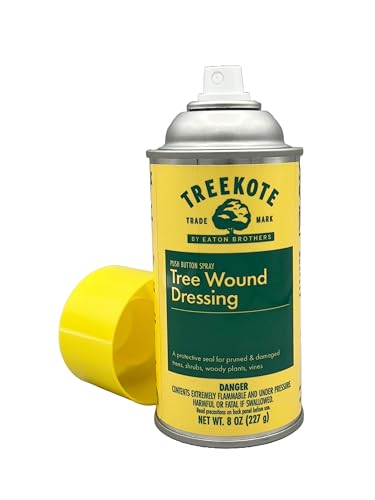
When a storm rips a 6-inch branch off an oak and you need protection applied in minutes, the Treekote aerosol is the fastest tool in the shed. The spray delivers a thin, even coating that penetrates bark fissures better than any brush can, and it sets to a flexible film in roughly 15 minutes—even in high humidity. The 8-ounce can covers approximately 30 square inches per coat, making it ideal for multiple medium-sized wounds across an orchard without reloading.
The formulation is engineered for year-round resilience: owners report that it stays intact through monsoon rain, high summer heat, and below-freezing winters without peeling or cracking. The aerosol format eliminates the mess of brush-on sealers, though the overspray drifts noticeably—users recommend masking nearby surfaces or working on calm days. The sealer also works on propagating orchids and sealing planter boxes, adding versatility beyond emergency wound repair.
Where the aerosol falls short is precision—you cannot control the spray pattern as tightly as a brush, so small grafts or bonsai cuts get oversaturated. The strong solvent odor requires ventilation during application. For fast, broad coverage on large wounds and storm breakage, this is the most efficient option on the list.
What works
- Sets rapidly in all weather conditions
- Penetrates bark crevices without brush marks
- Multi-purpose—works on planter boxes and orchids
What doesn’t
- Overspray drifts; requires masking nearby surfaces
- Strong smell needs good ventilation
3. Bonsai Outlet Cut Paste for Deciduous (160g)

Japanese bonsai culture has refined wound sealing into an art form, and the Kikuwa-manufactured cut paste in this 160-gram jar is the gold standard for deciduous species. Unlike liquid sealers that run and drip, this putty-based paste stays exactly where you place it—on a ¼-inch branch stub it holds form without sagging, even on a hot afternoon. The texture is soft enough to shape with a wet finger, creating a smooth, convex cap that sheds water and prevents rot at the cut edge.
Advanced bonsai practitioners report that the paste maintains its integrity for 6 to 12 months, giving the tree ample time to form a clean callus ring. The formula contains fungicidal additives that discourage decay without suppressing the tree’s natural healing response—a delicate balance that cheaper pastes often miss. Because the putty is so tacky, it blocks boring insects from entering through fresh cuts, a common failure point on thin-barked maples and elms.
The downsides are real for casual users: the 160-gram jar is expensive per ounce, and the paste dries out if the lid is left open. Application requires clean fingers or a spatula—gloves are mandatory or the paste bonds to skin. For precision work on bonsai and specimen trees, the performance justifies the premium, but for large landscape trees a brush-on liquid delivers more coverage per dollar.
What works
- Stays put on vertical cuts without dripping
- Supports clean callus formation over many months
- Blocks insects effectively on thin-barked species
What doesn’t
- High cost per ounce limits large-scale use
- Dries out if container is not sealed tightly
4. Tanglefoot Tree Pruning Sealer, 8 oz. Brushcap

Tanglefoot’s 8-ounce brushcap sealer has been a garden-maintenance staple for decades, and the formula remains one of the most reliable mid-range options for general pruning and storm-damage repair. The black, asphalt-based liquid flows smoothly from the built-in brush—no separate applicator needed—and dries to a flexible, waterproof film that seals wounds for roughly 12 months before needing reapplication. Owners consistently note that it reduces sap bleeding on maples and birches, minimizing the sticky drips that attract ants and wasps.
The viscosity is noticeably thicker than aerosol alternatives, so it builds up quickly on vertical cuts without running down the trunk. Users with fruit trees appreciate that it stays intact through summer heat and winter cold, though heavy rain and direct sun do shorten its service life to about 10 months in exposed southern climates. The 8-ounce bottle covers roughly 30 to 40 medium pruning cuts, making it a strong value for annual orchard maintenance.
Where Tanglefoot loses points is messiness: the brush leaves strings of sealer that can drip onto clothing (it is nearly impossible to wash out), and the surface stays tacky—dust and leaf litter stick immediately. For budget-conscious gardeners who do not mind a little grime, this is the most accessible entry point into proper wound protection.
What works
- Integrated brush makes application simple
- Thick viscosity stays on vertical cuts
- Reduces sap flow noticeably on maple and birch
What doesn’t
- Asphalt base can heat up in direct sun
- Stays tacky; attracts dust and debris
5. Bonide Aerosol Tree Pruning Sealer (14 oz.)

Bonide’s 14-ounce aerosol gives you more spray per can than most competitors, and the dark brown coating dries to a matte finish that blends well with tree bark—no shiny black patches screaming for attention. The formula is designed for both wound sealing and waterproofing wooden planter boxes, making it a dual-purpose product for gardeners who maintain structures alongside trees. Once dried, the sealer holds up well against rain and sprinkler overspray, forming a breathable barrier that does not trap moisture against the cambium.
Users report that a single can goes surprisingly far: it covers roughly 50 to 60 small pruning cuts or a dozen larger 3-inch wounds, thanks to the wide spray pattern. The aerosol nozzle delivers a coarse mist that clings to bark texture better than fine-mist sprays, reducing overspray drift. Several reviewers noted success treating storm-damaged peach limbs and broken ornamental branches, with the sealer staying intact through the first growing season.
The aerosol format has limitations: the spray is messy if you are not careful—users recommend a clip-on extension nozzle for better aim—and the can loses pressure halfway through if stored cold. The product is effective on woody trees and shrubs but the instructions advise pre-cutting the wound cleanly, which some beginners skip. For a fast, large-coverage spray that works on both trees and garden structures, the Bonide aerosol is a versatile mid-range pick.
What works
- Large 14-ounce can offers excellent coverage
- Dries to a matte brown that blends with bark
- Also waterproofs planter boxes and wooden pots
What doesn’t
- Spray pattern is coarse; overspray is common
- Can loses pressure if stored in cold conditions
6. Bickmore 100% Pure Pine Tar (16 oz.)

Bickmore’s 100% pure pine tar is one of the few wound dressings on this list that predates the modern chemical industry—a thick, sticky, sharply aromatic resin that has been used for centuries to seal fence posts, horse hooves, and tree wounds. The 16-ounce can contains no additives, no solvents, no fillers: just straight pine oil distillate. When applied to a clean pruning cut, the tar forms a waterproof, antiseptic layer that repels both fungal spores and boring insects.
Organic orchardists and permaculture gardeners gravitate toward pine tar because it is OMRI-compliant and breaks down naturally in the soil. It is also remarkably effective as a wood preservative for raised-bed corners and fence posts that contact damp ground—several users report that a single coat delayed rot on untreated pine by two full seasons. The application is messy: the tar is extremely sticky, requires gloves, and the smell (an intense pine-turpentine note) lingers for days. A little goes a very long way—a 16-ounce can treats dozens of wounds or multiple fence sections.
The key limitation for tree-wound use is lifespan: pine tar degrades under UV exposure faster than asphalt or latex sealers, requiring reapplication every 6 to 9 months on sun-facing cuts. It also stays soft for hours, so dust and pollen embed into the surface. For the organic grower who values natural chemistry over convenience, Bickmore’s pine tar is a reliable, earth-friendly alternative to synthetic dressings.
What works
- 100% natural resin—safe for organic orchards
- Antiseptic properties reduce fungal risk
- Excellent for preserving outdoor wood structures
What doesn’t
- UV degradation shortens outdoor lifespan
- Intense smell and extreme stickiness
7. Tricopolymer Garden-Seal (128 oz.)

The Tricopolymer Garden-Seal takes a fundamentally different approach from every other product here: it is a water-based, clear, non-toxic emulsion designed primarily for raised garden beds, trellises, and clay pots, but it works surprisingly well as a tree wound dressing for small cuts where you want zero visual impact. The milky liquid dries clear with a satin sheen, darkening redwood slightly but otherwise disappearing into the wood grain. It cures in about an hour to a rubber-like film that seals moisture out while allowing some vapor exchange.
Where this product excels is scale—the 128-ounce container holds enough sealer to coat four large raised beds or dozens of tree wounds, making it the most economical option on a per-square-inch basis. It contains no volatile organic compounds and emits no odor during or after application, a huge advantage for indoor greenhouse use or for gardeners sensitive to chemical fumes. Users report that a single coat on a clean pruning cut lasts roughly 8 to 10 months before reapplication is needed.
The tradeoff is that Garden-Seal is not formulated for the high-tack, thick-barrier requirements of large limb stubs. On cuts wider than 3 inches, the thin film can tear if the wound expands with temperature swings. It also does not block boring insects as effectively as thick asphalt or wax sealers. For a gardener who wants a non-toxic, odorless, multi-purpose sealer for beds and small tree wounds in one jug, this is a unique and compelling choice.
What works
- No odor and non-toxic; safe for edibles
- Dries clear—no unsightly black patches
- Massive 128-ounce volume covers extensive areas
What doesn’t
- Thin film insufficient for large limb wounds
- Does not block insects as effectively as thicker sealers
Hardware & Specs Guide
Viscosity Index
The flow resistance of a wound dressing determines how well it stays on vertical cuts versus pooling at the bottom. Aerosols typically have the lowest viscosity (thin enough to atomize), brush-on liquids fall in the medium range (similar to latex paint), and putty pastes have the highest viscosity—almost solid until worked with fingers. For a graft union or a bonsai perimeter cut, stick to high-viscosity putties; for a trunk wound on a large shade tree, a medium-viscosity brush-on liquid offers the best build without sagging.
Solids Content Percentage
The percentage of non-volatile material left on the wound after the solvent or water carrier evaporates. Higher solids content—80% or more in asphalt-based sealers—means a thicker protective film per coat. Aerosol formulations often hover around 40% to 50% solids, requiring two or three passes to match the film thickness of a single brush coat. Check the technical data sheet for solids percentage if consistent build matters for your application, especially on oak or elm wounds that are slow to compartmentalize.
FAQ
Should I use tree wound dressing on every pruning cut?
Can I use pine tar on fruit trees headed for human consumption?
How do I remove old tree wound dressing before reapplying?
Final Thoughts: The Verdict
For most gardeners, the best tree wound dressing winner is the Treekote 8 OZ Grafting Wax Tin because it combines all-natural ingredients, excellent weather resistance, and a flexible seal that supports natural healing without trapping decay. If you need fast spray-on protection for multiple large wounds in a single afternoon, grab the Treekote Aerosol Sealer. And for precision work on bonsai or specimen trees where aesthetics and adhesion matter most, nothing beats the Bonsai Outlet Cut Paste.