
Daylilies are notoriously tough, but even these resilient perennials hit a wall when the soil lacks the right nutrient balance. Too much nitrogen and you get a jungle of foliage with few blooms; too little phosphorus and the flower scapes stay short and sparse. The difference between a so-so display and a show-stopping performance comes down to the feeding strategy you choose.
I’m Rikta — the co-founder and writer behind Lawn Gear Lab. I’ve spent weeks cross-referencing soil science data with thousands of verified owner reports to isolate the formulations that actually push daylilies to produce more scapes, richer color, and longer bloom windows without burning roots or forcing excessive leaf growth.
This guide ranks seven proven granular and water-soluble feeds using real-world feedback and precise NPK ratios to help you pick the best fertilizer for daylilies for your bed preparation, maintenance feeding, and bloom-boosting needs.
How To Choose The Best Fertilizer For Daylilies
Daylilies are heavy feeders but respond poorly to imbalance. Selecting the right formula comes down to understanding three core variables: the nitrogen-phosphorus-potassium ratio, the release mechanism, and the presence of secondary nutrients like calcium and micronutrients.
NPK Ratio: The Middle Number Matters Most
Phosphorus (the middle number) drives flower bud initiation and root development in daylilies. A ratio with phosphorus equal to or slightly higher than nitrogen — such as 10-10-10 or 10-30-20 — encourages prolific scaping without triggering excessive foliage growth. Avoid high-nitrogen formulas (first number above 15) during the growing season, as they produce lush leaves at the expense of blooms.
Release Mechanism: Slow vs. Quick Feeding
Granular slow-release options feed daylilies steadily over several months, making them ideal for spring top-dressing. Water-soluble powders deliver an immediate nutrient hit — best used when you spot pale leaves or want to push a second bloom cycle. Organic blends with microbes improve long-term soil structure but release nutrients more slowly than synthetic salts.
Secondary Nutrients and Soil Life
Calcium supports cell wall strength in developing scapes, while magnesium keeps foliage green for photosynthesis. Mycorrhizal fungi and beneficial bacteria (found in some organic blends) help daylily roots extract phosphorus from the soil more efficiently — a critical advantage in clay or compacted beds.
Quick Comparison
On smaller screens, swipe sideways to see the full table.
| Model | Category | Best For | Key Spec | Amazon |
|---|---|---|---|---|
| FoxFarm Happy Frog All Purpose 6-4-5 | Organic Granules | Gentle year-round feeding | 6-4-5 NPK with soil microbes | Amazon |
| Espoma Organic Rose-Tone 4-3-2 | Organic Granules | Blooms on established clumps | 4-3-2 with 5% calcium | Amazon |
| GreenView Multi-Purpose 10-10-10 | Granules | Large beds on a budget | 10-10-10; covers 10,000 sq ft | Amazon |
| FoxFarm Marine Cuisine 10-7-7 | Organic Granules | Heavy feeders in poor soil | 10-7-7 ocean-based blend | Amazon |
| Espoma Garden Food 10-10-10 | Granules | Spring and fall maintenance | 10-10-10; pack of two 6.75 lb bags | Amazon |
| Miracle-Gro All Purpose 24-8-16 | Water-Soluble | Quick green-up and fast results | 24-8-16; covers 4,000 sq ft | Amazon |
| Jack’s Classic Blossom Booster 10-30-20 | Water-Soluble | Maximizing bloom count and color | 10-30-20 high-phosphorus formula | Amazon |
In‑Depth Reviews
1. FoxFarm Happy Frog All Purpose Fertilizer 6-4-5

The 6-4-5 ratio is a near-perfect starting point for daylilies because it provides balanced nutrition without overloading nitrogen. FoxFarm’s organic granules include beneficial soil microbes and mycorrhizal fungi that help daylily roots access phosphorus more effectively — especially useful in compacted garden beds where nutrients can be locked up.
Users consistently report rapid greening of daylily foliage within seven days, followed by increased scaping activity. The slow-release nature means one application feeds for roughly four to six weeks, reducing the risk of salt burn common with synthetic granular products. The 4-pound bag covers a modest daylily bed of 10 to 12 mature clumps with one thorough top-dressing.
The primary downside is the odor — the organic ingredients create a strong smell that some gardeners find unpleasant for indoor storage. A few users also note that the granules can clump if exposed to moisture after opening, so an airtight container is recommended for long-term storage.
What works
- OMRI-listed organic formula safe for edible garden beds near daylilies
- Mycorrhizae improve phosphorus uptake in clay or compacted soil
- Balanced 6-4-5 NPK prevents excessive leaf growth at bloom expense
What doesn’t
- Strong manure-like odor during and after application
- Granules may clump if bag is not sealed airtight
- Relatively small bag size for large perennial borders
2. GreenView Multi-Purpose Fertilizer 10-10-10

The classic 10-10-10 balanced ratio is one of the most reliable choices for daylily maintenance because it supplies equal parts nitrogen, phosphorus, and potassium. GreenView’s 33-pound bag provides an enormous 10,000-square-foot coverage area — enough to feed an extensive daylily border or multiple flower beds for several seasons without restocking.
Reviewers consistently note that this formula greens up daylily foliage quickly and supports consistent scape production without forcing the excessive leaf growth that high-nitrogen feeds cause. The granules are well-formed and dry, meaning they spread evenly with a hand broadcaster and do not clump in humid conditions. Many gardeners use it as their go-to early-spring top-dressing before mulching.
The trade-off is that 10-10-10 is a synthetic granular product without organic certification or soil microbial additives. Over-application can lead to nutrient runoff, and the lack of calcium or micronutrients means supplemental feeding may be needed if your soil test reveals specific deficiencies.
What works
- Massive 33-pound bag delivers exceptional value per square foot
- Smooth, uniform granules spread easily even with inexpensive broadcasters
- Balanced 10-10-10 ratio supports steady daylily growth without leaf overload
What doesn’t
- Synthetic formula not suitable for organic gardening programs
- No added micronutrients or beneficial soil microbes
- Risk of nutrient runoff if applied before heavy rain
3. Espoma Garden Food 10-10-10
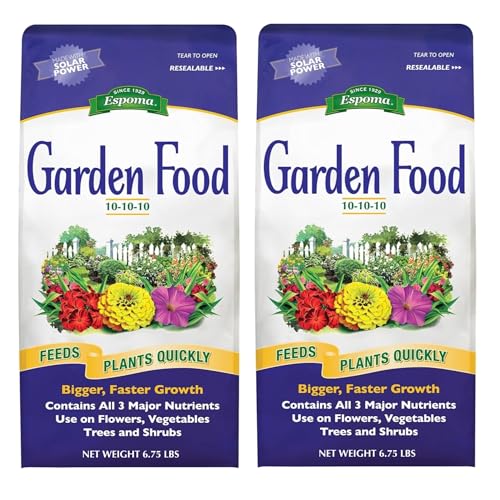
Espoma has been a trusted name in natural organics since 1929, and this 10-10-10 Garden Food continues that legacy with a straightforward, agricultural-grade formula. The two-bag pack delivers 13.5 pounds of granules, providing enough material for a mid-size daylily collection across a spring application and a late-summer top-dress.
Verified reviews from daylily growers highlight that this feed produces “vigorous” growth in existing clumps, with multiple scapes emerging within two weeks of application. The 1:1:1 ratio makes it easy to pair with other amendments — for example, adding a light dose of bone meal alongside for an extra phosphorus boost. The granules dissolve reasonably well after watering, and the product meets Washington State’s strict certification standards for commercial nursery use.
The main limitation is that the 10-10-10 formulation lacks the microbial additives found in Espoma’s organic Bio-tone line, so it does not improve long-term soil biology. Some users also note that the two bags are packaged together in one outer box, which can arrive slightly dented during shipping.
What works
- Two-bag pack offers convenient split applications for spring and fall
- Trusted brand with rigorous state-level certification compliance
- Granules dissolve readily and do not leave visible residue on foliage
What doesn’t
- No mycorrhizae or beneficial bacteria for soil improvement
- Outer box packaging can be crushed during delivery
- Requires careful measuring to avoid over-application on small beds
4. FoxFarm Marine Cuisine 10-7-7
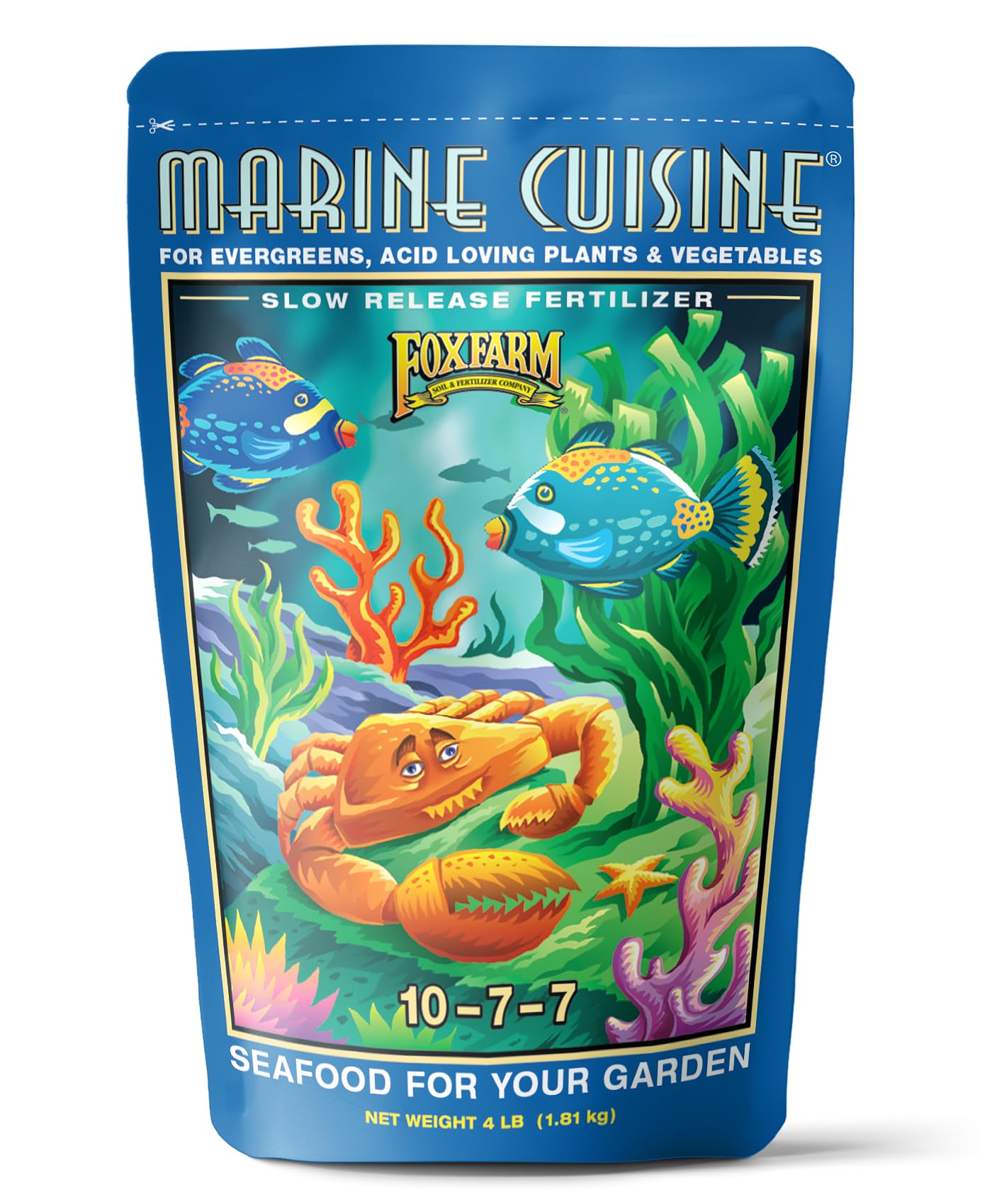
FoxFarm Marine Cuisine is specifically formulated for heavy feeders like daylilies that demand sustained nutrition during the bloom period. The 10-7-7 analysis provides ample nitrogen for fan production while keeping phosphorus slightly lower, and the ocean-based ingredients — crab meal, shrimp meal, seabird guano, and kelp — deliver trace minerals often missing in synthetic blends.
Customer reports show that this formula can revive yellowing or stressed daylily plants within three to four days of application, restoring dark green leaf color and pushing out new scapes. The slow-release mechanism requires only two applications per season (about three to four months apart), making it a low-maintenance option for gardeners with large collections. The powder form mixes readily into the top inch of soil around each clump.
The 4-pound bag is relatively small for the price, and the ocean-derived ingredients produce a strong fishy aroma during application. Additionally, the powder can be dusty when poured, so a dust mask and gloves are advisable during handling.
What works
- Ocean-based ingredients provide trace minerals missing in synthetic fertilizers
- Twice-per-season schedule reduces maintenance effort
- Fast visual recovery for stressed or yellowing daylilies
What doesn’t
- Strong fishy odor during and immediately after application
- Powder form can become dusty and requires careful handling
- Higher cost per application compared to standard granular feeds
5. Espoma Organic Rose-Tone 4-3-2

Espoma’s Rose-Tone uses a gentle 4-3-2 analysis that is lower in overall concentration but enriched with 5 percent calcium — a crucial secondary nutrient for daylily scape strength and flower bud development. The Bio-tone microbial formula helps unlock existing soil nutrients, making it particularly effective in beds that have been fed with synthetic fertilizers for years.
Gardeners using this product on daylilies report that it produces “drastically increased flower production” even on previously spindly plants. The recommended rate of about one cup per mature clump per month during the growing season (May through September) provides a steady, low-risk feeding that will not burn roots even in hot weather. The two-bag pack extends the value for multiple feeding cycles.
The 4-3-2 analysis is lower in phosphorus than some daylily growers prefer, so those seeking a dedicated bloom booster may need to supplement with bone meal or a water-soluble phosphorus source during peak bud set. The granules also have a mild organic odor that some users find off-putting.
What works
- 5% calcium content strengthens daylily scapes and reduces bud drop
- Bio-tone microbes improve long-term soil fertility and nutrient cycling
- Approved for organic gardening and safe around pets when watered in
What doesn’t
- Low phosphorus ratio may require additional bloom-specific supplement
- Monthly application schedule demands consistent attention
- Mild organic smell lingers for a day after top-dressing
6. Miracle-Gro Water Soluble All Purpose 24-8-16
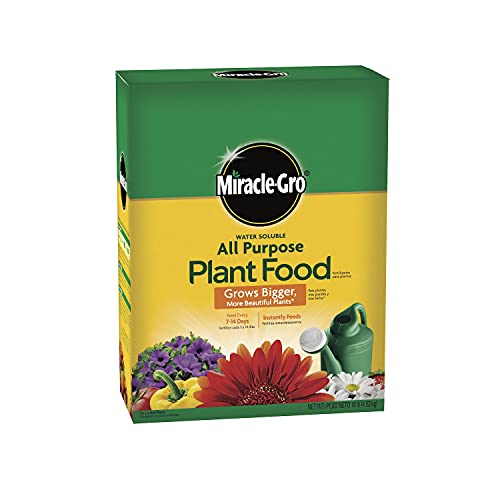
Miracle-Gro’s water-soluble formula delivers a high-nitrogen 24-8-16 punch that acts fast — leaves darken noticeably within a week. For daylilies that are looking pale or have been through a stressful transplant, this quick-acting feed can restore vigor rapidly. The 10-pound container treats roughly 4,000 square feet of garden area, making it economical for large beds.
Users report that daylily foliage doubles in size within two weeks and that the number of scapes increases noticeably when applied every two to three weeks during the growing season. The dual feeding action (root and foliar) means the nutrients are absorbed almost immediately, which is helpful for pushing a second bloom cycle in reblooming daylily varieties.
The high nitrogen content (24) can encourage excessive leaf growth at the expense of blooms if applied too frequently or at too high a concentration. The fine powder is also messy — it blows in the breeze during mixing and can stain clothing and concrete surfaces. It is not suitable for organic gardening programs.
What works
- Leaves darken and expand within 7 days of application
- Works through both roots and foliage for rapid nutrient uptake
- Large container provides many feeding cycles for the cost
What doesn’t
- High nitrogen can suppress blooming if overused on daylilies
- Powder form is dusty and stains skin, clothes, and surfaces
- Synthetic formula with no organic certification or soil microbes
7. Jack’s Classic Blossom Booster 10-30-20
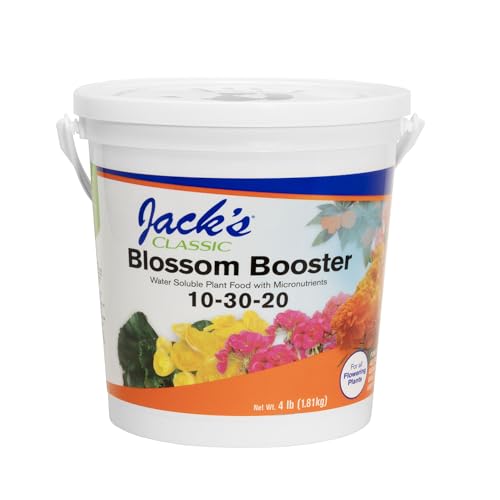
Jack’s Classic Blossom Booster is the go-to water-soluble feed when the goal is maximum bloom quantity and color intensity. The 10-30-20 analysis delivers three times more phosphorus than nitrogen, directly targeting flower bud initiation and scape development. Daylilies respond to this formulation with thicker, sturdier scapes and richer petal pigmentation.
Growers report “noticeable improvement in flower vibrancy, bloom fullness, and stem strength” within two weeks of the first feeding. The included measuring spoon simplifies mixing, and the 4-pound bag produces dozens of gallons of liquid fertilizer — enough to feed a substantial daylily collection weekly through the entire bloom season. The formula also works well as a foliar spray for a direct nutrient hit on developing buds.
The high phosphorus content means this should not be used as a sole year-round feed — daylilies still need balanced nitrogen and potassium for fan health and root storage. Overuse can lead to phosphorus accumulation in the soil, potentially locking up micronutrients like iron and zinc. The powder is also water-soluble, so it requires mixing each time rather than a single granular application.
What works
- High-phosphorus 10-30-20 formula dramatically increases flower count and color
- Can be used as both root drench and foliar spray for flexibility
- Comes with measuring spoon for easy, repeatable mixing ratios
What doesn’t
- Requires weekly mixing; not a set-and-forget granular feed
- High phosphorus can accumulate in soil and block micronutrient uptake
- Not suitable as a complete stand-alone fertilizer; needs nitrogen balance
Hardware & Specs Guide
NPK Ratio
The three-number sequence on a fertilizer package stands for nitrogen (N), phosphorus (P), and potassium (K). Nitrogen drives leaf and fan growth, phosphorus fuels flower bud initiation and root development, and potassium supports overall plant health and disease resistance. For daylilies, a ratio with phosphorus equal to or higher than nitrogen — such as 10-10-10 or 10-30-20 — keeps foliage in check while maximizing bloom output. Avoid ratios where the first number exceeds 15 for routine feeding.
Release Mechanism
Granular slow-release fertilizers break down over weeks to months, providing steady nutrition with a single application. Water-soluble powders dissolve immediately, giving plants a fast boost but requiring more frequent reapplication. Organic slow-release formulas (like FoxFarm Happy Frog and Espoma Rose-Tone) also feed soil microbes, improving long-term nutrient availability. Synthetic granular products (like GreenView 10-10-10) release nutrients more predictably but do not build soil biology.
Secondary Nutrients and Microbes
Calcium strengthens cell walls in developing scapes and blooms, reducing the risk of floppy flower stems. Magnesium keeps leaf tissue green and supports photosynthesis. Mycorrhizal fungi and beneficial bacteria (present in FoxFarm Happy Frog and Espoma Rose-Tone) help daylily roots extract phosphorus and trace elements from the soil more efficiently — especially important in clay-heavy or compacted garden beds where nutrients are less mobile.
Organic vs. Synthetic
Organic fertilizers are derived from plant, animal, or mineral sources and must be broken down by soil microbes before plants can use them. They improve soil structure over time but release nutrients more slowly. Synthetic fertilizers are manufactured from chemical salts and provide immediate, precisely measured nutrition. For daylilies, a hybrid approach works well: use a balanced organic granular for spring top-dressing and a water-soluble synthetic bloom booster (like Jack’s Classic) during peak bud formation.
FAQ
Should I use a high-phosphorus bloom booster on daylilies all season?
How often should I fertilize daylilies during the growing season?
Can I use tomato fertilizer on daylilies?
Is it possible to over-fertilize daylilies?
Final Thoughts: The Verdict
For most gardeners, the best fertilizer for daylilies winner is the FoxFarm Happy Frog All Purpose 6-4-5 because its balanced organic blend, added mycorrhizae, and OMRI listing make it a safe, effective choice from spring wake-up through fall cleanup. If you want a dramatic bloom boost for a show garden, grab the Jack’s Classic Blossom Booster 10-30-20 and apply it weekly during bud set. And for large beds on a lean budget, nothing beats the sheer value of the GreenView 10-10-10 — a 33-pound bag that feeds thousands of square feet without compromising nutrient balance.