
Feeding a cactus is a different game from feeding a leafy houseplant. These desert natives thrive on sparse nutrition, and the wrong fertilizer — especially one high in nitrogen — can trigger weak, stretched growth that ruins their natural form and makes them susceptible to rot. The ideal formula delivers phosphorus and potassium to support root systems and flowering, with minimal nitrogen to keep growth dense and controlled.
I’m Rikta — the co-founder and writer behind Lawn Gear Lab. I’ve spent countless hours studying horticultural data, comparing NPK ratios, and analyzing aggregated owner feedback across hundreds of cactus and succulent fertilization reports to isolate what truly separates effective feeds from plant-damaging mistakes.
Cactus owners need a formula that supports compact growth and bloom potential without risking root burn or overstimulation, and the best fertilizer for cactus delivers a precise low-nitrogen balance, often paired with beneficial microbes or organic slow-release sources to match the plant’s natural metabolism.
How To Choose The Best Fertilizer For Cactus
Selecting a cactus fertilizer means understanding that these plants evolved in nutrient-poor, arid environments. Overfeeding or using the wrong formula causes more damage than underfeeding. Focus on these three factors to match your plant’s specific needs.
NPK Ratio: Low Nitrogen is Non-Negotiable
Cacti require a fertilizer with a low first number (nitrogen) — typically a ratio like 2-7-7 or 1-2-2. High nitrogen encourages soft, etiolated growth that mimics the look of plants stretching toward insufficient light, and it increases the risk of rot. The middle number (phosphorus) supports flowering and root establishment, while the last number (potassium) promotes overall structural strength and disease resistance.
Format: Liquid vs. Slow-Release Granules vs. Powder
Liquid fertilizers deliver nutrients immediately, making them ideal for regular feeding during the growing season, but they require careful dilution and more frequent application. Slow-release granules feed over several months with minimal effort, though release rates depend on soil moisture and temperature. Powder packets offer pre-measured convenience and often include organic materials like beneficial microbes that enrich the soil beyond basic NPK.
Organic Certification and Beneficial Microbes
Organic formulas reduce the risk of synthetic salt buildup that can desiccate cactus roots. Some products are OMRI-listed and contain living soil microbes that break down organic matter, improve nutrient uptake, and strengthen the plant’s immune system. These biological additives are especially valuable for long-term container health where natural soil ecology is limited.
Quick Comparison
On smaller screens, swipe sideways to see the full table.
| Model | Category | Best For | Key Spec | Amazon |
|---|---|---|---|---|
| Grow Queen Organic | Powder Packets | Long-term soil health | 7 servings, feeds 8 months | Amazon |
| Schultz Cactus Plus 2-7-7 | Liquid Concentrate | Preventing stretched growth | NPK 2-7-7 liquid formula | Amazon |
| GT Succulent Focus | Liquid Concentrate | Complete mineral nutrition | 12 essential minerals + calcium | Amazon |
| TPS Succulent Fertilizer | Liquid Concentrate | Compact growth for pots | 32 fl oz, dilution 1:200 | Amazon |
| Miracle-Gro Succulent Plant Food | Liquid Pump | Quick convenience | Pump dispenser, feed every 2 weeks | Amazon |
| Espoma Organic Cactus! | Liquid Concentrate | Organic indoor feeding | ½ cap per quart, organic formula | Amazon |
| Nelson NutriStar Cactus | Slow-Release Granules | Low-maintenance feeding | NPK 8-6-8, feed every other month | Amazon |
In‑Depth Reviews
1. Grow Queen Organic Cactus & Succulent Fertilizer
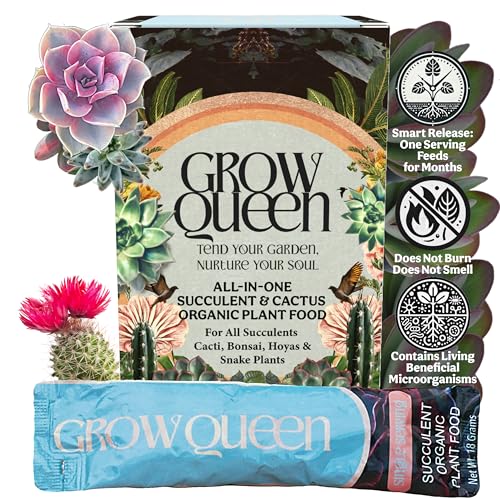
Grow Queen’s formula is unique among cactus fertilizers because it combines living beneficial soil microbes with a balanced organic powder that releases nutrients both fast and slow. Each single-serving packet feeds up to one gallon of soil or six small succulents, and the box of seven packets covers up to 28 plants for up to eight months. The OMRI-listed organic and vegan composition means it is non-toxic and safe around pets, making it a strong choice for indoor containers where household safety is a priority.
Users consistently report visible new growth on cacti and succulents within weeks, and the bioactive nature of the powder — which may show what looks like surface mold — is actually a sign that the beneficial microbes are colonizing the soil. The formula is odorless after application, so it works well in living rooms and bedrooms without any manure-like smell. Grow Queen also serves as a soil conditioner that reduces transplant shock, giving it an edge over simple liquid feeds for long-term root development.
The pre-measured packets eliminate any guesswork about dilution, and the non-burning formula allows for occasional over-application without damaging roots. For gardeners who want a single product that enriches soil biology while feeding the plant for months, this is the most complete option on the market.
What works
- Living beneficial microbes improve long-term soil health
- Pre-measured packets are mess-free and simple to use
- Non-burning and safe for indoor use around pets
What doesn’t
- Bioactive powder may develop visible mold-like surface growth
- Only 7 servings per box, may need repurchase for large collections
2. GT Succulent Focus Liquid Plant Food
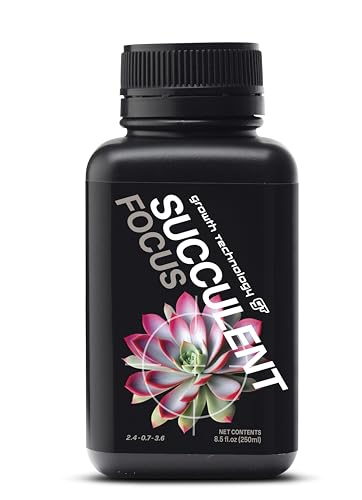
Growth Technology GT brings a scientific approach to cactus feeding with Succulent Focus, a liquid concentrate that delivers all 12 essential minerals, including calcium, in a pH-buffered solution. This is especially important for cacti because proper pH ensures that every nutrient remains available for root uptake, preventing lockout issues common in potting mixes. The formula is deliberately low in nitrogen and phosphorus to match the slow metabolic rate of desert plants while still supporting healthy foliage and root systems.
The mixing ratio of 3-5ml per litre for soil and 5-7ml for semi-hydro systems makes this incredibly concentrated — a single 250ml bottle lasts a long time, even for a large collection. Enthusiasts who use it on hydroponic succulents report growth comparable to fast-growing tropicals, which speaks to the bioavailability of the mineral package. It is free from sodium, chlorides, urea, cobalt, and nickel, so there is no risk of toxic buildup in containers.
Some users note that the original bottle packaging can leak during shipping, so transferring the concentrate to a sealed container upon arrival is a smart precaution. For growers who want the most complete nutrient profile available in a liquid format, this is the top contender.
What works
- Complete 12-mineral formula with calcium and pH buffer
- Highly concentrated, one bottle lasts many months
- Free from harmful additives like sodium and urea
What doesn’t
- Higher upfront cost per bottle
- Bottle may leak during shipping if not sealed properly
3. TPS Succulent Fertilizer Liquid
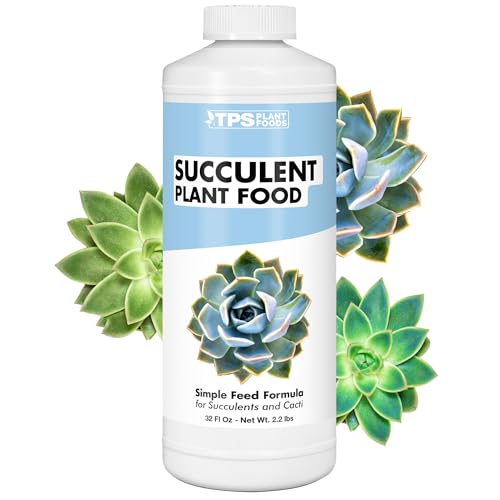
TPS Nutrients designed this 32-ounce liquid concentrate specifically to prevent leggy stretching in succulents and cacti. The balanced nutrient profile encourages dense, compact growth and thicker leaves rather than the weak etiolation that results from high-nitrogen feeds. With a dilution ratio of 1 part fertilizer to 200 parts water, this bottle goes a long way, making it a cost-effective solution for larger succulent collections.
The formula is gentle enough for potted plants, avoiding the buildup of salts that can stress roots in confined containers. Users report that after several feedings, succulents green up noticeably and maintain firmer, plumper leaves. The manufacturer states it strengthens roots and improves nutrient uptake over time, supporting long-term vitality without forcing rapid, unnatural growth spurts.
Some cactus owners hoping for blooms have not seen flowering yet, which may be related more to light conditions than the fertilizer itself. For growers who prioritize a compact, sculptural plant habit over fast size increase, this liquid option delivers consistent results with minimal effort.
What works
- Large 32-ounce bottle with high dilution ratio lasts many feedings
- Encourages compact, non-stretching growth
- Safe for containers with no salt buildup risk
What doesn’t
- May not trigger blooms without sufficient sunlight
- No organic certification
4. Schultz Cactus Plus 2-7-7 Liquid Plant Food
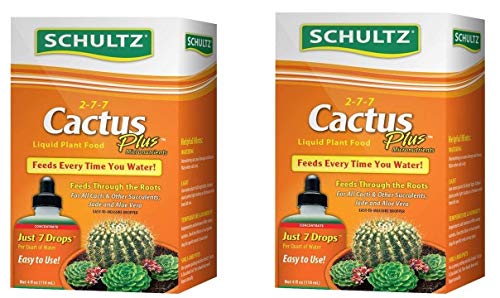
Schultz Cactus Plus uses a 2-7-7 NPK ratio that is precisely calibrated for cacti: low nitrogen prevents soft, weak growth while elevated phosphorus and potassium drive root development and flowering. The concentrated liquid means a 4-ounce bottle makes multiple gallons of feed, and the two-pack bundle provides ample supply for a full growing season. Users who apply this every two weeks during spring and summer consistently report stronger plants and more prolific blooms.
Seasoned succulent keepers often dilute it to half-strength (½ teaspoon per gallon) for slower-growing species, which demonstrates the flexibility of this formula. It has been used successfully on Christmas cacti for years, with multiple testimonials noting dramatic improvements in plant health and flower production within a single season. The small bottle footprint also makes it easy to store without taking up cabinet space.
Being a synthetic liquid, it lacks the organic matter or beneficial microbes that some natural formulas provide. For the budget-conscious cactus owner who wants a reliable, proven NPK profile without paying for biological additives, this is the most efficient choice.
What works
- Perfect 2-7-7 ratio for cactus flowering and root strength
- Highly concentrated, small bottle lasts a long time
- Proven track record for Christmas cactus blooms
What doesn’t
- No organic ingredients or soil microbes
- Requires careful dilution measurement
5. Miracle-Gro Succulent Plant Food (2 Pack)

Miracle-Gro’s Succulent Plant Food is designed for convenience above all else. The pump top allows direct soil application: one pump for small pots, two for larger ones. There is also an option to mix eight pumps per quart of water for combined feeding and watering. The formula feeds instantly and is intended for use every two weeks, making it one of the easiest options for beginners who want a no-fuss routine.
Owners of Thanksgiving and Christmas cacti report that regular feeding with this product leads to larger plants and more abundant flowering. The two-pack bundle typically lasts a year and a half for a small collection, which is good value given the brand’s widespread availability. The liquid feeds directly through the soil without any mixing odor, and the instant-feed mechanism means results often appear within days.
The formulation is synthetic and lacks the slow-release or biological components that some more premium options include. For the plant parent who values speed and simplicity above soil ecology, this pump-and-feed system is hard to beat.
What works
- Simple pump dispenser eliminates measuring
- Feeds instantly, visible results within days
- Two-pack provides long-lasting supply for small collections
What doesn’t
- Synthetic formula, no organic certification
- Requires bi-weekly application for best results
6. Espoma Organic Cactus! Plant Food (2 Pack)

Espoma’s Cactus! plant food is a certified organic liquid concentrate that uses natural ingredients to feed cacti, succulents, and palms. The application is straightforward: add half a capful per quart of water and drench the soil every two to four weeks. The organic composition means it is safe to use around children and pets, making it a natural fit for households where non-toxic plant care is a must.
Users who have applied it to fast-growing succulents and caudiciform trees like Adeniums report strong, healthy development and even resurrection of weak plants. The formula has a noticeable organic smell — described as manure-like in the bottle — but this dissipates completely after dilution and does not linger in the soil. Many growers keep this on hand as a reliable go-to for maintaining year-round health and bloom cycles.
Some experienced cactus keepers note that the NPK ratio (approximately 1-2-2) is better suited for faster-growing succulents than for slow-growing desert cacti, which may benefit from an even lower nitrogen source. For organic-focused gardeners who want a straightforward liquid that works across a range of succulent types, this is a strong performer.
What works
- Certified organic and safe around kids and pets
- Easy cap-based dosing, no measuring tools needed
- Effective on fast-growing succulents and caudiciforms
What doesn’t
- Concentrate has a strong manure-like odor
- Higher nitrogen may not suit slow-growing cacti
7. Nelson NutriStar Cactus and Succulent Plant Food
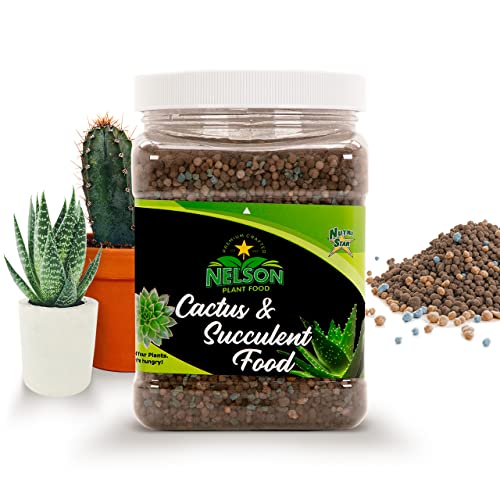
Nelson NutriStar takes a different approach from liquid feeds by offering a slow-release granular formula. With an NPK of 8-6-8, this product provides balanced nutrition through five sources of nitrogen, along with added magnesium for chlorophyll production and calcium for strong cell walls. Application requires only sprinkling the granules onto the soil surface every other month, which makes it the lowest-effort option for forgetful plant owners.
The granules work with the soil’s natural biology to release nutrients gradually, which reduces the risk of overfeeding that can occur with liquid dosing. Users have reported visible recovery in cold-damaged plants within a week, and the slow-release mechanism means you cannot accidentally burn roots by applying too much at once. The formula is suitable for both indoor potted plants and outdoor ground-planted cacti.
The 8-6-8 ratio is higher in nitrogen than what traditional cactus growers often recommend, so it may be better suited for faster-growing succulent species or plants that receive very high light levels. For anyone who wants a set-it-and-forget-it feeding schedule, the granular format removes the need for mixing and weekly reminders.
What works
- Only needs application every other month
- Granular format eliminates mixing and measuring
- Added calcium and magnesium support cell structure and color
What doesn’t
- Higher nitrogen level may cause stretch in low-light conditions
- Release rate depends on soil moisture and temperature
Hardware & Specs Guide
NPK Ratio — The First Number is the Trap
For cacti, the nitrogen number should be the lowest in the ratio. A 2-7-7 formula like Schultz provides phosphorus for roots and potassium for structure without forcing soft leaf growth. Compare this to general-purpose houseplant foods that often have a 10-10-10 or 20-20-20 balance, which will cause etiolation in cacti. Always check the label — if the first number is higher than the second or third, it is not designed for desert plants.
Beneficial Microbes vs. Synthetic Salts
Organic formulas such as Grow Queen and Espoma rely on biological activity to break down nutrients in the soil, feeding plants gradually while improving soil texture. Synthetic fertilizers like Miracle-Gro and Schultz deliver salts that plants absorb immediately, but over-application can desiccate roots. Cacti in small pots with limited soil volume benefit more from organic sources that buffer against salt buildup and support long-term root health.
FAQ
How often should I fertilize my cactus during the growing season?
Can I use regular houseplant fertilizer on my cactus?
What does it mean when my cactus fertilizer says it contains beneficial microbes?
Is liquid or granular fertilizer better for indoor cacti?
Final Thoughts: The Verdict
For most gardeners, the best fertilizer for cactus winner is the Grow Queen Organic Cactus & Succulent Fertilizer because it combines OMRI-listed organic ingredients with living beneficial microbes and long-lasting slow-release packets that simplify feeding for an entire season. If you want a concentrated liquid with a complete mineral profile, grab the GT Succulent Focus. And for budget-friendly, proven performance on flowering cacti, nothing beats the Schultz Cactus Plus 2-7-7.