
Philodendrons are epiphytic by nature, meaning their roots evolved to cling to tree bark and absorb moisture from humid air, not to sit in dense, soggy dirt. A generic potting soil that stays wet for days will suffocate those roots and invite rot, which is why finding a mix with a chunky, open structure is the single most important decision for keeping your plant lush and thriving.
I’m Rikta — the co-founder and writer behind Lawn Gear Lab. I spend my time comparing the internal structure, moisture retention rates, and drainage characteristics of dozens of specialized horticultural blends, analyzing thousands of verified owner experiences to separate mixes that actually deliver from those that just look good on a shelf.
To help you cut through the noise, this guide compares seven of the most effective pre-mixed options on the market. After a thorough analysis of their components, texture, and real-world performance, the following review covers my findings on the best soil for philodendron available today.
How To Choose The Best Soil For Philodendron
Philodendrons require a growing medium that mimics their natural rainforest floor habitat: a loose, chunky mix that provides excellent drainage, consistent airflow to the roots, and balanced moisture retention. Selecting the wrong soil can lead to stunted growth, yellowing leaves, or root rot.
Prioritize Chunky Texture and Aeration
The root system of a philodendron needs oxygen. A mix that is too fine or dense will compact over time, blocking airflow and trapping water. Look for visible bark chunks, coco chips, pumice, or perlite—these create air pockets that roots can breathe through and grow into.
Check the Ingredient List for Drainage Components
Ingredients like pine bark fines, pumice, LECA (clay pebbles), and coarse perlite are non-negotiable for proper drainage. Avoid soils that list peat moss or sand as primary ingredients without larger aggregates, as these can hold too much moisture and lead to soggy conditions.
Choose Between Peat-Based and Peat-Free Formulas
Many premium growers are moving toward peat-free mixes that use coco coir, biochar, or tree fern fiber. Peat is a non-renewable resource that can also make the soil too acidic for some plants. Peat-free alternatives provide better structure and are more environmentally sustainable.
Watch for Pre-Mixed Convenience vs. DIY Blending
All the products in this guide are ready-to-use out of the bag, saving you the time and guesswork of sourcing and mixing individual components. A well-formulated pre-mix delivers consistent results, especially if you have a small to medium collection.
Quick Comparison
On smaller screens, swipe sideways to see the full table.
| Model | Category | Best For | Key Spec | Amazon |
|---|---|---|---|---|
| Grow Queen Craft Aroid Mix | Premium | Peat-free organic growth | NZ Tree Fern Fiber | Amazon |
| Rosy Soil Aroid Mix | Mid-Range | Microbially active living soil | Biochar & Mycorrhizae | Amazon |
| Perfect Plants Aroid Mix | Premium | 8-quart bulk value | Charcoal & Sponge Rocks | Amazon |
| Top Tier Genetics Aroid Blend | Mid-Range | Ready-to-use simplicity | Biochar & Mycorrhizae | Amazon |
| Perfect Plants Indoor Soil | Mid-Range | Broad indoor plant use | Coarse Sand & Lime | Amazon |
| DUSPRO 8in1 Aroid Mix | Budget | Cost-effective 8-ingredient mix | Pine Bark & LECA | Amazon |
| Sol Soils Houseplant Chunky Mix | Budget | Sustainable peat-free blend | Recycled Forest Products | Amazon |
In‑Depth Reviews
1. Grow Queen Craft Aroid Potting Mix
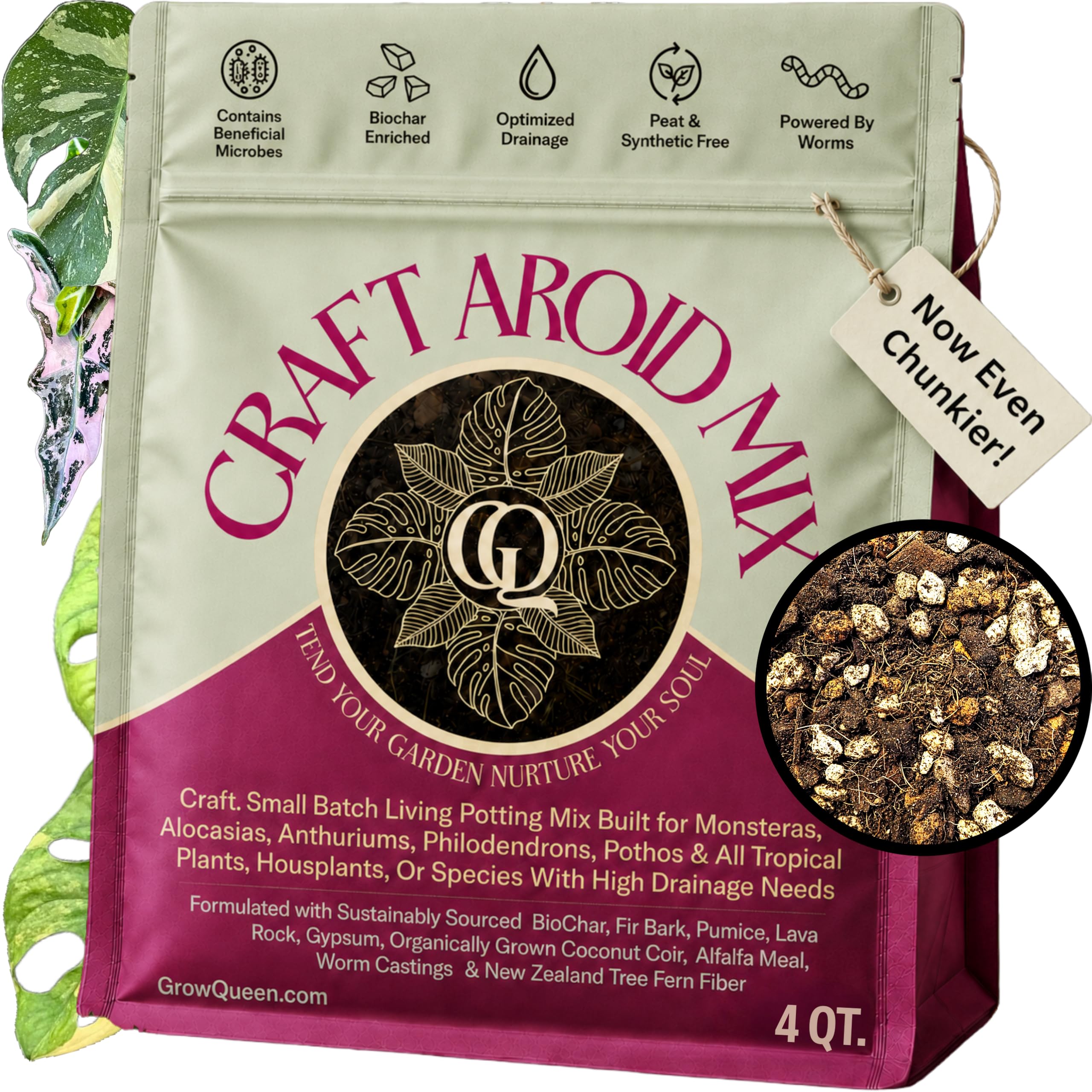
The Grow Queen Craft Aroid Mix is the closest you get to a custom-blended substrate without doing the work yourself. It replaces standard perlite with pumice and lava rock, which resist floating to the surface and provide a more stable, heavy structure that roots can anchor into. The inclusion of New Zealand Tree Fern Fiber is a standout—it naturally buffers the pH down to around 6.0, which mirrors the slightly acidic conditions philodendrons prefer in the wild.
This mix is also peat-free and perlite-free, which appeals to environmentally conscious growers. The Douglas fir bark fines are large enough to create distinct air pockets, while the coco coir holds just enough moisture to keep roots from drying out between waterings. Multiple owners report seeing new aerial root growth and leaf development within two weeks of repotting, and the bag is consistently described as being nearly dust-free.
One minor drawback is the premium positioning: the 4-quart bag costs more per quart than some competitors. However, the quality of the ingredients and the fact that it supports rapid root colonization make it a worthwhile investment for serious collectors. It is also pet-friendly, which is a bonus for households with curious animals.
What works
- New Zealand Tree Fern Fiber naturally adjusts pH to ideal 6.0 for aroids.
- Pumice and lava rock provide stable aeration without floating.
- Peat- and perlite-free formula is environmentally responsible.
What doesn’t
- Higher cost per quart compared to mid-range blends.
2. Rosy Soil Aroid Soil Mix
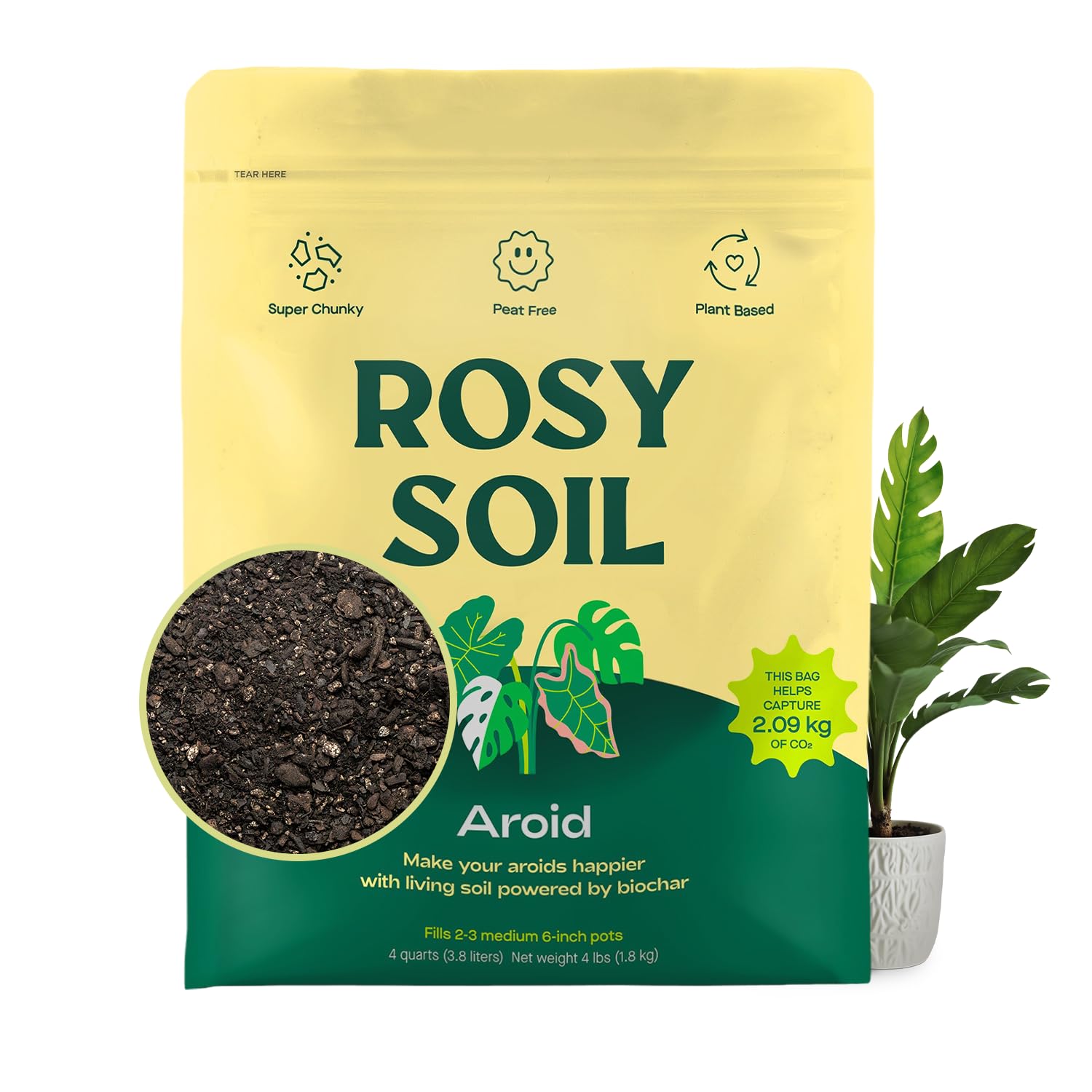
Rosy Soil takes a different approach by engineering a “living” mix powered by biochar and beneficial microbes. The biochar acts like a sponge for nutrients, preventing them from leaching out with each watering, while the mycorrhizae form a symbiotic network around philodendron roots to boost nutrient uptake. This makes the mix particularly effective for plants recovering from stress or those being transitioned from a different substrate.
The texture lands on the finer side of chunky—it is not as aggressively coarse as some premium bark-heavy blends, but it still drains quickly enough to prevent root rot. Several owners noted that switching to Rosy Soil eliminated fungus gnat problems, which is a common issue with bagged soils that remain wet on top. The formula is also peat-free and carbon-negative, meaning the manufacturing process actually sequesters more carbon than it emits.
The main trade-off is price point and bag size—some users wished for larger volume options to justify shipping cost. The 4-quart resealable bag is well-designed, but if you are repotting multiple large philodendrons, you may need two or three bags. Still, for plants that require consistent nutrient access, the microbial activity delivers noticeable results.
What works
- Biochar and mycorrhizae create a self-sustaining nutrient cycle.
- Eliminates fungus gnats in most reported cases.
- Carbon-negative, peat-free manufacturing process.
What doesn’t
- Texture is less chunky than some premium aroid blends.
- No bulk bag options available for larger collections.
3. Perfect Plants Organic Aroid Potting Mix (8qt)
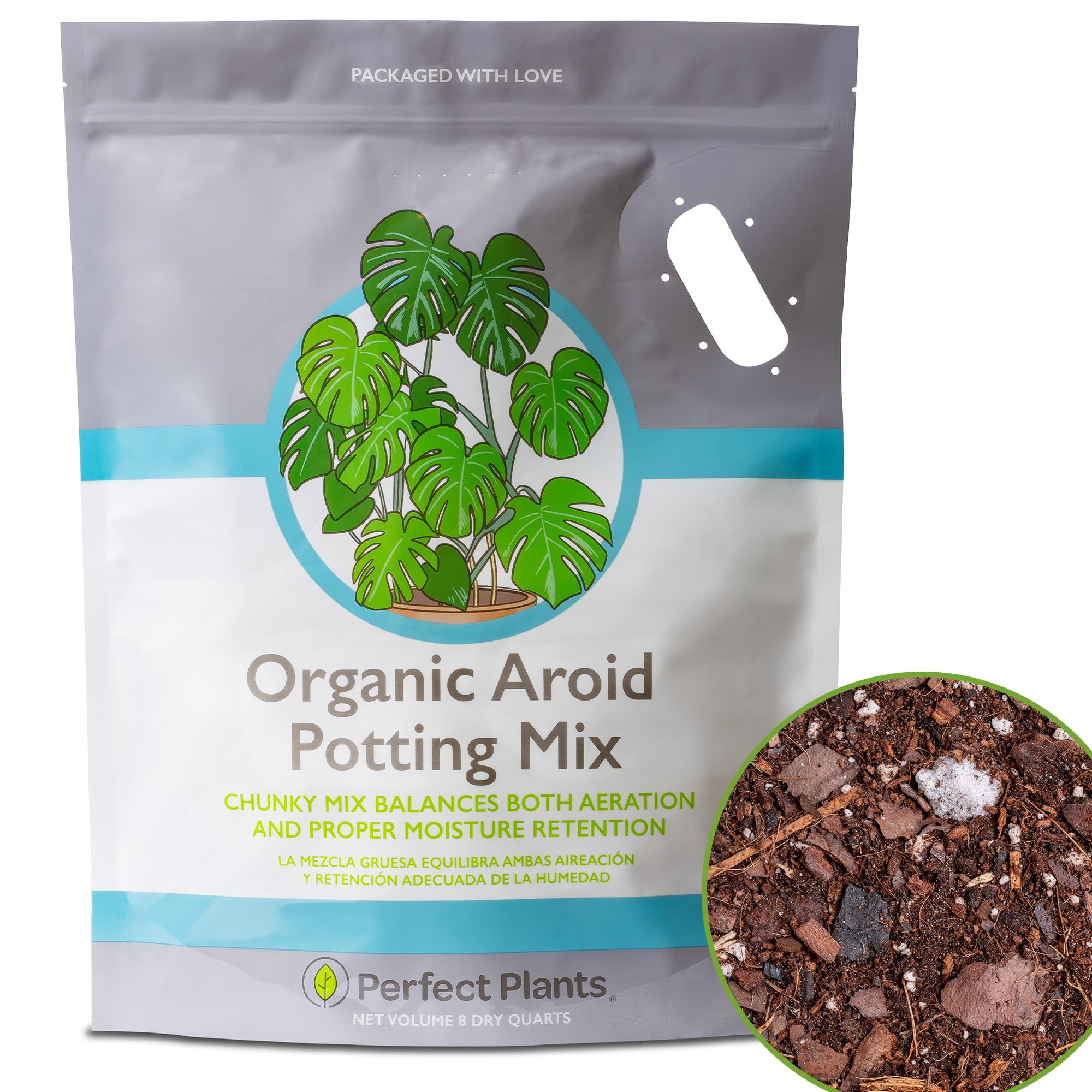
Perfect Plants offers the largest bag in this lineup at 8 quarts, making it the obvious choice if you have a sizable collection or several large philodendrons that need repotting at once. The mix combines worm castings and mycorrhizae with horticultural charcoal, sponge rocks, pine bark, and perlite to create a well-rounded blend that drains fast while still holding enough moisture for aroid roots.
Several owners noted that after repotting, their Monstera adansonii and philodendrons pushed out new leaves within a week, which indicates the mix is well-balanced for immediate use. The texture is described as chunky but not overly coarse, offering a middle ground between fine indoor potting soil and rugged orchid bark. The resealable bag is a practical touch, though a number of customers found the zipper closure difficult to operate and ended up transferring the mix to a container.
One consistent theme across reviews is the absence of pests or mold—a worry that many indoor growers have after bad experiences with lower-tier mixes. While the brand also makes a standard indoor soil, this specific aroid formula is the one to reach for if you want guaranteed drainage and visible growth results without having to mix in extra perlite.
What works
- Generous 8-quart bag offers the best volume-to-value ratio.
- Charcoal and sponge rocks improve long-term aeration.
- No reported gnats or mold across verified reviews.
What doesn’t
- Bag zipper seal is finicky and hard to reseal properly.
4. Top Tier Genetics Premium AROID Soil Blend
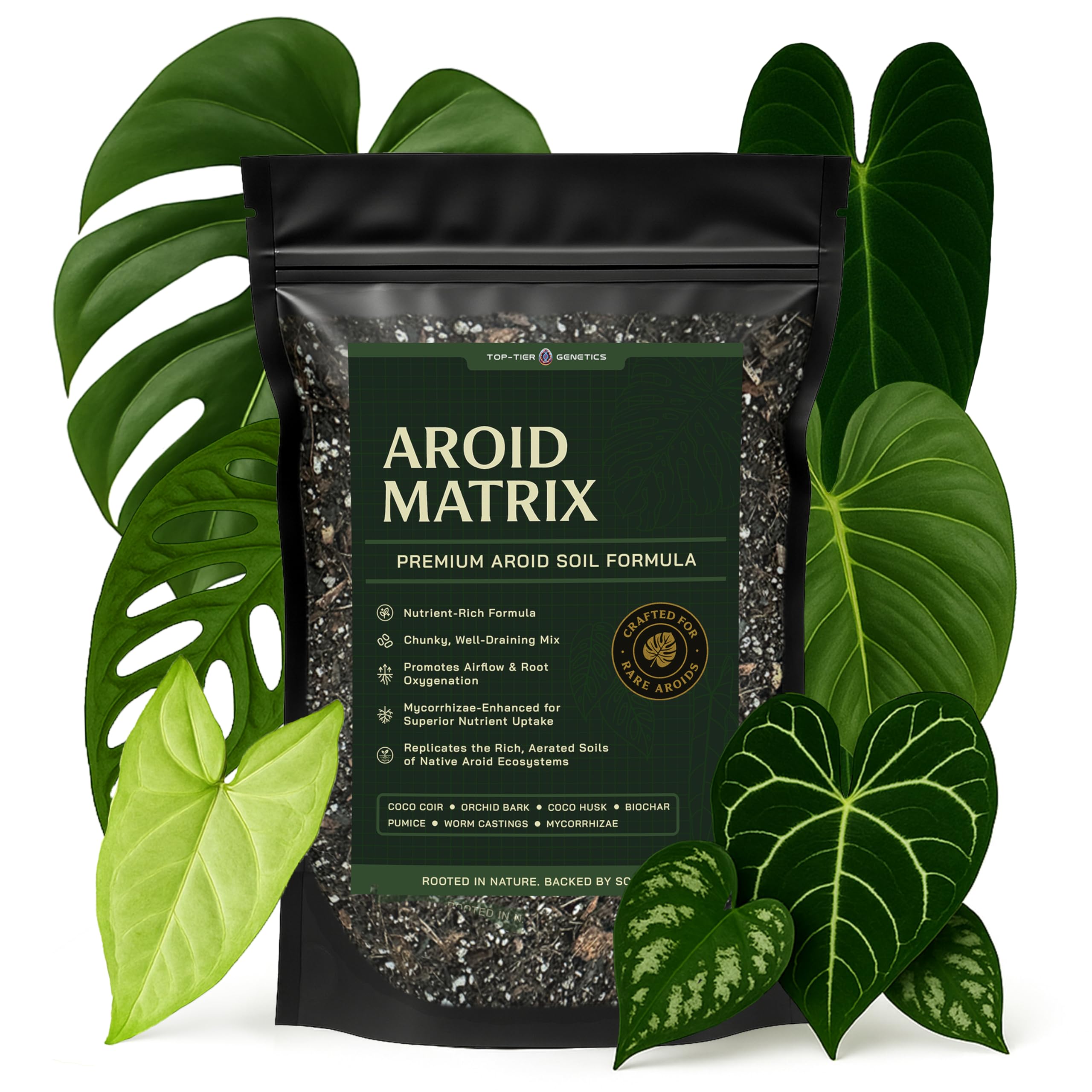
Top Tier Genetics formulated this blend specifically for philodendrons, monsteras, and anthuriums, and the ingredient list reads like a checklist for ideal aroid conditions: orchid bark for structure, coco husk for aeration, pumice for drainage, biochar for long-term nutrient retention, and worm castings for immediate fertility. The result is a mix that is ready to use straight from the bag without any additional sifting or mixing.
The standout characteristic is how fast the plants respond after repotting. Customers consistently describe their philodendrons as “perking up” within days, with visible root growth into the bark chips and new foliage emerging within two weeks. The moisture balance is engineered to feel damp but never soggy—the coco coir wicks water evenly while the pumice and bark ensure excess drains away rapidly. This makes the mix very forgiving for growers who tend to water on a schedule rather than by feel.
The bag size is listed as 4 quarts, but some reviews noted it visually appears smaller than competitors’ 4-quart bags due to settling during shipping. While the price per quart is reasonable for a premium blend, you may need to purchase multiple bags if you are repotting plants in 10-inch or larger pots. Still, for small to medium philodendrons, this mix delivers exceptional performance out of the box.
What works
- Orchid bark and coco husk create excellent physical structure for roots.
- Worm castings and mycorrhizae promote rapid foliage and root growth.
- Balanced moisture control prevents overwatering accidents.
What doesn’t
- Bag may appear underfilled due to settling during transit.
5. Perfect Plants Indoor Plant Soil (4qt)

This is the most general-purpose mix in the roundup, formulated for a wide range of indoor plants rather than exclusively for aroids. The inclusion of coarse sand and garden lime differentiates it from other all-purpose soils—the sand improves drainage and weight, while the lime buffers the pH to keep it neutral. For philodendrons, this means the soil will not become overly acidic over time, which can happen with peat-heavy mixes.
Several owners praised the fact that it arrived completely free of fungus gnats, which is a common complaint with mass-market potting soils. The texture is light and airy, with visible perlite and pine bark fines. It drains well enough for philodendrons, though it is not as aggressively chunky as the dedicated aroid blends on this list. If you have a mixed indoor collection with both aroids and more moisture-tolerant plants, this one mix can cover both needs.
The main limitation for philodendron enthusiasts is that it lacks some of the specialized ingredients—like orchid bark or LECA—that create the large air pockets epiphytic roots prefer. It works well for philodendrons in the short term, but for long-term container growth, the dedicated aroid blends will provide better root structure. The resealable bag is a nice touch for storing leftover soil.
What works
- Bug-free and sterile out of the bag according to many users.
- Coarse sand improves drainage and adds weight to pots.
- Versatile enough for philodendrons and other houseplants.
What doesn’t
- Not as chunky as specialized aroid mixes.
- Less air pocket volume for epiphytic root systems.
6. DUSPRO 8in1 Aroid Potting Mix
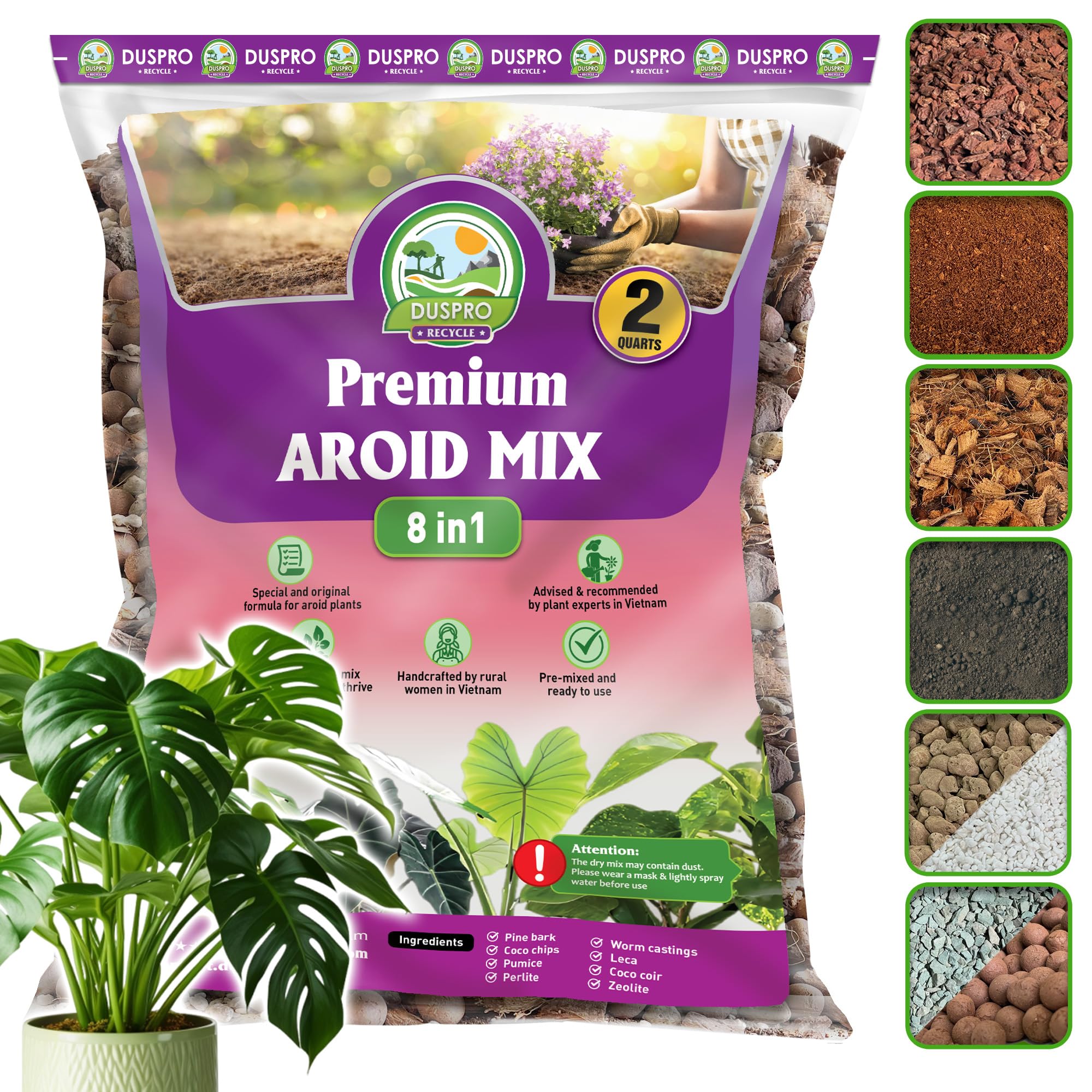
DUSPRO packs eight ingredients into a single 2-quart bag, making it one of the most compositionally diverse mixes on the market. The blend includes pine bark, coco chips, pumice, LECA, perlite, zeolite, worm castings, and coco coir. Zeolite is a less common addition—it acts as a mineral sponge that traps ammonium and slowly releases it, which can reduce the frequency of fertilizing for philodendrons.
The mix drains very quickly, which is ideal for growers who tend to overwater. The LECA and pumice create visible gaps in the texture, allowing air to circulate freely around the root ball. Several customers repotted multiple 8-inch and 6-inch pots from a single bag and reported seeing new growth within weeks. The price point is the lowest in the list, making it an accessible entry point for someone new to specialty aroid soils.
The primary downside is the small bag size—at 2 quarts, you will likely need multiple bags for larger philodendrons. Also, some users mentioned that the dust level near the bottom of the bag was higher than expected, so wearing a mask while handling is a good precaution. Despite that, the ingredient quality and immediate results justify its position as a strong budget-friendly option.
What works
- Zeolite helps regulate nutrient release over time.
- Very fast drainage reduces risk of root rot.
- Lowest cost entry point for aroid-specific soil.
What doesn’t
- Small 2-quart bag requires multiple purchases for large pots.
- Dusty towards the end of the bag.
7. Sol Soils Houseplant Chunky Mix
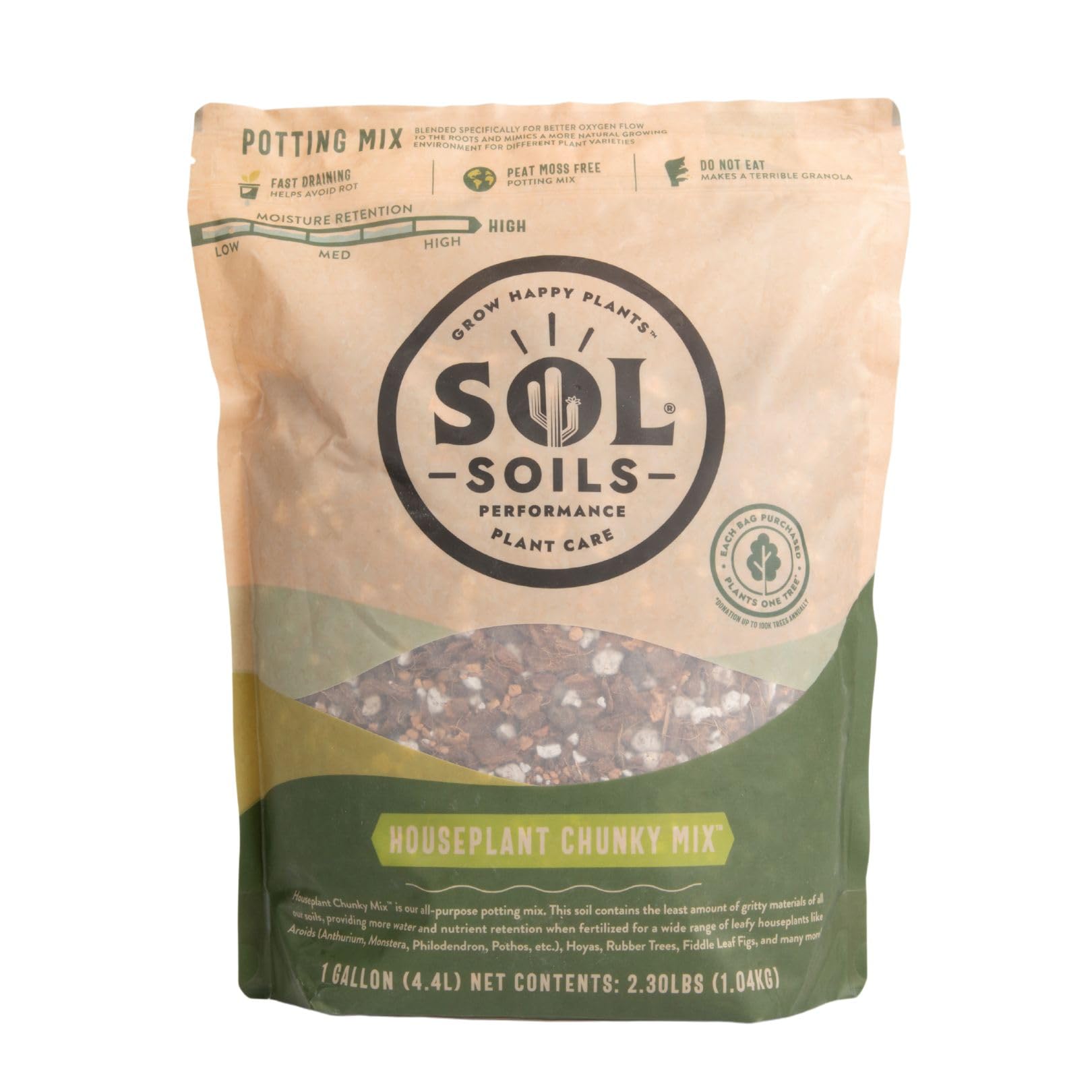
Sol Soils focuses on sustainability without cutting corners on performance. The mix uses recycled forest products, coconut coir and husk chips, perlite, pumice, pine bark, and LECA. It is entirely peat-free, and a portion of every sale goes toward global reforestation efforts. For eco-conscious plant owners, this adds a feel-good factor that is hard to find in larger commercial brands.
The texture is genuinely chunky—coarse enough to create visible air channels that philodendron roots can spread through with ease. The mix arrives extremely dry, which is intentional to prevent mold or bacterial growth during storage. Owners of fussier plants like Thai Constellation Monsteras and Hoyas reported that this mix helped their plants recover from root rot and produce new growth rapidly. The drainage is aggressive, so you will need to water more frequently than with finer soils.
The biggest issue is the bag size relative to the price point. At just 1 gallon (4 quarts), the cost per quart is the highest on this list. There is no larger size available, which limits its practicality for big collections. Still, if you value a completely peat-free, chunky blend that supports both your plants and the planet, this mix delivers outstanding quality in a small package.
What works
- Aggressively chunky texture ideal for epiphytic root systems.
- Completely peat-free and supports reforestation efforts.
- No pests or mold reported across multiple reviews.
What doesn’t
- Highest cost per quart in this lineup.
- No larger bag size available for bulk buyers.
Hardware & Specs Guide
Chunky vs. Fine Texture
Chunky soils contain bark chips, pumice, and perlite that create physical gaps in the medium. These gaps allow oxygen to reach the root zone, which is critical for philodendrons. A fine soil, like standard potting mix, compacts easily and traps water. When choosing a bag, look for visible pieces of bark or stone that are at least 1/8 inch wide—if the mix looks uniform and powdery, it is likely too dense.
Peat-Free vs. Peat-Based
Peat moss is still common in many potting soils, but it degrades over time and can become hydrophobic. Peat-free alternatives like coco coir, tree fern fiber, and biochar provide more consistent moisture distribution and better long-term structure. Many growers also prefer peat-free mixes for their lower environmental impact, as peat harvesting damages sensitive wetland ecosystems.
Beneficial Additives
Worm castings, mycorrhizae, and biochar are increasingly included in premium aroid mixes. Worm castings provide a gentle, slow-release nitrogen source. Mycorrhizae are beneficial fungi that extend the effective root system. Biochar acts as a nutrient reservoir, holding onto minerals that would otherwise wash out during watering. These additives reduce the need for frequent fertilizing.
Bag Size and Storage
Most aroid mixes come in 2-quart to 8-quart bags. A 4-quart bag fills roughly two 6-inch pots. If you have a large collection, buying an 8-quart bag saves money and reduces packaging waste. For smaller collections, a 2-quart bag is sufficient for one or two repottings. Always store leftover soil in a sealed container or a resealable bag to keep it from drying out or attracting pests.
FAQ
Can I use regular potting soil for philodendrons?
What is the ideal pH for philodendron soil?
How often should I repot a philodendron with fresh soil?
Why does my philodendron soil stay wet for so long?
Do I need to add fertilizer to pre-mixed aroid soil?
Final Thoughts: The Verdict
For most gardeners, the best soil for philodendron winner is the Grow Queen Craft Aroid Mix because it delivers the ideal balance of chunky aeration, pH-correcting tree fern fiber, and responsibly sourced peat-free ingredients. If you want the benefits of a living microbial ecosystem that reduces fertilizing, grab the Rosy Soil Aroid Mix. And for repotting an entire collection without breaking the bank, nothing beats the value of the Perfect Plants 8-Quart Aroid Mix.