
Annuals live fast and bloom hard, which means they burn through soil nutrients at a pace that catches most gardeners off guard. A standard all-purpose feed might keep foliage green, but it won’t push the kind of dense, continuous flowering that separates a so-so bed from a showstopper. The difference comes down to the NPK ratio, the release mechanism, and whether the formula prioritizes flower development over leaf production.
I’m Rikta — the co-founder and writer behind Lawn Gear Lab. I’ve spent hundreds of hours comparing commercial spec sheets, studying soil science data from horticultural trials, and cross-referencing thousands of verified owner reports to isolate the formulas that actually deliver on their bloom-boosting promises for annuals.
Whether you’re planting petunias, geraniums, impatiens, or zinnias, the right nutrition determines how many flowers you get and how long they last. This guide breaks down the market’s top performers to help you find the absolute best fertilizer for annuals that fits your growing style and garden goals.
How To Choose The Best Fertilizer For Annuals
Annuals complete their entire life cycle in one season, so their nutritional demands are intense and time-sensitive. Choosing the right fertilizer means matching the NPK ratio, release speed, and ingredient source to your specific planting setup — whether that’s containers, hanging baskets, or in-ground beds.
NPK Ratios: The Middle Number Matters Most
The three numbers on a fertilizer bag represent nitrogen (N), phosphorus (P), and potassium (K). For annuals, phosphorus — the middle number — drives flower bud formation and bloom size. A balanced ratio like 20-20-20 works for general maintenance, but a formula with a higher middle number, such as 4-10-7 or 3-9-4, shifts the plant’s energy toward producing more flowers instead of excess foliage. High-nitrogen feeds will give you lush green leaves at the expense of blooms, which is the opposite of what annual growers want.
Release Mechanism: Fast vs. Slow Feeding
Water-soluble powders and liquids deliver nutrients instantly, making them ideal for a quick boost when you see buds forming. Slow-release granules, on the other hand, meter out nutrition over several months with a single application. For annuals in containers that get watered daily, a slow-release granular base supplemented with a weekly liquid feed often produces the most consistent flowering. The key is matching the release speed to your watering frequency and the specific annual variety you’re growing.
Organic vs. Synthetic: Trade-offs in Speed and Soil Life
Synthetic fertilizers provide immediately available nutrients, which can trigger rapid bloom responses within days. Organic options, like those based on bone meal, blood meal, or compost extracts, feed the soil microbiome first and release nutrients more slowly. For annuals that need sustained energy over a short season, a high-quality organic blend with a boosted phosphorus source can produce equally impressive results while improving soil structure for future plantings. The choice often comes down to whether you prioritize instant response or long-term soil health.
Quick Comparison
On smaller screens, swipe sideways to see the full table.
| Model | Category | Best For | Key Spec | Amazon |
|---|---|---|---|---|
| Nelson ColorStar | Slow-Release Granules | Set-and-forget season-long feeding | 4-5 month feed duration | Amazon |
| Dr. Earth Total Advantage Rose & Flower | Organic Granules | Organic growers wanting non-GMO purity | OMRI & Non-GMO Verified | Amazon |
| Great Big Roses Liquid Booster | Liquid Concentrate | Amplifying existing fertilizer programs | 70+ chelated trace minerals | Amazon |
| Miracle-Gro LiquaFeed Bloom Booster | Liquid Refill | Instant feeding via hose-end sprayer | 16 oz refill (makes 64 oz) | Amazon |
| Fertilome All Purpose 20-20-20 | Water-Soluble Powder | Versatile use on annuals and perennials | 20-20-20 balanced NPK | Amazon |
| Dr. Earth Flower Girl Bud & Bloom Booster | Organic Granules | Organic bloom boosting for sensitive edibles | 4-10-7 NPK ratio | Amazon |
| Miracle-Gro Water Soluble Azalea Food | Water-Soluble Powder | Acid-loving annuals like impatiens | Designed for acid-loving plants | Amazon |
In‑Depth Reviews
1. Nelson Plant Foods ColorStar Outdoor & Indoor Plant Fertilizer
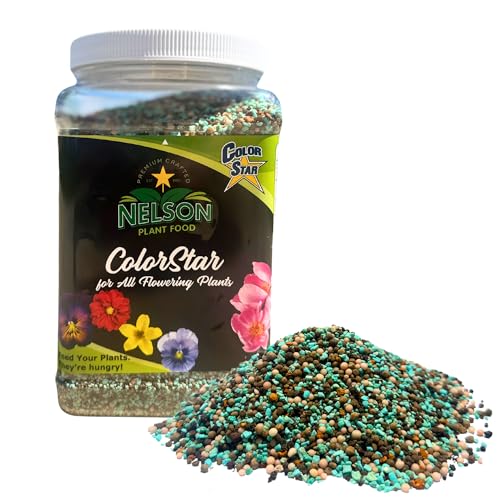
The Nelson ColorStar earns the top spot because it solves the biggest problem annual growers face: maintaining consistent nutrition without weekly reapplications. Its granular formula uses seven distinct nitrogen sources with staggered release characteristics, delivering steady feeding for four to five months from a single application. That means one spring application carries your petunias, marigolds, and zinnias through the entire growing season without fade-off in mid-summer.
The 3-in-1 formulation combines bone meal, blood meal, and essential micronutrients including iron sulfate and magnesium oxide, which directly influence bloom size and color saturation. Owner reports consistently note that bedding plants treated with ColorStar produce visibly larger flowers with deeper pigment intensity compared to standard balanced feeds. The 4-pound bag covers a substantial area, making it cost-effective for medium to large beds.
Where this fertilizer truly separates itself is in the consistency of results across different annual varieties. Whether applied to hydrangeas, geraniums, or flowering shrubs, the feedback is uniform: more blooms, richer color, and foliage that stays healthy without becoming leggy. The only trade-off is the upfront investment, which is higher than water-soluble powders, but the elimination of weekly mixing duties offsets the cost for most serious gardeners.
What works
- Single application feeds for 4-5 months
- Visible increase in bloom size and color intensity
- Seven nitrogen sources prevent growth surges and crashes
What doesn’t
- Higher price point per pound than synthetic powders
- Granules can be difficult to distribute evenly in tight container groupings
2. Dr. Earth Total Advantage Rose & Flower Fertilizer

Dr. Earth’s Total Advantage line is the only Non-GMO Project Verified fertilizer available in the U.S., and that certification matters for gardeners who want to avoid synthetic chemicals and GMO-contaminated chicken manure. The formula is handcrafted from human-grade and feed-grade ingredients, enriched with multi-minerals, proteins, carbohydrates, humic acids, and trace elements that support both bloom production and long-term soil biology.
The target species list includes roses, flowering trees, shrubs, annuals, and perennials, but annual growers report particularly strong results with heavy-feeding bloomers like geraniums and petunias. The granular form works well as a top-dress for in-ground beds or mixed into container soil at planting time. The organic breakdown means nutrients become available as soil microbes process them, which creates a slower but more sustained feeding curve compared to synthetic granulars.
Owner feedback emphasizes the safety profile — gardeners with pets and children appreciate the people-and-pet-safe labeling without sacrificing performance. The 4-pound bag is enough for several medium-sized beds or a season’s worth of container feeding. The primary drawback is that organic granules take longer to show visible results, so impatient growers may prefer a water-soluble option for immediate gratification.
What works
- Highest purity standards with OMRI and Non-GMO certification
- Enriched with humic acids and trace minerals for soil health
- Safe for use around children and pets
What doesn’t
- Slower visible results compared to synthetic fertilizers
- Granules can develop a strong odor in storage
3. Great Big Roses and Flowers Liquid Fertilizer Booster
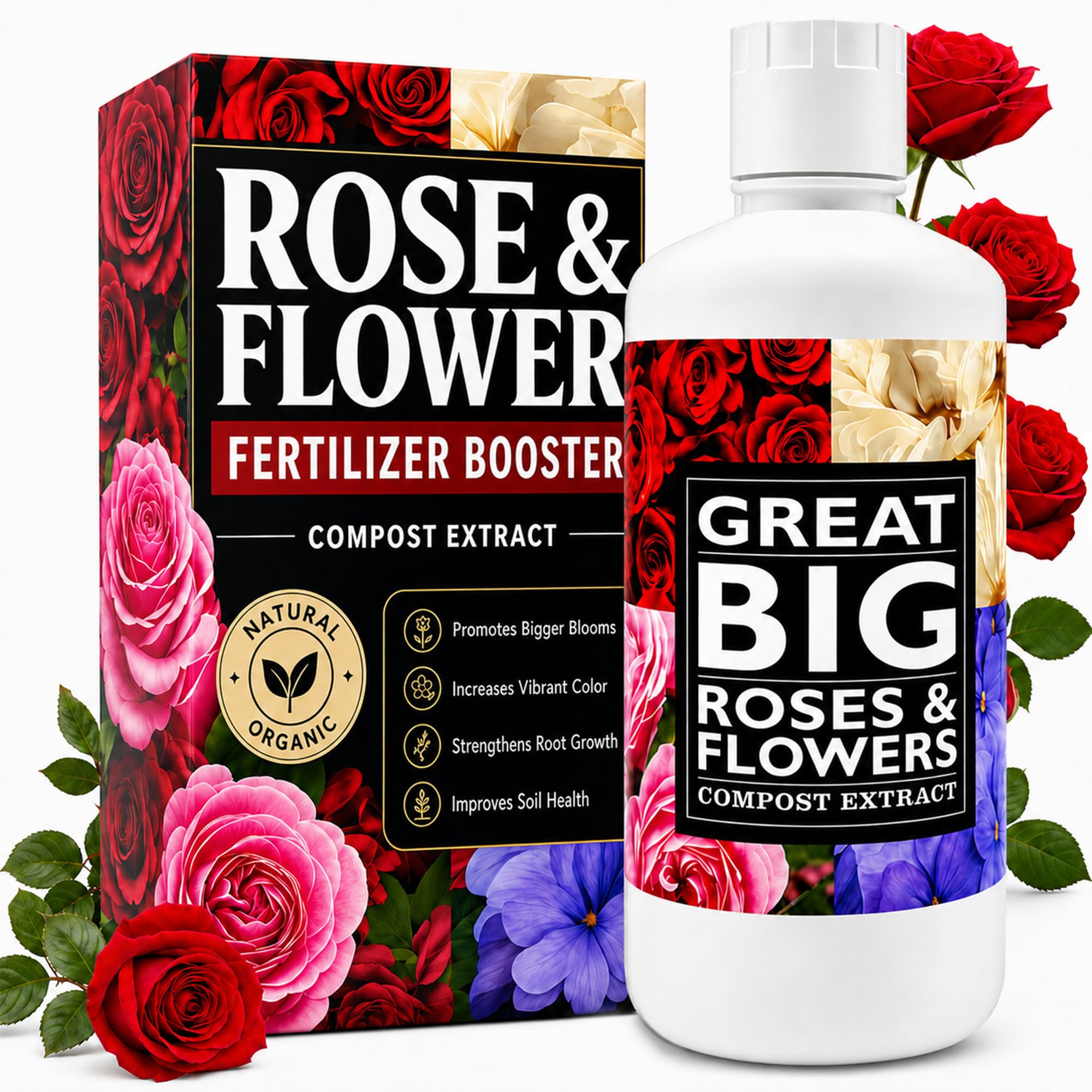
This liquid concentrate operates differently than standard fertilizers — it’s a soil activator that amplifies the nutrients already present in your garden bed rather than dumping in synthetic salts. The formula delivers humic acids, seaweed extract, and over 70 chelated trace minerals directly to the root zone, converting locked-up soil nutrients into forms that annuals can actually use. This makes it an excellent companion to any existing fertilizer program, whether organic or synthetic.
For annual growers, the real value is in the rapid root response. The booster flows quickly into the root zone without requiring digging or tilling, and owners report seeing flower bud formation within weeks of first application — even on plants that had previously stalled. The 32-ounce bottle makes roughly 8 gallons of working solution, which covers a full season for most garden beds when applied every two to three weeks.
Where this product shines is in reviving tired beds or plants that have been underperforming despite regular feeding. The chelated minerals correct micronutrient deficiencies that standard NPK blends miss entirely. The main complaint is the packaging — the wide-mouth jug makes precise measuring messy, and the price per ounce is among the highest in this roundup. Still, for targeted bloom boosting, the results justify the cost.
What works
- Unlocks existing soil nutrients for immediate plant use
- Visible bloom response within weeks of application
- Works alongside any existing fertilizer regimen
What doesn’t
- Expensive per ounce compared to granular or powder options
- Packaging makes measuring and pouring difficult without spills
4. Miracle-Gro LiquaFeed Bloom Booster Flower Food

The LiquaFeed system is designed for gardeners who want instant results with zero mixing effort. Each 16-ounce refill bottle connects directly to a Miracle-Gro hose-end feeder and delivers a precisely measured dose every time you water. The bloom booster formulation shifts the nutrient profile toward phosphorus and potassium, which directly supports flower bud development rather than leafy growth.
For annuals in containers and hanging baskets — which get watered frequently and lose nutrients to drainage — this system allows for supplemental feeding with every watering without the risk of over-fertilizing. Owner reports highlight that flowers appear fuller and more abundant within one to two weeks of switching from a general-purpose feed. The four-pack provides enough concentrate for an entire season of weekly feeding for a medium-sized garden.
The convenience factor is substantial, but the formula is synthetic and lacks the organic matter and micronutrients found in more comprehensive blends. Gardeners who prefer organic methods or want to build soil biology will find this too one-dimensional. The plastic refill bottles also contribute to packaging waste, though the system itself is reusable season after season.
What works
- Zero-mix application via hose-end feeder saves time
- Quick bloom response — visible results within 1-2 weeks
- Four-pack covers a full season of weekly feeding
What doesn’t
- Synthetic formula lacks organic matter and trace minerals
- Requires proprietary Miracle-Gro feeder for proper use
5. Fertilome All Purpose Water Soluble Plant Food 20-20-20

The Fertilome 20-20-20 is the most straightforward entry on this list — a classic balanced water-soluble powder that works reliably across annuals, perennials, hanging baskets, and even indoor plants. The 20-20-20 ratio provides equal parts nitrogen, phosphorus, and potassium, making it suitable for both foliage growth and flower production. For annual growers who want a single fertilizer that handles everything from transplanting to peak bloom, this is the most efficient option.
The mixing instructions are simple: one to two teaspoons per gallon of water for soil drench application, or a quarter to one teaspoon per gallon for foliar feeding. This flexibility allows gardeners to adjust the strength based on the specific annual variety and growth stage. The 3-pound bag goes a long way — owners report it lasting months even with weekly applications across multiple beds and containers.
Owner reviews consistently praise the results on hibiscus, geraniums, and petunias, noting improved flower size and color vibrancy within two weeks of first use. The main limitation is the lack of slow-release technology — this powder requires consistent weekly mixing and application to maintain results. It’s also a synthetic formula, so organic purists will want to look elsewhere. For the price per ounce, however, few options deliver this level of versatility.
What works
- Excellent value per application — 3 lbs covers months of feeding
- Works as both soil drench and foliar spray
- Balanced 20-20-20 formulation suits a wide range of annuals
What doesn’t
- Requires weekly mixing — no slow-release convenience
- Synthetic formula does not improve soil biology
6. Dr. Earth Flower Girl Bud & Bloom Booster 4-10-7

Dr. Earth’s Flower Girl formulation is optimized specifically for bloom production, with an NPK ratio of 4-10-7 that doubles the phosphorus content relative to nitrogen. This is the exact nutrient profile that annuals need when shifting from vegetative growth to flower formation. The 100% organic handcrafted blend excludes GMOs, chicken manure, and sewage sludge, meeting the highest standards for purity and safety.
The 4-pound bag covers a surprising amount of ground — owners report using it successfully on everything from dahlia beds to dragon fruit trees with noticeable increases in bud count. The organic certification means it’s safe for edible flowers and vegetables, making it a strong choice for gardeners who grow annuals in mixed beds with food crops. The granules break down steadily, providing nutrition over several weeks before requiring reapplication.
A notable detail from owner feedback is the discrepancy between the listed NPK numbers and what some buyers received — several units shipped with a 3-9-4 label instead of the advertised 4-10-7. While the ratio is still bloom-focused, the inconsistency is worth monitoring. Otherwise, the product delivers on its promise of boosting flower production without synthetic chemicals, though the organic breakdown means results develop more slowly than with synthetic bloom boosters.
What works
- High-phosphorus 4-10-7 ratio targets bloom production directly
- 100% organic with Non-GMO Project Verification
- Safe for edible flowers and mixed vegetable beds
What doesn’t
- NPK ratio on shipped product sometimes differs from listing
- Slower acting than synthetic bloom boosters
7. Miracle-Gro Water Soluble Azalea, Camellia, Rhododendron Plant Food

This Miracle-Gro formulation is specifically designed for acid-loving plants, which includes many popular annuals like impatiens, begonias, and lobelia that prefer a lower soil pH. The water-soluble powder dissolves instantly in water and can be applied with a watering can or hose-end feeder every 7 to 14 days. The 5-pound bag provides substantial coverage — enough for dozens of applications across a full season.
Owner feedback is overwhelmingly positive, with many noting that their acid-loving shrubs and annuals showed visible greening and increased bloom production within a week of first application. The formula is designed to won’t burn foliage when used as directed, which reduces the risk for newer gardeners who might be heavy-handed with mixing. The versatility extends to indoor acid-loving plants as well, making this a single-bag solution for both indoor and outdoor acid-lovers.
The main drawback is the bag design — the material doesn’t seal effectively after opening, forcing users to transfer the powder to an airtight container. This is a recurring complaint that’s worth noting if you plan to store the bag for extended use. The formula is also synthetic, so organic growers will need to look at Dr. Earth alternatives. For the price and volume, however, this is the most cost-effective option for acid-loving annuals.
What works
- Targeted formula for acid-loving annuals like impatiens
- Fast-acting — visible results within a week
- Large 5-pound bag offers excellent coverage per dollar
What doesn’t
- Bag does not reseal properly — requires separate storage container
- Synthetic formulation not suitable for organic gardening
Hardware & Specs Guide
NPK Ratio
The three-number ratio on any fertilizer label is the single most important spec for annuals. The first number is nitrogen (for leaf growth), the second is phosphorus (for flower and root development), and the third is potassium (for overall plant health and disease resistance). For bloom-focused annual feeding, look for a higher middle number — ratios like 4-10-7 or 3-9-4 shift energy toward flower production rather than foliage. Balanced 20-20-20 formulas work well for general maintenance but won’t push maximum bloom density.
Release Mechanism
Water-soluble powders and liquid concentrates deliver nutrients immediately but require frequent reapplication — typically every 7 to 14 days. Slow-release granules meter out nutrition over 2 to 5 months from a single application, making them ideal for low-maintenance beds. Organic granulars release even more slowly as soil microbes break down the material. For annuals in containers that get watered daily, a slow-release base combined with periodic liquid feeding produces the most consistent results without nutrient leaching.
FAQ
What does the middle number in 4-10-7 mean for annuals?
How often should I fertilize annuals in containers?
Can I use a rose fertilizer on my annual flowers?
Final Thoughts: The Verdict
For most gardeners, the fertilizer for annuals winner is the Nelson ColorStar because one spring application eliminates the need for weekly mixing and delivers consistent bloom production through the entire season. If you want organic purity and Non-GMO certification, grab the Dr. Earth Total Advantage Rose & Flower. And for instant results with zero mixing effort, nothing beats the Miracle-Gro LiquaFeed Bloom Booster when paired with a hose-end feeder.