
Zucchini plants are heavy feeders that demand a precise balance of nitrogen, phosphorus, and potassium to produce a steady harvest without turning into leafy monsters. Choosing the wrong fertilizer can lead to all vine, no fruit — a frustrating outcome for any gardener who has watched blossoms drop without setting squash.
I’m Rikta — the co-founder and writer behind Lawn Gear Lab. I’ve spent hundreds of hours studying N-P-K ratios, organic certification standards, and granular versus liquid delivery systems to isolate the formulations that actually drive fruit development in fast-growing cucurbits like zucchini.
After cross-referencing technical data sheets and analyzing thousands of verified owner reports, these seven contenders stand out as the most reliable options in the fertilizer for zucchini category.
How To Choose The Best Fertilizer For Zucchini
Zucchini plants consume nutrients rapidly from soil, especially once they begin flowering. A general-purpose lawn fertilizer will push leaf growth at the expense of fruit, so the N-P-K balance you select directly determines whether you harvest a dozen squash per plant or a pile of empty stems.
N-P-K Ratio and What Each Number Means for Zucchini
The first number (nitrogen) drives leaf and vine growth. The second number (phosphorus) supports root development and fruit set. The third number (potassium) improves overall plant health and disease resistance. For zucchini, a formula with a phosphorus number equal to or higher than the nitrogen number — such as 5-7-3 or 4-9-3 — encourages flowering and fruit production without creating excessive foliage that shades the plant.
Liquid Concentrate Versus Slow-Release Granules
Liquid concentrates like the Alaska Fish Fertilizer deliver nutrients immediately to the root zone, which is useful for correcting a deficiency fast or giving seedlings a boost. Granular options such as the FoxFarm Happy Frog line release nutrients gradually, reducing the risk of fertilizer burn and requiring fewer applications. Container-grown zucchini often benefit from liquids since frequent watering can flush granular nutrients out of pots faster than in-ground beds.
Organic Certification and Soil Health
OMRI-listed fertilizers ensure that the product meets organic standards for vegetable production. Organic formulas feed soil microbes alongside the plant, which builds long-term soil structure. Synthetic options like the balanced 10-10-10 GreenView work quickly but do not contribute to microbial life in the same way. If you plan to harvest zucchini for several months, organic granules provide steady nutrition without building up salt residues in the root zone.
Quick Comparison
On smaller screens, swipe sideways to see the full table.
| Model | Category | Best For | Key Spec | Amazon |
|---|---|---|---|---|
| Dr. Earth Home Grown | Liquid Organic | Organic zucchini seedlings | 3-2-2 NPK concentrate | Amazon |
| FoxFarm Happy Frog Tomato & Vegetable | Granular Organic | Fruit development + calcium | 5-7-3 with calcium | Amazon |
| FoxFarm Happy Frog Fruit & Flower | Granular Bloom | Maximizing zucchini flowers | 4-9-3 bloom ratio | Amazon |
| FoxFarm Happy Frog Citrus & Avocado | Granular Slow-Release | Slow-release zinc/iron | Slow-release N + microbes | Amazon |
| Alaska Fish Fertilizer 5-1-1 | Liquid Fish | Early vegetative growth | 5-1-1 liquid concentrate | Amazon |
| Miracle-Gro All Purpose + Feeder | Hose-End Kit | Quick weekly feeding | 24-8-16 + hose sprayer | Amazon |
| GreenView Multi-Purpose 10-10-10 | Granular Balanced | General garden-wide use | 33 lb bag, 10-10-10 | Amazon |
In‑Depth Reviews
1. Dr. Earth Home Grown Tomato, Vegetable & Herb Liquid Fertilizer 24 oz Concentrate

Dr. Earth’s liquid formula uses a 3-2-2 N-P-K ratio that delivers a moderate nitrogen dose while keeping phosphorus higher than many all-purpose liquids, which helps zucchini plants transition from leafy growth into flowering without overstimulating foliage. The concentrate is made from recycled grocery produce, fish, and meat byproducts, giving it an OMRI-listed organic profile that fits into sustainable garden practices. A single 24-ounce bottle dilutes to 12 gallons of ready-to-use fertilizer, making it cost-effective for a medium-sized zucchini patch.
Verified owners report that this product produced dense broccoli heads and strong leaf development on seedlings, though a few noted it may be too potent for container flowers if overapplied. The liquid formulation allows precise control during early growth stages, and several users mention applying it every two weeks throughout the season with excellent results on tomatoes and squash alike.
For zucchini specifically, the low-but-balanced middle number means you will likely need to supplement with a bloom booster during heavy fruiting weeks. The bottle requires a thorough shake before each use to redistribute settled organic particles, but the lack of synthetic chemicals makes it safe around pets and pollinators once watered into the soil.
What works
- OMRI-listed organic ingredients from recycled food waste
- Liquid concentrate dilutes to 12 gallons for broad coverage
- Gentle enough for seedlings without burning young roots
What doesn’t
- 3-2-2 ratio is lower in phosphorus than ideal for peak fruit set
- Must shake vigorously before each use to prevent settled particles
2. FoxFarm Happy Frog Tomato & Vegetable Fertilizer 5-7-3, 4 lb

The 5-7-3 N-P-K ratio in this granular formula shifts the nutrient profile toward phosphorus, which directly supports zucchini flower development and fruit production. FoxFarm also adds calcium to the blend, a critical component for preventing blossom end rot — the dark, sunken lesion that appears on the blossom end of squash during periods of uneven watering or calcium deficiency. The 4-pound bag covers approximately 100 square feet of garden bed at the recommended application rate.
Mycorrhizal fungi are included to colonize the root zone and improve water and nutrient uptake, which benefits zucchini plants that can wilt quickly during hot afternoons. Owner reviews consistently note that this fertilizer induced rapid tomato fruiting and produced large, productive squash plants with no blossom end rot when applied as directed. The granules have a mild earthy smell rather than a fishy odor, making it pleasant to handle and store.
One drawback is the price per pound compared to bulk synthetic blends — this is a premium-priced organic granular that requires reapplication every three to four weeks during heavy fruiting. Gardeners using it in containers should water it in thoroughly to activate the nutrients, and it works best when mixed into the top inch of soil rather than left sitting on the surface.
What works
- High phosphorus (7) drives zucchini fruit set and bloom count
- Calcium content prevents blossom end rot on summer squash
- Mycorrhizal fungi enhance root efficiency and drought tolerance
What doesn’t
- Premium price per pound compared to synthetic granular options
- Requires reapplication every 3-4 weeks through the growing season
3. FoxFarm Happy Frog Fruit & Flower Fertilizer 4-9-3, 4 lb

With a 4-9-3 ratio, this granular feed puts phosphorus nearly two-and-a-half times higher than nitrogen, which is ideal for directing zucchini energy into flower bud formation rather than leaf expansion. The 9 percent phosphorus content supports the development of male and female flowers, which must both appear for successful fruit set. This formulation is particularly useful once zucchini plants have reached 8 to 10 inches tall and you want to shift them from vegetative growth into heavy production.
Like the Tomato & Vegetable variant, Fruit & Flower contains mycorrhizal fungi and uses a granule form that can be top-dressed or mixed into soil. Owners report that it improved flower health and bloom count on spring potted flowers, and users with fruit trees note simpler application compared to liquid feeding. The 4-pound bag provides several applications for a typical home garden.
The high phosphorus content means this fertilizer is less suited for early seedling stages when nitrogen is needed for leaf development. Pair it with a nitrogen-rich starter like Alaska Fish Fertilizer for the first few weeks, then switch to Fruit & Flower as the plants begin to vine and produce buds. The granules do not dissolve fully in water and work best when scratched into moist soil.
What works
- High phosphorus (9) maximizes flower and fruit formation on zucchini
- OMRI-listed organic formula that feeds soil microbes
- Easy top-dress application without mixing or measuring liquids
What doesn’t
- Too low in nitrogen for seedling or early vegetative stages
- Must be scratched into soil surface for optimal release
4. FoxFarm Happy Frog Citrus and Avocado Fertilizer, 4 lb

Though labeled for citrus and avocado trees, this granular fertilizer works as a slow-release soil amendment for zucchini beds because it delivers nitrogen gradually through organic components rather than a fast-soluble salt. The inclusion of mycorrhizal fungi and beneficial soil microbes helps zucchini roots access nutrients locked in the soil, which is useful in raised beds that have been cropped heavily in previous seasons. The slow-release nitrogen prevents the sudden leafy flush that can happen with quick-release synthetic fertilizers.
Owners of citrus and avocado trees report dramatic reversal of leaf yellowing and increased fruit yields, while gardeners using it on other fruiting plants note improved overall plant vigor. The formula contains alfalfa meal as a primary ingredient, which contributes organic matter and a small amount of natural growth hormones. The 4-pound bag has good coverage for a 50-square-foot garden area.
The N-P-K ratio is not printed on the bag as a single bold number, which makes it harder to calculate exact phosphorus delivery compared to the Tomato & Vegetable or Fruit & Flower blends. Gardeners who want precise control over the second number may find this option less transparent. Additionally, the smell can attract dogs, so it should be watered in immediately after application.
What works
- Slow-release nitrogen prevents excess foliage at expense of fruit
- Mycorrhizal fungi and microbes improve long-term soil health
- Alfalfa meal adds organic matter and trace growth promoters
What doesn’t
- N-P-K ratio is not prominently displayed for precise comparison
- Odor may attract pets until thoroughly watered into soil
5. Alaska Fish Fertilizer OMRI Listed 5-1-1, 115 oz
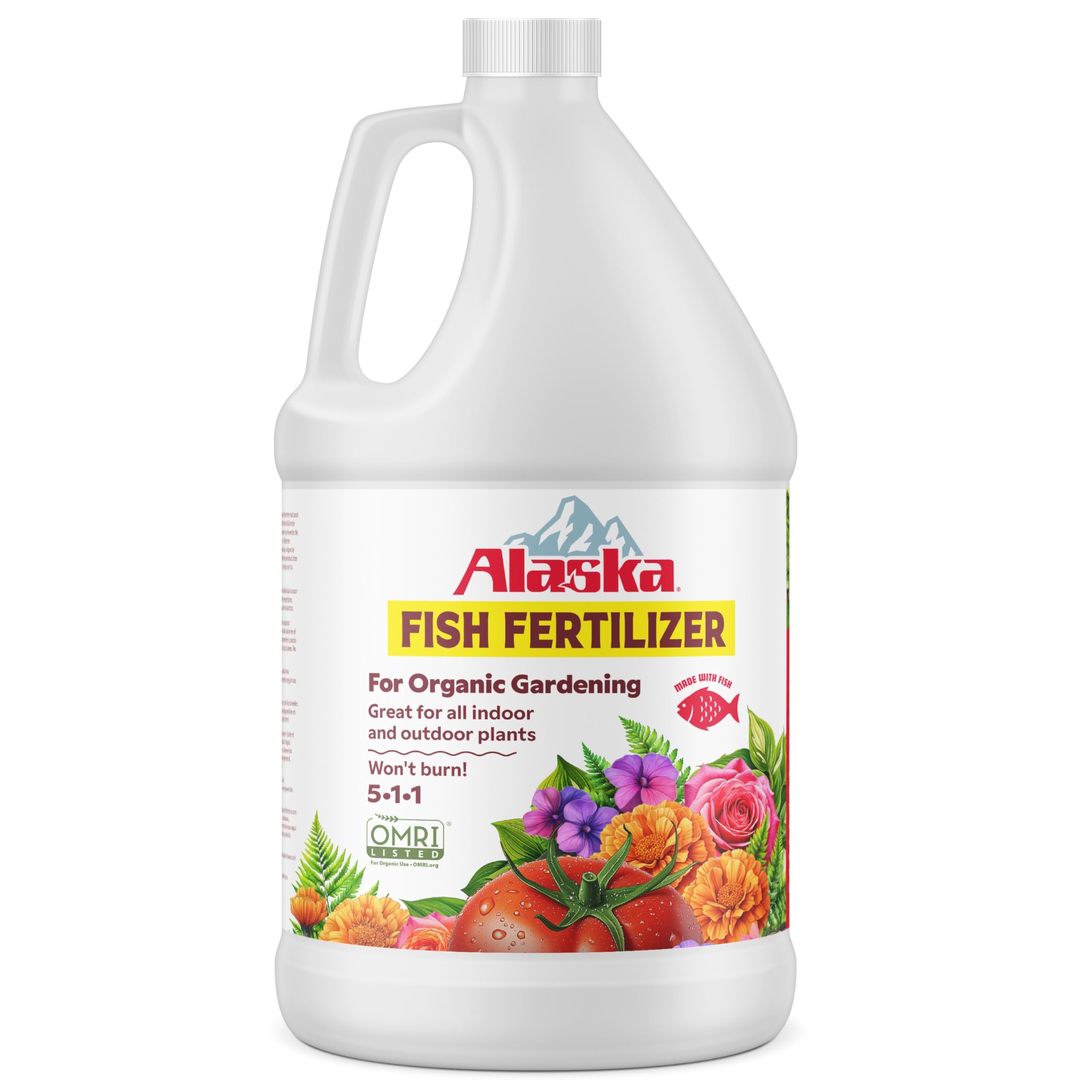
Alaska Fish Fertilizer delivers a 5-1-1 N-P-K profile that is heavily weighted toward nitrogen, making it a strong choice for the vegetative growth stage of zucchini planting. The liquid concentrate is cold-processed from fish byproducts to preserve micronutrients and amino acids that support rapid leaf expansion and stem strength. A 115-ounce bottle provides enough concentrate for roughly 30 to 40 gallons of diluted fertilizer, depending on your target mixing ratio.
Owner reviews spanning over a decade of use highlight its ability to produce lush green foliage on vegetables, herbs, and fruit trees without burning roots when used as directed. Gardeners report stronger stems and faster early growth on zucchini, tomatoes, and peppers after switching to this fish-based formula. The product is OMRI listed and feeds soil microbes, contributing to long-term soil structure.
The fishy odor is noticeable during mixing and for about a day after application, though it dissipates more quickly in outdoor soil than in greenhouse or indoor settings. Because phosphorus is very low at 1 percent, this fertilizer alone will not support heavy zucchini flowering and fruiting — it works best as a complement to a bloom-focused granular or a phosphorus supplement later in the season.
What works
- High nitrogen (5) drives fast leaf and vine growth on young zucchini
- Cold-processed fish retains micronutrients for soil health
- OMRI-listed and safe around pets when watered into soil
What doesn’t
- Low phosphorus (1) will not support heavy fruiting on its own
- Strong fish smell lingers for about 24 hours after application
6. Miracle-Gro Water Soluble All Purpose Plant Food and Garden Feeder Bundle

This bundle includes a pre-filled hose-end feeder plus a 1.5-pound refill container of Miracle-Gro’s 24-8-16 water-soluble formula, giving you a ready-to-use feeding system for large zucchini patches. The hose-end sprayer connects directly to your garden hose and allows you to feed plants while watering, with three spray patterns (shower, jet, and flat) and a trigger lock for continuous one-handed operation. The 24-8-16 ratio is high in nitrogen, which can push rapid vegetative growth but requires careful timing to avoid inhibiting fruit set.
Owner reviews praise the convenience of the hose-end feeder over manual mixing, noting that the dispenser is durable and simplifies feeding of flowers, vegetables, shrubs, and trees. The system is particularly useful for gardeners with long garden rows or multiple raised beds, as it eliminates the need to carry watering cans filled with diluted fertilizer. Users report that everything they apply it to grows faster and greener within days.
The synthetic NPK ratio delivers a strong nitrogen punch that can cause zucchini to produce massive leaves while skipping flower production if applied too late into the fruiting stage. Organic gardeners may prefer to avoid this product due to its synthetic salt-based formulation. Additionally, the pre-filled feeder cartridge is not refillable with other brands, locking you into the Miracle-Gro ecosystem for refills.
What works
- Hose-end feeder makes weekly feeding effortless for large gardens
- Three spray patterns allow targeted or broad application
- Fast-acting synthetic formula shows visible greening within days
What doesn’t
- High nitrogen (24) can suppress zucchini flower set if overused
- Synthetic salt-based formula may build up in soil over time
7. GreenView Multi-Purpose Fertilizer, 33 lb Bag, 10-10-10

The GreenView 10-10-10 provides a perfectly balanced N-P-K ratio that works as a general-purpose foundation for a mixed vegetable garden, including zucchini. A 33-pound bag delivers exceptional coverage at a low per-pound cost, making it the most economical option for gardeners with large in-ground plots or multiple garden beds. The granules are well-formed and non-clumping, which allows even distribution with a broadcast spreader or by gloved hand.
Owner reviews from Hawaii and the Midwest report that this fertilizer greens up plants quickly and works well on trees, hostas, perennials, and vegetables. The balanced ratio makes it difficult to over-apply nitrogen to zucchini, and the slow-release granular form provides steady nutrition over several weeks. Many users appreciate the Prime delivery option for heavy bags, especially older gardeners who struggle with lifting 33-pound sacks from store shelves.
The 10-10-10 formula lacks the phosphorus bias that zucchini benefits from during fruiting, so it may not push flower production as aggressively as the 5-7-3 or 4-9-3 blends. It also lacks calcium, so gardeners prone to blossom end rot should supplement with a calcium source or lime. The bag size is cumbersome for small container gardens and may take multiple seasons to use up in a modest plot.
What works
- 33-pound bag offers huge value for large garden plots
- Balanced 10-10-10 is versatile for all vegetables, flowers, and shrubs
- Non-clumping granules spread easily with a broadcast spreader
What doesn’t
- Balanced ratio lacks the higher phosphorus zucchini prefers for fruit set
- No added calcium to prevent blossom end rot on squash
Hardware & Specs Guide
Understanding N-P-K on the Fertilizer Label
The three numbers on a fertilizer bag represent the percentage by weight of nitrogen (N), phosphorus (P₂O₅), and potassium (K₂O) in the product. For zucchini, the middle number matters most because phosphorus drives flower bud differentiation and fruit set. A formula with a phosphorus number equal to or higher than the nitrogen number, such as 5-7-3 or 4-9-3, helps zucchini focus energy on producing squash rather than just more leaves. Products like the GreenView 10-10-10 provide a balanced baseline but may require supplementing with a bloom booster during peak production weeks.
Organic Certification and What OMRI Means
OMRI (Organic Materials Review Institute) listed products have been reviewed and approved for use in certified organic food production. This certification means the fertilizer contains no synthetic chemicals, sewage sludge, or prohibited additives. For zucchini growers who plan to eat the fruit directly from the vine, choosing an OMRI-listed product like the Dr. Earth liquid concentrate or the FoxFarm Fruit & Flower granules ensures the nitrogen and phosphorus sources meet organic standards. Non-certified synthetic products like the Miracle-Gro 24-8-16 may still produce healthy plants but are not compatible with organic gardening practices.
FAQ
What N-P-K ratio is best for zucchini fruit production?
How often should I fertilize zucchini plants in a raised bed?
Can I use citrus or avocado fertilizer on zucchini plants?
Why do my zucchini flowers fall off without producing fruit?
Final Thoughts: The Verdict
For most gardeners, the fertilizer for zucchini winner is the Dr. Earth Home Grown Liquid Fertilizer because its OMRI-listed 3-2-2 formula offers a balanced organic foundation that works for all growth stages without burning roots. If you want a phosphorus-heavy granular that directly targets fruit abundance, grab the FoxFarm Happy Frog Tomato & Vegetable 5-7-3 with added calcium to prevent blossom end rot. And for growers with a large in-ground garden who need maximum coverage per dollar, nothing beats the GreenView 10-10-10 33-pound bag as a versatile budget-friendly staple.