
Areca palms develop yellow fronds and brown tips when their micronutrient ratios are off, yet most general-purpose plant foods lack the high magnesium and manganese levels these tropicals demand. Feeding them with a fertilizer designed for palms is the only way to keep the foliage dense and the canopy a rich, dark green.
I’m Rikta — the co-founder and writer behind Lawn Gear Lab. I have spent countless hours comparing granular NPK ratios, liquid concentrate formulations, and slow-release technologies across dozens of brands to determine which formulas actually address the specific deficiencies areca palms show.
This guide distills that research into seven top-rated products so you can choose the right fertilizer for areca palms that delivers visible improvement in frond color and growth density without causing root burn or nutrient lockout.
How To Choose The Best Fertilizer For Areca Palms
Areca palms are heavy feeders that crave a specific blend of macronutrients and micronutrients. Choosing the wrong fertilizer can result in yellowing lower leaves, stunted new fronds, or a buildup of soluble salts that damages the root system. Focus on these three factors to avoid those problems.
NPK Ratio and Potassium Priority
Areca palms need a fertilizer where the third number — potassium — is the highest or at least equal to the first number. A typical palm formulation in the 8-2-12 or 6-2-8 range supports frond rigidity and cold/drought tolerance. Avoid high-phosphorus formulas (the middle number) unless a soil test confirms a phosphorus deficiency; excessive phosphorus can block the uptake of iron and zinc.
Magnesium and Manganese Content
The most common discoloration in areca palms — yellowing between the veins of older fronds — points to a magnesium deficiency. Manganese deficiency shows up as new fronds coming in small and frizzled. A proper palm fertilizer should list both magnesium and manganese in the guaranteed analysis. These two micronutrients are non-negotiable for healthy areca palms.
Slow-Release vs. Liquid Feeding
Granular slow-release fertilizers apply nutrients over 2-4 months and are ideal for in-ground areca palms because they minimize the risk of root burn. Liquid concentrates, on the other hand, provide an immediate nutrient boost that is perfect for potted areca palms grown indoors, where the limited soil volume cannot buffer a large granular dose. The choice depends on whether your palm lives in the landscape or in a container.
Quick Comparison
On smaller screens, swipe sideways to see the full table.
| Model | Category | Best For | Key Spec | Amazon |
|---|---|---|---|---|
| Espoma Organic Palm-Tone | Granular Organic | Preventing leaf tip burn | NPK 4-1-5 + Bio-tone | Amazon |
| Carl Pool Palm Food | Granular Synthetic | Professional-grade greenup | NPK 12-4-12 + Mg/Mn | Amazon |
| Down To Earth Palm Tree | Granular Organic | Organic outdoor plantings | NPK 6-2-8 | Amazon |
| Jobe’s Palm Spikes | Spike | Mess-free slow feeding | NPK 10-5-10 | Amazon |
| Growth Technology GT Foliage Focus | Liquid Concentrate | Indoor areca palms | 1:20 dilution ratio | Amazon |
| Perfect Palm Dual Action | Granular Slow-Release | Mature in-ground palms | 7 lb (feeds 14 palms) | Amazon |
| TPS Nutrients Palm Food | Liquid Concentrate | Quick recovery from stress | 1 Gallon concentrated | Amazon |
In‑Depth Reviews
1. Espoma Organic Palm-Tone 4-1-5

Espoma’s Palm-Tone uses a 4-1-5 NPK analysis with 5 percent calcium and a proprietary Bio-tone microbial blend that helps roots access nutrients even in compacted soil. The low salt index makes this one of the safest granular options for areca palms that have experienced tip burn from previous over-fertilization. Each 4-pound bag covers roughly eight small to medium palms when applied at the drip line every three months.
The OMRI-listed organic certification means it contains no synthetic sludge or toxic ingredients, and reviewers consistently report that fronds turn deeper green within two weeks of application. Owners of container-grown areca palms appreciate that the granules break down steadily without creating a hard crust on the potting mix surface. The lack of a high potassium spike (only 5 percent K) does mean very large in-ground specimens may eventually need a supplementary potassium source during peak summer growth.
Organic ingredients such as feather meal and sulfate of potash contribute to the mild smell, which dissipates quickly after watering. For the gardener who wants a reliable, low-risk maintenance fertilizer that supports soil biology, this is the most balanced option available for the price.
What works
- Bio-tone microbes enhance nutrient uptake in poor soil
- Low salt index eliminates leaf tip burn risk
- Approved for organic gardening programs
What doesn’t
- Potassium level is lower than some palm-specific blends
- Granules can attract dogs due to organic smell
2. Carl Pool Palm Food 12-4-12
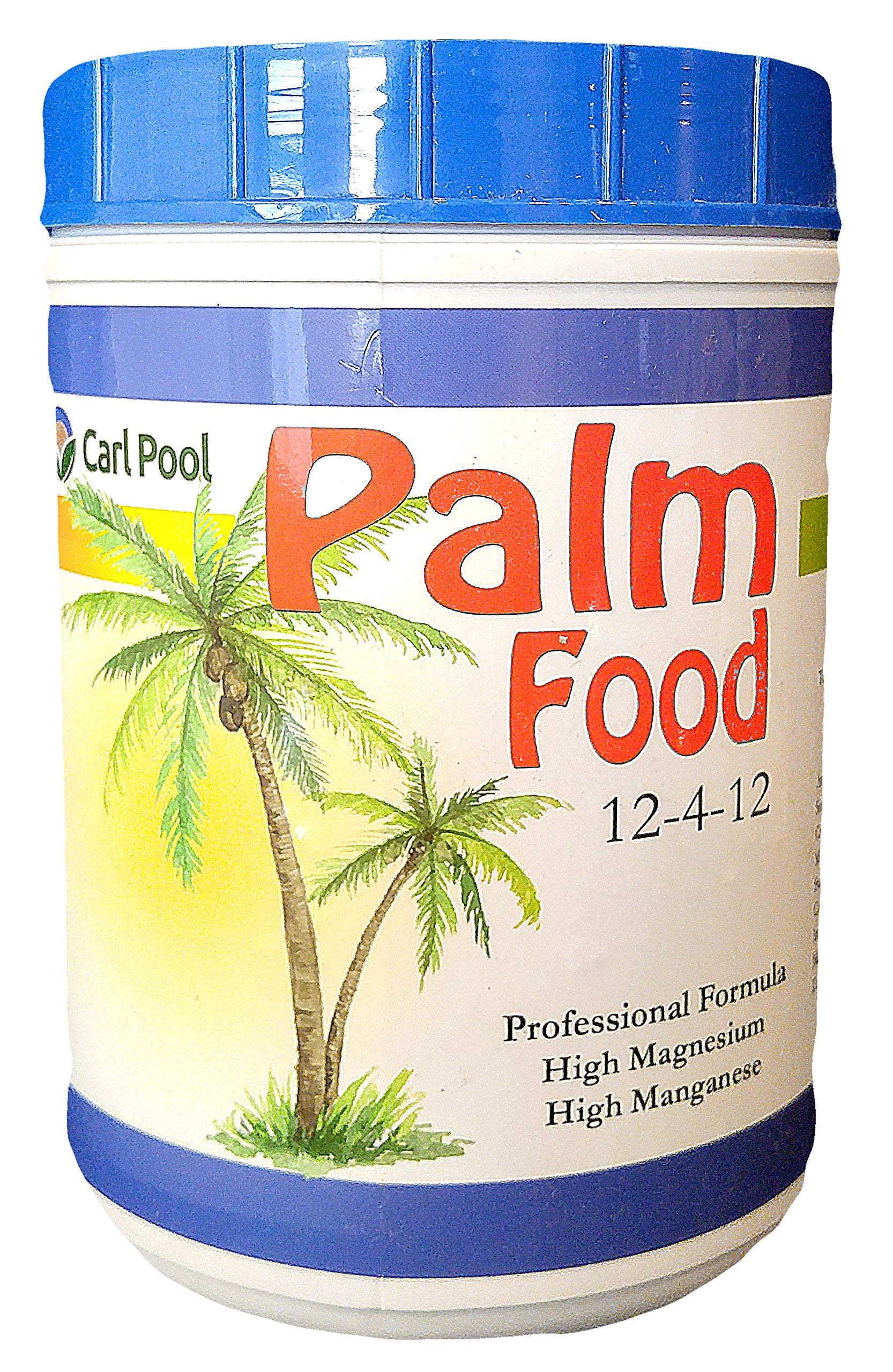
The 12-4-12 ratio in Carl Pool Palm Food is backed by the recommendation of university horticulture programs, notably Clemson University, for palm nutrition. The nitrogen comes partially from ureaform, which provides a controlled 3-4 month release window that aligns well with the areca palm’s natural growth cycle. The formula also includes the specific magnesium and manganese supplements that areca palms need to prevent interveinal chlorosis and frizzle top.
Reviewers with sago and foxtail palms describe this product as reviving yellow, droopy fronds after just one application, and many note that it outperforms general palm fertilizers when used on sandy soils where leaching is a problem. The 4-pound bag is compact, but the nitrogen density means a little goes further than an organic alternative. Professional palm growers list this as their go-to granular feed.
One consistent complaint involves packaging: the lid can arrive slightly open during shipping, causing a mess in the box. The synthetic base also means it is not suitable for organic certification programs. For anyone seeking the exact NPK profile that experts recommend for palm trees, this is the formulation to match.
What works
- University-recommended 12-4-12 ratio for palms
- Ureaform nitrogen provides slow, steady feeding
- Includes extra magnesium and manganese
What doesn’t
- Lid may loosen during transit, causing spillage
- Higher salt index requires careful watering
3. Down To Earth Palm Tree 6-2-8

Down To Earth delivers a 6-2-8 NPK formula that is optimized specifically for palms and cycads while keeping the phosphorus content low, which protects the soil’s ability to supply iron and zinc to the palm. The 5-pound box contains a blend of feather meal, fish bone meal, and basalt, providing calcium, magnesium, and trace minerals that mirror the natural nutrient profile of tropical soils. For an organic product at this size, the cost per application is among the lowest in the category.
Gardeners report that drought-stressed areca palms respond to this feed with vigorous new frond production and improved color within three weeks. The particle size is intentionally varied — some fine material for immediate availability, some chunky material for slower release — which keeps the feeding curve relatively smooth. It works well in both landscape beds and large containers.
The main drawback is odor. The fish-based ingredients produce a strong, manure-like smell that lingers for up to two weeks after application. This makes it unsuitable for use near patios, doorways, or party areas. The organic certification and excellent NPK balance for palms make it a top choice for dedicated organic growers who can tolerate the initial aroma.
What works
- Low phosphorus content prevents iron/zinc lockout
- Dual-release particle sizes feed immediately and slowly
- OMRI-listed with complete micronutrient profile
What doesn’t
- Strong fish odor persists for up to two weeks
- Not ideal for indoor or patio container use
4. Jobe’s Palm Tree Fertilizer Spikes 10-5-10

Jobe’s spikes leverage a 10-5-10 NPK ratio that is fortified with sulfur, magnesium, iron, and zinc — the exact suite of micronutrients areca palms draw from the soil. The pre-measured spikes eliminate the guesswork of scooping and spreading; you simply hammer them into the soil at the drip line. Each package contains five spikes, and the three-pack option provides 15 total spikes, enough for five small palms or three medium palms for a full season.
Reviewers consistently highlight the convenience factor: no measuring, no mixing, no dusty granules blowing away in the wind. The spikes release nutrients directly into the root zone over several weeks, reducing the risk of runoff and waste. Owners of royal palms and queen palms report seeing upright fronds and new flower pods within days of application. For gardeners with multiple palms spread across a yard, the spikes simplify the feeding routine dramatically.
The downsides are that spike placement does not distribute nutrients as evenly across the root zone as granular broadcast application, and the per-spike cost is higher than buying bulk granular fertilizer. For the gardener who values speed and cleanliness above maximum coverage area, however, the convenience trade-off is worth it.
What works
- Zero mess — no measuring, scooping, or mixing
- Contains iron, zinc, magnesium, and sulfur
- Slow-release format minimizes root burn
What doesn’t
- Higher cost per application than granular equivalents
- Uneven nutrient distribution compared to broadcast
5. Growth Technology GT Foliage Focus Liquid
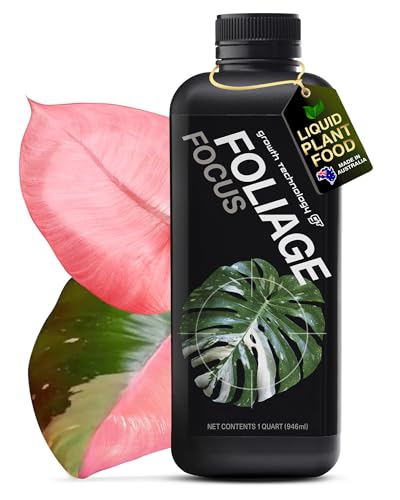
Growth Technology’s GT Foliage Focus is a precision liquid feed formulated for tropical houseplants including palms, aroids, and ferns. The nutrient profile centers on nitrate-nitrogen, potassium, calcium, and magnesium to support chlorophyll production and steady leaf color. The recommended dilution is 3–5 ml per liter for soil-grown plants, making the 946 ml bottle yield up to 190 liters of ready-to-use fertilizer — an exceptional value for indoor gardeners with multiple containers.
The formula is pH-buffered and works in potting mix, semi-hydro setups, and as a foliar spray. Indoor areca palm owners note that new fronds emerge larger and hold a deeper green after switching to this feed, and the absence of urea means there is no ammonia odor. The liquid format also allows precise control of feeding frequency — many users apply it with every watering and flush monthly with plain water to prevent salt buildup.
The primary limitation is that it is engineered for foliage growth rather than root or flower development, so it lacks the high potassium levels that in-ground specimens need for winter hardiness. For potted areca palms that never experience frost and are grown purely for their lush fronds, this liquid concentrate delivers unmatched consistency.
What works
- Exceptional value — one quart makes up to 190 liters
- pH-buffered formula prevents nutrient lockout
- Odorless and safe for indoor use
What doesn’t
- Not formulated for winter hardiness in outdoor palms
- Original bottle packaging may leak during shipping
6. Perfect Palm Dual Action 7 LB

Perfect Palm is formulated by actual palm farmers with a singular focus on mature in-ground specimens. The 7-pound pail contains XCU 64 percent control-release technology that meters out nutrients over several months, and the higher potassium levels in the blend improve the palm’s resistance to cold snaps, drought, and extreme heat. One pail feeds 14 palms with a trunk width of 2-6 inches, making it the most cost-efficient option per palm in this lineup for large landscapes.
The dual-action approach includes two forms of magnesium and two forms of iron to guarantee availability regardless of soil pH fluctuations. Gardeners who applied this after a hard freeze report that their palms reversed yellowing and pushed out green fronds within two weeks. The included measuring scoop and resealable pail make application straightforward, and the spoon-feeding philosophy behind the product prevents the heavy nitrogen surge that can cause frond elongation at the expense of root mass.
Some users find the initial investment higher than comparable granular bags, but the coverage per pail offsets that for anyone with more than five palms. For the grower who wants a set-and-forget granular feed that delivers professional-grade results through seasonal stress, this is the most complete package.
What works
- XCU control release feeds steadily through weather stress
- Dual magnesium and iron ensure uptake in variable pH
- One pail covers 14 palms — excellent per-palm value
What doesn’t
- Higher upfront cost for small collections
- Pail packaging is bulkier than bagged options
7. TPS Nutrients Palm Tree Liquid Food
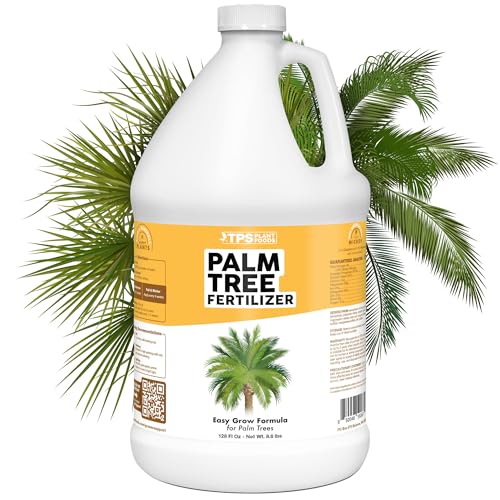
TPS Nutrients packs a full gallon of concentrated liquid fertilizer designed specifically for palms including majesty and areca varieties. The mixing ratio is simple — 2 tablespoons per gallon of water or 1 teaspoon per quart — which makes dosing straightforward even for gardeners new to liquid feeding. The product is formulated to support vibrant green fronds, robust root development, and overall structural stability in both indoor containers and outdoor landscapes.
Reviewers report visible results after just three days, with fronds that had turned crispy from spider mite damage regaining their bright green coloration. The fast uptake is ideal for palms that have gone through a stress period — transplant shock, pest infestation, or extreme temperatures — because the liquid form bypasses the slow breakdown phase that granules require. Users also note that the gallon jug provides multiple seasons of feed for a small collection of potted palms, making the per-application cost very reasonable.
The trade-off is that liquid fertilizers require more frequent application — typically every two weeks during the growing season — and they can lead to salt accumulation in containers if the grower does not flush the soil periodically. For the palm owner who wants immediate corrective feeding and does not mind a biweekly watering schedule, this gallon jug delivers rapid results.
What works
- Visible frond improvement within 72 hours
- Easy dilution ratio — no complicated measuring
- Works for both indoor and outdoor palm care
What doesn’t
- Requires biweekly application during growth season
- Salt buildup potential if soil is not flushed monthly
Hardware & Specs Guide
NPK Ratio Importance
The three numbers on a fertilizer bag represent nitrogen, phosphorus, and potassium. For areca palms, the potassium number should be equal to or greater than the nitrogen number to support frond rigidity, root strength, and stress tolerance. The phosphorus number should stay low — under 5 — because palms do not require high phosphorus and excessive amounts can inhibit iron and zinc absorption, leading to chlorosis.
Micronutrient Checklist
Beyond the NPK ratio, a true palm fertilizer should list magnesium (Mg) and manganese (Mn) on the guaranteed analysis panel. Magnesium prevents yellowing between leaf veins on older fronds, and manganese prevents new fronds from emerging stunted and frizzled. Iron (Fe) and zinc (Zn) are secondary but still important for chlorophyll synthesis and overall metabolic function in areca palms.
FAQ
How often should I fertilize areca palms indoors versus outdoors?
Why do my areca palm fronds keep turning yellow despite regular fertilizing?
Can I use general-purpose houseplant fertilizer on my areca palm?
Final Thoughts: The Verdict
For most gardeners, the fertilizer for areca palms winner is the Espoma Organic Palm-Tone because its Bio-tone formula and low salt index make it safe for regular feeding while still improving soil biology. If you want a university-recommended NPK ratio that greens up fronds rapidly, grab the Carl Pool Palm Food. And for indoor potted areca palms that need precise liquid feeding, nothing beats the Growth Technology GT Foliage Focus.