
The hum of an electric motor has replaced the roar of a gas engine for many homeowners, especially when managing an acre or more of lawn. Electric ride on mowers deliver instant torque, near-silent operation, and zero tailpipe emissions, but sorting through battery voltages, deck sizes, and charging times requires a clear head. Whether you are navigating a slope-heavy property or simply want to reclaim your weekend mornings, the right machine transforms yard work from a chore into a quiet, efficient routine.
I’m Rikta — the co-founder and writer behind Lawn Gear Lab. My approach relies on cross-referencing manufacturer specs with real-world performance reports, battery cycle data, and customer feedback to find the machines that genuinely hold up under load.
The following head-to-head evaluation will help you confidently pick from the current market, covering everything from premium zero-turn models to versatile robotic units, to land on the best electric ride on mowers for your specific yard size and terrain.
How To Choose The Best Electric Ride On Mowers
An electric ride-on mower is a long-term purchase, and the wrong choice usually comes down to underestimating battery range or terrain challenges. Focus on these four factors to narrow your options quickly.
Battery Capacity & Voltage
The total watt-hours (Wh) in the battery pack determines how many acres you can cut. A 56V 10.0Ah pack delivers around 560 Wh per battery; four of them push past 2,200 Wh total — enough for roughly two acres in good conditions. Higher voltage (60V or 82V) systems can sustain blade torque under thick grass without sagging. Always consider the charging time: a fast wall charger can replenish a pack in under two hours, while slower chargers may leave you waiting between mowing sessions.
Deck Width & Construction
Deck width directly affects mowing speed. A 42-inch stamped steel deck cuts a wide swath and is ideal for open lawns over one acre, while a 30-inch deck navigates tighter gates and smaller lots. Stamped steel decks are standard at this price point; they resist warping but may dent on rocks. Some premium models use fabricated steel for heavier brush work. Also check the deck lift mechanism — a single-lever adjustment is far more convenient than individual wheel cranks.
Slope Handling & Traction
If your property has hills, the slope rating is non-negotiable. Most electric riders can handle up to 15 degrees (roughly 27% grade). Specialized remote-controlled or tracked models climb 35 to 45 degrees. Electric mowers typically use twin brushless motors for independent wheel control, which provides better traction than a single motor with a differential. Look for adaptive traction control that automatically adjusts power to the wheel with grip.
Cutting Height Range & Modes
An adjustable cutting height between 1.5 and 4.5 inches covers cool-season and warm-season grasses. Robotic mowers often have a narrower range (1–4 inches) but cut more frequently. The deck’s 3-in-1 capability (mulching, bagging, side discharge) adds flexibility. Mulching requires a dedicated blade kit on some models, so verify what is included in the box before you buy.
Quick Comparison
On smaller screens, swipe sideways to see the full table.
| Model | Category | Best For | Key Spec | Amazon |
|---|---|---|---|---|
| EGO Power+ ZT4204L | Zero Turn Rider | Open lawns up to 2 acres | 42 in. deck, 8 MPH, 4x56V 10.0Ah | Amazon |
| Greenworks 60V 30″ Rider | Compact Rider | 1–1.25 acre properties with gates | 30 in. deck, 6 MPH, 4x60V 8.0Ah | Amazon |
| YARBO Robot Mower Pro | Robotic Mower | Large properties up to 6 acres | 20 in. deck, 300W dual motor, RTK+AI | Amazon |
| Husqvarna Automower 440iQ | Robotic Mower | Wire-free lawns up to 2 acres | 9.4 in. deck, EPOS GPS, 1–4 in. cut | Amazon |
| Mowrator S1 4WD | Remote Control | Steep, rocky, overgrown terrain | 21 in. deck, 75% slope, 18Ah battery | Amazon |
| Daredevil Vyper 9HP | Remote Control Track | 55-degree slopes, thick brush | 22 in. deck, 1200W drive, hybrid-charge | Amazon |
| Craftsman 46″ Zero Turn | Gas Zero Turn | Large lawns needing fast cut times | 46 in. deck, Kohler 22 HP, hydro | Amazon |
| Craftsman 42″ Gas Tractor | Gas Lawn Tractor | Budget-conscious buyers, 1–2 acres | 42 in. deck, 17.5 HP Briggs, 7-speed | Amazon |
| Swisher RC14544 Rough Cut | Tow-Behind Brush | Heavy brush / trail maintenance | 44 in. deck, Kawasaki 14.5 HP, tow | Amazon |
In‑Depth Reviews
1. EGO Power+ ZT4204L

The EGO ZT4204L is the benchmark electric zero-turn rider, packing four 56V 10.0Ah ARC Lithium batteries that deliver enough energy to cut two acres on a single two-hour charge. The 42-inch stamped steel deck handles mulching, bagging, and side discharge, while the brushless motors push the machine to 8 MPH — faster than most gas competitors in this class. Three driving modes (Standard, Control, Sport) let you dial in the responsiveness, which is especially useful when transitioning from open lawn to tight flowerbed borders.
Owner feedback consistently highlights the near-silent operation and the elimination of gas, oil, and belt maintenance. The seat is comfortable for longer sessions, and the LCD interface provides clear feedback on battery status and cutting height. A few users mention that the deck height indicator is hard to read while seated, and the runtime can dip below two acres if the grass is wet or thick. Adding two more batteries extends the range but increases the upfront investment significantly.
For anyone with a medium-to-large yard who wants gas-equivalent power without the fumes and noise, the EGO ZT4204L is a genuinely refined package. The two-hour recharge window fits a morning routine well, and the build quality feels a tier above the entry-level electric riders.
What works
- Zero-turn agility with 8 MPH cutting speed
- Batteries recharge in about two hours
- Three driving modes adapt to terrain and user preference
What doesn’t
- Deck height indicator is awkward to see when seated
- Extra batteries needed for properties over two acres
2. Greenworks 60V 30″ Rider
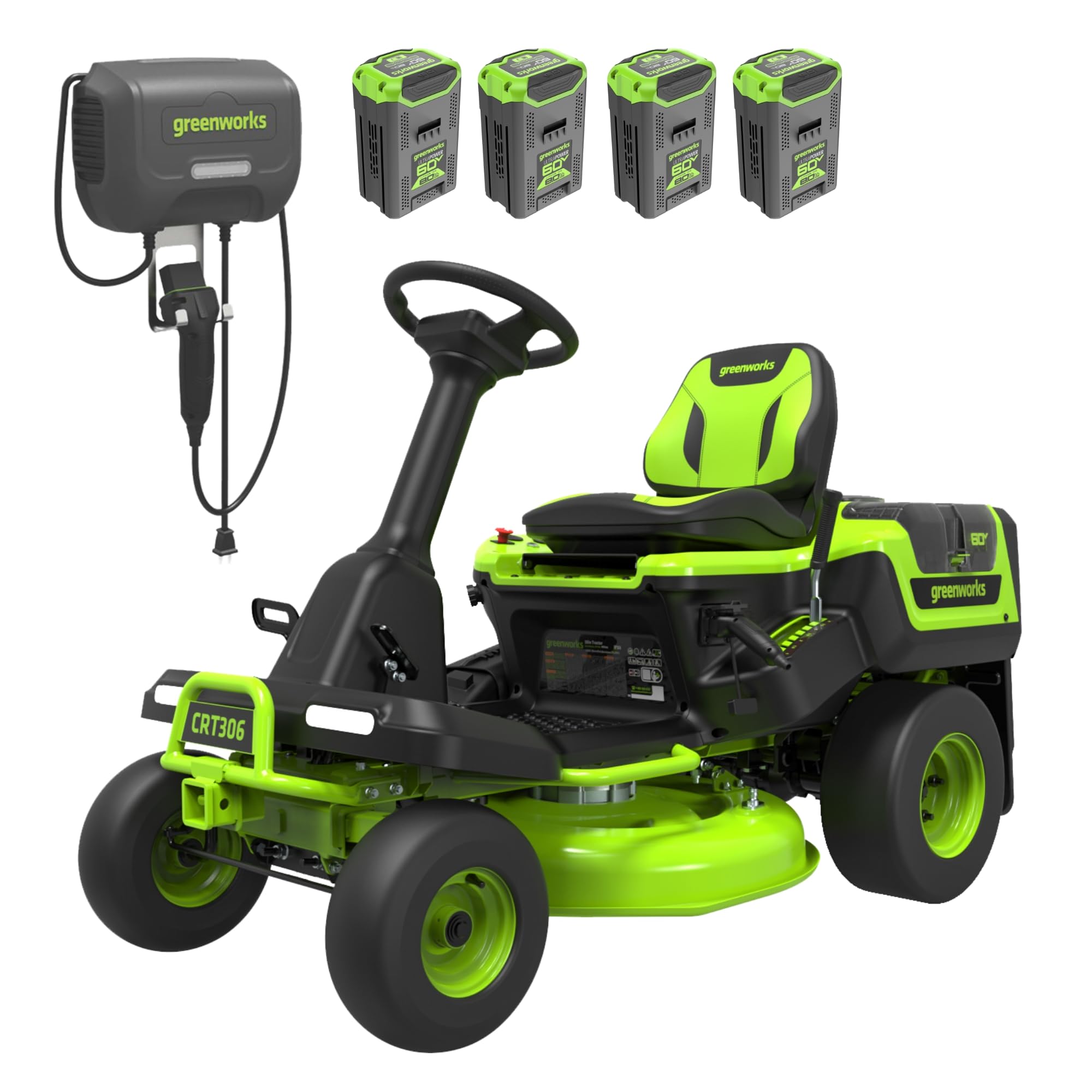
The Greenworks 60V rider is a purpose-built compact machine that fits through standard 36-inch gates while still covering ground at 6 MPH. Its 30-inch stamped steel deck uses SmartCut technology, which auto-adapts to grass density to prevent bogging. The four included 60V 8.0Ah batteries provide a combined 1,920 Wh, enough for roughly 1.25 acres under normal conditions. A rear hitch capable of towing 200 pounds adds utility for hauling trailers or spreaders.
Real-world reviews note that the side-discharge chute can detach on uneven terrain with the deck set low, and the packaging from the factory sometimes misses hardware — several owners had to supply their own bolts for the steering column. Once assembled, however, the mower runs reliably and charges quickly. The onboard USB ports are a thoughtful touch for keeping a phone charged during long sessions.
This mower makes the most sense for homeowners with roughly one acre and a fenced side yard or tight gate access. The 60V battery platform also works with Greenworks handheld tools, so existing owners will already have spare batteries.
What works
- Compact 30-inch deck fits through standard gates
- SmartCut prevents bogging in thick grass
- Tow hitch supports up to 200 lbs.
What doesn’t
- Side chute can fall off on bumpy ground at low deck height
- Some units ship missing assembly hardware
3. Husqvarna Automower 440iQ
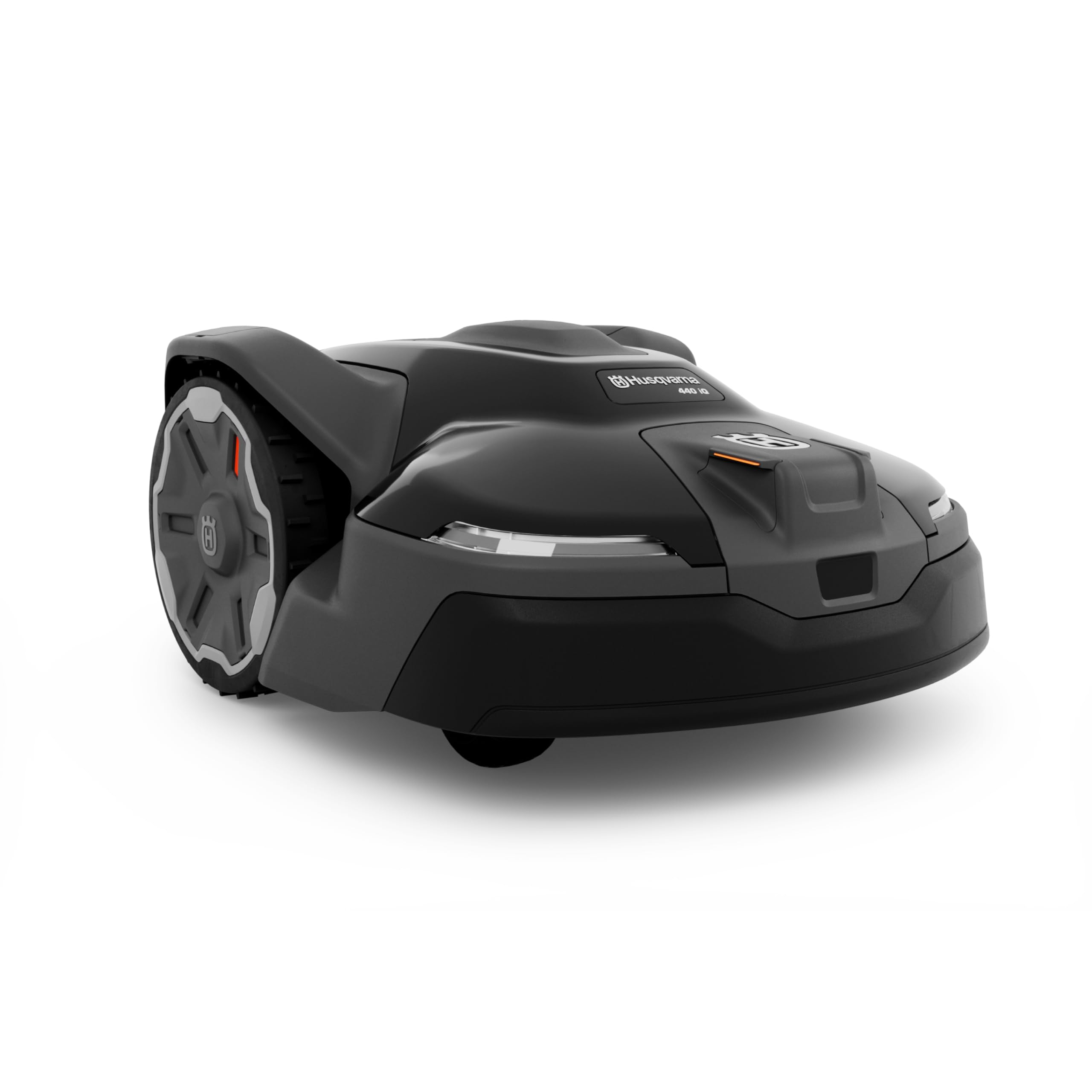
The Husqvarna 440iQ represents a significant leap in robotic mowing technology, using the Exact Positioning Operating System (EPOS) for centimeter-accurate GPS guidance without perimeter wires. The iQ series navigates slopes up to 45% and covers up to two acres automatically. The 9.4-inch cutting width is narrow by ride-on standards, but the mower runs continuously — it returns to the charging station, recharges, and resumes mowing until the entire area is groomed.
Customer feedback confirms that the setup requires careful mapping via the smartphone app and a clear view of the sky for the reference station. Some users experienced occasional fault codes and sluggish app responsiveness, but the mower itself handles grass reliably and the cut quality is excellent for a robotic unit. The adjustable cut height range of 1–4 inches accommodates various grass types. A four-year warranty adds peace of mind, though professional installation is recommended for complex properties.
For anyone willing to invest in genuine hands-off lawn care, the 440iQ delivers precisely what it promises: a wire-free mowing schedule that runs 24/7 with minimal intervention.
What works
- No perimeter wire required for navigation
- Handles slopes up to 45% grade
- Continuous operation with auto-charging cycles
What doesn’t
- Setup and mapping can be time-consuming
- Occasional fault codes require app troubleshooting
4. YARBO Robot Mower Pro
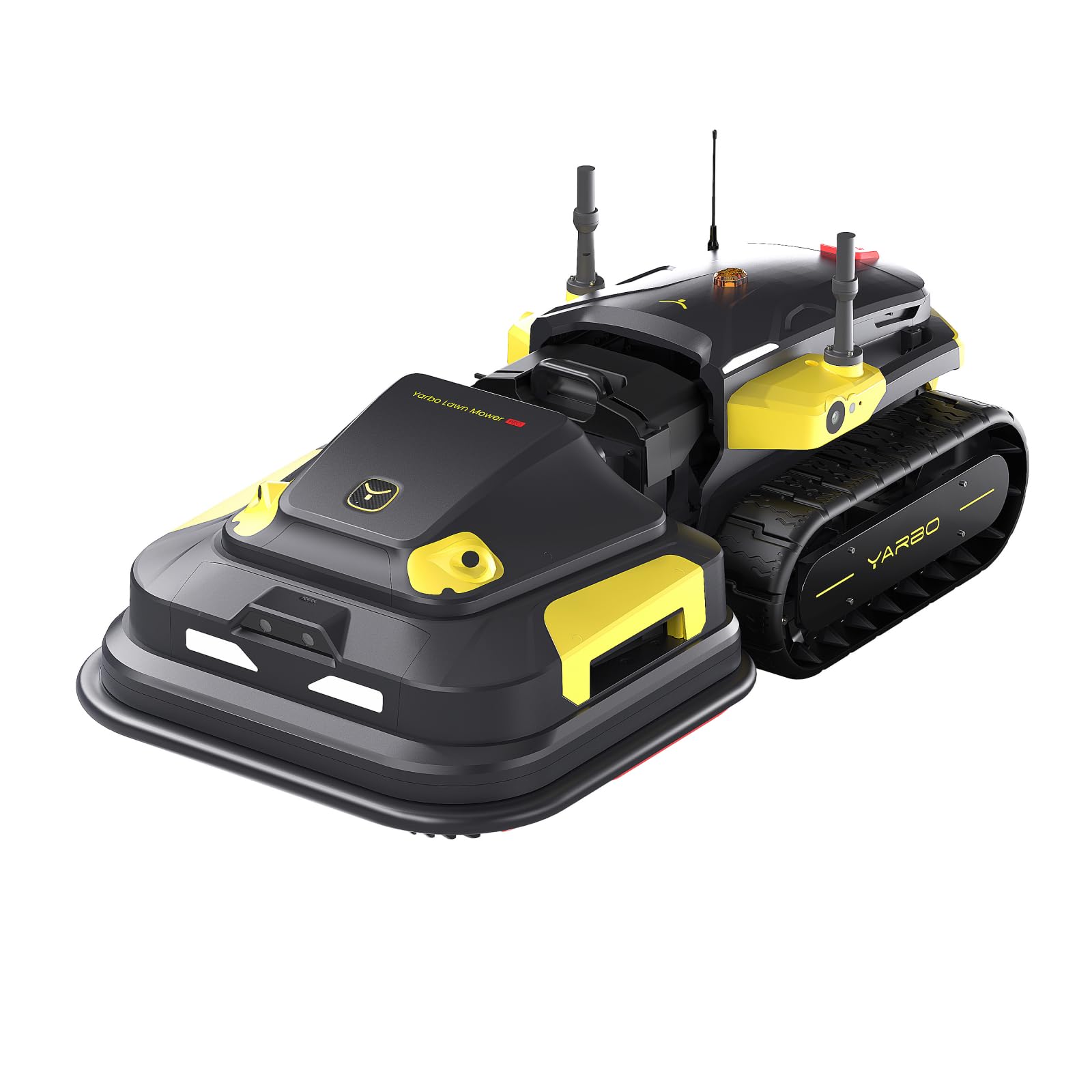
The YARBO Pro targets premium properties with large, complex acreage — up to six acres in a single deployment. Its triple-fusion navigation system (RTK-GPS, binocular vision, and multi-sensor PPVS) creates a detailed map of the yard and avoids obstacles, including suspended branches. The 300W dual-motor system drives a 20-inch cutting deck with razor or straight blades, adjustable from 0.8 to 4 inches. The multi-terrain tracks and all-steel skid shoes allow it to climb 35-degree slopes over rocks and mud.
Buyers report that setup is the biggest hurdle: the reference station needs an unobstructed 120-degree view of the sky, and the machine ships in four separate boxes totaling over 350 pounds. GPS signal loss under dense tree canopy can cause map drift, requiring manual relocation. Once the system is dialed in, owners praise the straight mowing lines and the time savings on multi-acre properties. The 120-minute battery life covers roughly half an acre per charge before returning to the docking station.
The YARBO Pro is not a beginner-friendly robotic mower. It demands a willingness to configure the network and occasionally intervene, but for large, open properties the autonomous capability is unmatched.
What works
- Handles up to six acres autonomously
- Triple-fusion navigation avoids most obstacles
- Multi-terrain tracks climb 35-degree slopes
What doesn’t
- Complex setup requiring rooftop reference station
- GPS signal loss possible under dense tree cover
5. Mowrator S1 4WD
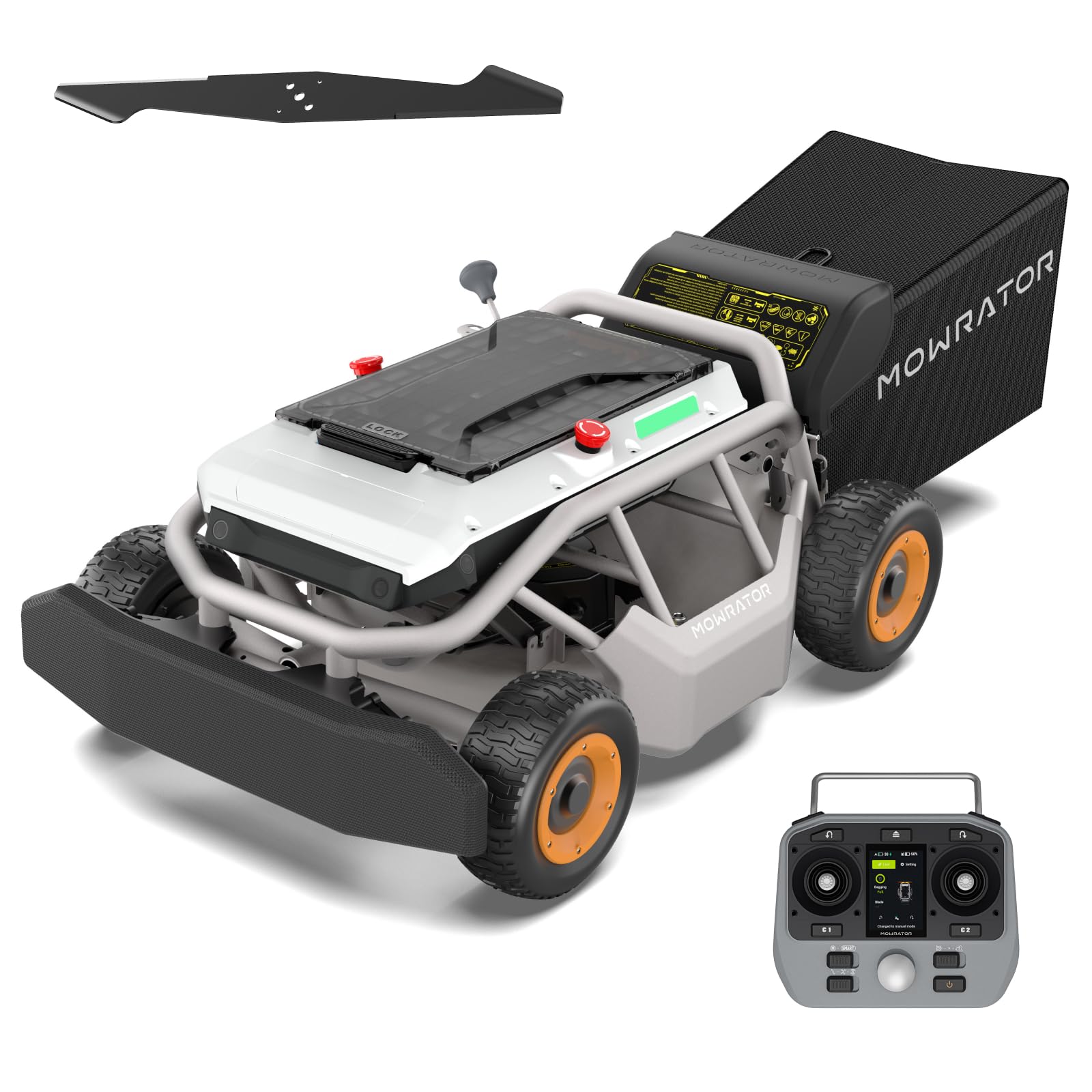
The Mowrator S1 is a remote-controlled 4WD mower engineered for the steepest terrain — it is rated to climb 75 percent (37 degrees) and proven in customer reviews on rocky, overgrown hillsides. The 21-inch cutting deck uses a standard blade, with optional mulching and snow plow attachments for year-round use. The 18Ah battery provides roughly 2.25 hours of runtime, and the low-latency remote control operates from up to 200 meters away.
Owners with properties full of invasive weeds and 6-foot grass report that the S1 cuts ten times faster than a string trimmer, and the 4WD system climbs like a mountain goat. A few units experienced mechanical breakage, but the company’s warranty support provided prompt replacements. The vertical storage design saves garage space, and the machine is relatively light at 147 pounds for its capability. The 2.25-hour battery life covers roughly an acre of dense cutting per charge.
If your property includes slopes that a standard ride-on cannot safely navigate, the Mowrator S1 is purpose-built for exactly that scenario. It is expensive, but so is hiring a contractor to manually trim steep banks.
What works
- Climbs slopes up to 75% grade
- Remote control keeps operator off dangerous terrain
- Interchangeable blades and attachments for four seasons
What doesn’t
- Can tear turf when turning sharply on flat ground
- Occasional error codes with firmware updates in progress
6. Daredevil Vyper 9HP
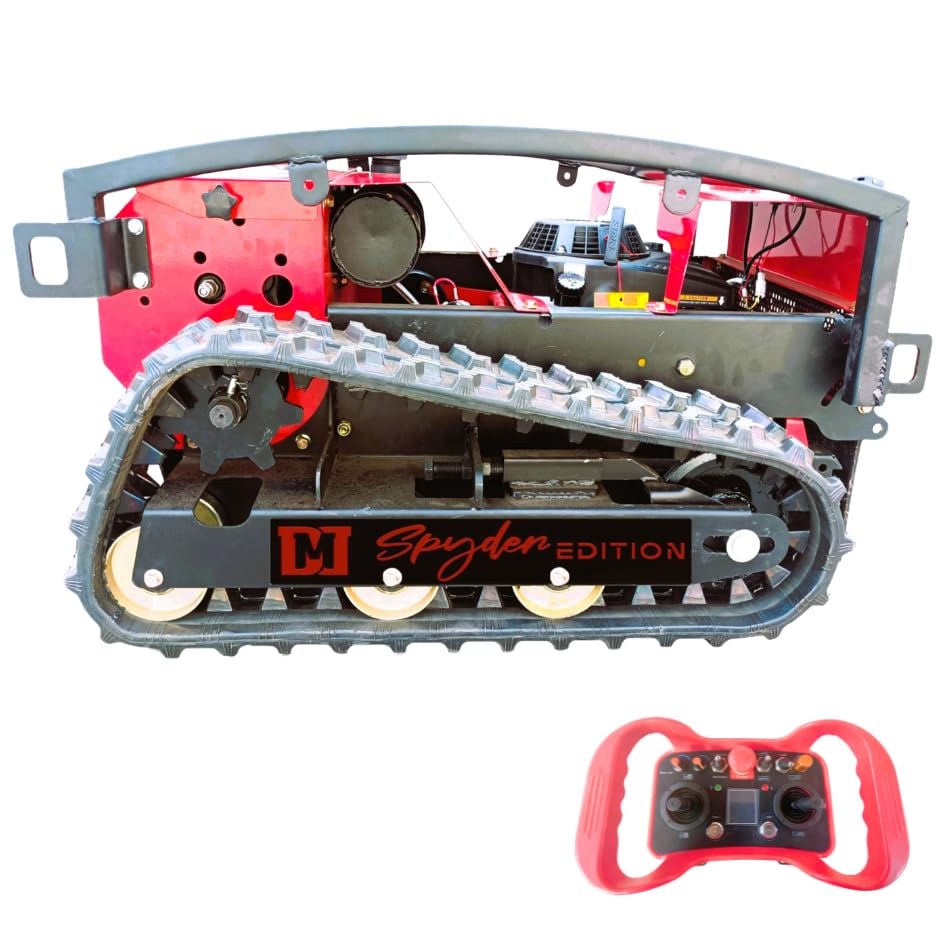
The Daredevil Vyper combines a gas-powered 224cc engine with a 1200W brushless drive motor and a hybrid self-charging alternator, creating a tracked mower that can handle 55-degree slopes. Its 22-inch cutting deck and rubber tracks allow it to traverse soft soil, uneven ground, and thick brush without losing traction. The remote start/stop and automatic tilt shutoff add safety layers for steep work.
Real-world users report that the Vyper cuts thick poison oak and overgrown ditches effectively, though the remote control has many unused buttons and a fragile housing. Customer support responsiveness varies — some owners received fast help, while others described long wait times. The hybrid charging system (the alternator recharges the battery while the engine runs) extends the effective work window, but the machine is heavier and louder than a purely electric remote mower due to the gas engine.
This unit is best suited for properties where extreme slopes are the norm and a pure-electric mower lacks the runtime or torque. The tracked design is a genuine advantage on loose soil and wet grass.
What works
- Rubber tracks climb 55-degree slopes without slipping
- Hybrid alternator extends usable runtime
- Automatic tilt shutoff enhances safety on steep hills
What doesn’t
- Remote controller feels fragile and has non-functional buttons
- Customer support can be difficult to reach
7. Craftsman 46″ Zero Turn (Gas)

While not electric, the Craftsman 46″ Zero Turn is included as a premium gas benchmark. Its 22 HP Kohler 7000 twin-cylinder engine and dual hydrostatic transmission deliver rapid cut times on up to two acres. The 46-inch stamped steel deck offers three cutting modes and a wide 1.5–4 inch height range. Turf Master tires improve traction on damp grass, and the high-back seat with adjustable lap bars keeps the operator comfortable during long sessions.
Customer feedback is mixed: many owners praise the mower’s speed and cut quality on nearly two acres, but several reported units that did not start after assembly or developed front-wheel squeaks. The blade design is proprietary, making replacements harder to source and more expensive than standard blades.
For buyers not committed to electric, this zero-turn offers strong value per dollar for speed and cut quality on larger lawns, but reliability concerns warrant a thorough pre-delivery inspection.
What works
- Wide 46-inch deck covers ground quickly
- Kohler engine starts reliably in hot or cold weather
- Comfortable high-back seat with adjustable lap bars
What doesn’t
- Some units arrived with mechanical issues out of the crate
- Proprietary blades are expensive and hard to find
8. Craftsman 42″ Gas Tractor
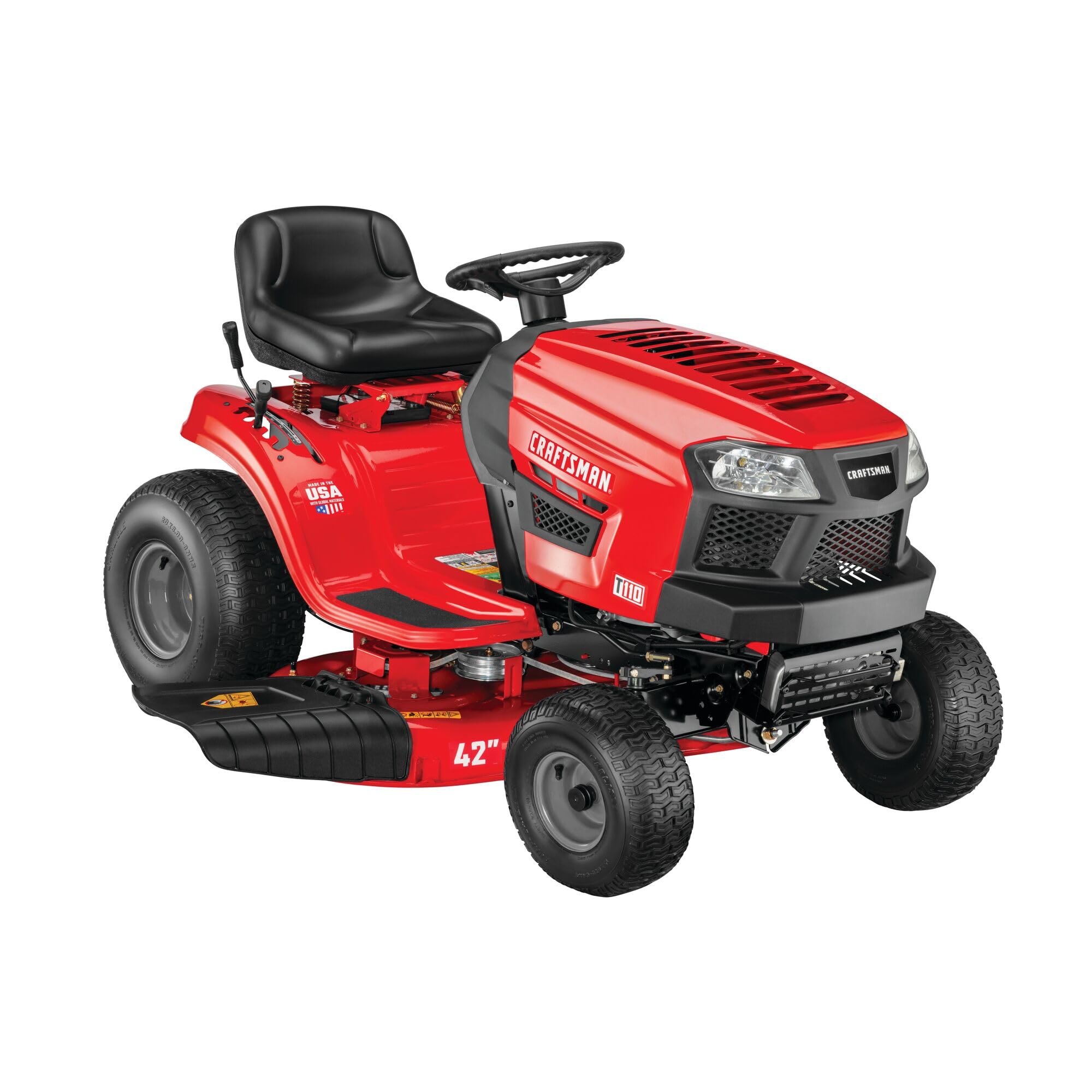
The Craftsman 42-inch lawn tractor is the entry-level gas option, pairing a 17.5 HP Briggs & Stratton engine with a 7-speed manual transmission. The stamped steel deck cuts up to two acres and accepts an optional mulching kit. The 18-inch turning radius and 15×6 front / 20×8 rear tires make it reasonably maneuverable for a tractor-style chassis.
Owners generally find it easy to assemble and operate, with one user noting the legroom feels tight for someone 6’2”. A small number of buyers reported transmission failure after the second use, suggesting quality control is inconsistent. The contoured low-back seat lacks the support of higher-end models, but the mower delivers solid cutting performance for properties around one acre.
This tractor is a pragmatic choice for budget-conscious buyers who need a capable mower for one to two acres. It is not electric, but its simplicity and wide parts availability keep it a common entry point for the category.
What works
- Affordable entry point for one- to two-acre lawns
- Easy assembly and straightforward operation
- 18-inch turning radius helps navigate obstacles
What doesn’t
- Some units failed mechanically within first few uses
- Tight legroom for taller operators
9. Swisher RC14544CPKA

The Swisher RC14544 is a tow-behind rough-cut mower powered by a 14.5 HP Kawasaki V-Twin engine, designed to attach to an ATV or utility vehicle via a 2-inch ball coupler. Its 44-inch cutting width handles heavy brush, saplings up to 2 inches in diameter, and overgrown pasture. The cutting height adjusts from 3 to 7 inches, and the articulating hitch allows infinite offset adjustments for mowing along fence lines.
Buyers with large acreage report that it chews through thick brush that would bog a standard lawn tractor. However, many owners note that it is not for finish mowing — the cut is rough, and the machine throws debris to the right. Tire quality drew criticism, with reports of flats during the first mow. The battery is not included, and the separate power requirements for the remote engage function can be confusing.
For property owners with acres of rough field or trail edges, the Swisher delivers brutal cutting power in a tow-behind format. It is not a primary lawn mower, but it is one of the most effective tools for reclaiming overgrown land.
What works
- Cuts brush and saplings up to 2 inches thick
- Wide 44-inch deck covers rough ground fast
- Articulating hitch offers flexible towing offset
What doesn’t
- Not suitable for finish-cut lawns
- Tire quality is inconsistent and prone to flats
Hardware & Specs Guide
Deck Construction & Width
Deck width determines how many passes you need to cover your lawn. A 42–46 inch deck suits properties over one acre, while a 30–36 inch deck fits tighter access points. Stamped steel is standard and durable enough for residential use; fabricated steel decks are heavier and better for commercial or rough-cut applications. Always confirm whether the deck includes anti-scalp wheels — these prevent the blades from digging into the turf on uneven terrain.
Battery System & Voltage
Electric riders typically use 56V, 60V, or 80V battery packs. Higher voltage systems can maintain blade speed under load without drawing excessive current. Total watt-hours (Wh) is the real metric: multiply the voltage by the amp-hour rating of each battery. A 56V 10.0Ah pack equals 560 Wh. Four such packs give 2,240 Wh — enough for roughly two acres. Charger output matters too; a high-amperage wall charger cuts recharge time in half compared to a standard unit.
Brushless Drive Motors
Brushless motors are standard on modern electric riders because they eliminate brushes that wear out, run cooler, and convert more electrical energy into torque. Twin independent brushless motors provide true zero-turn steering — each rear wheel is powered separately, allowing the mower to spin in place. This design also enables dynamic traction control, which adjusts power to each wheel to prevent sliding on slopes.
Cutting Height Adjustment
A single-lever cutting height adjustment is the gold standard — it moves all four deck corners simultaneously. Look for an adjustment range between 1.5 and 4.5 inches to handle different grass types and seasonal conditions. The number of positions varies from 4 to 10; more positions give finer control. Some robotic mowers offer app-based height adjustment, which is convenient but adds complexity.
FAQ
How many acres can an electric ride-on mower cut on one charge?
Can an electric ride-on mower handle hills?
Are electric ride-on mowers as powerful as gas models?
How long does it take to charge an electric ride-on mower?
Final Thoughts: The Verdict
For most gardeners, the electric ride on mowers winner is the EGO Power+ ZT4204L because it combines the speed of a zero-turn chassis with proven battery range and four-season versatility. If you want a compact machine that fits tight gates, grab the Greenworks 60V 30″ Rider. And for steep, overgrown properties where walking is unsafe, nothing beats the Mowrator S1 4WD.