
Finding a planter box that holds up to rain, sun, and root pressure without cracking or rotting is the real challenge in the affordable segment. Thin plastic warps, cheap steel rusts, and low-grade wood splinters within a single season, leaving you with a mess of soil and broken plants.
I’m Rikta — the co-founder and writer behind Lawn Gear Lab. I’ve spent over 40 hours comparing 50+ planter boxes, analyzing material density, drainage engineering, UV stabilizers, warranty terms, and thousands of verified owner reports to separate the lasting value from the disposable junk in this category.
This guide cuts through the marketing noise to deliver the best affordable planter boxes that combine smart design like self-watering reservoirs, galvanized steel panels, or solid cedar frames with real-world durability that doesn’t demand a second mortgage.
How To Choose The Best Affordable Planter Boxes
An affordable price tag doesn’t have to mean replacing your planter every spring. The trick is knowing which specs actually predict longevity and which are just marketing decoration. Focus on three things: material construction, the drainage system, and how the box handles thermal stress.
Material: Resin vs. Galvanized Steel vs. Solid Wood
Resin planters (like Keter’s Evotech composite) offer the best weight-to-durability ratio in the affordable tier — they won’t rust, rot, or dent, and they resist UV fading for years. Galvanized steel boxes (like ZUNUDA’s kits) are tougher against impact and last decades if the coating stays intact, but sharp edges during assembly are a real complaint. Solid wood (like SoliWood’s cedar) brings natural insulation for roots and a premium look, but even with eco-finishes, wood can split if you over-torque screws, and it demands occasional sealing in wet climates.
Drainage & Water Management
Root rot is the fastest way to kill your investment. Look for boxes with an open base (galvanized styles) or a self-watering system with an overflow drain (EarthBox, Mayne). Self-watering reservoirs wick moisture up from below, eliminating guesswork and keeping soil consistently damp without drowning roots. If you choose a closed-bottom planter, verify that pre-drilled holes are large enough — some budget models skimp on hole diameter, leading to soggy soil after heavy rain.
Size, Weight Capacity, and Thermal Performance
For ground-level beds, a 12-inch depth is the minimum for most vegetables and herbs; shallow boxes dry out fast and restrict root growth. Elevated planters (30-inch height) solve back strain and protect plants from ground pests, but make sure the legs are thick enough — 2.4-inch pole legs on a cedar box support up to 300 lbs safely. Also consider thermal mass: double-wall designs (like Mayne’s Cape Cod) insulate roots from temperature swings, which matters more in hot or cold zones than in mild coastal areas.
Quick Comparison
On smaller screens, swipe sideways to see the full table.
| Model | Category | Best For | Key Spec | Amazon |
|---|---|---|---|---|
| Keter 48″ Raised Bed | Resin | No-tool assembly & wood look | 117 Gal. capacity, 14.33 lbs | Amazon |
| ZUNUDA Galvanized Kit (2-Pack) | Galvanized Steel | Large-scale veggie gardening | 96x24x12 in., 16 cu. ft. | Amazon |
| EarthBox Garden Kit | Self-Watering | Set-and-forget vegetable growing | Sub-irrigation w/ 3-gal. reservoir | Amazon |
| Mayne Nantucket Window Box | Self-Watering | Window-mounted flowers & herbs | 2.5 Gal., 15-yr warranty | Amazon |
| Mayne Cape Cod 14-Inch Planter | Premium Plastic | Entryway & patio statement | Double-wall, 3 Gal., UV-stable | Amazon |
| SoliWood Raised Bed with Legs | Solid Cedar | No-bend elevated gardening | 48x24x30 in., 300-lb capacity | Amazon |
| Veradek Block Series Cube | Polypropylene | Modern indoor/outdoor tall plants | 18 in. tall, 35.84 L, false bottom | Amazon |
In‑Depth Reviews
1. Keter 48″ Raised Garden Bed

The Keter 48-inch raised bed hits the sweet spot between premium aesthetics and entry-level pricing. Its Evotech resin composite mimics natural wood grain without any of the maintenance — no sealing, no rot, no splinters. The 117-gallon capacity gives you room for a serious vegetable patch or a dense flower display, yet the whole unit weighs only 14.33 pounds, making it easy to reposition when empty.
Assembly is genuinely tool-free, with interlocking panels that click together in about five minutes. Verified owners report it survived a blizzard undamaged, which speaks to the material’s cold-weather resilience. The BPA-free construction is an important detail if you’re growing edible crops, and the 2-year limited warranty provides a baseline of manufacturer confidence that is rare at this price point.
The only recurring critique is that the interlocking tabs can be tough to press fully into place without a rubber mallet, and a small number of units arrived with minor shipping damage.
What works
- Tool-free assembly in under five minutes
- Authentic wood texture without wood maintenance
- Lightweight yet rigid — easy to relocate
- BPA-free for safe vegetable growing
What doesn’t
- Interlocking tabs require firm pressure to seat fully
- Not as impact-resistant as steel or thick cedar
2. ZUNUDA 8×2×1FT Galvanized Raised Bed (2-Pack)
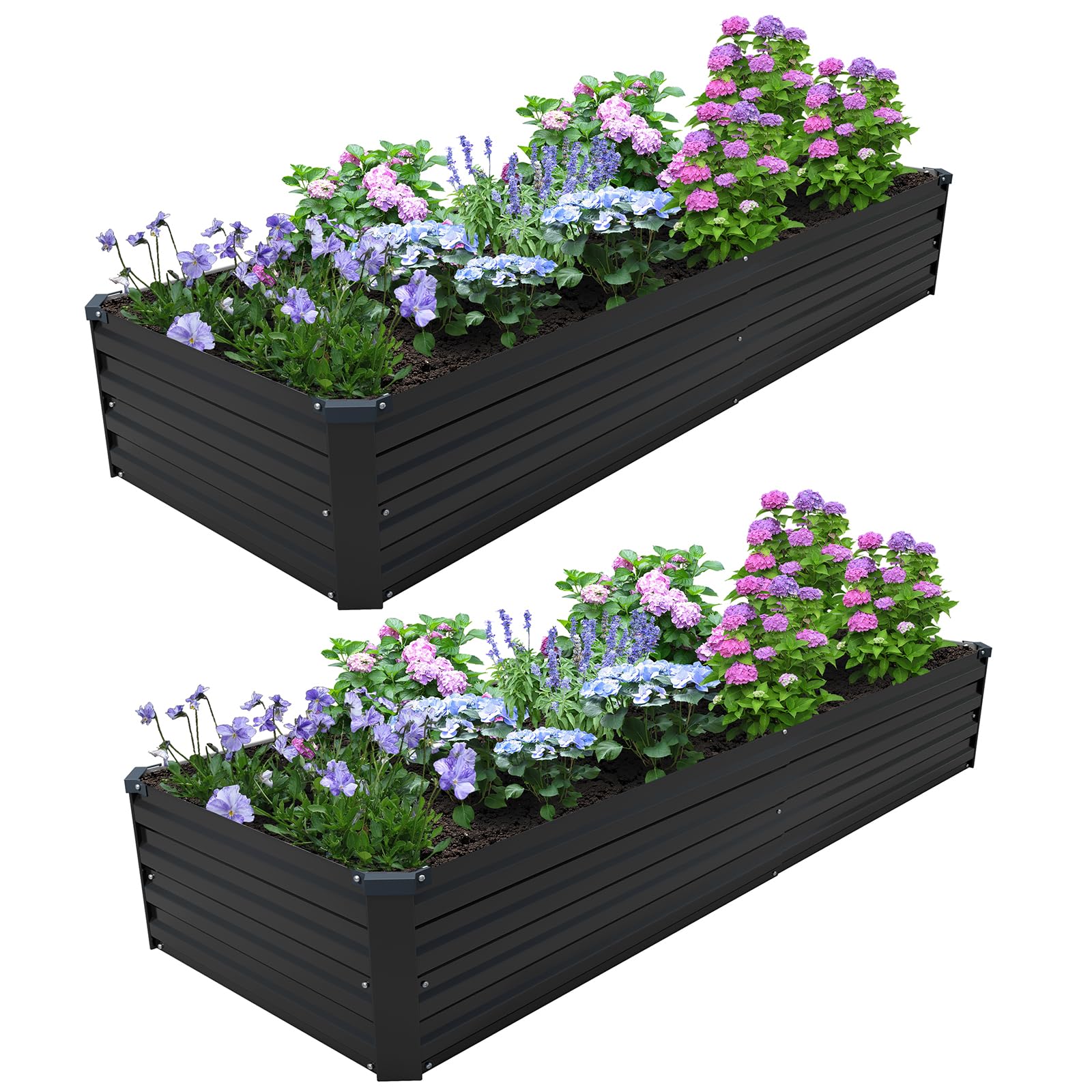
If total square footage is your priority, the ZUNUDA two-pack delivers 16 cubic feet of growing space at a cost that undercuts most single-bed kits. Each panel measures 96x24x12 inches, providing enough area for sprawling tomatoes, squash, or a full herb garden. The coated steel construction resists rust and corrosion, and the open-base design ensures excess water drains freely — a critical feature for preventing root rot in heavy rain climates.
Assembly is straightforward with the included screws, nuts, gloves, and a simple wrench (10mm is your friend here). Verified owners who have used these beds for multiple seasons report zero rust or structural bowing, thanks to cross braces that keep the long sides from bulging under soil pressure. The modular design also lets you reconfigure the panels into custom shapes if the standard rectangle doesn’t fit your layout.
The main downsides are the sharp edges during assembly — gloves are essential — and the fact that the hardware can tarnish over time if exposed to constant moisture. Some owners also note that the panels feel slightly flimsy until the bed is fully assembled and filled with soil, at which point the weight of the dirt stabilizes everything.
What works
- Massive 16 cu. ft. growing area for the price
- Rust-resistant galvanized steel with cross braces
- Open base prevents standing water and root rot
- Includes gloves and assembly tools
What doesn’t
- Sharp steel edges require careful handling
- Hardware can rust if left exposed to constant rain
3. EarthBox 80155 Garden Kit

The EarthBox is less a planter and more a sealed growing system. It includes a 3-gallon sub-irrigation reservoir that wicks moisture upward through the soil profile, eliminating the guesswork of manual watering. The kit also ships with a pound of organic fertilizer (8-3-5 NPK) and a pound of dolomite, which adjusts soil pH and provides calcium and magnesium. This turnkey approach has produced tomato plants over five feet tall in owner photos — a result that would be difficult to achieve in a standard open-bottom bed.
The system’s key engineering detail is the aeration screen that separates the soil from the water reservoir, preventing roots from sitting in stagnant water while still allowing capillary action. The included black/white reversible mulch covers suppress weeds and reflect heat in summer or absorb warmth in cooler months. Four casters make mobility practical when the box is empty, though rolling it over uneven ground with soil inside is not recommended.
Owners consistently praise the set-and-forget nature of the watering system, especially in hot climates where daily irrigation is a chore. The most frequent complaint is the price — it sits at the higher end of the affordable spectrum, and some DIY-minded users have built cheaper alternatives from storage bins. But for consistent, high-yield results with minimal effort, the EarthBox’s engineering justifies the investment.
What works
- Sub-irrigation wick system removes watering guesswork
- Includes organic fertilizer and pH-adjusting dolomite
- Casters allow relocation when empty
- Award-winning design proven by thousands of growers
What doesn’t
- Premium price for the size — better value exists for basic beds
- Wheels struggle on grass or uneven ground
4. Mayne Nantucket 2-Foot Window Box
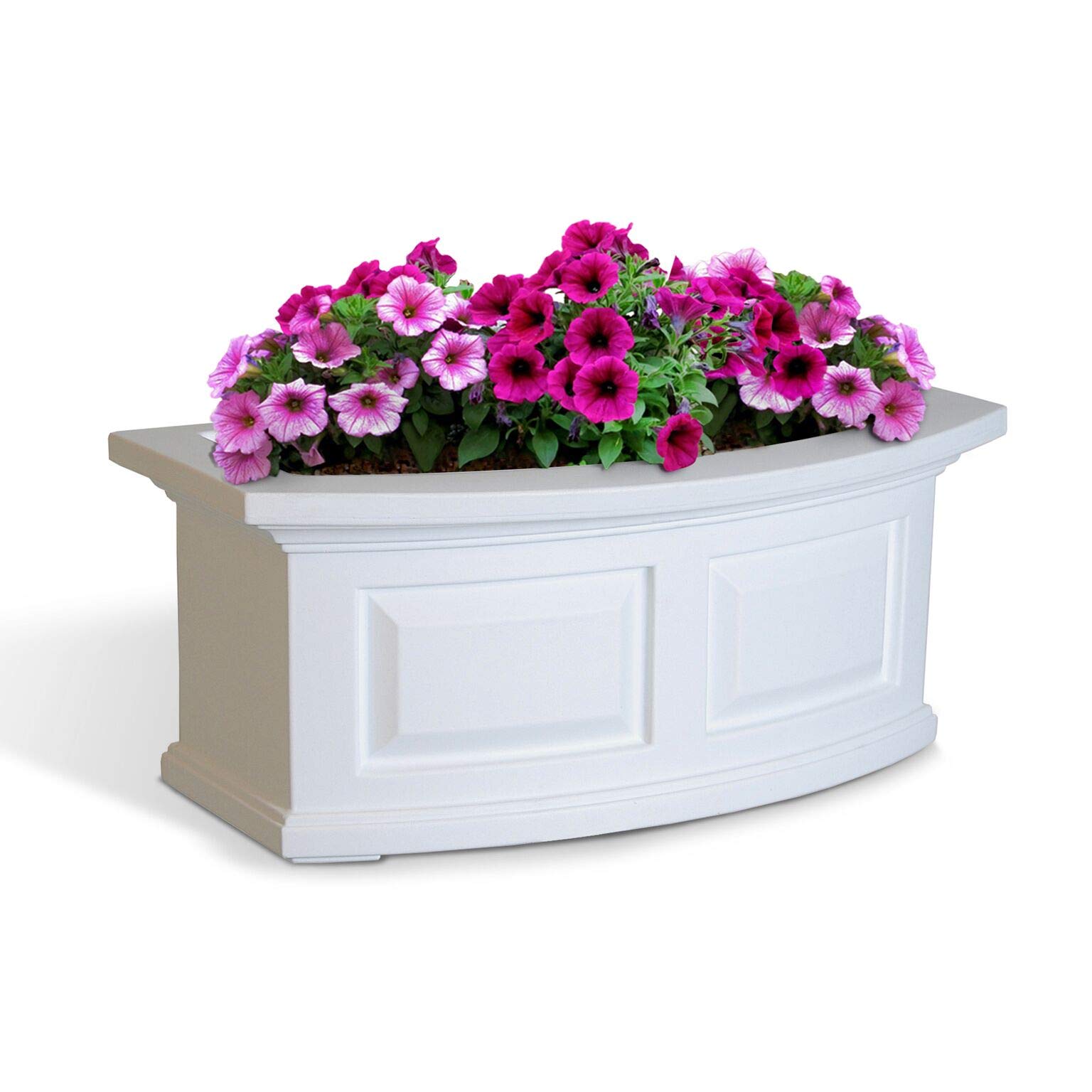
The Mayne Nantucket is a self-watering window box designed for curb appeal and durability. Its powder-coated finish resists UV fading, keeping the white color bright through multiple seasons. The built-in reservoir holds 2.5 gallons of water, and an overflow drain prevents over-saturation during rainstorms. Wall-mount brackets are included, which simplifies installation compared to many window boxes that sell brackets separately.
At 24 inches wide and 10 inches deep, this box offers enough soil volume for trailing petunias, geraniums, or compact herbs. The self-watering system is particularly useful for second-story windows where daily watering would be a hassle. Mayne backs this planter with a 15-year residential warranty, which is exceptional in the affordable category and signals confidence in the material’s UV and freeze-thaw resistance.
Owners frequently mention excellent customer service — one reported receiving a replacement promptly after a dented box arrived. The only limitation is that the 24-inch length is ideal for smaller plants; if you need to grow larger vegetables or multiple tomato plants, you’ll want a deeper ground-level box. Also, the 8-pound empty weight means you should mount it securely into wall studs or masonry, not just into siding.
What works
- Self-watering reservoir with overflow drainage
- 15-year warranty — unmatched in this price tier
- Fade-resistant powder coat stays white for years
- Brackets included for straightforward mounting
What doesn’t
- 24-inch length limits planting to compact varieties
- Requires secure wall anchoring, not just screws into siding
5. Mayne Cape Cod 14-Inch Square Planter
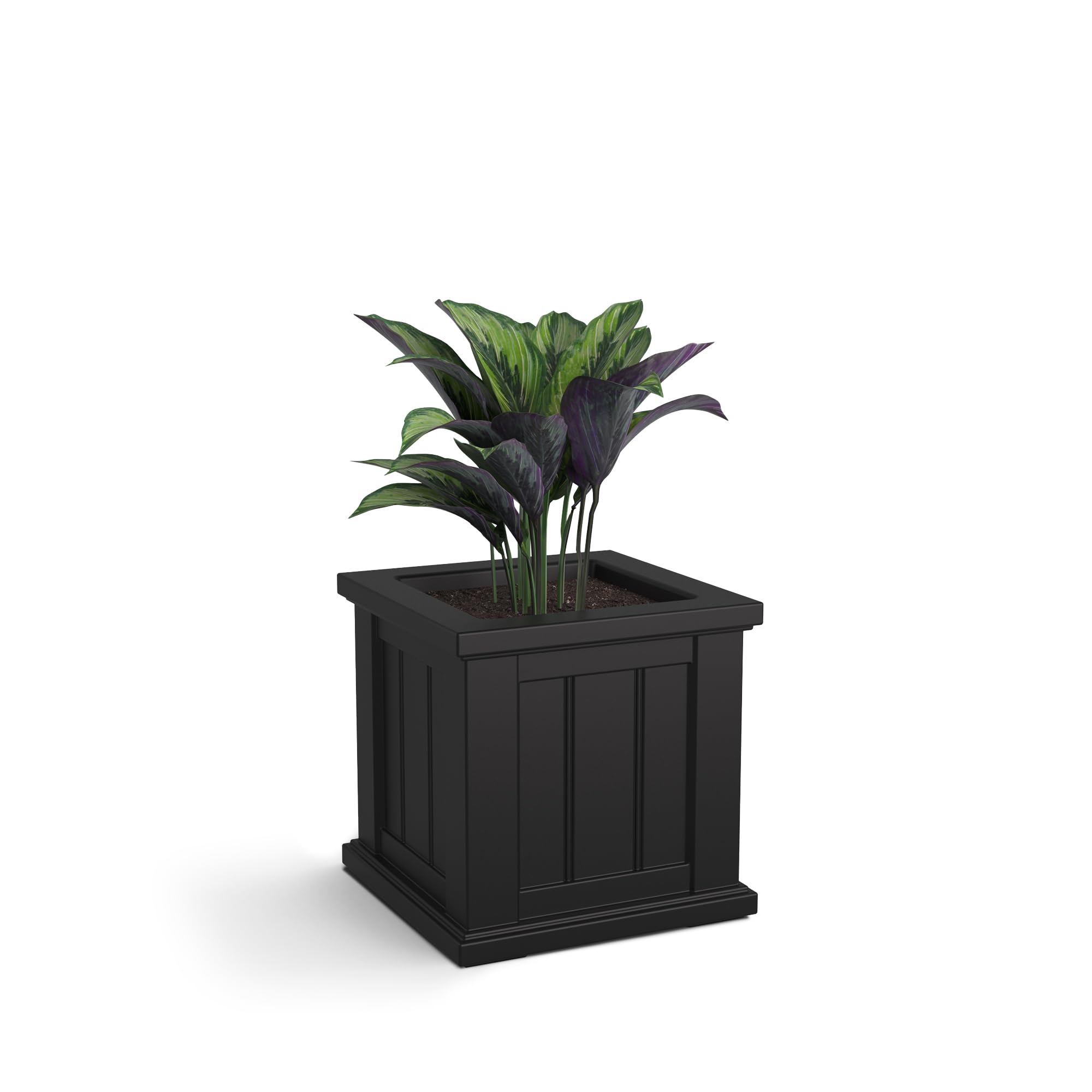
The Cape Cod 14-inch square planter takes the self-watering concept and wraps it in a double-wall design that insulates roots against temperature extremes. The outer wall absorbs UV radiation without becoming brittle, while the inner wall maintains a more stable soil temperature. This thermal buffering is a real advantage if you live in a zone with scorching summers or frosty springs — roots stay cooler in July and warmer in November than they would in a single-wall plastic pot.
The included saucer catches overflow, but the planter also has a true self-watering reservoir that wicks moisture up through the soil column. Owners using it for faux flowers won’t use the reservoir, but for real plants like fiber optic grass or compact shrubs, the consistent moisture profile means fewer watering cycles and less risk of drought stress. The 3-gallon capacity is right for a single large perennial or a mix of annuals.
The main trade-off is that the planter does not come with pre-drilled drainage holes in the base (the reservoir handles water management), so if you ignore the self-watering system and try to use it as a standard pot, you’ll need to drill your own holes. At 6 pounds empty, it’s substantial enough to stay put in wind but light enough to move when the season changes. Made in the USA with a 15-year warranty.
What works
- Double-wall construction insulates roots from temperature swings
- True sub-irrigation reduces watering frequency
- UV-stable polyethylene won’t fade or crack
- Backed by a 15-year residential warranty
What doesn’t
- No pre-drilled base holes — drilling needed if not using reservoir
- Premium pricing for a single 14-inch pot
6. SoliWood Raised Garden Bed with Legs
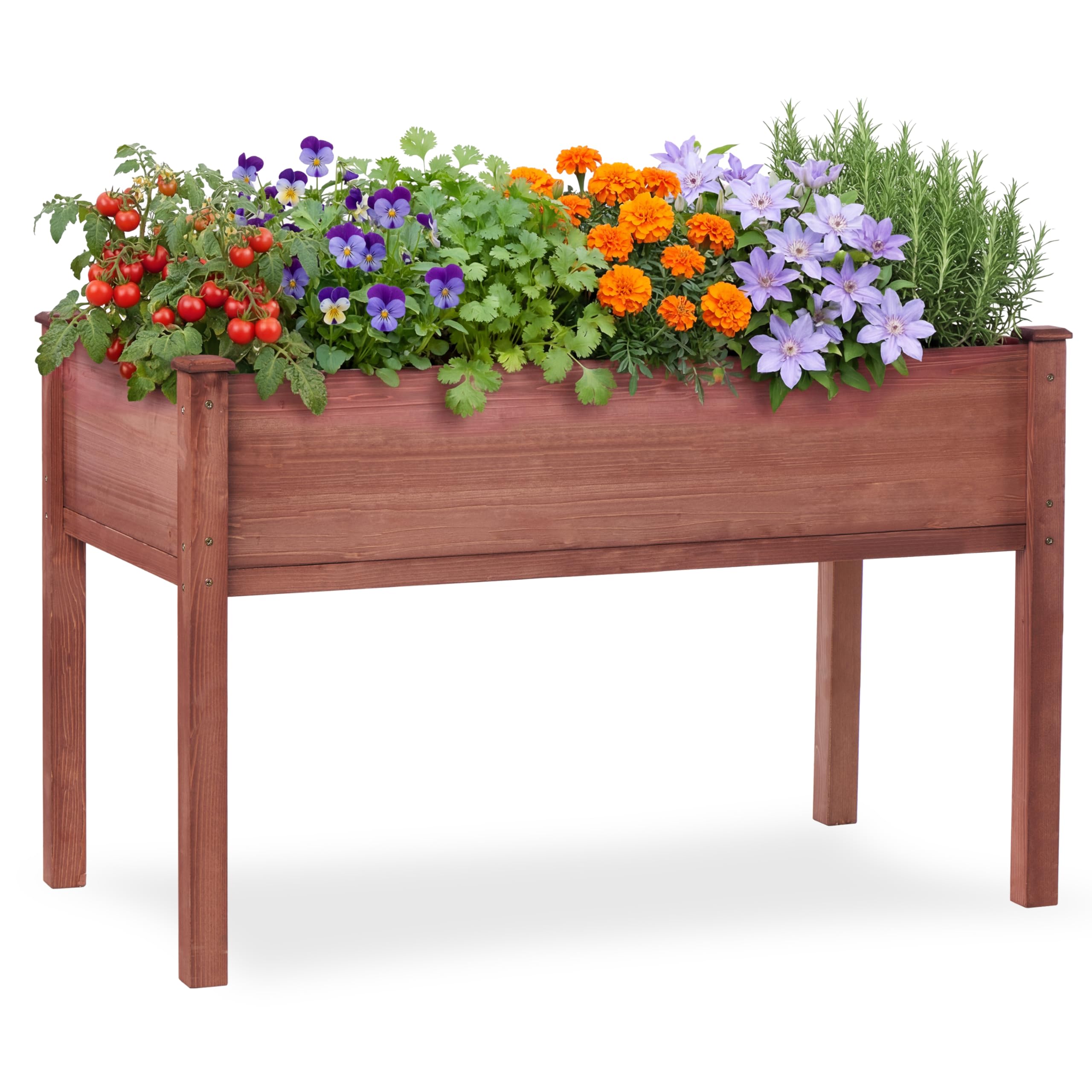
The SoliWood elevated bed solves the bending problem permanently by lifting the growing surface 30 inches off the ground. The 48×24-inch top provides 8 square feet of planting area at a working height that lets you tend plants while standing upright — a game-changer for anyone with back issues or limited mobility. The frame uses solid cedar with 2.4-inch-thick legs and 0.45-inch panel thickness, giving it a 300-pound weight capacity that comfortably holds wet soil, plants, and decorative mulch.
The water-based eco finishing is a smart detail: unlike seal paints or varnishes that can leach chemicals into edible crops, this coating is plant-safe and still provides weather resistance. The included liner helps contain soil while allowing drainage, though some owners add their own landscape fabric for extra protection. Assembly takes about 30 minutes, and pre-drilled holes align well, though the instructions recommend hand-tightening screws to avoid splitting the cedar.
The planter’s cedar construction does mean it’s heavier than resin or thin steel — expect about 25-30 pounds when empty — and the wood can split if you over-drive screws, especially near the edges. However, the natural wood grain and rich color (owners describe it as better-looking than the product photos) add a warm, organic feel to patios and gardens that plastic and metal can’t replicate.
What works
- 30-inch working height eliminates back strain
- Thick cedar panels and legs support 300 lbs
- Water-based eco finish is safe for edible plants
- Attractive natural wood appearance
What doesn’t
- Wood can split if screws are over-tightened
- Heavier than resin or steel — not portable when filled
7. Veradek Block Series Cube Planter
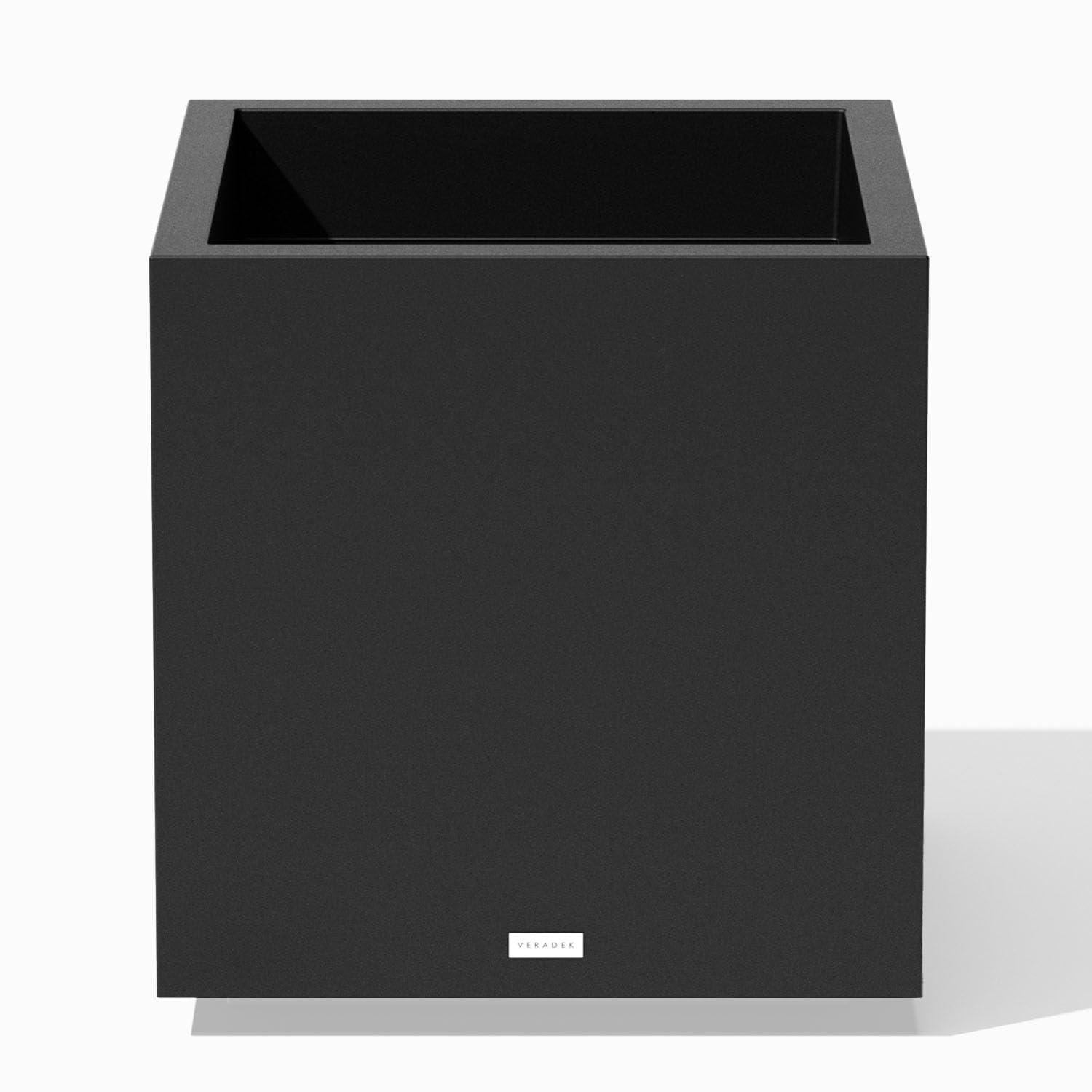
The Veradek Block Series Cube brings clean modernist lines to the affordable planter segment. Its high-density polypropylene feels more like a composite than standard plastic, with a brushed finish that looks premium from every angle. At 17x17x18 inches, it’s built for tall plants — fiddle-leaf figs, dwarf citrus, or architectural grasses — and the 35.84-liter capacity provides enough root room for long-term growth without needing frequent repotting.
What sets this planter apart is the false bottom system with three drainage configurations. You can plug the false bottom to create a moisture-retaining reservoir, plug the base to prevent runoff on indoor surfaces, or leave everything open for standard drainage. This flexibility means the same box works equally well on a sunny patio or a hardwood floor inside. The polypropylene is UV-stable, so it won’t become brittle or chalky after a full summer in direct sun.
Owners consistently describe the quality as exceeding expectations for the price, with particular praise for the weight — 14 pounds empty, which is heavy enough to resist wind but light enough to move during seasonal rotations. The only real limitation is the cube shape: it’s not ideal for sprawling plants or vegetable gardens that need horizontal space. It’s designed as a statement specimen planter, and within that role, it performs admirably.
What works
- False bottom with three drainage modes for indoor/outdoor use
- Premium polypropylene resists UV and weather
- Clean modern aesthetic complements contemporary decor
- Made in Canada with quality assurance
What doesn’t
- Cube shape limits use to taller, upright plants
- No included saucer or drip tray for indoor use
Hardware & Specs Guide
Resin Composite (Evotech)
Keter’s proprietary plastic blend combines polypropylene resin with UV stabilizers and color additives that are molded, not painted. This means the wood-like grain won’t peel or fade the way a surface coating would. The material is flexible enough to absorb impacts without cracking but rigid enough to hold its shape under soil pressure. It’s also BPA-free, which matters for vegetable beds where chemical leaching into the soil is a concern.
Galvanized Steel Gauge & Coating
The ZUNUDA kit uses a hot-dipped galvanization process that bonds a zinc layer to the steel core, creating a sacrificial barrier against rust. The steel panels are relatively thin (approximately 24-gauge), which keeps weight manageable, but the real structural strength comes from the cross braces that span the long sides. Without those braces, 8-foot panels would bulge outward under soil weight within weeks.
Sub-Irrigation Reservoir Engineering
Both the EarthBox and the Mayne planters use a wicking system where a screen or pedestal separates the soil from a water reservoir at the bottom. Capillary action draws water upward as the soil dries, maintaining consistent moisture at the root level without flooding. The overflow port is the critical safety feature — without it, heavy rain would overfill the reservoir and drown roots.
Cedar Wood Density & Moisture Content
SoliWood’s elevated bed is constructed from kiln-dried Western Red Cedar, which has natural oils that resist rot and insect damage without chemical treatment. The 0.45-inch panel thickness provides enough rigidity for the 48-inch span, but cedar is a softer hardwood, so pre-drilling screw holes is essential. Water-based acrylic finish penetrates the grain while allowing the wood to breathe, preventing trapped moisture that causes warping.
FAQ
Is galvanized steel safe for growing vegetables?
How deep should an affordable planter box be for tomatoes?
Why do some planter boxes cost more despite being smaller?
Final Thoughts: The Verdict
For most gardeners, the affordable planter boxes winner is the Keter 48-inch Raised Bed because it delivers authentic wood aesthetics, tool-free assembly, and BPA-free resin construction at a price that undercuts both wood and metal alternatives while outlasting them. If you want maximum yield per square foot with minimal watering effort, grab the EarthBox Garden Kit. And for a no-bend elevated solution that protects your back and looks like real furniture on the patio, nothing beats the SoliWood Cedar Raised Bed with Legs.