
Amending tired garden soil with raw manure can burn tender roots and unleash an unbearable stench that lingers for days. Composted cow manure solves both problems by delivering a stable, slow-release source of organic matter that improves soil structure without the harsh ammonia spike or the overpowering odor. The difference between a thriving vegetable bed and a disappointing harvest often comes down to which bag of composted manure you choose and how you apply it.
I’m Rikta — the co-founder and writer behind Lawn Gear Lab. I’ve spent hundreds of hours analyzing NPK ratios, comparing moisture-retention data, sifting through verified owner feedback, and cross-referencing mixing ratios so you can make a confident purchase without wasting time on bags that underdeliver.
Whether you’re prepping a raised bed for tomatoes or rejuvenating a flower border, this guide breaks down the top bagged options to help you select the right cow manure and compost blend for your soil type and planting goals.
How To Choose The Best Cow Manure And Compost
Not all bags labeled “cow manure compost” are created equal. Some are heavily cut with peat or bark fines, while others deliver a concentrated dose of nearly pure composted manure. Understanding a few key specs will prevent you from overpaying for filler or undernourishing your soil.
NPK Ratio and Nutrient Density
The three-number analysis on the bag tells you the percentage of nitrogen, phosphorus, and potassium by weight. Most composted cow manures fall around 0.5-0.5-0.5, which is a gentle, well-rounded base for general garden use. If you need a stronger nitrogen boost for leafy greens, look for a blend with a higher first number. For flowering and fruiting crops, the middle number (phosphorus) becomes more important. Pure cow manure compost typically provides a modest but steady nutrient release that won’t burn seedlings.
Texture and Screening Quality
Uniform, finely screened compost integrates into existing soil more easily and creates a better seedbed. Bags that contain large woody chunks, sticks, or clumps require extra effort to break apart and can create air pockets that dry out roots. The best products list a screened consistency and feel consistently dark, crumbly, and lightweight when you pour them out.
Moisture Retention vs. Drainage
Composted cow manure excels at holding moisture in sandy soils and improving aeration in heavy clay. A quality blend will retain enough water to reduce watering frequency without becoming waterlogged. If you are working with container plants, look for a mix that includes peat or coir to balance drainage. For in-ground beds, a denser, more concentrated manure compost works well to build organic matter deep in the root zone.
Quick Comparison
On smaller screens, swipe sideways to see the full table.
| Model | Category | Best For | Key Spec | Amazon |
|---|---|---|---|---|
| Black Kow 8 qt | Pure Compost | Seedlings & transplants | NPK 0.5-0.5-0.5 granules | Amazon |
| Coast of Maine 20 Qt | Potting Mix | Container tomatoes | Blend with peat moss | Amazon |
| R&M Organics 10 lb | Pure Compost | Indoor & outdoor recovery | Mixing ratio 5:1 | Amazon |
| Black Kow 35 lb | Bulk Compost | Large garden beds | 560 oz bag weight | Amazon |
| Brut Cow Compost 10 Qt | Pure Compost | Organic vegetable gardens | OMRI listed, odor-free | Amazon |
| Espoma DCM1 1 cu ft | Compost Blend | Roses & shrubs | Aged forest products added | Amazon |
| Michigan Peat Baccto 40 Qt | Peat/Manure Mix | Large raised beds | Odor-free, 34 lb bag | Amazon |
In‑Depth Reviews
1. Brut Cow Compost – Nutrient-Rich Composted Cow Manure (10 Qt)

Brut Worm Farms produces a 100% pure composted cow manure that skips all filler ingredients. The material is finely sifted to a soil-like texture with no large woody debris, making it ready to work directly into seed-starting mixes or top-dress existing beds. The NPK profile is gentle enough for delicate seedlings yet rich enough to give heavy feeders like tomatoes a measurable growth boost within days.
Verified buyers highlight the absence of odor — a major advantage over raw manure or poorly composted alternatives. One first-time grower reported tomato seedlings planted March 1st in a 3:2 compost-to-soil ratio showed vigorous growth by late April. The OMRI listing confirms organic integrity, which matters for edible gardens where synthetic inputs are off-limits.
At 10 quarts, the bag is compact enough for small urban gardens and apartment balcony containers. The lack of added peat or bark means you get more actual manure compost per pound, making it a concentrated choice for gardeners who want to control the exact organic matter content of their soil.
What works
- Finely sifted, no sticks or large clumps
- Certified organic with zero filler ingredients
- No detectable odor during application
What doesn’t
- Smaller bag size limits coverage for large beds
- Premium price per quart compared to peat blends
2. Espoma Organic Cow Manure with Aged Forest Products (1 cu ft)

Espoma’s DCM1 combines dehydrated cow manure with aged forest products to create a balanced soil amendment that improves both moisture-holding capacity and aeration. The 0.5-0.5-0.5 fertilizer analysis delivers a mild but steady nutrient release, making it suitable for vegetables, flowers, trees, and shrubs alike. The addition of forest humus buffers the compost, reducing the risk of salt buildup in containerized plantings.
Gardeners who applied this to roses and hibiscus reported quick greening and increased flower production. A reviewer noted that the presence of mushrooms in the soil after application indicated high biological activity — a strong sign of healthy microbial life. The powder-like consistency spreads evenly and works well scratched into the top inch of soil around established perennials.
The 1-cubic-foot bag covers roughly 10 square feet at a 1-inch depth, offering solid value for medium-sized raised beds. Espoma’s reputation for natural organics since 1929 adds confidence for growers who prioritize heritage brands with consistent formulation.
What works
- Increases microbial activity in tired soil
- Blended with forest products for better structure
- Established brand with decades of organic focus
What doesn’t
- Powder form can become dusty during mixing
- Contains some woody fines from forest products
3. Michigan Peat Baccto Wholly Cow Horticultural Compost (40 Qt)
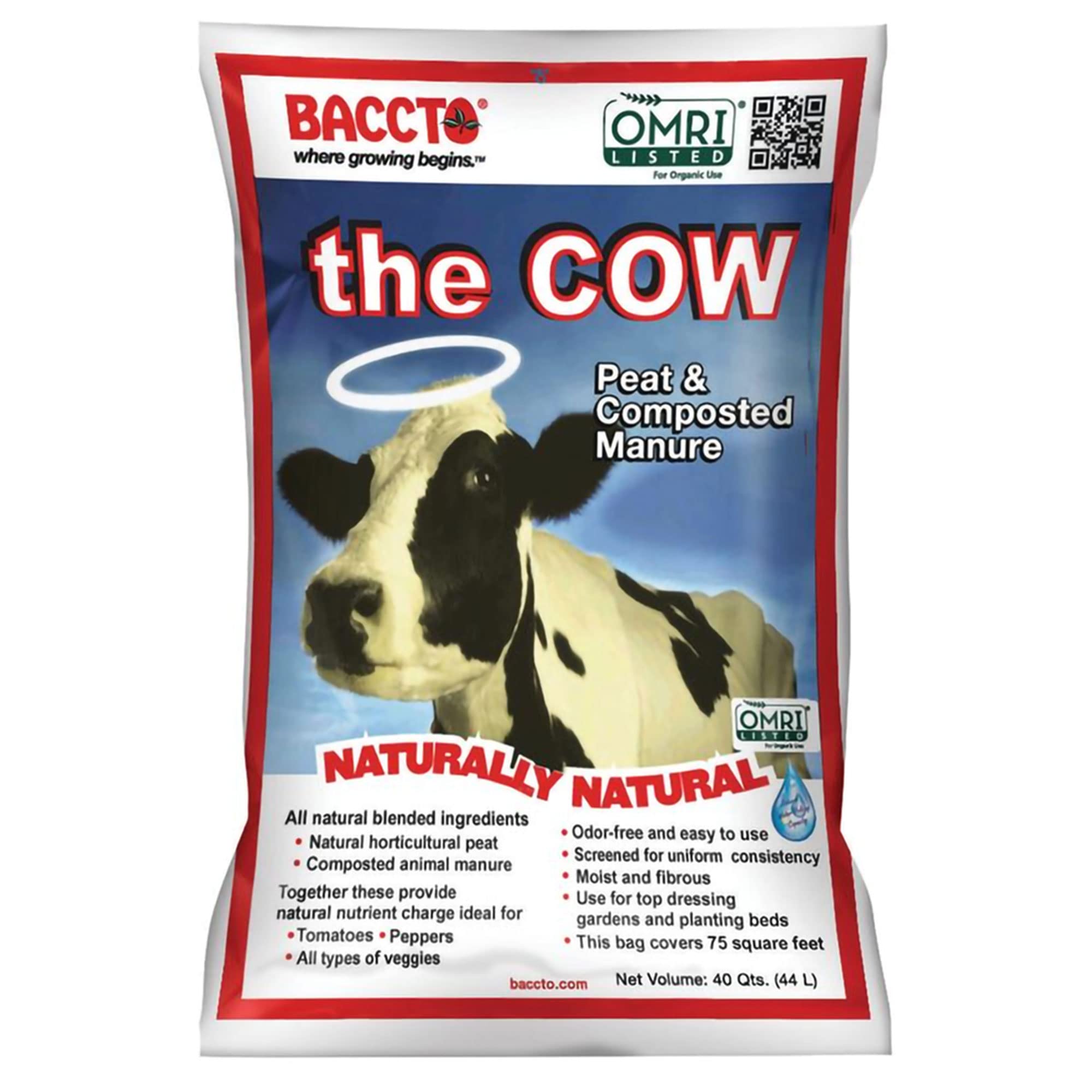
Michigan Peat’s Baccto Wholly Cow is a 40-quart blend of natural peat and composted animal manure designed for large-scale soil amendment. The screened consistency is uniformly dark, lightweight, and fluffy — reviewers specifically mention enjoying how easy it is to work with compared to chunkier competitors. The odor-free formula makes it practical for top-dressing lawns or mixing into planting beds near the house.
Mushroom cultivators have adopted this product as a cost-effective substrate base, mixing it 1:1 with coco coir and sterilizing it for 120 minutes at 15 psi. They report high manure concentration with minimal waste — only 1-3 small sticks per 5-pound bag. For traditional gardeners, the improved moisture retention reduces watering frequency, especially in sandy soils like the river-bottom clay one 78-year-old reviewer described.
The 34-pound bag delivers substantial volume for large raised beds or multiple containers. Some users note that the peat component makes it slightly lighter in nutrient density than pure manure composts, so heavy feeders may need supplemental feeding later in the season.
What works
- Large volume covers extensive garden areas
- Pleasant, odorless texture that’s easy to handle
- Effective as mushroom substrate or garden amendment
What doesn’t
- Peat content dilutes the pure manure concentration
- Bag weight may be challenging to carry for some users
4. Black Kow Composted Cow Manure (35 lb)

Black Kow’s 35-pound bag is the go-to choice for gardeners who need to amend large in-ground beds without breaking the bank. The 0.5-0.5-0.5 NPK rating mirrors the standard for composted cow manure, providing a balanced nutrient base for tomatoes, houseplants, and general landscaping. Multiple reviewers confirm fast growth in vegetables after incorporation.
The bagged form is straightforward to apply — dump it into the planting hole or till it into the top 4-6 inches of soil. One customer in central New York reported explosive sprouting in a greenhouse after adding this manure, even after an unseasonable late snow. The product holds moisture well in sandy soils and helps loosen heavy clay through improved aggregation.
Some buyers have flagged a discrepancy between the advertised 35-pound weight and the actual delivered weight, with one verified review measuring roughly 20 pounds. This inconsistency varies by batch, so weighing the bag on arrival is wise if precise volume matters for your application. Despite this, the raw compost quality itself receives strong reviews for plant response.
What works
- Great for large-area soil building projects
- Produces visible growth acceleration in vegetables
- Simple one-ingredient compost, no filler additives
What doesn’t
- Inconsistent bag weight reported by some customers
- Limited nutrient diversity compared to blended mixes
5. Black Kow Nitrogen Phosphate Composted Cow Manure Fertilizer (8 qt)

The 8-quart Black Kow bag is essentially the same composted manure formula as the 35-pound version but in a smaller, more manageable package. The granular form makes it easy to pour directly into planting holes or mix 1:1 with existing soil. It keeps water and nutrients locked in the root zone rather than letting them leach through sandy ground.
Gardeners particularly value this size for targeted jobs — a handful in each transplant hole for flowers, a scoop mixed into potting soil for a single tomato cage. One long-time user mentioned that her mother uses it in everything she plants, tolerating the initial manure smell because of the visible difference in flower vigor. The beneficial bacteria content helps convert nitrogen and other nutrients into plant-available forms without burning tender roots.
At roughly 6 pounds of lightweight granules, the bag is easy to store in a shed or garage and use throughout the season. While the unit price per quart is higher than bulk options, the reduced waste and precise application make it a smart choice for small-space gardeners or those fine-tuning individual planting holes.
What works
- Convenient small bag for precise planting jobs
- Beneficial bacteria improve nutrient availability
- Granules pour cleanly without excessive dust
What doesn’t
- Odor can be strong immediately after opening
- Higher cost per quart than larger bags
6. R&M Organics Premium Organic Compost (10 lb)
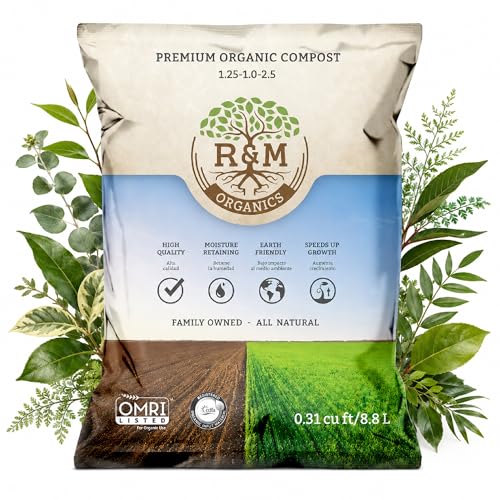
R&M Organics offers a dairy cow manure compost that has been fully aerated and composted to reduce odor and impurities. The result is a clean, earthy soil-like material suitable for both indoor and outdoor use. The all-purpose formulation targets a wide array of plants — tomatoes, herbs, citrus trees, roses, orchids, and lawns — making it a versatile option for gardeners managing multiple plant types.
One Master Gardener recommended this compost to a family member whose azaleas were struggling after a roof wash with enzymatic cleaner. Within a short period, the compost helped rescue the plants, reversing die-off. Another reviewer revived a severely yellowing tomato plant in a 27-gallon planter; within one week the leaves turned green and new flower buds appeared. The 5:1 recommended mixing ratio allows you to stretch the bag across several containers.
The 10-pound bag occupies minimal shelf space and has a fine topsoil texture without clumps or large wood chips. Some users note that the price per pound is higher than commodity composts, but those seeking a low-odor product that won’t offend neighbors or family members often find the premium worthwhile.
What works
- Near-odorless compost suitable for indoor use
- Fine, consistent texture with no large debris
- Revives stressed plants quickly according to reviews
What doesn’t
- Small bag size limits coverage for large gardens
- Higher cost per pound compared to bulk alternatives
7. Coast of Maine Organic & Natural Planting Soil (20 Qt)

Coast of Maine takes a different approach by formulating a complete potting soil that includes composted manure alongside sphagnum peat moss. This makes it a ready-to-use mix for tomatoes and vegetables straight out of the bag, without needing to blend additional ingredients. The peat balances moisture retention and drainage, which is critical for container plants that can easily become waterlogged or dry out.
Customers report that this mix works exceptionally well for heirloom tomatoes that require sharp drainage. One reviewer noted the inclusion of aromatic wood fines that appear to help deter insects. The lightweight, fluffy texture makes filling large containers easy on the back. For in-ground use, it can be used as a top-dressing or tilled into the top layer of existing garden beds.
The 20-quart bag covers roughly four 10-inch pots. While the price per quart is higher than raw manure compost, the convenience of a complete mix saves time and reduces the guesswork for newer gardeners. Some users wish it was more economical for large-scale projects, but for a few prized containers, the performance justifies the investment.
What works
- Pre-mixed and ready to use straight from the bag
- Excellent drainage properties for heirloom tomatoes
- Aromatic wood content helps repel some insects
What doesn’t
- Premium pricing for large-scale garden projects
- Some users reported gnats; disinfection recommended before indoor use
Hardware & Specs Guide
NPK Ratio (0.5-0.5-0.5)
Most composted cow manures carry the analysis 0.5-0.5-0.5, which stands for 0.5% nitrogen, 0.5% phosphorus, and 0.5% potassium by weight. This is a gentle, balanced profile suitable for nearly all plants. It releases nutrients slowly as soil microbes break down the organic matter, reducing the risk of burning roots. Compare this to synthetic fertilizers that deliver higher NPK values but require careful measuring and frequent reapplication.
OMRI Listing for Organic Use
The Organic Materials Review Institute (OMRI) listing confirms that a compost product meets the standards for certified organic production. Products with the OMRI seal contain no synthetic additives, GMOs, or prohibited substances. For gardeners growing food crops or maintaining a strict organic regimen, OMRI listing is the most reliable indicator of purity. Both Brut Cow Compost and Coast of Maine carry this certification.
FAQ
What is the NPK ratio of composted cow manure and why does it matter?
Can I use cow manure compost in container plants?
How should I apply bagged cow manure compost to an existing garden bed?
Final Thoughts: The Verdict
For most gardeners, the cow manure and compost winner is the Brut Cow Compost because it delivers pure, OMRI-listed organic matter with zero filler and no unpleasant odor. If you want a ready-to-use potting mix for container tomatoes, grab the Coast of Maine Organic Planting Soil. And for large-scale soil building in raised beds or in-ground gardens, nothing beats the volume and value of the Michigan Peat Baccto Wholly Cow.