
Tomato plants are notorious for collapsing overnight from early blight or septoria leaf spot, turning a thriving patch into a brown mess before the first fruit ripens. A reliable copper-based fungicide applied at the right concentration and frequency is the single most effective barrier between your vines and the fungal pathogens that thrive in warm, humid weather.
I’m Rikta — the co-founder and writer behind Lawn Gear Lab. I’ve spent dozens of hours cross-referencing product labels against university extension bulletins, analyzing copper concentration data, and sorting through thousands of verified owner experiences to find exactly which formulations stop tomato diseases without stunting the plants.
This guide breaks down the real performance differences—formulation type, copper percentage, rainfastness, and safety margins—so you can confidently pick the right copper fungicide for tomatoes for your garden’s specific pressure level and season length.
How To Choose The Best Copper Fungicide For Tomatoes
Tomatoes are especially vulnerable to fungal and bacterial diseases because of their dense canopy and high moisture needs. Picking the wrong formulation can leave your plants unprotected or cause copper phytotoxicity. Focus on these three factors to narrow the field.
Copper Type and Concentration
Not all copper is equal. Copper sulfate (fixed copper) delivers more elemental copper per ounce and is better for high-pressure blight outbreaks, but it can burn foliage if applied in hot sun. Copper soap (copper octanoate) uses a lower copper concentration and is gentler on leaves, ideal for weekly preventative sprays. Look for the percentage of metallic copper on the label—0.5% to 2% is standard for foliar disease control.
Formulation and Ease of Application
Ready-to-use (RTU) sprays offer convenience for small gardens but cost more per application. Concentrates give you control over dilution strength and are far more economical for larger tomato patches that need coverage every 7 to 10 days. Hose-end sprayers simplify mixing but require careful calibration to avoid under or over-application.
Rainfastness and Residual Protection
Copper fungicides work by forming a protective barrier on leaf surfaces. Rain washes that barrier away. Products labeled as rainfast within 2 to 4 hours are essential for regions with frequent summer showers. A product that dries to a tenacious film can hold through 0.5 to 1 inch of rain before needing reapplication.
Quick Comparison
On smaller screens, swipe sideways to see the full table.
| Model | Category | Best For | Key Spec | Amazon |
|---|---|---|---|---|
| Southern Ag Liquid Copper | Liquid Concentrate | General tomato disease control | 1.8% Metallic Copper | Amazon |
| Earth’s Ally 3-in-1 | Oil Blend RTU | Bee-safe multi-pest protection | Essential Oils (No Copper) | Amazon |
| Neudorff Copper Soap | RTU Spray | Gentle weekly prevention | Copper Octanoate 0.08% | Amazon |
| Bonide Captain Jack’s Neem Max | Hose-End Spray | Insect + fungus combo control | Cold Pressed Neem Oil | Amazon |
| Nature’s IQ Copper Fungicide | Innovative Mist | Precise coverage on ornamentals | Copper Soap Mist Spray | Amazon |
| Fertilome Copper Concentrate | Economical Concentrate | Large tomato patches | 1.8% Metallic Copper | Amazon |
| Bonide 4E Copper Fungicide | High-Strength Liquid | Severe fire blight or anthracnose | Elemental Copper 2-Pack | Amazon |
In‑Depth Reviews
1. Southern Ag Liquid Copper Fungicide, 16 oz

This 16 oz liquid concentrate delivers 1.8% metallic copper, which is the most effective concentration range for controlling early blight, late blight, and septoria leaf spot on tomatoes. Users consistently report that a single bottle treats a full season of a medium-sized garden because the dilution rate is economical—typically 0.5 to 2 oz per gallon of water depending on disease pressure.
Owner reviews highlight rapid results on powdery mildew and leaf spot, with many noting that regular applications every 7 to 10 days stopped disease progression that had already begun. The liquid mixes uniformly with water and leaves minimal residue on fruit compared to wettable powder alternatives. The 16 oz bottle is also shelf-stable for at least one season when stored properly.
Some users mention that the sprayer nozzle on larger bottles can clog if not rinsed immediately after use, but the concentrate itself performs reliably across vegetables, ornamentals, and turf. For pure bang-for-your-buck in a proven formulation, this is the default pick for tomato growers who want a no-nonsense product they can trust year after year.
What works
- High metallic copper content stops blight and leaf spot reliably
- One 16 oz bottle covers a full season at recommended dilution
- Mix is simple and leaves minimal visible residue on fruit
What doesn’t
- Concentrate requires a separate sprayer; not RTU
- No rainfastness time printed on label; wait 24 hours before rain
2. Bonide 4E Copper Fungicide 16 oz (2 Pack)

This two-pack of Bonide 811 4E provides a higher elemental copper concentration than most liquid formulations, making it the go-to choice for severe disease outbreaks like fire blight, anthracnose, and late blight that can destroy a tomato crop within days. The concentrated liquid gives you precise control over strength—experienced gardeners often use the upper label rate when conditions are wet and nights are cool.
Verified buyers report excellent results against aggressive pathogens including pachysandra blight and bacterial fire blight on trees, and multiple reviews confirm that alternating this product with a different mode-of-action fungicide every 10 to 14 days stops disease from gaining traction. The 4E formula is also labeled for use on soil to reduce overwintering fungal spores, which is a significant advantage for gardeners fighting recurring blight issues in the same soil year after year.
The main drawback is that this is a strong fixed-copper product that can cause leaf burn on tender tomato transplants if applied in direct heat above 85°F. It requires careful timing—spray in the early morning or late evening and never mix with acidic adjuvants. For seasoned growers managing high disease pressure, this two-pack is unmatched in raw stopping power.
What works
- Higher elemental copper percentage handles severe blight and fire blight
- Two bottles provide season-long coverage for large gardens
- Can be used on soil to reduce overwintering fungal spores
What doesn’t
- Can cause leaf burn on young transplants in hot weather
- Requires precise mixing and timing to avoid phytotoxicity
3. Nature’s IQ Copper Fungicide, 20 oz (2-Pack)

This 20 oz ready-to-use mist spray distinguishes itself through its spray mist delivery system, which creates a finer droplet than traditional trigger bottles. That finer mist means better coverage on the undersides of tomato leaves where septoria and early blight spores germinate first. The copper soap formulation is gentler on foliage than copper sulfate equivalents, reducing the risk of burning even when applied on warm afternoons.
Buyers who use this product on roses and ornamentals note that black spot disappeared after two applications, and tomato growers report that weekly use keeps the lower leaves green well into August. The 2-pack gives you 40 total ounces, which is enough for roughly 8 to 10 full applications on a 10-plant tomato patch. The blue dye in the formula helps you see where you’ve already sprayed, preventing missed spots that can harbor disease.
The biggest trade-off is cost per ounce versus a concentrate—you are paying for the convenience and the specialized spray mechanism. If you have more than 20 tomato plants, the bottle runs out faster than you expect. For small raised beds or container tomatoes, the precision spray and gentle formula make this an excellent choice for weekly preventative care.
What works
- Mist spray technology covers leaf undersides more thoroughly
- Gentle copper soap formula is safe on young transplants
- Blue dye shows coverage; prevents missed application areas
What doesn’t
- Higher per-application cost than concentrate alternatives
- 20 oz per bottle runs out quickly on larger gardens
4. Fertilome Copper Fungicide Concentrate, 16 oz
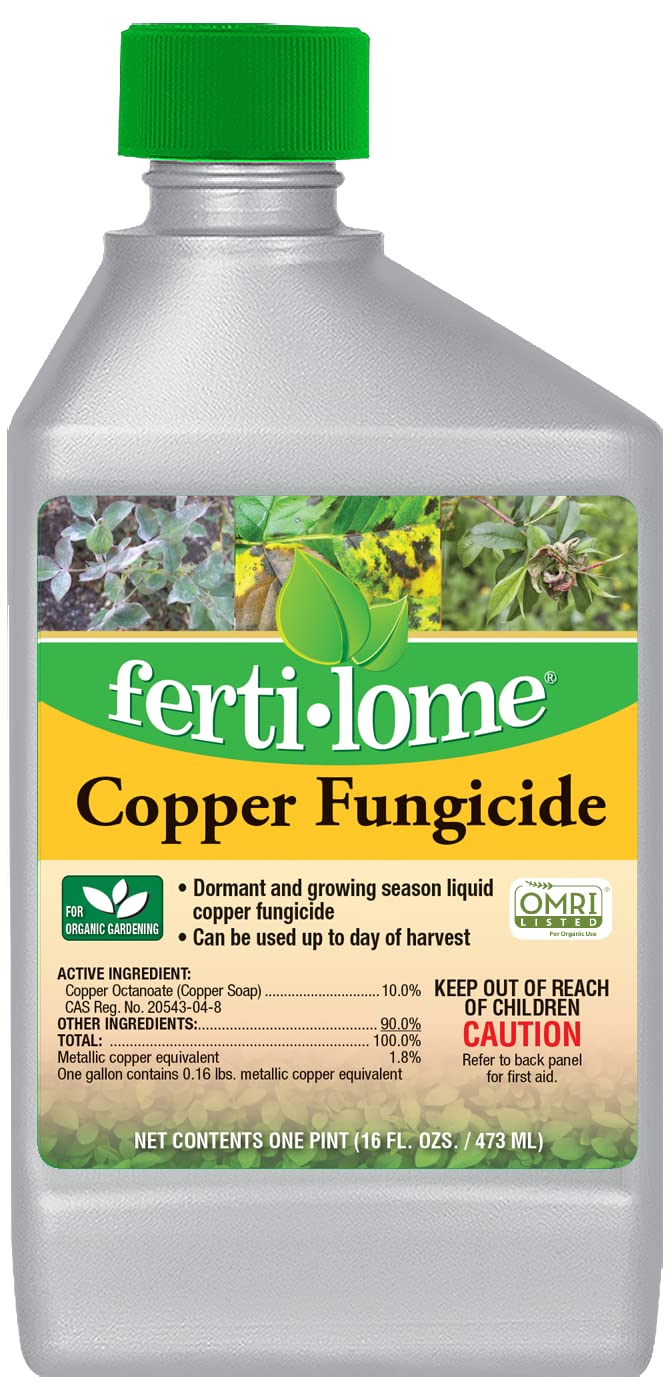
This OMRI-listed 16 oz concentrate from Fertilome matches the 1.8% metallic copper concentration of the Southern Ag product but costs slightly less per bottle, making it the top value pick for budget-conscious tomato growers. The label specifically lists early and late blight on tomatoes as controlled diseases, alongside powdery mildew, black spot, and cedar apple rust, giving it broad-spectrum utility for anyone growing mixed vegetable-fruit gardens.
Growers who have used this product on peach trees and ornamentals alike report that it revived nearly dead trees within three applications and is safe for monarchs and bees when applied according to directions. The dilution range is 0.5 to 2 oz per gallon of water, and most users find that a single bottle lasts the entire season for a 20-plant row. Many long-time gardeners consider this their baseline copper fungicide and only switch to premium products when disease pressure is extreme.
The main complaint is the spray bottle itself—multiple reviewers report that the trigger mechanism fails before the bottle is empty. This is a packaging issue, not a product efficacy issue. If you transfer the concentrate to a quality sprayer immediately after opening, you get a premium fungicide at an entry-level price point.
What works
- OMRI listed; safe for use in organic vegetable gardens
- Economical concentrate—one bottle lasts most home gardens a full season
- Effective against both blight on tomatoes and rust on fruit trees
What doesn’t
- Trigger sprayer nozzle frequently fails before product is used up
- No rainfastness guarantee; best applied when dry weather is forecast
5. Earth’s Ally 3-in-1 Insecticide, Miticide, Fungicide, 32 oz

Earth’s Ally 3-in-1 takes a fundamentally different approach—it uses a synergistic blend of thyme, rosemary, clove, and peppermint oils instead of copper. This makes it a natural alternative for tomato growers who want to avoid copper accumulation in the soil, particularly in raised beds where copper builds up over time. The 32 oz RTU bottle covers roughly 300 square feet of foliage per application.
User reviews highlight excellent results against soft-bodied insects like aphids and spider mites, which often accompany fungal outbreaks on stressed tomato plants. Many gardeners use this as their primary spray through early summer and only switch to copper if blight appears. The formula is proven bee-safe when dry, which is critical for gardens where pollinators visit tomato flowers throughout the growing season.
The trade-off is that essential oil-based fungicides are generally less potent than copper against established fungal infections. Multiple reviewers note that mild powdery mildew cases did not fully resolve, and the product works best as a preventative rather than a cure. If you are already fighting active blight, you need a copper-based product—this is better suited to a low-disease-pressure IPM program.
What works
- Bee-safe and OMRI listed; ideal for organic pollinator gardens
- Triple action kills soft-bodied insects while controlling early fungus
- Fresh scent is pleasant and non-toxic; leaves leaves shiny
What doesn’t
- Essential oil blend is less effective against established blight than copper
- Requires 3 applications 5-7 days apart for best insect control
6. Neudorff Plant Fungicide Spray, Copper Soap, 32 oz RTU

Neudorff’s ready-to-use copper soap spray is designed specifically for low-concentration weekly prevention on tomatoes, roses, and ornamentals. The active ingredient is copper octanoate at 0.08%, which is much lower than liquid concentrate products but is sufficient to stop spore germination when applied before disease symptoms appear. The 32 oz bottle is ready to spray straight from the container, making it the simplest option for casual gardeners who do not want to mix chemicals.
Verified buyers who used this on gardenias, roses, and tomatoes report significant improvement in plant health and fewer infections after 2 weeks of weekly use. The spray is odorless, non-staining, and contains a blue tracer dye that helps you see coverage. Several reviewers specifically note that the formula is gentle enough to use on herbs and strawberry plants without worrying about residue near harvest.
The major limitation is concentration—at 0.08% copper octanoate, this product is not strong enough to stop aggressive late blight or severe anthracnose once they are visible. It is a solid preventative for low to moderate disease pressure but will disappoint if your tomato patch already has active lesions. For that reason, it pairs best with a stronger concentrate for curative treatment.
What works
- RTU format is zero-mess and perfect for small gardens or containers
- Gentle copper soap formula safe on tender seedlings and herbs
- Blue dye helps visualize coverage; odorless and non-staining
What doesn’t
- Low copper concentration cannot stop active blight outbreaks
- Purely preventative; requires weekly applications to maintain protection
7. Bonide Captain Jack’s Neem Max, 16 oz RTU
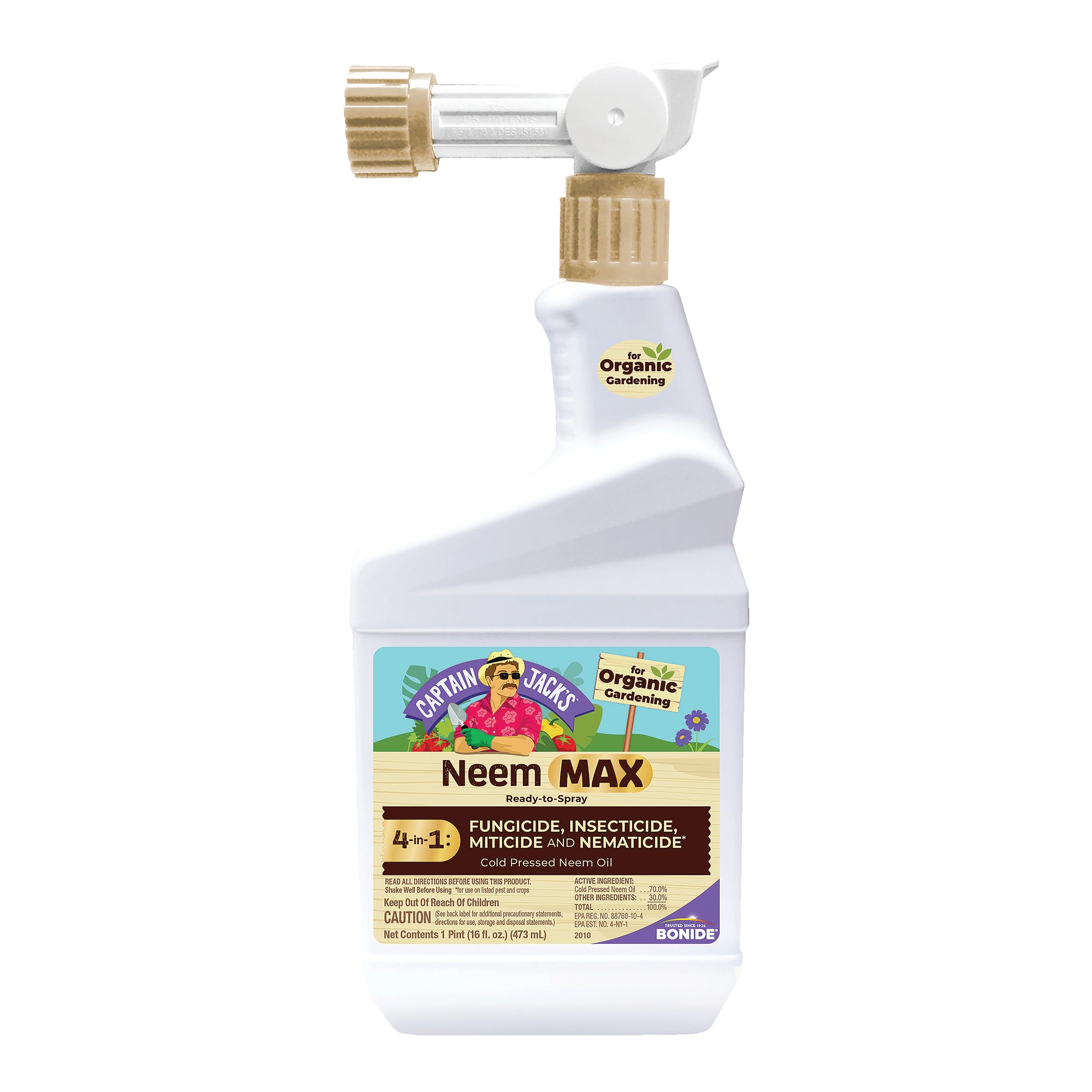
While not a copper fungicide, Bonide Captain Jack’s Neem Max deserves a spot here as the most popular non-copper alternative for tomato disease management. It uses cold-pressed neem oil to deliver insecticide, fungicide, miticide, and nematicide action in one ready-to-spray hose-end container. The hose-end sprayer automatically mixes the concentrate with water as you spray, covering large areas quickly without needing a tank sprayer.
Users consistently report excellent results against Japanese beetles, aphids, and the fungal diseases that often follow insect damage on tomatoes. The neem oil works by disrupting the feeding cycle of insects and inhibiting spore germination of powdery mildew and leaf spot fungi. Several reviews note that a single bottle treated both apple trees and the surrounding lawn, making it extremely efficient for gardeners with diverse plantings.
The biggest issue is the packaging—multiple buyers received bottles with cross-threaded caps that leaked in shipping, and the aspiration tube can clog with the viscous neem oil if not cleaned immediately after use. Because it is not a copper product, it does not offer the same residual barrier protection that copper-based sprays provide, and it needs to be reapplied more frequently after rain.
What works
- Hose-end sprayer treats large gardens and trees with zero mixing effort
- 4-in-1 action covers insects, fungus, mites, and nematodes
- Cold-pressed neem oil is OMRI listed and plant-based
What doesn’t
- Bottles often arrive leaking due to faulty cap threading
- Neem oil requires more frequent reapplication than copper barriers
Hardware & Specs Guide
Elemental Copper Percentage
This is the single most important number on the label. Liquid copper concentrates typically list metallic copper content between 1.8% and 2.0%. Higher percentages provide stronger antifungal action but increase the risk of leaf burn on sensitive tomato varieties like heirlooms. Copper soap formulations (copper octanoate) contain much lower metallic copper—around 0.08%—but are safe to spray weekly without accumulating toxicity in the soil.
Rainfastness Window
Copper fungicides must dry on the leaf surface to form a protective film. Most products require 2 to 24 hours of dry weather after application to become rainfast. If rain falls within that window, the copper washes off and leaves the plant unprotected. Products labeled rainfast in 2 hours are best for regions with unpredictable afternoon summer storms. Always check the label for the specific rainfastness statement before applying.
FAQ
Can I use copper fungicide on tomatoes during flowering and fruit set?
How often should I spray copper fungicide on my tomato plants?
Will copper fungicide burn my tomato leaves?
Final Thoughts: The Verdict
For most gardeners, the best copper fungicide for tomatoes winner is the Southern Ag Liquid Copper Fungicide because its 1.8% metallic copper concentration, proven performance against blight, and economical concentrate format deliver the best balance of efficacy and value. If you want a gentler weekly preventative for a small raised bed, grab the Neudorff Copper Soap Spray. And for severe late blight or fire blight outbreaks where nothing short of maximum stopping power will do, nothing beats the Bonide 4E Copper Fungicide 2-Pack.