
Growing your own produce starts with the structure you place your soil in — and the wrong planter leads to waterlogged roots, warped panels, and rabbits feasting before you harvest. A well-chosen bed for vegetables eliminates back strain, improves drainage, and gives deep-rooted crops like tomatoes and carrots the vertical space they need to thrive.
I’m Rikta — the co-founder and writer behind Lawn Gear Lab. After hours of cross-referencing metal gauge thicknesses, sidewall heights, soil capacities, and assembly hardware across dozens of models, I built this guide around what actually matters for a productive vegetable plot.
From compact balcony kits to sprawling 8-foot garden anchors, the right beds for vegetables determine how freely water drains, how deep roots stretch, and how many seasons your frame will hold up without rust or rot.
How To Choose The Best Beds For Vegetables
Selecting the right bed comes down to matching your back, your crop list, and your climate. An 8-inch-deep bed works for lettuce but starves carrots. A thin-gauge panel buckles within two seasons under wet soil. Here is where to focus.
Height: The Back-Saver Metric
Standard 12-inch beds force constant stooping. Go for 17 to 24 inches of sidewall height if you want to garden without knee pain. That extra depth also provides room for deep-rooting tomatoes, potatoes, and parsnips to develop fully. Tall walls also make it harder for rabbits and groundhogs to jump in.
Material & Gauge: Rust vs. Rot
Galvanized steel with a powder-coated finish resists rust for years but thin metal (0.4 mm) can bow outward under heavy soil pressure. Look for 0.8 mm–1.0 mm corrugated panels with center support rods. Cedar lasts long naturally but requires liner protection against moisture contact — and it will fade to gray without oil treatment.
Bottom Design: Drainage Is Everything
Bottomless beds sit directly on the ground, allowing worms and nutrients to move up from native soil and preventing the waterlogged roots that cause rot. Solid-bottom units need drainage holes drilled in and risk anaerobic soil conditions in heavy rain. Always prioritize an open-base frame for vegetable root health.
Quick Comparison
On smaller screens, swipe sideways to see the full table.
| Model | Category | Best For | Key Spec | Amazon |
|---|---|---|---|---|
| A ANLEOLIFE 8x4x2ft | Galvanized Steel | Large, deep-rooted gardens | 0.8 mm thick, 478 gallon capacity | Amazon |
| Gardener’s Supply Elevated Cedar | Wood | Stand-up gardening on patios | 29″ tall, aluminum legs | Amazon |
| Tegarbed 6x3x2ft | Galvanized Steel | Deep roots + reduced bending | 1.0 mm thick, 24″ tall | Amazon |
| SnugNiture 3-Pack 4x2x1.5ft | Galvanized Oval | Multiple beds in one purchase | 17″ tall, rubber edging | Amazon |
| BIRDSINYARD 4x2x1ft 2-Pack | Powder-Coated Steel | Backyard aesthetics + safety | Avocado green, 12″ tall | Amazon |
| DIIYIV 12x4x1ft 2-Pack | Galvanized Steel | Maximum ground coverage | 144″ x 48″ per bed | Amazon |
| zizin 2-Pack 6x3x1ft | Galvanized Metal | Entry-level, quick setup | 12″ tall, multi-corrugated | Amazon |
In‑Depth Reviews
1. A ANLEOLIFE 8x4x2ft Galvanized Raised Garden Bed
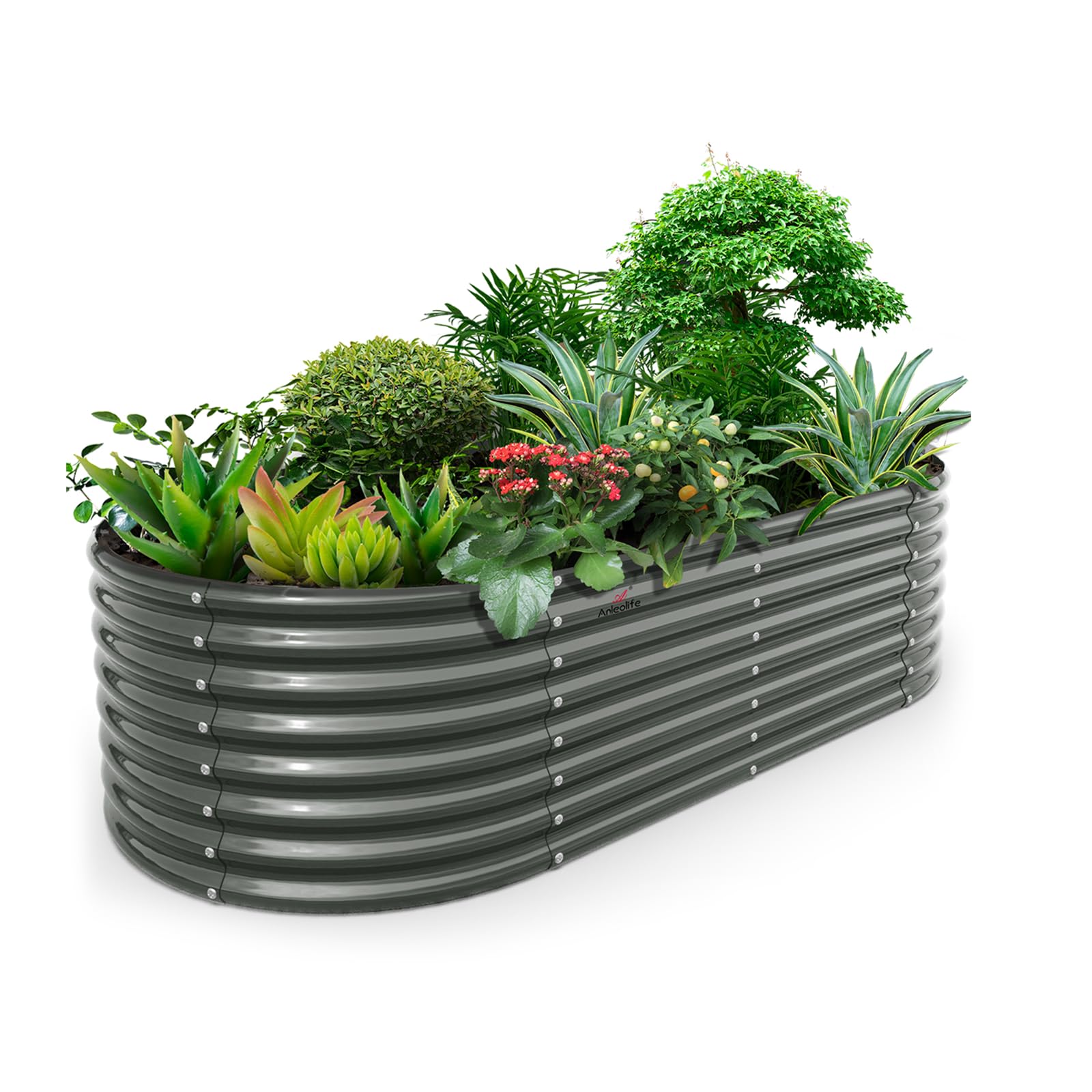
The A ANLEOLIFE delivers a massive 478-gallon soil capacity with a 24-inch sidewall height that keeps your back straight and your deep-rooted crops happy. Each panel is rolled from 0.8 mm corrugated galvanized steel with a multi-layer eco-friendly powder coat, giving it a quartz-grey finish that resists chipping and weather degradation better than standard silver galvanizing.
Assembly takes roughly 90 minutes with a drill, and the bottomless design sits directly on native soil so worms and nutrients migrate upward naturally. The oval shape eliminates sharp corners, and the curled top edges paired with included garden gloves make handling safe. Center support rods are included to prevent the long 8-foot sides from bowing under wet soil pressure.
The 2-foot depth is tall enough to deter most rabbits and groundhogs while providing 478 gallons of loose soil for root vegetables to spread. Owners report that the panels arrive well-packaged with perfect hole alignment and that the frame remains stable even after heavy rain. The only trade-off is the total weight of the empty kit — at nearly 48 pounds, plan your assembly location carefully.
What works
- Thick, corrugated steel resists bowing with proper bracing
- 24-inch height eliminates back strain and blocks ground pests
- Secure rolled edges prevent cuts during assembly and use
What doesn’t
- Heavy empty frame requires two people to reposition
- Center rods feel thinner than main panels
2. Gardener’s Supply Company Elevated Cedar Planter Box

This elevated cedar planter stands 29 inches off the ground — the highest in this roundup — making it the only true stand-up option on the list. The cedar slats are naturally rot-resistant and are reinforced with heavy-duty, rustproof aluminum legs and corner brackets. It holds roughly 6 cubic feet of soil, which is enough for a dense vegetable patch of tomatoes, peppers, and leafy greens.
The included hardware comes with pre-drilled pilot holes that prevent the cedar from splitting during assembly. Build time averages 20–30 minutes after the first attempt. The aluminum frame lifts the entire box off the ground, which keeps your knees and back completely out of the equation — ideal for seniors, deck gardeners, or anyone with mobility constraints.
Because it is elevated with legs, the underside stays open to air circulation, preventing moisture rot on the deck or patio surface. Owners report that the cedar wears well when treated with a food-safe oil, and the unit can produce heavy yields — one grower harvested four tomato plants, a cucumber, squash, and two pepper plants from a single box. The price sits at the premium end, but the wood-to-metal build quality justifies the investment for permanent patio placement.
What works
- Stand-up height eliminates stooping completely
- Cedar and aluminum construction resists rot and rust
- Pre-drilled holes make assembly quick and clean
What doesn’t
- Premium price compared to metal beds of similar volume
- Limited to shallow-root crops unless you fill deep
3. Tegarbed Tall Galvanized Raised Garden Bed 6x3x2ft
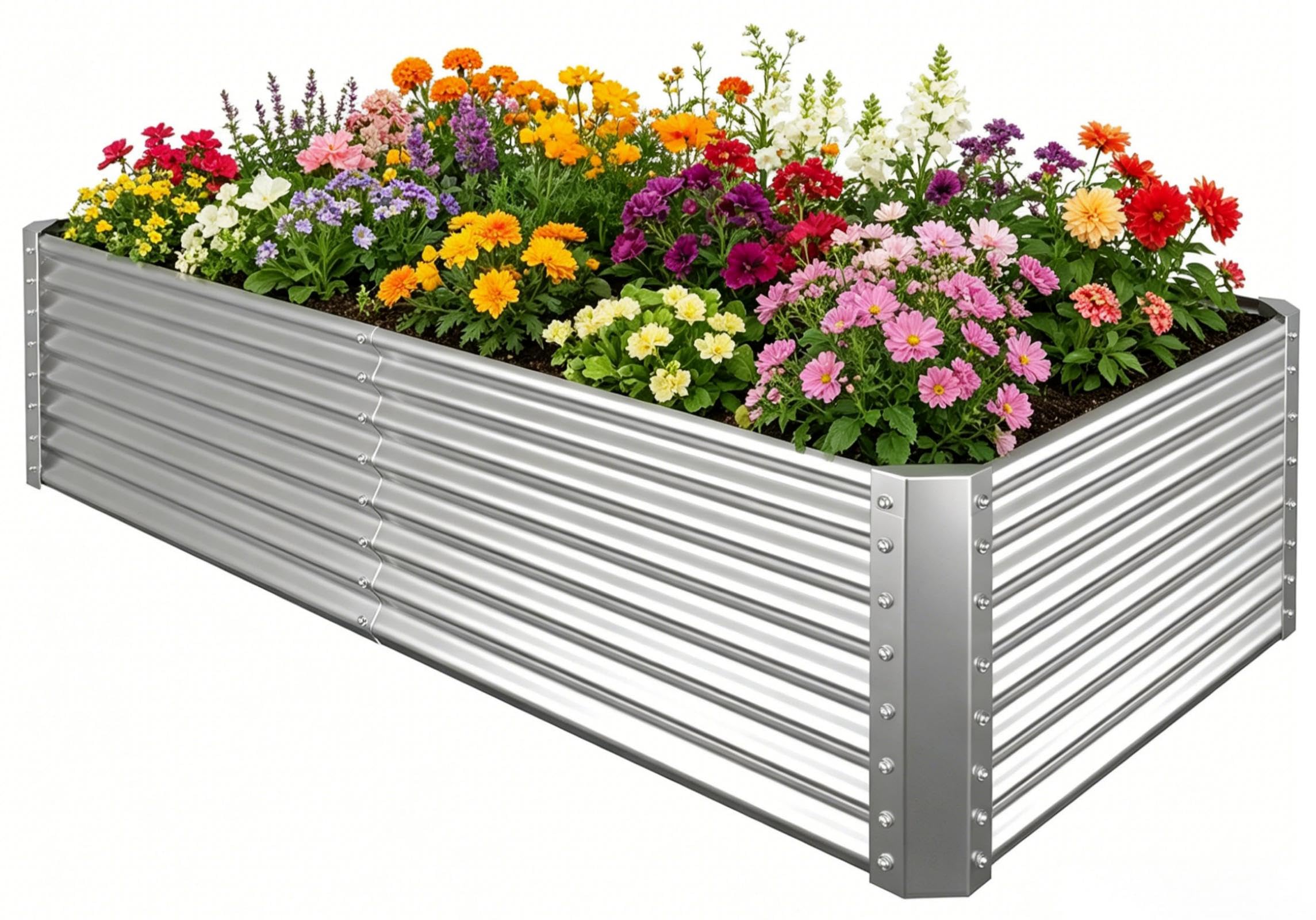
The Tegarbed strikes a smart balance between footprint and depth. At 6 feet by 3 feet with a full 24 inches of sidewall, this bed provides 36 cubic feet of soil volume without taking over the entire yard. The key differentiator is the 1.0 mm galvanized steel thickness — noticeably heavier than many budget kits — combined with a reinforced center brace that prevents the long sides from bulging outward when fully saturated.
All edges are smooth-polished, and the corners are protected for safe handling during assembly. The bottom is completely open, allowing native soil contact and natural drainage. Owners note that the 2-foot height makes a dramatic difference in gardening comfort, and several reviewers mention assembling the kit alone in under 45 minutes using the included hardware and tools.
While the metal is thick enough to resist denting during assembly, a few owners note that the unit can feel slightly flimsy before soil is added — once filled, the weight firms the structure solidly. The silver galvanized finish is clean and modern, working well in both backyard and greenhouse settings. For gardeners who want a tall, deep-root-capable bed without the massive footprint of an 8-foot model, this is the sweet spot.
What works
- 1.0 mm steel is noticeably sturdier than thin-gauge competitors
- 24-inch depth supports carrots, potatoes, and tall tomatoes
- Center brace effectively prevents sidewall bowing
What doesn’t
- Feels wobbly before soil fill
- Single-pack only — no multi-bed savings
4. SnugNiture 3-Pack 4x2x1.5ft Raised Garden Bed

The SnugNiture three-pack delivers three 46-inch by 23.6-inch beds at 17 inches tall, giving you roughly 11 cubic feet of total soil volume spread across separate planting zones. The oval shape is constructed from thickened galvanized steel that resists deformation, and each bed is fitted with black rubber safety edging at the top rim to protect hands and arms during planting and weeding.
Assembly requires patience — each bed uses wingnuts and bolts, and the accompanying plastic film removal adds time. Owners estimate 60–90 minutes per bed for a careful first build. The open-base design ensures water flows out naturally, and the 17-inch height provides a meaningful reduction in stooping while still accommodating peppers, eggplants, and bush tomatoes comfortably.
The brown color mimics wood grain, making these beds blend well into existing landscaping. While a few owners note that the wingnuts on some units did not fit the crossbars perfectly, the majority find the sturdiness solid after fill. The boxed set is economical for gardeners wanting multiple planting zones without buying individual kits at a higher per-unit cost.
What works
- Three beds per box offers excellent value per planting zone
- Rubber edging prevents cuts during garden maintenance
- 17-inch height reduces bending while supporting medium-root crops
What doesn’t
- Protective plastic removal is tedious and time-consuming
- Wingnut fit is inconsistent across some units
5. BIRDSINYARD Galvanized Raised Garden Bed 4x2x1ft 2-Pack
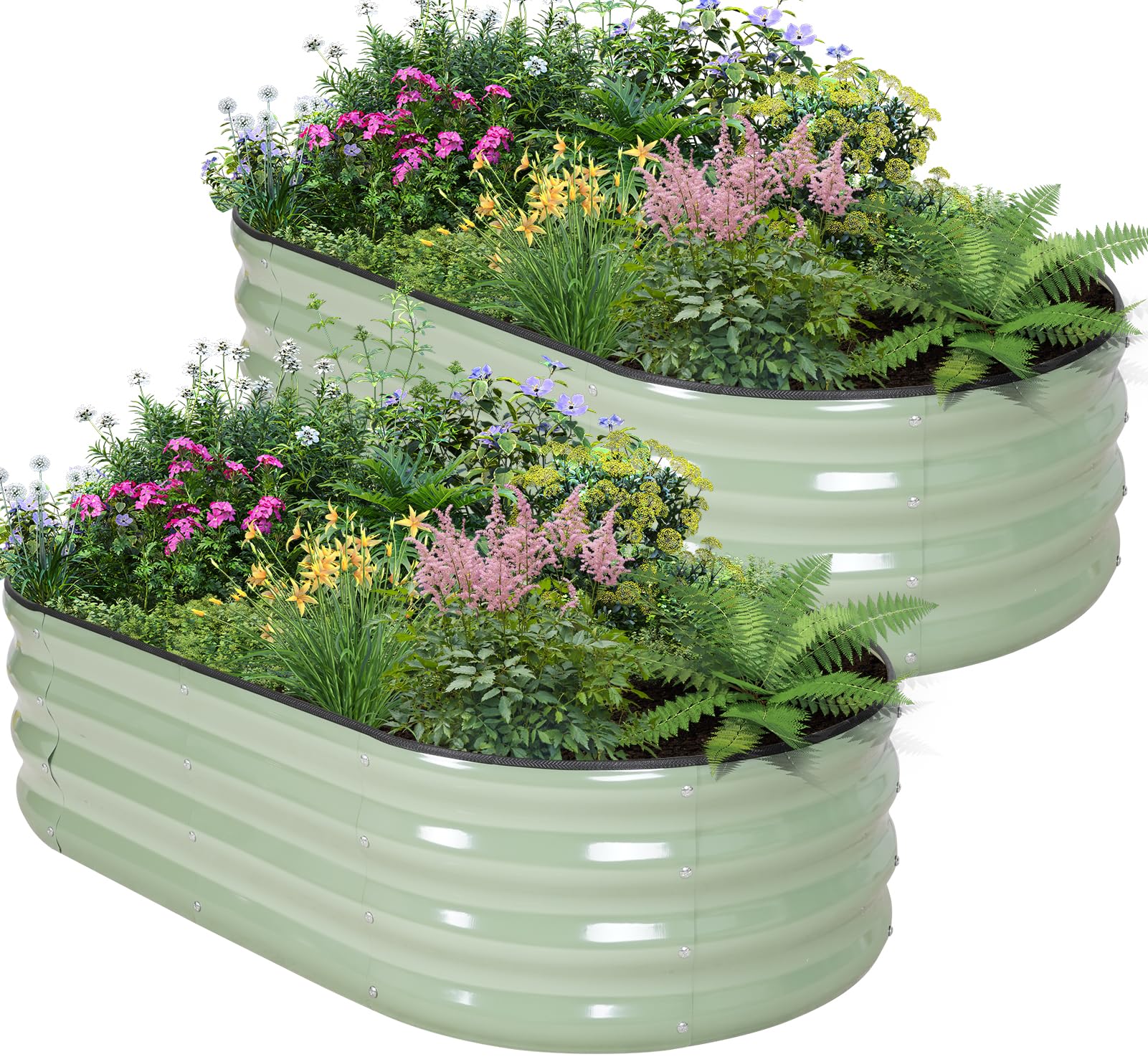
The BIRDSINYARD stands out for its avocado-green powder coating applied over a galvanized steel core. That dual-layer finish provides better long-term weather resistance than raw galvanized alone — the powder coat seals against moisture ingress that can cause white rust. Each pack includes two 47.24-inch by 23.62-inch beds with 12-inch sidewalls, making them ideal for shallow-root greens, herbs, and strawberries.
Safety was clearly prioritized here: black rubber sealing edges run along the top rim to prevent cuts, and the included gloves add extra protection during assembly. The open-bottom design is standard, and the beds sit flush on the ground. Assembly time is roughly 10–15 minutes per bed thanks to clearly labeled hardware and straightforward instructions.
The main limitation is the 12-inch depth. It works well for lettuce, spinach, and radishes, but deeper-rooted vegetables like carrots or indeterminate tomatoes will feel cramped. A few owners noted minor scratches on the powder coating during shipping, though the galvanized layer underneath prevents rust. Overall, this is a strong choice for a gardener focused on aesthetics and safety in a contained bed.
What works
- Avocado-green powder coat resists rust better than bare galvanized
- Rubber edging and included gloves improve safety
- Quick assembly under 15 minutes per bed
What doesn’t
- 12-inch depth restricts deep-root crops
- Powder coat can scratch during shipping
6. DIIYIV 2-Pack 12x4x1ft Galvanized Raised Garden Bed

The DIIYIV two-pack covers 48 square feet of ground per bed — that is 96 square feet of total planting surface at a mid-range price. At 12 inches deep, these are strictly shallow-root beds, but for sprawling vegetables like squash, cucumbers, and melons that spread horizontally, the wide footprint is a strategic advantage. Each panel is galvanized on all surfaces to resist corrosion.
Corner pads cover the four upper and lower edges to prevent puncture injuries, and the steel plate edges are polished to reduce cut risk. Assembly does not require additional tools, though the thin-gauge metal means the beds wobble noticeably before soil fill — once packed, the weight firms the structure, but leaning on the side can still cause bending. Owners recommend filling the bottom third with wood mulch to reduce soil volume and cost.
The 144-inch length makes these beds difficult to access from the center without stepping in — plan your layout with pathways on both long sides. A few reviewers note the nuts provided are slightly undersized, so having a spare 1/4-inch nut from a hardware bin is helpful. For gardeners who prioritize horizontal surface area for trailing vegetables over depth, this is a practical option.
What works
- Massive 12×4 footprint suits sprawling crops
- Corner pads reduce sharp-edge risk
- Two-pack covers 96 square feet total
What doesn’t
- Thin-gauge metal bows if leaned on
- Some hardware has fit issues
7. zizin 2-Pack Galvanized Raised Garden Bed 6x3x1ft

The zizin twin-pack gives you two 6-by-3-foot beds at a budget-friendly entry point into raised-bed gardening. Each bed uses multi-corrugated galvanized sheet metal that adds some rigidity without heavy material cost. At 12 inches deep, these beds are best suited for leafy greens, herbs, peppers, and bush varieties — root crops will hit the bottom.
Assembly is notably quick: multiple owners report completing each bed in under ten minutes using the included support rods that connect the middle of the long sides to prevent bowing. The hardware pack is comprehensive, though two reviewers noted missing nuts (with extras from other beds filling the gap). The bottomless design allows natural drainage, and the silver galvanized finish is clean and utilitarian.
The thinness of the metal panels is the most commonly cited concern — they are lightweight and can flex before soil is added. A few owners worried about long-term durability, with estimates of a few seasons before corrosion could appear in wet climates. For starting a vegetable garden on a tight budget, the value per square foot is unmatched, but plan for replacement or reinforcement after 2–3 seasons in humid regions.
What works
- Excellent value for two large beds
- 10-minute assembly per bed with clear instructions
- Support rods reduce sidewall bowing
What doesn’t
- Thin metal panels feel less durable long-term
- Missing hardware in some kits
Hardware & Specs Guide
Metal Gauge & Thickness
Thicker steel (1.0 mm vs. 0.4 mm) resists bowing, denting, and rust penetration over time. Look for “1.0 mm” or “0.8 mm” in the spec sheet — thinner panels at 0.4–0.5 mm may require center braces and still deform under wet soil. Corrugated profiles add structural stiffness without extra weight.
Powder Coating vs. Bare Galvanized
Bare galvanized steel develops a protective zinc patina but can show white rust in constant moisture. A baked-on powder coating (like the avocado green finish on the BIRDSINYARD) creates a sealed barrier that prevents oxidation. For coastal or high-rainfall zones, powder-coated units outlast bare metal by a significant margin.
Sidewall Height & Soil Volume
Every extra inch of sidewall height adds measurable soil volume and root space. A 6x3x1-foot bed holds 18 cubic feet; a 6x3x2-foot bed holds 36 cubic feet. Taller walls also provide physical barriers against ground-dwelling pests. For root vegetables like carrots and potatoes, prioritize 18 inches or more.
Open-Bottom Drainage Mechanics
Bottomless beds depend on contact with native soil for water to percolate downward. This prevents the anaerobic conditions that cause root rot. If placing on concrete or a deck, the bed must have a solid floor with drainage holes — otherwise, water pools at the bottom and suffocates roots within weeks.
FAQ
How tall should a vegetable bed be for carrots and potatoes?
Will galvanized steel raised beds leach zinc into my vegetables?
Can I put a raised bed directly on grass or sod?
Final Thoughts: The Verdict
For most gardeners, the beds for vegetables winner is the A ANLEOLIFE 8x4x2ft because its 0.8 mm corrugated steel, 478-gallon capacity, and 24-inch depth cover every essential — deep roots, reduced bending, heavy rain stability, and pest deterrence. If you want stand-up gardening on a patio with zero stooping, grab the Gardener’s Supply Elevated Cedar. And for a proven deep-dirt value in a manageable 6×3-foot footprint, nothing beats the Tegarbed Tall Galvanized Kit.