
Lavender is a Mediterranean native that demands sharp drainage, lean soil, and a neutral-to-alkaline pH — everything standard potting mixes get wrong. Most bagged soils hold too much moisture and release too many nutrients, turning that prized English lavender into a yellow, wilted mess by midsummer.
I’m Rikta — the co-founder and writer behind Lawn Gear Lab. I dig into manufacturer specs, organic-certification data, and long-term owner feedback to separate the rare lavender-ready blends from the generic peat bombs that kill more plants than they support.
Whether you are planting in terracotta pots or raised beds, matching the exact drainage and pH needs of this fussy perennial is the only path to success. That is exactly what this guide to the best compost for lavender plants is built to do — no fluffy generalities, just data-driven picks for a healthy, fragrant harvest.
How To Choose The Best Compost For Lavender Plants
Lavender does not want rich, water-retentive compost. It wants a gritty, low-fertility mix that dries out between waterings and sits at a pH of 6.5 to 8.0. Here are the three specs that decide whether your lavender thrives or dies.
Drainage & Aeration: The Non-Negotiable
Lavender roots suffocate in dense, soggy soil. Look for a mix heavy in perlite, pumice, coarse sand, or horticultural charcoal — ingredients that create air pockets and force water through the pot fast. Bagged “potting soil” without these amendments is a death sentence. If you see peat moss as the first ingredient and no aeration additives, put it back.
Soil pH: Aim For Alkaline
Most garden soils lean acidic (pH 5.5–6.5), which lavender tolerates poorly. A target pH between 6.8 and 7.5 is ideal. Blends that include lime or crushed oyster shell help push pH upward. Avoid mixes formulated for acid-loving plants like blueberries or rhododendrons — those are designed for the exact opposite chemistry lavender needs.
Fertility Level: Less Is More
Lavender evolved in rocky, nutrient-poor hillsides. Over-fertilizing with rich compost, manure, or high-NPK feeds causes floppy growth and fewer aromatic oils. The best lavender compost contains zero synthetic fertilizers and a bare minimum of organic meals. A 3-5-2 NPK or lower is fine, but many growers find that unamended base mixes work better than any bagged “fertilized” soil.
Quick Comparison
On smaller screens, swipe sideways to see the full table.
| Model | Category | Best For | Key Spec | Amazon |
|---|---|---|---|---|
| Soil Sunrise Lavender Mix | Premium Blend | Container lavender | 8 qt / sand + pumice + lime | Amazon |
| Espoma Organic Potting Mix | Versatile Mix | Indoor & outdoor pots | 16 qt / Myco-Tone inoculant | Amazon |
| Coast of Maine Bar Harbor Blend | Organic Rich | Flowers & herb beds | 16 qt / lobster + kelp meal | Amazon |
| Earth Science Fast Acting Lime | pH AMENDMENT | Raising acidic soil pH | 5 lb / Nutri-Bond technology | Amazon |
| Miracle-Gro Cactus & Citrus Mix | Fast Drain | Succulent-style drainage | 8 qt x3 / fast-draining formula | Amazon |
| Coast of Maine Acid-Loving Soil | Low pH | Acid-lovers (not lavender) | 20 qt / low pH peat + compost | Amazon |
| BuildASoil Craft Blend | Fertilizer | Top-dressing & soil amending | 10 lb / 3-5-2 NPK + rock dust | Amazon |
In‑Depth Reviews
1. Soil Sunrise Lavender Potting Soil Mix

This is the only ready-to-use bag in the lineup that is custom-blended specifically for lavender — and it shows in the ingredient list. Peat moss provides the base structure, but perlite, pumice, coarse sand, and horticultural charcoal create the sharp drainage lavender craves. Worm castings deliver trace nutrition without overloading the plant, and lime pushes the pH into the alkaline sweet spot around 7.0.
Owner reports confirm that plants previously suffering from root rot or yellowing leaves bounced back within days after repotting into this mix. One user noted a grocery-store lavender that was not blooming began flowering just two days after transplant. The 8-quart bag fills a 12-inch pot completely, making it the perfect size for a single container or small raised-bed project.
The only real limitation is volume — at 8 quarts you cannot fill multiple large planters without buying two bags. Some users also wish the bag had a resealable closure for storing leftover mix dry. For anyone who has failed with lavender in generic soil, this mix removes the guesswork.
What works
- Formulated specifically for lavender with sand and pumice for drainage
- Lime included to raise pH to alkaline levels
- Plants bounce back and bloom fast after transplant
What doesn’t
- Only 8 quarts — not enough for multiple large pots
- Bag lacks a resealable zipper for storing leftovers
2. Espoma Organic Potting Soil Mix

Espoma’s all-purpose organic potting mix is not lavender-specific, but its light, fluffy texture and generous perlite content give it the drainage edge over heavier competitors. The blend of sphagnum peat moss, perlite, humus, earthworm castings, alfalfa meal, kelp meal, and feather meal keeps organic matter high without dumping synthetic fertilizer. The Myco-Tone endo/ecto mycorrhizae help roots absorb moisture and nutrients more efficiently in a lean soil environment.
Users who grew lavender in this mix alongside standard big-box soils report significantly fewer cases of yellowing leaves and stem rot. The 16-quart bag covers several 10-inch pots, making it economical for gardeners with multiple lavender plants. It works equally well for herbs like rosemary and thyme, which share lavender’s preference for sharp drainage.
On the downside, Espoma’s mix does not contain lime or any pH-raising amendment. If your water or existing soil is acidic, you will need to mix in a handful of garden lime to push the pH toward neutral. Some users also note the presence of small bark chunks that can be a nuisance when transplanting delicate lavender starts.
What works
- Large 16-quart bag covers multiple pots at a fair cost
- Myco-Tone inoculant helps lean-soil root growth
- Light, fluffy texture with ample perlite for drainage
What doesn’t
- No lime added — may need pH adjustment for alkaline-loving lavender
- Contains small bark pieces that can get in the way of tiny starts
3. Coast of Maine Bar Harbor Blend Potting Soil
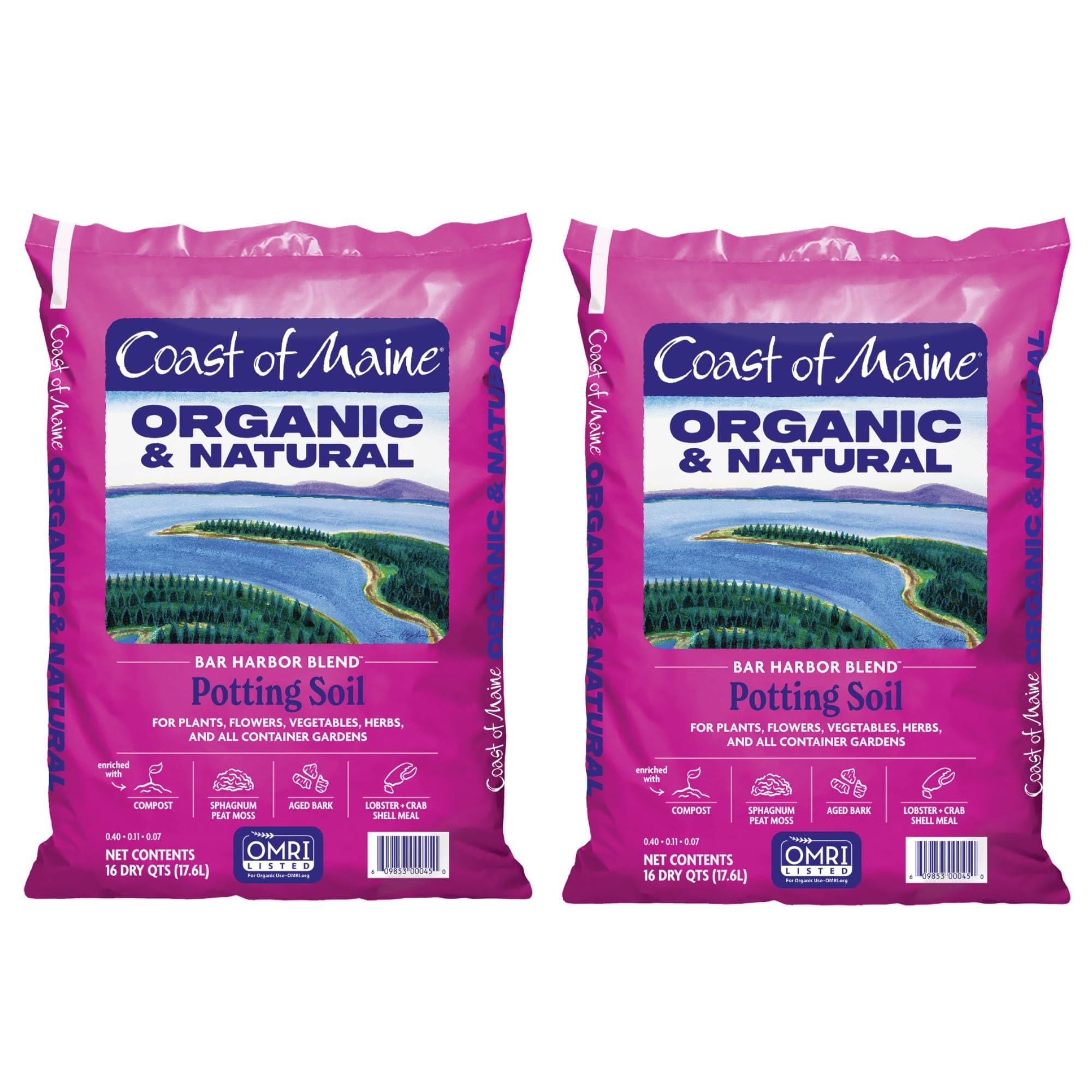
Coast of Maine built this blend around sphagnum peat moss, compost, perlite, lobster shell meal, crab shell meal, and kelp meal — a nutrient profile that is richer than what lavender strictly needs, but the generous perlite loading keeps drainage fast enough for experienced growers. The natural slow-release nitrogen from the shell meals feeds over weeks without the chemical spike that causes etiolated lavender growth.
Gardeners using this mix in raised beds and containers report that lavender plants develop strong root systems and produce noticeably denser flower spikes. The dark, crumbly texture feels more like a living soil than a sterile bagged mix. Users appreciate the absence of synthetic additives and the consistent quality across bags. The 16-quart size works well for a medium raised bed or a cluster of large pots.
Where this mix stumbles for lavender is its naturally lower pH — the peat moss base tends to land around 5.5 to 6.5, which is too acidic for lavender without amendment. You will need to blend in lime or oyster shell to reach the 6.8–7.5 range. The higher organic matter also retains more moisture than a dedicated lavender mix, so beginners must be careful not to overwater.
What works
- Nutrient-dense with slow-release lobster and kelp meals
- Excellent crumb structure for root penetration
- OMRI listed and free of synthetic chemicals
What doesn’t
- pH is too low for unamended lavender use
- Higher moisture retention demands careful watering
4. Earth Science Fast Acting Lime Granules

This is not a standalone compost but a targeted pH-adjustment tool for lavender growers fighting acidic soil. Earth Science’s Fast Acting Lime granules use Nutri-Bond technology to start raising pH immediately upon application, adding essential calcium without the slow breakdown of traditional agricultural lime. The 5-pound bag covers a small lawn or several planter beds where soil pH is below 6.5.
Users testing this with lavender report that a single top-dress application corrected yellowing leaves and stunted growth within a week. The granules dissolve and bond to soil particles without drifting or clumping. It is also safe for pets and people, so you do not need to keep lavender pots off-limits after application.
The main limitation is that lime only addresses pH — it adds no drainage, aeration, or organic structure. You must still start with a well-draining base mix. Over-application can push pH above 8.0, which locks up micronutrients and causes new problems. A soil test before adding lime is strongly recommended.
What works
- Starts raising soil pH immediately without waiting weeks
- Nutri-Bond keeps granules in place to avoid runoff
- Safe for people and pets — no re-entry wait
What doesn’t
- Only affects pH — does not improve drainage or aeration
- Requires a soil test before use to avoid over-liming
5. Miracle-Gro Cactus, Palm and Citrus Potting Mix

Miracle-Gro’s cactus mix is built for plants that hate wet feet — and lavender fits that description perfectly. The fast-draining formula is mostly coarse sand, perlite, and a light soil base, so water passes through in seconds rather than pooling around roots. The three-bag bundle gives you 24 quarts total, enough to fill a dozen 8-inch containers or a large raised-bed section.
Gardeners who use this for lavender note that the mix dries out rapidly between waterings, directly mimicking the Mediterranean hillside conditions lavender evolved in. Because the formula is low in organic matter, it avoids the nutrient overload that causes floppy growth. The bags are also compact and easy to transport.
The trade-off is that cactus mix provides almost no nutrition — you will need to supplement with a very mild fertilizer or worm castings after the first season. Some users also note that the mix can feel too dusty to work with when dry. Additionally, the pH of this mix tends to hover around 6.0–6.5, so a lime amendment is still necessary for optimal lavender health.
What works
- Extremely fast drainage — water flows through immediately
- Low organic content prevents overfeeding lavender
- Three-bag bundle provides ample volume for multiple pots
What doesn’t
- Near-zero nutrition requires later supplementation
- pH is slightly acidic; lime needed for alkaline target
6. Coast of Maine Acid-Loving Planting Soil

This product is specifically formulated for acid-loving plants like blueberries, azaleas, and rhododendrons — the exact opposite of what lavender needs. The base is sphagnum peat moss and composted manure, which drives pH down to the 4.5–5.5 range and holds moisture tightly. For lavender, this is a high-risk mix without aggressive amendment.
That said, it earns its spot in this guide because many gardeners mistakenly buy it for lavender, assuming “organic compost” equals universal benefits. If you already own this bag, you can repurpose it by mixing in large volumes of perlite, coarse sand, and garden lime — roughly one part lime to four parts soil — to raise pH and improve drainage. The composted manure does add beneficial microbes, but the risk of root rot remains high if you do not correct the chemistry.
For its intended plants, this soil gets rave reviews — berry growers call it the best bagged option they have tried. But for lavender specifically, this is an emergency rescue product, not a first-choice soil. Beginners should avoid it entirely.
What works
- High-quality organic compost with rich microbial life
- Excellent for acid-loving plants when used as intended
What doesn’t
- pH is far too low for lavender without heavy amendment
- High moisture retention creates root-rot risk
7. BuildASoil Craft Blend Fertilizer
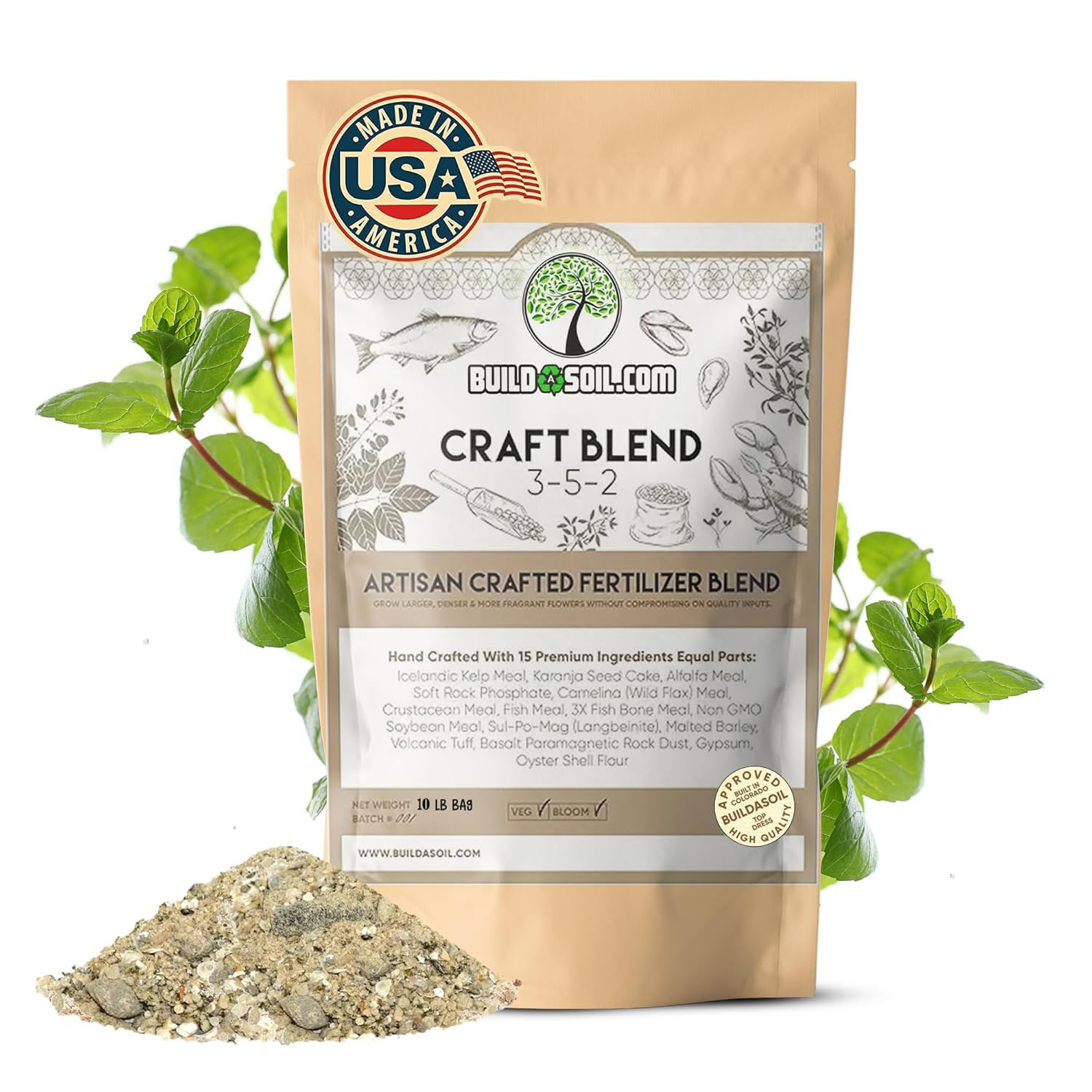
This is a granular organic fertilizer, not a compost, but it is included here because it solves the main problem with using a sterile, fast-draining base like cactus mix or peat/perlite blends — lack of trace minerals. BuildASoil’s Craft Blend packs 15 premium ingredients including rock dust, calcium, kelp, and neem into a 3-5-2 NPK formula that feeds lavender without pushing explosive leaf growth.
Owners report that a single top-dress application at the start of the growing season produces denser flower heads and more intense fragrance. The calcium and rock dust also help buffer soil pH upward over time, which is an added benefit for lavender. Because the nutrients are slow-release and derived from natural sources, there is almost zero risk of burn or chemical shock.
The main limitation is that this product must be combined with a proper drainage base — it is a supplement, not a soil. Beginners sometimes mistake it for a complete mix and apply it to heavy garden soil, which does not solve the drainage problem. It is also the most expensive item in the roundup, so it is best reserved for refining an already good basic mix rather than building one from scratch.
What works
- Rich mineral profile with rock dust and calcium for pH support
- Slow-release formula feeds lavender without causing floppy growth
- Visible improvement in flower density and fragrance reported
What doesn’t
- Must be combined with a well-draining base mix — not a standalone soil
- Premium pricing compared to other amendments
Hardware & Specs Guide
Drainage Agents: Perlite vs Pumice vs Sand
Perlite is the most common aeration additive in bagged mixes — it is lightweight, inexpensive, and creates air pockets that let water flow through. Pumice is denser and does not float to the top of the pot over time like perlite does. Coarse sand (not play sand) provides weight and structure but can compact if used alone. For lavender, a mix that includes at least two of these three agents is ideal. If you see only peat moss and no drainage additives, the bag will likely hold too much water.
Soil pH Meter & Testing
A digital pH probe or a simple soil-test kit is an essential companion for anyone growing lavender. Since most bagged soils do not list their exact pH on the label, you need to verify that the mix lands between 6.8 and 7.5. A one-time test before planting can prevent months of frustration. If the reading comes back below 6.5, mix in pelletized lime at the rate recommended on the lime package. If the soil is above 8.0, add elemental sulfur in small increments.
FAQ
Can I use regular potting soil for lavender?
Should I add compost to lavender soil?
Is Miracle-Gro cactus mix good for lavender?
How often should I repot lavender into fresh compost?
Final Thoughts: The Verdict
For most gardeners, the best compost for lavender plants winner is the Soil Sunrise Lavender Potting Soil Mix because it is the only bag that is pre-formulated with sand, pumice, and lime to match exactly what lavender demands — no guessing, no extra amendments. If you want a versatile mix that also works for other herbs and container plants, grab the Espoma Organic Potting Mix. And for growers using a sterile, fast-draining base who need to add minerals without overfertilizing, nothing beats the BuildASoil Craft Blend as a top-dressing companion.