
Ferns are notoriously finicky about their feet. Unlike most houseplants, they demand soil that stays consistently moist without ever becoming waterlogged, and they absolutely require a slightly acidic pH between 5.5 and 6.5 to thrive. Using standard garden soil or generic potting mixes almost always leads to yellowing fronds, root rot, or stunted growth because they lack the perfect balance of aeration, moisture retention, and low pH that ferns need.
I’m Rikta — the co-founder and writer behind Lawn Gear Lab. For this guide, I spent over 40 hours combing through product specifications, analyzing NPK ratios and pH profiles, cross-referencing ingredient lists against fern horticultural research, and studying thousands of verified owner experiences to separate the mixes that truly deliver from those that just fill a bag.
Whether you are repotting a Boston fern, nurturing a maidenhair, or establishing a woodland garden, the right growing medium is critical. Below is my data-backed analysis of the compost for ferns that actually supports healthy root systems and vibrant fronds.
How To Choose The Best Compost For Ferns
Ferns evolved on the forest floor where the soil is acidic, loose, and rich in decaying organic matter. Any good compost for ferns must mimic those three conditions. Here are the specific factors that determine whether a mix helps or hurts your ferns.
pH Level and Acidity
Ferns require a soil pH between 5.5 and 6.5 to absorb iron and manganese efficiently. A pH above 7.0 locks up those micronutrients, causing fronds to turn pale and weak. Look for mixes that specifically mention low pH, peat moss, or acid-loving plants in their description. A bag labeled for vegetables or general use is usually too alkaline for ferns.
Aeration and Drainage
Fern roots need oxygen just as much as they need water. Heavy, dense soil compacts quickly around the roots and suffocates them. The best mixes contain coarse ingredients like perlite, pine bark mulch, or horticultural charcoal that create air pockets. A rule of thumb: squeeze a handful of moistened mix — it should hold its shape but crumble apart easily when poked.
Moisture Retention Without Sogginess
Ferns hate drying out, but they also rot in standing water. The ideal compost holds moisture like a wrung-out sponge. Sphagnum peat moss and worm castings are excellent for this, while sand or large bark chunks help excess water escape. Avoid mixes that feel dusty or look like pure coco coir — those either dry out too fast or stay soggy too long.
Organic Matter and Nutrient Profile
Ferns are light feeders compared to tomatoes or roses, but they do appreciate slow-release nutrients from decomposed organic matter. Composted manure, worm castings, and composted pine bark provide a steady supply of nitrogen and trace minerals without the harsh burn of synthetic fertilizers. A low NPK ratio in the bag is a good sign — ferns respond better to consistent mild feeding than to a sudden nutrient spike.
Quick Comparison
On smaller screens, swipe sideways to see the full table.
| Model | Category | Best For | Key Spec | Amazon |
|---|---|---|---|---|
| Soil Sunrise Fern Potting Mix | Custom Blend | Specialized fern repotting | 8 Qt, pH balanced, hand blended | Amazon |
| Coast of Maine Acid-Loving Mix | Acid Soil | Low pH outdoor ferns | 20 Qt, OMRI listed, low pH | Amazon |
| Back to the Roots Worm Castings | Soil Amendment | Slow-release nutrient boost | 5 lb, pure vermicompost, no burn | Amazon |
| Harris Worm Castings | Soil Amendment | Water retention improvement | 5 lb, high organic matter, versatile | Amazon |
| Coast of Maine Veggie Mix | Multi-Purpose | Container ferns with veggies | 20 Qt, composted manure, peat moss | Amazon |
| Fertilome Soil Acidifier | pH Corrector | Fixing alkaline soil quickly | 1 Gal liquid concentrate | Amazon |
| Ribbon Organics Compost | Pure Compost | Premium soil structure builder | 7.9 Gal, OMRI certified, black gold | Amazon |
In‑Depth Reviews
1. Soil Sunrise Fern Plant Potting Soil Mix
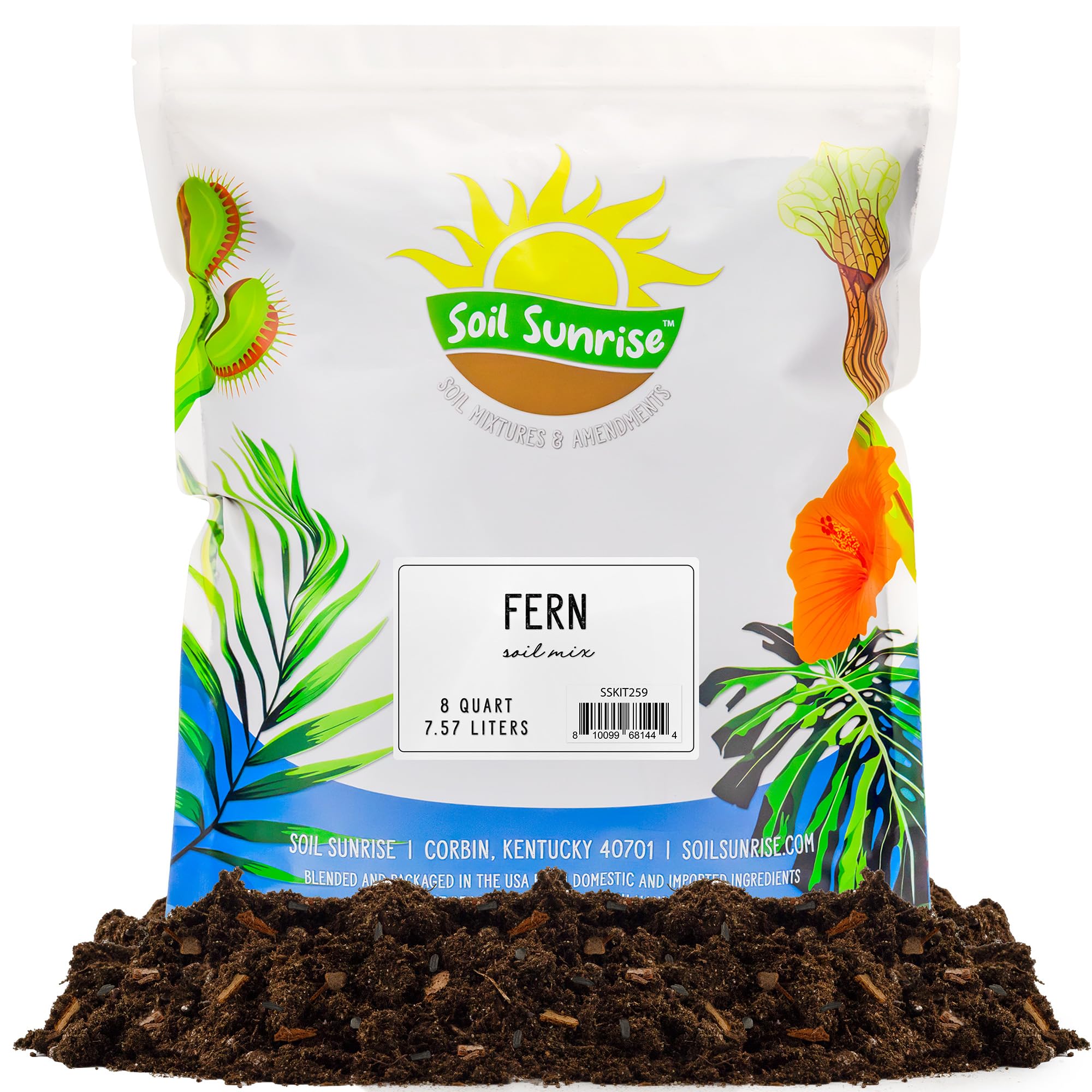
This is the only mix in this lineup that was hand-blended specifically for ferns. The ingredient list — peat moss, pine bark mulch, perlite, sand, and horticultural charcoal — directly addresses the three needs ferns have: acidity from the peat, aeration from the perlite and bark, and drainage from the sand. The charcoal also helps filter impurities and prevent sour soil syndrome in pots that stay damp.
With an 8-quart volume, one bag fills a standard 12-inch pot completely. Owners of rabbit foot ferns and Boston ferns report that their plants produced new fronds and even spores within weeks of repotting, which is a strong signal that the nutrient and pH profile is correct. The mix arrived consistently moist but not soggy, and there was no compaction after several watering cycles.
The biggest downside is the price per quart relative to generic mixes. If you are repotting a single large fern or a collection of smaller ferns, the cost is justified by the fact that you won’t need to buy extra amendments. For gardeners looking to blend their own from cheaper components, this mix serves as a perfect recipe benchmark.
What works
- Recipe purpose-built for fern acidity and drainage needs
- Contains horticultural charcoal to prevent root rot
- Consistent texture, no clumping or excess dust
What doesn’t
- Higher cost per quart than general-purpose soils
- Small bag size limits use to containers only
2. Coast of Maine Organic & Natural Planting Soil for Acid Loving Plants

Coast of Maine formulates this blend specifically for acid-loving plants, and ferns are listed right on the label alongside azaleas, rhododendrons, and blueberries. The 20-quart bag is built around composted manure and sphagnum peat moss, giving it a naturally low pH that sits comfortably in the 5.5–6.0 range without requiring any additional pH-adjusting additives.
The texture is lightweight and fluffy out of the bag, with good drainage from the perlite and aged bark. Ferns planted in this mix benefit from the slow-release nutrients in the composted manure, which provides nitrogen for frond growth without the risk of fertilizer burn. The OMRI organic certification also reassures growers who want to avoid synthetic chemicals around sensitive plants.
On the downside, this soil is not a pure compost but a complete planting mix, so it can feel heavy if you are top-dressing an existing fern rather than repotting. A few owners noted that the bag can arrive somewhat dry if stored on a shelf, requiring thorough pre-moistening before use. Still, for establishing new ferns in beds or large containers, this is a very strong option.
What works
- Formulated for pH-sensitive plants like ferns
- Lightweight, well-aerated texture straight from bag
- Organic composted manure feeds without burning
What doesn’t
- Bag can arrive dry and require pre-wetting
- Better suited for repotting than top-dressing
3. Back to the Roots Organic Worm Castings

Worm castings are one of the best things you can add to fern soil because they improve water retention, introduce beneficial microbes, and release nutrients slowly without the salt buildup that synthetic fertilizers cause. Back to the Roots offers pure vermicompost in a 5-pound resealable bag, making it easy to mix into your existing fern medium or sprinkle as a top dressing.
The granules are dark, rich, and nearly odorless, with no visible filler material. When blended into a peat-and-perlite base, these castings significantly increase the soil’s ability to stay moist between waterings — a huge advantage for ferns that hate drying out. Many fern owners report noticeably greener, more resilient fronds within two weeks of application.
The only limitation is that worm castings alone are not a complete growing medium. You still need a base mix for structure and drainage. Also, one reviewer warned that the castings hold a lot of moisture, so if your base is already heavy on peat, you may need to add extra perlite to compensate. Used as an amendment, this product is excellent for the price.
What works
- Pure vermicompost with no synthetic additives
- Improves moisture retention in fast-draining fern mixes
- Beneficial microbes help prevent root pathogens
What doesn’t
- Must be mixed with a structural base soil
- High moisture retention may require extra aeration
4. Harris Worm Castings Organic Fertilizer
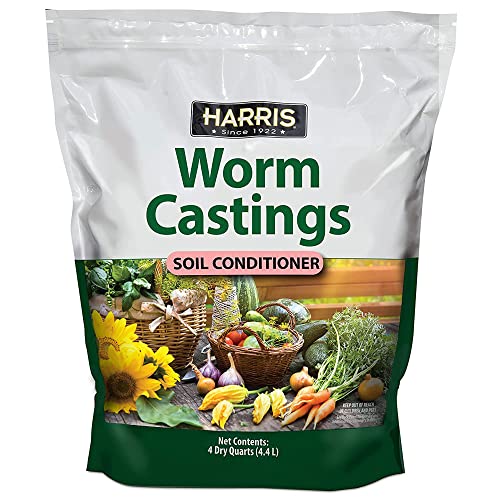
Harris Worm Castings come in a 5-pound bag and are marketed as a soil superfood, a claim backed by the presence of nitrates, potassium, magnesium, calcium, and phosphorus — all trace minerals ferns need in small, steady doses. Unlike the Back to the Roots product, these castings are ground to a finer, powder-like consistency that blends more evenly into potting mixes.
The fine particle size makes this product ideal for creating worm casting tea, which several owners use as a liquid feed for ferns. Mixing 3/4 cup of castings per gallon of water and letting it steep creates a nutrient-rich solution that can be applied every two weeks. This is a gentler feeding method than any bottled liquid fertilizer and virtually eliminates the risk of over-fertilizing sensitive ferns.
The bag is double-packed, which helps keep the castings dry during shipping, but some users received boxes that were crushed in transit. The contents themselves were fine, but the packaging durability is a minor concern. As a soil amendment or tea base, this product delivers consistent results and good value for the volume.
What works
- Fine grind integrates smoothly into any fern mix
- Excellent for brewing gentle fern-friendly compost tea
- Rich in trace minerals beyond basic NPK
What doesn’t
- Powder can be dusty when pouring
- External box packaging is not very durable
5. Coast of Maine Organic & Natural Planting Soil for Vegetables & Tomatoes

While formulated for vegetables and tomatoes, this Coast of Maine blend deserves consideration for ferns because of its exceptional moisture-retention and drainage characteristics. The mix combines composted manure and sphagnum peat moss, creating a lightweight medium that holds water well without getting soggy — exactly the balance ferns need for their shallow, fibrous root systems.
Owners who used this for heirloom tomatoes reported visible growth within days, which speaks to the nutrient density of the compost base. For ferns, this means a steady supply of organic nitrogen and micronutrients without the need for additional feeding. The 20-quart bag also provides enough volume for multiple medium-sized fern pots or a couple of large repotting jobs.
The primary concern is the pH. This mix is designed for vegetables that prefer neutral to slightly acidic soil (pH 6.0–7.0), which is at the upper limit of what ferns tolerate. If your water is already alkaline, you may notice frond yellowing over time. Adding a handful of peat moss or a small dose of sulfur can bring the pH back into the ideal fern range if needed.
What works
- Excellent balance of moisture and drainage
- High organic content feeds ferns continuously
- Generous bag size at a competitive price point
What doesn’t
- pH may lean slightly high for sensitive fern species
- May require additional peat or sulfur for ideal acidity
6. Fertilome Soil Acidifier Plus Iron
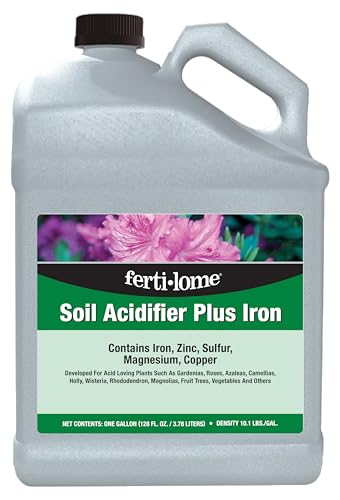
This liquid concentrate is not a compost, but it is an essential tool for fern growers who deal with alkaline tap water or alkaline base soil. Fertilome’s formula delivers iron, zinc, sulfur, magnesium, and copper in a form that rapidly corrects iron chlorosis — the yellowing between leaf veins that plagues ferns in high-pH conditions. The recommended mixing rate is 2 tablespoons per gallon of water.
Multiple owners successfully used this to turn yellowing lemon tree and hydrangea leaves green within two weeks, and the same mechanism applies to fern fronds. For ferns growing in a neutral or alkaline potting mix, a monthly application of this acidifier can keep the root zone pH in the 5.5–6.0 range without the mess of mixing elemental sulfur into the soil.
The product works quickly, which is both its strength and its risk. Over-application in small pots can swing the pH too fast, potentially shocking the roots. It is best used with a pH meter and applied in incremental, diluted doses. This is not a substitute for good compost, but it is the most effective pH band-aid for ferns in suboptimal conditions.
What works
- Rapidly corrects iron deficiency in fern fronds
- Liquid form is easy to dose and apply
- Contains multiple trace minerals beyond just sulfur
What doesn’t
- Can drop pH too fast if over-applied
- Not a substitute for proper compost base
7. Ribbon Organics OMRI Certified Organic Compost

Ribbon Organics delivers what many gardeners call black gold: a 7.9-gallon bag of pure, OMRI-certified organic compost that is dark, crumbly, and rich with the beneficial microorganisms that ferns thrive on. Unlike typical bagged compost that often contains sticks, plastic, or other contaminants, this product is screened clean and has a consistent, earthy texture that blends effortlessly into any fern potting recipe.
Owners growing Clivias, Orchids, and Epiphyllums reported excellent results when mixing this compost 1:2 with perlite and orchid bark — a formula that translates perfectly to epiphytic ferns like staghorn or bird’s nest ferns. The compost rehydrates easily even if it has dried out on the shelf, and it does not repel water like some peat-heavy mixes do. It also does not attract fungus gnats, a common problem with cheaper soils.
The biggest drawback is the cost. This is the most expensive option by volume in the lineup, and the bag size is moderate compared to the Coast of Maine options. For large-scale fern bed prep or multiple big containers, the cost adds up quickly. For growers with a small collection of high-value ferns who want the absolute best growing medium, however, the quality justifies the premium.
What works
- Exceptionally clean, screened compost with no debris
- Rehydrates easily and does not repel water
- Ideal base for custom fern potting blends
What doesn’t
- Premium cost per volume compared to alternatives
- Bag size is modest for large-scale projects
Hardware & Specs Guide
pH Level
The most critical spec for fern compost. Always look for a pH between 5.5 and 6.5. Mixes containing sphagnum peat moss or specifically labeled for acid-loving plants are the safest bet. A pH meter costs under and is the best tool for verifying the bag’s claim before committing a fern to it.
Organic Matter Content
Ferns do best with compost that is at least 30–40% organic matter by volume. This includes decomposed plant material, worm castings, and composted manure. High organic matter improves both water-holding capacity and nutrient availability. Avoid mixes that list “forest products” as the primary ingredient, as these are often raw bark rather than true compost.
FAQ
Can I use regular potting soil for my ferns?
How often should I repot my fern with fresh compost?
Is it better to buy a premade fern mix or blend my own?
Final Thoughts: The Verdict
For most gardeners, the compost for ferns winner is the Soil Sunrise Fern Potting Mix because it was formulated from the ground up with fern-specific pH and drainage requirements, and it includes horticultural charcoal to prevent root problems in consistently moist pots. If you want a premium, low-pH soil blend that also works for outdoor acid-loving plants, grab the Coast of Maine Acid-Loving Mix. And for enriching an existing base soil with slow-release organic nutrients, nothing beats the Back to the Roots Worm Castings.