
Flipping a shovelful of garden soil before planting season reveals everything: dark crumbly earth teeming with life or a lifeless dusty patch that needs a serious nutritional overhaul. The pre-planting window is the single most critical feeding moment in a vegetable garden’s entire lifecycle, and choosing the wrong granular blend means either wasting weeks of growing time or chemically burning tender young root systems before they even establish. Applying a balanced, slow-release, or organic amendment at the right rate sets the stage for robust root architecture and heavy fruit set without the guesswork of mid-season corrections.
I’m Rikta — the co-founder and writer behind Lawn Gear Lab. I spend hundreds of hours cross-referencing NPK ratios, measuring nutrient bioavailability in organic vs synthetic formulations, and parsing verified owner feedback to isolate which pre-planting fertilizers deliver measurable results in real gardens.
This guide compares seven granular options optimized for pre-plant incorporation, evaluating each by its nutrient profile, feeding duration, soil microbe activity support, and real harvest outcomes to determine the best fertilizer for vegetable garden before planting for different growing styles and soil conditions.
How To Choose The Best Fertilizer For Vegetable Garden Before Planting
The pre-planting application window demands a fertilizer that is gentle enough to avoid burning germinating seeds or tender transplants yet potent enough to sustain the plant through its first six to twelve weeks of growth. Your choice hinges on three interconnected factors: the NPK ratio relative to what you are growing, the release mechanism (granular slow-release vs quick-release organic), and whether the blend supports or bypasses soil biology.
Match NPK to Your Crop Type
Leafy green vegetables like lettuce, kale, and spinach thrive on a higher nitrogen first number (5-3-3 or 6-4-5) because nitrogen drives lush foliage production. Fruiting vegetables like tomatoes, peppers, squash, and melons need a phosphorus-heavy middle number (5-10-4 or 4-6-2) to support flower initiation and fruit set. Root crops such as carrots, beets, and onions benefit from balanced or slightly potassium-rich formulas (3-4-4) that encourage below-ground storage organ development. The common beginner mistake is applying a universal lawn fertilizer with a high first number like 30-0-0 into a tomato bed, which produces massive green plants with zero fruit.
Release Mechanism: Slow-Release vs Organic Granular
Synthetic slow-release fertilizers like Osmocote use polymer-coated prills that meter out nutrients over a defined timeline — typically three to four months — regardless of soil temperature. This provides predictable feeding but adds zero organic matter or microbial food to the soil. Organic granular fertilizers composed of bone meal, blood meal, feather meal, and kelp release nutrients as soil microbes break down the material, which means their availability depends on warm soil temperatures (above 55°F). For early spring pre-planting when soil is still cool, a fast-acting organic or a synthetic slow-release may outperform a straight organic that requires biological activation.
Soil Biology Additives: Mycorrhizae, Calcium, and Humates
Premium pre-plant fertilizers now incorporate biological additives that synthetic blends cannot match. Mycorrhizal fungi colonize root systems and extend the effective root zone by up to 100 times, improving water and phosphorus uptake. Calcium is critical for preventing blossom end rot in tomatoes and peppers — a disorder caused by calcium deficiency during rapid fruit expansion. Humates and kelp meal improve soil cation exchange capacity and supply trace micronutrients. If your garden has compacted or depleted soil, choosing a blend with these extras eliminates the need for separate soil amendments at planting time.
Quick Comparison
On smaller screens, swipe sideways to see the full table.
| Model | Category | Best For | Key Spec | Amazon |
|---|---|---|---|---|
| Miracle-Gro Organic All Purpose | Organic Granular | In-ground beds & containers | 5:2:2 NPK, 3-month feeding | Amazon |
| Trifecta+ 5-10-4 | Organic Granular | Fruiting vegetables (peppers, tomatoes) | 5:10:4 NPK, all-in-one | Amazon |
| Down To Earth Tomato & Vegetable 4-6-2 | Organic Granular | Transplants & container plants | 4:6:2 NPK, 8-ingredient blend | Amazon |
| FoxFarm Happy Frog Tomato & Vegetable | Organic Granular | Blossom end rot prevention | 5:7:3 NPK + calcium + myco | Amazon |
| Osmocote Smart-Release Flower & Vegetable | Synthetic Slow-Release | Potted plants & controlled feeding | 4-month smart-release coating | Amazon |
| FoxFarm Happy Frog All Purpose | Organic Slow-Release | General mixed beds & ornamentals | 6:4:5 NPK + soil microbes | Amazon |
| Espoma Garden-tone 3-4-4 | Organic Granular | Cool & warm season vegetables | 3:4:4 NPK + Bio-tone + calcium | Amazon |
In‑Depth Reviews
1. Miracle-Gro Organic All Purpose Plant Food
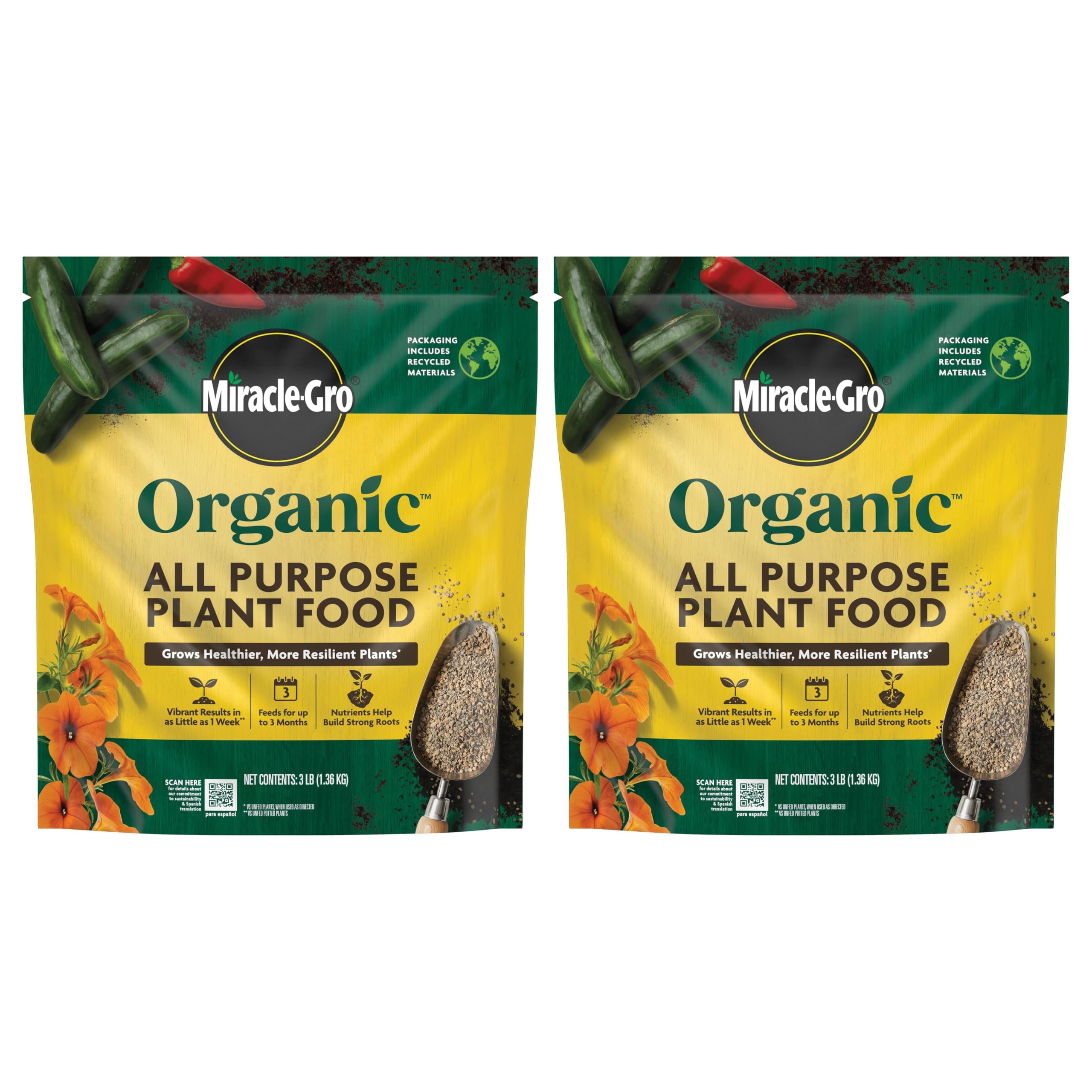
This 3-pound two-pack delivers a 5:2:2 NPK formula that is heavy on nitrogen for rapid green growth, making it ideal for leafy vegetables and container plantings where soil biology may be limited. The OMRI listing confirms its ingredients meet organic production standards, and the granular format requires no mixing — just shake onto the soil surface, mix into the top 1-3 inches, and water in. At roughly ¾ to 1 cup per 20 square feet, coverage is generous for raised beds or row gardens.
Customer feedback highlights dramatic foliage improvement within a week of application, with sustained feeding lasting three to four months even in heavy-feeding tropicals and annuals. The slow-release organic base provides a gentle nutrient curve that avoids root burn even when applied around established transplants, which is critical for the pre-planting window when roots are most vulnerable. The low phosphorus ratio (2) makes it less suitable for fruiting crops like tomatoes that require higher phosphorus for flower initiation.
The formulation supports resilient plant growth versus unfed controls, and the two-pack format offers strong value for gardeners managing multiple beds or a full season of container rotations. For general-purpose pre-plant feeding of leafy vegetables and mixed ornamental beds, this blend hits the sweet spot between cost and results.
What works
- OMRI-listed organic formulation with immediate granular application
- Noticeable greening within one week based on owner reports
- Generous 3-month feeding window from a single application
What doesn’t
- Low phosphorus ratio limits effectiveness for fruiting vegetables
- Requires thorough watering-in to activate full nutrient release
2. Trifecta+ 5-10-4 Organic All Purpose Fertilizer

The 5:10:4 NPK ratio of Trifecta+ is specifically engineered for fruiting vegetables, with its phosphorus number nearly double the nitrogen content to drive flower formation and fruit set. In a six-pound bag, the all-in-one organic granular formulation eliminates the need to mix multiple amendments, covering root development, soil conditioning, and general plant growth in a single pre-plant incorporation. Users growing peppers, tomatoes, and squash consistently report harvests that exceed expectations in both volume and fruit size.
Detailed owner accounts describe jalapeño plants producing 25 peppers from a single plant and total pepper counts reaching 148 per season after switching to Trifecta+. The formula performed well even under extreme Ohio summer heat and drought conditions, with plants remaining greener and healthier than neighboring beds treated with conventional fertilizers. The granular texture is fine enough to mix evenly into the top few inches of soil without clumping, and no liquid fertilizer supplementation was needed according to long-term users.
The brand’s reputation for responsive customer service and consistent seed germination rates further reinforces trust in the product. For serious vegetable growers focused on maximizing fruiting crop yields from a single pre-planting application, this formula delivers a measurable performance edge over balanced all-purpose blends.
What works
- High phosphorus ratio specifically targets flower and fruit development
- All-in-one composition eliminates separate amendment purchases
- Proven performance in heat-stress and drought conditions
What doesn’t
- Single six-pound bag may require repurchase for larger gardens
- Higher phosphorus content is overkill for leafy greens and root crops
3. Down To Earth Organic Tomato & Vegetable Mix 4-6-2

Down To Earth’s 4-6-2 formulation uses eight distinct organic ingredients — fish bone meal, blood meal, feather meal, rock phosphate, langbeinite, greensand, humates, and kelp meal — to create a non-burning granular fertilizer safe for even the most delicate transplants. The OMRI listing and the absence of synthetic salts mean this mix can be placed directly into the planting hole without root damage, making it one of the safest pre-planting options for vegetable gardens. The five-pound bag covers a significant area when applied at the recommended rate of one cup per 20 square feet.
Owner feedback repeatedly mentions that pale, flimsy tomato plants revived within two weeks of application, and the gentle formula is endorsed by multiple YouTube gardening channels for its reliability. The unpleasant organic smell dissipates after a few days of soil incorporation, which is a trade-off for the uncompromised biological ingredient quality. The humates and kelp meal improve soil cation exchange capacity, making this a dual-purpose amendment that feeds both the plant and the soil microbial community simultaneously.
The five-pound box format is practical for home gardeners and the ingredient transparency — every component is listed on the label — allows growers to avoid hidden fillers. For organic gardeners who prioritize soil health over raw NPK numbers and need a trustworthy pre-plant mix that will not burn roots, this blend is a top contender.
What works
- Eight-ingredient organic formula with no synthetic salts for safe hole placement
- Humates and kelp improve long-term soil fertility beyond immediate feeding
- Proven ability to revive stressed transplants within two weeks
What doesn’t
- Strong organic odor persists for several days after application
- Five-pound bag size may require multiple units for larger gardens
4. FoxFarm Happy Frog Tomato & Vegetable Fertilizer

FoxFarm’s Happy Frog Tomato & Vegetable formula is the only fertilizer on this list that explicitly includes both calcium and mycorrhizal fungi — two additives that directly address blossom end rot in tomatoes and peppers while expanding root access to water and nutrients. The 5:7:3 NPK ratio is moderately phosphorus-heavy to support fruit development, but the real differentiating value lies in the biological package. Mycorrhizae colonize root systems during the pre-planting stage and remain active throughout the season, reducing transplant shock and improving drought tolerance.
Users consistently report that the formula eliminates blossom end rot problems that plagued previous seasons, and the lack of a strong fish or manure smell makes it pleasant to handle compared to other organic blends. The four-pound bag is concentrated enough that one application at planting time sustains heavy feeders like tomatoes, squash, and peppers through the full growing cycle. When blended with Ocean Forest soil, perlite, and coco coir in container gardens, the results are described as “bumper crops” with vigorous blooms and abundant fruit set.
The formula is designed for vigorous feeders and includes a balanced supply of nutrients for both vegetative and flowering stages, reducing the need for a mid-season switch to a bloom booster. For any gardener who has lost tomatoes or peppers to blossom end rot, this fertilizer is a targeted solution that prevents the problem before it starts.
What works
- Calcium content specifically prevents blossom end rot in fruiting vegetables
- Mycorrhizal fungi improve root efficiency and water uptake from first application
- Odorless formula with no strong organic smell during handling
What doesn’t
- Higher unit cost compared to general-purpose organic blends
- Four-pound bag covers less area than similarly priced competitors
5. Osmocote Smart-Release Plant Food Flower & Vegetable
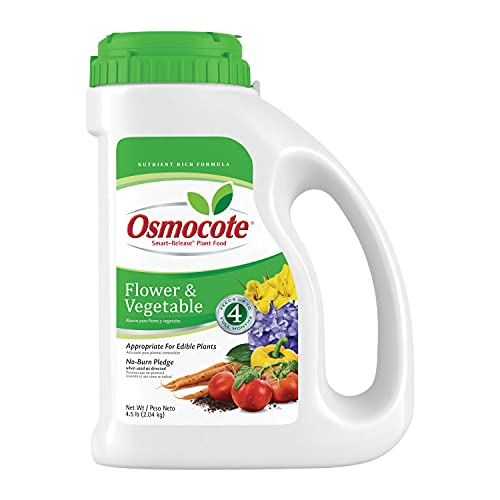
Osmocote’s synthetic slow-release formula uses a polymer coating around each prill that meters out nutrients based on soil temperature, providing a consistent four-month feeding window regardless of microbial activity. This makes it the only non-organic option in the lineup and the best choice for early spring pre-planting when cold soil temperatures would stall biological breakdown of organic granules. The powder format disperses easily through the top soil layer and the 4.5-pound bag treats up to 180 square feet at the recommended rate of one pound per 40 square feet.
Owner reviews emphasize the practicality of a single pre-planting application that eliminates the need for monthly reapplication — one user noted they were on their third consecutive bag for potted vegetables and grafted trees. The controlled release prevents the root burn commonly associated with synthetic quick-release fertilizers, and seedlings show greener, faster growth compared to unfed controls. Local nursery recommendations and long-term repeat purchases indicate strong trust in the predictable performance across varying climates.
The main trade-off is zero organic matter or microbial food contribution to the soil, which means this fertilizer does not improve soil structure or long-term fertility. It is purely a plant-feeding tool designed for maximum convenience and predictable release timing. For potted vegetables, container gardens, and gardeners who prefer a precise, set-it-and-forget-it approach to pre-plant nutrition, Osmocote delivers unmatched reliability.
What works
- Temperature-controlled polymer coating provides exact 4-month release
- Single application covers entire growing season for most vegetables
- Zero root burn risk when applied according to label rates
What doesn’t
- Synthetic formulation adds no organic matter or soil biology support
- Recommended application rate may be too strong for small pots
6. FoxFarm Happy Frog All Purpose Fertilizer 6-4-5

The Happy Frog All Purpose fertilizer shifts the NPK ratio to 6:4:5 — higher in nitrogen and potassium than the Tomato & Vegetable variant — while retaining the beneficial soil microbes that make FoxFarm’s line distinct. The OMRI listing certifies organic compliance, and the granular slow-release formula feeds plants gently over time without the sharp nutrient spikes that synthetic products produce. The microbial inoculation is particularly valuable for pre-planting incorporation because it establishes active soil biology around the root zone from day one.
Owner reports describe dramatic transformations in yellowing tomato and zucchini plants within one week of application, with sustained feeding that required only a monthly reapplication for the best garden results. The 6:4:5 ratio supports both foliage development and fruit production, making it a true all-purpose option for mixed vegetable beds containing leafy greens, fruiting crops, and root vegetables. Users who paired this fertilizer with worm castings in their soil mix reported “explosive growth” across all plant types.
The primary drawback is the strong manure-like odor that can be unpleasant when applied indoors or in enclosed spaces, and users must spread it thinly to prevent white mold growth on the soil surface after watering. Gloves are recommended during handling. For organic gardeners who want a single pre-planting fertilizer that builds soil biology while feeding a wide variety of vegetables, this blend delivers comprehensive results.
What works
- Beneficial soil microbes improve nutrient cycling and root colonization
- Balanced 6:4:5 ratio supports both leafy and fruiting vegetable types
- OMRI-listed with reliable organic certification for production gardens
What doesn’t
- Strong pungent odor requires outdoor or ventilated storage
- Risk of surface mold if applied too thickly in humid conditions
7. Espoma Organic Garden-tone 3-4-4 Fertilizer

Espoma’s Garden-tone uses a 3:4:4 analysis with 5% calcium and the proprietary Bio-tone formula, which includes beneficial microbes and mycorrhizae designed to enhance root development and nutrient uptake. The two-pack format delivers eight total pounds of granular fertilizer, making it the highest volume option in the premium tier and the best value for gardeners with large in-ground beds. The balanced NPK is ideal for both cool-season leafy vegetables like lettuce and kale and warm-season fruiting crops like tomatoes, squash, and melons.
Owner feedback highlights its forgiving nature — even over-application does not burn plants — and consistent performance across multiple growing seasons. One urban gardener in zone 10b reported a 400-pound tomato harvest and 100 pounds of carrots after switching to Espoma fertilizers, attributing the unprecedented yields to the sustained nutrition and soil conditioning provided by the monthly application schedule. The formula is approved for organic production and contains no sludges or toxic ingredients, meeting strict organic input material standards.
The requirement for monthly reapplication throughout the growing season is more labor-intensive than slow-release alternatives, but the Bio-tone microbial boost and calcium content justify the extra effort for serious vegetable growers. For organic gardeners who want high-volume coverage, proven results with heavy-feeding crops, and a formula that supports both leafy and fruiting vegetables from pre-planting through harvest, this two-pack is a strategic buy.
What works
- Two-pack provides eight pounds of total coverage for large gardens
- Bio-tone formula with microbes and calcium supports root and fruit health
- Forgiving organic base prevents root burn even with over-application
What doesn’t
- Requires monthly reapplication for full-season feeding
- Organic odor present but less intense than some competing blends
Hardware & Specs Guide
NPK Ratio Decoded for Pre-Planting
The three numbers on every fertilizer bag represent nitrogen (N) for leafy growth, phosphorus (P) for root and flower development, and potassium (K) for overall plant health and disease resistance. For pre-planting incorporation, a ratio where the phosphorus number equals or exceeds the nitrogen number — such as 5:10:4 or 4:6:2 — supports the critical root establishment phase that determines the plant’s entire season performance. Avoid high-first-number blends (20-5-5 or similar) designed for lawn grass, as these push excessive foliage at the expense of fruit development.
OMRI Listing vs “Natural” Labeling
OMRI (Organic Materials Review Institute) listing means an independent third party has verified that every ingredient in the formulation meets USDA National Organic Program standards. Products marketed as “natural” or “organic-derived” without OMRI certification may contain synthetic additives, sludge by-products, or non-organic filler materials. For serious organic vegetable production, look for the OMRI seal on the bag — it is the only reliable guarantee that the product can be used in certified organic operations without violating compliance rules.
Calcium Content for Blossom End Rot Prevention
Blossom end rot is a physiological disorder caused by calcium deficiency during rapid fruit expansion, not a disease. Blends containing at least 5% calcium — like FoxFarm Happy Frog Tomato & Vegetable and Espoma Garden-tone — provide a direct supply of this immobile nutrient at the root zone during the pre-planting stage. Once fruit set begins, calcium must already be present in the soil because the element does not translocate efficiently within the plant. Pre-plant incorporation of calcium-rich fertilizer is the most effective prevention strategy.
Slow-Release Mechanisms: Coated vs Microbial
Synthetic slow-release fertilizers like Osmocote use a semi-permeable polymer coating that releases nutrients as water vapor pressure builds inside each prill. This release is temperature-dependent and predictable regardless of soil biology. Organic slow-release blends rely on soil microorganisms to break down proteins and minerals into plant-available forms, which means cold spring soils delay nutrient availability by 2-4 weeks. For early pre-planting in northern climates, a synthetic slow-release product may outperform organic blends until soil temperatures reach 55-60°F.
FAQ
How far before planting should I apply granular fertilizer?
Can I use a high-nitrogen fertilizer for tomatoes before planting?
Is synthetic slow-release fertilizer safe for organic vegetable gardens?
How do I calculate how much pre-plant fertilizer my garden needs?
Final Thoughts: The Verdict
For most gardeners prepping a mixed vegetable bed, the best fertilizer for vegetable garden before planting winner is the Miracle-Gro Organic All Purpose Plant Food because its balanced 5:2:2 NPK, OMRI listing, and three-month feeding window cover leafy greens, root crops, and containers with minimal effort and strong value. If you need high phosphorus for bumper tomato and pepper yields, grab the Trifecta+ 5-10-4. And for blossom end rot prevention with added mycorrhizal root support, nothing beats the FoxFarm Happy Frog Tomato & Vegetable.