
Splitting firewood is a brutal, repetitive test of gear. A blade that sticks in the round, a handle that transfers every shock into your palms, or a head that loses its edge after a dozen swings turns an afternoon’s work into a full-day struggle. Choosing the right tool is the difference between one-strike splits and a wedge-and-sledge situation.
I’m Rikta — the co-founder and writer behind Lawn Gear Lab. I’ve spent hundreds of hours poring over carbon steel grades, HRC ratings, handle geometries, and owner reports from cord after cord of real-world splitting to isolate what actually separates a sharp tool from a frustrating one.
Whether you want a maul that busts knotted rounds or a lightweight axe for kindling prep, this guide covers the key specs — blade convexity, head weight, handle length, edge retention — to help you pick the best ax to split wood for your stack.
How To Choose The Best Ax To Split Wood
Not every tool labeled an “axe” is built to split rounds. A felling axe is sharp and thin for cutting across grain, while a splitting tool relies on a wedge-shaped head and mass to push fibers apart. Choosing wrong means more swings, stuck blades, and wasted energy.
Head Weight: The Force Multiplier
Heavier heads — 6 to 8 pounds — transfer more momentum into the log, splitting larger and knotty rounds in fewer strikes. Lighter heads around 3.5 pounds are easier to control for kindling and smaller splits but lack the inertia needed for full-sized hardwood. Match head weight to the diameter of your typical round.
Handle Material and Length
Fiberglass and composite handles absorb vibration better than wood and won’t warp or crack over time. Hickory handles offer classic shock absorption but require oiling and storage away from moisture. A 36-inch handle provides maximum lever arm for tall users, while 28 inches offers more control for precision splitting.
Blade Geometry: Convex vs. Flat
A convex (beveled) blade profile acts like a wedge, pushing wood fibers apart and releasing easily. Flat or straight blades tend to bite deep and stick, requiring a pry motion to free the head. For splitting, a pronounced convex grind or a dedicated splitting maul shape is the most efficient choice.
Quick Comparison
On smaller screens, swipe sideways to see the full table.
| Model | Category | Best For | Key Spec | Amazon |
|---|---|---|---|---|
| Fiskars 36″ Super Splitting Axe | Splitting Axe | Medium to large logs | 6 lbs, 36″ FiberComp handle | Amazon |
| Estwing 8 lb Splitting Maul | Splitting Maul | Heavy, knotty rounds | 8 lb head, 50-55 HRC | Amazon |
| Hooyman Splitting Maul | Splitting Maul | Value and durability | 8 lbs, 1045 forged steel | Amazon |
| Fiskars 28″ Chopping Axe | Chopping Axe | Kindling and small logs | 3.5 lbs, 28″ handle | Amazon |
| Husqvarna Wood Splitting Axe S2800 | Splitting Axe | Portable splitting | 5 lb head, composite handle | Amazon |
| Husqvarna 20″ Carpenter Axe | Carpenter Axe | Fine carving & limbing | 2 lb head, hickory handle | Amazon |
| Husqvarna Hatchet | Hatchet | Camping and light tasks | 1.32 lb head, Swedish steel | Amazon |
In‑Depth Reviews
1. Fiskars 36″ Super Splitting Axe
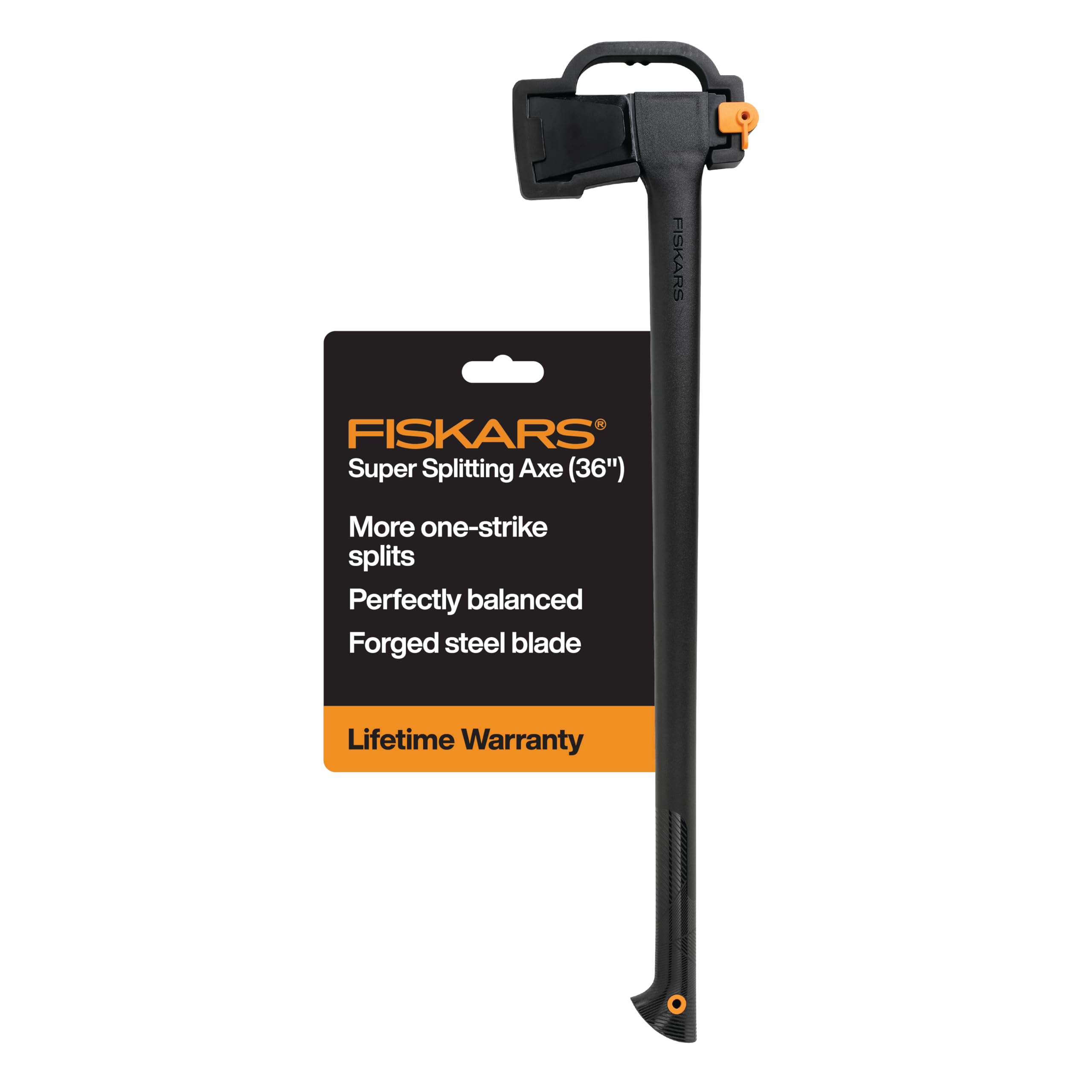
The Fiskars Super Splitting Axe hits the sweet spot between head weight and handle length. At 6 pounds with a 36-inch FiberComp handle, it generates enough momentum to crack medium to extra-large rounds in a single swing, while the convex bevel blade bites deep and releases without sticking. The handle’s vibration-damping construction reduces fatigue significantly over a full session.
Owner feedback consistently praises the balance — several users note the axe feels lighter than its actual weight during the swing but delivers heavy impact on contact. The hardened forged steel blade maintains its edge across multiple cords of mixed hardwood, reducing downtime for sharpening. The grip remains secure even when wet, a critical feature during damp firewood season.
The virtually unbreakable handle and lifetime warranty remove long-term ownership concerns. This is the tool to reach for when you have a full splitter’s stack and want to minimize swing count per log. It is equally capable for taller users who benefit from the extended lever arm.
What works
- Exceptional balance reduces arm fatigue over long sessions
- Convex blade geometry prevents sticking in green or knotty wood
- Composite handle absorbs shock better than traditional wood
What doesn’t
- Not ideal for splitting kindling or very small pieces
- Some users report the blade arrives needing a touch-up sharpening
2. Estwing 8 lb Wood Splitting Maul

When a round is large, wet, or riddled with knots, a lightweight splitting axe won’t cut it — you need mass. The Estwing 8 lb maul delivers exactly that. Its forged head, hardened to 50-55 HRC, withstands repeated impacts without deforming, and the dual-injection fiberglass handle with over 70% fiberglass content provides a stout, vibration-resistant platform.
Multiple owners call it the tool they grab when their lighter maul fails. The high-force head design generates momentum that drives through fibrous woods like elm and ironwood where thinner blades stall. The 36-inch length offers good reach, though the 8-pound head weight means it swings heavy — users suggest it rewards proper technique rather than brute strength.
The broad handle profile provides a secure grip even with gloves, and the blue finish is durable enough to survive years in a shed. This maul earned its reputation as the go-to for stubborn rounds, and it’s priced competitively for the performance it delivers.
What works
- 8 lb head crushes knotty and oversized rounds effortlessly
- Fiberglass handle resists warping and absorbs shock well
- Head hardness rating ensures long-term edge retention
What doesn’t
- Heavy weight can fatigue shorter users quickly
- Not suitable for precise limbing or kindling work
3. Hooyman Splitting Maul

The Hooyman Splitting Maul punches well above its price point. The 8-pound head is forged from 1045 high-strength steel with a convex grind and an HRC rating of 45-60, offering real durability for the money. The fiberglass core handle is interlocked and epoxy-sealed into the head, a construction method typically found on tools costing significantly more.
Owner reports highlight near-100% split rates on accurate strikes, with the V-shaped head design that grabs and wedges logs apart efficiently. The H-Grip handle becomes tacky when wet, providing security during damp weather splitting. Users note it handles knotty and large rounds with authority, with one owner calling it “half the price, double the impact.”
The flat poll doubles as a striking surface for driving wedges, adding versatility. Some users report the rubber grip near the head can tear after heavy use, but the limited lifetime warranty covers manufacturing defects. For budget-conscious buyers who refuse to compromise on splitting power, this maul delivers impressive performance per dollar.
What works
- Excellent splitting power for the price point
- V-shaped head design reduces blade sticking
- Rubberized grip stays secure in wet conditions
What doesn’t
- Rubber collar near head can tear with heavy use
- Weight feels slightly head-heavy during controlled swings
4. Fiskars 28″ Chopping Axe
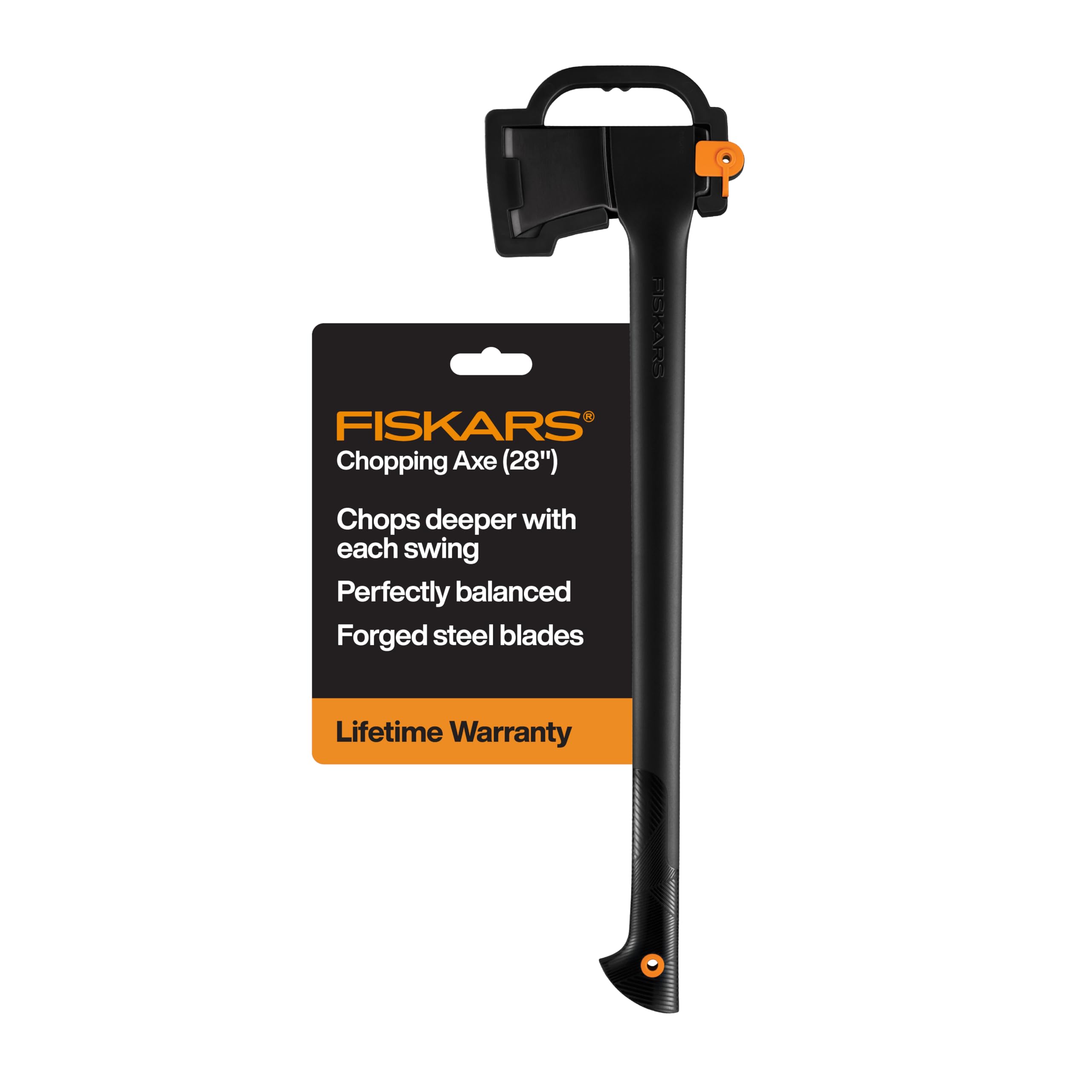
Not every splitting task requires an 8-pound maul. The Fiskars 28″ Chopping Axe is built for the lighter end of the firewood spectrum — kindling prep, small logs, and campsite cleanup. At 3.5 pounds with a 28-inch handle, it’s nimble enough for one-handed use yet carries enough head mass to split typical campfire-sized rounds.
The ultra-sharp alloy steel blade features a low-friction coating that reduces drag and prevents the axe from getting wedged in the wood. Owners consistently mention how little effort is required for clean splits on seasoned softwood. The precision-balanced design ensures the blade bites deeper with each swing, minimizing the number of strikes needed.
Fiskars’ lifetime warranty backs the virtually unbreakable design. While this axe won’t replace a dedicated splitting maul for full cords of hardwood, it excels as a secondary tool for quick splits and kindling production. Its lightweight nature also makes it a favorite for campers and gardeners who need a versatile cutting tool.
What works
- Lightweight and easy to control for precision work
- Low-friction coating prevents blade sticking
- Sharp out of the box and holds edge well
What doesn’t
- Not powerful enough for large or knotty hardwood rounds
- Short handle limits leverage for taller users
5. Husqvarna Wood Splitting Axe S2800

The Husqvarna S2800 balances portability and splitting capability with a 5-pound coated steel head and a 27.6-inch fiberglass composite handle. The coating improves cutting efficiency by reducing friction, and the composite handle eliminates the warping and moisture absorption issues associated with wood. It’s a dedicated splitter, not a general-purpose axe.
Owners describe it as lightweight but powerful enough for seasoned softwood and medium hardwood. The 27.6-inch length works well for users up to about 6 feet tall — taller users report wishing for a longer handle to improve swing arc. The blade does not arrive razor-sharp, but splitting axe geometry relies more on wedge action than edge sharpness, so this is less critical.
A lifetime warranty covers the composite handle and head, making it a low-maintenance choice. The compact length also makes it easier to transport and store than full-size mauls. It splits efficiently within its size range but will struggle against massive or knotty rounds that demand the mass of an 8-pounder.
What works
- Composite handle is weatherproof and won’t warp
- Good balance for its weight class
- Coated head reduces friction during splits
What doesn’t
- Handle too short for users over 6 feet tall
- Not suitable for splitting large-diameter hardwood rounds
6. Husqvarna 20″ Carpenter Axe
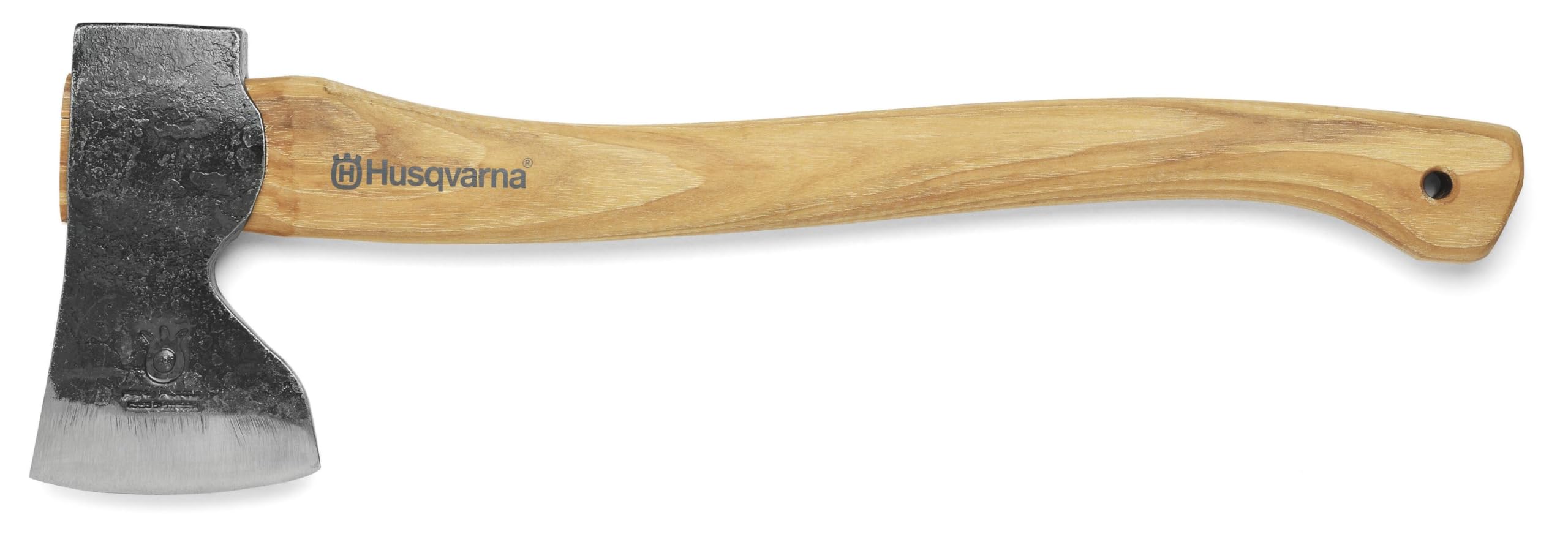
The Husqvarna 20″ Carpenter Axe is a specialized tool designed for fine control during carpentry, limbing, carving, and splitting kindling — not for splitting large rounds. Its hand-forged Swedish steel head and hickory handle reflect traditional craftsmanship, and the leather edge cover provides protection during transport. The head weighs 2 pounds, keeping the tool nimble.
Owner feedback over six years of use highlights its versatility: it limbs branches, carves notches, splits kindling, and even drives wedges. The thin head geometry holds an edge well and is easy to maintain with a file. However, the axe typically arrives requiring handle sanding and edge sharpening, which some buyers view as a project rather than a ready-to-use tool.
The 20-inch handle makes it highly portable and ideal for bushcraft or camping bags. Buyers should temper expectations — this is a precision carving and light splitting tool, not a firewood workhorse. For those who appreciate hand-fitted tools and are willing to invest initial setup time, the Swedish steel performs beautifully.
What works
- Swedish steel takes a razor edge and holds it well
- Compact size is excellent for camping and backpacking
- Traditional hickory handle offers natural shock absorption
What doesn’t
- Requires significant sharpening and handle prep out of the box
- Not designed for splitting firewood rounds
7. Husqvarna Hatchet
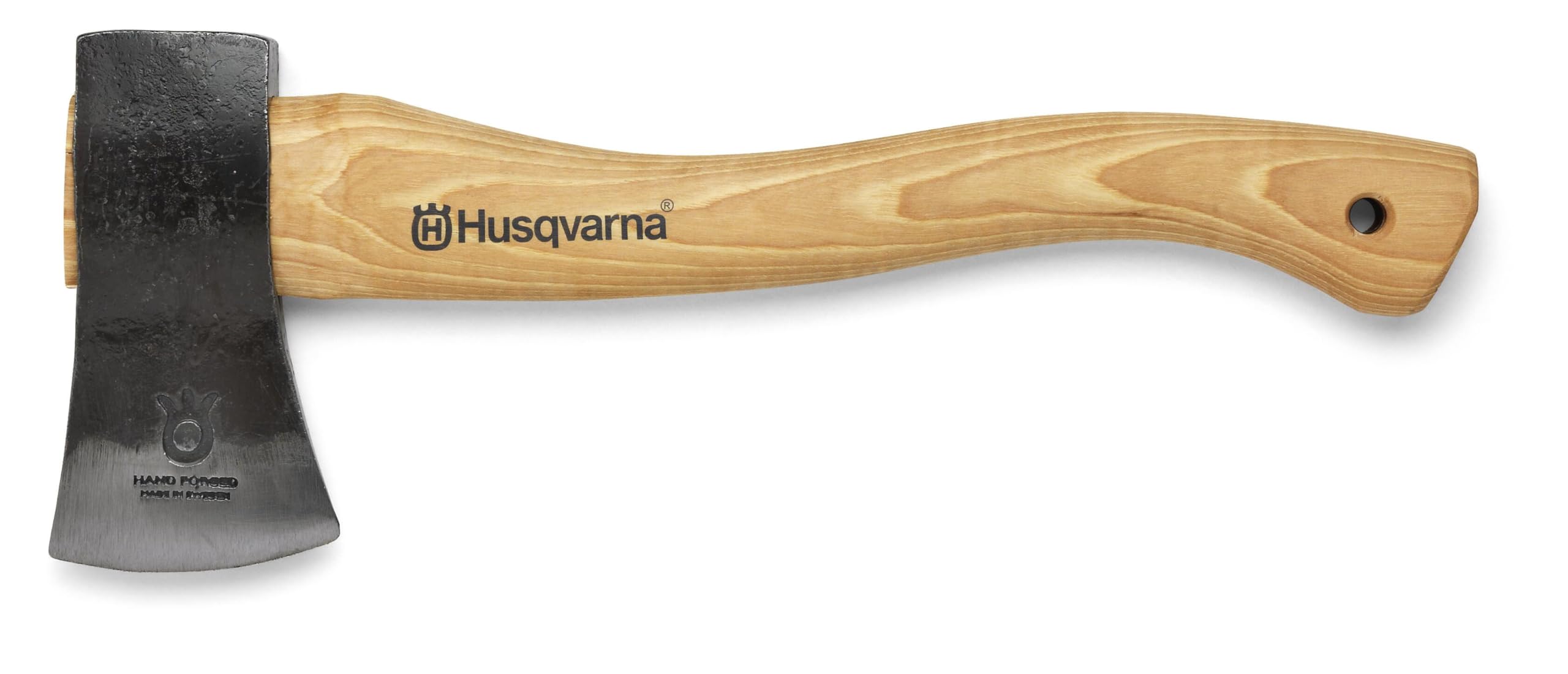
The Husqvarna Hatchet is a hand-forged Swedish steel tool designed for one-handed use on light cutting tasks — splitting kindling, trimming branches, and camp chores. The 1.32-pound head on a hickory handle makes it a nimble companion for backpackers and campers who need a capable splitting tool without the bulk of a full-size axe.
For many owners, the hatchet arrives with a good edge profile but dull blade, requiring time with a file to achieve optimal sharpness. The hickory handle is tight-grained but often needs sanding and oiling to remove lacquer and improve grip. The leather sheath is functional but basic, with some users reinforcing the snaps for security.
Despite the setup work, owners consistently praise the steel quality and the heritage of Hultafors forging. The hatchet balances well for one-handed use and splits kindling-sized pieces cleanly. It is a premium tool for those who appreciate traditional construction and are willing to invest the time to make it field-ready.
What works
- Hand-forged Swedish steel offers excellent edge durability
- Leather sheath protects the blade during storage and transport
- Hickory handle provides natural feel and shock dampening
What doesn’t
- Blade typically arrives dull and requires sharpening
- Handle needs sanding and oiling for optimal grip
Hardware & Specs Guide
Head Weight and Inertia
Head weight determines how much momentum the tool carries into the log. An 8-pound maul delivers roughly 60% more impact force at the same swing speed than a 5-pound splitting axe. Heavier heads split larger rounds in fewer strikes but cause faster fatigue — match head weight to the typical diameter of your firewood.
Blade Geometry and Convexity
A convex bevel (cheek) on a splitting tool acts as a wedge, pushing wood fibers apart. Flat-ground blades bite deep and are prone to sticking. Look for a pronounced convex profile on dedicated splitters — the angle transitions from steep near the edge to shallower up the cheek, enabling the head to self-extract after splitting.
FAQ
What HRC rating is ideal for a splitting maul head?
When should I choose a splitting maul over a splitting axe?
Final Thoughts: The Verdict
For most gardeners, the ax to split wood winner is the Fiskars 36″ Super Splitting Axe because it combines the perfect head weight, vibration-damping composite handle, and non-stick convex blade geometry into a tool that makes short work of medium to large logs. If you want raw 8-pound knockout power for stubborn rounds, grab the Estwing 8 lb Splitting Maul. And for a budget-friendly maul that refuses to quit, nothing beats the Hooyman Splitting Maul.