
Specs are compiled from manufacturer listings and verified buyer reviews and can change over time — please confirm the key details on the product page before buying.
Gardening should not leave you hunched over with a sore back. A wood garden bed that sits at waist level lets you plant, weed, and harvest while standing up straight. The material matters as much as the height. Real wood breathes, blends into your garden, and can last for years, but you need the right build and depth so your roots — and your knees — get what they need.
I am Rikta, the founder of Lawn Gear Lab. This guide compares each manufacturer’s published specs and patterns from verified customer reviews, so you see real strengths and trade-offs, not marketing claims.
For tomatoes on a patio or lettuce on a balcony, the right wood garden bed gives you enough soil depth for healthy roots, a comfortable height to save your back, and a frame that stays sturdy when filled with damp soil.
Quick Picks
- SoliWood Raised Garden Bed, 48x24x30″ — Top Performer
- AMERLIFE Raised Garden Bed, 48x30x24 Inches — Deepest Soil
- 48×24×30 Inch Raised Garden Bed, Solid Wood Elevated Planter — Value Cedar
- Maple99 Raised Garden Bed, 48x24x30 — Premium Finish
- DUMOS Raised Garden Bed, 48x24x30in — Compact Starter
- Best Choice Products 34x18x30in Raised Garden Bed — Budget Champion
How To Choose The Best Wood Garden Bed
Picking a raised wood garden bed depends on three things: how deep the soil is, what wood it uses, and how much weight it can hold when full of wet soil. You want a bed high enough to work in without bending. You want wood that resists rain and rot. And you want enough depth for the vegetables or flowers you plan to grow.
Soil Depth Matters More Than You Think
Most root vegetables like carrots and radishes need at least 8 to 10 inches of soil to grow straight and full. If a planter only gives you 7 inches of depth, you are stuck with shallow-rooted plants like lettuce and herbs. Always check the actual planting depth — not just the total bed height — because some beds have a bottom liner or slats that take up space.
Cedar vs Fir vs Other Wood
Cedar is naturally resistant to moisture, rot, and insects, so it is the most common material for outdoor raised beds. Fir wood costs less and is still durable, but it may need a protective sealant to last more than a few seasons. If the wood is labeled “unfinished” or “water-based paint,” plan to apply your own food-safe sealant like tung oil to prevent warping and splitting.
Weight Capacity Tells You The Build Quality
Wet soil is heavy — a 4.4 cubic foot bed can weigh over 250 pounds once saturated. A planter rated for 300 pounds uses thicker legs and sturdier frame panels than one rated for 150 pounds. Thicker legs (around 2.4 inches) and frame panels (around 0.7 inches) mean less wobble and a longer lifespan, especially if you move the bed around your patio or yard.
Quick Comparison
| Model | Best For | Material | Capacity | Weight Limit | Amazon |
|---|---|---|---|---|---|
| SoliWood Raised Garden Bed | Maximum durability & heavy loads | Cedar Wood | 6 cu. ft. | 300 lbs | Amazon |
| AMERLIFE Raised Garden Bed | Deep soil for root vegetables | Fir Wood | 5 cu. ft. | 200 lbs | Amazon |
| 48×24×30 Solid Wood Planter | Lightweight natural cedar at a budget | Cedar Wood | 6 cu. ft. | — | Amazon |
| Maple99 Raised Garden Bed | Premium natural cedar finish | Cedar / Fir Wood | — | 200 lbs | Amazon |
| DUMOS Raised Garden Bed | Compact entry-level planter | Fir Wood | 4.4 cu. ft. | 300 lbs | Amazon |
| Best Choice Products Garden Bed | Budget-friendly small-space gardening | Chinese Fir Wood | 60 qt (2.3 cu. ft.) | 150 lbs | Amazon |
In‑Depth Reviews
1. SoliWood Raised Garden Bed, 48x24x30″
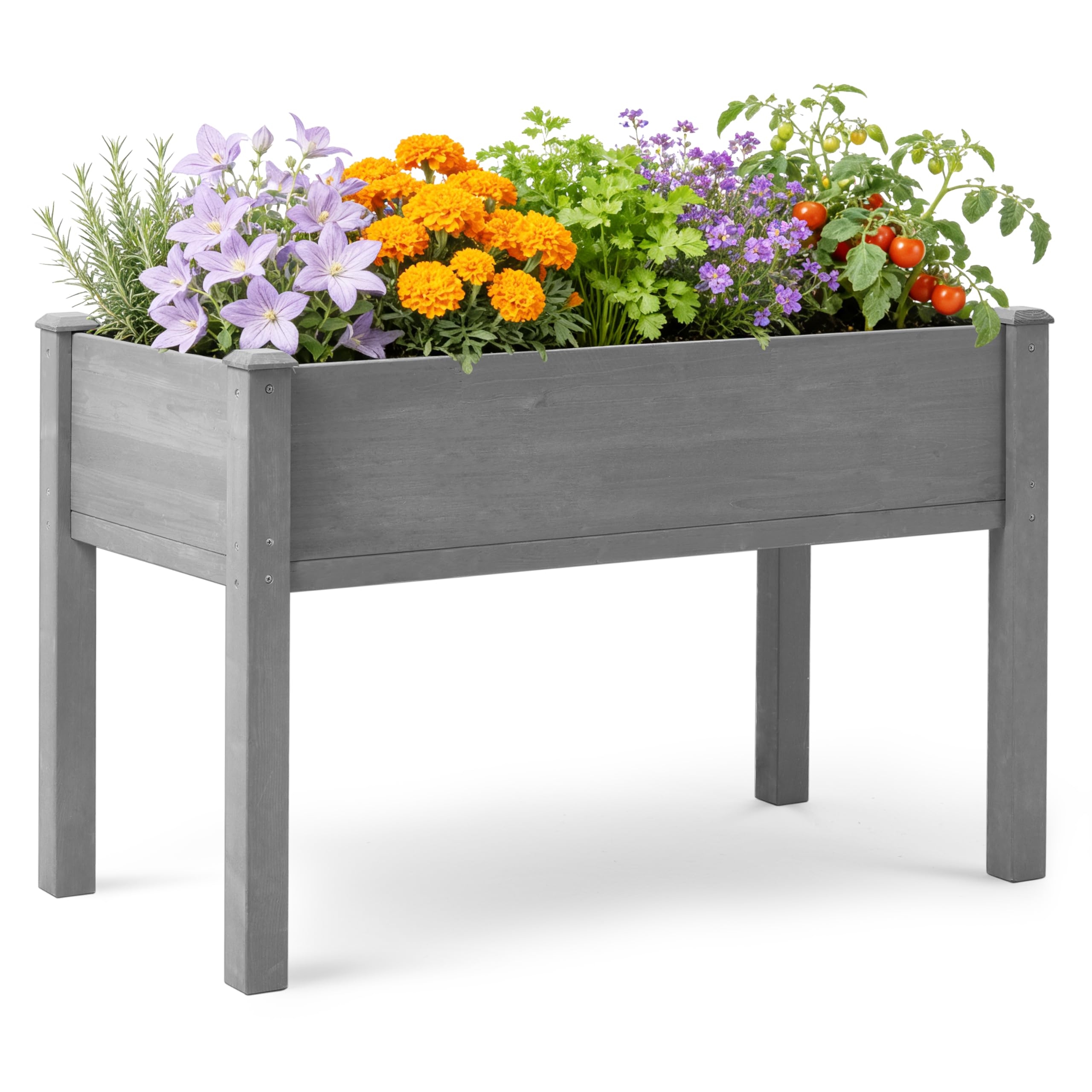
A 300-pound capacity cedar build that barely flexes under a full load of wet soil.
You get a mighty 6 cubic feet of planting volume in a frame with 2.4-inch thick legs and 0.7-inch thick panels. That extra mass is nearly double the heft of the lighter wood models. This means the SoliWood holds up to 300 pounds without wobbling, so you can fill it with dense topsoil and mature tomato plants without the sides bowing. The 30-inch height puts the soil right at waist level, so you do not bend over every time you water or harvest.
The cedar wood comes with a water-based eco finish that the maker says gives no harmful substances to fruits or vegetables. Buyers report the gray color looks better than the photos and that assembly was easy (one reviewer noted a 76-year-old put it together without trouble). At 38.9 pounds, the SoliWood is the heaviest bed here — 2.4 times heavier than the 48×24×30 Solid Wood Planter at 16.3 pounds — so set it in its final spot before filling it.
Unlike lighter models, the included liner keeps the soil off the wood, which helps the cedar resist moisture damage over many seasons. Some buyers noted the wood can split slightly if you over-tighten the screws, so pre-drilling is a good idea. Choose this if you want a planter that feels permanent and can handle deep, heavy soil loads.
The heavyweight champion versus the field: Its 300-pound capacity and 6 cu. ft. volume beat every other wood bed here. The Best Choice Products bed holds 150 pounds — exactly half — so roots have room to spread and the frame stays solid.
The honest trade-off: The 38.9-pound empty weight makes it a two-person lift, and the wood can split if you drill screws in without care.
Reach for this if: you want a high-capacity cedar planter that handles heavy loads, lasts years, and stays stable on uneven patio or backyard ground.
Look elsewhere if: you need a light, portable bed you can move around easily, or you want the absolute cheapest option.
2. AMERLIFE Raised Garden Bed, 48x30x24 Inches
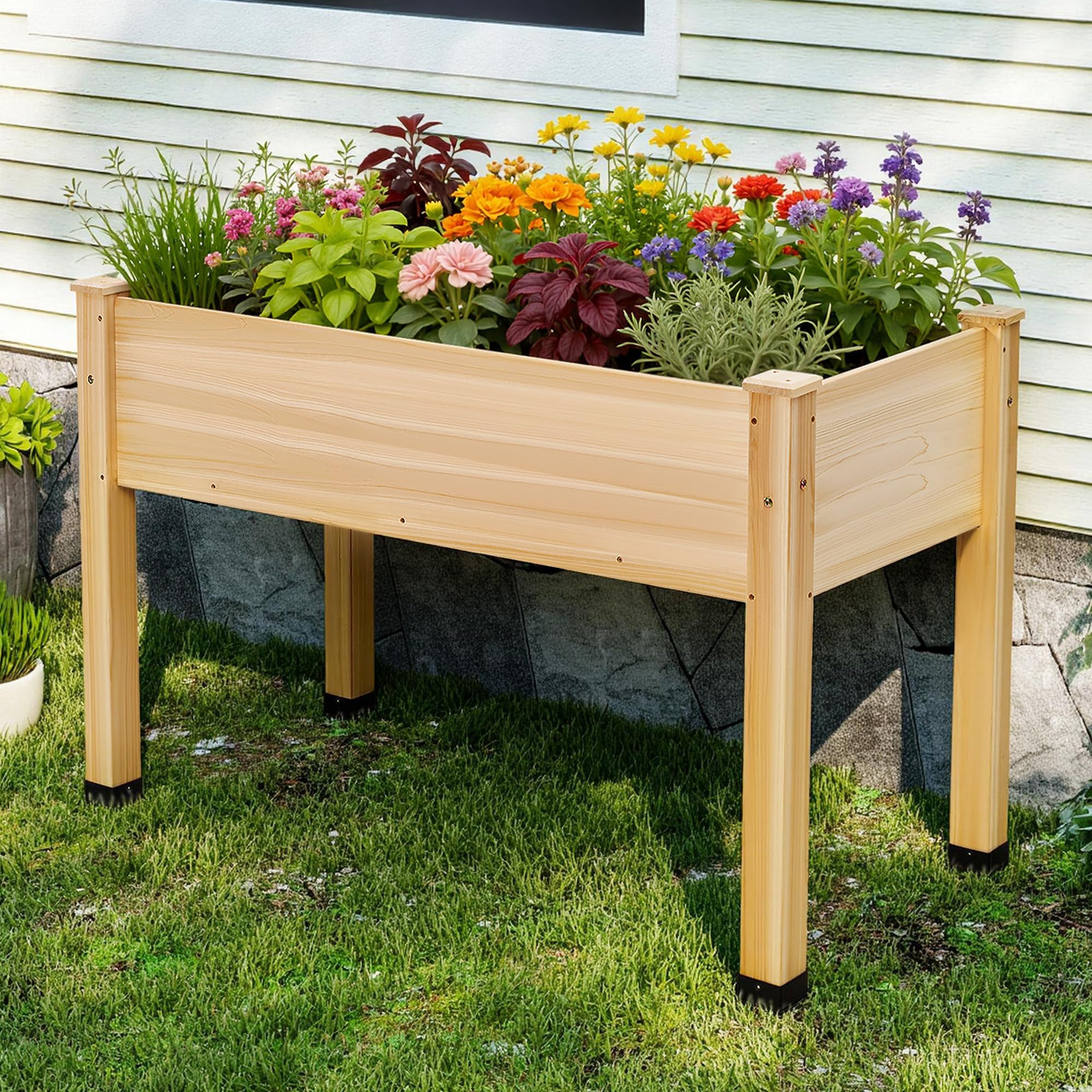
Sixteen inches of planting depth for carrots, radishes, and other deep-root crops.
Most raised beds at this price offer only 7 to 9 inches of soil depth. The AMERLIFE gives you a genuine 16-inch depth (one reviewer measured it against the typical 12-inch depth of other beds). That extra room makes a real difference if you want to grow root vegetables or perennials that need space to spread underground. The overall dimensions are 48 by 30 inches wide, so the planting area is 2 inches wider than the SoliWood, even though the total capacity is 5 cubic feet vs 6.
One buyer mentioned assembly took about an hour with a power drill and was easy enough for a 66-year-old to do alone. The bed is built from solid fir wood, which is naturally durable but not as rot-resistant as cedar — so you may want to apply a weatherproof sealer before filling it. All drainage holes and gaps are pre-built to prevent waterlogging, and the included divider lets you split the box into separate planting zones for different crops.
A few buyers reported misaligned screw holes, so keep a sanding block handy. For deep-rooted vegetables and flowers, this is the bed that gives them the most vertical room to thrive.
Why deep-soil gardeners choose it
- 16-inch soil depth — more than enough for carrots, parsnips, and deep-rooted herbs.
- Wider 30-inch front-to-back dimension gives plants extra lateral root space.
- Divider included for separating different plant types.
The caveats to know
- Wider width (30 vs 24 inches) can make reaching the center awkward in tight spaces.
- Some assembly reviews mention misaligned pilot holes that require sanding.
Best for the root gardener: choose this if you grow carrots, radishes, or deep-rooted perennials and need a genuine 16-inch soil column.
Skip if: you prefer a rear-against-fence placement where the 30-inch width is hard to reach across, or you want a completely maintenance-free wood finish.
3. 48×24×30 Inch Raised Garden Bed, Solid Wood Elevated Planter
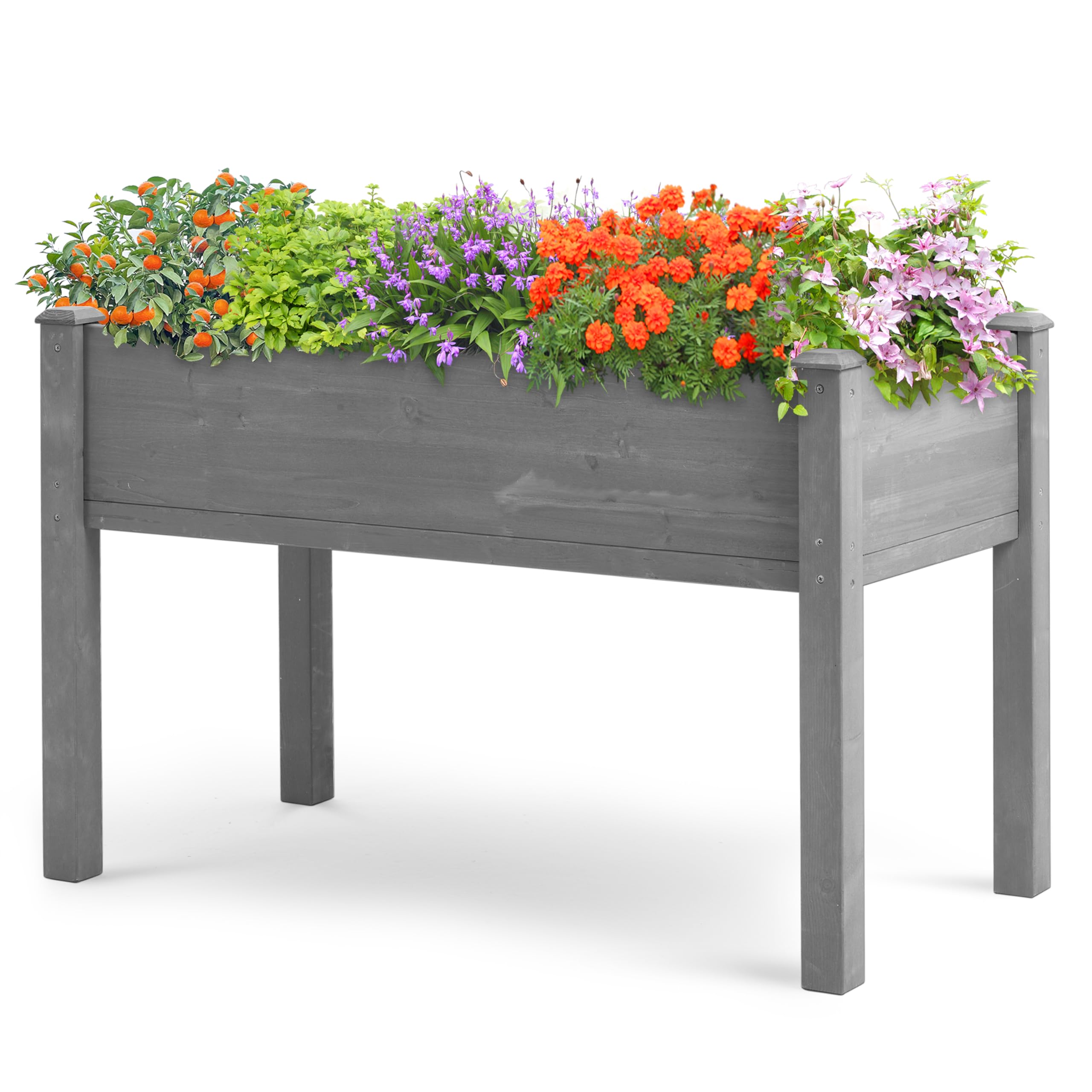
A lightweight cedar bed that one buyer expects to last twelve-plus years outdoors.
For the price, you get a real cedar-wood planter that weighs just 16.3 pounds — less than half the weight of the SoliWood bed — while still offering the same 6 cubic foot capacity. The cedar construction naturally resists moisture and insects, and the included bed liner keeps soil off the wood to extend its lifespan. One reviewer specifically noted the “well-made cedar planter” with “excellent drainage” and said they “expected to last 12+ years.”
Assembly is straightforward with a battery-powered screwdriver, and the 2.4-inch thick legs provide strong support. Owners mention the planting depth at 9.5 inches, which is enough for shallow-rooted vegetables like lettuce, spinach, and peppers. The gray water-based paint finish is pre-applied, though a few reviewers suggest adding a clear exterior sealant for extra weather protection in rainy climates.
The main limitation: the wood panels are thin enough to bend under a very heavy load. One owner reported the wood bends and absorbs water if you do not seal it before assembly. Some units have pre-drilled hole alignment that is off, so you may need to re-drill a couple of holes. Despite that, for a lightweight cedar bed at this price, it is a solid starting point for new gardeners who want real wood without the back strain of lifting a heavier unit.
The light cedar pick versus the SoliWood: at 16.3 pounds it is 22.6 pounds lighter, making it the easiest to move and assemble alone, but still offers the same 6 cu. ft. planting volume.
The catch: thin panels can flex under fully saturated soil, and some units have misaligned holes — plan on a quick sanding and a food-safe sealant before filling.
Reach for this if: you want natural cedar on a budget, plan to grow shallow-rooted plants, and value a lightweight profile you can carry yourself.
Look elsewhere if: you need a planter that can hold very heavy, wet soil without any panel flex, or you want pre-drilled holes that line up perfectly every time.
4. Maple99 Raised Garden Bed, 48x24x30

Natural cedar with a paintable finish and a 200-pound capacity for medium-depth planting.
This Maple99 bed uses a blend of cedar and fir wood with a natural finish that you can paint or stain to match your deck or fence. At 33.3 pounds, it sits between the lightweight cedar beds and the heavy-duty SoliWood in weight. It supports up to 200 pounds of soil and plants. The 30-inch leg height keeps you standing upright, and the 48-by-24-inch planting area (26.5 inches wide at the legs) is spacious enough for several rows of vegetables or herbs.
Assembly is straightforward with clear instructions, though one customer observed that the included screws can be difficult to drive and recommended using a drill. Another reviewer pointed out that the cedar has a relatively low modulus of elasticity (MOE 7.66 GPa — a measure of stiffness), meaning it can bend or split under heavy soil weight, and suggested adding a steel support bar underneath as a reinforcement. The included bed liner helps prevent soil contact, and several buyers recommended treating the wood with tung oil for waterproofing before filling.
The Maple99 stands out for its customizability — you can paint or stain it any color. The natural cedar also has insect-repelling properties that other woods lack. The downside is that the 200-pound weight capacity means you should avoid extremely dense clay soils. For a kitchen herb garden or flower bed, the balance of aesthetics and moderate strength is tough to top.
Why it earns its premium tag
- Natural cedar wood resists insects and rot, with a paintable finish for customization.
- Included bed liner and clear instructions simplify setup.
- Buyers praise the solid build and natural color.
The stuff to watch out for
- Cedar is prone to splitting under heavy loads; a steel support bar is recommended for confidence.
- Some screws are hard to drive — a power drill is almost essential.
Best for the DIY decorator: pick this if you want a natural cedar planter you can paint or stain to match your outdoor space, and you use lighter soil mixes.
Skip if: you plan to fill it with very heavy, dense topsoil — the 200-pound capacity can be exceeded by wet soil alone.
5. DUMOS Raised Garden Bed, 48x24x30in

A budget-friendly fir-wood planter that still rates an impressive 300-pound capacity.
The DUMOS packs surprising strength for its price. Its 4.4 cubic feet of planting space sits inside a frame that can hold up to 300 pounds — the same weight rating as the premium SoliWood bed. That means you can fill it with heavy, moisture-retaining soil without worrying about the legs buckling. The all-natural fir wood construction is weather- and water-resistant, and the included bed liner keeps the soil off the wood to prevent early rot.
Buyers consistently praise the easy one-person assembly and clear instructions. The 30-inch height is comfortable for anyone with back or knee problems — one reviewer specifically mentioned the great height for their back pain. The bed’s narrow 24-inch width means you can reach the center from either side without stretching, which is convenient for small patios and balcony corners.
The biggest drawback: the planting depth is only 7 inches. That works well for lettuce, spinach, and herbs, but it is too shallow for carrots, potatoes, or any deep-rooted crop. Another reviewer said they successfully used it for lettuce and spinach and praised the quality. If you accept that depth limit, the DUMOS offers exceptional value for a fir-wood bed with a heavy-duty frame.
Max strength for the money: despite being a mid-range-priced fir option, its 300-pound weight capacity matches the premium SoliWood, which costs more.
The depth reality: only 7 inches deep means you are restricted to shallow-rooted plants — think herbs and salad greens, not root vegetables.
Reach for this if: you are a new gardener on a budget, you grow shallow-rooted vegetables like lettuce and spinach, and you want a planter that can handle heavy soil without breaking.
Look elsewhere if: you need a deeper soil column for carrots, radishes, or potatoes — the 7-inch depth here will leave roots cramped.
6. Best Choice Products 34x18x30in Raised Garden Bed

A 30-minute assembly, 150-pound capacity bed designed for beginners and small spaces.
At 34 inches long, 18 inches wide, and 30 inches tall, this is the most compact bed in this roundup. It offers 60 quarts (roughly 2.3 cubic feet) of planting volume. The Chinese fir wood construction gives it a natural water- and weather-friendly structure, and the included liner protects the wood from direct soil contact. Customers note it is “good quality for price, easy 30-min assembly, perfect size, attractive wood color/grain, sturdy and stable.” The 150-pound weight capacity is half the SoliWood’s 300 pounds, so avoid overfilling with dense wet clay. For a small herb garden or a child’s first vegetable patch, it is plenty.
The narrower 18-inch width is a strength for tight balconies and narrow deck spaces. You can reach the center easily without stretching. The 30-inch height reduces bending for taller adults and makes it accessible for kids. Some buyers chose to paint or stain it for personalization, which is smart given the unfinished wood surface. The assembly hardware is straightforward, though a few users noted missing pieces — which Best Choice Products customer service resolved quickly.
The trade-off is the limited soil capacity and lower weight rating. This is not a bed you fill with several cubic feet of dense soil. It is best for a few tomato plants, a row of peppers, or a mix of shallow-rooted flowers. The wood is also thinner than the premium models, so it may not hold up as long against heavy rain without a protective stain. For a first-time gardener or a small patio, the budget-friendly price and quick assembly make this an easy choice.
Best for tight budgets & tight spaces
- 30-minute assembly time — quickest to set up in the list.
- Narrow 18-inch width fits slim balconies and deck edges, and you can reach every plant easily.
- Buyers consistently call it “sturdy and stable” at the price.
The size reality check
- 150-pound weight capacity is the lowest here — wet soil can exceed it quickly.
- Smaller soil volume (60 quarts) limits what you can grow to a few plants.
Best for first-timers: the low price, easy assembly, and compact size let you dip into raised-bed gardening without a big investment in space or money.
Skip if: you need a large planter for heavy vegetables, or you want a wood bed that will last many seasons without a protective sealant application.
Understanding the Specs
Cubic Feet of Soil
This number tells you how much planting volume the bed offers. A 6 cubic foot bed holds roughly six large bags of potting mix. Deeper beds hold more roots, and a higher number generally means you can grow more plants in one box. But bigger also means heavier: 6 cubic feet of wet soil can weigh over 350 pounds, so always check the bed’s weight capacity first.
Weight Capacity
This spec tells you how much total weight the legs and frame can hold, including the soil, plants, and any water. A bed rated for 150 pounds can handle a modest amount of soil and a few plants. A 300-pound bed allows for deep, saturated soil without the frame bowing or collapsing. Thicker legs (usually around 2.4 inches) and thicker frame panels (around 0.7 inches) are what give a higher weight capacity.
FAQ
How deep should a wood garden bed be for vegetables?
Cedar or fir wood — which lasts longer outdoors?
Do I need to seal a wood garden bed before using it?
What is the best wood for a raised garden bed?
How much soil do I need to fill a 6 cubic foot garden bed?
Can I put a wood garden bed directly on grass?
What happens if my wood garden bed gets wet from rain?
How do I prevent the wood from splitting when I screw it together?
Will a wood garden bed attract termites or insects?
Can I use a wood garden bed indoors or on a balcony?
Final Thoughts: The Verdict
Across the board, the best wood garden bed is the SoliWood Raised Garden Bed because its 300-pound capacity, 6 cubic feet of planting space, and 30-inch ergonomic height give you the deepest, most stable, and longest-lasting raised planter — perfect for everything from herbs to heavy tomato plants. If you grow root vegetables and want a genuine 16-inch depth, grab the AMERLIFE Raised Garden Bed. And for a compact starter bed that you can set up in half an hour on a tight balcony, the Best Choice Products Garden Bed offers the lowest cost and smallest footprint.
How We Picked
We do not accept paid placement. Every pick is matched to a real buyer and a real use-case; we do not hands-on test units.
Sources & Methodology
Specifications: manufacturer listings and product documentation. Review insights: verified customer reviews, as of July 2026. Pricing: not shown on this page (it changes often); check the current price via the retailer link.
As an Amazon Associate, Lawn Gear Lab earns from qualifying purchases. This does not affect which products we feature.