
Dandelions, clover, crabgrass, and nutsedge don’t have to dominate your yard. The right selective herbicide knocks them down without nuking the turf you’re trying to keep. Choosing the wrong mix means wasted time, brown patches, or weeds that bounce back within a week.
I’m Rikta — the co-founder and writer behind Lawn Gear Lab. I spend my hours comparing active ingredient ratios, cross-referencing label data for turf safety, and reading hundreds of owner application notes so you don’t have to guess which concentrate or RTU bottle actually works.
This guide digs into seven of the most effective formulas on the shelf, from fast-acting cool-weather powerhouses to budget-friendly gallons that cover an acre. After researching coverage specs, rainfast windows, and real-world results, I’ve narrowed the field to help you find the right weed spray for lawns that matches your specific weed problem and grass type.
How To Choose The Best Weed Spray For Lawns
Selective weed sprays are not one-size-fits-all. You need to match the active ingredient chemistry to your specific turf type, the weed species you’re fighting, and the application method you’re comfortable with. Ignoring any one of these variables can kill your grass, waste the product, or guarantee a return visit from the same weeds in a few weeks.
Match the Active Ingredient to Your Turf Type
The most common selective herbicides use 2,4-D, dicamba, MCPP, carfentrazone, or mesotrione. Cool-season grasses like Kentucky bluegrass, tall fescue, and perennial ryegrass tolerate most of these. Warm-season grasses — St. Augustine, centipede, bahia — are far more sensitive. Mesotrione-based sprays are often the safest choice for sensitive warm-season turf, while standard three-way mixes perform well on fescue and bluegrass. Always confirm the label lists your specific grass species before mixing.
Read the Weed List, Not the Marketing
Every spray label lists the exact weed species it controls. A product claiming to kill 250+ weeds still may miss the one creeping charlie or nutsedge infestation in your yard. When you know your target weed — dandelion, clover, spurge, crabgrass, wild violet — cross-check it against the controlled-weed table on the label. If the weed isn’t listed, the spray won’t work even if you double the dose.
Consider Coverage and Concentration
Ready-to-use trigger bottles are convenient for spot-spraying small patches but become expensive for yards over a quarter acre. Concentrated formulas require a pump or hose-end sprayer and proper dilution math, but they treat thousands of square feet per bottle. A 32-ounce concentrate that covers 32,000 square feet is far cheaper per application than a 24-ounce RTU bottle covering 5,000 square feet. Choose the format based on the scale of your weed problem.
Quick Comparison
On smaller screens, swipe sideways to see the full table.
| Model | Category | Best For | Key Spec | Amazon |
|---|---|---|---|---|
| SpeedZone EW Weed Killer | Selective | Fast-acting cool-weather control | 20 oz treats 10,000 sq ft | Amazon |
| Fertilome Weed Free Zone | Selective | Stubborn creeping charlie | 32 oz concentrate | Amazon |
| Trimec Lawn Weed Killer | Selective | Large-scale cool-season lawns | 128 oz treats up to 64,000 sq ft | Amazon |
| Spectracide Large Plot Concentrate | General Purpose | Broad coverage for large yards | 128 oz treats 32,000 sq ft | Amazon |
| Liquid Harvest Mesotrione | Pre+Post Emergent | Crabgrass plus broadleaf control | 8 oz concentrate | Amazon |
| Ortho Max Nutsedge Killer | Targeted | Nutsedge and kyllinga elimination | 24 oz RTU (2 pack) | Amazon |
| Ortho Weed B Gon RTU | General Purpose | Quick spot-treating | 24 oz RTU covers 5,000 sq ft | Amazon |
In‑Depth Reviews
1. SpeedZone EW Lawn Weed Killer

The SpeedZone EW formula is engineered for speed — visible wilting occurs within hours, and most weeds are fully dead within two days. This carry-over 2,4-D, dicamba, carfentrazone, and MCPP mix also performs reliably in cooler spring and fall temperatures where many broadleaf sprays stall out. The 20-ounce bottle treats roughly 10,000 square feet when mixed at the standard rate, making it a solid mid-yard option for homeowners who want results they can see after one application.
Professional lawn crews frequently use SpeedZone because the rainfast window is only three hours. The low 1.5 to 1.8 fl. oz. per gallon ratio means you can cover a lot of ground with a small bottle. Owners report excellent results on clover, dandelion, goosegrass, and ground ivy, though persistent spurge may need a follow-up after two months. Adding a spray dye helps avoid overlap that can stunt adjacent grass.
The concentrate must be mixed with water in a pump sprayer or backpack unit — there is no trigger bottle version. Measuring the small dose accurately requires a measuring cup since the cap is not calibrated. For homeowners with mixed warm/cool-season lawns, check the label carefully: SpeedZone is labeled for Kentucky bluegrass, tall fescue, bermudagrass, and zoysiagrass but may stress St. Augustine.
What works
- Visible results within hours, full kill in two days
- Rainfast in only three hours
- Effective in cool weather when other sprays stall
What doesn’t
- No calibrated cap for precise mixing
- Spurge may require a second application
2. Fertilome (10525) Weed Free Zone (32 oz)
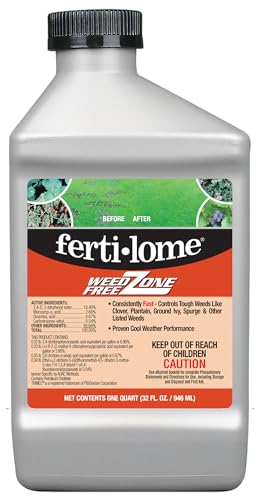
The Fertilome Weed Free Zone has earned a loyal following specifically for one weed: creeping charlie (ground ivy). Multiple verified owners report this as the only product that kills that viney invader overnight without damaging surrounding grass. The dicamba-heavy formulation works on over 80 broadleaf species including clover, spurge, chickweed, and thistle, and it’s labeled for Kentucky bluegrass, bermudagrass, bahiagrass, and zoysiagrass.
The concentrate mixes with water, and many users find they need to bump the rate above the label minimum for tougher weeds like clover and mature dandelions. Adding a few drops of dish soap improves leaf adhesion, especially on waxy weed leaves that repel spray droplets. The 32-ounce bottle provides substantial coverage; a single application can treat the average suburban yard with leftover concentrate for follow-up spots.
Evidence of injury appears within hours on susceptible weeds. The spray works best when applied to young, actively growing broadleaf weeds in spring, summer, or fall. Owners note the product is safe around ornamental beds — sprayed near hostas, sedums, and lilies without damage. The price sits at the higher end of the mid-range, but the dedicated creeping charlie control justifies it for homeowners fighting that specific pest.
What works
- Kills creeping charlie when other products fail
- Safe near flowers and ornamentals
- Visible injury within hours on broadleaf weeds
What doesn’t
- Label rate may be weak on established clover
- Premium price for the bottle size
3. PBI/GORDON Trimec Lawn Weed Killer

The Trimec brand has been a go-to for decades, and this one-gallon concentrate delivers the classic three-way mix of 2,4-D, MCPP, and dicamba. It is specifically formulated for cool-season grasses — Kentucky bluegrass, perennial ryegrass, and tall fescue — and covers an enormous 32,000 to 64,000 square feet depending on application rate. For homeowners with half-acre or larger fescue lawns, this single bottle can handle the entire season.
Owners report effective control on dandelion, clover, and creeping charlie, with results taking two to three days on standard broadleaf weeds and up to two weeks on stubborn perennials like Virginia buttonweed. The rainfast window is typical for this chemistry — allow six hours before rainfall. Some users note that for heavy infestations or older weeds, doubling or tripling the Trimec portion within label limits improves results, but always verify the rate against your specific grass type.
The gallon jug requires a pump sprayer or hose-end attachment; there is no RTU version. One caveat: the product shipped may sometimes be labeled as “Weed-Out” by Fertilome rather than the Trimec brand, though the active ingredients and performance are effectively the same. For cool-season lawns needing broad coverage without repeated trips to the store, this is a cost-efficient workhorse.
What works
- Excellent value per square foot of coverage
- Kills creeping charlie and Virginia buttonweed
- Time-tested formula trusted for decades
What doesn’t
- Label may arrive as a different brand
- Adjustment to label rate may be needed for tough weeds
4. Spectracide Large Plot Weed Stop for Lawns Concentrate

Spectracide Large Plot Weed Stop delivers one of the largest coverage areas at the lowest per-square-foot cost among the concentrates tested here. The one-gallon jug treats up to 32,000 square feet of northern grasses or 42,500 square feet of southern grasses. The label lists more than 200 weed types including dandelion, chickweed, clover, dollar weed, and nutsedge, with results showing within hours on many broadleaf species.
Rainfast sets in at six hours, and the formula won’t harm lawn grasses when applied according to directions. Owners report fast wilting on common weeds with a single pass, though tougher rosette weeds and foxtails may require a second or third application at a slightly higher dose. The formula mixes easily with water and spreads well through a hose-end sprayer or pump tank.
The product delivers good broad-spectrum control, but some users note it acts slower than SpeedZone or Trimec on certain perennial broadleaf weeds. Dollar weed and chickweed die quickly; rosette-forming weeds like wild lettuce or plantain may need a follow-up. For the coverage-to-price ratio alone, this is a top pick for owners managing acreage-scale lawns who need a reliable general-purpose spray.
What works
- Enormous coverage for large properties
- Kills 200+ weed types including nutsedge
- Rainfast in 6 hours
What doesn’t
- Slower acting on tough rosette weeds
- Foxtails may need multiple applications
5. Liquid Harvest Mesotrione – 8oz Concentrate

Mesotrione is the active ingredient in the branded product Tenacity, and Liquid Harvest offers a generic alternative at a substantially lower cost per ounce. Unlike standard three-way mixes, mesotrione provides both pre-emergent and post-emergent control, making it effective on crabgrass that hasn’t germinated yet and existing broadleaf weeds like clover and dandelion. The 8-ounce bottle is highly concentrated — a single teaspoon per two gallons of water goes a long way.
Mesotrione inhibits photosynthesis, turning susceptible weeds white before they die. Full death takes two to three weeks, which is slower than carfentrazone-based formulas, but the residual pre-emergent activity is a trade-off many homeowners appreciate. The product requires activation — 0.15 inches of rain or irrigation within ten days of application — otherwise you need to water it in manually.
This spray is safe on centipede, St. Augustine (sod only), Kentucky bluegrass, tall fescue, and perennial ryegrass, but it can discolor or stunt bentgrass, zoysiagrass, and bermudagrass. Users recommend using a spray dye to prevent overlap. The whitening effect on weeds is dramatic, and many owners in Nebraska, South Carolina, and the Midwest specifically credit this formula with eradicating crabgrass that survived everything else they tried.
What works
- Pre-emergent and post-emergent in one product
- Excellent crabgrass control
- Safe on sensitive warm-season turf like centipede
What doesn’t
- Slow visual death takes 2-3 weeks
- Not safe on bermudagrass or zoysiagrass
6. Ortho Max Nutsedge Killer Rtu, 24 fl.oz. (2 Pack)
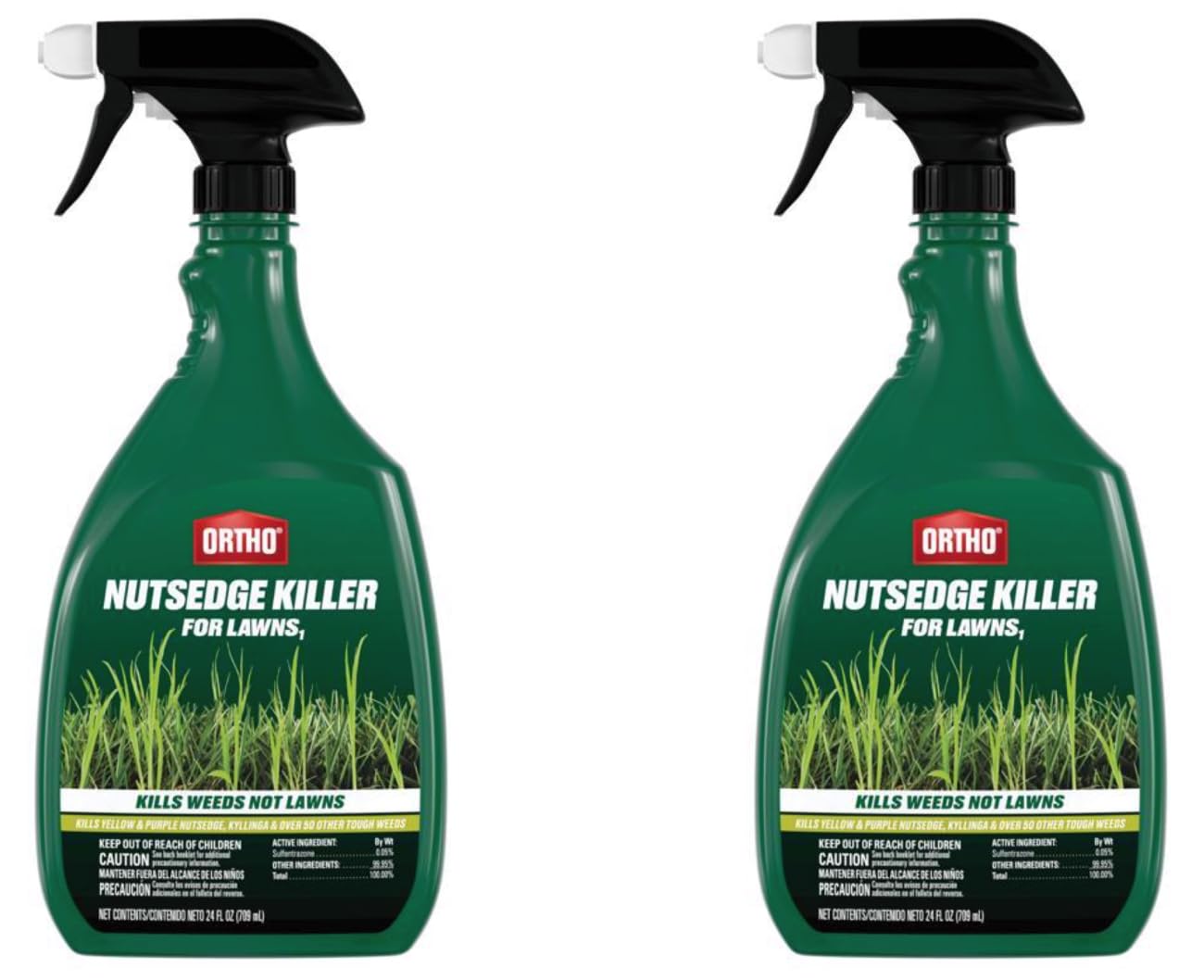
Yellow and purple nutsedge require a dedicated chemistry — standard broadleaf sprays won’t touch them. Ortho Max Nutsedge Killer uses the selective active ingredient halosulfuron-methyl, which translocates through the plant to kill the underground nutlets, preventing regrowth. The ready-to-use trigger bottle delivers a convenient spot-treatment solution for homeowners fighting that distinctive sedge without harming surrounding turf.
The formula targets more than 50 listed weeds including wild onion, garlic, broadleaf plantain, purslane, and spurge, but its primary claim is nutsedge eradication. Owners report best results when spraying newly emerged nutsedge — the sedge typically dies within 24 to 48 hours. Older, taller nutsedge requires higher rates and repeated applications. The product is rainproof in just two hours, which is one of the fastest rainfast windows in this guide.
The biggest drawback is the bottle size. At 24 fluid ounces per bottle, a two-pack covers spot treatments but isn’t designed for a lawn-wide blanket application. Homeowners with widespread nutsedge infestations across a full yard may need many bottles or should look for a concentrate version. For targeted patches of nutsedge, this is the most reliable RTU option available.
What works
- Kills nutsedge at the root without harming lawn
- Rainproof in only 2 hours
- RTU trigger bottle for easy spot-spraying
What doesn’t
- Small bottle size for the price
- Less effective on tall, mature nutsedge
7. Ortho Weed B Gon Weed Killer, 24oz RTU

Ortho Weed B Gon is the category’s most recognizable name, and this 24-ounce RTU bottle is designed for the homeowner who wants to grab, spray, and move on. The formula kills 250+ listed broadleaf weeds — dandelion, clover, chickweed, and more — without harming lawn grass when used as directed. Results appear within hours, and the spray kills weeds down to the root to slow regrowth.
The ready-to-use trigger saves the hassle of mixing concentrates, measuring, and cleaning a sprayer. Coverage is rated at 5,000 square feet per bottle, which works well for spot-treating scattered patches in a quarter-acre lot. Owners consistently praise the ease of use — just point and spray — and the visible wilting of dandelions and clover within 24 hours. It is particularly effective on young, actively growing weeds.
The downside with any RTU bottle is cost per application. When treating a full lawn with widespread weeds, the per-square-foot cost climbs significantly higher than a concentrate. The trigger also tends to drip after extended use, and some users note the spray pattern becomes uneven as the bottle nears empty. For a quick spot-kill on visible weeds, this is a solid entry-level choice, but owners managing larger or recurring infestations should move to a concentrate.
What works
- No mixing required — spray and go
- Kills 250+ weeds including dandelion and clover
- Results visible within hours
What doesn’t
- Expensive per square foot for large areas
- Trigger can drip and lose spray pattern
Hardware & Specs Guide
Active Ingredient Profiles
The most common active ingredients in selective lawn weed sprays are 2,4-D (broadleaf control), dicamba (tough perennial weeds like creeping charlie), MCPP or mecoprop-p (clover and chickweed), carfentrazone-ethyl (rapid burndown, visible hours after spraying), and mesotrione (photosynthesis inhibitor, both pre- and post-emergent). Three-way mixes are the standard for residential use because they combine 2,4-D, dicamba, and MCPP for broad-spectrum coverage. Sprays with carfentrazone deliver the fastest visual results — often within hours — while mesotrione offers residual pre-emergent activity that prevents germination of crabgrass and other grassy weeds.
Application Methods: RTU vs Concentrate
Ready-to-use trigger bottles come premixed and require no sprayer. They are ideal for spot-treating isolated weed patches on smaller lawns under 10,000 square feet. The downsides are the higher cost per treatment and limited coverage per bottle. Concentrated formulas require a dedicated sprayer — either a hose-end attachment that draws from a jug, or a pump/backpack sprayer for precise application rates. Concentrates cost less per square foot and let you adjust the dose for weed severity. The trade-off is measuring accuracy and cleanup: leftover mixed spray must be used within 24 hours or discarded.
FAQ
Can I spray weed killer on my lawn after mowing?
How long after spraying weed killer can I water my lawn?
Will weed killer also kill my bermudagrass or St. Augustine grass?
Final Thoughts: The Verdict
For most gardeners, the weed spray for lawns winner is the SpeedZone EW because it delivers visible results within hours, works in cool weather, and has a short three-hour rainfast window. If you are fighting creeping charlie or need a formula that performs on sensitive warm-season grasses, grab the Fertilome Weed Free Zone or the Liquid Harvest Mesotrione. And for large-scale lawn coverage on cool-season turf without breaking the bank, nothing beats the Trimec Lawn Weed Killer.