
Sandy soil drains fast — too fast for most standard fertilizers. Apply a water-soluble feed and watch it vanish below the root zone before your plants can use it. The result is pale leaves, stunted growth, and a frustrated gardener who has to reapply every week. Fertilizing sandy soil is a completely different game from working with loam or clay, and the wrong product will simply wash away.
I’m Rikta — the co-founder and writer behind Lawn Gear Lab. I’ve spent dozens of hours cross-referencing NPK ratios, release mechanisms, and organic certifications against hundreds of verified owner reports to find the products that actually stay put in sandy conditions.
Whether you are starting a vegetable plot, repairing a patchy lawn, or planting ornamentals in a coastal garden, the slow-release granules and organic blends reviewed below are the ones that resist leaching and deliver real results. This guide covers the best fertilizer for sandy soil currently available on the market.
How To Choose The Best Fertilizer For Sandy Soil
Sandy soil particles are large, leaving wide pore spaces that water (and the nutrients dissolved in it) can race through. The single most important feature in a sandy-soil fertilizer is how tightly it holds onto its nutrients. Here are the three criteria that matter most.
Prioritize Slow-Release Nitrogen Sources
Quick-release nitrogen (like ammonium nitrate or urea) dissolves almost instantly and is gone with the first heavy rain. In sandy soil, this is a recipe for waste and repeated applications. Look for sulfur-coated urea, polymer-coated granules, or natural organics like feather meal and bone meal. These break down over weeks rather than minutes, matching the slower nutrient uptake curve that sandy soil demands.
Check the NPK Ratio for Your Crop
A balanced 4-4-4 or 5-1-1 ratio works for general garden use, but sandy soil often lacks potassium as well as nitrogen. A slight lean toward higher potassium (the third number) can help with root strength and disease resistance. For lawns, a 27-0-5 or 16-0-8 with slow-release N avoids the phosphorus runoff issues common in sandy coastal areas where water tables are shallow.
Organic Matter and Microbial Additives
Fertilizers that include mycorrhizal fungi or beneficial soil microbes improve the Cation Exchange Capacity (CEC) of sandy soil over time. Products like those from Espoma and FoxFarm contain these additives, which help the soil hold onto positively charged nutrient ions (calcium, magnesium, potassium) that would otherwise leach away. This is a long-term fix that pays off after one or two seasons.
Quick Comparison
On smaller screens, swipe sideways to see the full table.
| Model | Category | Best For | Key Spec | Amazon |
|---|---|---|---|---|
| Jobe’s Organics 4-4-4 | Organic Granules | Vegetable gardens & shrubs | 16 lb bag, 4-4-4 NPK | Amazon |
| The Andersons PGF 16-0-8 | Lawn Granules | Established lawns | Humic DG, 8-week feed | Amazon |
| GreenView Fairway 27-0-5 | Lawn Granules | Spring lawn feeding | 63% slow-release N | Amazon |
| Alaska Fish 5-1-1 | Liquid Concentrate | Quick green-up for leaves | 115 fl oz, OMRI certified | Amazon |
| FoxFarm Happy Frog 6-4-5 | Organic Granules | Containers & ornamentals | 4 lb bag, active microbes | Amazon |
| Sustane All Natural 8-2-4 | Organic Granules | Soil building & beds | 5 lb bag, poultry manure | Amazon |
| Espoma Bio-tone 4-3-3 | Starter Granules | Transplants & new plants | Endo & ecto mycorrhizae | Amazon |
In‑Depth Reviews
1. Jobe’s Organics Granular All Purpose Fertilizer 4-4-4

This is the workhorse for anyone managing sandy vegetable beds or shrub borders. The 4-4-4 ratio provides even macronutrient distribution without overwhelming sandy soil’s low buffering capacity. At 16 pounds, one bag covers a substantial area, and the granular form allows you to side-dress around individual plants — a critical technique when rain can flush surface-applied nutrients sideways.
Owner reports consistently mention explosive yields on squash, cucumbers, and tomatoes when used as a weekly or bi-weekly root feed. The granules break down at a pace that matches what sandy soil can absorb, and users who steep the granules in water to create a liquid tea report near-immediate flower opening within 48 hours. The OMRI listing means it meets organic standards, so it is safe for edible crops.
The odor is noticeable — several reviewers describe it as pungent but far milder than raw manure. Application is straightforward with a handheld spreader or by hand with gloves, and the resealable bag keeps the contents dry between uses. For a single product that handles everything from lawn patches to flower borders, this is the most versatile pick in the lineup.
What works
- Balanced 4-4-4 NPK works across vegetables, shrubs, and flowers.
- Large 16-lb bag offers strong coverage for medium to large gardens.
- OMRI listed for certified organic growing.
- Versatile — apply dry or steep as a liquid tea.
What doesn’t
- Strong smell during application, especially in enclosed spaces.
- Granules can clump if the bag is not kept completely sealed.
- Slow release may frustrate those wanting instant results.
2. The Andersons Professional PGF 16-0-8 with Humic DG
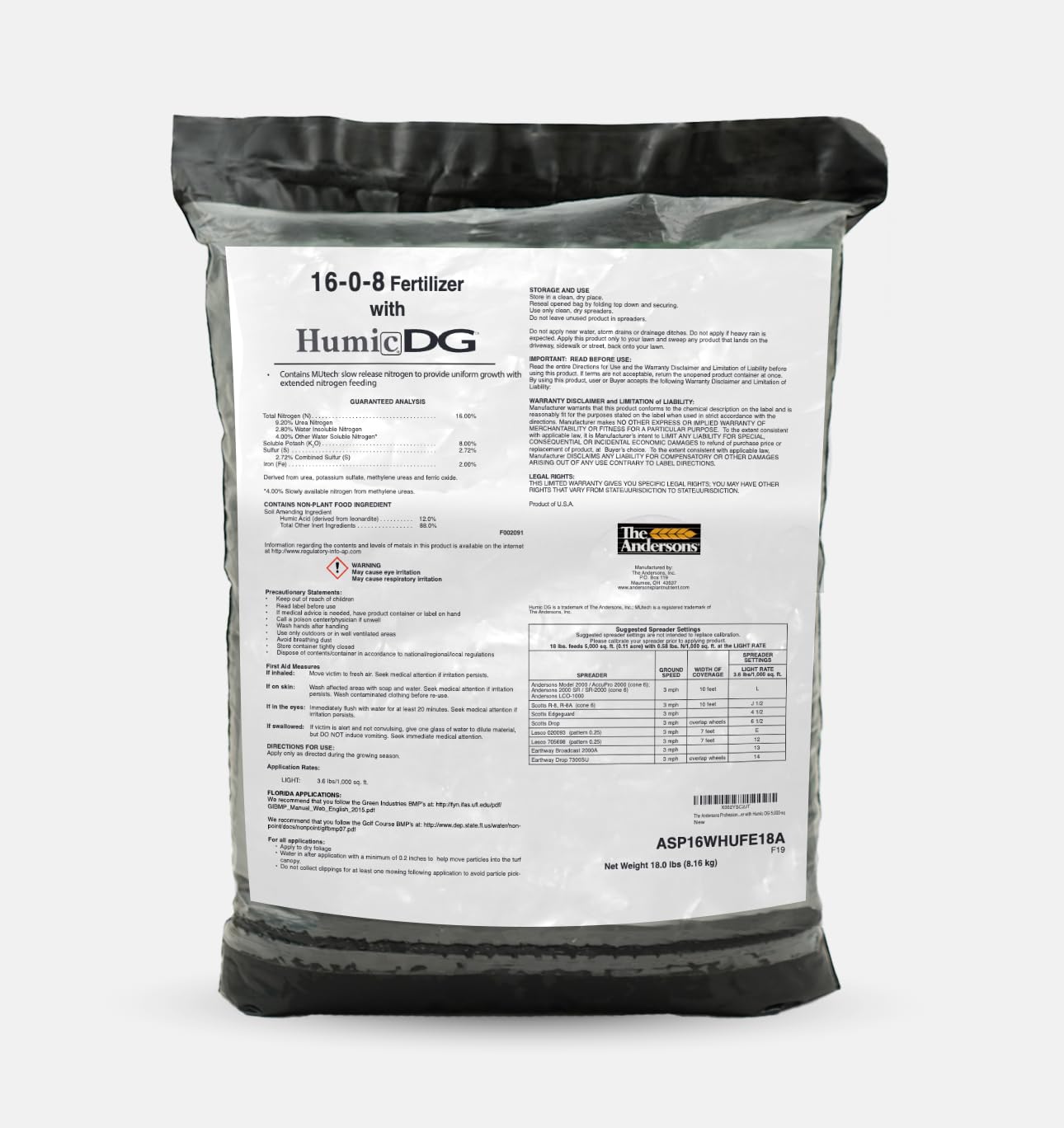
This is the most technologically advanced product in this review for lawn care on sandy soil. The 16-0-8 analysis delivers high nitrogen and potassium without phosphorus, which is ideal for soils where phosphorus levels are already sufficient or where runoff regulations apply. The key differentiator is the Humic DG coating — humic acid increases the CEC of sandy soil, helping it hold onto nutrient cations that would otherwise leach.
The super-fine particle size delivers twice the number of granules per square foot compared to standard lawn fertilizers, meaning more even distribution and less risk of burn stripes. The dual-release nitrogen (quick + slow) provides immediate greening within a week while the slow-release fraction feeds for up to eight weeks. Verified buyers report the best lawn on the block after switching to this product, with dramatic improvements in color and density.
It is not cheap on a per-bag basis, but the 18-pound bag covers 10,000 square feet — comparable to much larger bags of lower-density products. Note that it is not for sale in California or Oregon due to local phosphorus regulations. If you want a premium, research-backed solution for sandy turf, this is the one.
What works
- Humic DG increases CEC to combat nutrient leaching in sand.
- Phosphorus-free formula protects waterways.
- Fine granules provide exceptionally even coverage.
- Quick + slow-release nitrogen feeds for up to 8 weeks.
What doesn’t
- More expensive per application than standard lawn foods.
- Not available in California or Oregon.
- Over-application can burn turf if not watered in properly.
3. GreenView Fairway Formula Lawn Fertilizer 27-0-5

For lawns planted in sandy soil, the GreenView Fairway Formula is engineered to solve the leaching problem head-on. With 63 percent of its nitrogen in slow-release form, this fertilizer feeds steadily over a 12-week window. That means fewer applications and less wasted nutrient migrating into the water table. The 27-0-5 ratio is strong on nitrogen for green growth and potassium for root health, with zero phosphorus to avoid environmental issues.
The small blue granules are designed to prevent overlap burn — a common issue when using a spreader on uneven sandy ground. Owners report visible greening within a week and sustained dark color through the spring and summer. One reviewer noted it performs well on Carpet Grass Centipede in Zone 7a, a grass type notoriously picky about nitrogen sources.
The 33-pound bag covers 10,000 square feet, making it one of the most economical options per square foot in the premium-tier category. It works on any actively growing grass type including Bermuda. For medium to large sandy lawns, this is the most straightforward, results-driven option available.
What works
- 63 percent slow-release nitrogen resists leaching in sandy soil.
- Covers 10,000 sq ft from a single 33-lb bag.
- Phosphorus-free for environmentally sensitive areas.
- Consistent dark green color without surge growth.
What doesn’t
- High nitrogen content can burn if applied to stressed or dry turf.
- Only suitable for lawns — not for gardens or ornamentals.
- May require a second application after 8-12 weeks for season-long feed.
4. Alaska Fish Fertilizer 5-1-1 OMRI Listed
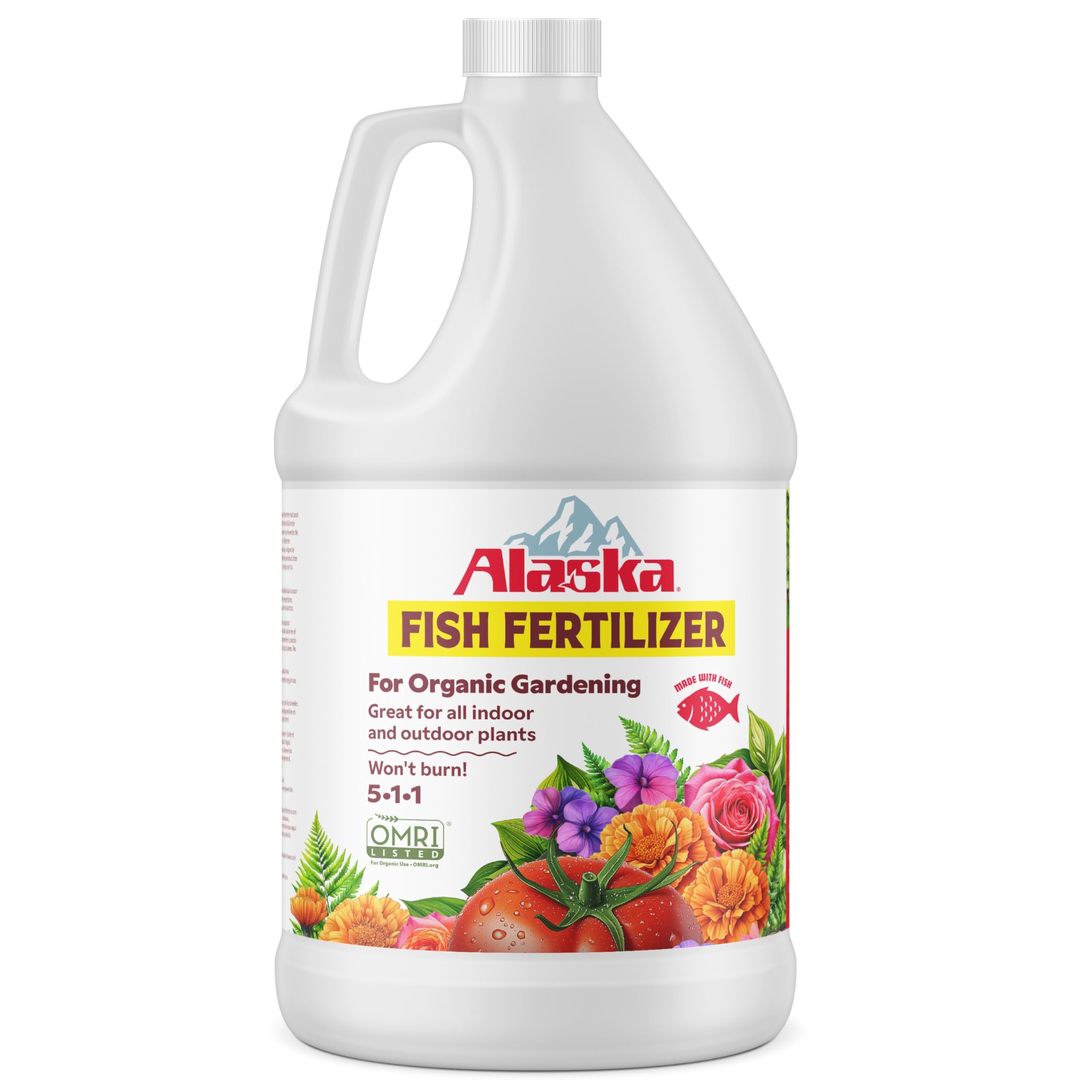
Not all sandy-soil fertilizers need to be granules. The Alaska Fish Fertilizer is a liquid concentrate (5-1-1) that provides a gentle, organic nitrogen boost for leafy growth. In sandy soil, it is best used as a foliar spray or a careful root drench every three weeks during the growing season — the liquid format means your plants can absorb it immediately before it has time to percolate away.
Verified users with 10-plus years of experience swear by it for vegetables, herbs, trees, and transplants. The cold-pressed process preserves micronutrients that fuel soil microbes, a valuable trait for improving sandy soil biology over time. The 115-ounce bottle provides excellent value per ounce compared to smaller fish emulsion bottles.
The one unavoidable downside is the smell. Even the deodorized formula produces a strong fishy odor that lingers for about a day indoors. Use it in well-ventilated areas or on outdoor plants only. For gardeners who want a fast-acting, organic nitrogen source that supports soil biology rather than just feeding the plant, this is the best liquid choice.
What works
- Immediate nutrient availability for fast green-up.
- OMRI certified for organic gardening.
- Large 115 fl oz bottle offers great per-ounce value.
- Cold-pressed formula preserves micronutrients for soil microbes.
What doesn’t
- Strong fishy smell that persists for 24 hours indoors.
- Low phosphorus/potassium means flowering plants may need a supplement.
- More frequent application needed compared to slow-release granules.
5. FoxFarm Happy Frog All Purpose Fertilizer 6-4-5

FoxFarm’s Happy Frog is a cult favorite among container gardeners, and for good reason on sandy ground. The 6-4-5 ratio is slightly higher in potassium than the standard all-purpose blend, which helps sandy soil’s often-depleted potassium reserves. More importantly, it contains beneficial soil microbes and mycorrhizal fungi that improve the soil’s biological CEC — the living component of nutrient retention.
Owner reports highlight its ability to revive yellowing plants within a week, even in sandy raised beds. The product works well for ornamentals, vegetables, and container plants where the granular form can be worked into the top few inches of medium. One reviewer reported explosive growth when combining Happy Frog with worm castings in a soilless mix.
The smell is described as manure-like and very pungent — not ideal for indoor use without strong ventilation. The 4-pound bag is small relative to other options, so gardeners with large beds will need multiple bags. For those growing in sandy containers or small raised vegetable plots who want biological activity along with nutrients, this is a top-tier choice.
What works
- Includes soil microbes and mycorrhizae to boost CEC in sand.
- 6-4-5 ratio provides extra potassium for root development.
- Fast visible results — many users report plant revival within a week.
- OMRI listed for organic use.
What doesn’t
- Small 4-lb bag requires multiple purchases for large gardens.
- Very strong manure-like odor.
- Can develop white mold/mildew if applied too thick and overwatered.
6. Sustane All Natural Flower and Vegetable Plant Food 8-2-4

Sustane uses composted poultry manure as its base, which delivers nutrients in a form that is already complexed with organic matter — a significant advantage in sandy soil where pure synthetic salts leach rapidly. The 8-2-4 ratio provides a solid nitrogen punch with moderate phosphorus and good potassium, making it well-suited for flower beds and vegetable gardens where you want blooms as well as foliage.
Customer reports are striking: one gardener grew 150 onion ends and a 2-foot leek from scraps in water with Sustane in under two weeks. Another used it in a soilless mix of perlite, compost, and coconut coir for raised beds and described vegetable growth as phenomenal. The small pellet form is easy to mix into the top layer of sandy soil without clumping.
The primary complaint is the smell — chicken manure is unmistakable, and some descriptions call it powerful. It works best when incorporated into the soil before planting or when top-dressed and watered in immediately. For gardeners committed to organic soil building and who want a single ingredient that provides both nutrients and organic matter, Sustane is a smart purchase.
What works
- Composted poultry manure provides slow-release nutrients and organic matter.
- 8-2-4 ratio supports both foliage and flower production.
- Promotes vigorous growth in containers and raised beds.
- Easy to incorporate into soil without clumping.
What doesn’t
- Strong chicken manure odor during application.
- 5-lb bag is relatively small for large garden plots.
- Nutrient profile may be too rich for very sensitive seedlings.
7. Espoma Organic Bio-Tone Starter Plus 4-3-3
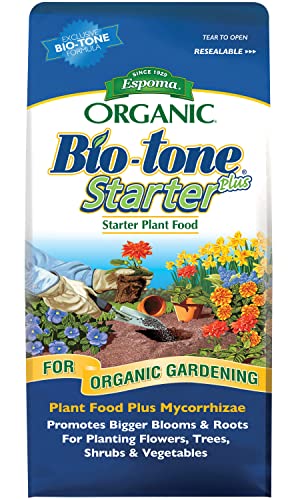
This is not a maintenance fertilizer — it is a starter formula designed exclusively for the critical moment of planting and transplanting. The 4-3-3 analysis is mild enough not to burn tender roots, and the inclusion of both endo and ecto mycorrhizae fungi is the real story for sandy soil. These fungi form symbiotic relationships with plant roots, extending their reach into the sandy matrix to access water and nutrients that would otherwise be beyond the plant’s reach.
Espoma includes 5 percent calcium in the mix, which is a welcome addition for sandy soils that are typically calcium-deficient. The instructions are clear: mix thoroughly with the soil used to backfill the planting hole so that the Bio-Tone is concentrated in the root zone. Reviewers who follow this method report faster establishment and reduced transplant shock, even in challenging sandy sites.
The smell is famously bad — one verified buyer describes it as a stinker but worth holding your breath for. The 4-pound bag covers a generous number of planting holes, and the two-pack ensures you have enough for a full season of planting. For any new plant going into sandy ground, this is the best insurance policy you can buy.
What works
- Contains both endo and ecto mycorrhizae for root expansion in sand.
- Mild 4-3-3 analysis safe for direct root contact.
- Added calcium addresses common sandy soil deficiency.
- Excellent for reducing transplant shock.
What doesn’t
- Very strong, unpleasant odor.
- Not formulated for ongoing maintenance feeding.
- 4 lb per bag is modest — large projects need multiple bags.
Hardware & Specs Guide
NPK Ratio
The three numbers on a fertilizer bag stand for Nitrogen (N), Phosphorus (P), and Potassium (K). In sandy soil, a higher first number (N) is fine for leafy growth, but the third number (K) is often more important than gardeners realize — sand typically holds less potassium than clay, and that deficiency limits root strength and disease resistance. A ratio like 6-4-5 or 4-4-4 provides balanced support. Avoid very high phosphorus ratios (the middle number) unless a soil test confirms a deficiency, because phosphorus binds tightly in sandy soil and is rarely the limiting factor.
Slow-Release Technology
Products like GreenView’s polymer coating or The Andersons’ Humic DG slow down the dissolution of nutrients so they match the uptake rate of the plant instead of the drainage rate of the soil. Look for the phrase “slow-release nitrogen” on the label and a percentage — anything above 50 percent is excellent for sandy conditions. These formulas reduce application frequency from every week to every 8-12 weeks, saving both time and money while preventing groundwater contamination.
FAQ
Should I use liquid or granular fertilizer on sandy soil?
How often should I fertilize sandy soil during the growing season?
Can organic fertilizers really improve sandy soil texture long-term?
Final Thoughts: The Verdict
For most gardeners, the fertilizer for sandy soil winner is the Jobe’s Organics 4-4-4 because its balanced ratio, large bag size, and slow-release granular form address the three biggest challenges sandy ground presents. If you want a turf-specific solution with advanced CEC-boosting technology, grab the The Andersons PGF 16-0-8. And for transplant success and root establishment in pure sand, nothing beats the Espoma Bio-Tone Starter Plus.