
Wild onions emerge as thin green blades that look harmless, but their underground bulblets ensure they return every season thicker than before. Standard broadleaf sprays often discolor the tops while leaving the bulbs untouched, guaranteeing a frustrating repeat cycle where the “dead” patch fills back in within weeks. Success requires a selective herbicide that translocates deep into the root system, stopping the vegetative bulb from regenerating another shoot.
I’m Rikta — the co-founder and writer behind Lawn Gear Lab. I’ve spent hundreds of hours cross-referencing active ingredient concentrations and analyzing owner feedback to identify the formulas that actually kill wild onion bulbs versus merely surface-burning the foliage.
This guide compares the seven most reliable herbicides on Amazon so you can confidently choose the best weed killer for wild onions and break the regrowth cycle for good.
How To Choose The Best Weed Killer For Wild Onions
Wild onions are classified as bulbous perennials, meaning they store energy underground. Killing the visible blade is easy; killing the entire bulb requires a herbicide that moves through the plant’s vascular system. Understanding a few key factors lets you avoid products that only provide cosmetic relief.
Active Ingredient Selection
Look for formulas that contain 2,4-D, dicamba, triclopyr, or MCPP. These systemic auxin-type herbicides mimic plant hormones and cause uncontrolled growth that drains the bulb until it starves. Glyphosate also kills onions but is non-selective and will damage any grass it touches — use it only for spot treatments in bare ground areas.
Selectivity Versus Lawn Safety
If the wild onions are growing inside your lawn, you need a selective herbicide that kills broadleaf weeds without harming turfgrass. Products listing “safe for lawns” with tall fescue, Kentucky bluegrass, or bermudagrass printed on the label are your safest bet. Non-selective formulas like glyphosate are better reserved for garden beds, driveways, or areas where you want total vegetation removal.
Concentration And Coverage
Concentrates give you better value per treatment because you control the dilution ratio. Wild onions have waxy leaves, so many users report needing a slightly stronger mix than the label’s minimum dose for soft weeds. Adding a non-ionic surfactant or a few drops of dish soap helps the herbicide adhere to the slick blade surface and increases translocation into the bulb.
Rainfast Timing
Check the rainfast window — the time the spray needs to dry undisturbed before rain can wash it off. Products that become rainproof within a few hours give you more flexibility, but wild onions respond best when applied during sunny mornings with at least 24 hours of dry weather forecasted. Rain shortly after spraying rinses the active ingredient off before it can penetrate the bulb.
Quick Comparison
On smaller screens, swipe sideways to see the full table.
| Model | Category | Best For | Key Spec | Amazon |
|---|---|---|---|---|
| Bonide Weed Beater Ultra | Selective Concentrate | Killing wild onion bulbs in lawns | 2,4-D / Dicamba / MCPP blend | Amazon |
| Fertilome Weed Free Zone | Selective Concentrate | Overnight knockdown on tough broadleaf weeds | Dicamba / 2,4-D / MCPP + Carfentrazone | Amazon |
| PBI/Gordon Trimec (Gallon) | Selective Concentrate | Large lawn coverage for cool-season grasses | 32,000-64,000 sq ft per gallon | Amazon |
| Bonide Chickweed Clover & Oxalis Killer | Ready-to-Use | Small spot treatments without mixing | Triclopyr / Dicamba blend | Amazon |
| Hi-Yield Killzall 365 | Non-Selective Concentrate | Driveways, patios & non-lawn areas | Glyphosate / Imazapyr blend | Amazon |
| Southern Ag Trimec | Selective Concentrate | Targeting clover & wild onion in warm-season turf | 2,4-D / MCPP / Dicamba | Amazon |
| Control Solutions Eraser | Non-Selective Concentrate | Total vegetation spot removal | 41% Glyphosate | Amazon |
In‑Depth Reviews
1. Bonide Weed Beater Ultra, 32 oz Concentrate

Bonide Weed Beater Ultra is the most directly referenced product for wild onion control in the customer data, with verified buyers reporting it as “very effective against wild onion.” The three-way active ingredient cocktail — 2,4-D, dicamba, and MCPP — targets the bulb through systemic action, and its rainfast protection within hours means one well-timed application stays on the blade long enough to translocate. At a pint treating roughly 10,000 square feet, the concentrate stretches further than most ready-to-use alternatives.
Users note that broadleaf weeds require two or more treatments in consecutive seasons to fully exhaust the bulb bank, but the initial knockdown is visible within seven days. The formula kills over 200 listed weed species, so it also handles clover, ground ivy, and dandelions that typically co-occur with wild onions. Injury symptoms appear on the leaves within hours, confirming the chemical is moving through the plant rather than just sitting on the surface.
The liquid mixes instantly with water and works best when applied with a pump or backpack sprayer for even coverage. Some users found they needed a slightly higher concentration than the label’s base rate for waxy-leaved onions, but the blend remains safe for turf grasses when used according to directions. This is the most complete selective solution for anyone fighting wild onions inside their lawn.
What works
- Proven by multiple users to kill wild onion bulbs
- Rainfast protection prevents washout from unexpected showers
- One of the few concentrates that treats over 200 broadleaf species
What doesn’t
- Requires persistent seasonal treatment for complete bulb exhaustion
- May need a slightly stronger mix for waxy wild onion leaves
2. Fertilome Weed Free Zone, 32 oz Concentrate
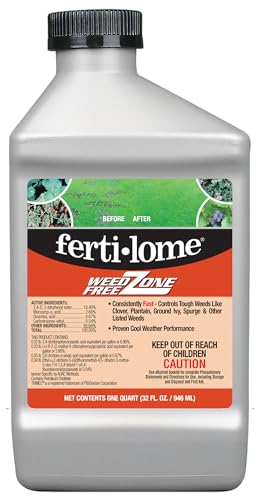
Fertilome Weed Free Zone stands apart because it includes carfentrazone — a fast-acting contact herbicide that accelerates the injury symptoms visible on broadleaf weeds within hours. For wild onions, this means you see immediate leaf curling and browning, which provides visual confirmation the spray is working. The formula contains dicamba, 2,4-D, and MCPP, giving it a systemic punch that goes beyond surface damage to reach underground bulblets.
Customer reports confirm the product is safe on Kentucky bluegrass, bermudagrass, bahiagrass, and zoysiagrass, making it versatile across most northern and southern lawns. Users who tackled creeping charlie — a weed similarly aggressive to wild onions — praised this as the only product that eliminated it overnight. The concentrate requires mixing with water and a surfactant for best adhesion, especially on those glossy onion blades.
The rapid injury speed is a double-edged sword: it shows results quickly, but some users had to double the recommended concentration for clover and tougher weeds like wild onion. The spray rate is economical — a little goes a long way — and the rainfast window is short enough that a morning application can survive an afternoon shower. Keep a bottle on hand for mid-season spot sprays when onion patches re-emerge.
What works
- Carfentrazone provides visible injury within hours
- Safe on multiple turf types including bermudagrass
- Effective against creeping charlie and other persistent bulbs
What doesn’t
- Label dose may be too weak for waxy wild onion leaves
- Higher price per ounce compared to standard Trimec blends
3. PBI/Gordon Trimec Lawn Weed Killer, 1 Gallon

PBI/Gordon Trimec in the one-gallon jug is the most cost-effective option for owners of large lawns, covering between 32,000 and 64,000 square feet depending on the dilution rate. The Trimec trademark stands for a trusted three-way blend of 2,4-D, MCPP, and dicamba that has been the industry standard for decades. Wild onions fall squarely within the list of hard-to-control weeds this formula is designed to kill.
A 73-year-old verified buyer called this the best weed killer they had ever used, and multiple users confirmed it killed creeping charlie within two to three days. The gallon size eliminates the need to reorder mid-season, and the concentrate stores well for spot treatments the following year. Users note that some particularly resilient weeds — including Virginia buttonweed and wild onion — required two to three weeks of systemic action before full dieback.
The product is specifically formulated for cool-season grasses, so warm-season lawn owners should double-check compatibility with their turf type. Some users found they needed to double or triple the Trimec portion for the toughest broadleaf weeds, but the volume in the gallon container still makes that adjustment affordable. Add a surfactant and marking dye to improve coverage on waxy wild onion blades.
What works
- Excellent coverage per dollar for large lawn applications
- Trusted Trimec blend proven on bulb-type weeds
- Low risk of turf injury on cool-season grasses
What doesn’t
- May require double-strength mix for wild onions
- Not recommended for all warm-season turf varieties
4. Bonide Chickweed Clover & Oxalis Killer, 128 oz Ready-to-Use

Bonide’s ready-to-use formulation is ideal for homeowners who want a no-mix solution for small wild onion patches. The active ingredients — triclopyr and dicamba — are both strong systemic herbicides that move into the root system, and triclopyr in particular is effective on woody and bulb-type weeds. The sprayer hose attachment covers roughly 10,000 square feet, though the gallon jug itself is better suited for spot treatment on smaller lawns or garden bed edges.
Users consistently report strong results on chickweed, clover, and dandelions, with visible dieback occurring the next day. For wild onions, the triclopyr component provides an advantage because it penetrates waxy coatings more efficiently than 2,4-D alone. The product is nearly odorless and clear, making it comfortable to use around the yard without strong chemical fumes.
The ready-to-use format costs more per treatment than concentrates, and the built-in hand sprayer is not ideal for large lawns — switch to a pump sprayer for better coverage. One reviewer noted it was ineffective on clover patches, which suggests the ready-to-use dilution may be too mild for thicker broadleaf infestations. For small, targeted wild onion patches where you value convenience over economy, this is a solid grab-and-go option.
What works
- Triclopyr formulation penetrates waxy wild onion leaves
- No mixing required — attach hose and spray
- Nearly odorless and clear application
What doesn’t
- More expensive per treatment than concentrates
- Hand sprayer struggles with large-area coverage
5. Southern Ag Lawn Weed Killer with Trimec, 32 oz

Southern Ag Trimec is labeled for use on nine different turf types, making it one of the most versatile selective herbicides for homeowners unsure about their grass species. The patented three-way blend of 2,4-D, MCPP, and dicamba is the same proven chemistry used by professional lawn care operators. One verified buyer specifically reported winning their “onion grass battle” after a single week when they added a surfactant and marking dye to the Trimec mix.
The product comes as a 32-ounce concentrate covering about 5,000 square feet, placing it in the mid-range for coverage. Users note that it wiped out clover, spurge, and chickweed without damaging the lawn, and the liquid has virtually no odor during application. For wild onions, the key is matching the mix ratio to the severity — some users found the standard 2 oz per gallon rate effective, while others needed a stronger dose for mature bulbs.
The product instructions are compatible with conventional and hose-end sprayers, and the rainfast window is approximately 24 hours. One drawback mentioned in reviews is that weeds can return relatively fast, requiring reapplication every few weeks during the growing season. For persistent wild onion infestations, plan on a second application three to four weeks after the first treatment to hit any bulbs that survived the initial spray.
What works
- Proven Trimec chemistry with a verified wild onion win
- Safe on nine turf types including St. Augustine and centipede
- Low odor for comfortable yard application
What doesn’t
- Weeds may return quickly if bulbs are not fully exhausted
- Requires 24-hour dry window for best results
6. Hi-Yield Killzall 365, 32 oz

Hi-Yield Killzall 365 combines glyphosate and imazapyr for total vegetation control that persists in the soil for months. This is not a lawn-safe product — it is designed for driveways, patios, fence lines, and other non-lawn areas where bare ground is desired. The imazapyr component gives residual activity that prevents new weeds from germinating for an extended period, which is helpful for keeping wild onions from returning on gravel paths or mulched beds.
The 32-ounce concentrate treats up to 4,300 square feet, and the mixing ratio varies from 6 oz per gallon for spot control to 7.4 oz for bare-ground sterilization. Users report good results on broadleaf weeds and grasses, though one verified buyer noted it had no effect on moss. Wild onions in non-lawn areas will die completely within one to two weeks, and the residual barrier reduces the need for repeat spraying.
The primary risk is overspray — because imazapyr stays active in the soil, any drift onto desired grass or ornamentals can kill them for the entire season. Apply only on calm days with a dedicated sprayer, and avoid using this near tree root zones. For targeted wild onion removal inside your lawn, choose a selective product instead; for permanent clearing of wild onions in hardscape areas, this is the most aggressive solution.
What works
- Glyphosate plus imazapyr provides long residual control
- Excellent for driveways and non-lawn areas
- Cost-effective bare ground sterilization
What doesn’t
- Non-selective — kills any plant it touches
- Soil residual can harm nearby ornamentals and tree roots
7. Control Solutions Eraser, 32 oz Concentrate
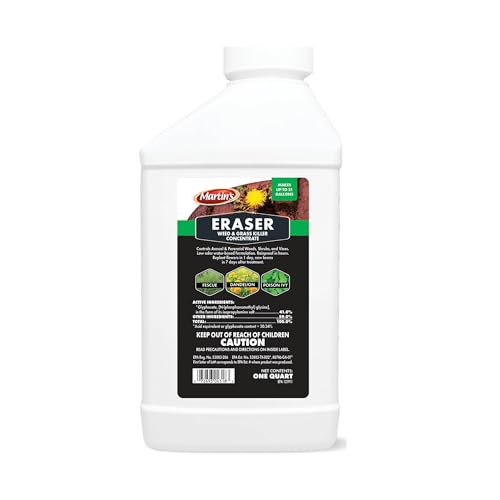
Control Solutions Eraser delivers 41% glyphosate concentrate — the same active ingredient found in name-brand Roundup — at a significantly lower cost per ounce. This is a non-selective herbicide that kills everything green it touches, including grass, flowers, and shrubs, so its use is limited to spot treatment of wild onions in non-lawn areas. The water-based formula has a low odor and leaves no residual soil activity, meaning you can plant in the treated area soon after the weeds die.
Users report that glyphosate takes 7 to 14 days to fully kill weeds, with yellowing appearing after 4 to 7 days. Wild onions will show injury within the first week, but the bulbs may require a follow-up spray if the initial application didn’t reach the entire root system. The concentrate mixes at 8 oz per gallon for general weed control, and one 32-ounce bottle goes a long way if you are only spot-treating scattered onion patches.
The biggest limitation is that Eraser, like all glyphosate products, kills turf grass on contact. If your wild onions are mixed into a bermudagrass or fescue lawn, you will create bare spots that invite more weeds. The product is best reserved for garden beds, mulched areas, and sidewalk cracks where selective herbicides are not an option. For the price, it is the most economical non-selective choice, but only for the right use case.
What works
- 41% glyphosate at the lowest price on this list
- Low odor and easy to mix
- No residual soil activity allows quick replanting
What doesn’t
- Non-selective — kills desirable grass and ornamentals
- Bulb may require a second application for full kill
Hardware & Specs Guide
Glyphosate vs. Trimec (2,4-D / Dicamba / MCPP)
Glyphosate kills by blocking the EPSPS enzyme essential for plant growth — it is non-selective and works on all green tissue, but has zero residual soil activity. Trimec blends use synthetic auxins that cause uncontrolled cell division, selectively target broadleaf weeds, and leave grass unharmed. For wild onions, Trimec-type formulas are preferred in lawns because they translocate to the bulb without killing the turf.
Surfactant Requirement for Waxy Leaves
Wild onion leaves have a smooth, waxy cuticle that causes spray droplets to bead up and roll off. Adding a non-ionic surfactant at 0.25% to 0.5% of the spray volume reduces surface tension and allows the herbicide to spread evenly across the leaf. Many users report significantly better results against wild onions when they add a few drops of dish soap or a commercial surfactant to the mix.
FAQ
Why do wild onions keep coming back after spraying?
Can I use vinegar to kill wild onions instead of chemical herbicides?
What is the best time of year to spray wild onions?
Does mowing wild onions help or make them worse?
Final Thoughts: The Verdict
For most gardeners, the weed killer for wild onions winner is the Bonide Weed Beater Ultra because its three-way systemic blend and rainfast protection directly target the bulb without harming the lawn. If you want overnight knockdown and visual feedback within hours, grab the Fertilome Weed Free Zone. And for large properties needing broad coverage at a low per-treatment cost, nothing beats the PBI/Gordon Trimec gallon.