
Mulch beds should frame your flowers, not harbor a jungle of crabgrass and creeping charlie. The frustration of pulling weeds from deep within shredded bark, only to have them resprout within days, is a cycle every gardener wants to break. A targeted chemical strategy is often the only efficient way to regain control without disturbing the entire bed’s root system.
I’m Rikta — the co-founder and writer behind Lawn Gear Lab. I spend my time cross-referencing active ingredient concentrations, studying soil persistence data, and analyzing hundreds of verified owner reports to separate the solutions that deliver results from those that just promise them.
Whether you need a fast-acting post-emergent to spot-treat invaders or a granular pre-emergent to stop seeds before they sprout, the right weed killer for mulch beds hinges on matching the active ingredient to your specific weed pressure and replanting schedule.
How To Choose The Best Weed Killer For Mulch Beds
Mulch acts as a physical barrier, but weed seeds blow in, and perennial roots creep underneath. Selecting the wrong chemistry can sterilize your soil or leave your ornamentals damaged. Here are three critical factors to resolve before you buy.
Selective vs. Non-Selective Active Ingredients
Non-selective herbicides like glyphosate (the active ingredient in many heavy-duty concentrates) kill any green tissue they touch. They are perfect for spot-spraying emerged weeds between your shrubs but will kill a hosta if overspray drifts onto its leaves. Selective broadleaf herbicides like dicamba (found in broadleaf-focused formulas) target clover, dandelion, and creeping charlie without harming most turf-type grasses, but their safety around non-target ornamentals varies wildly. Always check the label for “ornamental bedding plants” tolerance.
Pre-Emergent vs. Post-Emergent Timing
A post-emergent kills weeds you can see. A pre-emergent (like prodiamine in the Andersons or Quali-Pro products) creates a chemical barrier in the top inch of soil that stops weed seeds from germinating. Pre-emergents are useless on existing weeds but are the single best tool for preventing the annual breakout in a mulch bed. Apply them in early spring before soil temperatures reach 55°F, and again in early fall for winter annuals. Never use a pre-emergent if you plan to direct-sow flower seeds in that bed, as it will prevent the good seeds from sprouting too.
Rainfastness and Soil Activity Window
Rainfastness is the time required after spraying before rain will wash the chemical off the weed leaves. Fast-acting formulas like Spectracide’s diquat-based mix boast rainfastness in 15 minutes, which is vital for unpredictable weather. On the other hand, “residual soil activity” means the chemical remains active in the ground for weeks. Some gardeners want zero residual activity (glyphosate breaks down on contact with soil) to replant immediately. Others want a long soil residual (prodiamine can suppress weeds for months) to minimize reapplications.
Quick Comparison
On smaller screens, swipe sideways to see the full table.
| Model | Category | Best For | Key Spec | Amazon |
|---|---|---|---|---|
| Ferti-lome Weed Free Zone | Selective Post-Emergent | Creeping charlie & broadleaf control | 0.86% Dicamba | Amazon |
| Quali-Pro Prodiamine 65 WDG | Pre-Emergent Granule | Crabgrass & broadleaf prevention | 65% Prodiamine | Amazon |
| The Andersons Barricade | Pre-Emergent Granule | Large-area season-long prevention | 0.48% Prodiamine (50 lb) | Amazon |
| Roundup Weed & Grass Killer₄ | Non-Selective Post-Emergent | Tough perennial & woody weed kill | 18% Glyphosate | Amazon |
| Control Solutions Eraser | Non-Selective Post-Emergent | Budget-friendly total vegetation kill | 41% Glyphosate | Amazon |
| Ortho Max Nutsedge Killer | Selective Post-Emergent | Nutsedge & lawn-safe spot treatment | 0.08% Halosulfuron-methyl | Amazon |
| Spectracide Weed & Grass Killer | Non-Selective Post-Emergent | Fast visible results in hours | 2.3% Diquat Dibromide | Amazon |
In‑Depth Reviews
1. Ferti-lome Weed Free Zone (32 oz)
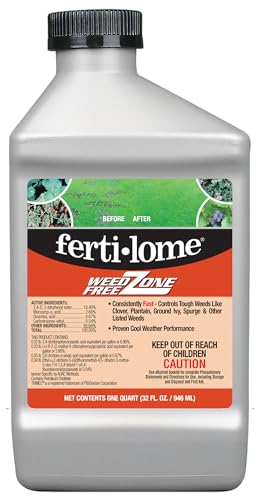
This broadleaf selective concentrate sets the gold standard specifically for creepy charlie, wild violet, and spurge — those stubborn waxy-leaf weeds that shrug off weaker formulas. The 0.86% dicamba penetrates the plant cuticle quickly, and multiple verified users report visible wilting within hours of application, not days. This makes it the top choice for gardeners who need aggressive control of established broadleaf perennials without resorting to a scorched-earth non-selective spray.
The 32-ounce bottle mixes into a surprising volume of spray solution; one reviewer noted a single bottle covered their entire suburban lawn plus front beds with a second application. It is labeled safe for many cool-season grasses, though owners of St. Augustine or centipede lawns should check the fine print. Overspray on hostas, sedums, and lilies produced no dieback in the tests reported, a significant advantage over glyphosate-based products.
Its main friction point is the price per ounce — this is a premium concentrate. Some users found the recommended dosage too weak for mature clover patches and had to double the mix ratio. Adding a non-ionic surfactant (or a drop of dish soap) significantly improved adhesion on waxy weed leaves. For mulch beds plagued by creeping charlie, this is the most targeted weapon available.
What works
- Fast visible results on broadleaf weeds
- Selective — low risk to ornamentals with careful overspray
- Concentrate goes a long way
What doesn’t
- Requires experimentation with mixing ratio for tough weeds
- Higher price per ounce than basic glyphosate concentrates
2. Quali-Pro Prodiamine 65 WDG (5 lbs)
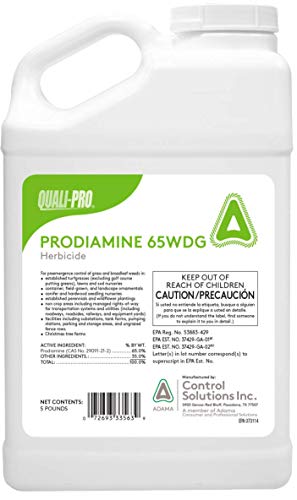
If your strategy is preventive rather than reactive, this 65% prodiamine wettable dispersible granule is the most cost-effective pre-emergent solution on the market. The active ingredient is identical to the branded Barricade, but this generic formulation offers a significantly lower per-application cost when you measure by square footage. A single 5-pound bag can cover up to two acres at lowest labeled rates, making it the go-to for large properties with extensive mulch beds.
Users report near-total prevention of crabgrass, foxtail, and annual broadleaf weeds for three to four months after a spring application. It must be applied before weed seeds germinate — typically when soil temps hit 55°F — and watered in with a quarter-inch of irrigation within a few days. One Long Island user confirmed zero dandelions or poa annua through June 1 after a March application. It does not control existing emerged weeds; you need to pair it with a post-emergent for that.
The dry flowable formulation mixes cleanly in a sprayer without clumping, but measuring the tiny dose (0.185 ounces per gallon per 1,000 sq ft) requires a precise scale. Some users found the upfront cost sizable, but the extended control window and low rate per application make it cheaper per season than multiple bags of granular Preen.
What works
- Extremely low cost per square foot over time
- Long residual control of annual weeds
- Professional-grade active ingredient
What doesn’t
- Requires precise measuring equipment
- Useless on existing, emerged weeds
3. The Andersons Barricade (50 lb Bag)
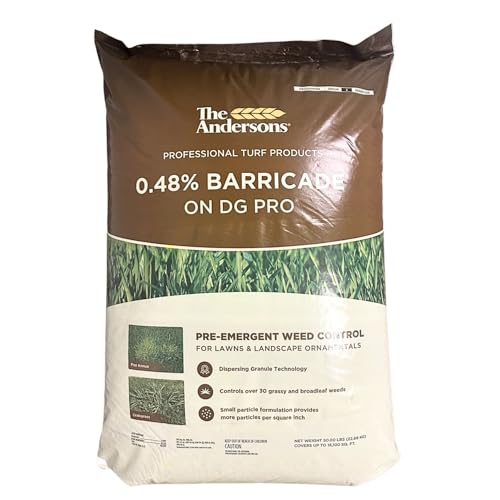
For gardeners who prefer granular application over mixing sprays, this 50-pound bag of professional-grade prodiamine delivers season-long weed prevention with no measuring, no sprayer, and no drift risk. The patented DG Pro formulation uses a clay-based particle that shatters into thousands of smaller particles per square inch, creating a more uniform chemical barrier than standard granular products. One verified user reported two years of effective control without reapplication in low-pressure spots.
The 0.48% concentration is low relative to the Quali-Pro concentrate, but the sheer volume of the 50-pound bag covers 14,200 square feet at the standard rate. This is ideal for large, established ornamental beds where you want to broadcast the granules by hand or with a drop spreader and simply water them in. It labels itself for use on landscapes, flower beds, groundcovers, and established perennials, making it the safest pre-emergent choice for beds with shallow-rooted ornamentals.
The biggest limitation: it is a preventative only. You cannot cure an existing infestation with this product. Also, a few users noted that while it suppressed crabgrass effectively, it did not adequately control clover, which required a follow-up post-emergent spray in late spring. For pure convenience and ease of application on large ornamental beds, this is the premium granular pick.
What works
- Extremely easy broadcast application
- Safe for established ornamentals
- Long residual with minimal reapplication
What doesn’t
- Does not control existing weeds
- Weak on clover prevention in some tests
4. Roundup Weed & Grass Killer₄ Concentrate (1 gal)

The legacy name in non-selective weed control, this gallon of concentrate delivers the reliable glyphosate formula that kills roots of tough perennials like poison ivy, dandelions, and large crabgrass. The new formulation includes a diquat dibromide kicker for faster top-kill, so you see yellowing within hours while the glyphosate works systemically to destroy the root system over the following week. It is rainproof in as little as 30 minutes, which is a major advantage over older formulas that required six hours of dry weather.
It excels in raw power: users tackling overgrown fence lines, woody stump regrowth, and neglected garden beds report total knockdown after a single application. The 1-gallon bottle mixes to make up to 42 gallons of spray solution at the standard rate, making it economical for large areas. It also allows replanting — the booklet specifies a waiting period of 1 to 30 days depending on what you plan to grow next, giving you flexibility.
Because it is non-selective, any spray drift onto desirable perennials will kill or severely damage them. Multiple users caution about wind conditions and the need for full protective gear including a respirator. It also does nothing to prevent new weeds from germinating after the current ones die — a pre-emergent companion is necessary for long-term bed maintenance.
What works
- Kills tough perennial and woody weeds to the root
- Fast rainfastness for reliable results
- Large volume concentrate offers great value
What doesn’t
- Non-selective — will kill ornamentals on contact
- Requires protective gear and careful handling
5. Control Solutions Eraser Concentrate (1 qt)
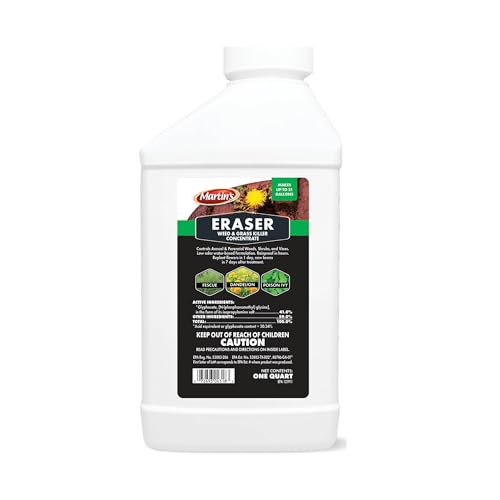
At 41% glyphosate, this quart of concentrate packs almost two and a half times the active ingredient of standard retail formulations. It is a low-odor, water-based liquid with no residual soil activity, meaning you can replant any area as soon as the treated weeds are dead without worrying about chemical buildup. One verified reviewer even noted they have been using this same product for 17 years — a testament to its consistent performance.
Users report it is effective on everything from annual crabgrass to poison ivy and woody vines, though tougher perennials may require a second application. The recommended mix rate of 8 ounces per gallon of water creates a potent solution that shows visible yellowing in 4 to 7 days, with full death in 7 to 14 days. Adding a surfactant like dish soap improves adhesion on waxy weed leaves, a common trick shared among experienced users.
Its primary weakness is speed: it is slower-acting than the diquat-based Spectracide. The first two days often show no effect at all, which can cause impatience in gardeners used to instant knockdown. It also does not discriminate — any overspray onto shrubs or flowers will destroy them. For a budget-friendly, high-concentration glyphosate that outperforms Roundup on a price-per-ounce basis, this is a standout.
What works
- Highest glyphosate concentration in this list
- No residual soil activity for quick replanting
- Excellent value for the active ingredient dose
What doesn’t
- Slow action — takes 1-2 weeks for full kill
- Non-selective; kills desirable plants on contact
6. Ortho Max Nutsedge Killer RTU (2 Pack, 24 oz)
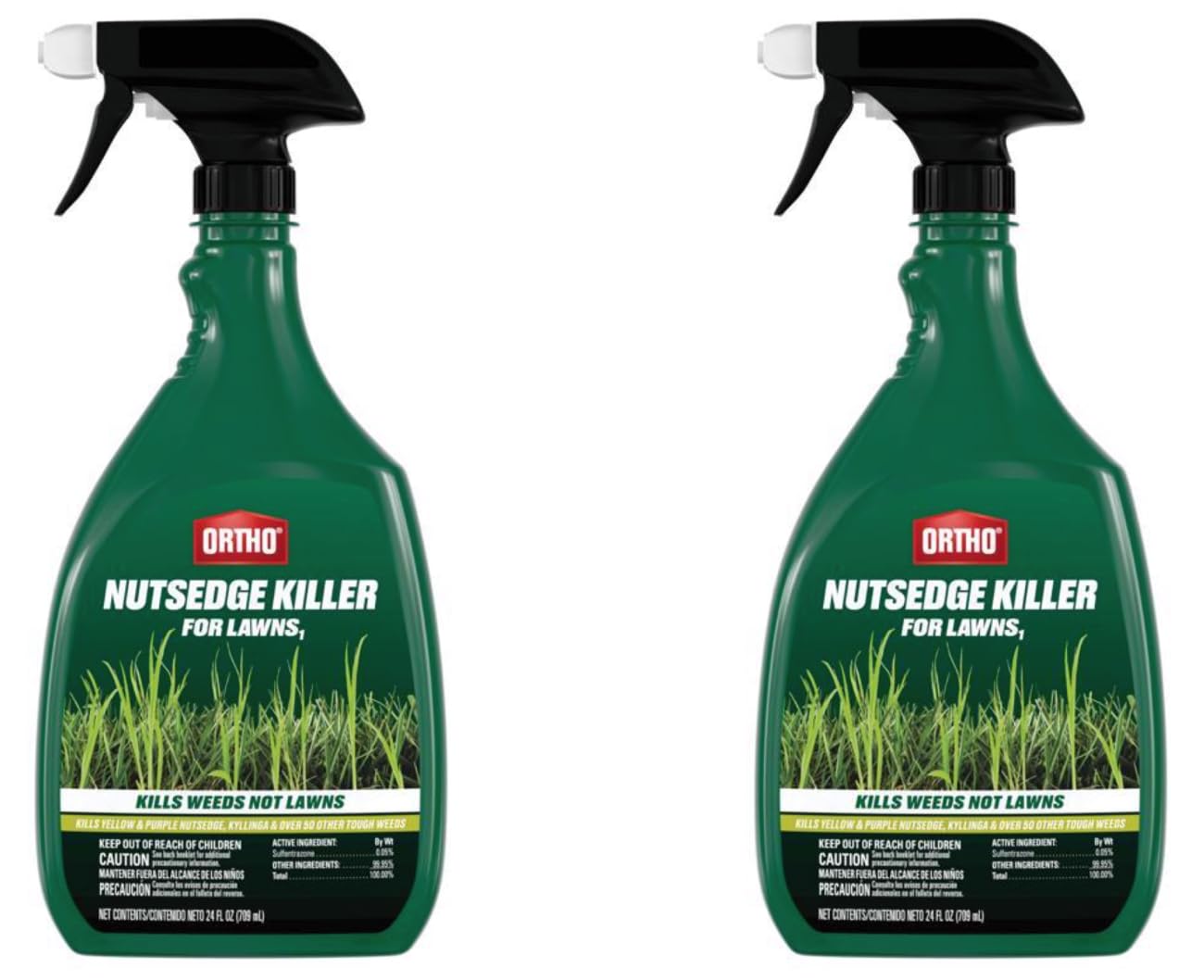
If yellow nutsedge or purple nutsedge is your specific nemesis in the mulch bed, this ready-to-use formula is the only dedicated tool on this list. The active ingredient halosulfuron-methyl translocates through the plant to kill the underground nutlets that make nutsedge so persistent — pulling the foliage merely stimulates regrowth from the tubers. One verified user emphasized that catching the nutsedge when it is only 2-3 inches tall is critical; taller, more mature plants require multiple applications.
The biggest advantage here is its selectivity: it kills nutsedge plus over 50 other weeds including kyllinga, wild onion, and broadleaf plantain without harming established turf grass. In a mulch bed setting, this means you can spot-spray nutgrass shoots that pop up through the bark without worrying about the chemical migrating into the root zone of your perennials. The rainfastness window is 2 hours, which is competitive with many concentrates.
As a ready-to-use product, the convenience is high but the value is lower per gallon than concentrates. Each 24-ounce sprayer treats a relatively small area, and heavy infestations of mature nutsedge may require two applications 10-14 days apart. For the targeted eradication of nutsedge in small to medium ornamental beds, this is the definitive pick.
What works
- Unmatched selectivity for nutsedge control
- Ready-to-use — no measuring or mixing
- Safe for established grass and ornamentals
What doesn’t
- Low value per ounce compared to concentrates
- Requires early application for best results
7. Spectracide Weed and Grass Killer Concentrate (32 oz)
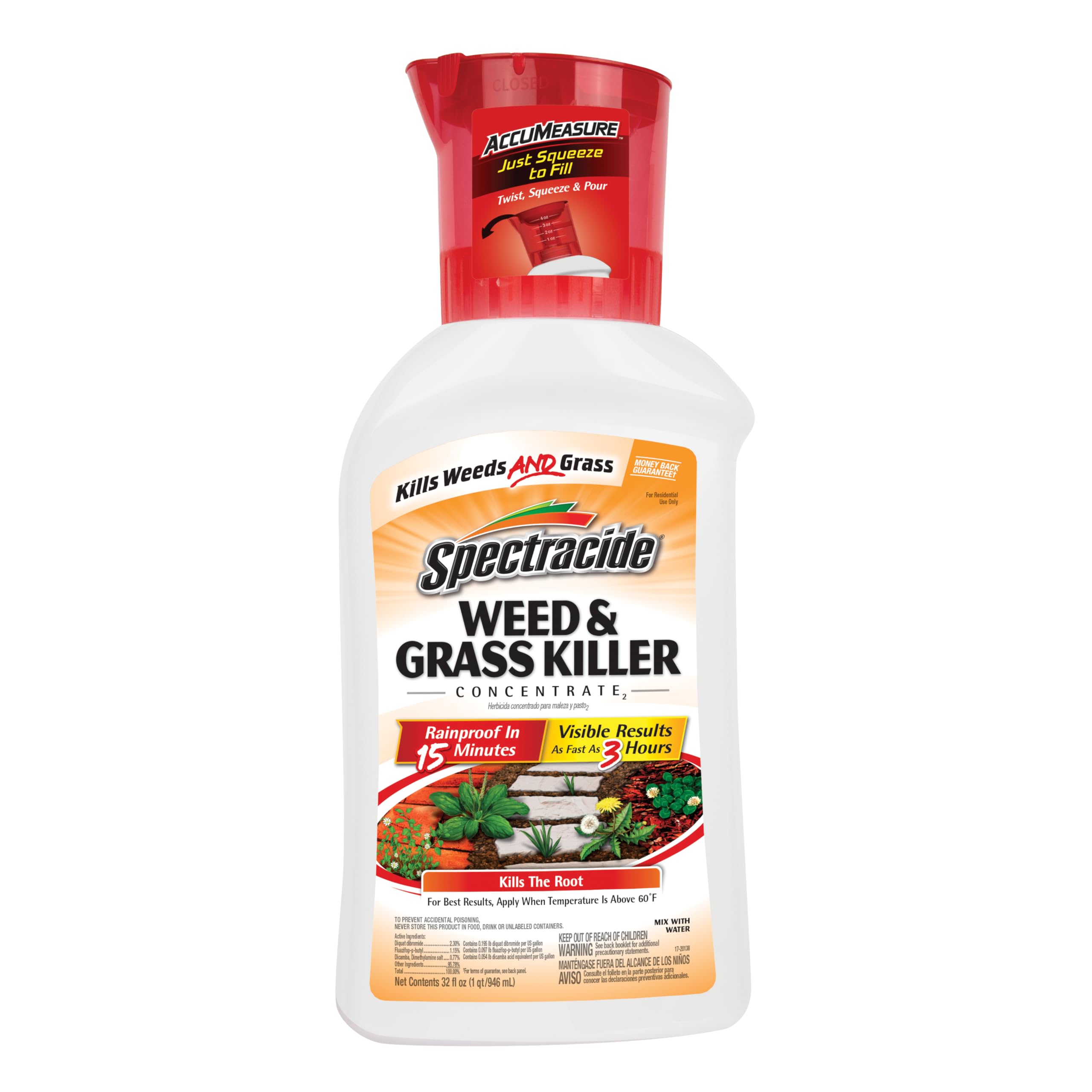
For gardeners who need to see results immediately — not in a week — this diquat dibromide concentrate is the speed champion. Users report visible wilting and discoloration within 3 hours of application, and the Accumeasure cap allegedly makes measuring foolproof by letting you twist, squeeze, and pour the concentrate directly into your sprayer. The rainfast window of 15 minutes is the shortest on this list, making it ideal for climates with afternoon thunderstorms.
Its mechanism of action is contact-based rather than systemic: it destroys leaf cell membranes on contact, causing rapid desiccation. This means it works quickly but does not translocate to the roots of perennial weeds, so heavy-rooted species like poison ivy may resprout. The formula is optimized for annual grasses and broadleaf weeds typical of driveways, walkways, and fence lines, making it a strong option for surface weeds that are sitting on top of the mulch.
The Accumeasure cap has drawn criticism — several users found it ineffective and simply switched back to using the old bottle lid for measurement. It also requires the same protective precautions as any non-selective herbicide: gloves, goggles, and avoidance of drift onto ornamentals. For rapid knockdown of visible weeds in a high-traffic area, this is the product that delivers the fastest visible feedback.
What works
- Extremely fast visible results in hours
- Short 15-minute rainfast window
- Convenient measuring cap design
What doesn’t
- Contact-only mode — roots may survive
- Accumeasure cap is unreliable according to users
Hardware & Specs Guide
Glyphosate Concentrations
Glyphosate is the most common non-selective active ingredient. Standard retail formulations hover around 18% (Roundup), but commercial-grade products like Control Solutions Eraser offer 41% glyphosate. Higher concentration means you mix less product per gallon, lowering the per-application cost. However, higher concentration also increases the risk of drift damage if applied carelessly, as the water-based solution can carry further in wind. Always measure precisely — mixing too strong can cause rapid top-kill that prevents the chemical from translocating to the root system.
Pre-Emergent Residual Windows
Prodiamine-based pre-emergents create a chemical barrier that lasts 3 to 4 months, depending on soil type, rainfall, and microbial activity. The Quali-Pro 65 WDG and Andersons Barricade both use this active ingredient. Apply in early spring (soil temp 55°F) and again in late summer (early September) to cover both summer annuals and winter annuals. These products require 0.5 inches of water within 7 days to activate the barrier. Avoid applying to freshly turned soil where you plan to direct-sow seeds within 8 weeks, as the barrier stops all seed germination.
Selective vs. Non-Selective Spraying
A selective herbicide (like Ferti-lome Weed Free Zone with dicamba, or Ortho Nutsedge Killer with halosulfuron-methyl) targets specific plant families while leaving the surrounding ornamentals unharmed. Non-selective herbicides (glyphosate and diquat) kill any green plant tissue. In a mulch bed with prized perennials, a non-selective sprayer can only be used as a spot-treatment with a shielded nozzle or a paintbrush application on individual weed leaves. The selective options allow broader coverage over the entire bed surface.
Replanting Intervals
Non-selective products with no residual soil activity — such as Control Solutions Eraser (glyphosate) — allow replanting as soon as the treated weeds are dead and the chemical has bound to soil particles, typically within 24-48 hours. Other products like Roundup specify a waiting period of 1 to 30 days depending on the intended plant type. Always check the label’s “planting” section before digging. Pre-emergents like prodiamine require a much longer window — typically at least 8 weeks — between application and seeding to avoid killing the desired seeds.
FAQ
Can I use a lawn weed killer that contains 2,4-D in my mulch beds?
How long should I wait before laying new mulch after spraying a post-emergent?
Will prodiamine from The Andersons Barricade harm my established hostas and daylilies?
Final Thoughts: The Verdict
For most gardeners, the weed killer for mulch beds winner is the Ferti-lome Weed Free Zone because it offers powerful selective control of the most troublesome broadleaf weeds — creeping charlie, spurge, and clover — without requiring you to replace your mulch or worry about killing daffodils. If you want season-long prevention and prefer a set-it-and-forget-it approach, grab the The Andersons Barricade. And for spot-killing tough perennial grass that has already breached the bark, nothing beats the Roundup Weed & Grass Killer₄.