
Pulling a single stalk of crabgrass out of your flower bed only to have it snap off at the root is frustrating. The right weed killer for grassy weeds solves this — it hunts down invading grass while leaving your hostas, roses, and lawn grasses unharmed. That is the promise of a selective herbicide (a chemical that kills certain plants without harming others), and these six options deliver it.
I’m Rikta — the co-founder and writer behind Lawn Gear Lab. This guide is built by comparing the manufacturers’ published specifications and the patterns across verified customer reviews, so you get each pick’s real strengths and trade-offs instead of marketing spin.
Whether you need a ready-to-use (RTU) spray (a pre-mixed bottle you squeeze and spray) for a small garden or a professional concentrate (a liquid you dilute with water) for a half-acre lawn, this look at the best weed killer for grassy weeds points you to the right match for your specific weed and your specific plants.
How To Choose The Best Weed Killer For Grassy Weeds
The biggest mistake is buying a non-selective herbicide (like glyphosate, a chemical that kills every plant it touches) and then wondering why your lawn has a big brown circle. For grassy weeds inside your turf or among ornamentals, you need a selective product that attacks the weed without hurting the plants around it. Here are the three factors that separate a smart buy from a regretful one.
Active Ingredient: The Decisive Factor
Not all active ingredients (the chemical that does the killing) target the same weeds. Quinclorac is the standard for post-emergent crabgrass control (killing weeds after they sprout) — it stops cell growth in grassy weeds while leaving most turf grasses and many ornamentals untouched. MSMA (monosodium methanearsonate, a professional-grade organic arsenical) hits harder against Dallisgrass and Johnsongrass, but it can stress warm-season lawns like Bermuda if you over-apply it. Blended formulas like those in Fertilome products claim to tackle up to 200 types of weeds at once, which is great for mixed infestations but can be slower on individual grassy weed species.
Ready-to-Use vs. Concentrate
A ready-to-use (RTU) spray bottle, like the Ortho Grass B Gon, is ideal if you have a small flower bed or a few grass patches sneaking through your shrubs — you just squeeze the trigger and go. But an RTU bottle is mostly water; you are paying for convenience, not chemical. Concentrates (powder or liquid, like the Primesource Quinclorac) give you more weed-killing power per dollar and let you treat larger areas. The catch is that you need a sprayer and must measure and mix carefully — and always add a surfactant (a wetting agent, such as a non-ionic surfactant or mild dish soap, that helps the herbicide stick to waxy grass leaves so it absorbs rather than runs off).
Application Window and Patience
Selective herbicides work best when grassy weeds are young and actively growing — spring and early summer are ideal times. Nearly every buyer review across these products mentions the same thing: you will not see results in 24 hours. Most need 3 to 7 days to show the first signs of wilting or yellowing, and full die-off can take two weeks or more. If you spray and see nothing after a day, that is normal. Re-treating too early (before the label’s recommended interval) wastes product and can stress your lawn.
Quick Comparison
On smaller screens, swipe sideways to see the full table.
| Model | Category | Best For | Key Spec | Amazon |
|---|---|---|---|---|
| Primesource Quinclorac 1.5L | Premium | Large lawns & heavy crabgrass | 64 ounces concentrate, 18.92% Quinclorac | Amazon |
| Fertilome Weed-Out with Crabgrass Killer | Mid-Range | Mixed weed infestations | 32 ounces; treats up to 5,000 sq ft | Amazon |
| Pro Crabgrass & Grassy Weed Killer | Premium | Professional-grade, fast drying | 8 ounces concentrate, 18.92% Quinclorac | Amazon |
| Ortho Grass B Gon | Mid-Range | Garden beds, easy application | 48 ounces RTU (2×24 oz bottles) | Amazon |
| Fertilome Over The Top Grass Killer | Mid-Range | Safe spraying over ornamentals | 8 ounces concentrate; makes 8 gallons | Amazon |
| Target 6 Plus (MSMA) | Premium | Tough Dallisgrass & fast results | 2.5 gallons concentrate, MSMA 48.2% | Amazon |
In‑Depth Reviews
1. Primesource Quinclorac 1.5L Select Liquid Crabgrass Killer (64 ounces)
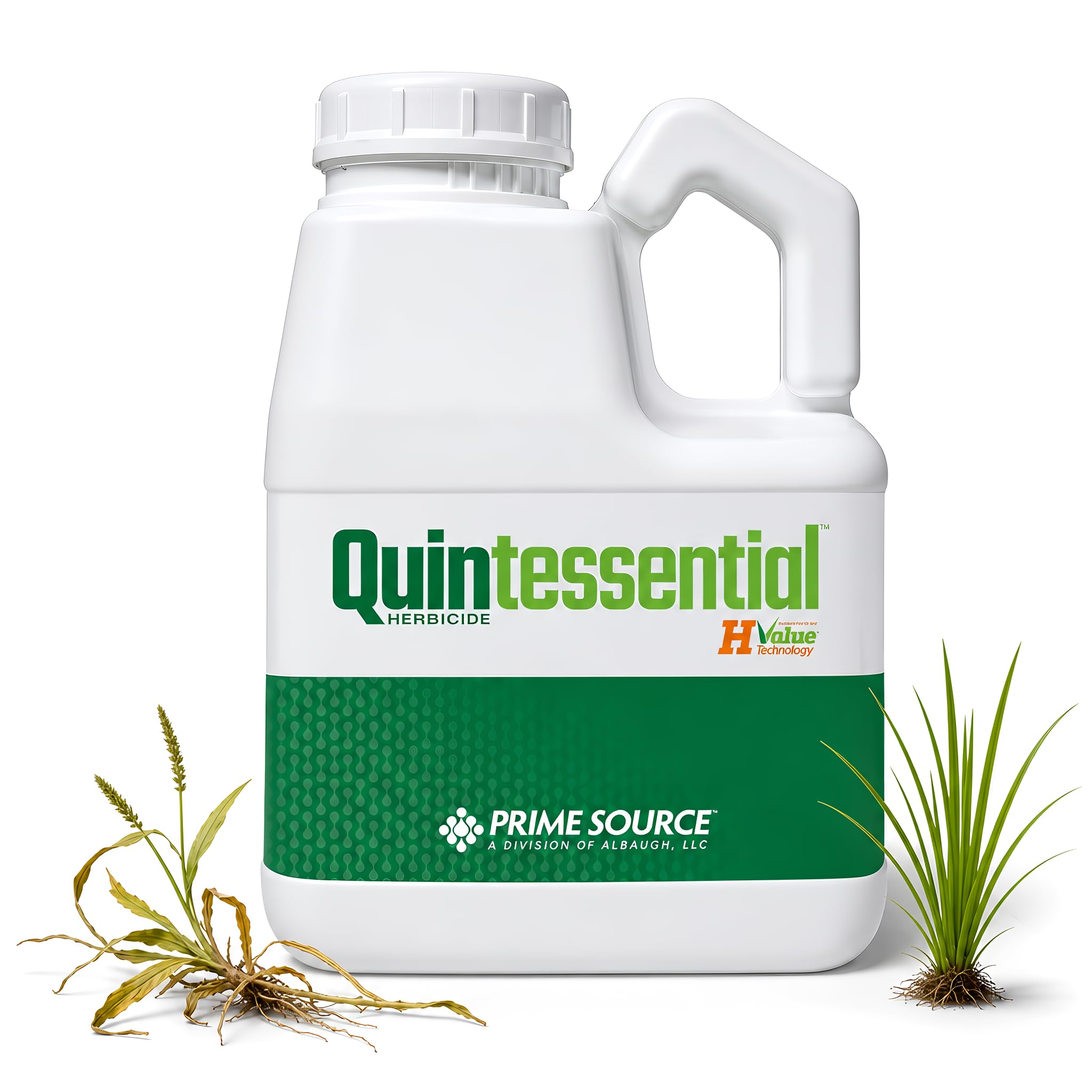
18.92% Quinclorac in a 64-ounce jug makes this the top pick for anyone with a large lawn who wants the most concentrated weed-killing power per dollar — one 4-ounce dose mixes with 2 gallons of water, and buyers report crabgrass “dying in 3 days, rots in a week.” It beats the Pro Crabgrass killer on total volume by an 8x margin (64 oz vs 8 oz), so you can treat the whole property without buying a second bottle.
This is a concentrate, so you do need a sprayer and a surfactant — most reviewers add either a methylated seed oil (MSO, a plant-based surfactant) or a few tablespoons of Dawn dish soap to help the chemical adhere to waxy grass blades (so the spray beads up into a film instead of running off). One buyer on a half-acre mixed Quinclorac with MSO and a blue dye to track coverage, hitting 98% spray coverage and killing about 70% of the crabgrass in a single pass with no harm to his fescue lawn, according to his report.
The one catch: you need to plan for a follow-up spot treatment to catch the survivors. This is the best pick for anyone with a large lawn who values maximum chemical per dollar and is prepared to mix their own spray — skip it if you want a no-setup, ready-to-use bottle.
Why it’s great
- 64 oz concentrate is the largest volume in this review (8x more than the Pro Crabgrass killer at 8 oz)
- 18.92% Quinclorac is the same professional-grade active ingredient used by groundskeepers
- Owners mention visible crabgrass death in 3 days with high survival of lawn grass
Good to know
- Requires a separate surfactant (like MSO or dish soap) for best results
- At 0.01 oz item weight, the plastic jug is light but the liquid inside is heavy — handle with care
2. Fertilome (11032) Weed-Out with Crabgrass Killer (32 oz)
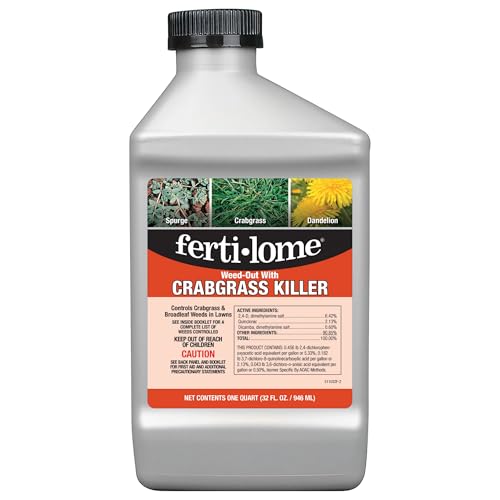
Where the Primesource is a Quinclorac specialist, the Fertilome Weed-Out is a broad-spectrum solution (hits many weed types at once) that claims control over more than 200 grassy and broadleaf weeds including crabgrass, foxtail, and spurge. It lags behind the Primesource in volume per dollar (32 oz vs 64 oz), but its liquid volume is 4 times that of the Fertilome Over The Top Grass Killer (32 oz vs 8 oz), and it weighs 2 pounds — 4 times heavier than the Pro Crabgrass killer — giving you a sense of the chemical load per bottle.
One buyer summed it up: “Expensive but it works !!! Kills Spurge and other weeds…..Also kills crabgrass…. Retreat a few days later to assure killing some weeds.” The mixed weed coverage is the real selling point — you do not need to identify whether you are fighting crabgrass, clover, or ground ivy; this bottle handles all of them in one pass, according to the manufacturer. It is designed for established lawns (Bermuda, Buffalo, Kentucky Bluegrass), so it will not torch your turf, though the maker notes temporary yellowing is possible on Bermuda grass after application, with full recovery expected.
If you have a mixed weed invasion (grassy and broadleaf) and want one bottle to cover it all, this is the smartest non-specialist pick. pass on it if you only need to target one or two specific grassy weeds — a Quinclorac-only product like the Primesource will be faster for that. Choose this over the top pick if your lawn is hit with both grassy and broadleaf weeds and you prefer a single-bottle broad-spectrum approach rather than a Quinclorac specialist.
Where it shines
- Controls 200+ weed types, reducing the need for multiple products
- Treats up to 5,000 sq ft from a single 32 oz bottle
- Formulated for use on Bermuda, Buffalo, Kentucky Bluegrass, and other common lawns
Worth noting
- Contains 4x the liquid volume of the Over The Top Grass Killer (32 oz vs 8 oz) but is still a concentrate — requires mixing
- May cause temporary yellowing on Bermuda grass; full recovery expected
3. Pro Crabgrass & Grassy Weed Killer – 18.92% Quinclorac (8 oz)
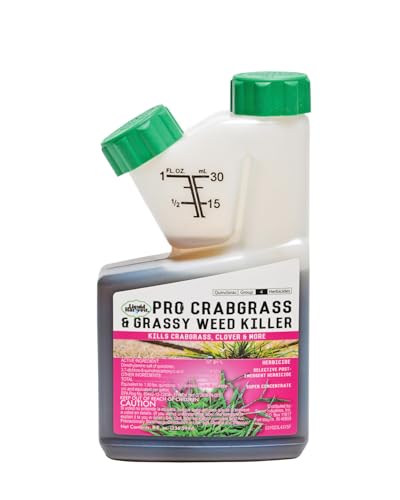
This is the product you grab when store-brand sprays have been failing you for weeks. It uses Quinclorac at 18.92% — the same active ingredient at the same concentration as the Primesource jug but in a compact 8-ounce bottle, making it ideal for a smaller lawn where you do not want to store a gallon-sized container. At 0.5 pounds, it is 4 times lighter than the Fertilome Weed-Out (2 lbs), so it is easy to handle and mix.
Customers note visible results starting around day 3, with full browning by day 5 and complete die-off after about 2 weeks. One reviewer in Louisiana noted it was effective on Dallisgrass, which is tougher to kill than crabgrass. The manufacturer markets this as a “quick drying” formula with residual control, meaning it does not wash off after an hour and continues working below the soil surface to prevent new grassy weeds from germinating immediately.
The downside: somewhere in the instruction brochure is a note about adding a surfactant (a spreader-sticker) to make the liquid cling to the leaves. Several buyers missed this and saw poor results. If you follow the instructions and add a wetting agent, this matches the Primesource on performance per ounce — just half the total volume. Choose this over the Primesource only if you have a small lawn (under 3,000 sq ft) and prefer a compact bottle. it’s not for you if you are treating a large area — you will run out fast and pay more per ounce than the bigger jug.
What stands out
- Professional 18.92% Quinclorac concentration matches premium-grade efficacy
- Quick-drying formula becomes waterproof in one hour for lasting results
- Effective on hard-to-kill Dallisgrass as well as crabgrass and foxtail
The trade-offs
- At 8 oz, it holds only an eighth of the volume of the 64 oz Primesource bottle
- Buyers consistently report that skipping a surfactant leads to very poor results
4. Ortho 0438580 Grass B Gon Garden Grass Killer Ready-to-Use Spray (48 oz)

The single number that matters most in this category is 48 ounces — the total volume in this two-bottle ready-to-use pack, which is 6 times the volume of the 8-ounce Fertilome Over The Top concentrate, but remember an RTU is mostly water so the chemical volume is far lower.
One reviewer noted exactly what the label promises: “Used it on my Iris flower beds. Killed the grass but did not harm Irises.” Another noted it killed grass in flower beds without harming shrubs. The trade-off is that some users found it too weak — one person used the entire two-bottle pack on two small areas and saw no effect at all. That inconsistency is the price of convenience: RTU formulas are inherently less concentrated and can be less effective on mature, tough grass clumps.
It becomes waterproof in one hour, so you can spray and not worry about rain washing it into your ornamentals’ root zones. This is the pick for the weekend gardener with a few square feet of grass intruding into a flower bed who wants zero gear or guesswork. look elsewhere if you are treating more than 500 square feet — you will burn through bottles and pay way more per treatment than a concentrate would cost, making the price-to-value read poor for larger areas.
The upsides
- Zero setup — spray directly from the bottle onto unwanted grass
- Buyers confirm it kills Bermuda, crabgrass, and fescue without harming established flowers and shrubs
- Waterproof in one hour for reliable outdoor use
Keep in mind
- As an RTU, it is mostly water — the same 48 oz total volume is far less potent than 8 oz of concentrate
- Mixed reviews on effectiveness; some reviewers point out it did nothing on mature grass
5. Fertilome 8 Oz Over The Top Grass Killer – 10434

This small 8-ounce bottle makes 8 full gallons of spray solution — an impressive dilution ratio that gives you a lot of coverage from a tiny container. It is labeled as safe to spray directly over vegetables, gardens, trees, shrubs, and ornamentals, making it one of the most versatile picks if you need to kill grass in a bed of delicate perennials or even among your tomato plants. According to the manufacturer, it stops grass growth 2 days after application, though a full kill takes longer.
The biggest trade-off is the patience required. One buyer mentioned: “Killed Bermuda grass in flower beds after 3 weeks; required patience. Shrubs and roses unharmed. Effective but slow-acting.” Another reviewer noted that while it kills short, actively growing grass, taller grass (over 6 inches) may only get stunted rather than killed.
For the gardener who needs to spot-treat Bermuda or crabgrass in a mixed flower bed without harming anything else, and who is willing to wait 2–3 weeks for results, this is exactly the right tool. steer clear if you need fast results or are dealing with tall, mature grass clumps — those may only be stunted, not killed.
Why we’d pick it
- Safe for over-the-top spraying on vegetables, ornamentals, shrubs, and trees
- 8 oz makes 8 full gallons of spray — excellent value for small areas
- Buyers confirm it kills Bermuda grass in flower beds without harming surrounding plants
A few caveats
- Very slow — shoppers say visible results take 1–3 weeks depending on weed size and weather
- Taller grass (over 6 inches) may only be stunted rather than fully killed
6. Target 6 Plus (MSMA 48.2%) Turf Herbicide (2.5 Gallons)

The Target 6 Plus is perfect for the property manager, golf course superintendent, or large-acreage owner battling a heavy infestation of Dallisgrass, Johnsongrass, or nutsedge that Quinclorac cannot fully knock down. This is not a consumer-grade choice; it uses MSMA (monosodium methanearsonate, an organic arsenical) at 48.2% concentration, and the 2.5-gallon jug (320 fluid ounces) dwarfs every other product here by at least 5x.
Buyers report dramatically fast results — one reviewer who bought it five years ago says they are still using the same jug, a testament to its concentration. Another noted that just 1.25 tablespoons per 2 gallons of water killed all weeds in a test area. However, the power comes with a warning: the same reviewer said overuse stressed their Bermuda grass, causing it to go dormant. This is not for beginners; mixing mistakes will cost you your lawn.
The sheer size (2.5 gallons) means this is only practical if you have a large property to treat or multiple seasons of weed control ahead of you. For the Dallisgrass-laden lawn owner who has tried everything else, this is the heavy artillery — just measure twice, spray once. skip it if you are a casual gardener with a small lawn; you will never use that much, and the risk of damaging your turf is too high.
Strong points
- Professional-grade MSMA at 48.2% — the most potent active ingredient concentration in this review
- Enormous 2.5-gallon (320 oz) volume; one buyer reports the same jug lasting 5 years
- Extremely fast results — users report visible weed death within days
Before you buy
- Not for casual use — overdilution can stress or kill desirable grasses like Bermuda
- 2.5 gallons is heavy and impractical for small lawns; storage space is a real consideration
Understanding the Specs
Active Ingredient Concentration (%)
This is the percentage of the actual weed-killing chemical (like Quinclorac or MSMA) in the bottle, not the water or filler. A product at 18.92% Quinclorac is about 4 times more potent than a 5% formula on a per-drop basis. Higher concentration means you use less product per gallon of water, which stretches your bottle further. For example, the Pro Crabgrass and Primesource killers both sit at 18.92% Quinclorac — the same active ingredient strength — but the Primesource has 64 oz of liquid versus 8 oz, so you simply get more total applications from the bigger jug.
Form: Ready-to-Use vs. Concentrate
A ready-to-use (RTU) spray, like the Ortho Grass B Gon, comes pre-mixed in a trigger bottle so you can spray immediately without any equipment. It is the most convenient choice for small jobs but the most expensive per application because you are paying for the water and the bottle. A concentrate (liquid or granular) requires you to measure and mix with water in a pump sprayer. It costs less per square foot and lets you adjust the strength to match the weed type, but it demands a little effort and a sprayer. Every concentrate in this review also benefits from a surfactant — a few drops of dish soap or a dedicated spreader-sticker — to help the chemical stick to the waxy grass blade surface.
Coverage Area
This tells you how many square feet one bottle will treat at the label’s standard mix rate. The Fertilome Weed-Out (32 oz) covers up to 5,000 square feet, while the Fertilome Over The Top (8 oz) covers about 2,000 square feet. A bigger coverage number is not always better — if you only have a few small patches, a 64-ounce jug might expire before you use it all. Choose a bottle size that matches your actual lawn area to avoid waste.
Liquid Volume (Fluid Ounces)
A simple measure of how much liquid is in the bottle. This matters for storage and for understanding value: 64 ounces of concentrate (Primesource) will treat far more square footage than 8 ounces of concentrate (Pro Crabgrass), even if both have the same 18.92% Quinclorac strength. For RTU products, the liquid volume is the total ready-to-spray amount, not the concentrated dose. Do not compare an RTU’s 48 oz directly to a concentrate’s 8 oz — the concentrate makes many gallons of spray once diluted.
FAQ
Can I use a weed killer for grassy weeds on my vegetable garden?
Why do some Quinclorac products say you need a surfactant?
How long does it take for a selective grassy weed killer to show results?
What is the difference between Quinclorac and MSMA?
Final Thoughts: The Verdict
If you want one dependable pick, the weed killer for grassy weeds winner is the Primesource Quinclorac 1.5L Select Liquid Crabgrass Killer because it gives you the most concentrated active ingredient in the biggest bottle at a cost that makes large-scale treatment affordable. If you want a convenient, no-mix spray for small garden beds, grab the Ortho Grass B Gon. And for those battling tough Dallisgrass or needing professional-speed results, Target 6 Plus (MSMA) is unmatched — but only if you are ready to measure carefully.