
A felling axe needs to do one job well: bite deep into a tree trunk and keep doing it all day without the handle coming loose or the edge rolling over. If it fails at any of those, every swing is a frustration. This guide covers five proven felling axes, from a budget-friendly workhorse that leaves room for a sharpening file to a hand-forged Swedish piece that delivers the heaviest blow per swing. You will see exactly which one fits your cutting style and budget, based on published specs and what real buyers report after months of use.
I’m Rikta — the co-founder and writer behind Lawn Gear Lab. This guide is built by comparing the manufacturers’ published specifications and the patterns across verified customer reviews, so you get each pick’s real strengths and trade-offs instead of marketing spin.
You will find a head-to-head breakdown of weight, handle length, steel quality, and real-world performance so you can confidently pick the right felling axes for your property, firewood stack, or wilderness project.
How To Choose The Best Felling Axes
Before you start shopping, understand the three numbers that define every felling axe: head weight, handle length, and steel hardness. These specs determine whether the axe bites deep on every swing or just bounces off the wood.
Head Weight and Handle Length: The Swing Formula
A heavier head (3.5 to 4.6 pounds) drives deeper into the trunk with each swing, but it also demands more stamina from your arms. A longer handle (31 to 36 inches) multiplies the force you deliver because it acts like a lever — the extra length adds speed and power without requiring you to swing harder. The catch is control: a very long handle makes one-handed limbing awkward, so if you plan to use the same axe for felling and trimming, a 31-inch handle is a more versatile middle ground.
Steel Quality and Edge Geometry
The blade material determines how often you stop to sharpen. High-carbon steel (like C50 German steel or Swedish axe steel) holds a keen edge for many cuts and is easy to touch up in the field with a file. The edge shape matters just as much: a convex edge (a smooth, rounded bevel) is tougher and resists chipping on knotty wood, while a hollow grind (a concave bevel that some factories cut for speed) is thinner and will roll or chip sooner. A premium axe should arrive with a convex edge; if it comes with a hollow grind, you will need to file it to a convex profile before you get the durability you paid for.
Handle Wood and Fit
American hickory is the industry standard because it absorbs shock without splintering. Look for a handle with straight grain running from the head to the knob — this orientation resists breakage when you miss the cut and strike a root or rock. The handle should be wedged securely (a double wedge system is best) and dried to around 10% moisture so seasonal wood movement does not loosen the head over time. Kiln-dried handles shrink less in dry weather, meaning you are less likely to need a wedging repair down the road.
Quick Comparison
On smaller screens, swipe sideways to see the full table.
| Model | Category | Best For | Key Spec | Amazon |
|---|---|---|---|---|
| Council Tool Dayton Axe | Value | All-day felling on a budget | 4.75″ cutting edge | Amazon |
| Council Tool Jersey Axe | Mid-Range | Aggressive swing with secure head fit | Jersey-pattern lugs | Amazon |
| Helko Werk Forester | Premium | Handmade heirloom for heavy use | 31″ handle, 4 lb head | Amazon |
| Hults Bruk Kisa | Premium | Lightweight camp-to-forest axe | 2 lb head, 26″ handle | Amazon |
| Gränsfors Bruks American Felling Axe | High-End | Maximum power for serious felling | 35.5″ handle, 4.6 lb head | Amazon |
In‑Depth Reviews
1. Council Tool Single Bit Axe (Dayton Pattern)
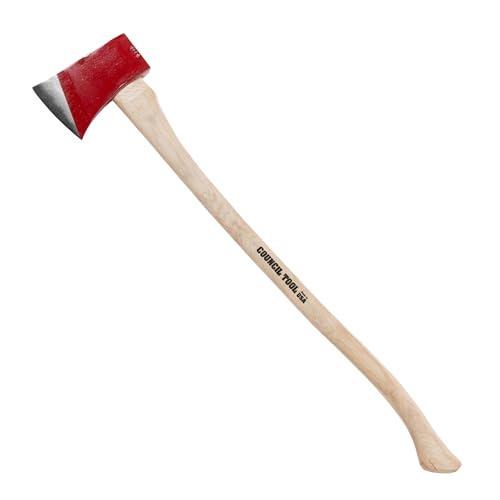
The 3.5‑pound head and 36‑inch curved handle make the Council Tool Dayton the top pick for anyone who wants professional‑grade felling performance without spending more than necessary for a quality file and sheath. The 4.75‑inch cutting edge is notably wide — a full 6.5 times longer than the cutting edge on the Hults Bruk Kisa — so each swing removes more wood per strike, speeding up the whole job.
The high‑carbon steel head is hand‑sharpened with a tapered bit, which owners mention after felling five trees with minimal edge degradation — a sign that the steel hardness and geometry are right for sustained work. The American hickory handle is kiln‑dried to reduce shrinkage, and the red enamel coating on the head prevents rust when you store it in a damp shed. At just 0.01 ounces on the spec sheet for the head (the real item weight is around 3.5 pounds total), this axe feels light in the hands because of the balanced grain orientation in the handle.
The honest limit: the bit arrives with a factory grind that is serviceable but not optimized for maximum bite. A few minutes with a belt sander or a file to thin the edge and smooth the cheeks will make it cut noticeably deeper. For the money, this is the only axe you need for years of weekend firewood and trail clearing.
Why it’s great
- 4.75-inch cutting edge removes more wood per swing
- High-carbon steel holds an edge through several trees
- Kiln-dried hickory handle resists loosening over time
Good to know
- Edge needs light grinding for optimal bite
- Not ideal for splitting — stick to felling and limbing
2. Council Tool Jersey Axe (Sport Utility Finish)
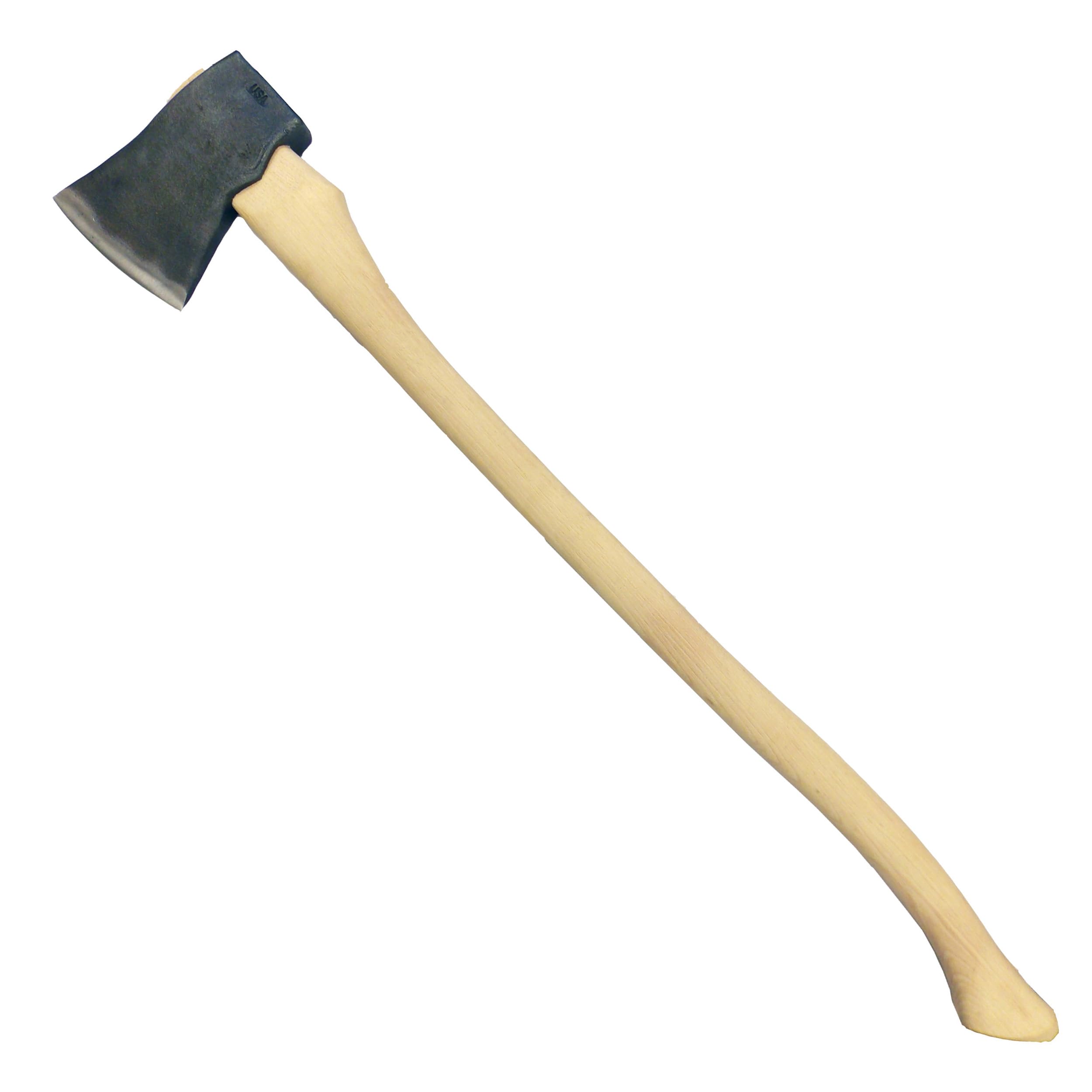
The Council Tool Jersey axe trumps the Dayton on handle security because the Jersey pattern head has prominent lugs that increase the contact surface between steel and wood, making it significantly harder for the head to fly off during a missed swing. It shares the same 3.5-pound head weight and 36-inch handle length, but customers note a key difference: one reviewer found the factory edge had a rough 20-degree hollow grind that lost its bite on seasoned ash after a single 10-inch log. That sounds discouraging, but the fix is straightforward — after filing the edge to a 23-degree convex profile, the same reviewer confirmed the steel holds an edge very well.
In real use, this axe balances like a jack-of-all-trades. The curved hickory handle is dried to under 10% moisture and attached with a double wedge system, so even if you store it in a changing climate, the head stays tight. The forged tool steel head arrives hand-sharpened, and the sport utility finish (a mix of black and silver) resists surface rust better than bare metal. At 3.5 pounds total weight, the swing is fast without being exhausting, making it a strong choice for a full day of bucking and limbing.
Choose the Jersey over the Dayton if you want a safer head-to-handle bond and do not mind spending 15 minutes with a file to dial in the edge geometry. It is the smarter buy for anyone who plans to put the axe through heavy, repeated use rather than occasional weekend work.
Where it shines
- Jersey lugs lock the head to the handle securely
- Double wedge system prevents loosening over time
- Forged tool steel sharpens to a durable convex edge
Worth noting
- Factory hollow-grind edge needs re-profiling out of the box
- Handle grain may not be perfectly straight on every unit
3. 1844 Helko Werk Germany Classic Forester Axe

If your goal is to buy one axe for the rest of your life and hand it down, the Helko Werk Forester is the clearest path. Hand-forged in Germany from C50 high-carbon steel hardened to 53-56 HRC, the 4-pound head hits harder than the 3.5-pound Council Tool options, while the 31-inch handle gives you a shorter, more controllable swing than the 36-inch models. The total weight is 5.5 pounds, which is 74% heavier than the Hults Bruk Kisa, so you feel the mass on the downswing — it drives deep into oak and maple without needing extra effort.
Buyers consistently call the craftsmanship heirloom-quality, noting the hand-beaten dimples on the polished head and the perfectly oriented grain on the American hickory handle. The axe arrives with a convex edge and a full-grain leather sheath plus a bottle of Axe Guard oil. One reviewer noted the anti-rust coating is tough to remove, but a quick pass with WD-40 and sandpaper cleans it off. The handle is sanded to 150 grit and finished with linseed oil, so it feels smooth immediately — no sanding needed before use.
The honest trade-off is that the 4-pound head and 31-inch handle make this axe less forgiving for beginners; if your swing is inconsistent, the weight can throw your accuracy off. It also requires edge profiling out of the box if you want the absolute best bite. But for an experienced woodcutter, this is the most capable felling axe you can buy without entering the -plus tier. Its sheer head weight is the spec that defines its category.
What stands out
- 4-pound C50 carbon steel head bites deeper than 3.5-pound models
- Convex edge out of the box resists chipping on knotty wood
- Includes premium leather sheath and protective oil
The trade-offs
- Heavy swing requires good technique to control
- Anti-rust coating can be stubborn to remove
4. Hults Bruk Kisa Felling Axe
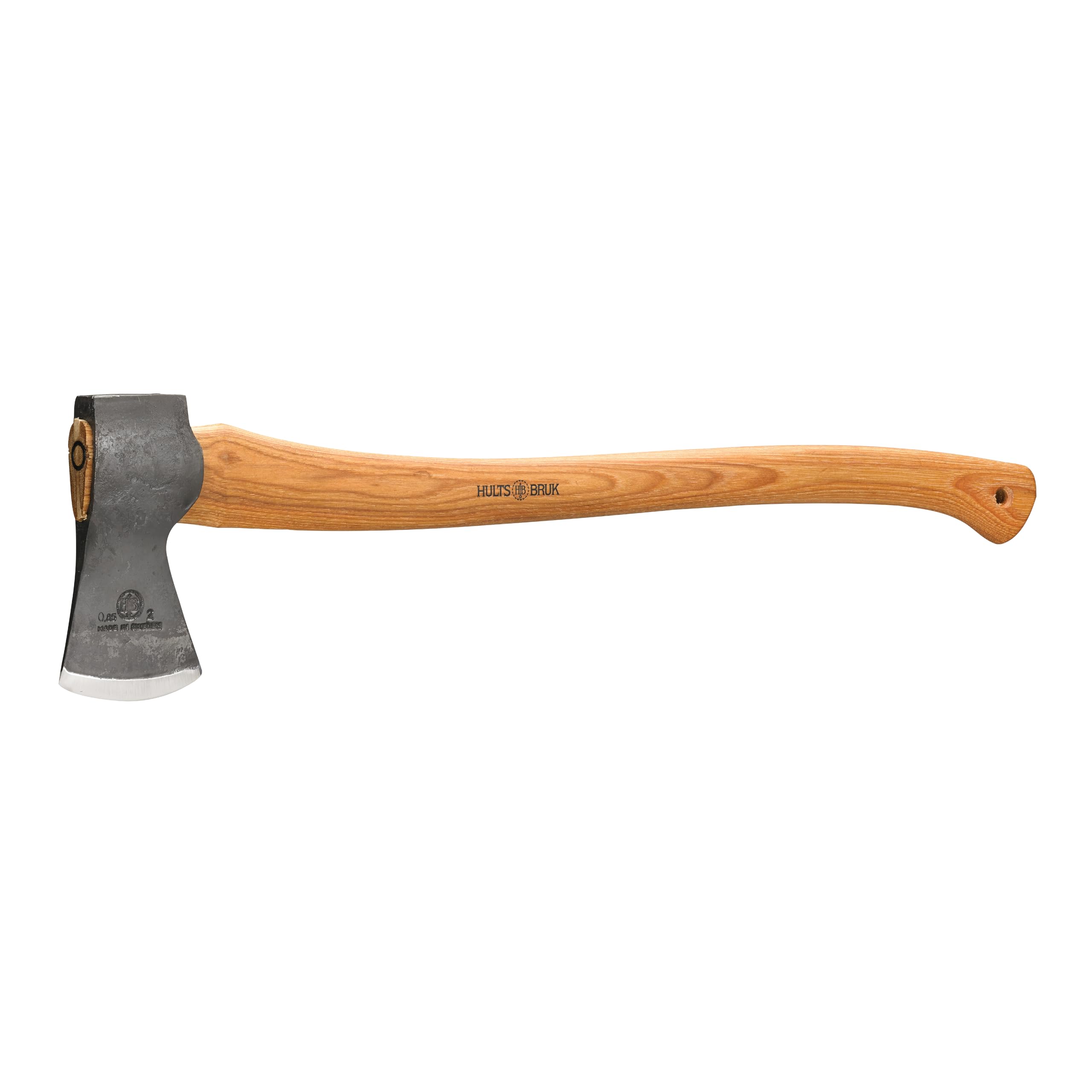
The single number that matters most in this category is head weight, and the Hults Bruk Kisa scores a 2-pound head on a 26-inch handle — making it the lightest and shortest felling axe in this lineup, 38% shorter in the handle than the Council Tool Jersey and over 60% lighter than the Helko Werk Forester. That means you can swing this axe all afternoon without your shoulders giving out, and you can easily pack it into a campsite or throw it in the back of a truck without it catching on gear. The head is hand-forged from Swedish axe steel at a forge that has been running since 1697, and the tempered edge holds a razor-sharp profile even after repeated sharpening.
Buyers praise the even grind and the straight handle (engraved with the Hults Bruk logo), noting that both units they received were perfect out of the box. The 3.17-pound total weight makes it feel almost like an oversized hatchet rather than a full-size felling axe, but the Swedish steel is tough enough to fell medium trees. One reviewer sanded and conditioned the handle before use because the initial surface was a little rough — a quick 10-minute job that reveals the smooth hickory underneath.
The downside you accept is a smaller cutting arc and less momentum per swing. You will need more strikes to bring down a 12-inch oak compared to the Helko Werk or Council Tool models. That makes the Kisa a specialty tool: perfect for backpacking, camp chores, and clearing saplings, but underpowered for heavy home firewood duty. Its price-to-performance ratio leans toward portability over raw power.
The upsides
- 2-pound head and 26-inch handle reduce fatigue on long days
- Swedish axe steel holds a razor edge through repeated sharpening
- Includes premium leather sheath and storage box
Keep in mind
- Too light for large hardwood felling tasks
- Handle may need light sanding before first use
5. Gränsfors Bruks American Felling Axe
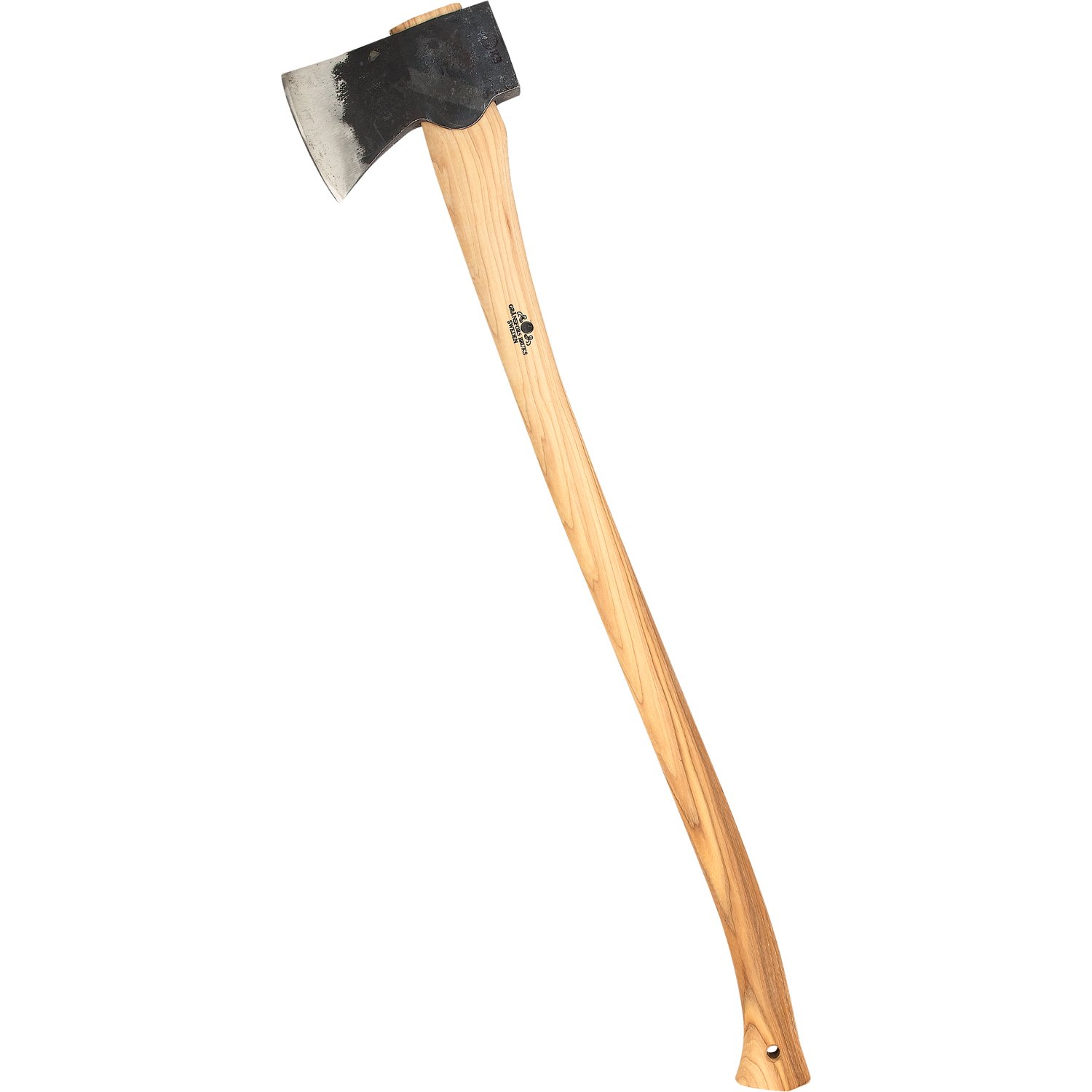
The Gränsfors Bruks American Felling Axe is the heaviest and longest in the field — a 4.6-pound head on a 35.5-inch curved handle, giving you the maximum possible momentum per swing. If you need to take down mature hardwoods or process a winter’s worth of firewood in a weekend, this axe will get the job done faster than anything else here. Reviewers point out felling entire trees with zero issues, describing the blade as sharp enough to shave with and noting the handmade leather sheath adds to the premium feel.
For that weight and length, you sacrifice portability and beginner friendliness. One buyer mentioned the handle arrived slightly rough against the grain, recommending a light sanding and oiling before use. Another pointed out that the wood handle can shrink and cause the head to loosen if you store it in a very dry environment — a quick application of Swel-loc (a wood swelling compound) fixed the issue.
For the experienced woodcutter who needs maximum force per swing and treats tools as investments, the Gränsfors Bruks is the definitive choice. It leads on raw power over every other pick, from the Council Tool Jersey to the Helko Werk Forester, but demands respect for its weight and requires attentive maintenance to stay tight. It is not an impulse buy — it is the final axe you would reach for on a job where time per tree matters most.
Why we’d pick it
- 4.6-pound head drives the deepest bite of any axe on this list
- 35.5-inch curved handle delivers maximum leverage
- Handmade in Sweden with a vegetable-tanned leather sheath
A few caveats
- Heavy swing can fatigue arms quickly for less experienced users
- Handle may shrink and loosen in dry storage — Swel-loc helps
Understanding the Specs
Head Weight and Handle Length
Heavier heads (3.5 to 4.6 pounds) drive deeper into wood, while longer handles (31 to 36 inches) multiply the force you deliver through leverage. A 36-inch handle on a 3.5-pound head gives a good balance of power and swing speed. A 26-inch handle on a 2-pound head is easier to carry and control but requires many more strikes to fell a large tree. Match the combination to the size of wood you cut most often.
Steel Type and Edge Geometry
High-carbon steel (like C50 or Swedish axe steel) holds a sharp edge and is easy to sharpen with a file in the field. The edge shape matters most: a convex edge (a smooth, rounded bevel) is tough and resists chipping, while a hollow grind (a thin, concave bevel) cuts fast initially but dulls or chips quickly on knotty wood. A good felling axe should arrive with a convex edge — if it has a hollow grind, plan to re-profile it with a file.
Handle Wood and Grain Orientation
American hickory is the preferred material because it absorbs shock without splintering. The grain should run straight from the head to the knob — this resists breakage on missed swings. Kiln-dried handles (dried to around 10% moisture) shrink less in dry climates, keeping the head tight. Avoid handles with wavy or angled grain, which can snap under heavy use.
Polish and Rust Protection
A polished head reduces friction during cuts and resists rust when stored properly. Many axes come with a red enamel or black paint coating for additional rust protection. Leather sheaths protect the edge during transport and storage. Axe guard oil (included with some premium models) helps maintain the steel over long periods of inactivity.
FAQ
Is a 3.5-pound head heavy enough for felling large hardwood trees?
What is the difference between a Dayton pattern and a Jersey pattern axe?
Do I need to sharpen a new felling axe before first use?
How do I maintain the hickory handle so the head stays tight?
Final Thoughts: The Verdict
If you want one dependable pick, the felling axes winner is the Council Tool Dayton Axe because it combines a wide 4.75-inch cutting edge, high-carbon steel, and a kiln-dried hickory handle at a price that leaves room for a sharpening file and a sheath. If you want the most secure head-to-handle fit and the ability to handle heavy daily use, grab the Council Tool Jersey Axe. And for the absolute maximum bite per swing with heirloom craftsmanship, the standout is the Helko Werk Forester.