
Water soluble fertilizers are the fastest-acting tool in a gardener’s shed — but the wrong ratio can scorch foliage, starve blooms, or waste weeks of effort. The NPK numbers on the bag aren’t marketing fluff; they are the precise recipe your soil chemistry demands for a specific cycle of growth, from root establishment to flower set.
I’m Rikta — the co-founder and writer behind Lawn Gear Lab. I’ve spent countless hours cross-referencing university extension data, dissecting solubility and micronutrient profiles, and analyzing owner feedback to separate genuine bloom boosters from overpriced generic mixes.
This guide ranks seven proven formulations against measurable metrics like NPK ratio accuracy, mixing ease, target-species suitability, and visible results. Whether you need a balanced nitrogen source for leafy vegetables or a high-phosphorus finisher for prize-winning blooms, the right best water soluble fertilizer solves your specific soil gap, not some generic feeding schedule.
How To Choose The Best Water Soluble Fertilizer
Selecting a water soluble fertilizer means matching three variables: the plant’s current growth stage, the existing soil nutrient levels, and the specific water chemistry in your area. A high-nitrogen mix applied during flowering pushes leaf mass at the expense of blossoms, while a low-nitrogen formula used on a nitrogen-deficient vegetable patch stunts the entire plant.
NPK Ratios — Decoding the Three Numbers
Nitrogen (N) drives leaf and stem growth; phosphorus (P) supports flower, fruit, and root development; potassium (K) strengthens overall plant immunity and water regulation. A 24-8-16 profile, common in general-purpose blends, provides heavy nitrogen for rapid green-up but can delay flowering on perennials or fruiting vegetables. A 10-30-20 formula, by contrast, shifts energy into blossom production and fruit set. Always check the middle number when your goal is flowering — anything above 20 on the phosphorus index classifies as a bloom booster.
Water Solubility and Application Method
Not all powders dissolve equally. Greenhouse-grade formulations (like 15.5-0-0 calcium nitrate) leave no oily residue on drip lines or sprayers, whereas agricultural-grade products can clog irrigation emitters. For foliar feeding, the fertilizer must dissolve to a completely clear solution — any sediment means it won’t be absorbed through leaf stomata. A simple test: mix the recommended dose in a glass jar; if particles settle after 30 minutes, switch to a finer-grade product.
Micronutrient Profile
Beyond N-P-K, chelated iron, manganese, and calcium prevent common deficiencies like interveinal chlorosis (yellowing between leaf veins) and blossom-end rot in tomatoes. Calcium nitrate (15.5-0-0) is the fastest fix for calcium-deficient soil, while bloom boosters with added iron keep flower petals vibrant. If your water is hard or alkaline, look for a formulation that includes sulfur-coated micronutrients to maintain uptake in high-pH environments.
Quick Comparison
On smaller screens, swipe sideways to see the full table.
| Model | Category | Best For | Key Spec | Amazon |
|---|---|---|---|---|
| Miracle-Gro Acid-Loving Plant Food | Acid-Loving Blend | Azaleas, Hydrangeas, Holly | N-P-K ratio designed for pH-sensitive species | Amazon |
| Miracle-Gro All Purpose Plant Food | All-Purpose | Indoor/Outdoor Gardens | 24-8-16 NPK, feeds 2,000 sq ft | Amazon |
| Ferti-lome All Purpose 20-20-20 | Balanced Formula | Hanging Baskets, Annuals | Equal N-P-K, soil drench & foliar spray | Amazon |
| Cz Garden Calcium Nitrate 15.5-0-0 | Single-Nutrient | Blossom End Rot Prevention | 15.5% N + 19% Ca, greenhouse grade | Amazon |
| Peter’s Professional 20-20-20 | Balanced Formula | Houseplants, Orchids | 1:1:1 ratio with micronutrients | Amazon |
| Grow More Super Bloomer 15-30-15 | Bloom Booster | Flower Shrubs, Blooming Vines | High phosphorus 30, chelated iron | Amazon |
| Jack’s Classic Blossom Booster 10-30-20 | Bloom Booster | Roses, Hydrangeas, Orchids | 10-30-20 with included measuring spoon | Amazon |
In‑Depth Reviews
1. Miracle-Gro Water Soluble Azalea, Camellia, Rhododendron Plant Food

This specialized formulation is built exclusively for acid-loving species — azaleas, camellias, rhododendrons, gardenias, hibiscus, hollies, hydrangeas, and orchids. The nutrient profile is calibrated to maintain the lower soil pH these genera require, preventing the chlorosis common when using general-purpose fertilizers on ericaceous plants. The 5-pound bag provides substantial coverage for a mixed bed of shrubs and perennials.
Mixing is straightforward: a 1:144 ratio for indoor plants and 1:18 for outdoor applications. Owners consistently report visible greening within seven days, with blooms developing deeper color on the second feeding cycle. The resealable Velcro closure outperforms standard zip-lock bags by keeping moisture out between uses, though granular residue on the seal flap can reduce effectiveness over time if not wiped clean.
Multiple verified reviews confirm the formula is safe on foliage and won’t burn roots when applied at the recommended dilution. The only real limitation is its specificity — this product does not suit neutral-soil vegetables, lawns, or alkaline-preferring species like lavender. For anyone maintaining a dedicated bed of rhododendrons, azaleas, or hydrangeas, this is the most reliable instant-feed option available.
What works
- Targeted NPK profile prevents iron chlorosis in acid-loving plants
- Visible results in under seven days on shrubs
- Resealable bag design keeps granules dry between applications
What doesn’t
- Only effective on acid-loving species – not a general-purpose feed
- Velcro seal loses grip if granules accumulate on the closure
2. Jack’s Classic Blossom Booster 10-30-20
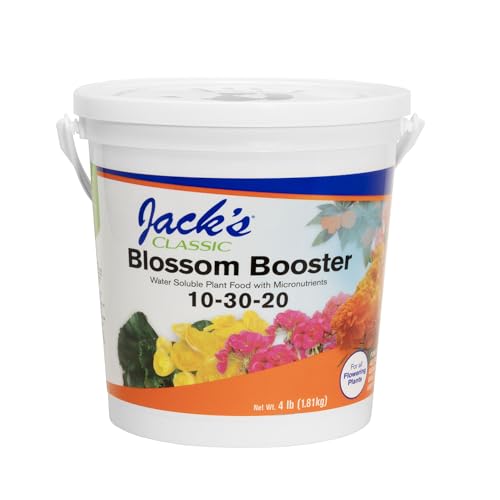
Jack’s Classic delivers a high-phosphorus 10-30-20 analysis specifically designed to increase the quantity and color intensity of flowers. The included measuring spoon removes guesswork — each scoop corresponds to the correct dilution rate for a standard watering can. This formulation can be applied as either a root drench or a foliar spray, making it versatile for both container plants and garden beds.
Owners report a measurable shift in bloom density after two applications, with hydrangea petals showing deeper pigmentation and longer vase life. The micronutrient package — including chelated iron and magnesium — prevents the interveinal chlorosis that can occur when pushing phosphorus without trace element support. The powder dissolves completely in water without sediment, suitable for use in hose-end sprayers without clogging.
The main consideration is the application rate: the 4-pound bag lasts a full season for a moderate garden, but the 10-30-20 ratio should not be applied during vegetative growth stages or on leafy greens without supplementing nitrogen. Verified reviews note it revived struggling annuals within two weeks and produced “big, beautiful blooms” on orchids. It’s the strongest bloom-targeted option among the seven products reviewed.
What works
- High phosphorus ratio delivers fast, dense flowering
- Included measuring spoon ensures accurate mixing every time
- Works as both root drench and foliar spray
What doesn’t
- Too high in phosphorus for general-purpose use
- Needs supplementary nitrogen during early growth stages
3. Grow More Super Bloomer 15-30-15 Fertilizer

Grow More Super Bloomer uses a 15-30-15 ratio with added chelated iron and manganese to support color vibrancy across a broad range of flowering species — from climbing roses to fruit-bearing shrubs. The 3-pound powder dissolves readily in a 1:64 mixing ratio, making it compatible with both soil soaks and foliar feeding systems. The formulation is designed for uniform nutrient distribution through drip irrigation without sediment buildup.
Verified buyers report that rose bushes treated with this product produced “twice the size and two to three times the blooms” within a single growing season. The chelated micronutrients prevent leaf yellowing during the high-phosphorus feed, a common issue when iron is not stabilized in alkaline water. The product is manufactured in the USA, and the resealable pouch maintains freshness across multiple applications.
The trade-off is the bag size: 3 pounds runs out faster than the 5-pound options if you are feeding a large flower bed weekly. Some owners caution that the high phosphorus content can inhibit calcium uptake in soils already low in calcium, so pairing with a calcium supplement is recommended for tomatoes or peppers.
What works
- Visible increase in bloom count and size within one season
- Chelated iron prevents chlorosis on high-phosphorus feeds
- Uniform dissolve suitable for drip irrigation systems
What doesn’t
- 3-pound bag runs out quickly for large gardens
- High phosphorus may require separate calcium supplement
4. Ferti-lome All Purpose Water Soluble Plant Food 20-20-20

Ferti-lome’s 20-20-20 provides an equal N-P-K split, making it a true generalist that supports foliage, root, and flower development simultaneously. The label recommends both soil drench (1-2 teaspoons per gallon) and foliar spray (1/4-1 teaspoon per gallon) methods, giving the user flexibility for different growth stages. The 3-pound bag is compact enough for small greenhouse benches but still covers a full season of weekly feeding for a container garden.
Verified reviewers — particularly in Florida and other subtropical climates — have used this formula to revive dying hibiscus and bougainvillea with a root drench applied every two weeks. The equal ratio means you cannot push specifically for blooms or leaves, but it eliminates the risk of nutrient imbalance in mixed beds. Several owners note the powder is potent: “1 teaspoon per gallon of water… It’s potent stuff.”
The 3-pound size is the main limitation compared to the 5-pound competitors. If you manage a large vegetable plot or extensive flower beds, you will need to repurchase mid-season. The granules also dust easily when dry, so measuring near plants can leave visible white residue on foliage if not rinsed immediately.
What works
- Balanced 20-20-20 ratio suits mixed-species gardens
- Can be applied as soil drench or foliar spray
- Concentrated formula requires small dose per gallon
What doesn’t
- 3-pound bag insufficient for large gardens
- Dry granules dust easily and leave white residue
5. Peter’s Professional 20-20-20 General Purpose Fertilizer

Peter’s Professional 20-20-20 has earned a loyal following among houseplant enthusiasts and orchid growers for its balanced 1:1:1 ratio and the inclusion of chelated micronutrients. The 2-pound container is the smallest in this review set, but the concentrated formula requires only 0.5 tablespoons per gallon for houseplant feeding, making a single bag last months for a collection of indoor plants. The powder dissolves to a clear solution ideal for sensitive orchids.
Long-term users report African violets blooming continuously through the year and indoor succulents showing healthier, more compact growth. The micronutrient package — which includes boron, copper, and zinc — prevents the deficiency patterns common in container-grown plants where potting mix lacks trace elements. Verified reviews describe the nutrient uptake as superior to general retail brands, with one owner stating it “works much better than Miracle-Gro and at a lesser rate.”
The 2-pound quantity is the clear drawback for outdoor vegetable gardens or large flower beds — you will need a larger bag for seasonal feeding. Additionally, the product lacks an included scoop, so measuring requires a dedicated teaspoon or gram scale for precision.
What works
- Comprehensive micronutrient profile prevents trace-element deficiencies
- Excellent for orchids, African violets, and bromeliads
- Concentrated formula — low dose per gallon extends bag life
What doesn’t
- 2-pound bag too small for outdoor garden use
- No measuring spoon included
6. Miracle-Gro Water Soluble All Purpose Plant Food 24-8-16

This 5-pound bag of Miracle-Gro all-purpose plant food uses a high-nitrogen 24-8-16 formulation to drive rapid green growth on everything from vegetable seedlings to established trees. A single bag covers roughly 2,000 square feet of garden area, making it the highest-volume coverage option in this review. The mixing ratio is straightforward: 1/2 teaspoon per gallon for indoor plants and 1.5 tablespoons per 1.5 gallons for outdoor feeding.
Verified owners consistently report that plants nearly double in size and green up noticeably within a week. The powder dissolves quickly in water with minimal stirring, though the fine granules can drift in wind during measuring and stain hands or clothing. The product is compatible with Miracle-Gro’s garden feeder system, which simplifies hose-end application for large properties. Over five hundred reviews confirm its safety for most common species — excluding orchids and carnivorous plants.
The primary drawback is the 24-8-16 nitrogen level, which can delay flowering on perennials and fruiting vegetables if used as the sole feed during the bloom stage. Owners growing tomatoes or peppers should switch to a lower-nitrogen formula once flowers appear. The bag also lacks a resealable feature as robust as the Velcro-style options, so storing it in a separate container is advisable.
What works
- Exceptional coverage — 2,000 sq ft per 5-pound bag
- Fast dissolve and visible green-up within one week
- Works with hose-end feeder for large areas
What doesn’t
- High nitrogen delays flowering on perennials
- Bag sealing is basic — granules need airtight storage
7. Cz Garden Calcium Nitrate 15.5-0-0 Fertilizer

Calcium nitrate is a specialized single-nutrient fertilizer providing 15.5% nitrogen and 19% calcium — designed almost exclusively to prevent or correct blossom-end rot in tomatoes, peppers, and cucurbits. Cz Garden’s version is labeled “greenhouse grade,” meaning it dissolves completely without the oily residue common in lower-grade agricultural calcium nitrate that can clog drip lines and leave a film on reservoir surfaces. The 5-pound resealable pouch includes a pour spout for measured dispensing into watering cans or nutrient tanks.
Verified reviews overwhelmingly center on its effectiveness against blossom-end rot. Multiple owners report that after two years of failed crops, a single season using calcium nitrate as a foliar spray and root drench eliminated the rot entirely within ten days. The product is also compatible with hydroponic systems — NFT, DWC, flood-and-drain, and coco coir feeds — making it a crossover pick for indoor growers managing calcium deficiencies without adding phosphorus or potassium.
The 15.5-0-0 ratio means this is not a complete feed — it must be paired with a balanced fertilizer for full vegetative and bloom support. Overuse without adequate phosphorus and potassium leads to soft, nitrogen-dominated growth prone to pest pressure. It’s the most specific tool in this lineup but indispensable for anyone fighting calcium deficiency in fruiting vegetables.
What works
- Eliminates blossom-end rot in tomatoes and zucchini
- Greenhouse grade — dissolves fully without oily residue
- Compatible with hydroponic and drip irrigation systems
What doesn’t
- Not a complete fertilizer — needs balance N-P-K supplement
- Over-application leads to nitrogen-heavy, soft growth
Hardware & Specs Guide
NPK Ratio — The Core Chemistry
The three numbers on a fertilizer label represent the percentage by weight of nitrogen (N), phosphorus (P₂O₅), and potassium (K₂O). A 24-8-16 formulation contains 24% nitrogen — which drives leaf expansion — but only 8% phosphorus, which means it is optimized for vegetative growth, not flowering. Bloom-specific formulations like 10-30-20 reverse this balance, pushing 30% phosphorus to fuel bud formation and fruit set. Matching the NPK ratio to the plant growth stage is the single most impactful decision you can make.
Water Solubility and Dissolution Rate
Greenhouse-grade products dissolve to a completely clear solution, leaving no sediment that could clog spray nozzles or drip emitters. Agricultural-grade calcium nitrate, by contrast, often leaves an oily skim on the water surface that coats irrigation equipment and root surfaces. For foliar feeding, the solution must be fully transparent — any particles remain on leaf surfaces and can burn foliage under direct sunlight. A simple sedimentation test in a clear glass jar reveals the grade quality before you commit to a full application.
Micronutrient Profile
Beyond N-P-K, chelated iron, manganese, zinc, copper, boron, and molybdenum prevent trace-element deficiencies that mimic disease symptoms. Interveinal chlorosis — yellowing between leaf veins — is typically an iron deficiency triggered by high soil pH or phosphorus-locked roots. Bloom boosters with added chelated iron avoid this problem. Calcium nitrate provides 19% calcium, which strengthens cell walls and halts blossom-end rot, a disorder not cured by general-purpose fertilizers.
Mixing Ratio and Application Frequency
The dosage differs between indoor and outdoor applications: indoor mixes typically require 1/2 teaspoon per gallon, while outdoor soil drenches often need 1 to 1.5 tablespoons per 1.5 gallons. Over-concentrating the solution causes fertilizer burn — brown leaf margins and wilting — because the high salt content draws moisture out of root cells. Always follow the manufacturer’s mixing table and apply every 7-14 days during the active growing season, skipping applications during dormancy.
FAQ
What NPK ratio should I choose for flowering plants like roses or hydrangeas?
Can I use the same water soluble fertilizer for both indoor houseplants and outdoor vegetable beds?
Why does my fertilizer leave white residue on leaves and pots?
Final Thoughts: The Verdict
For most gardeners, the best water soluble fertilizer winner is the Miracle-Gro Acid-Loving Plant Food because it delivers a targeted NPK formulation for the most demanding acid-preferring species and produces visible results within one week. If you want a high-phosphorus bloom booster for roses, hydrangeas, and flowering orchids, grab the Jack’s Classic Blossom Booster 10-30-20. And for correcting blossom-end rot in tomatoes and zucchini with a pure calcium nitrate feed, nothing beats the Cz Garden Calcium Nitrate 15.5-0-0.