
Corded leaf blowers deliver the one thing that battery-powered and gas models simply cannot match: unlimited, sustained airflow from the moment you pull the trigger until the last leaf is piled. No battery swapping, no mixing fuel, and no emissions in your face.
I’m Rikta — the co-founder and writer behind Lawn Gear Lab. I’ve spent hundreds of hours cross-referencing motor amperage, CFM ratings, MPH claims, and real-world owner feedback to separate the blowers that actually move wet debris from the ones that just sound impressive on paper.
After analyzing amp draws, turbine fan designs, cord retention systems, and the durability of each unit, these are the models that defined the standard for the modern corded leaf blower.
How To Choose The Best Corded Leaf Blower
Choosing a corded blower is simpler than choosing a battery-powered one, but a few key specs determine whether you get a gentle breeze or a full cleanup in half the time. Focus on air volume (CFM), motor amperage, and the cord management system that keeps you working without interruption.
Air Volume (CFM) Is More Important Than MPH
Manufacturers love to advertise MPH numbers because they sound dramatic, but cubic feet per minute (CFM) is the spec that tells you how much air the blower moves. A 110 MPH blower with 600 CFM will clear a lawn faster than a 160 MPH blower with 150 CFM because the wider, denser column of air sweeps debris from a broader path in fewer passes. For wet leaves or heavy debris, 400 CFM and above is the floor to aim for.
Motor Amperage Defines The Power Ceiling
Standard corded blowers run on 7-amp motors, which are adequate for patios, sidewalks, and light leaf scattering. Once you step up to 12-amp or 13-amp motors, you enter gas-backpack territory — these units can move landscaping rocks, pine cones, and thick piles of wet oak leaves without bogging down. Higher amperage also means a heavier unit, so balance raw power with the fatigue of holding the machine for a full yard session.
Cord Retention Is Not Optional
A blower with no cord lock becomes a frustration machine the moment you hit the edge of the lawn and the plug yanks out of the extension cord. Look for a built-in cord retainer — a hook, loop, or twist-lock mechanism that secures the extension cord to the blower handle. This single feature can save ten minutes of walking back to re-plug during every session.
Quick Comparison
On smaller screens, swipe sideways to see the full table.
| Model | Category | Best For | Key Spec | Amazon |
|---|---|---|---|---|
| Yard Force 13A | High CFM | Large properties with heavy debris | 630 CFM / 13 Amp | Amazon |
| SENIX 12 AMP | High Volume | Moving heavy wet debris quickly | 700 CFM / 12 Amp | Amazon |
| WORX Turbine 600 | Turbine Fan | Volume-focused clearing with jet-engine feel | 600 CFM / 12 Amp | Amazon |
| Toro 51585 | 2-Speed | Lightweight versatility for mixed debris | 160 MPH / 7 Amp | Amazon |
| Greenworks 24012 | Budget Reliable | Light duty patios and sidewalks | 150 CFM / 7 Amp | Amazon |
| BLACK+DECKER LB700 | Entry Level | Small yards and one-hand operation | 180 CFM / 7 Amp | Amazon |
| GUEDE 7 Amp | Budget Pick | Villa patios and porch clean-ups | 155 MPH / 7 Amp | Amazon |
In‑Depth Reviews
1. Yard Force 13A Electric Leaf Blower
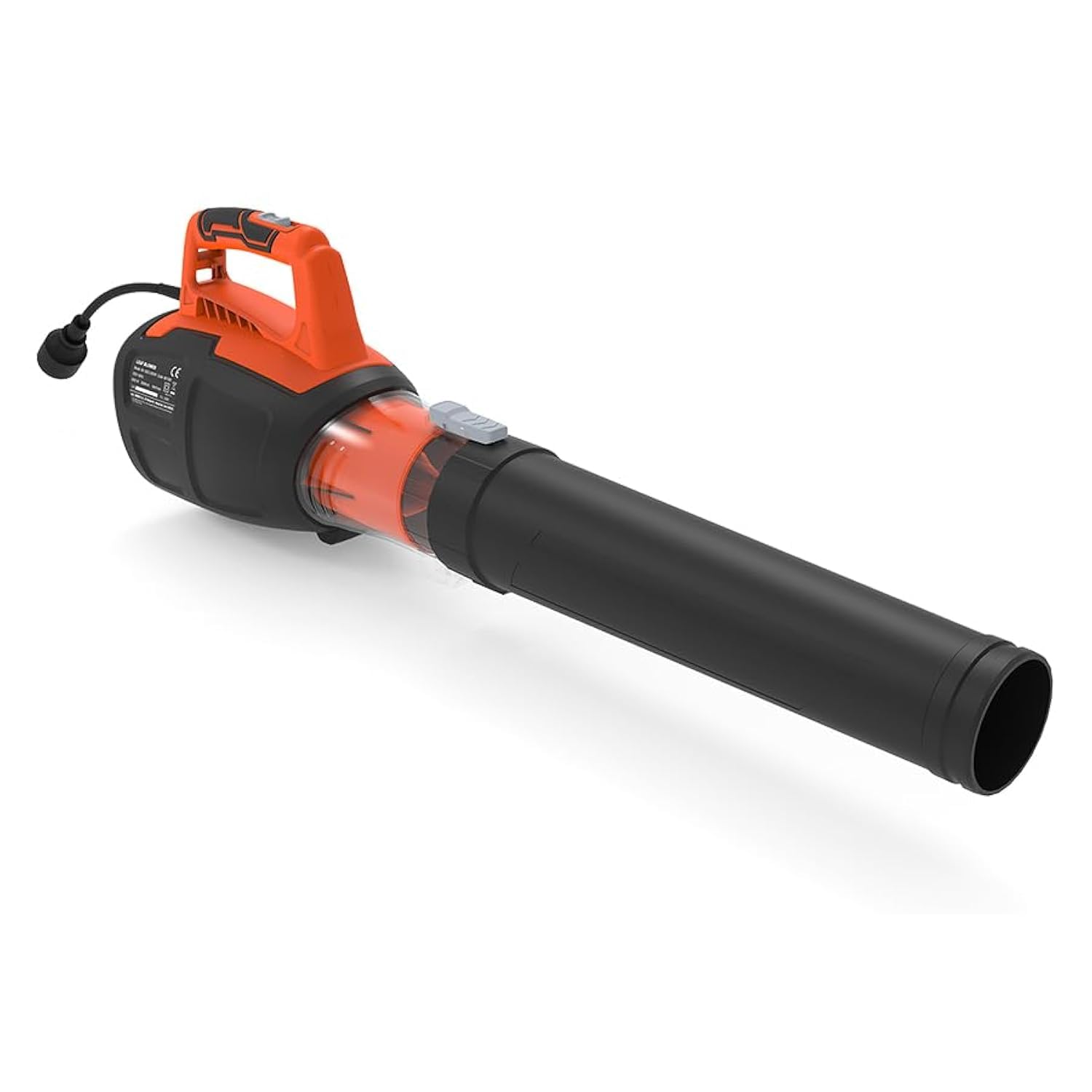
The Yard Force 13A sits at the sweet spot of high-volume air output and manageable weight. Its 630 CFM and 13,000 RPM motor deliver a dense air column that rivals gas backpack units, yet the blower itself weighs only 5.5 pounds. This combination makes it the strongest pick for homeowners who want commercial-grade moving power without the price tag or the noise ordinance headaches of gas equipment.
Cord management is handled by a simple pass-through hook on the handle that keeps the extension cord anchored, and the unit ships with comfortable hearing protection — a practical inclusion given the volume this machine produces. Owners consistently report that it clears large properties faster than raking and replaces the need for a gas blower entirely, especially when paired with a 14-gauge or thicker extension cord for longer runs.
The only real trade-off is that the blower requires both hands to maintain control at full throttle, which is expected for a 13-amp motor. The included safety glasses are functional, though some users swap them for their own preferred eyewear. For sheer per-dollar air volume, this is the most effective corded blower on this list.
What works
- Gas-backpack level of air volume at 630 CFM
- Lightweight at 5.5 pounds despite 13-amp motor
- Comes with hearing protection and safety glasses
What doesn’t
- Needs two hands for full control at high throttle
- Included ear protection is basic for extended use
2. SENIX 12 AMP Handheld Electric Leaf Blower
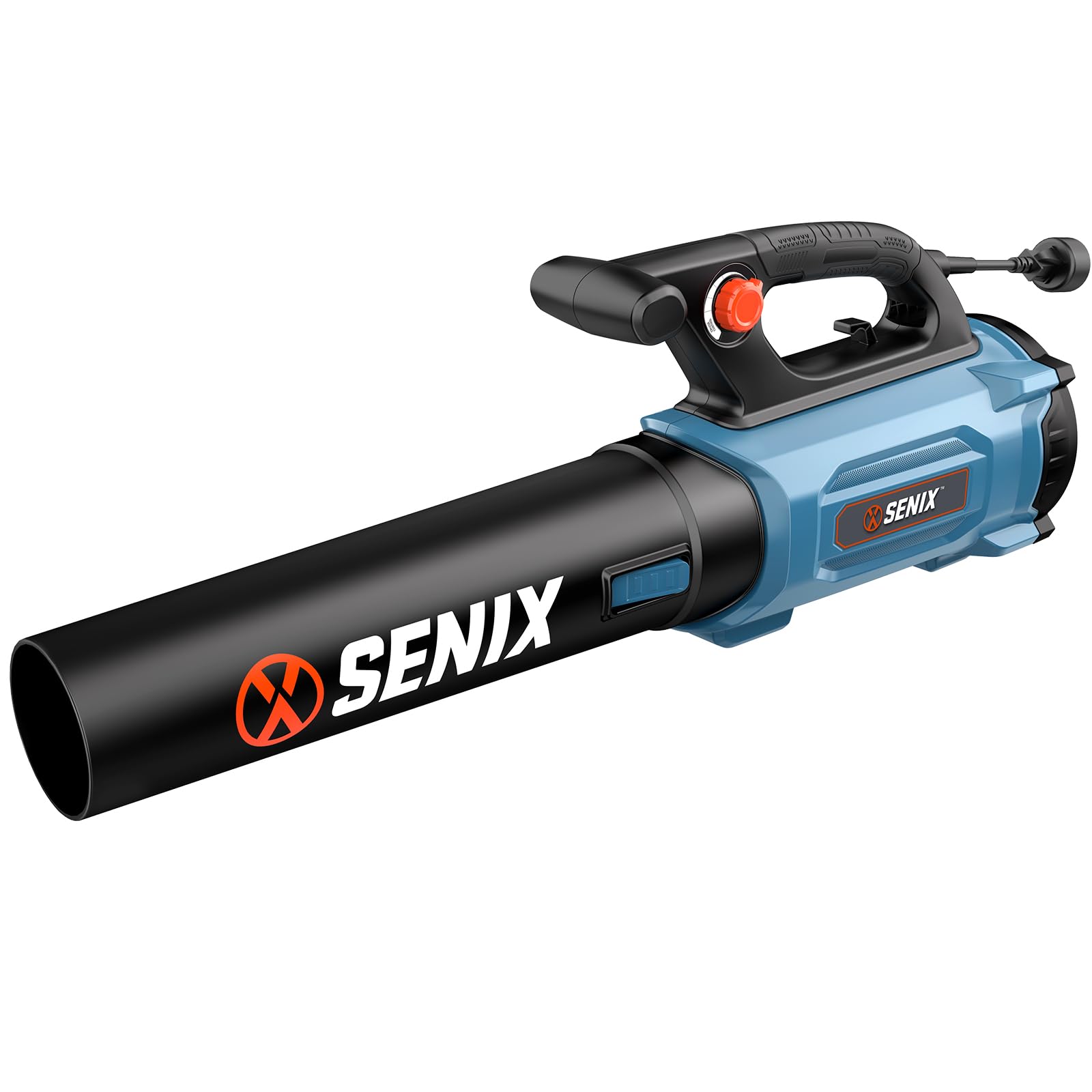
The SENIX 12 AMP pushes the highest CFM rating in this comparison at 700 cubic feet per minute, which is remarkable for a handheld unit. The 12-amp motor runs at 110 MPH, so you are trading some linear speed for a massive column of air that moves debris in wide, efficient sweeps. This makes it especially effective on large open lawns and pool decks where covering ground quickly is the priority.
Variable speed control gives you gentle airflow for flower beds and flower gardens, then ramps up to full hurricane mode for wet piles and small twigs. Owners note that it easily moves landscaping rocks when pointed downward, and one reviewer described it as a tornado in the hand. The blower includes a short integral cord that requires high-quality extension cords for reaching the far corners of a property, with 50-foot 12-gauge cords being the common recommendation.
At 7 pounds, it is the heaviest of the high-volume handhelds here, but the ergonomic balance reduces perceived fatigue during extended sessions. The variable speed trigger gives precise control that single-speed models cannot match, making this a versatile choice for properties with a mix of sensitive garden areas and heavy debris zones.
What works
- Highest CFM on this list at 700
- Variable speed offers precision control
- Ergonomic balance reduces arm fatigue
What doesn’t
- Heavier than other handhelds at 7 pounds
- Short built-in cord requires multiple extension cords
3. WORX 12 Amp Turbine 600

The WORX Turbine 600 uses a turbine fan design that spins faster than the axial fans found in most corded blowers, producing a dense, wide air column at 600 CFM despite a relatively modest 110 MPH rating. This design philosophy prioritizes volume over speed, meaning you can clear a driveway in fewer passes because the air stream is simply broader. The wide-mouth nozzle is a deliberate choice that maximizes the sweep path.
Two speed settings offer flexibility — low speed for sensitive areas and paved corners, and high speed for open lawn debris. The machine weighs 6.5 pounds and is designed for one-handed operation, though the thrust at high speed makes a two-handed grip more practical. Owners report that it outperforms cheaper battery blowers and even some pro-grade gas units in terms of sheer air moving capacity, especially when paired with a 12 AWG extension cord.
The cord retainer and 2-pin plug design prevent accidental disconnections, a critical detail for a blower this powerful. The variable speed dial is a nice addition, but some users note that the ABS plastic build feels slightly less robust than metal-reinforced competitors. For the price, it delivers an impressive volume-to-weight ratio that makes it a strong contender for mid-sized yards.
What works
- Unique turbine fan produces wide, high-volume air stream
- Two-speed control for varied debris tasks
- One-handed operation feasible at low speed
What doesn’t
- ABS plastic build feels less premium than competitors
- Needs 12 AWG extension cord for full power on long runs
4. Toro 51585 Power Sweep

The Toro 51585 proves that a 7-amp motor can still be highly effective when paired with a well-designed nozzle and two-speed control. At 160 MPH and only 4.6 pounds, it is one of the lightest blowers in this category, making it ideal for users with arthritis or anyone who prioritizes one-hand operation for quick daily cleanups. The compact form factor means it lives in the shed without taking up much space.
The two-speed switch is a genuine asset — low speed for delicate flower beds and wet grass, high speed for sidewalks and driveways. Multiple owner reports confirm that looping the extension cord through the rear hook prevents the flimsy-feeling cord connection from popping out. While the build quality feels more consumer-grade than the high-amp competition, the reliability has proven solid for small to medium properties over years of use.
The biggest drawback is the extension cord interface, which requires the user to loop the cord through the handle clip to stay secure. Without that step, the plug can disconnect at the most inconvenient moment. For the price, however, it offers excellent portability and sufficient power for patios, decks, and light leaf duty without needing a heavy-duty cord.
What works
- Extremely lightweight at 4.6 pounds for one-hand use
- Two-speed control adds versatility for different surfaces
- Compact size for easy storage
What doesn’t
- Cord connection is weak without looping through handle hook
- Not powerful enough for heavy wet debris piles
5. Greenworks 7 Amp 24012

The Greenworks 24012 is a tried-and-true entry point for homeowners who need a corded blower for maintenance tasks like clearing garages, drying vehicles, and sweeping walkways. Its 7-amp motor produces 150 CFM and 160 MPH — numbers that are modest compared to the high-amp contenders above, but perfectly adequate for light debris on hard surfaces. The anti-vibration design makes it noticeably quieter and smoother than many gas-powered units.
The cord lock is a simple but effective hook that prevents the extension cord from pulling free, and the lightweight 5.5-pound frame allows for extended one-handed use without fatigue. Owners with concrete garages and porches report that it blasts sand and pebbles out completely, making it a favorite for cleanup after garage sweeping. It is also a popular choice for drying cars after washing because the non-scorching air stream avoids water spots.
The biggest risk with this model is that some units have been reported with infant mortality — failing within the first few uses — though Amazon’s return policy makes replacements straightforward. Over the long term, several users report four to five years of service before bearing wear. For the price, the performance is more than fair, but it is not designed for heavy-duty leaf management on large properties.
What works
- Anti-vibration design reduces noise and hand fatigue
- Lightweight at 5.5 pounds for easy one-hand use
- Effective for drying cars and clearing hard debris
What doesn’t
- Infant mortality reports require careful initial testing
- CFM too low for heavy wet leaf piles
6. BLACK+DECKER LB700

The BLACK+DECKER LB700 has been a staple in the entry-level corded blower space for years because it delivers reliable 180 CFM and 180 MPH from a 7-amp motor in a package that weighs only 4.4 pounds. It is the lightest blower with the highest MPH in the 7-amp tier, which makes it ideal for smaller yards and users who want to sweep patios and decks with minimal arm strain. The built-in cord retention loop prevents accidental disconnections during use.
Owner reports consistently highlight the single-speed design as both a strength and a limitation — it is simple and effective, but you cannot fine-tune the airflow for delicate areas. The blower performs best on dry leaves and light debris, easily handling wet leaves in small patches. Comparisons with battery models show that the LB700 outperforms most 20V and 40V cordless units in sustained runtime and cost per session, since there is no battery investment required.
Several users mention that it could use a bit more power for heavy debris, and the lack of a variable speed trigger means you have no intermediate airflow option. For basic cleanup around a small property, though, this is the most cost-effective option that still delivers a real moving force. The 2-year limited warranty adds a layer of protection against defects.
What works
- Lightest blower at 4.4 pounds with excellent portability
- 180 MPH provides strong linear air speed for debris
- Simple single-speed operation with no battery worries
What doesn’t
- Single speed limits precision for delicate areas
- Not powerful enough for wet leaf piles on lawns
7. GUEDE 7 Amp Electric Leaf Blower
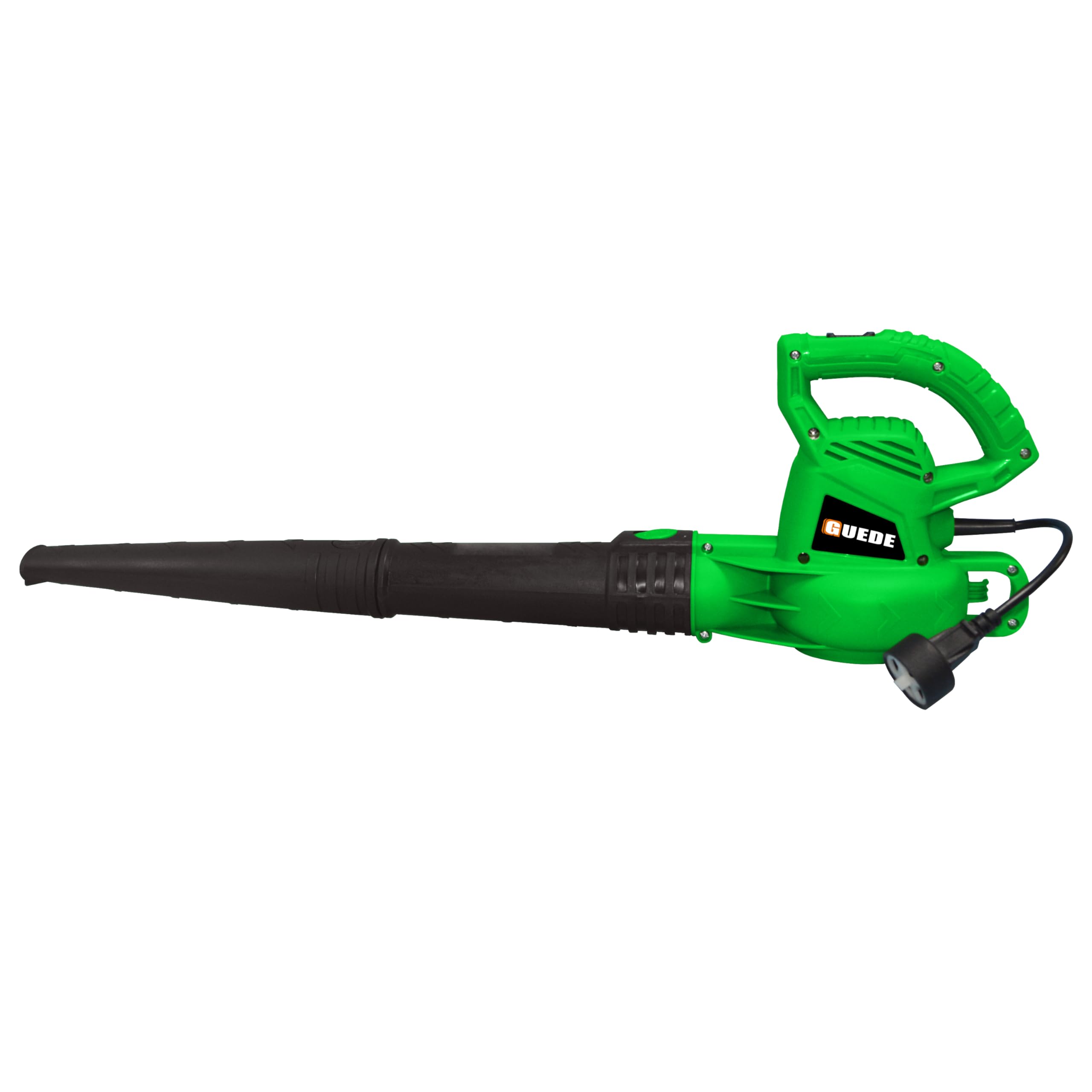
The GUEDE 7 Amp blower enters the market as a budget-focused option that prioritizes compactness and low weight over raw power. At 3.8 pounds, it is the lightest blower in this entire comparison, making it exceptionally easy to maneuver around porches, garages, and villa patios. The 155 MPH output is modest but sufficient for blowing dry leaves off walkways and clearing light debris from small outdoor spaces.
Assembly is tool-free, requiring only the attachment of two blower tubes, and the double-insulated construction with SGS certification ensures basic safety compliance for US and Canadian use. Owner feedback highlights the surprising power-to-size ratio, with multiple users describing it as a “small but mighty” tool for small homes. The metal and plastic construction feels durable enough for occasional use, though it is clearly not designed for commercial-grade endurance.
The most common complaint is the lack of a longer included cord, which forces buyers to own a separate extension cord to reach the far corners of even a small yard. The anti-vibration feature helps reduce hand fatigue despite the light weight. For anyone who needs a throw-and-go blower for minimal cleanup tasks and values compact storage above all else, this is the entry point that gets the job done without breaking the wallet.
What works
- Heaviest blower at 7 pounds but highest CFM performance
- Variable speed control for delicate flower bed areas
- Ergonomic balance reduces perceived fatigue
What doesn’t
- Needs heavy gauge extension cord for full power
- Short built-in cord limits initial reach
Hardware & Specs Guide
CFM — Air Volume
Cubic Feet per Minute measures how much air the blower moves. For corded blowers, 150–200 CFM is adequate for dry leaves on paved surfaces. 400 CFM and above moves wet leaves, pine straw, and small twigs in wide, efficient sweeps. The high end of 600–700 CFM approaches the output of gas backpack blowers, allowing you to clear large lawns with fewer passes. Always prioritize CFM over MPH for overall cleanup speed.
Motor Amperage — The Power Baseline
Standard 7-amp motors dominate the budget and entry-level segment, producing enough torque for sidewalks and light patios. Stepping up to 12–13 amps nearly doubles the power available, enabling the blower to move heavier debris without the motor bogging down under load. Higher amperage also correlates with more weight — expect a difference of about 2 to 3 pounds between a 7-amp and a 13-amp handheld model.
Cord Retention Systems
A cord retainer — usually a molded hook or loop near the handle — keeps the extension cord securely attached to the blower. Blowers without this feature are prone to the plug pulling out mid-sweep, especially when the cord snags on bushes or lawn furniture. Always verify the design of the cord lock before purchase; a simple twist-lock or pass-through hook is far more reliable than a friction fit.
Extension Cord Gauge and Length
Corded blowers draw significant current, so using an undersized extension cord causes voltage drop that reduces motor performance. For a 7-amp blower on a 50-foot run, 14 AWG is adequate. For 12-amp and 13-amp blowers on 100-foot runs, 12 AWG is required to prevent overheating and power loss. Never use a 16 AWG cord with a high-amp blower — the motor will run slowly and the cord may overheat.
FAQ
Is a corded leaf blower more powerful than a battery model?
What extension cord gauge do I need for a 12-amp blower?
How do I keep the extension cord from disconnecting from the leaf blower?
Final Thoughts: The Verdict
For most gardeners who want the best balance of power and price, the corded leaf blower winner is the Yard Force 13A because it delivers gas-like 630 CFM in a lightweight 5.5-pound package with a simple cord retention system. If you need the highest possible air volume and do not mind a few extra pounds, grab the SENIX 12 AMP. And for a compact, budget-friendly option that still moves real debris for small patios, nothing beats the GUEDE 7 Amp.