
You want your vegetable garden to grow strong, but picking the wrong soil mix will choke the roots and waste your effort. The right blend keeps roots aerated so they can breathe, holds enough moisture so you do not have to water twice a day, and delivers the nutrients that turn a seedling into a heavy-yielding plant. The problem is that a bag labeled “garden soil” might be too heavy for containers or too sandy to hold water, and you will not know until your tomatoes start wilting.
I’m Rikta — the co-founder and writer behind Lawn Gear Lab. This guide is built by comparing the manufacturers’ published specifications and the patterns across verified customer reviews, so you get each pick’s real strengths and trade-offs instead of marketing spin.
The goal is the same: a loose, nutrient-dense foundation your vegetables will actually thrive in. That is what this review of the best vegetable garden soil mix is here to deliver — honest breakdowns so you know exactly what each bag does before you buy.
How To Choose The Best Vegetable Garden Soil Mix
Picking a soil mix comes down to matching the bag to your specific garden setup — a mix that is perfect for a raised bed can be a disaster for a container if it does not drain fast enough. Here are the three factors that separate a good harvest from a disappointing one.
Aeration and Drainage
Your plant roots need oxygen as much as they need water. A mix that is too dense (heavy clay or compacted sandy loam) suffocates roots and pools water, leading to rot. Look for ingredients like sphagnum peat moss, perlite, or biochar — these create tiny air pockets so water flows through at a healthy rate and roots can spread without resistance.
Nutrient Source and Organic Certification
The nutrients in the bag are what feed your vegetables from seedling to harvest. Composted manure, earthworm castings, kelp meal, and mycorrhizae (beneficial fungi that attach to roots and help them absorb more water and minerals) are signs of a nutrient-dense blend. If you are committed to organic growing, check for an OMRI (Organic Materials Review Institute) listing on the bag — that means every ingredient is verified for organic use with no synthetic chemicals.
Volume and Bag Weight
Soil is sold by volume (quarts or cubic feet), not by weight, because moisture content makes weight misleading. A 1.5-cubic-foot bag fills a standard 4×4-foot raised bed about 6 inches deep. If you have a single large planter, a 20-quart bag will do; for multiple beds or full rows, go with a 2-cubic-foot bag to avoid making multiple trips to the store.
Quick Comparison
On smaller screens, swipe sideways to see the full table.
| Model | Category | Best For | Key Spec | Amazon |
|---|---|---|---|---|
| Coast of Maine Castine Blend | Premium | Raised beds & high-yield veggie gardens | 2 cu ft bag | Amazon |
| FoxFarm Raised Bed Planting Mix | Premium | Ready-to-use raised beds & containers | 1.5 cu ft bag | Amazon |
| Espoma Organic Vegetable & Flower | Mid-Range | Amending native in-ground soil | 1 cu ft bag | Amazon |
| Coast of Maine Tomato & Vegetable | Mid-Range | Small containers & heirloom tomatoes | 20 Qt bag | Amazon |
| Wakefield Biochar Blend | Budget | Amending clay or sandy garden soil | 4 Qt bag | Amazon |
In‑Depth Reviews
1. Coast of Maine Organic & Natural Castine Blend Soil
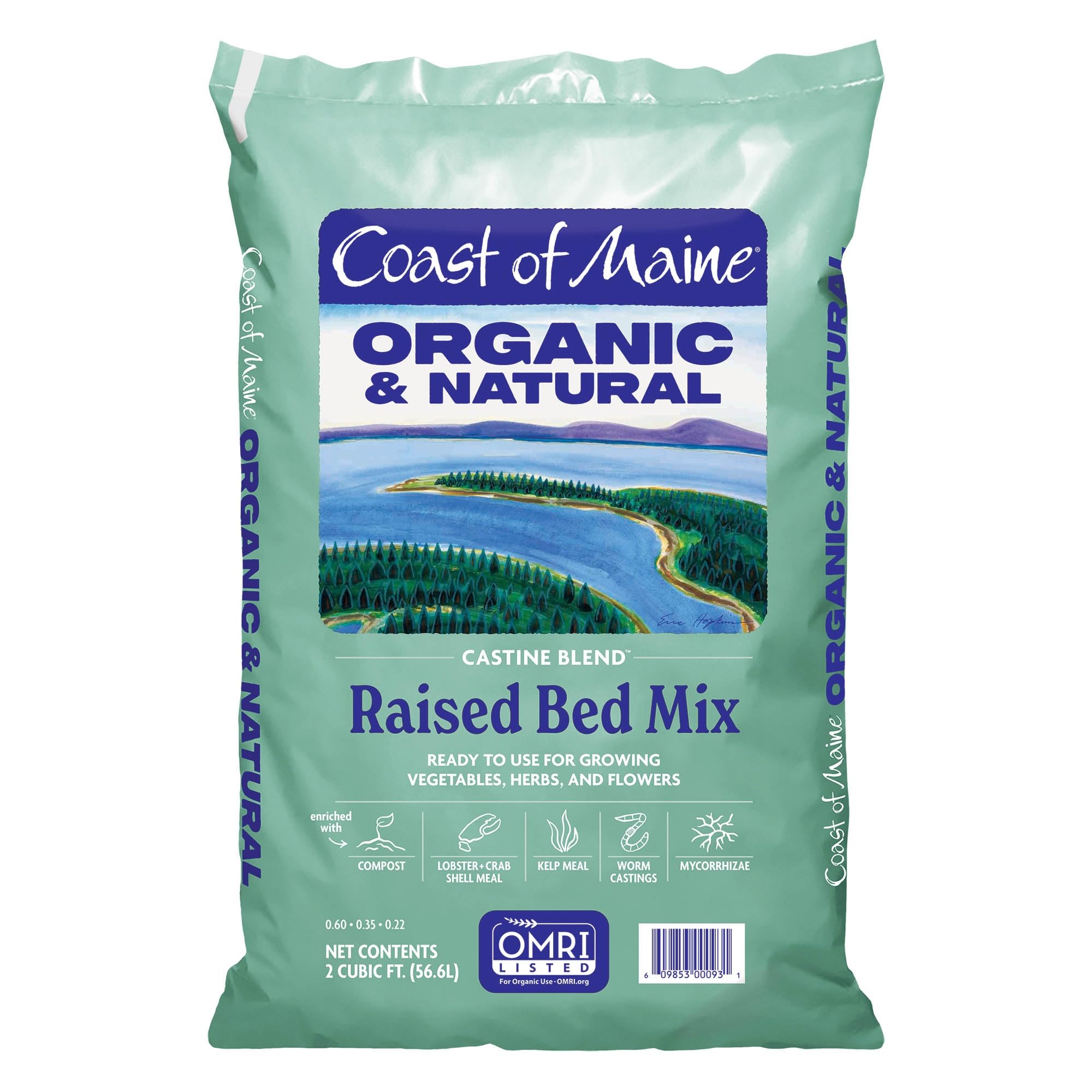
2 cubic feet — 50% more than the Espoma Organic Vegetable & Flower Soil (1 cubic foot) — makes this the top pick for anyone filling a full raised bed or several large containers in one go without buying extra bags. It is a complete, nutrient-dense foundation ready to use straight out of the package: no mixing, no guessing. That volume lets you plant a serious vegetable garden without multiple trips to the store.
The ingredient lineup sets it apart: worm castings, mycorrhizae (beneficial fungi that attach to roots and help them absorb more water and minerals), biochar (a charcoal-like material that holds nutrients and water in the root zone), green sand, kelp meal, and lobster and crab shell meal. Buyers report that after using it for three years straight, their soil stays loose and drains well — one reviewer noted “the best soil to add to elevated garden beds” because it loosens existing soil and keeps roots happy.
At 40.3 pounds for the bag, it is heavy, but that weight comes from moisture and dense organic matter, not filler. The honest limit is the premium price — but if you are investing in a season of big yields, this mix pays for itself in what you harvest. Choose this bag when you want the richest, most complete organic soil mix for raised beds; skip it if you only have a small container or a tight budget, because a smaller bag like the Coast of Maine Tomato & Vegetable will cost less and waste none.
Why it’s great
- Largest usable volume (2 cu ft) of any pick here — covers more ground
- Rich ingredient list: mycorrhizae, biochar, worm castings, kelp meal
- Buyers praise its texture: soft, dark, no twigs, no bugs
Good to know
- Premium price point — best for committed gardeners with multiple beds
- Heavy bag (40.3 lbs) may be awkward to move
2. FoxFarm Raised Bed Planting Mix
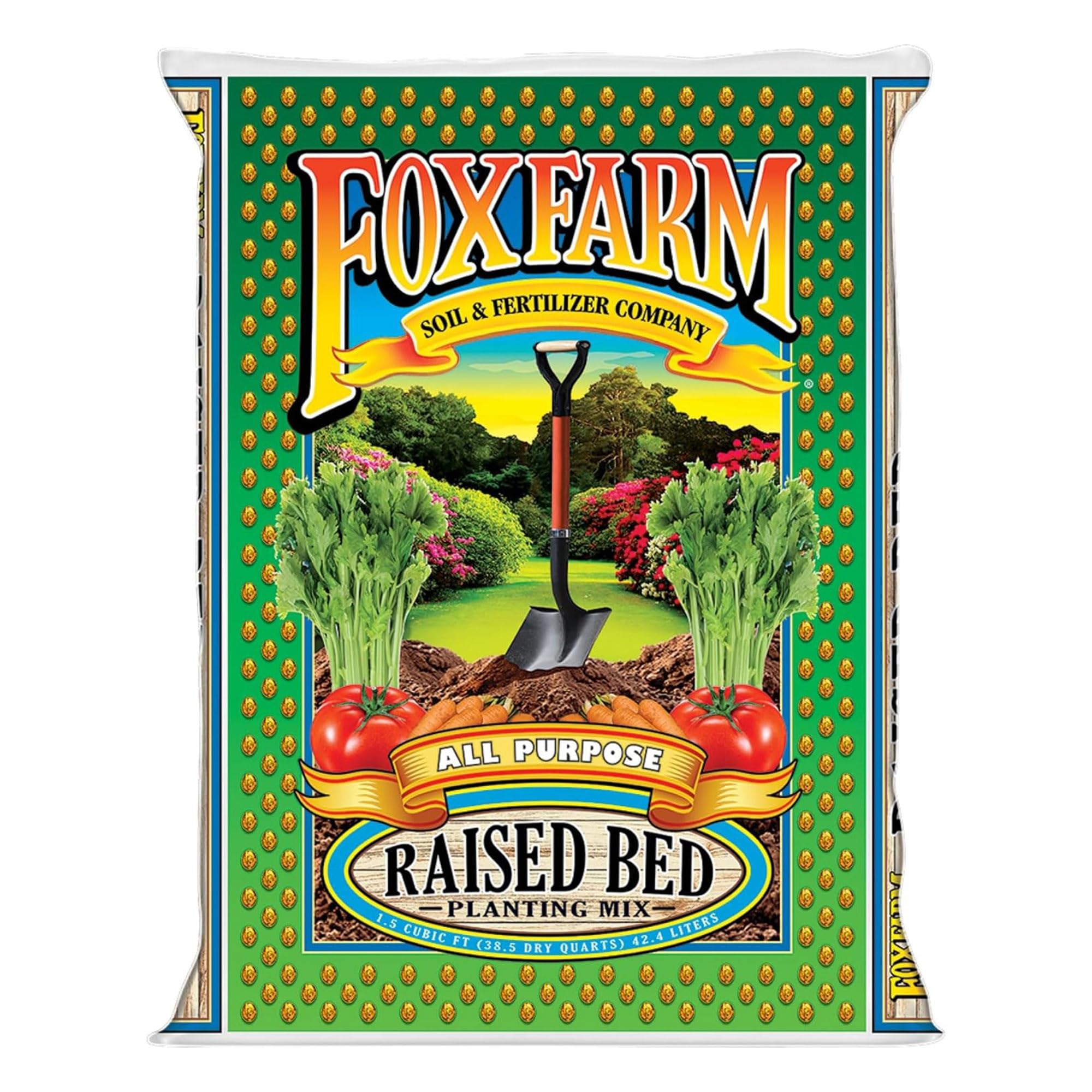
You get pour-and-plant convenience with this FoxFarm mix — no stirring required — but its 1.5-cubic-foot bag holds 25% less material than the Coast of Maine Castine Blend (2 cubic feet). However, at 40 pounds it weighs almost the same as the Castine Blend (40.3 pounds), meaning FoxFarm packs a denser, heavier mix per cubic foot, which usually translates to more moisture and nutrient density per scoop.
This mix contains 50-60% aged forest products, sphagnum peat moss, earthworm castings, oyster shell, and dolomite lime (a mineral that balances pH and adds calcium and magnesium). One long-time buyer called it “the best garden soil on the market” and a reviewer noted it is a “great start for containers or raised beds.”
Owners mention it is often available cheaper at local garden centers — one buyer mentioned “it is worth noting this product is at my local garden center,” which is a solid reminder to check local pricing before ordering online. If you want a no-fuss, pour-and-plant soil that delivers reliable results without any mixing guesswork, pick the FoxFarm over the Castine Blend and save the price difference for seeds. This one is for the gardener who values speed and hates measuring; pass on it if you need maximum volume for the money, because the Castine Blend gives you more cubic feet per bag.
Where it shines
- True pour-and-plant convenience — no mixing required
- Dense, nutrient-rich formula with earthworm castings and oyster shell
- Proven reputation: buyers call it the best garden soil on the market
Worth noting
- Smaller volume (1.5 cu ft) than the top pick
- May be cheaper at local garden centers — shop around
3. Espoma Organic Vegetable & Flower Garden Soil

If you are planting directly into an existing in-ground garden bed and just need to improve the native soil, this 1-cubic-foot bag is the smart choice — a third smaller than the Coast of Maine Castine Blend, but its job is different. You mix it thoroughly with your existing soil, not use it as a standalone fill. The real value is in the Myco-Tone blend, a proprietary mix of endo and ecto mycorrhizae (the two types of beneficial fungi that attach to roots to help them absorb water and minerals).
Customers note that “plants potted in Espoma outperformed those in a store-bought organic alternative,” with tomatoes and marigolds thriving in it. The soil is enriched with earthworm castings and contains no synthetic chemicals, matching the organic promise of the entire lineup. It also includes a rich blend of natural ingredients that improved moisture retention for one gardener growing tomatoes in raised rows.
This bag is for you if you already have decent in-ground soil and just want to boost its nutrients and fungi; it’s not for you if you need a standalone mix for a raised bed or container, because it is designed to be mixed in, not poured straight. The standout spec is the Myco-Tone blend: you are paying for the fungi technology, not just bulk peat moss.
What stands out
- Myco-Tone mycorrhizae blend gives roots a head start on nutrient absorption
- Trusted organic ingredients — no synthetic plant foods or chemicals
- Buyers confirm it outperforms generic organic alternatives
The trade-offs
- Best used as an amendment for native in-ground soil, not a standalone mix
- Smaller bag (1 cu ft) — better for topping off than filling entire beds
4. Coast of Maine Organic & Natural Planting Soil for Vegetables & Tomatoes

The single number that matters most in this category is 20 quarts — this bag from Coast of Maine is roughly 0.75 cubic feet, significantly smaller than the FoxFarm (1.5 cubic feet) and the Castine Blend (2 cubic feet), which makes it the right choice for targeted planting rather than filling an entire raised bed.
The catch you accept here is that it is a premium-priced blend for a smaller volume — one buyer candidly noted “if you have one or two tomatoes this is worth it but for anything more steer clear and seek cheaper alternatives.” But for that price you get a lightweight, nutrient-dense mix with composted manure and sphagnum peat moss that balances moisture retention and drainage perfectly for pots and containers.
Buyers rave about its results: one said “my plants are thriving” and noted it is “excellent for vegetables; holds moisture well, drains well, high in nutrients.” It is specifically formulated for heirloom tomatoes that need good drainage, and it contains aromatic wood that the brand says deters insects. This is the bag for the container gardener who needs a small, high-quality batch for a few prize plants, not for bulk filling — if you are filling multiple beds, the Castine Blend gives you more volume for your money.
The upsides
- Lightweight, nutrient-dense blend perfect for tomatoes and containers
- OMRI listed for organic use — verified no synthetic chemicals
- Reviewers point out thriving plants with excellent drainage for heirloom varieties
Keep in mind
- Small volume (20 Qt) — not economical for large gardens
- Some shoppers say gnats; treat with neem oil if needed
5. Wakefield Biochar Blend with CarbonBoost™ Technology
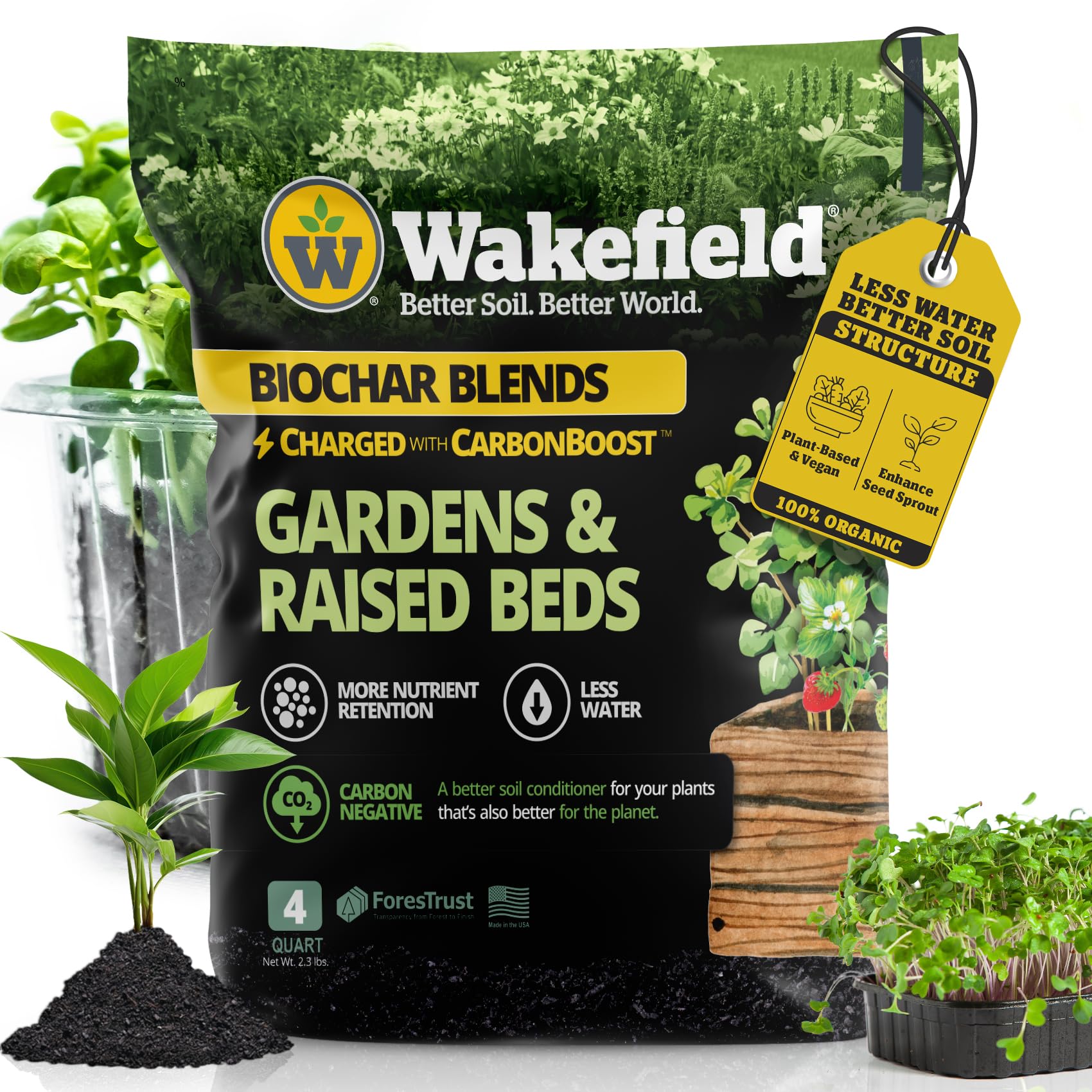
This 4-quart bag is tiny compared to the Coast of Maine Tomato & Vegetable Soil’s 20 quarts (a 5x volume gap), so you get a focused soil amendment rather than a complete fill mix. What you are actually buying is a concentrated biochar and probiotic blend designed to be mixed into your existing garden soil, not used as a standalone potting medium.
What you give up in volume you gain in water-saving performance. The brand claims the CarbonBoost technology can reduce watering needs by up to 50% thanks to the biochar’s porous structure, which acts like microscopic sponges holding moisture and nutrients in the root zone. One buyer with heavy clay soil said it “worked very well to boost my garden soil, which is quite clay,” and another noted “great for water retention in soil, lets plants need less watering.”
Grab this bag if you already have decent native soil (or a cheap bagged mix) and just want to improve its structure and water-holding ability without buying a premium full bag. If you are starting from scratch, you will need a larger base mix — but if you just want to fix clay or sand with a few shovels of powerful amendment, this is the most targeted tool for the job.
Why we’d pick it
- CarbonBoost technology is designed to reduce watering frequency by up to 50%
- Works as a targeted amendment for clay or sandy soil
- Bio-active probiotic and mycorrhizae blend boosts root growth
A few caveats
- Very small bag (4 Qt) — not a standalone fill mix
- Best used as a soil booster, not a complete planting medium
Understanding the Specs
Volume (Cubic Feet vs Quarts)
Soil mixes are measured by volume because moisture content makes weight unreliable. One cubic foot equals about 25.7 quarts. A 1.5-cubic-foot bag (like the FoxFarm Raised Bed Mix) fills a 4×4-foot raised bed about 6 inches deep. A 20-quart bag (like the Coast of Maine Tomato & Vegetable) is better for a few large pots or topping off existing beds. If you see quarts on the bag, divide by 25.7 to get cubic feet for easier comparison.
Mycorrhizae and Biochar
Mycorrhizae are beneficial fungi that attach to plant roots and extend their reach underground, helping roots absorb up to 10 times more water and minerals than they could alone. Biochar is a lightweight, charcoal-like material made from burned organic matter — its porous structure holds water and nutrients in the root zone so they do not wash away with the first watering. Together, mycorrhizae and biochar improve root health and reduce how often you need to fertilize and water.
FAQ
Can I use vegetable garden soil mix in containers?
How much vegetable garden soil mix do I need for a 4×4 foot raised bed?
What does OMRI listed mean on a soil bag?
Final Thoughts: The Verdict
Across the board, the vegetable garden soil mix winner is the Coast of Maine Castine Blend because it delivers the best combination of volume (2 cubic feet), organic richness (mycorrhizae, biochar, worm castings, kelp meal), and buyer satisfaction for raised beds and container gardens. If you want pour-and-plant convenience with a trusted brand name, grab the FoxFarm Raised Bed Planting Mix. And for budget-minded gardeners who need to fix native clay or sandy soil, the standout is the Wakefield Biochar Blend for its targeted, water-saving carbon-boost technology.