
Specs are compiled from manufacturer listings and verified buyer reviews and can change over time — please confirm the key details on the product page before buying.
Pea vines sprawl, tangle, and droop onto the soil where pods rot before you pick them — a good trellis lifts the whole plant off the ground so air flows, sun hits every leaf, and you harvest more peas per square foot without the mess. The trick is finding the right mesh size, frame height, and build quality that actually holds up under a full canopy of climbing peas.
I’m Rikta — the founder and writer behind Lawn Gear Lab. This guide is built by comparing the manufacturers’ published specifications and the patterns across verified customer reviews, so you get each pick’s real strengths and trade-offs instead of marketing spin.
Whether you work a small raised bed or a long row in the garden, the right support saves space and keeps your pea crop clean — here is what you need to know about choosing the best trellis for peas.
Quick Picks
- FOLLOOK 63×63 Cucumber Trellis for Raised Garden Bed — Best Overall
- yotoworth Cucumber Trellis 71″ H x 32″ W A-Frame — Top Performer
- Gardeneer by Dalen Trellis Netting 5′ x 60′ — Flexible Coverage
- Toolazy Trellis Netting 5 x 350 ft — Premium Coverage
- Toriexon Foldable Cucumber Trellis 48″ x 34″ — Compact & Quick
How To Choose The Best Trellis for Peas
Peas climb by curling tiny tendrils around anything thin — they need a mesh or grid they can grab, not a solid panel. Picking the wrong trellis means your vines slink to the ground or the whole structure tips over when the pods get heavy. Here are the three factors that matter most.
Mesh Size and Tendril Grip
Pea tendrils wrap best around openings around 2 to 7 inches. A 7-inch mesh like the Gardeneer netting gives vines room to weave through and makes picking pods easy. A 6-inch mesh works similarly. If the openings are much larger than 7 inches, young pea shoots may not find enough cross-strands to latch onto and will need a little guiding early on.
Height and Frame Shape
Shelling peas climb 4 to 6 feet; snow and snap peas usually top out around 3 to 5 feet. A trellis standing 48 to 71 inches tall covers most pea varieties. A-frame designs let you grow on both sides, doubling your yield in the same footprint. U-shape or arch trellises work well over a single raised bed or container.
Material and Weather Resistance
Nylon netting is lightweight at around 0.44 to 2 pounds and resists rot, but it needs a separate frame to stretch across. Steel frames with a polyethylene or powder-coated finish resist rust through rain and sun. Heavier frames around 6.4 pounds stay planted in wind, while lighter netting is easier to take down and store after the season.
Quick Comparison
| Model | Best For | Height | Mesh / Width | Weight | Amazon |
|---|---|---|---|---|---|
| FOLLOOK 63×63 U-Shape | Compact raised beds | 63 in | 63 in wide | 6.4 Pounds | Amazon |
| Gardeneer by Dalen Netting | Long garden rows | 5 ft | 7 in mesh, 60 ft long | 0.44 Pounds | Amazon |
| yotoworth A-Frame | Double-sided vertical growing | 70.8 in | 31.5 in wide | 2.7 Kilograms | Amazon |
| Toolazy Netting 5×350 ft | Large gardens & greenhouses | 5 ft | 6 in mesh, 350 ft roll | 2 Pounds | Amazon |
| Toriexon A-Frame Foldable | Quick seasonal setup | 48 in | 34 in wide | — | Amazon |
In‑Depth Reviews
1. FOLLOOK 63×63 Cucumber Trellis for Raised Garden Bed
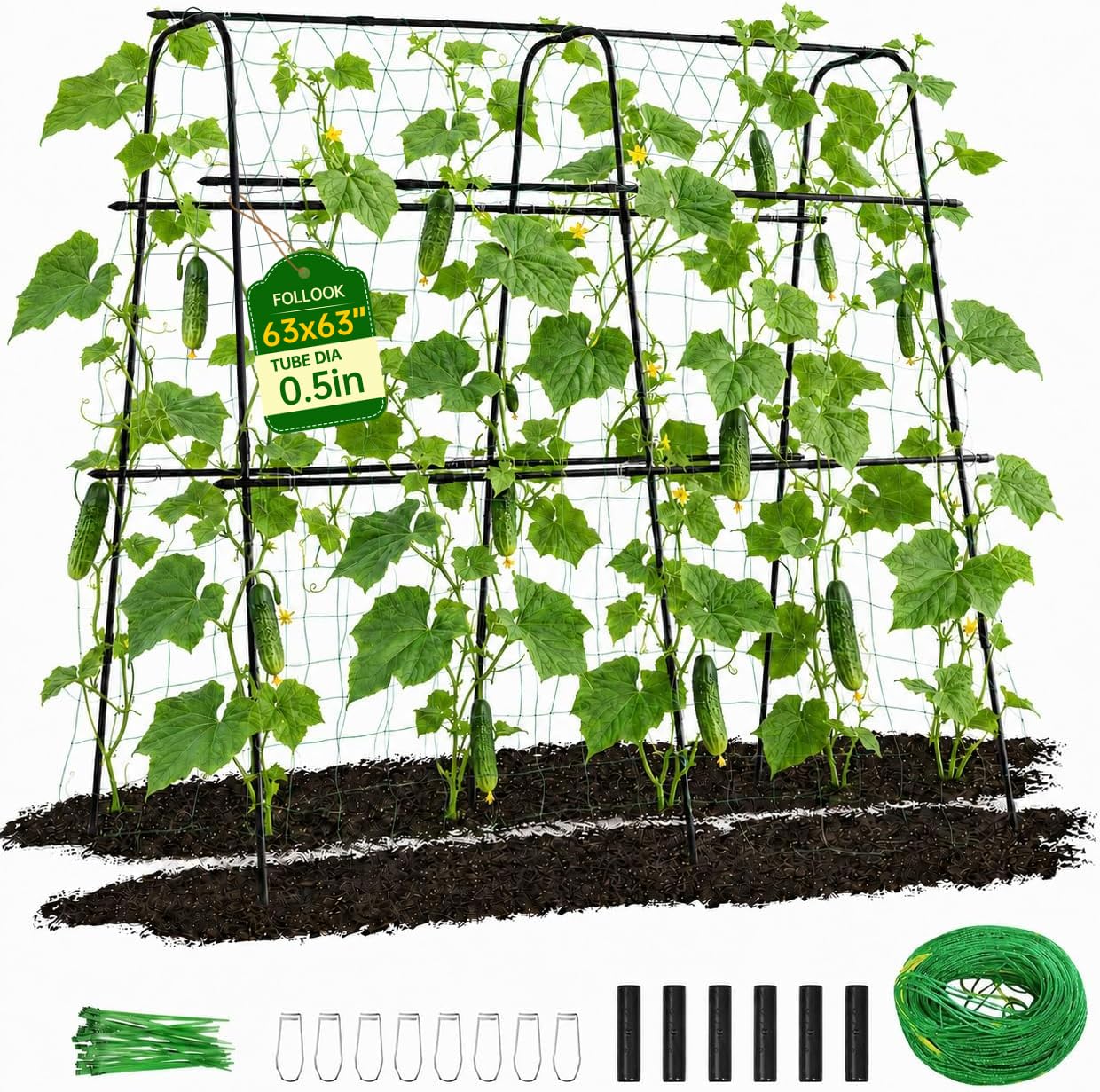
A 63-inch arch that stands firm without a single tool needed.
This FOLLOOK trellis gives your peas a broad 63 by 63-inch climbing arch with an adjustable base from 17 to 32 inches, so it fits different raised-bed widths without wobbling. The frame uses a thick 0.55-inch polyethylene-coated steel pipe that resists rust and weather — buyers report it stays sturdy through the season. Assembly snaps together by hand; no tools are required, and it disassembles just as easily for off-season storage.
At 6.4 pounds it is significantly heavier than the Gardeneer netting’s 0.44 pounds (a 6-pound difference), which means this frame stays put under a full pea canopy without needing extra stakes. The spacious arch shape lifts vines up for airflow and sunlight, which keeps pea pods cleaner and easier to reach. It works for cucumbers, tomatoes, beans, squash, and even grapes, making it a versatile investment beyond just peas.
The trade-off: you are limited to a single raised-bed footprint of 63 by 63 inches — it will not cover a long garden row like netting does. If you grow peas in a wide patch rather than a contained bed, this arch feels less flexible than a roll of trellis netting.
Why It Earns Top Billing
- Snap-together assembly, no tools needed
- Thick 0.55-inch rustproof steel tubing
- Adjustable base fits 17-32 inch beds
Room for Improvement
- Fixed 63×63 size limits row coverage
- Requires assembly and disassembly each season
Perfect for raised-bed growers: If you have a single bed or planter box and want a tool-free arch that outlasts the season, this is your anchor.
Not ideal for: Long rows or sprawling garden patches where a flexible netting would cover more ground for the same money.
2. yotoworth Cucumber Trellis 71″ H x 32″ W A-Frame
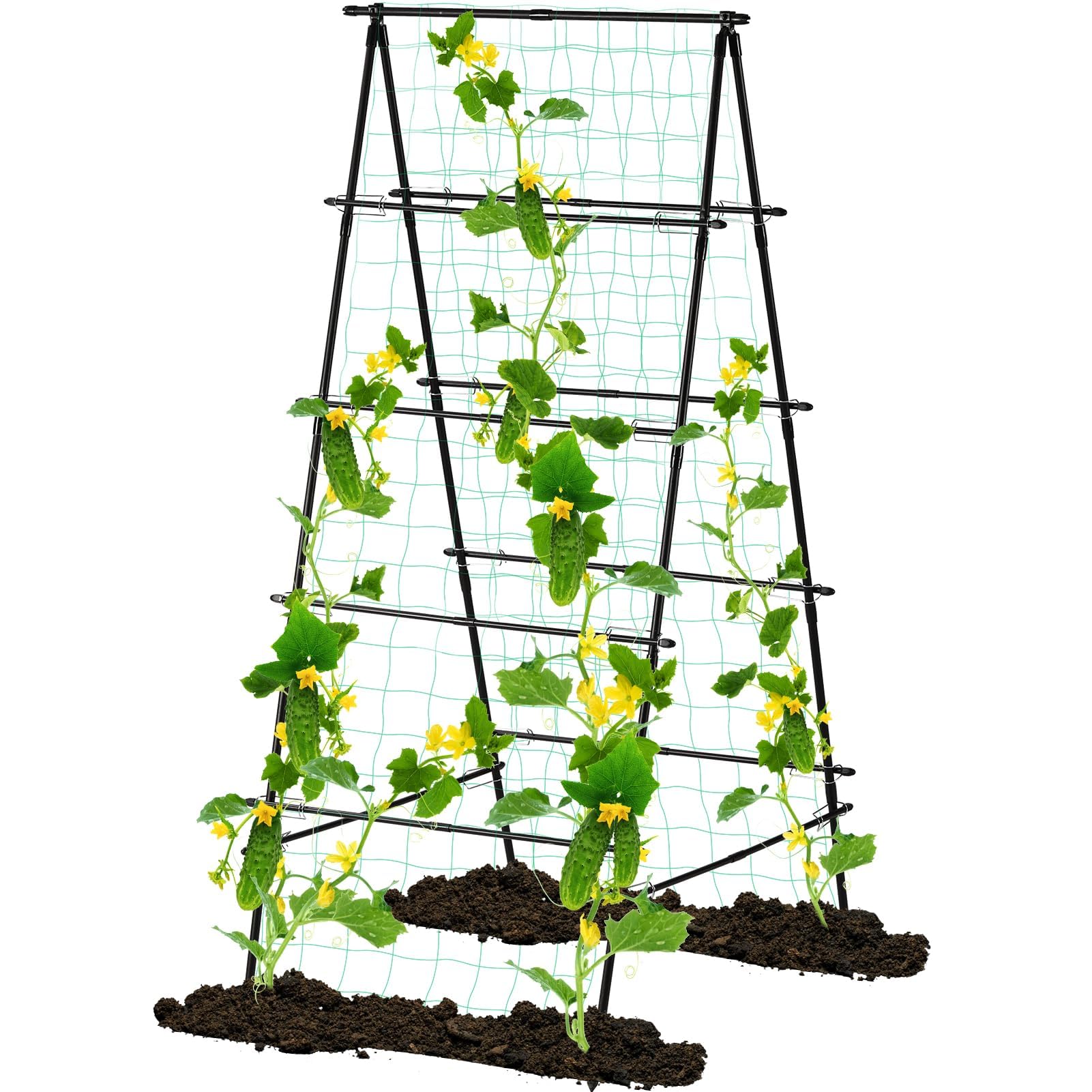
An A-frame that grows peas on both sides and held 30 watermelons.
This yotoworth trellis stands 70.8 inches tall with a 31.5-inch width, making it the tallest pick in this lineup — a full 22.8 inches taller than the Toriexon foldable frame. Pea vines love the extra height; shelling varieties can climb all the way up without topping out. The A-frame design lets you plant peas on both sides of the trellis, which doubles your growing space in the same footprint.
Owners mention they grew over 30 watermelons in a tiny area and the frame held them with no problem at all. That confidence extends to pea vines loaded with pods. The metal pipes have a PE coating (a plastic layer that shields against rust and weather) and textured surfaces that pea tendrils grip naturally. Assembly takes about 20 minutes using the included clips, and the pointed legs push straight into soil — no digging or hardware required.
The catch: a few buyers mention the connections can feel unstable without the clips, so you absolutely must use the provided clamps for a solid frame. If you lose them, the whole thing gets wobbly.
Double-sided advantage: Peas on one side, beans on the other — this A-frame makes the most of a small raised bed without crowding.
Honest heads-up: The clips are essential for stability; do not skip them during assembly.
Go for this if: You want maximum height and dual-sided growing in a compact footprint — perfect for peas plus a second crop in one season.
Look elsewhere if: You prefer a no-assembly-required netting that rolls out in seconds across a long garden row.
3. Gardeneer by Dalen Trellis Netting 5′ x 60′

A 60-foot roll of nylon netting that one buyer ran for 12 seasons.
This Gardeneer netting comes as a 5-foot by 60-foot roll of heavy-duty nylon with a 7-inch mesh opening. Pea tendrils grab the strands easily, and the large openings let you reach through to pick pods without peeling the netting off its frame. It weighs just 0.44 pounds, a fraction of what a steel frame weighs, so you can stretch it across a row of posts or attach it to a fence in minutes with zip ties or twine.
Customers note it lasted 12 years for heavy pickles and tomatoes — proof of the weatherproof nylon that resists tearing even under 60-pound loads. Unlike a rigid frame, this roll covers any length of garden you have: cut a 10-foot section for peas and save the rest for next season. Installation is tangle-free and requires no tools or assembly.
The downside: you need a separate support structure (conduit, PVC pipe, or wooden stakes) to hold the netting upright. It is not a stand-alone trellis. Also, one reviewer noted the actual dimensions ran slightly under the listed 5 by 60 feet — measure your row before cutting.
What Makes It a Workhorse
- 7-inch mesh is easy to harvest through
- Lasts years outdoors without rot or tears
- Covers any row length — cut to size
What You Should Know
- Needs a separate frame or poles to hold it
- Actual size may vary slightly from listed dimensions
Best for row gardeners: If you run long pea trenches and want a lightweight, reusable net that you can cut custom lengths for, this is a budget-friendly, long-lasting solution.
skip it if: You want a self-supporting freestanding trellis with no extra posts or stakes.
4. Toolazy Trellis Netting 5 x 350 ft

A 350-foot roll of soft nylon that covers multiple seasons in one buy.
The Toolazy netting is 5 feet wide and comes on a massive 350-foot roll, offering 1750 square feet of coverage — by far the largest quantity in this roundup. The 6-inch mesh is comparable to the Gardeneer’s 7-inch openings; pea tendrils climb through it naturally, and the soft nylon fibers are gentle on delicate pea stems. Buyers confirm the durable, heavy-duty nylon mesh supports climbing plants without sagging or tearing.
It is pre-wound on a cardboard reel that prevents tangling and makes cutting custom lengths straightforward — just unroll, snip, and mount on any frame with zip ties or clips. The nylon resists UV rays, chemicals, and weathering for multi-year outdoor use. Unlike the FOLLOOK steel arch that stays in one spot, this roll can cover a whole greenhouse wall or an entire row of raised beds.
The main consideration: like the Gardeneer netting, this is not a stand-alone trellis. You must provide posts, a PVC frame, or a fence to stretch it across. Also, the 350-foot roll is a lot of netting for a small pea patch — you may end up storing most of it for later seasons.
Long-term value: One 350-foot roll replaces disposable netting for years, especially if you grow peas, beans, cucumbers, and tomatoes across multiple beds.
Caveat: You need your own support structure; this is the netting, not the frame.
Reach for this if: You have a large garden or greenhouse and want one roll of soft, durable netting that lasts for multiple growing seasons without replacement.
Pass on this if: You only grow a few pea plants in a single raised bed — a smaller net or frame would waste less material.
5. Toriexon Foldable Cucumber Trellis 48″ x 34″

A foldable frame that pops open and stores flat after harvest.
This Toriexon trellis measures 48 inches tall by 34 inches wide in an A-frame design — the shortest frame here, sitting 22.8 inches lower than the yotoworth A-frame. That makes it a natural fit for shorter snow and snap pea varieties that top out around 3 to 4 feet. The steel wire frame has a green powder coating that resists rust, and one buyer mentioned after 2 years in Oregon weather it showed no rust, fading, or chipping.
Setup is as simple as unfolding the trellis, pushing the pointed legs into soil, and connecting two panels with the included spring connectors. The package also comes with U-stakes, twist ties, garden clips, and plant bags — more accessories than any other pick in this list. The foldable design means it collapses flat for storage between seasons, unlike the FOLLOOK arch which needs full disassembly.
The height limitation is the real trade-off. Tall shelling peas that reach 5 or 6 feet will outgrow this frame and start flopping over the top. Stick to compact pea varieties or use this for cucumbers and bush beans instead.
Why It Stands Out
- Folds flat for easy off-season storage
- Includes stakes, ties, clips, and plant bags
- Powder-coated steel resists rust and weather
Where It Falls Short
- 48-inch height limits use to short pea varieties
- Narrow 34-inch width suits small beds only
Best for compact gardens: If you grow snow or snap peas in a small raised bed and want an instant, store-flat trellis that comes with all the accessories, this is a no-fuss choice.
Not for tall growers: Full-height shelling peas need the extra 22 inches that the yotoworth A-frame provides.
Understanding the Specs
Mesh Size and Why It Matters for Peas
Pea tendrils wrap around strands that are roughly 2 to 7 inches apart. A 7-inch mesh like the Gardeneer netting gives vines room to weave through and lets your hand reach inside to pick pods. A 6-inch mesh works the same way. If the openings are much larger, young pea shoots may not find enough cross-strands to grab, so you will need to guide them early or add a couple of horizontal strings.
Height: Matching Trellis to Pea Type
Shelling peas climb 5 to 6 feet; snow and snap peas typically top out around 3 to 4 feet. A trellis like the yotoworth at 70.8 inches gives tall varieties room to grow without spilling over the top. The Toriexon at 48 inches is a better fit for shorter peas. Measure your pea seed packet’s mature height before choosing, or you will end up with vines drooping down the side of a too-short frame.
FAQ
What size mesh works best for pea tendrils?
Is a 48-inch trellis tall enough for peas?
Can I use cucumber trellis netting for peas?
Should I get an A-frame or a U-shape trellis for peas?
How do I install nylon trellis netting for peas?
Will a lightweight netting hold heavy pea vines?
Can I leave the trellis out in winter rain and snow?
How much trellis netting do I need for a row of peas?
What is the easiest trellis for peas with no assembly?
Final Thoughts: The Verdict
If you want one dependable pick, the trellis for peas winner is the FOLLOOK 63×63 because its tool-free assembly, thick 0.55-inch rustproof frame, and adjustable base make it the most practical all-in-one arch for raised beds. If you want to grow peas on both sides of a single frame, grab the yotoworth A-Frame — at 70.8 inches it is the tallest option here and reviewers confirm it holds heavy crops without issue. And for covering long garden rows or multiple beds with minimal fuss, the standout is the Gardeneer by Dalen netting, which one buyer used for 12 straight seasons.
How We Picked
We do not accept paid placement. Every pick is matched to a real buyer and a real use-case; we do not hands-on test units.
Sources & Methodology
Specifications: manufacturer listings and product documentation. Review insights: verified customer reviews, as of July 2026. Pricing: not shown on this page (it changes often); check the current price via the retailer link.
As an Amazon Associate, Lawn Gear Lab earns from qualifying purchases. This does not affect which products we feature.