
Watching prized oaks, maples, or fruit trees succumb to leaf spot, powdery mildew, or fire blight is disheartening, but the right formulation stops the spread and protects new growth from the inside out.
I’m Rikta — the co-founder and writer behind Lawn Gear Lab. I’ve spent countless hours cross-referencing active ingredient trials, comparing systemic vs. contact modes of action, and analyzing hundreds of verified owner reports to build a clear picture of which treatments actually deliver for trees of every size and species. The marketplace is crowded with concentrates, ready-to-use sprays, and granular preventatives, so I’ve focused on the real-world data that separates a temporary bandage from a genuine cure.
Whether you are fighting rust on a blackberry thicket or saving a century-old oak from anthracnose, this guide cuts through the marketing to find the best tree fungus treatment for your specific situation, based on disease type, tree size, and your tolerance for mixing and protective gear.
How To Choose The Best Tree Fungus Treatment
Selecting the right tree fungicide starts with a correct diagnosis and an honest assessment of the tree’s size, the disease’s severity, and whether you need a quick rescue or a season-long prevention program.
Active Ingredient Matters Most
Propiconazole and Myclobutanil (the active in Eagle 20EW) are systemic sterol inhibitors that move through the tree’s vascular system to protect new growth from the inside. Copper-based and neem oil products are contact-only and must coat every surface before the fungus germinates. For established infections on mature trees, a systemic is almost always the correct choice, while neem oil works well as a preventative on smaller ornamentals.
Formulation: Liquid Concentrate vs. Granular vs. Ready-to-Use
A 32-ounce concentrate like Quali-Pro Propiconazole treats thousands of square feet and is the most cost-effective option for large landscapes. Ready-to-use sprays (like Fertilome Liquid Systemic) eliminate measuring and are ideal for a few small trees. Granular products (The Andersons Prophesy) are applied with a spreader and require watering-in, making them best for lawn-based tree root zones where you want slow, sustained release.
OMRI Listed vs. Synthetic Chemistry
If you are treating fruit or nut trees that will be harvested, an OMRI-listed product like Monterey Complete Disease Control (Bacillus subtilis) or Bonide Neem Oil is allowed under organic standards. Synthetic fungicides like Eagle 20EW have pre-harvest intervals and may require protective equipment during application. Always check the label for the specific crop and the number of days between spraying and harvest.
Quick Comparison
On smaller screens, swipe sideways to see the full table.
| Model | Category | Best For | Key Spec | Amazon |
|---|---|---|---|---|
| Quali‑Pro Propiconazole 14.3 | Systemic Concentrate | Large trees & turf | 14.3% Propiconazole | Amazon |
| Eagle 20EW | Systemic Concentrate | Wide disease spectrum | Myclobutanil 20% | Amazon |
| Fertilome Triple Action | Contact Spray | Small fruit & ornamentals | Neem Oil 70% | Amazon |
| The Andersons Prophesy | Granular Systemic | Preventative lawn-tree care | 0.44% Propiconazole | Amazon |
| Bonide Neem Oil RTU | Contact Multi-Purpose | Organic pest + fungus | 70% Neem Oil | Amazon |
| Monterey Complete Disease Control | Biological / OMRI | Organic curative | Bacillus subtilis | Amazon |
| Fertilome Liquid Systemic | Systemic RTU | Quick, no-mix rescue | Propiconazole 1.55% | Amazon |
In‑Depth Reviews
1. Quali‑Pro Propiconazole 14.3, 32oz

Quali-Pro’s 14.3% Propiconazole is the benchmark concentrate for arborists and serious homeowners alike. The microemulsion formulation ensures excellent tank stability and thorough leaf and bark coverage, and the locally systemic mode of action moves into the tree’s tissue to protect new growth for two weeks or more per application. Owners report visible improvement in oak wilt, brown patch on St. Augustine, and orange rust on blackberries after just one or two sprays.
This is a professional-grade product that requires mixing with water and a decent pump or backpack sprayer. A 32-ounce bottle makes up to 60 gallons of spray solution, making it the most economical choice for properties with multiple large trees or large turf areas. Customer feedback repeatedly notes that it stops active infections faster than weaker retail brands, with many reporting recovery within 7 to 14 days of the first treatment.
The trade-off is safety: the label requires full PPE including a respirator, goggles, and chemical-resistant gloves. The concentrate also has a pungent odor during mixing, though the microemulsion formula is less volatile than older EC formulations. For anyone managing recurring fungal pressure on mature trees, this is the gold standard for curative and preventative control.
What works
- High 14.3% active concentration treats large areas economically
- Reliable curative action on brown patch, rust, and leaf spot
- Excellent tank-mix compatibility with other fungicides
What doesn’t
- Requires full PPE (respirator, goggles, gloves) for safe application
- Strong smell during mixing is unpleasant
- Heavy-duty packaging could include a measuring cap
2. Eagle 20EW Fungicide, 16oz

Dow AgroSciences’ Eagle 20EW delivers 20% Myclobutanil, a sterol-inhibiting systemic that provides curative and preventative control across an impressive range of diseases — over 15 including powdery mildew, rust, leaf spot, and anthracnose. Unlike contact fungicides, it works from the inside out, protecting new leaves and shoots as they emerge. Verified owners have used it successfully on red oaks, hydrangeas, peonies, stone fruit, and hardwood species with high efficacy against shot-hole disease and cedar-apple rust.
The concentrated emulsifiable concentrate mixes at rates as low as 0.7 ounces per 100 gallons for some turf applications, but for tree spraying the typical rate is 2–4 ounces per 100 gallons. A 16-ounce bottle goes a long way, making it surprisingly economical for its premium positioning. Many reviewers switched to Eagle 20EW after failing with copper-based products and found it rapidly stopped disease progression.
Like Quali-Pro, Eagle 20EW demands strict adherence to label safety: gloves, goggles, long sleeves, and a respirator are necessary during mixing and spraying. The mixing math (ounces per acre per 100 gallons) can be intimidating for casual users without a calibrated sprayer. Still, for a broad-spectrum systemic that trees actually absorb and distribute, this is a top-tier weapon against established infections.
What works
- Broad label covering over 15 fungal diseases
- Systemic action protects new growth from inside
- Concentrated formula lasts multiple seasons for most homeowners
What doesn’t
- Complex mixing ratios may confuse beginners
- No measuring cap included in the packaging
- Strong chemical requiring full protective equipment
3. Fertilome Triple Action, 32oz

Fertilome Triple Action is a ready-to-use neem oil formulation that combines fungicide, insecticide, and miticide in a single bottle — a practical choice for small orchards and home fruit trees where you are already fighting aphids, mites, and powdery mildew in the same season. The neem oil works by smothering fungal spores and insect eggs on contact, and it has a proven track record on apple trees, roses, vegetables, and herbs.
The 32-ounce ready-to-use format requires no mixing, so you can walk out to the tree and start spraying immediately. Owners report consistent results against rust, leaf spot, and powdery mildew when reapplied on a 7-to-14-day schedule, which is typical for contact products. The neem oil also provides residual protection against chewing insects, eliminating the need for a separate pesticide pass on many small trees.
The biggest limitation is that neem oil is a contact-only treatment — it cannot cure a systemic infection already inside the tree’s vascular tissue. It also requires thorough coverage of all leaf surfaces, including the undersides, which is time-consuming on larger trees. Users with apple trees noted the cost per application is rising, but for low-to-moderate fungal pressure on edible crops, this is a strong, pollinator-conscious option when applied at dawn or dusk.
What works
- Triple action controls fungus, insects, and mites in one spray
- Ready-to-use bottle eliminates measuring errors
- Safe for fruits, herbs, and vegetables up to harvest day
What doesn’t
- Contact-only action misses existing internal tree infections
- Requires thorough coverage every 7–14 days
- Price per ounce is higher than concentrated options
4. The Andersons Prophesy Propiconazole, 25lbs
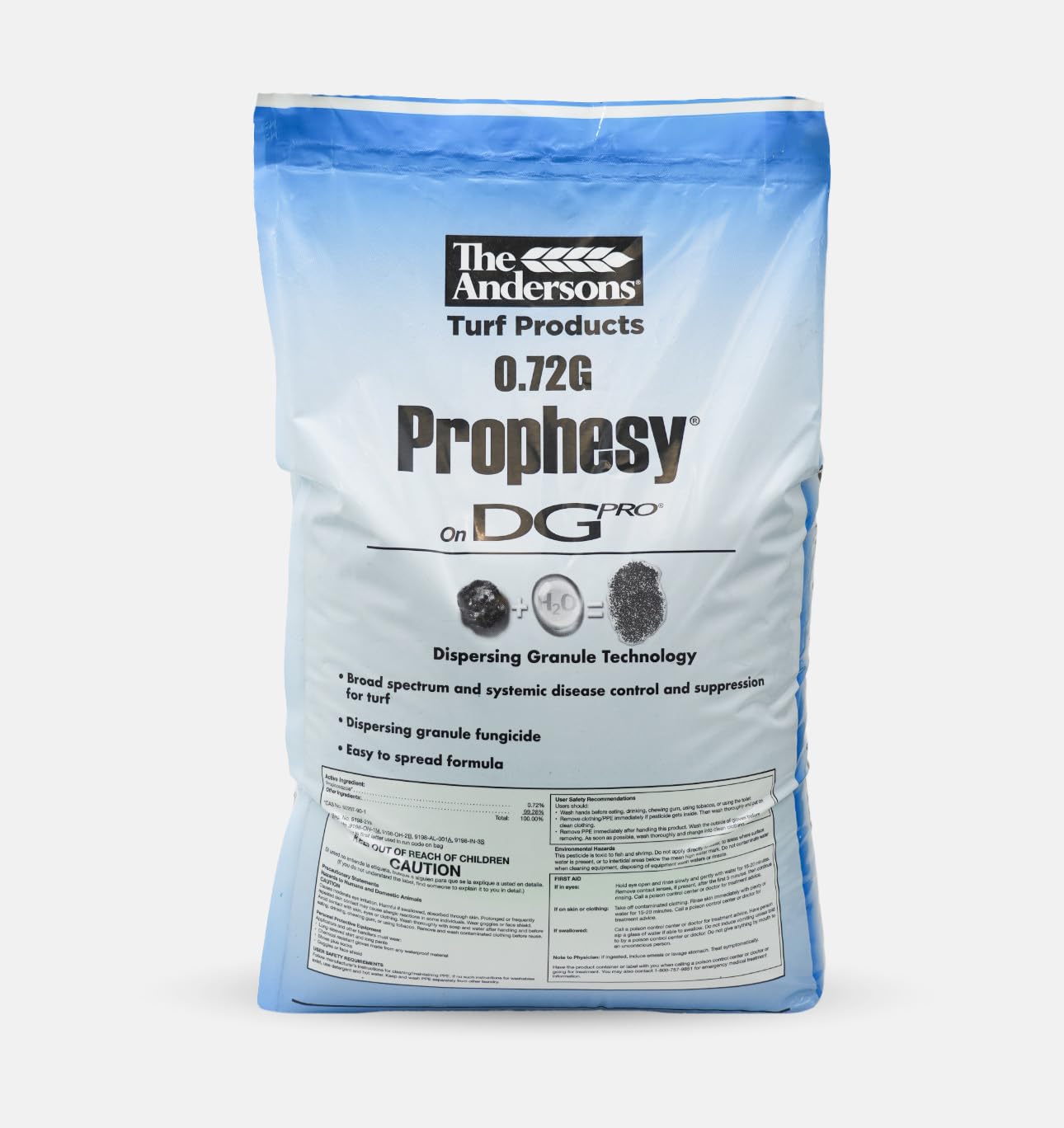
The Andersons Prophesy takes a fundamentally different approach: instead of spraying the leaves, you spread granules on the soil around the tree’s root zone, and the patented DG (Dispersion Granule) Technology releases propiconazole into the soil where roots absorb it systemically. This method is ideal for large properties where spraying every leaf on a 50-foot oak is impractical, and it provides season-long disease suppression as the tree takes up the fungicide through its root system.
Each 25-pound bag covers up to 10,000 square feet, making it the highest-coverage product in this lineup. Owners have used it successfully against necrotic ring spot, red thread, and dollar spot on lawns, with the benefit extending to trees growing in the treated turf area. The granular format is also far safer for the applicator — no inhalation risk, no mixing, and no PPE beyond gloves and a spreader.
The drawback is speed: granular uptake takes days to weeks, so this is a preventative or early-season maintenance product, not a rescue spray for an actively dying branch. A few reviewers found that severe infections required a liquid systemic first to stop the disease, then granular for long-term prevention. The price per bag is higher upfront, but considering the coverage area, it is one of the most economical options for preventative tree care over a large landscape.
What works
- Root-zone systemic uptake protects trees without spraying
- 25lb bag covers up to 10,000 sq ft — excellent value
- Safe, dust-free application with a standard spreader
What doesn’t
- Slow acting — not suitable for emergency rescue
- Requires watering-in for activation
- Large bag can be heavy to carry and store
5. Bonide Captain Jack’s Neem Oil, 128oz RTU
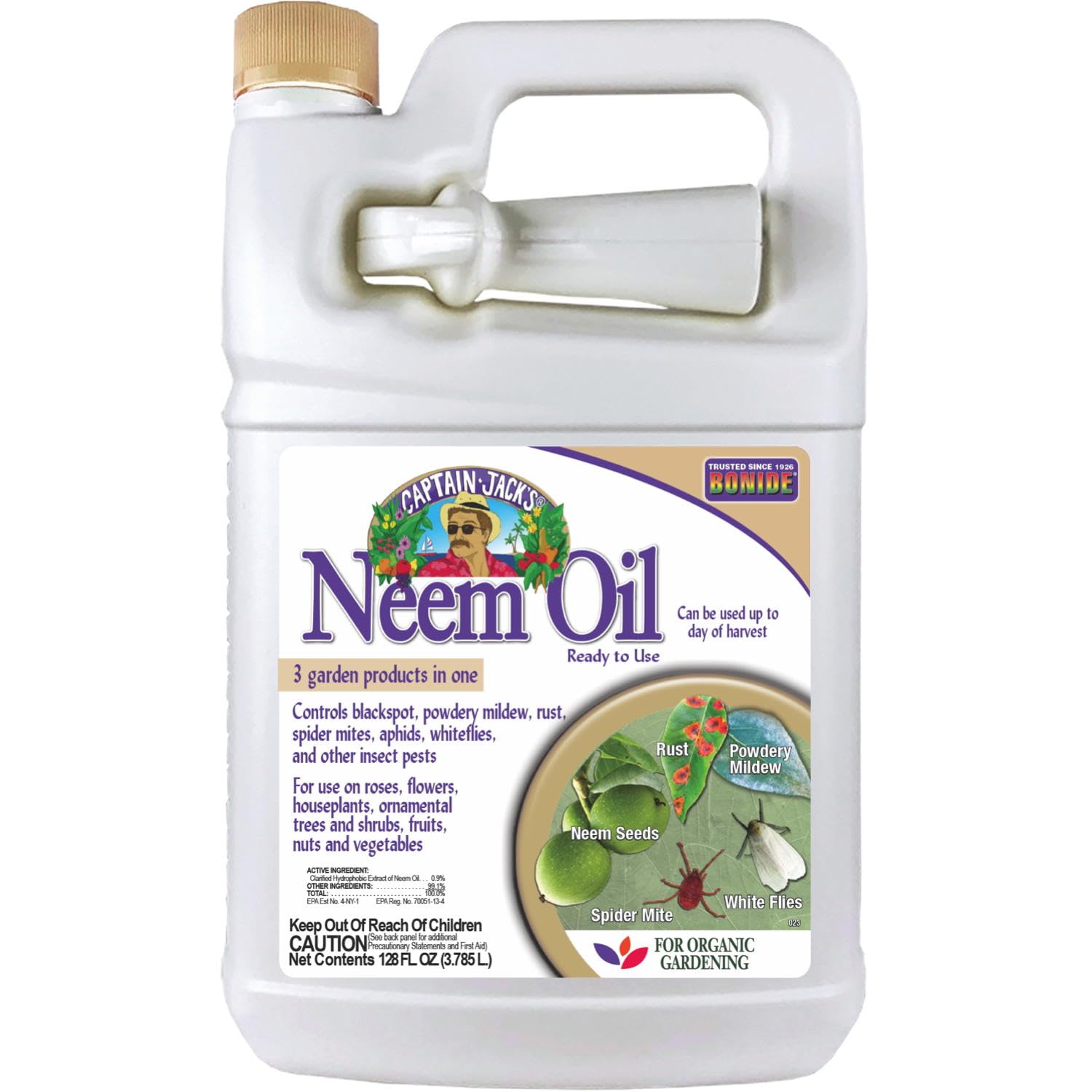
Bonide’s Captain Jack’s Neem Oil delivers 70% clarified hydrophobic extract of neem oil in a massive 128-ounce ready-to-use bottle, making it the largest-volume contact fungicide in this roundup. It covers common tree fungal issues like rust, powdery mildew, and leaf spot while simultaneously controlling spider mites, aphids, and whiteflies — a genuine multi-purpose tool for the organic gardener who wants one spray to handle multiple problems.
Because it is ready-to-use, you simply attach the included spray nozzle, shake, and apply. Owners report that it eliminates scale on indoor plants after two applications and dramatically reduces fungus gnat populations in seedlings. The light fresh scent (surprising for neem oil) makes it tolerable for use around outdoor living spaces, and it is OMRI-listed, so it meets organic standards right up to the day of harvest.
The 128-ounce volume is both a strength and a practical challenge — it is heavy at nearly 9 pounds and can be awkward to carry around the yard. Neem oil also works slowly, typically requiring two to three weekly applications before you see results on stubborn infections. For organic gardeners managing moderate fungal pressure on a mix of ornamentals, fruit trees, and vegetables, the sheer volume and triple-action coverage make this a smart, economical staple.
What works
- Huge 128oz ready-to-use bottle for broad coverage
- Controls fungus, insects, and mites organically
- OMRI-listed and safe to use until harvest day
What doesn’t
- Heavy 9-pound bottle is cumbersome to carry
- Slow acting — requires consistent reapplication
- Contact-only; cannot cure systemic tree diseases
6. Monterey Complete Disease Control

Monterey Complete Disease Control is a biological fungicide built around Bacillus subtilis, a beneficial bacterium that colonizes root hairs and leaf surfaces to competitively exclude disease-causing fungi and bacteria. Unlike copper-based products that can harm beneficial soil life, this OMRI-listed formula works with the tree’s natural microbiome. It is effective against powdery mildew, rust, leaf blight, brown rot, anthracnose, and gray mold on fruits, nuts, ornamentals, and trees.
Users in the humid south describe it as a lifesaver for tomato plants and peaches during rainy seasons, and the ability to apply it as both a foliar spray and a root drench gives it a unique dual-action advantage. The concentrate must be mixed with water, and a measuring spoon is bundled in the box — a small but thoughtful inclusion that reduces guesswork. Many organic growers have relied on it for three years running specifically for peach leaf curl and early blight prevention.
Biological products have inherent limits: they suppress and slow disease progression rather than delivering a knockout blow to advanced infections. A few reviewers found it only slowed down anthracnose on cucumbers and beans without eliminating it. For certified organic growers who need a curative option that complies with USDA NOP standards, this is the most effective biological tree fungicide available, but you must apply it early in the disease cycle for best results.
What works
- Biological action is safe for beneficial insects and soil life
- Can be used as foliar spray or root drench
- Comes with a measuring spoon for accurate mixing
What doesn’t
- Suppresses rather than eradicates advanced infections
- Requires early and consistent application schedule
- Smaller 16oz concentrate makes fewer gallons than synthetic options
7. Fertilome Liquid Systemic Fungicide II, 32oz RTU
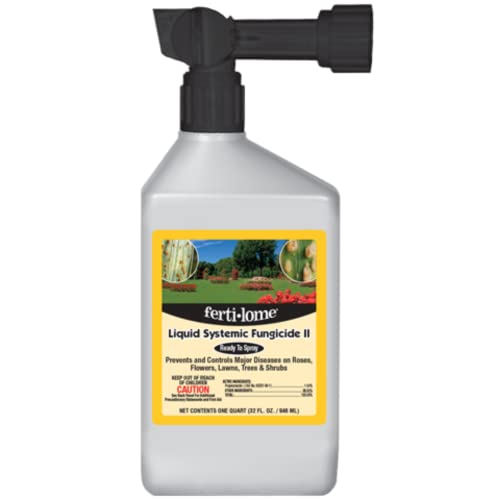
Fertilome’s Liquid Systemic Fungicide II takes the complexity out of tree disease treatment by offering a ready-to-use systemic spray that requires zero mixing or measuring. The active ingredient (a propiconazole-based systemic) penetrates leaf tissue and moves throughout the tree to control Take All Patch, Brown Patch, Dollar Spot, Leaf Spot, and fire blight. Owners have successfully saved mature Live Oaks from yellowing leaves with a single treatment and cured Crimson Maples of fire blight after three biweekly hose-end sprays.
For homeowners who own only a few small-to-medium trees and want the confidence of a systemic without the hassle of measuring concentrates, this is the most convenient entry point. The 32-ounce bottle is lightweight and easy to handle with one hand while spraying. Users consistently praise how simple it is — just point and spray to the point of runoff — and the results are typically visible within a week on active leaf diseases.
The obvious trade-off is price per gallon of active solution. Compared to a concentrate like Quali-Pro that makes 60+ gallons, the 32-ounce RTU bottle is significantly more expensive per treatment. Also, the ready-to-use format limits the total coverage area, so owners with multiple large trees or large orchards will run through bottles quickly. For the occasional user needing a no-fuss rescue spray for one or two infected trees, it delivers systemic protection without the learning curve.
What works
- True systemic action in a no-mix ready-to-use bottle
- Effective on fire blight, leaf spot, and Take All Patch
- Lightweight and easy to handle for one-handed spraying
What doesn’t
- Higher cost per gallon than concentrate options
- Limited coverage area per bottle
- Not practical for large trees or multiple trees
Hardware & Specs Guide
Systemic vs Contact Mode of Action
Systemic fungicides like Propiconazole and Myclobutanil are absorbed into the tree’s vascular system (xylem and phloem) and translocated to new growth, providing curative protection that lasts 14–21 days. Contact fungicides like Neem Oil and Copper remain on the leaf surface and must be reapplied every 7–14 days, especially after rain. For established tree diseases, systemic products are almost always more effective because they reach the infection inside the tissue.
Concentration and Dilution Rates
Active ingredient percentage directly dictates how much concentrate you need per gallon. Quali-Pro’s 14.3% Propiconazole typically mixes at 1–2 ounces per 5 gallons for foliar sprays. Eagle 20EW’s 20% Myclobutanil mixes at 0.7–4 ounces per 100 gallons depending on the disease. Granular products like The Andersons Prophesy deliver a much lower 0.44% Propiconazole by weight, relying on root uptake over time rather than immediate high-concentration contact.
Organic Certification and Harvest Intervals
OMRI-listed products (Monterey Complete Disease Control, Bonide Neem Oil) are allowed under USDA organic rules and have no pre-harvest interval if used per label. Synthetic systemic fungicides (Quali-Pro, Eagle 20EW) may have pre-harvest intervals of 14–30 days for fruit and nut trees. Always check the specific crop entry on the label — the interval can vary by tree species and by the part of the tree being harvested.
Application Equipment Requirements
Ready-to-use sprays (Fertilome Liquid Systemic, Bonide Neem Oil RTU) require only the included nozzle. Concentrates (Quali-Pro, Eagle 20EW) require a clean pump sprayer, backpack sprayer, or hose-end sprayer calibrated for dilution. Granular products require a broadcast or drop spreader. For full safety with synthetic concentrates, always wear an N95 or P100 respirator, chemical-resistant gloves, safety goggles, and long sleeves during mixing and spraying.
FAQ
How do I know if my tree has a fungal infection and not insect damage?
Can I use the same fungicide on all my trees and shrubs?
How often should I reapply a tree fungicide during the growing season?
What is the difference between curative and preventative tree fungicides?
Final Thoughts: The Verdict
For most gardeners, the best tree fungus treatment winner is the Quali‑Pro Propiconazole 14.3 because its high active concentration, broad label, and locally systemic action deliver reliable curative and preventative control for the best overall value per gallon of spray solution. If you want a no-mix systemic rescue for a few small trees, grab the Fertilome Liquid Systemic RTU. And for organic growers seeking a biological option that complies with USDA rules, nothing beats the Monterey Complete Disease Control for early-season suppression without synthetic chemistry.