
A job that starts with slicing through a single taproot can become a full-blown excavation when the wrong tool bends, snaps, or simply glances off the wood. That stubborn knot of roots gripping your planting bed, fence line, or old stump demands a blade geometry and handle leverage that a standard shovel or trowel cannot deliver. The difference between a 30-minute removal and a half-day struggle comes down to one choice: picking a tool built to cut, pry, and sever instead of just scooping dirt.
I’m Rikta — the co-founder and writer behind Lawn Gear Lab. I’ve spent countless hours researching root-removal tool specs, comparing steel alloys and handle lengths, and cross-referencing real-world owner feedback to identify which designs handle the most punishing soil conditions without failing.
This guide isolates the essential features of a capable root-removal tool — blade steel, edge style, weight distribution, and handle leverage — so you can confidently choose the best tool for removing roots that matches the scale of your project and your physical comfort.
How To Choose The Best Tool For Removing Roots
A root-removal tool must withstand concentrated force on a small contact area. The wrong design will either bounce off the root, dull immediately, or transfer painful vibration up your arms. Focus on these four specs to avoid a wasted purchase.
Blade Steel and Tang Design
Look for full-tang construction where the steel runs the entire length of the handle. Stainless steel offers corrosion resistance, but high-carbon or chrome-moly steel holds a sharper edge longer under the abrasive friction of soil and root fiber. A blade that is only spot-welded or epoxied into the handle will snap when you pry sideways on a thick root.
Edge Profile and Serration Pattern
Smooth, beveled edges slice cleanly through smaller roots and are easier to sharpen, while aggressive serrations grip and saw through woody material without slipping. For roots under half an inch, a sharp straight edge is sufficient. For roots thicker than an inch, a serrated section or a dedicated chopping blade (like a cutter mattock) saves significant effort.
Handle Length and Shock Absorption
Short handles (6 to 14 inches) offer precision for close work around planted beds but require you to kneel or bend. Long handles (36 to 68 inches) multiply leverage and let you stand upright, reducing back strain on deep roots. Fiberglass or rubber over-molded handles dampen vibration better than bare wood or metal.
Weight and Head Configuration
Lighter tools (under 2 pounds) are best for detail work and prolonged use without fatigue. Heavier tools (5 pounds and up) deliver momentum-driven blows that shatter thick roots and compacted soil. Dual-head designs combine a cutting blade with a mattock or tamping plate, letting you switch between chopping and prying without switching tools.
Quick Comparison
On smaller screens, swipe sideways to see the full table.
| Model | Category | Best For | Key Spec | Amazon |
|---|---|---|---|---|
| Bully Tools 68″ Digging Bar | Digging Bar | Heavy stump and rock removal | 16.2 lb solid steel, 1″ diameter | Amazon |
| Fiskars Pro IsoCore Garden Pick | Garden Pick | Chopping thick roots in clay soil | 5 lb head, IsoCore shock control | Amazon |
| Truper 5 lb Cutter Mattock | Cutter Mattock | Dual-purpose digging and root chopping | 5 lb forged steel, 36″ fiberglass handle | Amazon |
| Root Slayer 22611 Edger | Root Edger | Clean lawn borders and shallow roots | Carbon steel half-moon blade, inverted V tip | Amazon |
| Lesche Digging Tool | Hand Digger | Precision digging and metal detecting | 7″ chrome-moly steel blade, serrated edge | Amazon |
| Nisaku NJP6510 Hori-Hori Knife | Hori-Hori Knife | Versatile weeding and root slicing | 7.25″ stainless steel, inch-marked blade | Amazon |
| Husqvarna Carpenter Axe | Carpenter Axe | Precision limbing and root carving | 2 lb Swedish steel head, 20″ hickory handle | Amazon |
In‑Depth Reviews
1. Bully Tools 68″ Steel Tamping Digging Bar
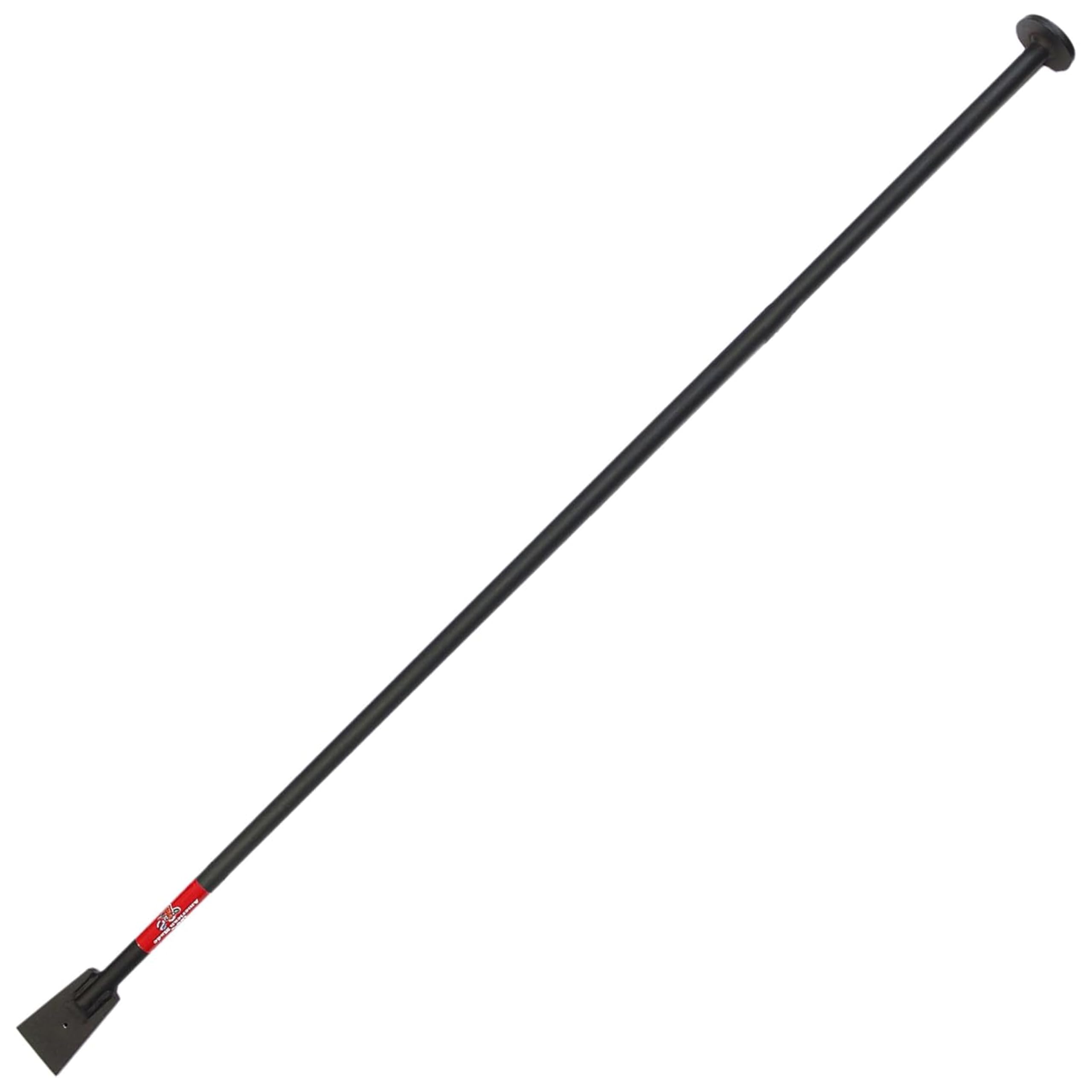
The Bully Tools digging bar is a 68-inch solid steel spike with a chisel end on one side and a flat tamping plate on the other. At 16.2 pounds, this is a momentum-driven tool — you lift it and let gravity do the work of driving the chisel through thick roots, compacted clay, and even small rocks. The 1-inch diameter shaft provides enough stiffness to pry out stumps without bending, and the powder-coat finish resists rust when left in damp soil between uses.
Owners consistently report cutting through roots up to 3 inches thick in a single drop, and the flat tamping end is useful for compacting backfill around fence posts or pavers. The length gives a tall user full standing leverage, eliminating the need to kneel or hunch. Several reviewers mention that the bar flexes slightly under extreme prying force but never takes a permanent bend after years of heavy use in rocky ground.
The main downside is the raw weight — this tool is tiring to handle for more than 20 minutes of continuous work, and the all-steel construction transmits cold in winter and vibration directly to the hands. Some users also note that the chisel tip arrives moderately sharp and benefits from a quick file touch-up for cleaner root cuts. It is not a precision tool, but for demolition-scale root removal, it is unmatched.
What works
- Penetrates hard clay and thick roots with minimal effort using gravity and weight.
- Dual-ended design adds tamping functionality for post-setting and backfill work.
- Made in USA from solid American steel — no welds or joints to break.
What doesn’t
- Extremely heavy — fatiguing for extended sessions or users with less upper body strength.
- Bare steel handle offers no vibration dampening; gloves are essential.
- Chisel edge requires sharpening out of the box for optimal cutting performance.
2. Fiskars Pro IsoCore Garden Pick

The Fiskars Pro Garden Pick combines a 5-pound forged steel head with a 36-inch handle that incorporates the IsoCore shock control system. The textured rubber grip and flared base keep your hands from sliding during overhead swings, while the dual-layer handle construction absorbs twice the vibration of a standard wood handle. The pick end is pointed for breaking up hard soil, and the broad flat edge chops through surface roots and compacts bedding soil.
Owner feedback highlights the pick’s effectiveness on dense clay soil that would normally require a mattock, with the IsoCore system making a noticeable difference in hand and elbow fatigue after an afternoon of digging. The alloy steel head holds its edge well against abrasive soil, and the riveted attachment ensures the head won’t loosen over time. Several users mention that the 36-inch length is comfortable for average-height users but slightly short for anyone over 6 feet tall.
The flat chopping edge comes blunt from the factory — it is designed for splitting and prying rather than slicing, so it does not cut roots as cleanly as a sharpened mattock blade. Users who need a razor-sharp root cutter will need to grind the edge themselves. The weight (5 pounds) is manageable for most adults but will wear out inexperienced users quickly if they try to power through large root networks without letting the tool’s momentum do the work.
What works
- IsoCore handle drastically reduces vibration transfer to hands and elbows.
- Balanced 5-pound head delivers strong blows without excessive user effort.
- Riveted steel head attachment resists loosening under repeated impact.
What doesn’t
- Flat edge is blunt from factory; needs grinding for clean root cutting.
- 36-inch handle is short for tall users, reducing leverage and requiring more bending.
- Hefty for casual users; fatigue sets in during prolonged overhead swings.
3. Truper 5 lb Cutter Mattock, 36-Inch
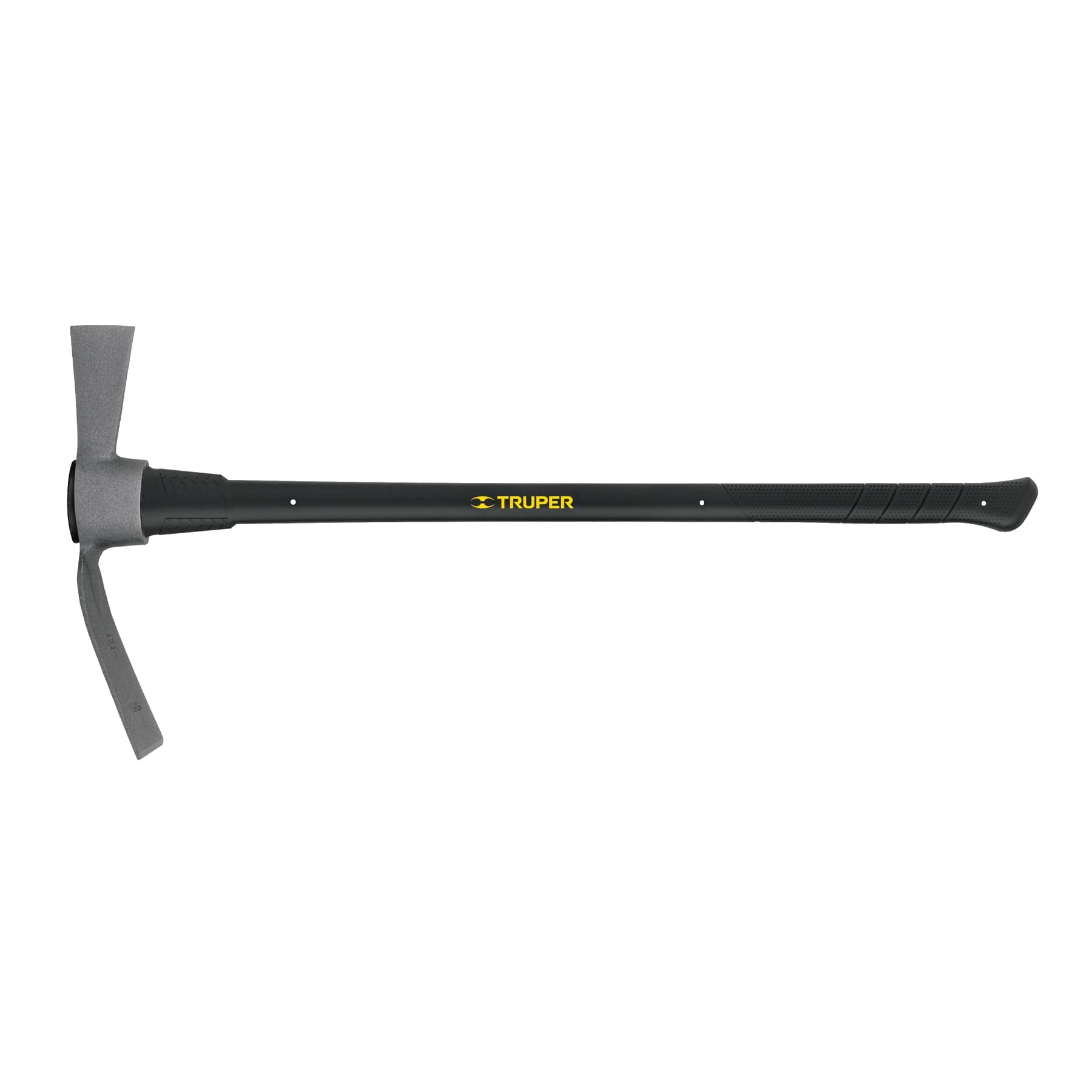
The Truper Cutter Mattock pairs a sharp vertical cutter blade with a wide horizontal mattock on a 36-inch fiberglass handle with a shock-absorbing grip. The 5-pound forged high-carbon steel head is designed for switching between chopping roots with the cutter edge and breaking up or scooping soil with the mattock side. The fiberglass handle will not rot, warp, or splinter like wood, and the rubber grip dampens the sting of hard impacts.
Reviews from contractors and landscapers consistently describe this tool as a “beast” for clearing palm roots, digging through hard red clay, and cutting roots up to 2 inches thick with a single swing. The longer handle provides substantial prying leverage when working the cutter blade under a root crown. Several users note that the cutter edge arrives decently sharp but benefits from a quick grinding session to reach peak performance. The mattock side is wide enough to move decent amounts of soil between root-chopping passes.
The main drawbacks are weight-related — 7.6 pounds total makes this a tiring tool for overhead use, and the head-heavy balance can cause the tool to wobble in the hands of smaller users. Some owners report that the mattock blade bent slightly after repeated prying on deep roots, though the steel straightened back without cracking. The plastic retention ring at the head-handle junction has sharp edges that can cut skin if not filed down.
What works
- Dual-head design eliminates the need to switch between a pick and a hoe or shovel.
- Fiberglass handle is weatherproof and resists splintering and rot.
- Cutter blade drives deep into hard soil and severs roots up to 2 inches thick.
What doesn’t
- Heavy overall weight (7.6 lbs) causes fatigue during prolonged use.
- Mattock blade can bend under extreme prying pressure on deep roots.
- Sharp plastic edges at head junction require filing for safe handling.
4. Root Slayer 22611 Serrated Garden Edger

The Root Slayer Edger uses a half-moon carbon steel blade with an inverted V cutting tip and aggressive serrated teeth to slice through turf, compacted soil, and shallow roots while creating clean lawn borders. The 39-inch fiberglass shaft and ergonomic grip let you stand upright while pushing the blade into the ground, making it ideal for defining garden bed edges along sidewalks and driveways without a gas-powered trimmer.
Customer reviews highlight how the inverted V tip bites into the soil immediately instead of skidding across the surface, and the serrated edge chews through thin surface roots that would stop a standard edger blade. The powder-coated finish resists rust, and the 13-gauge steel is thick enough to withstand repeated stomping without bending. Many owners note that the tool is heavier than budget edgers (4.8 pounds), which helps it penetrate but can be tiring for smaller users during long edging sessions.
The primary limitation is that the Root Slayer is a specialized edging tool — it works brilliantly for slicing through shallow roots along borders but is not designed for digging up deep taproots or stump removal. The blade width (10 inches) limits its use to creating and maintaining edges rather than excavating. Some users find the weight distribution handle-heavy, which reduces control on steep or uneven terrain.
What works
- Inverted V tip prevents blade from skidding on hard or root-filled soil.
- Aggressive serrations cut through shallow roots that stop standard edgers.
- Long fiberglass handle allows upright use, reducing back strain during edging.
What doesn’t
- Not designed for deep root removal or stump excavation.
- Heavier than basic edgers; can cause fatigue during extended use.
- Weight distribution feels handle-heavy, reducing control on slopes.
5. Lesche Digging Tool & Sod Cutter

The Lesche Digging Tool is a compact hand digger with a 7-inch blade made from chrome-moly steel — the same alloy used in high-end firearm barrels. The blade features a serrated edge on one side for sawing through roots and a straight edge on the other for clean plug cuts. A rubber handle and a sturdy belt sheath are included, making this a favorite among metal detectorists who need a portable, discreet tool for extracting finds from root-laced soil.
Owner reviews consistently praise the tool’s ability to withstand extreme abuse — users report standing on the blade or prying it sideways against rocks without bending or breaking. The chrome-moly steel holds a sharp edge far longer than standard stainless steel, and the serrations grip roots aggressively without stripping. The compact size (12 inches overall) fits easily into a backpack or tool belt, and the included sheath makes carry safe and convenient.
The downsides center on the handle ergonomics. The rubber grip is narrow and smooth, causing it to slide in the hand when wet or muddy. Some users replace the handle with a larger aftermarket grip or wrap it with tape for better purchase. Additionally, the 7-inch blade length limits the tool to shallow root work — it excels at cutting small roots in topsoil but lacks the reach for deep taproots or thick stump networks. The right-handed serration orientation may feel awkward for left-handed users.
What works
- Chrome-moly steel is exceptionally tough and holds a sharp edge under heavy use.
- Serrated edge saws through roots cleanly without binding or stripping.
- Compact and lightweight with a belt sheath for easy carry during metal detecting or hiking.
What doesn’t
- Rubber handle is narrow and slippery when wet; aftermarket grip upgrade recommended.
- Blade length (7 inches) is too short for deep root systems or stump removal.
- Serrated edge is oriented for right-handed users; lefties may find it awkward.
6. Nisaku NJP6510 Hori-Hori Knife

The Nisaku Hori-Hori knife is a traditional Japanese digging and weeding tool featuring a 7.25-inch stainless steel concave blade that is beveled on one edge and serrated on the opposite edge. Inch marks are engraved along the blade for precise planting depth, and the full-tang construction with wood scales provides a sturdy foundation for prying up deep taproots. The included hard plastic sheath allows safe transport in a tool bag or belt loop.
User reviews highlight the knife’s surprising strength — the full-tang design and thick stainless steel resist bending even when used to pry out stubborn roots in heavy clay soil. The smooth edge slices through smaller roots cleanly, while the serrated side handles slightly thicker material. The concave blade shape helps scoop soil like a small trowel, and the inch markers are genuinely useful for bulb planting and seed depth. Several owners note that the knife arrives sharp enough for immediate use.
The main complaints revolve around the sheath — it holds the knife securely, but some users find the retention too tight, making it difficult to draw the knife quickly with one hand. The wood handle, while aesthetically pleasing, can become slippery when wet and lacks the ergonomic contouring of modern rubberized grips. The 6-inch handle is also on the short side for users with larger hands, reducing leverage during deep prying motions.
What works
- Full-tang stainless steel construction provides excellent strength for prying and digging.
- Dual edge (smooth and serrated) handles both slicing and sawing root tasks.
- Inch markings on the blade allow accurate depth control for planting and seeding.
What doesn’t
- Sheath is very tight, making one-handed draw difficult in the field.
- Wood handle becomes slippery when wet; lacks ergonomic shaping for large hands.
- Short handle limits leverage for deep taproot prying compared to long-handled tools.
7. Husqvarna 596271201 20 in. Wooden Curved Carpenter Axe
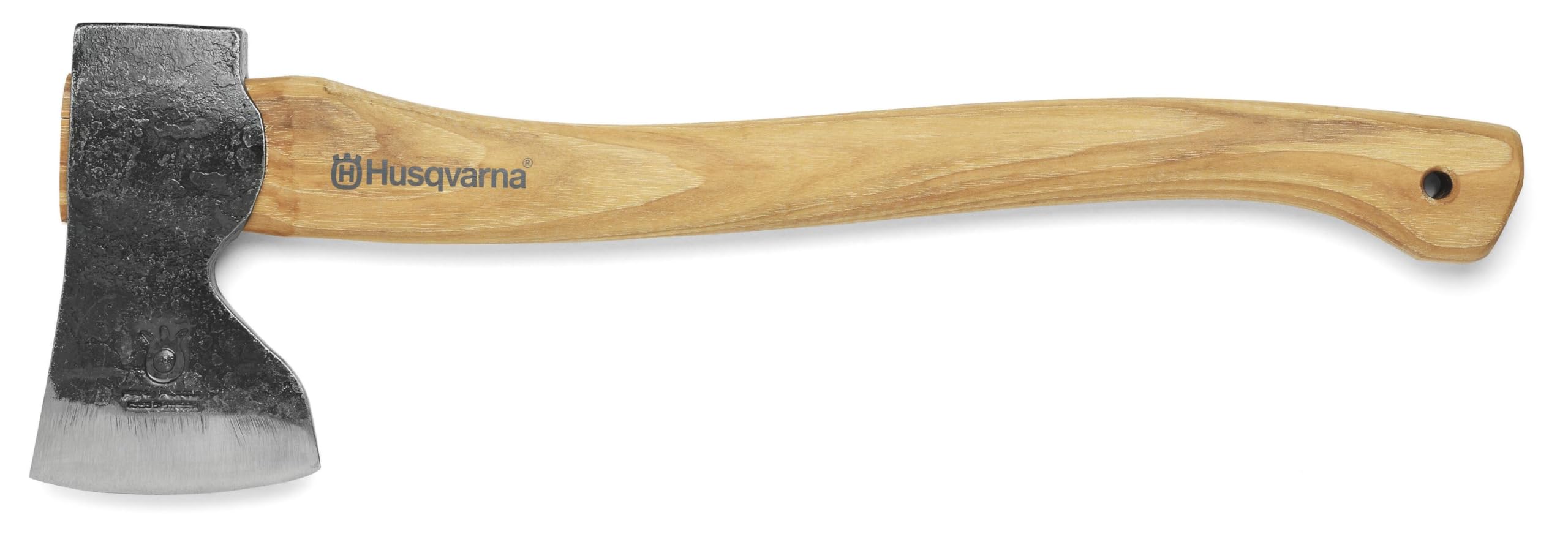
This Husqvarna carpenter axe features a hand-forged Swedish steel head weighing 2 pounds on a 20-inch American hickory handle. The straight cutting edge is ground for fine carpentry work — shaping wood, limbing small branches, and carving — but its thin profile and precise edge geometry also make it effective for slicing through exposed roots when clearing brush or preparing firewood. A leather edge cover protects the blade during transport and storage.
Owner reviews spanning several years of use on tree farms and campsites describe the axe as a superb tool for detail work — wedging, limbing, and carving — but emphasize that it is not designed for heavy chopping or splitting. The thin head lacks the mass to drive through thick hardwood logs, and the short handle limits swing momentum. The hickory handle is selected for grain orientation, though some units arrive with less-than-ideal grain runout that may affect long-term durability.
The biggest drawbacks are the out-of-box condition and the learning curve. Many users report that the edge is sharp enough for light use but requires honing to achieve the razor finish expected for fine carpentry. Some units have minor cosmetic imperfections in the handle or head alignment that need filing and sanding. The 2-pound head is light enough for all-day carry but lacks the inertia needed for heavy root chopping — this is a precision tool, not a demolition tool.
What works
- Swedish steel holds a fine edge well and is easy to sharpen to a razor finish.
- 20-inch hickory handle is well-proportioned for one-handed limbing and detail cuts.
- Leather edge cover protects the blade during transport and storage.
What doesn’t
- Not designed for heavy root chopping or splitting; thin head lacks momentum.
- Out-of-box edge is usable but needs honing for precision carpentry work.
- Some units have minor handle grain or head alignment issues requiring tuning.
Hardware & Specs Guide
Blade Steel Hardness and Toughness
Stainless steel (like the Nisaku’s 420-grade) resists rust but may dull faster in abrasive soil. Chrome-moly steel (used by Lesche) offers superior edge retention and impact resistance, making it ideal for tools that endure sideways prying and rock contact. High-carbon steel (Truper, Fiskars) balances hardness with the ability to be re-sharpened easily in the field. For tools weighing over 5 pounds, the steel must be thick enough to avoid cracking under the concentrated force of a swing — look for head thicknesses of at least 1/4 inch at the blade edge.
Handle Length and Leverage Ratios
A handle length of 36 inches provides a mechanical advantage of roughly 6:1 over a 6-inch hand tool, meaning you can apply six times more prying force at the blade tip for the same arm effort. This is critical when working against deep taproots that resist straight pulling. Fiberglass handles (Truper, Root Slayer) are stiffer than wood and resist environmental degradation, while hickory handles (Husqvarna) offer natural vibration dampening but require periodic oiling. Rubber over-molds (Fiskars) reduce slip and further isolate shock.
FAQ
What is the best tool for removing thick tree roots from soil?
Should I choose a serrated or straight edge for root cutting?
Can a standard shovel work for removing roots?
How do I maintain a root removal tool to prevent rust?
Final Thoughts: The Verdict
For most gardeners and homeowners facing moderate to heavy root challenges, the tool for removing roots winner is the Bully Tools 68″ Digging Bar because its solid steel construction and gravity-assisted cutting make quick work of thick roots without requiring heavy swinging or bending. If you need a more balanced dual-action tool for chopping roots and digging soil in the same pass, the Truper Cutter Mattock delivers professional-grade versatility. And for precise detail work around established plants and shallow borders, the Nisaku Hori-Hori Knife offers the control and edge retention needed to extract roots without disturbing surrounding soil.