
Trying to carve a clean line between your lawn and flower bed with a flat spade is a recipe for crooked trenches and sore knees. The dedicated manual edger, however, is purpose-built to sink a serrated half-moon blade straight down, chop through sod and shallow roots, and leave a crisp, vertical wall that keeps grass from invading your perennials.
I’m Rikta — the co-founder and writer behind Lawn Gear Lab. I’ve spent countless hours cross-referencing blade metallurgy, handle ergonomics, and foot-plate leverage ratios across dozens of border edgers, then cross-checking those specs against real owner feedback to separate the tools that glide from the ones that bounce off clay.
The right selection of steel, handle length, and blade geometry defines a tool for edging flower beds that turns a chore into a satisfying one-stroke finish.
How To Choose The Best Tool For Edging Flower Beds
Not all manual edgers are created equal. The three specs that separate a one‑pass winner from a tool that leaves a ragged trench are blade design, handle length, and foot‑plate construction.
Blade Design: Serrated vs. Straight Edge
A serrated half‑moon blade saws through grass roots and compacted soil rather than relying solely on downward pressure to shear them. Straight‑edge blades force you to stomp hard and rock the tool, which can crack dry clay and leave an uneven cut. For flower‑bed borders where shallow roots run thick, aggressive teeth are a decisive advantage.
Handle Length and Grip Ergonomics
A 40‑inch handle lets you stand upright while cutting, shifting the work from your lower back to your legs and shoulders. Look for a T‑shaped or padded D‑grip that gives you a secure hold for rocking and levering motions. Shorter handles (under 36 inches) force you to bend, which accelerates fatigue during longer edging sessions.
Foot‑Plate Size and Stance
A wide foot plate—ideally 5 inches or more across—distributes your stepping force evenly and prevents the blade from twisting mid‑cut. The step surface should be textured or raised to give your boot sole a stable purchase, especially when edging after a rain or on a sloped border.
Quick Comparison
On smaller screens, swipe sideways to see the full table.
| Model | Category | Best For | Key Spec | Amazon |
|---|---|---|---|---|
| Radius Garden Pro-Lite | Premium | Ergonomic leverage on heavy clay | Carbon steel blade, 9×5 in | Amazon |
| Root Slayer XL Edger | Premium | Deep root penetration, tall gardeners | 52.5 in shaft, 10×6 in blade | Amazon |
| CKLT One-Piece Edger | Mid-Range | Seniors & petite users | Spring steel blade, 40 in | Amazon |
| BARAYSTUS Height Adjustable | Mid-Range | Cost‑conscious, adjustable height | Cast iron, 7.9 in wide | Amazon |
| Colwelt Manual Edger | Mid-Range | Deep 5.5 in cutting depth | V‑shape serrated, 5.5 in depth | Amazon |
| Byhagern Professional Edge | Entry-Level | Budget bundle with shears & gloves | Half‑moon saw‑tooth blade | Amazon |
| AMES Saw-Tooth Border Edger | Entry-Level | Light occasional use on small beds | 15‑gauge serrated, 8.9 in wide | Amazon |
In‑Depth Reviews
1. Radius Garden 25602 Pro-Lite Carbon Steel Edger

The Radius Garden Pro-Lite combines a heat‑treated carbon steel blade that measures 9 x 5 inches with a fiberglass shaft that absorbs shock rather than transferring it into your wrists. The extra‑wide elevated forward step gives you a stable platform to drive the blade deep into clay or sod without the twisting that plagues narrow foot‑plate designs. Owners consistently report that the blade stays sharp through multiple seasons and cuts clean vertical walls with minimal rocking.
The ergonomic donut handle is the standout feature here — it lets you grip from any angle, which is especially useful when you are edging around existing plant roots or curved bed borders. The bright green shaft is easy to spot among ground cover, and the 40‑inch overall length keeps you standing tall. A quick rinse after use is all the maintenance the carbon steel requires.
Where this tool truly earns its spot at the top is in leverage. The elevated step combined with the fiberglass shaft creates a mechanical advantage that makes deep cuts feel lighter than they are. For gardeners who face heavy soil or who want professional‑grade borders without power equipment, this is the premium pick that pays for itself in saved effort.
What works
- Extra‑wide elevated step transfers weight efficiently
- Fiberglass shaft dampens vibration and resists flex
- Donut grip allows multi‑angle handling for curved beds
What doesn’t
- Blade could arrive slightly dull from the factory; a quick file pass fixes this
- Not ideal for rock‑filled soil without pre‑digging
2. Root Slayer 22711 XL Serrated Garden Edger

The Root Slayer XL is built for tall gardeners and deep‑rooted invasions. Its 52.5‑inch fiberglass shaft is the longest in this roundup, letting you stand nearly vertical while the 10 x 6‑inch tempered mid‑carbon steel blade bites into the ground. The inverted V‑shaped tip with aggressive serrated teeth is explicitly designed to sever taproots and fibrous weed mats without stalling.
The blade is noticeably heavier than the competition — the tool weighs 5 pounds — and that mass works in your favor once you get a rhythm going. The reinforced fiberglass shaft and soft, non‑latex grip provide stability, but some shorter users have found the weight tiring over a full afternoon. Owners emphasize that this is not a tool for casual flick‑and‑cut work; it rewards deliberate, full‑body strokes.
For creating new flower‑bed borders or reclaiming overgrown edges where invasive grass has built up a thick root layer, the XL’s extra length and blade mass let you cut deeper with each step. The downside is a noticeable arm workout, but the end result — a crisp, uniform trench — justifies the effort for serious landscapers.
What works
- Extra‑long shaft reduces bending for tall users
- Serrated inverted‑V blade chews through thick roots
- Reinforced fiberglass handle feels indestructible
What doesn’t
- Heftier than average; may be heavy for petite users
- Soft grip attracts dust and can become slick with mud
3. CKLT One-Piece 40in Manual Edger

The CKLT manual edger arrives fully assembled — a true one‑piece construction that eliminates the wobbly bolt‑on handles that plague budget edgers. The 1.18‑inch diameter manganese steel tube connects directly to the serrated spring steel blade, creating a rigid line of force from your hands to the cutting edge. Spring steel is chosen here for its ability to resist permanent deformation under high pressure, so the blade stays sharp and true even when you are jumping on it.
At 5.24 pounds, it is the second‑heaviest tool in this lineup, but the weight is distributed evenly along the 40‑inch shaft. The blue rubber handle is comfortable and stays put in wet hands. A protective strip is included to cover the serrated edge during storage, which is a smart touch that few competitors offer. Owners aged 60+ report that the tool is manageable and effective, especially in damp soil.
The trade‑off is that the blade requires a firm, direct stomp to achieve full depth in compacted earth — the rigid one‑piece design does not flex to absorb shock the way a fiberglass shaft would. For younger gardeners or those with good leg strength, this tool offers exceptional durability and precision for the mid‑range investment.
What works
- Zero assembly — open box and start edging
- Spring steel blade resists bending under full weight
- Included blade guard protects edge during transport
What doesn’t
- Rigid frame transfers more shock to the user than fiberglass alternatives
- Bulky design makes storage in a small shed awkward
4. BARAYSTUS Height Adjustable Garden Edger

The BARAYSTUS edger stands out in the mid‑range segment by offering two precise handle‑height settings — 37 and 41 inches — so the tool can be shared between family members of different stature without compromising ergonomics. The half‑moon blade is made from heat‑treated cast iron with a rust‑resistant coating, and it combines a smooth cutting edge with serrated teeth to handle both root slicing and soil displacement.
The 7.9‑inch wide head is among the broadest in this comparison, meaning fewer passes per linear foot of border. The reinforced wide foot platform accepts boots of all sizes, and the soft T‑grip handle reduces palm fatigue during repetitive stamping. Assembly requires just three steps and includes two wrenches, which owners frequently cite as a welcome detail.
Durability reviews have flagged occasional weld failures under heavy abuse, but for typical weekly flower‑bed maintenance, the cast iron construction holds up well. The tool’s ability to also function as an ice chipper on concrete walkways is an unexpected bonus noted by several buyers.
What works
- Adjustable handle accommodates multiple user heights
- Wide 7.9‑in head covers ground quickly
- Cast iron blade offers good rust resistance
What doesn’t
- Reported weld failures under hard daily use
- Assembly required despite simple design
5. Colwelt Manual Edger Lawn Tool 40-inch

The Colwelt edger’s primary calling card is its V‑shaped serrated blade, which cuts 5.5 inches deep — substantially deeper than the 2‑ to 4‑inch limit of most half‑moon edgers. That extra depth matters when you are creating a fresh border for a new flower bed or deepening an existing trench that has filled with roots and sediment. The blade is thick enough to stand on without flexing, and the anti‑slip foot tread measures 6.3 inches wide, accommodating even bulky work boots comfortably.
The cushioned T‑handle gives you good control for the rocking and levering motions that the saw‑tooth edge demands. Owners highlight the tool’s ability to chop through hard‑packed clay after a rain, and several reviewers note its effectiveness as a mini‑hoe for digging planting holes for bulbs and small perennials. The 40‑inch handle keeps most users upright during operation.
Where the Colwelt stumbles is in the handle‑to‑blade connection — some units arrive with protruding bolts that can pinch, and the blade edge may benefit from a quick sharpening out of the box. For the price, however, the combination of deep cut potential and solid steel construction makes it a strong contender for cost‑conscious gardeners with heavy soil.
What works
- Exceptional 5.5‑in cutting depth for deep trenching
- Large anti‑slip foot tread fits all shoe sizes
- V‑shape blade channels roots toward serrated teeth
What doesn’t
- Handle bolts may protrude uncomfortably
- Blade often needs sharpening before first use
6. Byhagern Professional Edge Lawn Tool
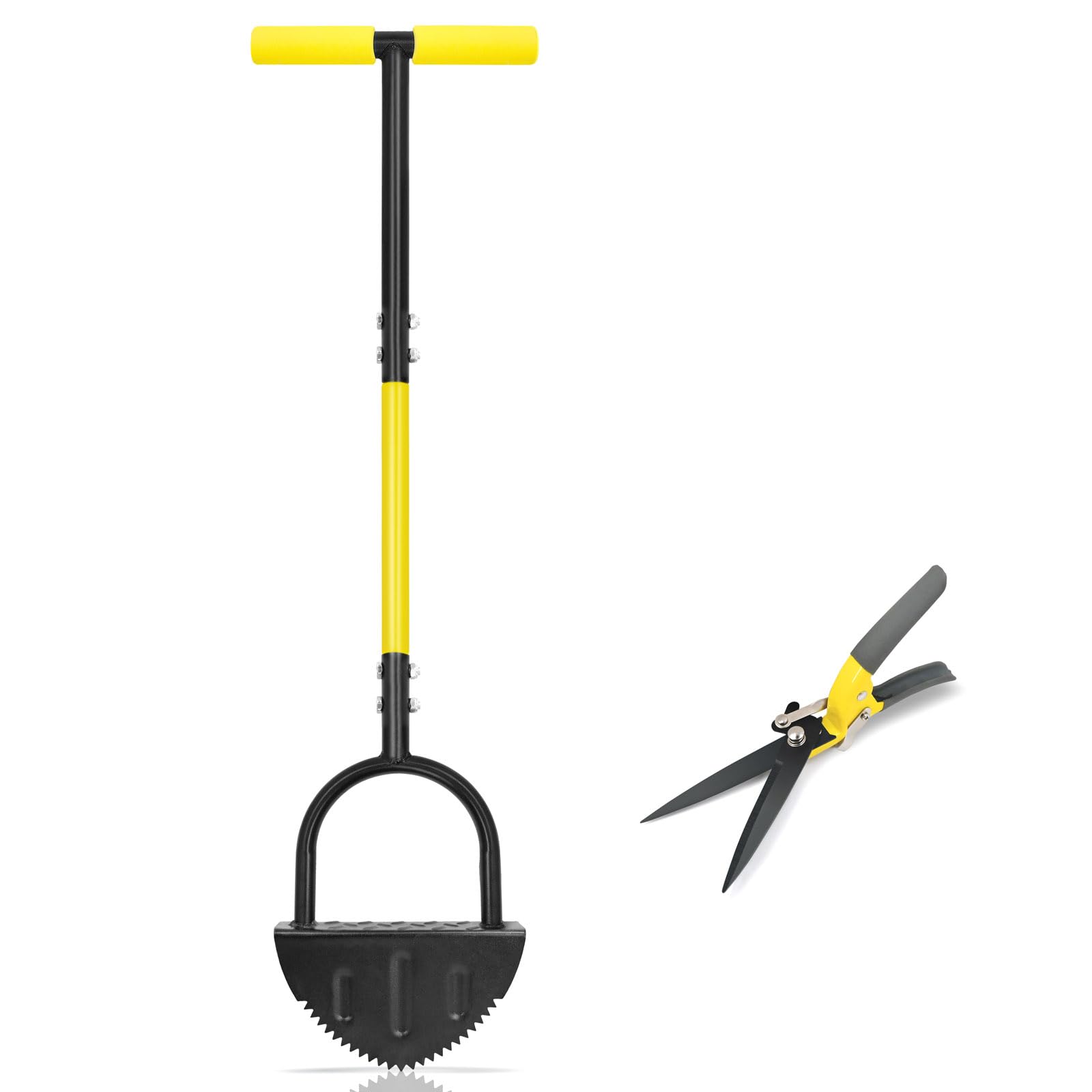
The Byhagern entry‑level edger bundles the tool with a pair of garden shears and gloves, making it an attractive grab‑and‑go option for a homeowner tackling their first border project. The saw‑tooth half‑moon blade is carbon steel with a weather‑resistant coating, and the long handle features a padded non‑slip grip to reduce fatigue. The wide footplate provides good leverage for transferring weight into the cut.
Owner feedback is overwhelmingly positive for the price tier, with several buyers noting the tool produces “professional” results on flower beds and sidewalks. The three‑piece assembly is straightforward, and the included bonuses eliminate the need to buy separate trimming tools. The blade arrives sharp enough for soft turf and loam, but several reviews note that the steel is roughly 1/8‑inch thick, making it harder to drive through dense turf without first grinding the teeth narrower.
For light to moderate use on established beds with decent soil, the Byhagern represents the best value in the entry‑level category. If you regularly edge in rocky or compacted clay, you will likely need to profile the blade with a file before it cuts efficiently.
What works
- Bundled shears and gloves add immediate utility
- Non‑slip padded grip reduces hand fatigue
- Weather‑resistant coating delays rust formation
What doesn’t
- Blade thickness requires profiling for heavy turf
- Plastic handle components feel less durable than all‑metal alternatives
7. AMES 2917200 Saw-Tooth Border Edger with T-Grip

The AMES 2917200 is the budget‑tier workhorse that has been around long enough to earn a 15‑year manufacturer warranty — a rare confidence signal at this price point. Its 15‑gauge serrated steel blade measures 8.9 inches wide, giving you good coverage per pass, and the one‑piece metal construction eliminates the worry of handles snapping off mid‑cut. The foot plate is functional if not flashy, and the T‑grip handle offers adequate control for straight‑line edging.
Owners consistently describe the tool as “sturdy” and report it cuts through thick lawn and crabgrass without excessive effort. The serrated teeth bite into soil effectively, and applying your full body weight drives the blade deep enough to create a proper trench. The tool is lightweight at 3 pounds, which makes it easy to carry around the yard but means it may require repeated rocking to sink fully into hard ground.
For the occasional weekend warrior who needs to define front‑yard flower beds a few times a year, the AMES delivers reliable performance at the lowest investment. The warranty backs up the build quality, though the lack of a padded grip or ergonomic handle refinement places it firmly in the “gets the job done” category rather than the “pleasure to use” category.
What works
- 15‑year warranty backs long‑term durability
- Wide 8.9‑in blade covers ground efficiently
- One‑piece metal frame removes failure points
What doesn’t
- Lightweight design requires more rocking effort on hard soil
- Basic handle lacks ergonomic padding for long sessions
Hardware & Specs Guide
Half‑Moon vs. Straight Blade
A half‑moon blade’s curved profile concentrates downward force at the center of the cut, reducing the effort needed to penetrate the soil. Straight blades distribute force evenly across the whole edge, which works well for slicing sideways but stalls more easily when you are trying to sink straight down. The half‑moon shape is the default choice for flower‑bed borders because it naturally produces a clean vertical wall.
Serrated Teeth Count and Aggressiveness
Serrated edgers rely on many small cutting points that grip and saw rather than push. A blade with 12‑16 teeth across a 7‑inch width offers a good balance of bite and clean finish. Fewer teeth (8‑10) require more downward force but leave a smoother trench wall. More teeth (18+) cut aggressively through roots but can grab and tear if the soil is loose.
Handle Length and Shaft Material
Fiberglass shafts are the premium choice because they dampen vibration and won’t rust, but they can splinter if subjected to severe lateral stress. Manganese steel tubes offer superior rigidity for deep cutting and resist bending, but they transmit more shock to the user. Wood shafts are rare today and found mainly on budget tools; they are comfortable but vulnerable to rot and splitting.
Heat‑Treatment and Edge Retention
Heat‑treated carbon steel blades reach a hardness of roughly 48‑52 HRC (Rockwell hardness scale), which resists dulling against sandy soil and small pebbles. Untempered steel — common on ultra‑budget tools — will roll or chip after a few edge sessions. Spring steel is a subtype of heat‑treated alloy that flexes under load without taking a permanent set, making it ideal for tools that see repeated high‑impact use.
FAQ
How deep should a serrated half‑moon edger cut for a flower bed border?
Can I use a manual edger on dry, hard‑packed clay soil?
How often should I sharpen a manual flower‑bed edger?
Final Thoughts: The Verdict
For most gardeners, the tool for edging flower beds winner is the Radius Garden Pro-Lite because its fiberglass shaft, elevated wide step, and carbon steel blade combine into the most effortless cutting experience across varied soil types. If you need an extra‑long reach for tall stature or deep root mats, grab the Root Slayer XL. And for a zero‑assembly, budget‑minded option that still cuts deep, the BARAYSTUS Height Adjustable Edger delivers reliable performance for the occasional border refresh.