
The wood you choose for a raised bed determines everything from root temperature regulation to rot resistance and structural lifespan. A thin pine board will warp within one season, while premium cedar or a thick fir build can anchor your garden for years without splitting or chemical leaching. The market is crowded with options that look identical in product photos but differ dramatically in board thickness, joinery strength, and long-term stability once loaded with saturated soil.
I’m Rikta — the co-founder and writer behind Lawn Gear Lab. I spend hundreds of hours comparing board dimensions, wood species density, assembly mechanisms, and aggregated owner feedback across dozens of raised bed kits to rank them by real-world durability, not just marketing claims.
After analyzing corrugated galvanized metal, mortise-and-tenon fir, and dovetail-interlocking cedar, the clear all-around solution for most gardeners searching for the best raised garden bed wood is the Greenes Fence model for its chemical-free North American cedar and tool-free joinery.
How To Choose The Best Raised Garden Bed Wood
Selecting the right raised bed wood requires evaluating board thickness, wood species, joinery system, and overall design depth. Here are the three factors that matter most for longevity and plant health.
Board Thickness and Rot Resistance
Premium options use 3/4-inch to 1-inch thick boards that resist bowing under the weight of saturated soil. Thinner panels (under 0.5 inches) often warp within the first growing season. Cedar contains natural oils that resist decay without chemical treatment, while fir requires sealing for comparable longevity. Pine is the least durable and should always be lined or sealed for outdoor use.
Joinery System vs. Fastener-Based Assembly
Dovetail interlocking joints and mortise-and-tenon connections eliminate metal fasteners that can corrode over time. These systems also allow for tool-free assembly and easy disassembly for expansion. Screw-based kits are simpler to build but rely on hardware that may loosen or rust, especially in damp soil-contact environments.
Bed Depth and Open-Base Design
A minimum soil depth of 10.5 inches supports most root vegetables, but deeper beds (15 to 23 inches) accommodate tomatoes, peppers, and perennials. Open-base (bottomless) beds improve drainage and allow deep root penetration into native soil, preventing waterlogging. Elevated beds with legs add ergonomic height for gardeners who prefer not to bend.
Quick Comparison
On smaller screens, swipe sideways to see the full table.
| Model | Category | Best For | Key Spec | Amazon |
|---|---|---|---|---|
| Greenes Fence Premium Cedar | Wood / Cedar | Longevity & organic growing | 3/4 in. thick boards, dovetail joints | Amazon |
| AMERLIFE 2-Tier Mortise & Tenon | Wood / Fir | Deep root & zone planting | 23 in. depth, 0.6 in. fir boards | Amazon |
| ANLEOLIFE Galvanized Steel | Metal / Galvanized | Large area & critter resistance | 24 in. tall, 478 gal. capacity | Amazon |
| AMERLIFE Elevated 48x30x24 | Wood / Fir | Ergonomic height & drainage | 30 in. elevated, 5 cu. ft. capacity | Amazon |
| VIVOSUN 3-Tier 3-Grid | Wood / Fir | Small spaces & tiered organization | 15 in. depth, slot connection | Amazon |
| SoliWood Elevated 48x24x30 | Wood / Cedar | Pre-drilled precision & grey finish | 0.7 in. frame panels, 2.4 in. legs | Amazon |
| Giantex Elevated 49.5×23.5×30 | Wood / Fir | Compact patio & entry-level price | 9 in. box depth, 25 lbs. weight | Amazon |
In‑Depth Reviews
1. Greenes Fence Premium Cedar Raised Garden Bed with CritterGuard Fence System
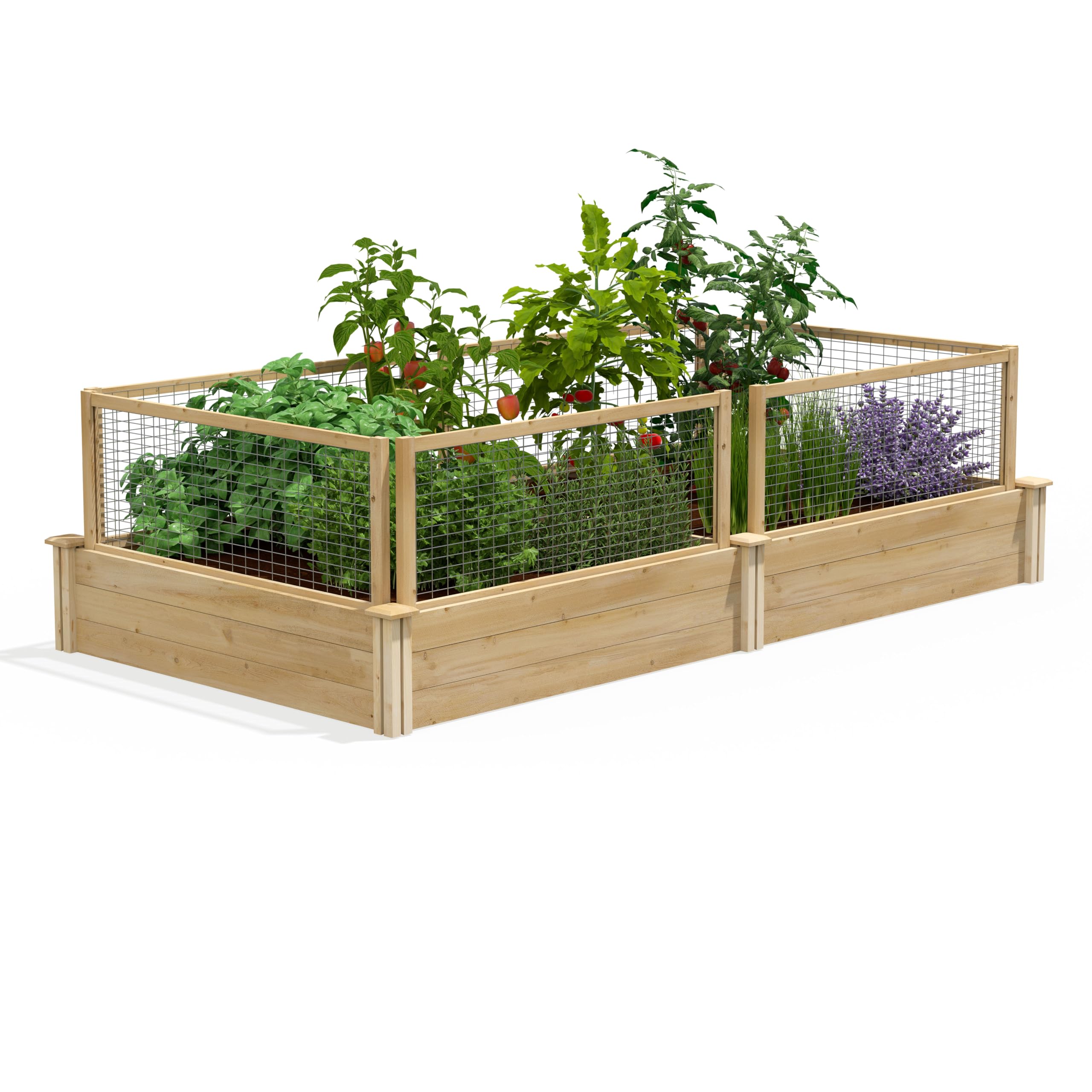
This kit uses chemical-free North American cedar with 3/4-inch thick boards and 2.5-inch square corner posts, a combination that resists bowing even when holding the 28-cubic-foot soil capacity. The dovetail interlocking joints allow tool-free assembly in roughly 20 to 40 minutes, and the routed corner posts support stacking if you want to increase depth later. The CritterGuard fence panels stake directly into soft soil without additional hardware.
Owners report that after four years in a wet climate, the corner posts began to disintegrate, but the main boards remained functionally intact — a lifespan that exceeds most fir or pine kits. The cedar is left untreated, meaning it will naturally weather to a silver-gray patina, which is ideal for organic vegetable growing. Some users noted rough-cut lumber and large knot holes in a few pieces, but seller replacement was responsive.
For gardeners who want a large, durable, non-toxic raised bed that assembles without any tools, this kit delivers the best balance of board thickness, natural wood quality, and long-term performance. The included fence panels make it especially useful for areas with rabbits or small ground animals.
What works
- Tool-free dovetail assembly is genuinely fast and secure
- 3/4-inch thick cedar resists warping better than thinner fir boards
- CritterGuard fence integrates without separate posts or clips
What doesn’t
- Rough lumber finish may not match sanded product photos
- Corner posts in extremely wet climates may degrade after 4 years
2. AMERLIFE 2 Tier Raised Garden Bed, Mortise & Tenon Structure
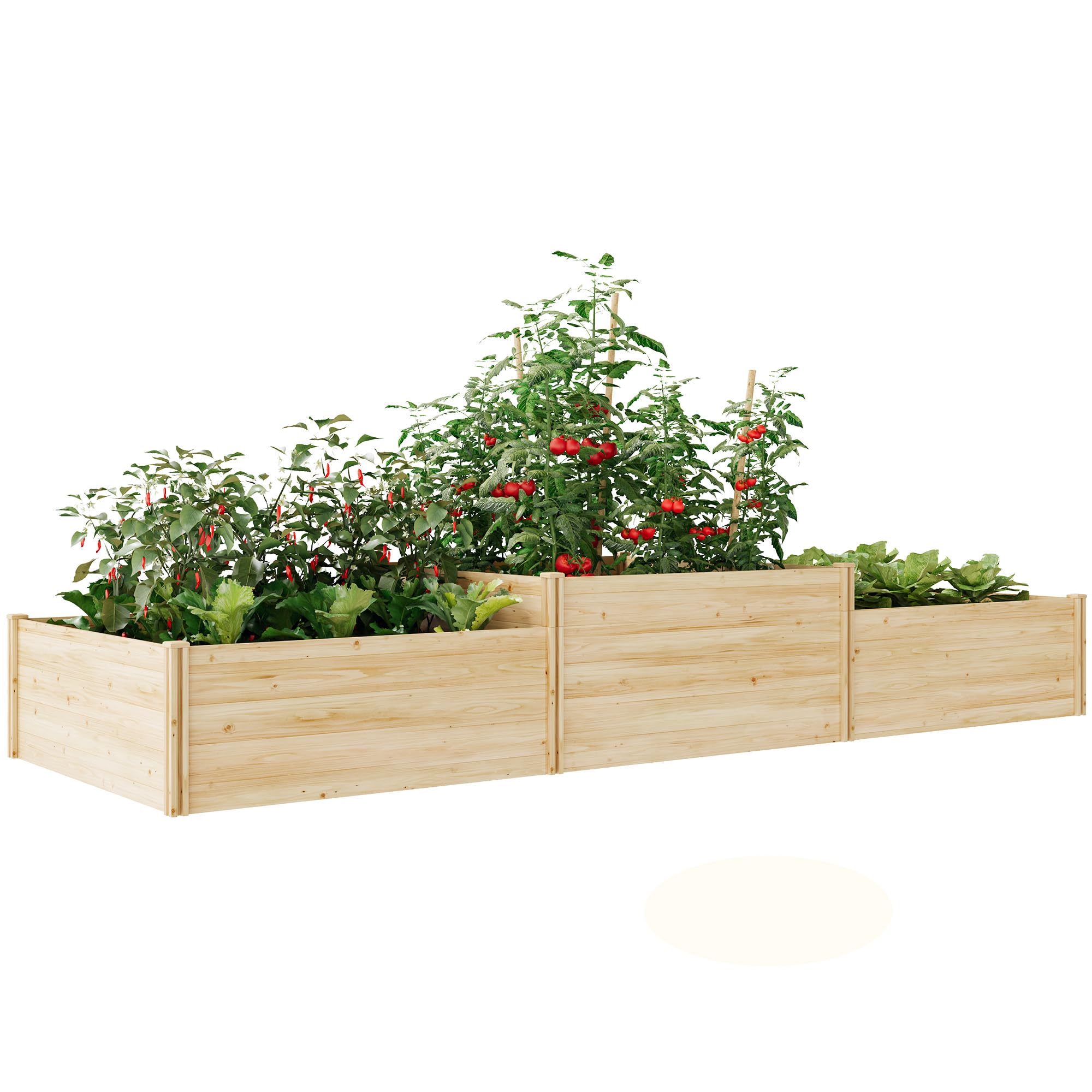
This two-tier, three-section bed uses a mortise-and-tenon structure with 0.6-inch thick fir boards and 2-inch posts, locking panels into grooves without screws or tools. The 17.2-inch and 23-inch depths provide exceptional root space for deep-rooted crops like tomatoes and carrots. The open-bottom design prevents waterlogging and allows roots to penetrate the native soil below.
Owner feedback highlights that assembly takes under 30 minutes and the materials feel solid for the price point. The center poles can develop cracks if panels are forced in and out repeatedly, though users note this does not compromise overall stability. The kit supports free combination into convex, trapezoid, or L-shape configurations, which is rare in wood kits at this size.
Gardeners planning to grow a variety of crops in separate sections without purchasing multiple beds will find this design efficient. The wood is unfinished, so applying a sealer will extend the lifespan beyond the first season, especially in high-rainfall zones.
What works
- Deep 23-inch soil capacity supports heavy feeders and perennials
- Mortise-and-tenon joinery offers excellent lateral stability
- Flexible layout adapts to odd-shaped garden spaces
What doesn’t
- Center locking pins can crack if over-torqued during assembly
- Unfinished fir needs seasonal sealing for long-term durability
3. A ANLEOLIFE 8x4x2ft Galvanized Raised Garden Bed Kit
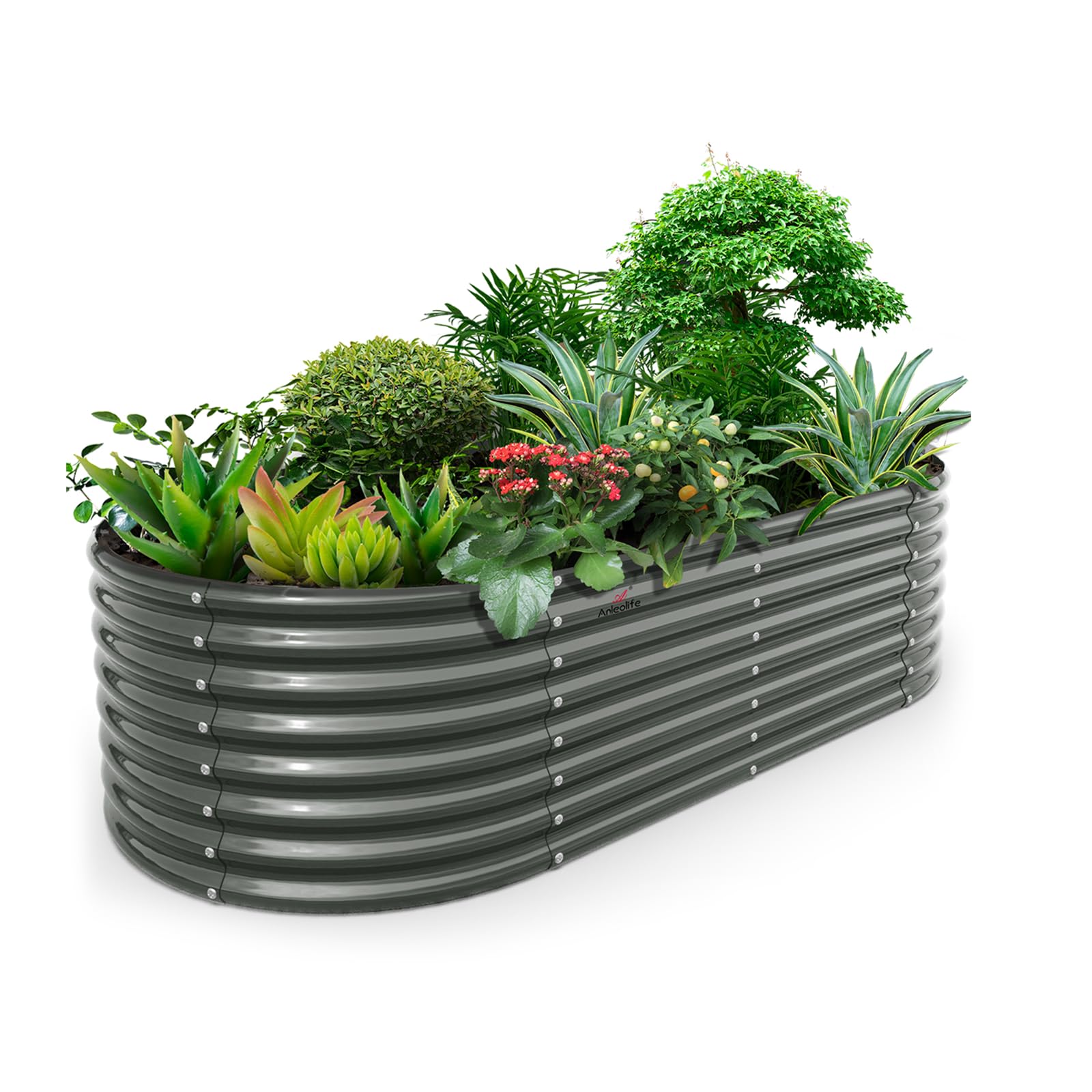
Although not a wood product, this galvanized steel bed competes directly with wood as a durable alternative for gardeners seeking a large, bottomless structure. The 22-gauge (0.8mm) corrugated steel with multi-layer eco-friendly powder coating resists rust far longer than treated pine, and the oval design eliminates sharp corners. The 24-inch height and 478-gallon capacity make it suitable for deep-rooted vegetables and ergonomic gardening.
Buyers consistently praise the rolled safety edges and included garden gloves, which prevent injury during assembly. The bottomless design allows native soil access while keeping out burrowing animals. Center support rods are included to maintain shape under heavy soil weight, though some larger kits arrived without them initially — the company was quick to credit and resolve the issue.
This option is ideal for gardeners who prioritize longevity over the aesthetic of natural wood grain. The metal retains more heat than wood, which can extend the growing season in cooler climates but may require additional watering in hot regions.
What works
- Rust-resistant galvanized steel outlasts most untreated wood by decades
- Rolled edges and included gloves make assembly safe for all ages
- Large 24-inch depth keeps rabbits and groundhogs out effectively
What doesn’t
- Metal absorbs and radiates heat, potentially drying soil faster
- Oval shape limits modular stacking arrangements
4. AMERLIFE Raised Garden Bed, 48x30x24 Inches Elevated Wood Planter Box
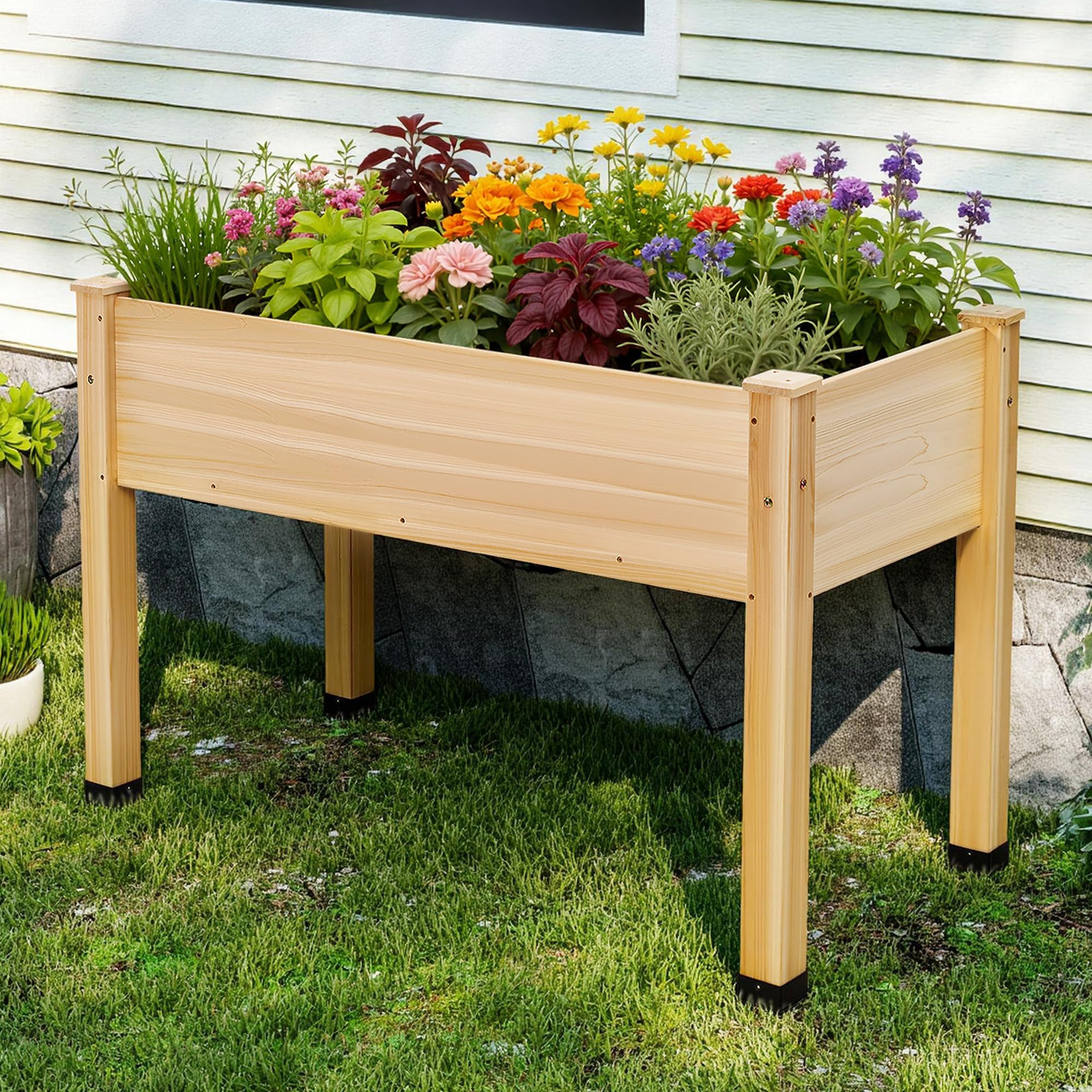
This fir wood planter sits 30 inches off the ground, eliminating the need to bend or kneel during planting and maintenance. The 5-cubic-foot capacity provides enough space for a mix of vegetables and flowers, while the built-in drainage gaps and included bed liner help separate soil from the wood panels to reduce rot. The kit also includes a divider for separating crop types.
User reports indicate that pre-drilling pilot holes is recommended to prevent the fir boards from splitting during screw assembly. Some owners added weatherproof sealer and plastic liners with extra drainage holes to improve longevity. A few buyers experienced misaligned slots and stripped screws due to inconsistent quality control, though the majority found the bed stable and attractive for the price.
This bed works best for gardeners with limited mobility or those who want a waist-high growing surface on a deck or patio. The included liner and divider add value, but the wood requires sealing for year-round outdoor exposure in wet climates.
What works
- 30-inch elevated design is comfortable for gardeners who cannot bend easily
- Built-in drainage gaps prevent water pooling at the base
- Included bed liner and divider enhance functionality
What doesn’t
- Quality control issues with misaligned screw holes reported
- Fir boards need sealing to avoid moisture damage over time
5. VIVOSUN 3-Tier 3-Grid Wooden Raised Garden Bed
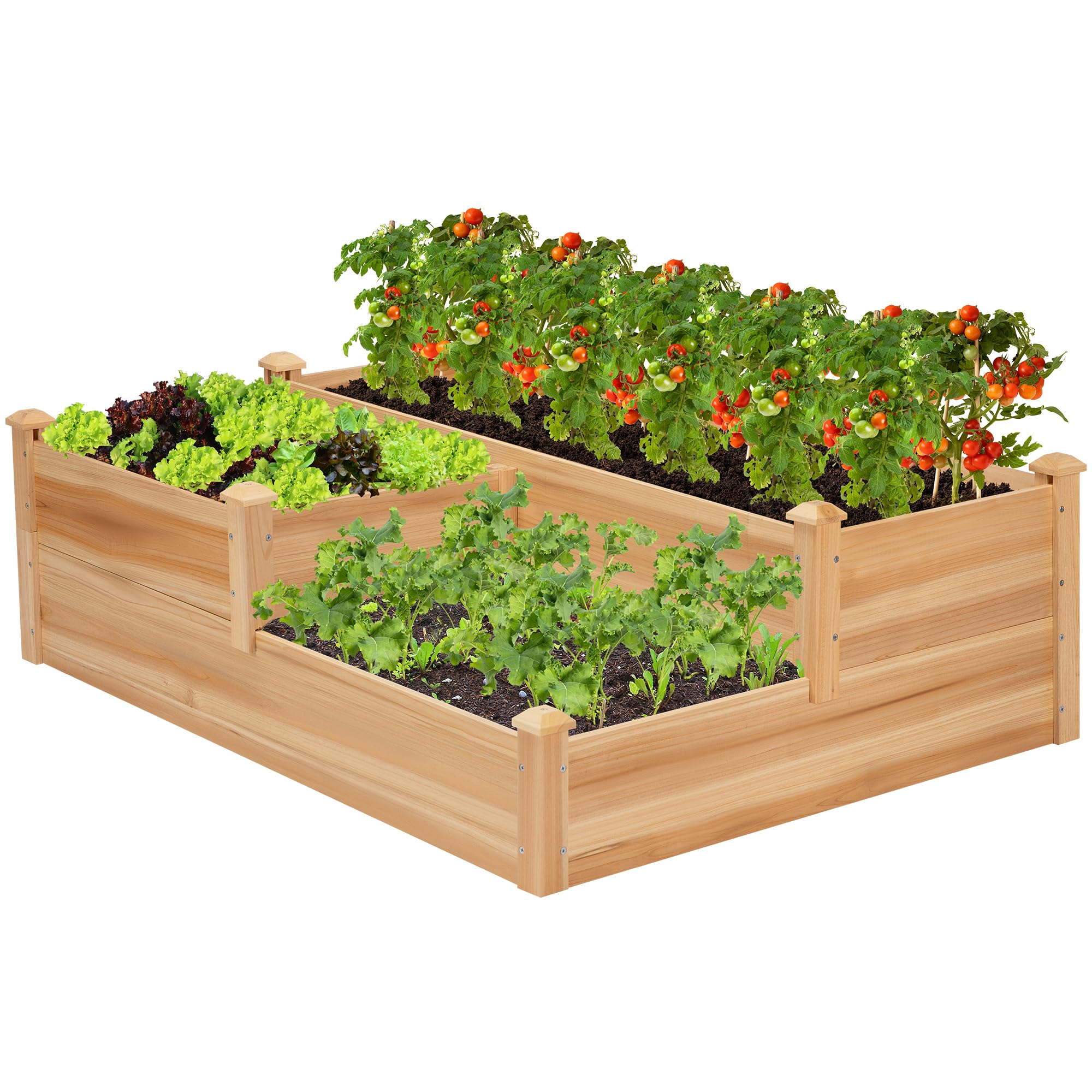
This three-tier, three-grid fir wood planter uses a slot-and-screw connection system that allows assembly in under an hour without specialty tools. The 15-inch soil depth provides sufficient room for most annual vegetables and flowers, and the open-base design improves airflow to roots while preventing waterlogging. The stair-step configuration lets you arrange the tiers in two different patterns to match sun exposure.
Customer experience is mixed: many praise the quick 5-minute assembly and attractive appearance, while others report that the wood cannot hold the weight of wet soil, causing the structure to bow or break. The included landscape fabric liner disintegrated after a few weeks for several users, requiring replacement with newspaper or plastic. VIVOSUN support has been responsive, replacing damaged units quickly.
This kit is best suited for light-use herb gardens or annual flowers in protected patios where the wood will not be constantly soaked. Reinforcing the seams with additional brackets or sealing the wood will significantly extend its functional life.
What works
- Tiered organization allows crop separation by depth needs
- Slot connection enables tool-free assembly in minutes
- Compact footprint fits balconies and small patios
What doesn’t
- Thin fir boards bow under fully saturated soil weight
- Included landscape liner degrades rapidly in outdoor conditions
6. SoliWood Raised Garden Bed with Legs, 48x24x30 Inch Grey Cedar
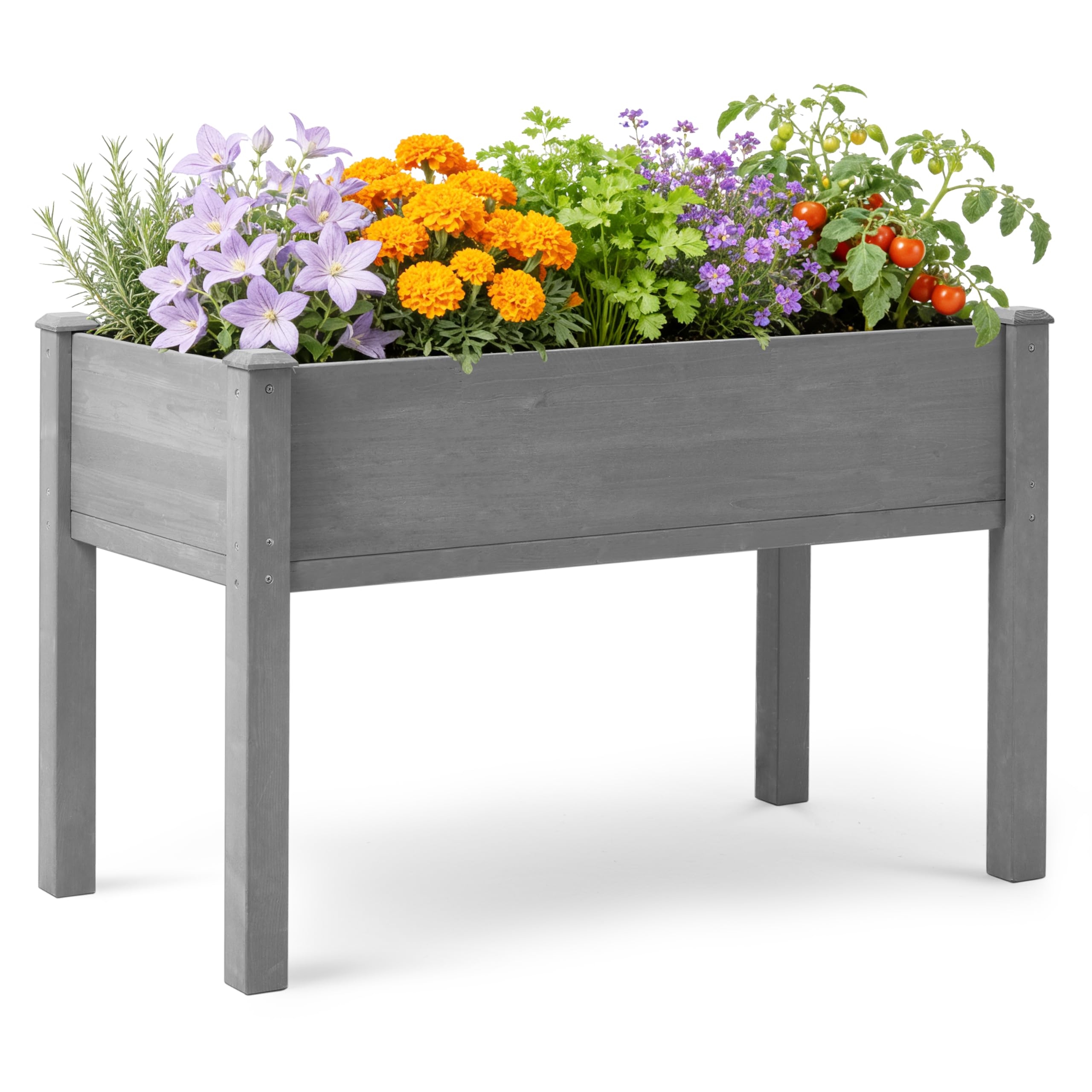
This elevated planter uses 0.7-inch thick cedar frame panels and 2.4-inch thick leg posts, creating a sturdy structure that supports up to 300 pounds. The grey water-based eco finish eliminates the risk of chemical leaching into edible crops. At 30 inches overall height, the bed reduces bending and includes a protective liner for separating soil from the wood interior.
Assembly requires connecting legs to frame panels and typically takes about 30 minutes. Owners over 70 years old specifically note the pre-drilled holes align well, making the build manageable without power tools. Some users caution that the cedar can split slightly if screws are over-tightened, but the wood accepts sealant well for extended outdoor life. The grey color matches modern deck and fence aesthetics cleanly.
For gardeners who want prefabricated cedar with a finished appearance and a liner included, this model offers a turnkey solution. The leg thickness provides superior stability compared to thinner frame kits, though the overall soil depth is shallower than the AMERLIFE tiered alternative.
What works
- Thick 2.4-inch legs provide excellent lateral stability on uneven ground
- Water-based grey finish is safe for organic vegetable growing
- Pre-drilled hole alignment eases assembly for less handy users
What doesn’t
- Cedar can split if screws are over-tightened without pilot reaming
- Shallow depth limits root space for deep-rooted crops
7. Giantex Raised Garden Bed Kit Elevated Planter Box, 49.5×23.5×30 Inch Cedar

This budget-friendly cedar planter measures 49.5 inches wide by 23.5 inches deep with a 9-inch soil depth, making it one of the most compact options in this lineup. The listed material is fir wood, not cedar, though the product name claims cedar. Assembly is straightforward with labeled hardware, but several users note the wood is thin and prone to slight bowing when filled with moist soil.
Buyers who added extra cross-supports (two cedar boards costing under ) reported significantly improved rigidity. The open-bottom design allows deep root growth into existing soil, but the slatted base has gaps that leak soil — placing the bed directly on the ground solves this. A protective sealant application is strongly recommended before filling.
This kit is best for first-time gardeners or rental property owners who want a low-cost elevated bed for shallow-rooted greens and herbs. The thin wood means the bed will not last as long as thicker premium options, but the price point makes it an accessible entry into raised bed gardening.
What works
- Compact size fits balconies, patios, and small yard corners
- Labeled hardware simplifies sorting during assembly
- Open base allows unrestricted root growth into native soil
What doesn’t
- Thin boards bow noticeably under fully saturated soil weight
- Bottom slats leak soil; requires ground placement or a liner
Hardware & Specs Guide
Wood Species and Chemical Safety
Cedar (both Western Red and North American varieties) contains natural thujaplicins that inhibit fungal decay without added preservatives, making it the safest choice for organic vegetable beds. Fir wood is denser and more affordable but lacks natural rot resistance — it must be sealed with a plant-safe linseed or tung oil to avoid premature decomposition. Pressure-treated lumber, especially older CCA stocks, should be avoided entirely near edible crops due to arsenic and copper leaching risks.
Board Thickness and Span Limits
A 3/4-inch thick cedar or fir board can span 4 feet unsupported without noticeable bowing under wet soil load. Thinner 0.5-inch panels will deflect at spans over 3 feet, especially when the soil is saturated. For beds wider than 4 feet, internal cross-supports or center braces are essential to prevent the walls from bulging outward. The measurement that matters is the longest unsupported wall length, not the overall bed dimension.
FAQ
Should I seal my raised garden bed wood before planting?
What is the minimum board thickness for a 4-foot wide raised bed?
Can I use pressure-treated lumber for a vegetable raised bed?
Final Thoughts: The Verdict
For most gardeners, the best raised garden bed wood winner is the Greenes Fence Premium Cedar because its 3/4-inch thick North American cedar and dovetail interlocking joints provide exceptional rot resistance and tool-free assembly. If you want deep root space with flexible arrangement, grab the AMERLIFE 2-Tier Mortise & Tenon. And for a long-lasting metal alternative that never rots, nothing beats the ANLEOLIFE Galvanized Steel.